Strasbourg Airport To City Centre
Strasbourg Airport sits a short shuttle ride from the city it serves, and the train connection into the centre is quicker than the airport transfer in cities several times its size. Here is how the shuttle works, what it costs, and how to turn your landing day into a proper first day in Alsace.
Short answer
The train shuttle from Strasbourg Airport to Strasbourg station runs up to five times an hour and takes 8 minutes. A combined train, tram or bus and 24-hour CTS ticket costs 4.60 EUR. From Strasbourg station, the Grande Île and Petite France are a short tram ride or walk away, so the whole journey from aircraft door to city centre is comfortably under an hour.
Strasbourg, in Alsace in north-eastern France, is one of the few European cities of its size where the airport transfer is genuinely painless. Strasbourg Airport (SXB), at Entzheim south-west of the city, is connected to Strasbourg's central station by a dedicated train shuttle that runs up to five times an hour and covers the distance in 8 minutes, according to the airport's own access page. That single fact shapes every arrival: you do not need to book a private transfer, you do not need to negotiate with a taxi driver, and you can be standing in the Grande Île, the UNESCO-listed river island at the heart of the city, well within the hour after your wheels touch down. This guide walks through the shuttle, the tickets, the alternatives, and what to do with the rest of your arrival day.
How Do You Get From Strasbourg Airport To The City Centre?
The fastest route is the train shuttle: it runs up to five times an hour, takes 8 minutes from the airport station to Strasbourg's central station, and a combined ticket covering the train plus a 24-hour CTS tram and bus pass costs 4.60 EUR. The airport station sits directly opposite the terminal, and Strasbourg station is on the western edge of the city centre, a short tram ride or a pleasant walk from the Grande Île.
The shuttle is a regular TER regional train on the Strasbourg to Entzheim line, with the airport as its own stop. The airport's access page states the frequency plainly: up to five trains per hour, with services every 20 minutes through the day. You buy a ticket at the station machines or in the SNCF app, board, and soon step off at the Gare Centrale. From there the city opens up: the tram network fans out from the station forecourt, and the historic streets begin a few blocks east.
What makes this transfer unusually good is the combined ticket. The airport sells a single product that bundles the airport train with a 24-hour CTS pass covering trams and buses across the whole Strasbourg network, priced at 4.60 EUR. That means your arrival ticket is also your transport for the rest of the day, including the ride to your hotel and the evening trip back out for dinner. For a party of two, the whole transfer from the airport to anywhere in the city costs less than a single taxi journey would in a larger European capital, though no taxi tariff is published in the airport's materials, so a cab is a metered fare you agree with the driver rather than a figure you can plan around in advance.
How Often Does The Airport Train Shuttle Run And What Does It Cost?
Trains run up to five times an hour between Strasbourg Airport and Strasbourg station, taking 8 minutes per journey, with departures roughly every 20 minutes during the day and every 5 to 10 minutes at peak periods. The combined train plus 24-hour CTS pass costs 4.60 EUR. A standard CTS single ticket is 1.90 EUR bought through the app, a Badgéo card or contactless payment, or 2.50 EUR if bought on board a bus.
The airport's own shuttle page gives the frequency and journey time, and the CTS fare page gives the ticket prices. The 4.60 EUR combined ticket is the one worth knowing about, because it is priced the same as a standalone 24-hour Solo pass for the city network and simply adds the airport train on top. If you are staying several days and plan to walk the centre, one combined ticket on arrival may be all the city transport you need for the first 24 hours, since the Grande Île, Petite France and the cathedral quarter are compact and walkable.
| Ticket | Price | What it covers |
|---|---|---|
| Combined airport ticket | 4.60 EUR | Airport train shuttle plus 24-hour CTS tram and bus travel |
| CTS single (app, Badgéo or contactless) | 1.90 EUR | One CTS journey |
| CTS single (bought on board a bus) | 2.50 EUR | One CTS journey |
| CTS 24h Solo | 4.60 EUR | 24 hours of CTS tram and bus travel for one person |
| CTS 24h Trio | 10.20 EUR | 24 hours of CTS travel for two to three people |
Two practical notes follow from the fare structure. First, buying on the bus costs more than buying before you board, so use the CTS app or a contactless card at the stop whenever you can. Second, the 24h Trio pass is aimed at small groups: if three of you are travelling together beyond the airport day, it works out cheaper per person than three Solo passes. The CTS fare page carries the current numbers, and prices in this table are the ones published there.
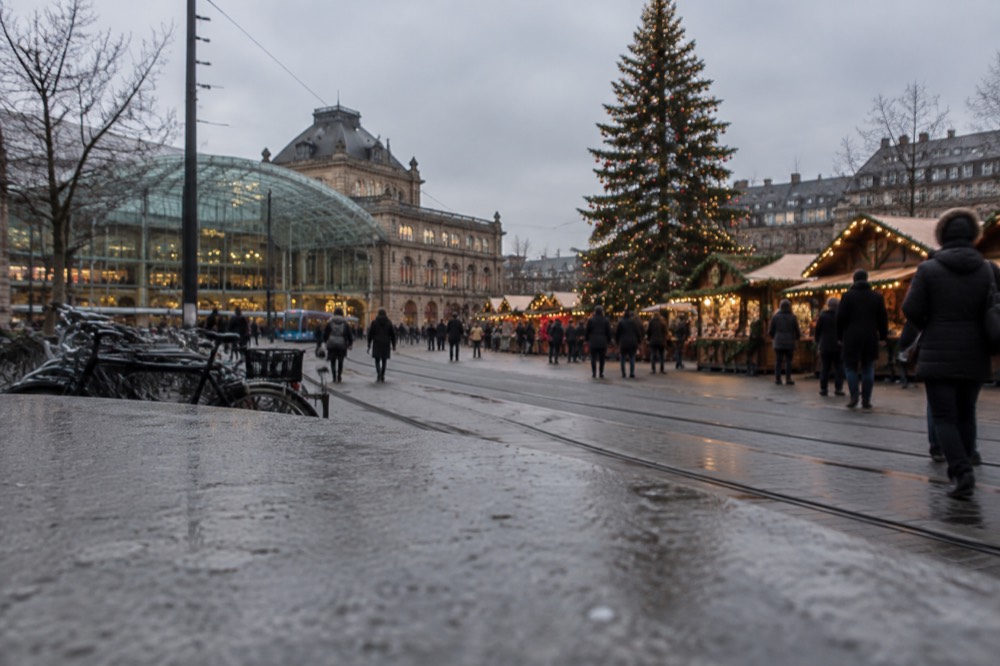
A question that comes up for winter arrivals is whether the shuttle serves the Christmas market crowds. It does, in the sense that the train and tram network runs its normal late-November and December service, and the market spreads across squares in the centre a short walk from the station trams. The city's Christmas site is the place to confirm the market dates and any special transport arrangements for the edition you are visiting.
What Are The Other Ways To Reach The Centre?
The train shuttle is the recommended option, but the alternatives are a metered taxi from the rank outside the terminal, a pre-booked private transfer, or a hire car driven in and parked at one of the city's car parks. No fixed taxi or transfer price is published in the airport's materials, so those are quotes you obtain from the operator. The tram network does not serve the airport itself, which is why the train, not a tram line, is the rail link.
Taxis wait at the terminal and run on the meter. Because no flat fare appears in the airport's published information, the honest advice is to ask the driver for an estimate before setting off, or to pre-book a transfer through an operator's listing where the price is fixed when you book. For travellers with heavy luggage, small children or a very early arrival, that convenience can be worth the extra cost over the 4.60 EUR train ticket.
| Option | Best for | Cost basis | Where to arrange it |
|---|---|---|---|
| Train shuttle | Nearly everyone | 4.60 EUR combined ticket, or a standard TER fare | Station opposite the terminal |
| Taxi | Heavy luggage, odd hours | Metered, ask the driver for an estimate | Rank at the terminal |
| Private transfer | Groups, fixed-price peace of mind | Fixed when booked, check the operator's listing | Pre-booked online |
| Hire car | Touring Alsace beyond the city | Rental rate plus city parking | Airport rental desks |
One pattern worth knowing: a hire car makes little sense if Strasbourg is your only destination, because the centre is pedestrian-friendly and tram-served, and parking fills the budget quickly. A car earns its keep when the trip includes the wine route villages, Haut-Koenigsbourg or the Black Forest, none of which have journey times published in the airport's materials. If that is your plan, read the Alsace road trip guide for how a driving itinerary fits together, and the parking in Strasbourg guide for where to leave the car in the city.
How Do You Get Around Strasbourg Once You Have Landed?
Strasbourg's CTS network of trams and buses covers the whole city, with a single ticket at 1.90 EUR from the app, a Badgéo card or contactless, or 2.50 EUR on board a bus, and 24-hour passes at 4.60 EUR for one traveller or 10.20 EUR for two to three. The historic centre is compact enough that the Grande Île, Petite France and the cathedral are comfortably explored on foot between tram rides.
The tram is the backbone of the city. Lines radiate from the Gare Centrale forecourt, and the stop nearest the station connects within minutes to the stops around the Grande Île. If you arrived on the combined airport ticket, your 24 hours of CTS travel is already active from your first tram ride, so there is nothing more to buy until the pass expires. Contactless payment on board works too, at the 1.90 EUR rate rather than the 2.50 EUR on-board purchase rate, which is a small but real saving for anyone who prefers not to plan ahead.
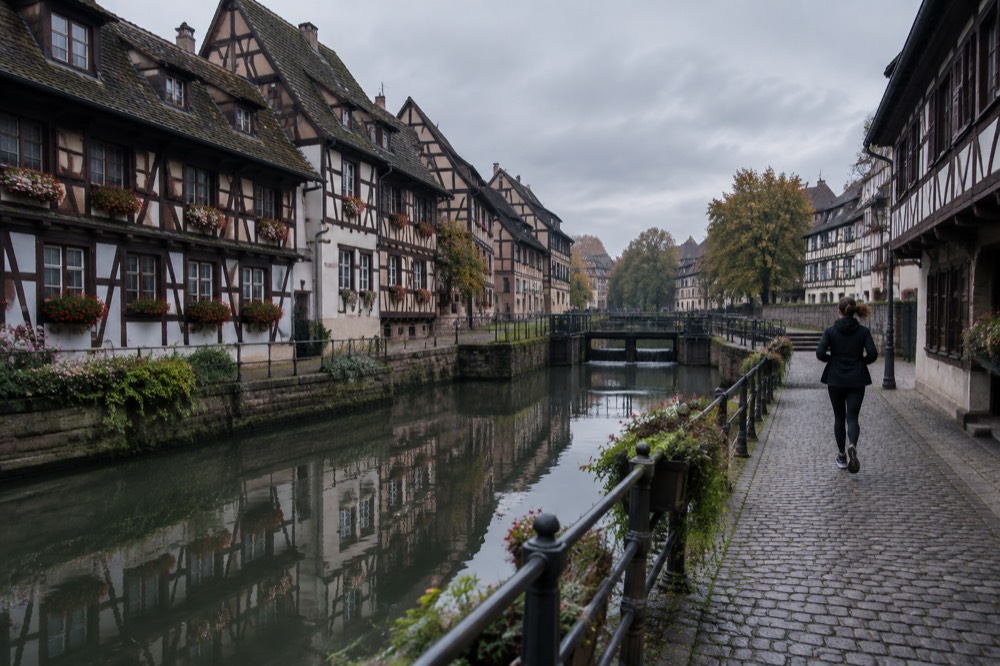
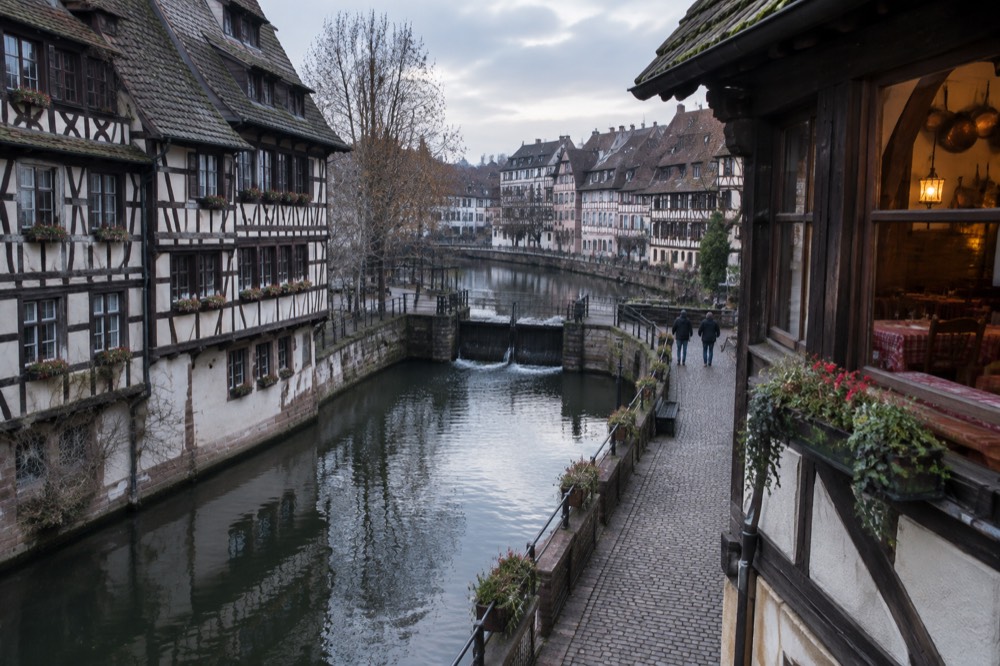
Walking deserves more credit than it usually gets here. The Grande Île, the river island that forms the old city, is a UNESCO World Heritage property along with the later Neustadt extension, and its lanes, canals and half-timbered frontages are the point of the visit rather than an obstacle between sights. Petite France, the former tanners' and millers' quarter at the western tip of the island, sits within an easy stroll of the station side of the centre. The covered bridges and the Barrage Vauban terrace, with its seasonal opening hours, sit at the edge of the same walk, so a first afternoon on foot covers a remarkable amount of the city's famous scenery without a single ticket.
| Mode | Price | Notes for arrival day |
|---|---|---|
| Tram or bus single | 1.90 EUR (app, Badgéo, contactless) | Cheapest single option |
| Tram or bus single on board | 2.50 EUR | Bus purchases only, costs more |
| 24h Solo pass | 4.60 EUR | Included in the airport combined ticket |
| 24h Trio pass | 10.20 EUR | Two to three travellers sharing |
| On foot | Free | The Grande Île and Petite France are walkable from the centre |
For the mechanics of the wider network, including the bike-hire and river options, the site's getting around Strasbourg guide goes deeper than this page needs to, and the Strasbourg by bike guide covers the cycle routes along the Ill.
Where Should You Stay For Your First Night?
The most convenient bases are the station district for the simplest airport transfer, the Grande Île and Petite France for atmosphere in the middle of the old city, and the Krutenau or Neustadt for a quieter, more local feel a short tram ride out. All sit within the CTS network covered by the airport's combined ticket, so no base adds a second fare to your arrival.
The station district is the pragmatic choice after a late flight: you step off the shuttle and you are there. The trade-off is atmosphere, since the streets around a mainline station rarely show a city at its best. The Grande Île puts you inside the postcard, among winstubs and candlelit streets, at the cost of higher rates and thinner walls in old buildings. Petite France is the most photographed quarter in the city, and staying in it means the famous canals are outside your door in the morning.
| Area | Character | Suits | Trade-off |
|---|---|---|---|
| Station district | Practical, well connected | Late arrivals, early departures | Less charm |
| Grande Île | Medieval heart, winstubs, cathedral | First-time visitors | Higher rates, older buildings |
| Petite France | Canals and half-timbered houses | Photographers, romantics | Busiest with visitors |
| Krutenau | Student quarter, casual eating | Longer stays, food lovers | A short tram or walk from the centre |
| Neustadt | Imperial-era boulevards | Architecture fans, quieter nights | East of the Ill, a tram ride out |
The site's full where to stay in Strasbourg guide works through the areas in detail, and for December trips the where to stay for the Christmas market guide narrows the choice to the squares that matter. Whichever you pick, the airport transfer is the same 8-minute train plus a tram, so the decision can rest on the city rather than on logistics.
What Can You Do On Your Arrival Day In Strasbourg?
Realistic plans for a landing day are a walk through Petite France and the Grande Île, a climb of the cathedral platform at 66 m for 10 EUR full price or 6 EUR reduced, the 12:30 astronomical clock show at 4 EUR if your timing allows, or a Batorama river circuit from 12.50 EUR for the short tour. All of these sit inside the area covered by your combined airport ticket, so the only extra costs are the admission prices themselves.
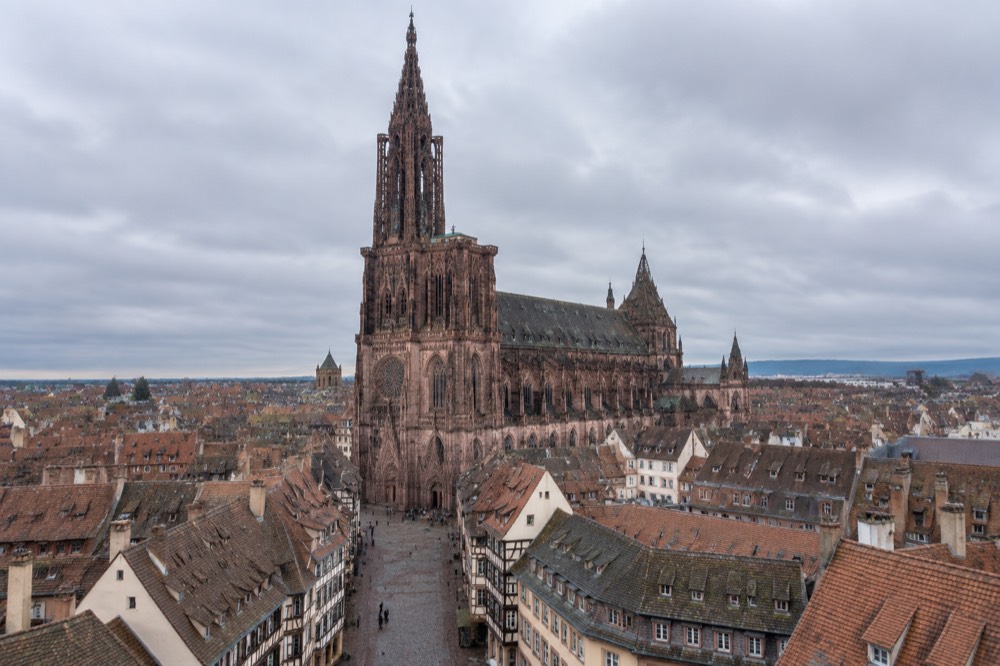
The cathedral is the anchor. Its single spire dominates the old city, and the tower platform, reached by stairs and lift arrangements described on the cathedral's own page, gives the classic view over the rooftops of the Grande Île to the Black Forest hills on clear days. The platform's hours shift with the seasons, running longer in the April to September window than from October to March, and the nave keeps its own timetable with a midday closure window on weekdays, so check the cathedral's hours page before you set out. The astronomical clock performs its automaton show daily at 12:30, and tickets, at 4 EUR for adults, are sold on the day only, with sales at the cathedral stalls in the morning or at the Saint-Michel entrance from 11:30. That day-of-purchase rule matters for planners: you cannot reserve the clock in advance.
The river is the other half of a first day. Batorama's official listing gives a short circuit at 12.50 EUR full price and 7.20 EUR reduced, running 45 minutes, and a long tour at 16.20 EUR full and 8.90 EUR reduced over an hour and ten minutes, gliding past the European institutions and back through the old town's waterways. A boat circuit is a low-effort way to see the city when your legs are still in travel mode, and the landing stage is a short walk from the cathedral quarter.
For a private version of the same water, there is a captain-led boat that tours the Ill with just your party aboard. It runs with a skipper who narrates the city from the water, and it is a different proposition from the shared Batorama circuits: your own route, your own pace, your own group of up to four. The price and current availability are on the operator's live listing rather than in this article, because product figures belong there, where they stay current.
If the legs are willing and the evening is long, a guided walk is the most efficient first orientation. A small-group curiosities walk of around two and a half hours threads the covered alleys, courtyards and stories that a map does not surface, and the format suits a first evening when the light is going gold over the canals. The current price, rating and departure details render on the live listing.
Which Day Trips Work Once You Are Based In Strasbourg?
The strongest day trips from a Strasbourg base are the Alsace wine route villages such as Riquewihr, Eguisheim and Kaysersberg, the castle at Haut-Koenigsbourg, the city of Colmar, and the German side of the border including the Black Forest. The airport's short transfer means you can land, drop bags, and still start a full excursion the next morning without changing hotels, which is the quiet advantage of basing a trip here rather than in a smaller Alsatian town.
Thinking about where the rail lines can take you beyond the city? Book a train ticket here.
Strasbourg works as a hub because it is the region's transport centre, with the tram, the river and the rail lines converging on one compact centre. The trade-off of hub cities, visitor bustle in the old streets, is the price of that convenience, and it is one many travellers happily pay. A typical pattern is two nights in the city with the Grande Île and Petite France covered on foot, then a day of villages and vineyards, then the shuttle back out to Entzheim.
The escorted option that ties the region's headline sights together is the day trip to Colmar, Haut-Koenigsbourg, Riquewihr and Kaysersberg. It runs about ten and a half hours, which is the honest scale of a loop that takes in a castle, two wine villages and Colmar's old town in one day, and it removes the question of who drives the wine route. The price, rating and pickup details are on the operator's live listing, and the tour pairs naturally with this arrival guide: land, sleep in the centre, and let the excursion handle the distances.
Check availability for the Colmar and Haut-Koenigsbourg day trip on the operator's listing, where the current price and free-cancellation terms are shown before you book.
For planning the region yourself, the site's Alsace road trip guide, the most beautiful villages in Alsace guide and the Colmar guide cover the routes, and the Christmas markets in Alsace guide does the same job for a December trip. The Strasbourg and Colmar itinerary splits a short stay between the two cities.
When Is The Best Time To Fly Into Strasbourg?
The city has a semi-continental climate, with Meteo-France 1991-2020 normals showing mean daily maxima from 5.2 C in January to 26.4 C in July, around 635.7 mm of rain a year and 112.3 days of rain of 1 mm or more. December draws the Christmas market crowds, while May to September offers the warmest weather, so the airport is at its busiest in late November and December.
The winter peak is the defining feature of Strasbourg's travel calendar. The Christmas market, which the city bills as Strasbourg Capitale de Noël, drew 3.05 million visitors in the 2025 edition, which ran from 26 November to 24 December, and the city's press release records that figure alongside a 3.4 million total for 2024. The city's Christmas site states that the programme is still being finalised, so confirm the dates there before booking flights around them. The pattern to plan around is an opening in the last week of November and a close on 24 December, with the final day finishing early in the evening.
| Month | Mean daily maximum | Mean daily minimum | Rain days of 1 mm or more |
|---|---|---|---|
| January | 5.2 C | -0.2 C | 9.1 |
| April | 17.0 C | 5.7 C | 8.6 |
| July | 26.4 C | 14.9 C | 10.4 |
| October | 15.8 C | 7.2 C | 9.6 |
| December | 5.9 C | 0.8 C | 10.2 |
The flight side of the equation matters too. Strasbourg Airport is small, with a route map centred on European destinations, and the airport's own press release confirms new Jet2 winter routes to Edinburgh, Manchester and London Stansted, each flying twice weekly, with the Edinburgh and Manchester services running from late November into December. There is no verified direct transatlantic route, so long-haul travellers connect through a European hub, and the site's does Strasbourg have an international airport page answers that question directly. For the wider choice of airports, including Basel across the Swiss border, see the nearest airport to Strasbourg guide and the Basel airport to Strasbourg guide.
What Should You Budget For The First Day And Night?
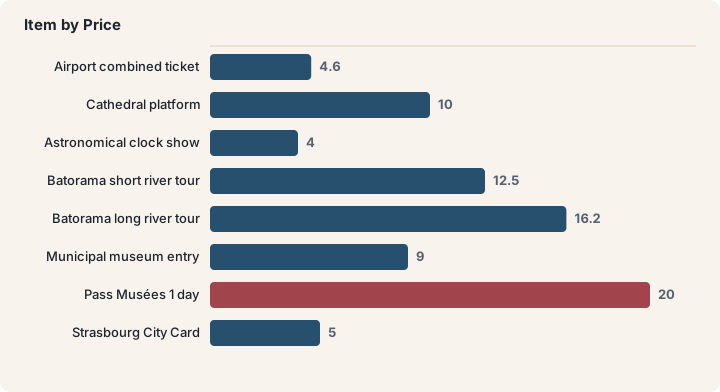
The fixed, published costs are small: the 4.60 EUR combined airport ticket, the 4 EUR astronomical clock show, 10 EUR full price for the cathedral platform, 12.50 EUR and up for a Batorama river circuit, and 9 EUR full price for the municipal museums, which are free on the first Sunday of every month. The Strasbourg City Card, at 5 EUR for seven days, is a discount card rather than an all-inclusive pass, and hotel rates vary too widely to quote as a figure.
The honest budget picture is that the transport is cheap and the admissions are modest, so the variable costs are where the money goes: the hotel, the winstub dinners and any guided experiences. The museum maths is worth a sentence: at 9 EUR full price per municipal museum, a day spent in three of them already exceeds the 20 EUR one-day Pass Musées, so the pass pays for itself at the third museum door, and the first Sunday of every month makes all municipal museums free for everyone. The Musée Alsacien is closed for works until 2028 and should not be counted in any museum plan.
| Item | Price | Notes |
|---|---|---|
| Airport combined ticket | 4.60 EUR | Train shuttle plus 24-hour CTS pass |
| Cathedral platform | 10 EUR full, 6 EUR reduced | Platform at 66 m, under 6s free |
| Astronomical clock show | 4 EUR | 12:30 daily, tickets on the day only |
| Batorama short river tour | 12.50 EUR full, 7.20 EUR reduced | 45-minute circuit |
| Batorama long river tour | 16.20 EUR full, 8.90 EUR reduced | 1 hour 10 minute circuit |
| Municipal museum entry | 9 EUR full, 5 EUR reduced | Free on the first Sunday of each month |
| Pass Musées 1 day | 20 EUR | Covers the municipal museums |
| Strasbourg City Card | 5 EUR adult, 3.50 EUR child | Discount card for 7 days, not an all-inclusive pass |
For the money-saving angle, the site's Strasbourg on a budget guide and free things to do in Strasbourg guide go further than the fixed prices above, and the Strasbourg City Card guide explains what the 5 EUR card does and does not include. A useful nugget that is easy to miss: the cathedral's own pages note that a platform ticket also gives a reduced rate at the Musée de l'Œuvre Notre-Dame next door, which quietly improves the value of the climb.
What Do Travellers Get Wrong About This Transfer?
The common mistakes are buying a bus ticket on board at 2.50 EUR instead of the 1.90 EUR contactless rate, assuming a tram runs to the airport when it is a train shuttle that does, budgeting a taxi fare in advance when none is published, and planning the astronomical clock show without knowing tickets are sold on the day only. None of these are expensive errors, but each one costs either money or a missed sight on a tight arrival day.
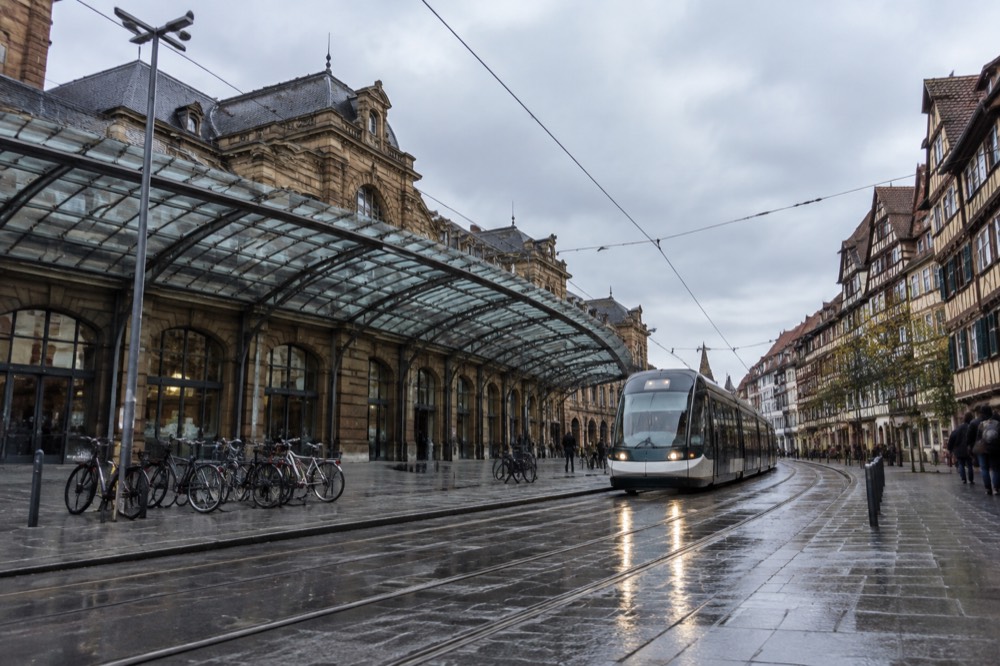
The tram assumption is the most frequent. Strasbourg's tram network is famous, and visitors reasonably expect it to reach the airport, but the rail link from Entzheim is a TER train, not a tram, and it uses rail tickets rather than CTS ones, which is exactly why the combined ticket exists. The clock ticket rule is the other quiet trap: the 12:30 show sells out on busy days, and since tickets go on sale only that morning at the stalls or the Saint-Michel entrance, arriving at noon and expecting to buy at the door is a gamble.
A final planning note on the station itself. Summer 2026 saw tram works on lines A through D and F near the Gare Centrale, which the CTS documented while they ran, so any disruption advice you read from that period predates your trip and the CTS site carries the current state. Trams, trains and the shuttle all converge at the station regardless, and the works did not change the fundamental shape of the transfer: 8 minutes by rail, then a tram or a walk, then the old city.
The short version of all of this: land at Entzheim, buy the 4.60 EUR combined ticket, ride the train to the Gare Centrale, and let the tram or your own feet finish the job. From there Strasbourg, its cathedral, its canals and its wine route are all within reach on a ticket you already hold, and the rest of the planning is about what you want your first day to contain. This Strasbourg Travel Guide page is part of a wider set of arrival and planning guides, so the next step is usually choosing between the city itself and the villages beyond it.
Common Questions About Strasbourg Airport To City Centre
How Do You Get From Strasbourg Airport To The City Centre?
The train shuttle runs up to five times an hour from the airport station to Strasbourg's central station and takes 8 minutes. A combined ticket covering the train plus 24 hours of CTS tram and bus travel costs 4.60 EUR. Taxis and pre-booked transfers are alternatives, but no fixed taxi fare is published in the airport's materials.
How Much Is The Train From Strasbourg Airport To The City?
The combined airport ticket, which bundles the train shuttle with a 24-hour CTS pass for trams and buses, costs 4.60 EUR. A standard CTS single ticket costs 1.90 EUR bought through the app, a Badgéo card or contactless payment, or 2.50 EUR bought on board a bus.
Does The Tram Go To Strasbourg Airport?
No. The rail link from the airport is a TER train shuttle, not a tram line, and it runs up to five times an hour with an 8-minute journey time to Strasbourg station. The tram network starts at the city end, at the Gare Centrale, where the airport's combined ticket already covers 24 hours of tram and bus travel.
How Long Does It Take To Get From Strasbourg Airport To The City Centre?
The train shuttle itself takes 8 minutes from the airport station to Strasbourg's central station. Add the walk from the terminal to the station, a wait of up to 20 minutes between trains in the daytime pattern, and a tram ride or walk to the old centre, and the door-to-door transfer sits comfortably under an hour.
Is There A Bus From Strasbourg Airport To The City Centre?
The airport's published access information centres on the train shuttle, which is the rail connection to Strasbourg station. CTS buses and trams cover the city from the station onwards, and the 4.60 EUR combined airport ticket includes 24 hours of that city network, so no separate bus purchase is needed once you arrive.
Which Airlines Fly To Strasbourg Airport?
Strasbourg Airport's route map is centred on European destinations. The airport's press release confirms new Jet2 winter routes to Edinburgh, Manchester and London Stansted, each twice weekly, with the Edinburgh and Manchester services running from late November into December. There is no verified direct transatlantic route, so long-haul travellers connect through a European hub.