Strasbourg Tram
The tram is the simplest way to move around Strasbourg, in Alsace in north-eastern France. This guide sets out the verified fares, the airport connection and when to leave the rails behind and walk.
Short answer
A single CTS ticket in Strasbourg costs 1.90 EUR bought through the Badgeo card, the CTS app or contactless payment, or 2.50 EUR bought on board a bus. A 24h Solo pass is 4.60 EUR and a 24h Trio pass for two to three people is 10.20 EUR. The airport train shuttle takes 8 minutes and a combined ticket costs 4.60 EUR.
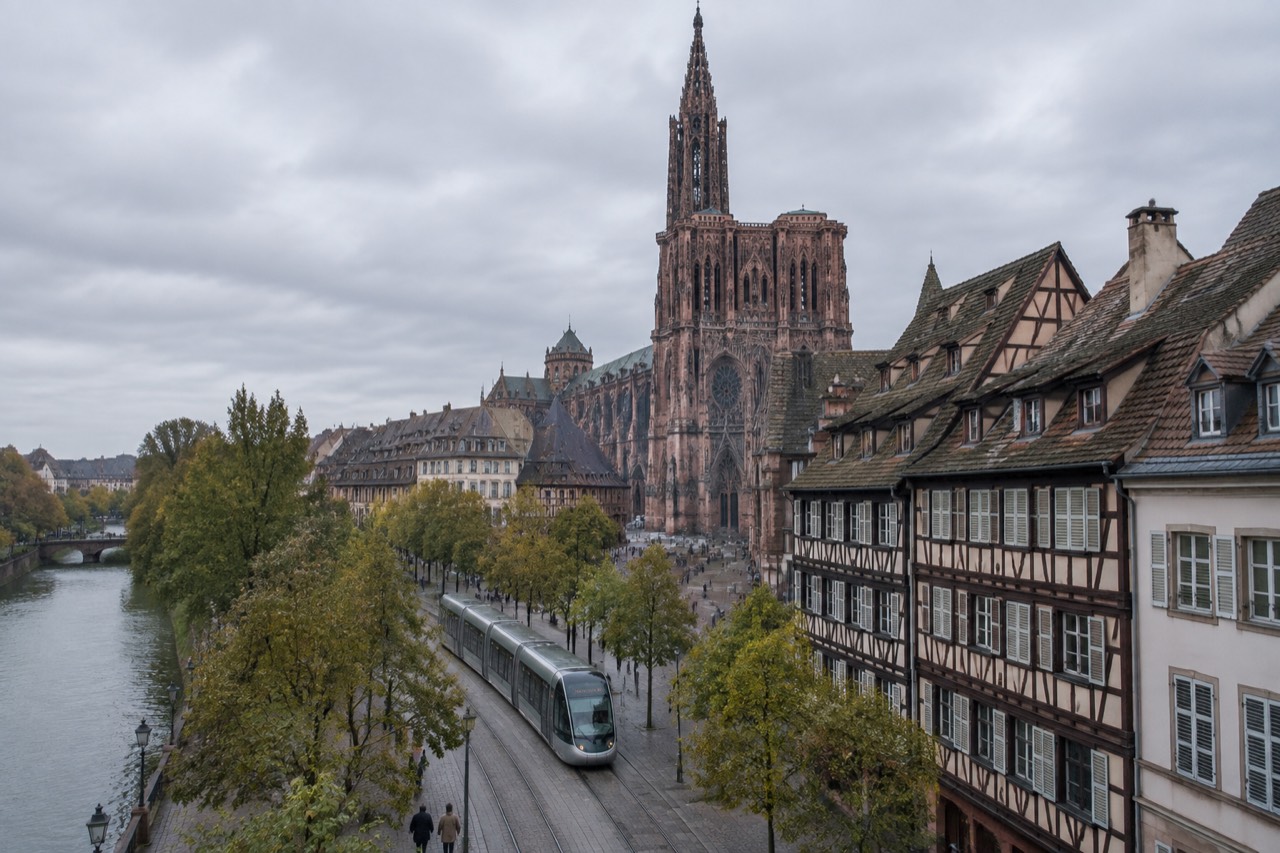
Strasbourg, the prefecture of the Bas-Rhin in Alsace, north-eastern France, is a city built around its tram. The network run by CTS, the local transport authority, threads along the River Ill, links the Gare Centrale with the Grande Île and carries the everyday rhythm of a commune of 293,771 people (INSEE 2023). For visitors it does something rarer: it connects the medieval heart, the Germanic Neustadt and the European Quarter without a single car journey. This guide walks through what the tram costs, how the airport link works, and when the historic centre is better seen on foot.
How The Strasbourg Tram Network Works
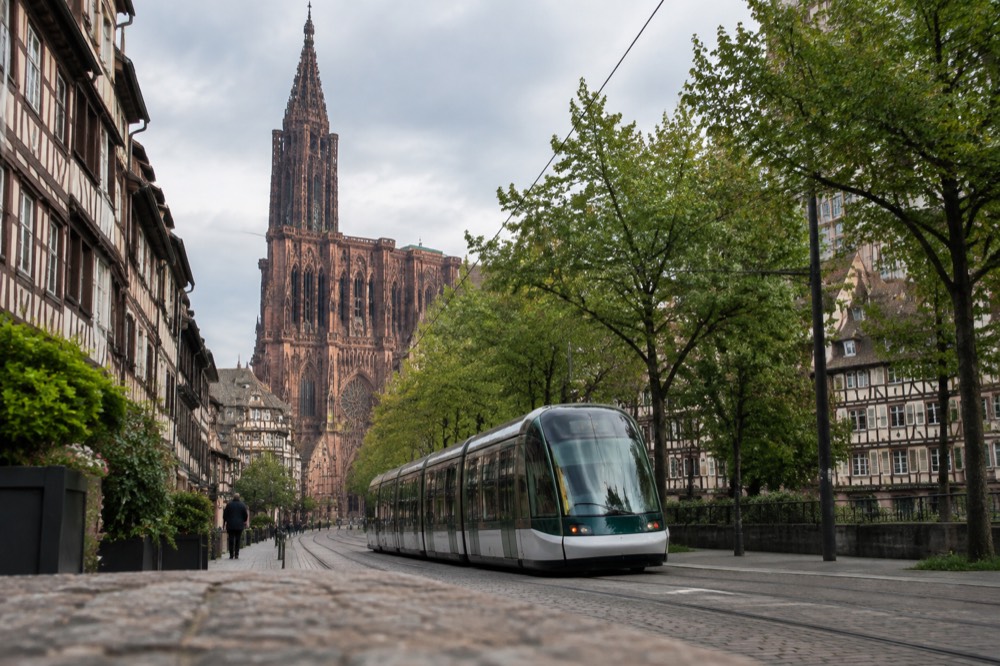
The Strasbourg tram is a city-wide network run by CTS that links the railway station, the Grande Île, the Neustadt, the European Quarter and the Krutenau with modern low-floor trams, and a single ticket covers tram, bus and the regional train shuttle to the airport. The network is the backbone of daily movement in the city, and this Strasbourg Travel Guide treats it as the default way for visitors to get around. Strasbourg sits on the River Ill beside the Rhine, which forms the border with Germany, and the tram reaches every part of the French bank that a short visit touches. No new tram line opened in 2026, and the summer 2026 works that disrupted lines near the Gare Centrale have ended, so the network is running on its normal pattern again.
What makes the system easy for a first-time visitor is its simplicity. One ticket type covers the whole urban network, trams and buses alike, and the same ticket also works on the airport train shuttle when you buy the combined version. The historic centre, the Grande Île, is largely pedestrianised, which is precisely why the tram matters: you park your luggage at a stop on the ring of the island and walk the rest.
The stops a visitor actually uses cluster around a handful of names. Outside the Gare Centrale, the tram hub connects arriving rail passengers with the whole city in a few minutes. From there, the lines fan out across the Ill, past the Neustadt's broad avenues, towards the European institutions and back into the Krutenau's student streets. There is no need to learn the network in detail; the CTS app and the stops' displays show live departures, and the city is compact enough that a wrong stop costs a short walk rather than a long wait.
What Tram Tickets Cost And Where To Buy Them
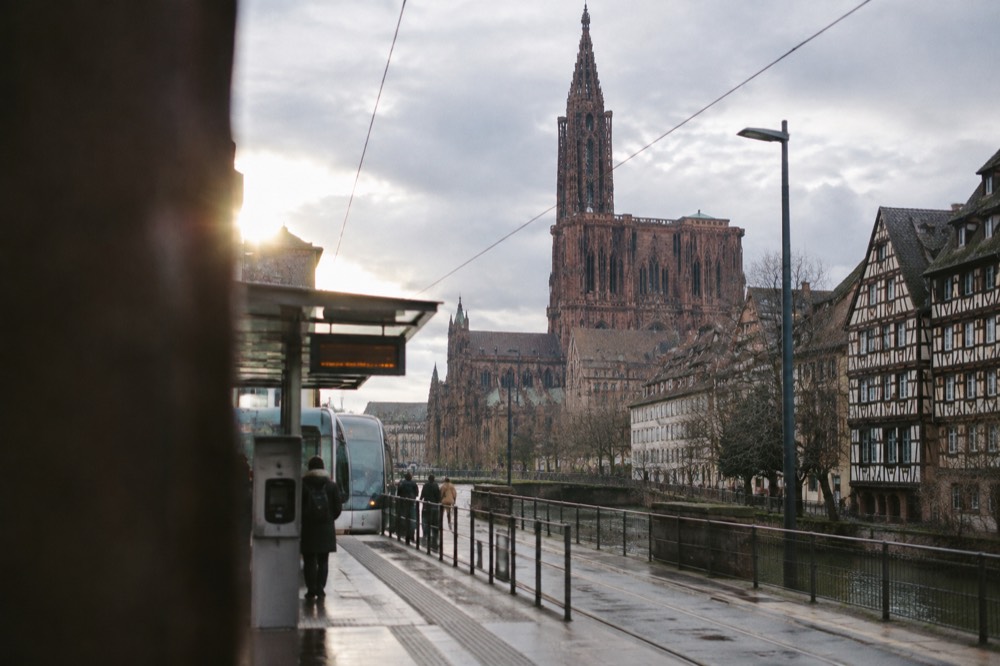
A single CTS ticket costs 1.90 EUR when bought through the Badgeo card, the CTS app or contactless payment on board, and 2.50 EUR when bought from the driver on a bus; a 24h Solo pass costs 4.60 EUR, and a 24h Trio pass covering two to three people travelling together costs 10.20 EUR. Those are the fares published on the CTS fare pages, and they are the only figures a visitor needs for a stay of any length. The 24h Solo pays for itself after the third journey of the day, and the Trio is built for couples and families moving together. CTS's fare page gives the full list of ticket types, including longer passes whose prices are worth checking there before a longer stay.
The payment choice matters more than the ticket choice. Buying on the bus costs 60 cents more per ticket, so the app, a contactless bank card or the Badgeo card is the cheaper habit. Contactless validation is the fastest option for visitors who do not want to install an app: tap in when you board, and the fare is charged to your card.
| Ticket | Price | Where to buy it |
|---|---|---|
| Single (Badgeo, CTS app or contactless) | 1.90 EUR | Before or during boarding |
| Single bought on board a bus | 2.50 EUR | From the driver |
| 24h Solo pass | 4.60 EUR | CTS app, machines or Badgeo |
| 24h Trio pass (2-3 people) | 10.20 EUR | CTS app, machines or Badgeo |
| Airport combined ticket (train + tram/bus + 24h EMS) | 4.60 EUR | Airport and station ticket channels |
A short visit rarely needs anything beyond the single or the 24h Solo. The Trio only makes sense for groups, and the airport combined ticket is a separate purchase covered in its own section below. Whatever you buy, keep the ticket until you leave the vehicle: inspections happen, and an unstamped or unvalidated ticket is treated as no ticket at all.
For travellers weighing the tram against the paid sightseeing options, the honest split is simple. The tram moves you between neighbourhoods cheaply; a guided walk, a boat or a bike adds the storytelling and the angles the rails cannot reach.
How To Get From Strasbourg Airport To The City Centre
The airport link is a regional TER train shuttle that runs between Strasbourg Entzheim airport and the Gare Centrale in 8 minutes, with up to five trains per hour, and a combined ticket covering the train, the tram or bus and a 24h EMS pass costs 4.60 EUR. The airport's own access page sets out the shuttle details, and the journey is short enough that a taxi is rarely worth considering for a city-centre hotel. The shuttle is part of the ordinary regional rail network, not a separate premium service, so the same ticketing rules and the same reliability apply.
The combined ticket deserves a moment of attention because it quietly solves the first hour of any trip. It bundles the airport train with a 24h Solo-style urban pass, so the ticket that carries you from the terminal also carries your tram rides for the rest of the day. For a late-morning arrival with an afternoon of sightseeing ahead, it is the single best purchase in the city.
| Airport shuttle fact | Figure |
|---|---|
| Journey time to Gare Centrale | 8 minutes |
| Frequency | Up to 5 trains per hour |
| Combined ticket price | 4.60 EUR |
| What the combined ticket covers | Train + tram/bus + 24h EMS |
Arriving by air in winter has one extra consideration. New Jet2 routes from Edinburgh, Manchester and London Stansted begin twice weekly from late November, so the winter flight schedule into Entzheim is fuller than in past seasons, and the shuttle's frequency is the reason that growth causes no strain on the transfer. The airport's destination map lists the full airline lineup for anyone comparing arrival options.

Where The Tram Cannot Take You
The tram covers the French bank of Strasbourg completely, but it does not reach the Alsace wine villages or climb into the Black Forest, and for those journeys a guided day trip or a regional train is the practical answer. That boundary is not a limitation on a city break; it is the line between two different kinds of trip.
For the Black Forest side, a guided day trip is the low-effort option. The itinerary that visits Triberg, Titisee and Freiburg handles the border crossing, the parking and the timing while you watch the scenery, and it pairs naturally with a Strasbourg base: out by coach in the morning, back in the evening, and the tram waiting to carry you home from the station. Check availability on the operator's live listing if that shape of day appeals.
For the French side, the wine route and the villages such as Riquewihr and Eguisheim are covered in the site's Alsace road trip guide planning pages, and the regional rail network reaches several of them without a car. The planning rule of thumb: use the tram inside the city, use a guided tour or a train for the day trips, and never try to park inside the Grande Île, where the streets belong to pedestrians. Where you sleep shapes all of this, and the where to stay in Strasbourg guide maps the neighbourhoods against the tram lines.
Regional trains reach several villages without a car. Book a train ticket here.
Do You Even Need The Tram In The Historic Centre
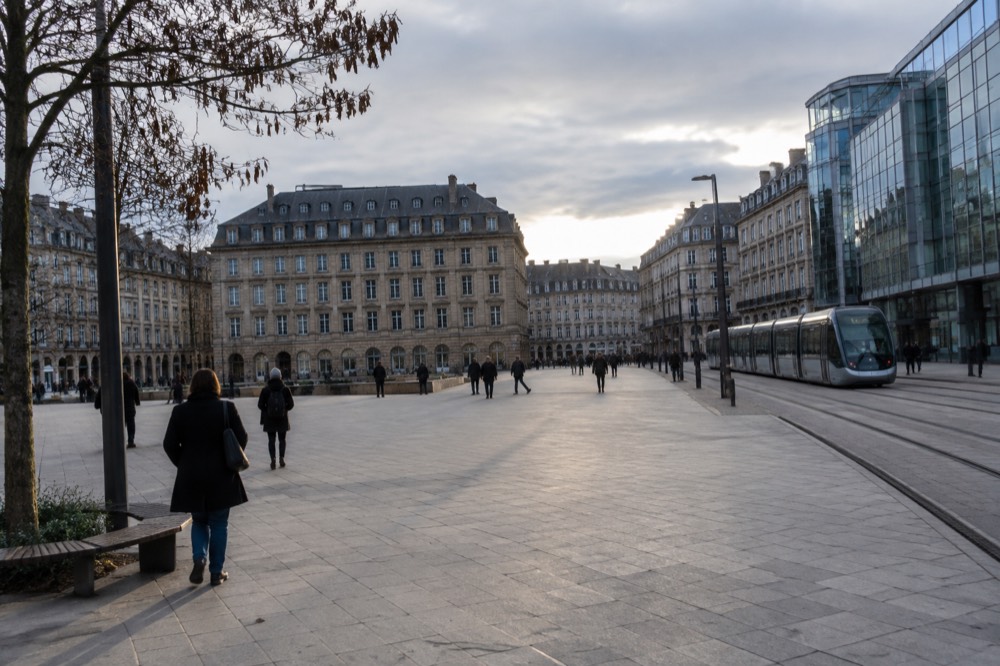
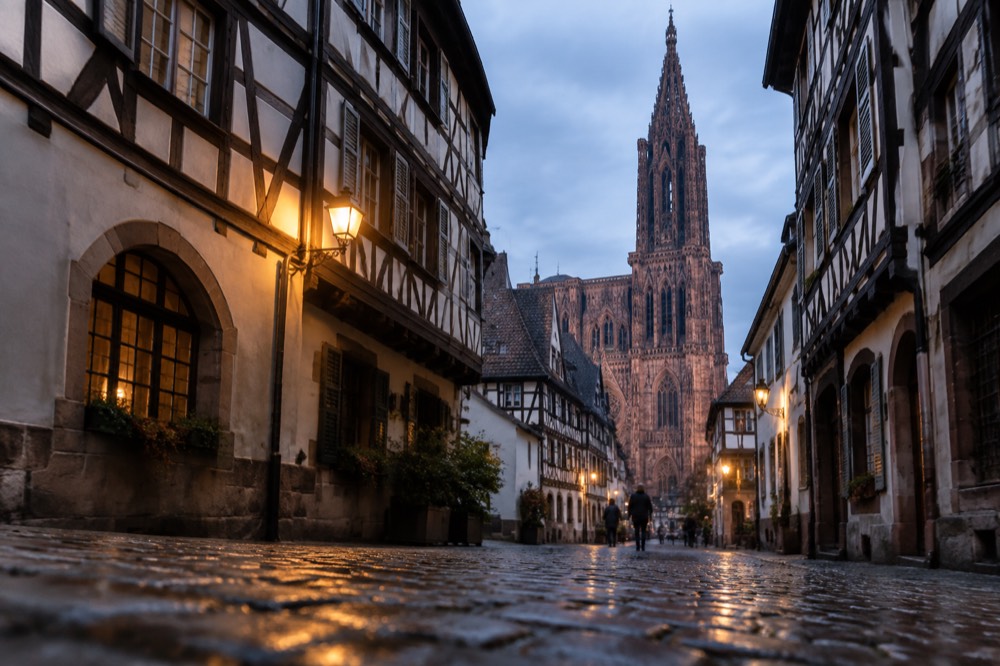
Inside the Grande Île you walk, because the medieval streets of the UNESCO-listed island are pedestrianised or so narrow that a tram only frames the edges, and the cathedral, Petite France and Place Kléber sit within an easy stroll of one another. The tram's job is delivering you to the edge of the island; from there, the visit is entirely on foot. This is the one part of Strasbourg where the transport question answers itself: the historic centre was built centuries before the rails and it shows.
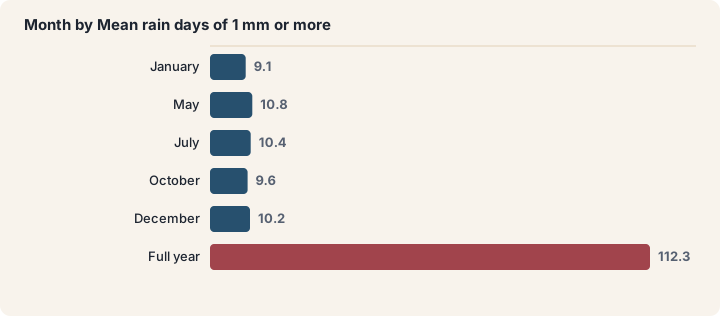
The walking is not demanding. The island is flat, the lanes are continuous, and the distances between the big sights are short enough that a full circuit of the centre fits between lunch and dinner. The only real variable is the weather, and Strasbourg's semi-continental climate means rain is spread across the year, with 112.3 rain days annually in the 1991-2020 Meteo-France normals recorded at Strasbourg-Entzheim. The table below shows how the wet days fall by season, which is the difference between a stroll and a sprint to the nearest winstub.
| Month | Mean rain days of 1 mm or more |
|---|---|
| January | 9.1 |
| May | 10.8 |
| July | 10.4 |
| October | 9.6 |
| December | 10.2 |
| Full year | 112.3 |
The practical reading of those numbers is simple: any month can hand you a wet afternoon, and the months either side of summer carry the wettest averages. The Strasbourg weather month by month guide unpacks the full normals, and the best time to visit Strasbourg guide weighs them against crowds and events. Neither changes the tram advice; both change how you dress for the walk.
A guided walk adds the layer the streets cannot explain on their own. The walk with a local guide covers the centre's lanes with a resident's commentary, and it pairs well with a first day in the city because it ends with your bearings set: after it, the tram stops make sense as pins on a map you already know.
Seeing The City By Bike, Boat And Segway
The tram is the workhorse, but Strasbourg's flat terrain and river setting make the bike, the boat and the Segway genuine alternatives, each covering ground the rails cannot reach: the riverside paths, the Ill itself, and the long boulevards of the Neustadt. None of them replaces the tram for getting from A to B with luggage; all of them beat it for the experience of the city once you are unencumbered. The choice between them is a choice of pace and angle rather than of price or convenience.
Cycling is the closest thing Strasbourg has to a second native mode. The city is flat, the Ill's banks carry paths, and the network of cycle lanes reaches the European Quarter and the parkland beyond it. A guided bike tour with bikes included removes the rental logistics and routes you along the riverside and through the Neustadt with a guide who knows which avenues reward a slow roll and which are simply thoroughfares.
The Segway covers the same flat ground with less effort and more spectacle. The Euro Segway tour is the established format: a short training session, then a loop that takes in the European institutions and the riverbanks, terrain where the distances are long enough that walking would eat the afternoon. It suits travellers who want the panorama without the pedal work.
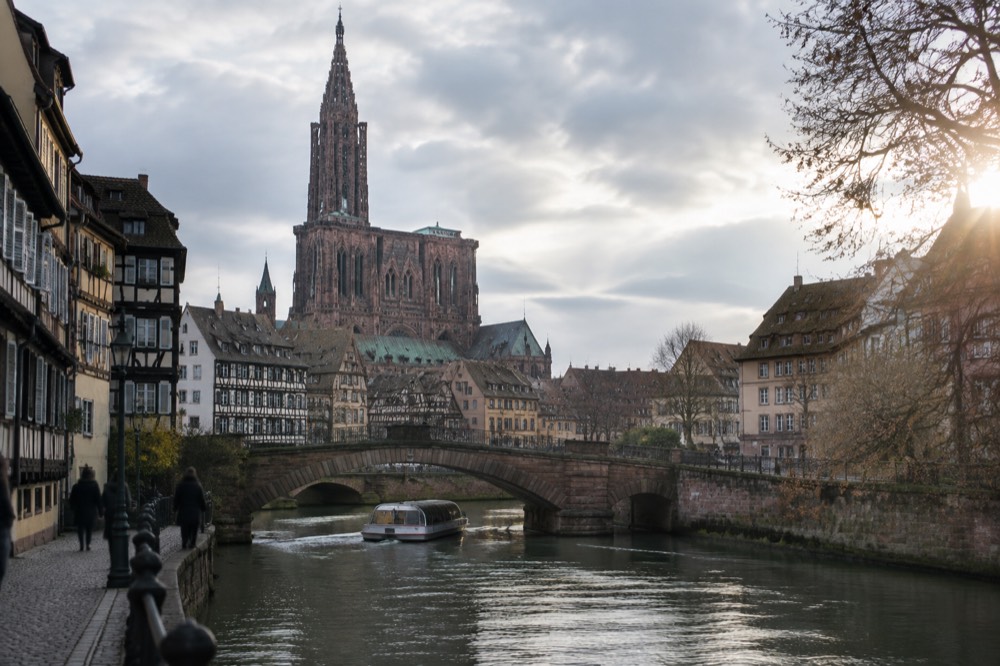
The boat is the fourth mode, and the only one the tram cannot imitate at all. Batorama's official cruises run from the quay by the Palais Rohan: the long tour costs 16.20 EUR full fare or 8.90 EUR reduced and lasts 1h10, and the short tour costs 12.50 EUR full fare or 7.20 EUR reduced and lasts 0h45. The river angle shows the covered bridges, the Barrage Vauban and the four-terraced silhouette of Petite France in a way no street-level transport manages.
| Mode | What it does best | Who it suits | What to check |
|---|---|---|---|
| Tram | Fast hops across the whole city | Everyone, daily | CTS fare page for passes |
| Bike | Riverside paths and the Neustadt | Confident riders | Tour listing for bike inclusion |
| Segway | Long boulevards with minimal effort | First-timers welcome | Tour listing for training time |
| Boat | The Ill, the bridges and Petite France | All ages | Batorama site for schedules |
How The Christmas Market Changes Getting Around
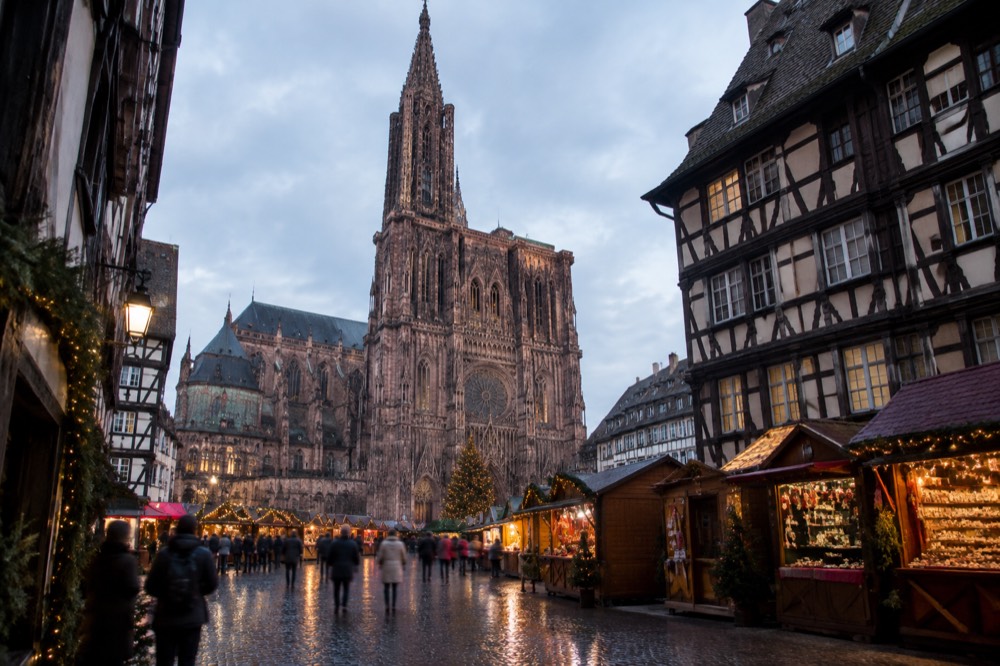
During the Christmas market, which in a typical year opens in the last week of November and runs to 24 December, the centre fills with chalets and crowds, the tram still runs but the walking pace drops, and the sensible plan is to arrive by tram, park yourself on the island and move on foot between the squares. The 2025 edition ran from 26 November to 24 December and drew 3.05 million visitors according to the city's own press release, which is the scale of the pressure the centre absorbs for a month. The 2026 dates are still being finalised on the city's Christmas site, so confirm them there before booking anything around the market.
The market's footprint spreads across several squares around the cathedral and Place Kléber, all inside the walking zone described earlier. Chalets typically open from late morning into the evening, and the busiest hours are after dark, when the lights are on and the crowds are thickest. The tram's role in those weeks is the approach: a stop on the edge of the island, then a slow loop of the markets on foot, with a winstub as the halfway house.
| Christmas period consideration | What happens | What to do |
|---|---|---|
| Market dates | Finalised on the city's Christmas site | Confirm dates there before booking |
| Crowd levels | Highest after dark near the cathedral | Visit squares in the late afternoon |
| Tram service | Runs through the market period | Buy a 24h pass to avoid queues at machines |
| Walking pace | Slow through the chalet streets | Allow double the usual crossing time |
The season also changes the arrival calculus. The Strasbourg Christmas market guide covers the markets themselves, the Christmas market food guide covers what to eat among the chalets, and the Strasbourg in winter guide covers the rest of the cold-season city. December's climate normals, a mean maximum of 5.9 C and a mean minimum of 0.8 C with 10.2 rain days, mean the tram-to-foot plan needs a warm layer whatever the forecast says.
What To Check Before You Travel
Before travelling, check three things on official pages: the current CTS fares and any ticket-rule changes, the cathedral's visiting hours if it is on your list, and the Christmas market dates if your trip falls in late November or December. The fares in this guide are the published CTS figures, but transport authorities revise prices, and a two-minute look at the CTS fare page before departure is cheaper than a surprise at a machine. The same discipline applies to opening hours: the cathedral's nave is open Monday to Saturday from 08:30 to 11:15 and 12:45 to 17:45, and on Sundays from 14:00 to 17:15, while the platform hours shift between the summer season, 09:30 to 13:00 and 13:30 to 20:00, and the winter season, 10:00 to 13:00 and 13:30 to 18:00.
None of this is busywork. The platform ticket costs 10 EUR full fare or 6 EUR reduced for a view from 66 m up the single spire, and the astronomical clock's automaton show runs daily at 12:30 with a 4 EUR ticket sold on the day only, so the hours and the ticket rules feed directly into how you route a day around the tram stops. A morning that pairs the 12:30 clock show with an afternoon platform ascent is a morning that needs the tram timetable to behave.
| What to check | Where | Why it matters |
|---|---|---|
| CTS fares and ticket rules | CTS fare pages | Prices can be revised between visits |
| Cathedral nave and platform hours | Cathedral's own hours page | Hours shift between summer and winter |
| Christmas market dates | The city's Christmas site | The 2026 dates are still being finalised |
| Museum openings | Musees de Strasbourg site | The Musee Alsacien is closed for works until 2028 |
Two further notes for planners. The municipal museums cost 9 EUR full fare or 5 EUR reduced, with a 1-day Pass Musees at 20 EUR, and every municipal museum is free on the first Sunday of the month, which can anchor a whole Sunday around a tram loop of the museums; the Strasbourg museums guide maps them out. And the Strasbourg City Card, at 5 EUR for adults and 3.50 EUR for children and valid for 7 days, is a discount card rather than a transport pass, so buy it for the attraction reductions, not for the rides; the City Card explained guide sets out the arithmetic.
For anyone still deciding whether the city justifies the trip at all, the is Strasbourg worth visiting guide makes the case, and the free things to do in Strasbourg guide proves a tram ticket is the only compulsory spend of a day. The budget guide covers the rest.

Whichever way the checks turn out, the underlying plan holds: tram for the city, feet for the island, and a guided excursion for everything beyond the river. The three options below round out that last leg, from the Black Forest day trip that started this guide to two ways of seeing Strasbourg itself once the rails have done their work.
Common Questions About The Strasbourg Tram
How much does a Strasbourg tram ticket cost?
A single CTS ticket costs 1.90 EUR bought through the Badgeo card, the CTS app or contactless payment, or 2.50 EUR bought on board a bus. A 24h Solo pass costs 4.60 EUR and a 24h Trio pass for two to three people costs 10.20 EUR.
Can I buy a Strasbourg tram ticket on the bus?
Yes, the driver sells single tickets on buses for 2.50 EUR, which is 60 cents more than the 1.90 EUR price through the app, Badgeo or contactless. On trams there is no driver sale, so buy before boarding or pay contactless on board.
Is there a multi-day Strasbourg tram pass?
The verified fares are the single ticket, the 24h Solo at 4.60 EUR and the 24h Trio at 10.20 EUR. Longer passes exist on the CTS fare pages, and the prices are worth checking there directly before a stay of several days.
How do I get from Strasbourg Airport to the city centre?
A regional TER train shuttle runs between the airport and the Gare Centrale in 8 minutes, with up to five trains per hour. A combined ticket covering the train, the tram or bus and a 24h EMS pass costs 4.60 EUR.
Does the Strasbourg tram run during the Christmas market?
Yes, the tram runs through the market period, which in a typical year opens in the last week of November and runs to 24 December. The 2026 dates are still being finalised on the city's Christmas site, so confirm them there before a December trip.
Can I use the tram to visit Kehl in Germany?
The tram network serves the French bank of Strasbourg and the border with Germany runs along the Rhine. For cross-border journeys, check the CTS site and the regional rail options on the official pages before travelling, as cross-border ticket rules are set out there.
The tram earns its place as the default: it is cheap, it is frequent, and it frames the city from the station to the European Quarter in a way no other mode manages. Buy the 24h pass on a full sightseeing day, walk the Grande Île once the rails have delivered you to its edge, and save the bigger journeys for the trains and tours that reach beyond the river.