Strasbourg Weather
Strasbourg, in Alsace, north-eastern France, has a semi-continental climate: cold winters, warm summers and 635.7 mm of rain a year. Here is what the Meteo-France 1991-2020 normals mean for each month of a visit.
Short answer
Strasbourg, in north-eastern France, has a semi-continental climate. Mean daily maximums run from 5.2 C in January to 26.4 C in July, mean minimums from -0.2 C to 14.9 C, and rain totals 635.7 mm a year over 112.3 days. May is the wettest month at 77.2 mm and February the driest at 34.1 mm.
Strasbourg, the prefecture of the Bas-Rhin in Alsace, north-eastern France, lies on the River Ill beside the Rhine, and its weather is shaped by one geographic fact above all: the Vosges mountains to the west. Those mountains strip Atlantic rain before it reaches the plain, leaving the city with a semi-continental climate, cold winters, warm summers and 635.7 mm of rain a year over 112.3 days with 1 mm or more. The Meteo-France 1991-2020 normals for the Strasbourg-Entzheim station, set out month by month below, put the mean daily maximum at 5.2 C in January and 26.4 C in July. What those numbers mean for a visit, season by season, is the subject of this page, which pairs the climate data with packing lists, timing advice and plans that survive a wet afternoon.
What Is The Weather Like In Strasbourg, France?
Strasbourg, the prefecture of the Bas-Rhin in Alsace, north-eastern France, has a semi-continental climate with cold winters and warm summers. Meteo-France 1991-2020 normals for Strasbourg-Entzheim put the mean daily maximum at 5.2 C in January and 26.4 C in July, the mean daily minimum at -0.2 C in January and 14.9 C in July, and total rainfall at 635.7 mm spread over 112.3 days with 1 mm or more.
The headline is contrast. Cities on France's Atlantic coast have mild, damp, even winters and cool summers; Strasbourg, sitting inland on the Alsatian plain in the rain shadow of the Vosges, swings further in both directions. January nights average below freezing, while July afternoons average warmer than many seaside resorts manage in August. The annual mean temperature across the year is 11.4 C, which sounds temperate, but that average hides the seasonal spread that defines the place.
Rain is steady rather than dramatic. The 635.7 mm annual total is moderate for western Europe, and it arrives on 112.3 days with 1 mm or more, which works out to a little over nine such days in an average month. No month in the normals table is dry and none is sodden: the range runs from 34.1 mm in February to 77.2 mm in May. A visitor planning around the weather is planning around frequency, not intensity.
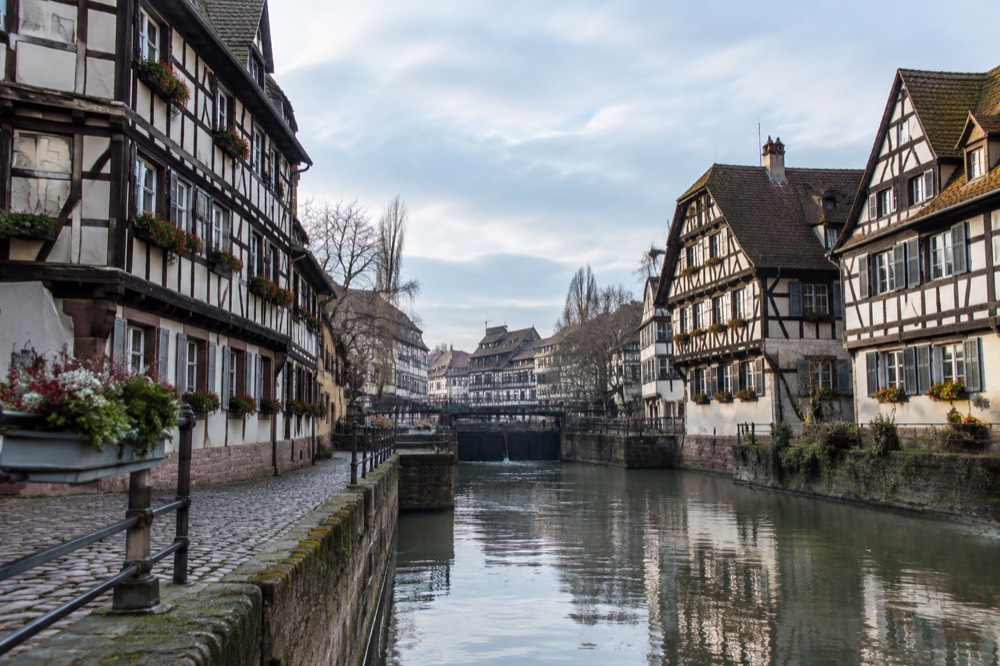
For a city built around walking, from the Grande Île to the Krutenau, that matters. The Strasbourg Travel Guide site breaks the seasons down in detail elsewhere, from winter market planning to summer river banks, and this page carries the numbers those pages lean on. The season snapshot below is the short version.
| Season | Months | Mean daily maximum | Mean daily minimum | Character |
|---|---|---|---|---|
| Winter | December to February | 5.2 C to 7.3 C | -0.2 C to 0.8 C | Cold, frost at night, occasional snow possible |
| Spring | March to May | 12.1 C to 20.9 C | 2.6 C to 10.1 C | Warming fast, wettest month of the year in May |
| Summer | June to August | 24.4 C to 26.4 C | 13.4 C to 14.9 C | Warm afternoons, mild nights, summer rain still regular |
| Autumn | September to November | 9.4 C to 21.6 C | 3.3 C to 10.7 C | Cooling steadily, September the mildest of the three |
Why Does Strasbourg Have A Semi-Continental Climate?
The Vosges mountains to the west hold back Atlantic rain, so Strasbourg sits in a rain shadow and the climate is classified as semi-continental rather than oceanic or Mediterranean. That produces sharper seasons than France's western seaboard: frost in winter, warm summer afternoons, and genuine shoulder seasons in spring and autumn, with 635.7 mm of rain a year, less than the Vosges foothills receive.
The mechanism is simple. Weather systems arrive from the west, climb the Vosges, drop their moisture on the western slopes, and descend onto the Alsatian plain drier than they set out. The city is also far from any sea, so winter cold builds over the plain and summer heat is not moderated by ocean water. Together those two factors give Strasbourg its continental flavour: a climate closer to what you find further east than to anything on the Atlantic.
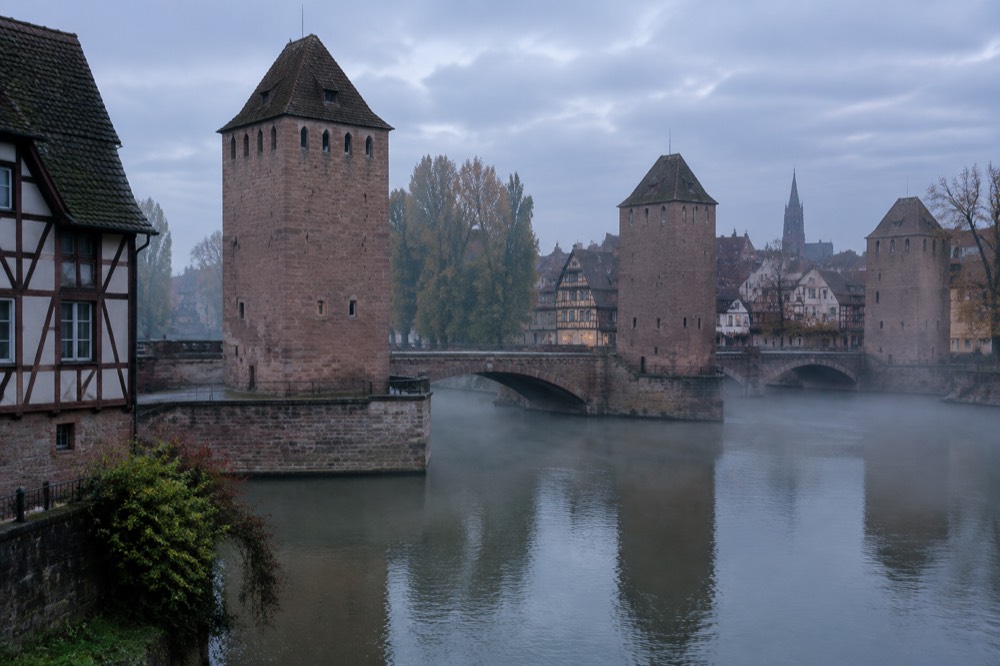
The practical consequences are worth knowing before you pack. Winter nights drop below freezing on average in January, at a mean minimum of -0.2 C, so ice on pavements is part of the season. Summer days average 26.4 C at their July peak, warm enough for the river banks and terraces but far from southern-French heat. And because the rain shadow keeps annual totals at 635.7 mm, the city is neither a rainy outlier nor a dry one: it is simply a place where a waterproof layer earns its space in the bag.
None of this makes Strasbourg unpredictable in the way mountain weather is. The normals describe a steady, legible pattern: cold months, warm months, rain distributed evenly enough that no season can be written off as wet or counted on as dry. Planning around it is about layers and timing, not contingency plans.
Which Month Has The Best Weather In Strasbourg?
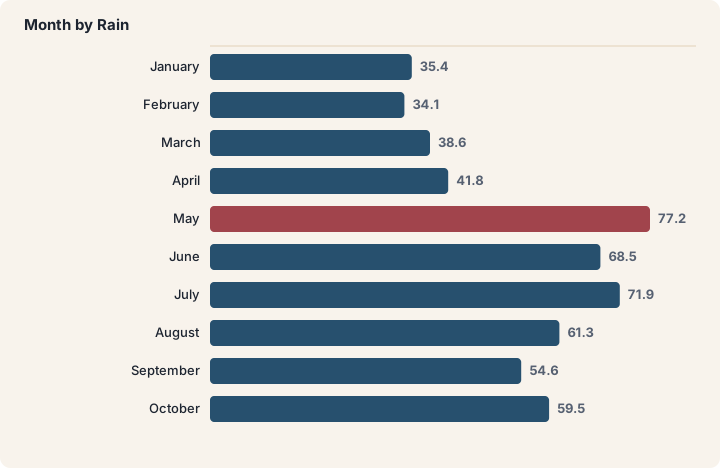
May and June bring the longest days but also the wettest weather, with May averaging 77.2 mm of rain, while September offers warm, drier conditions at a mean maximum of 21.6 C with 8.0 rain days, and October stays mild at 15.8 C. For comfortable temperatures and fewer wet days, late spring and early autumn suit the city well; late November and December belong to the Christmas market.
The full monthly table is the place to compare. Read it with your own priorities in mind: a traveller who minds cold more than rain will choose differently from one who minds rain more than cold.
| Month | Mean daily maximum | Mean daily minimum | Rain | Days with 1 mm or more |
|---|---|---|---|---|
| January | 5.2 C | -0.2 C | 35.4 mm | 9.1 |
| February | 7.3 C | 0.0 C | 34.1 mm | 8.3 |
| March | 12.1 C | 2.6 C | 38.6 mm | 8.5 |
| April | 17.0 C | 5.7 C | 41.8 mm | 8.6 |
| May | 20.9 C | 10.1 C | 77.2 mm | 10.8 |
| June | 24.4 C | 13.4 C | 68.5 mm | 10.2 |
| July | 26.4 C | 14.9 C | 71.9 mm | 10.4 |
| August | 26.1 C | 14.5 C | 61.3 mm | 9.5 |
| September | 21.6 C | 10.7 C | 54.6 mm | 8.0 |
| October | 15.8 C | 7.2 C | 59.5 mm | 9.6 |
| November | 9.4 C | 3.3 C | 47.6 mm | 9.2 |
| December | 5.9 C | 0.8 C | 45.2 mm | 10.2 |
Three stretches stand out. April and May warm quickly, from 17.0 C to 20.9 C mean maximums, and the city fills with blossom along the Ill; the trade-off is that May carries the heaviest rain of the year. September is the connoisseur's month: 21.6 C on average in the afternoon, the lowest rain-day count of any month at 8.0, and the light of an Alsatian early autumn. And December, cold and damp on paper at 5.9 C and 45.2 mm, is the month the city dresses for anyway, because the Christmas market is the point of the visit, not the weather.
The seasonal pages go deeper on each of these windows: spring in Strasbourg for the April warming, autumn in Strasbourg for September and October, and the full best time to visit Strasbourg rundown, which weighs crowds and hotel prices alongside the climate. If the month is fixed by school holidays or flight times, the packing section below does the adjusting for you.
How Much Rain Does Strasbourg Get, And When?
Strasbourg records 112.3 days of 1 mm or more of rain a year, and no month in the normals table averages fewer than 8.0 such days: May is the wettest at 77.2 mm, February the driest at 34.1 mm, and July carries 71.9 mm despite being the warmest month. Rain in Strasbourg is a steady background presence in every season, not a winter-only phenomenon.
The evenness surprises visitors who expect a dry continental summer. July, at 26.4 C mean maximum, still averages 10.4 days with 1 mm or more of rain, and June logs 10.2. Summer rain in a semi-continental climate often arrives in heavy afternoon showers and clears again, but the normals only record totals and day counts, so treat the timing of any specific shower as unknowable in advance and check a forecast app the morning of.
What the numbers do support is planning by format rather than by month. A wet afternoon in Strasbourg is not a lost afternoon.
| Condition | What It Means For A Visit | Good Options |
|---|---|---|
| Steady rain, any season | The half-timbered centre is compact and crossed quickly | Strasbourg museums for wet days, a winstub lunch, the covered chalets in December |
| A wet day on a tight budget | Indoor plans exist that cost little or nothing | Free things to do in Strasbourg, first-Sunday museum entry |
| Showery day, clearing later | Morning indoors, afternoon outdoors works well | The astronomical clock show at 12:30, then the riverside walk |
| Cold rain in winter | Wet and cold together, dress for both | Food-led walks, the Christmas market chalets, Strasbourg on a budget |
Two pack facts sharpen the museum option. All of Strasbourg's municipal museums are free on the first Sunday of every month, and a 1-day Pass Musées costs 20 EUR, so a rain-heavy day can be turned into a museum day without much expense. The Musée Alsacien is closed for works until 2028, so plan around the other municipal museums: the Beaux-Arts, the Archaeological Museum, MAMCS and the Musée de l'Œuvre Notre-Dame among them.
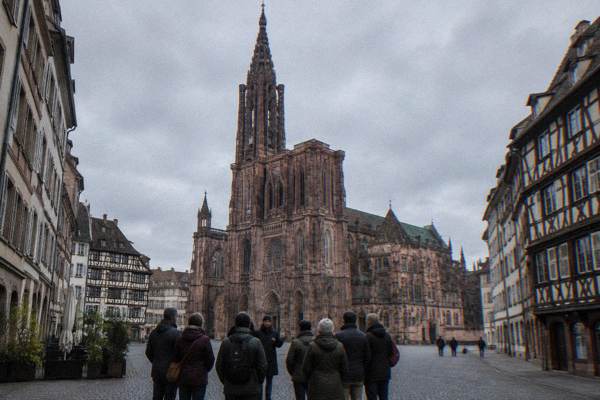
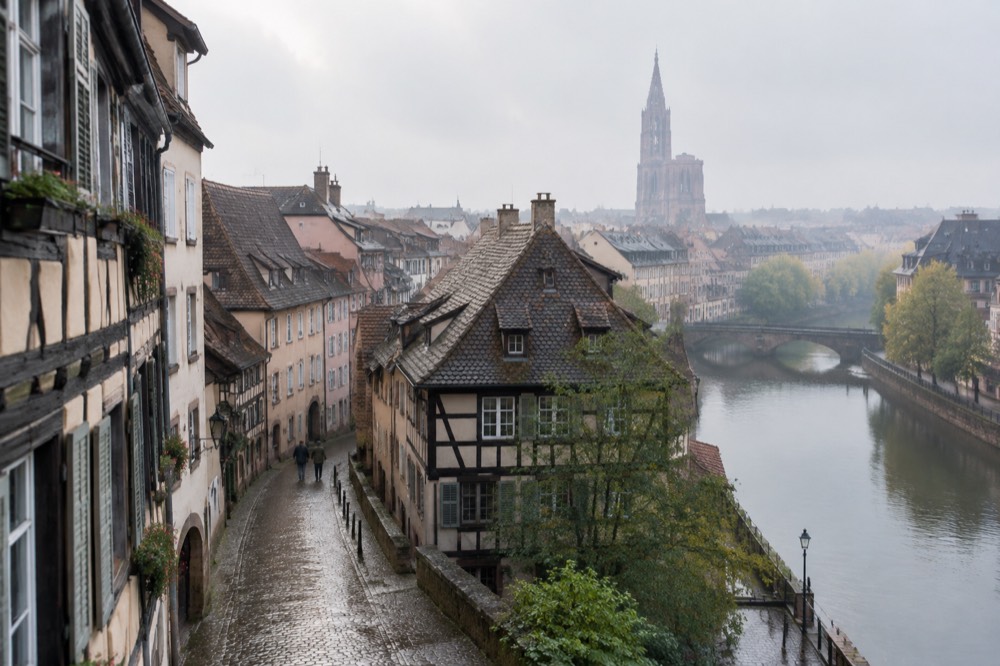
Rain also changes the character of the old town rather than closing it. Wet cobblestones in the Grande Île deepen the colour of the sandstone, and the Cathedral's west front reads differently under a grey sky than under a bright one. Photographers who want the moody version of Petite France find that a rain day delivers it, provided the camera stays dry.
What Is Winter Weather Like During The Christmas Market?
Winter in Strasbourg is cold: December averages a mean maximum of 5.9 C and a mean minimum of 0.8 C, with 45.2 mm of rain over 10.2 rain days, and January is colder still at 5.2 C and -0.2 C. Snow is possible rather than guaranteed by the normals, and the Christmas market, which ran 26 November to 24 December in its 2025 edition, gives the cold months their purpose.
The market is the reason a large share of visitors accept those numbers. The 2025 edition ran from 26 November to 24 December and drew 3.05 million visitors, and the pattern in recent editions has been an opening in the last week of November and a close on 24 December, with the final day ending early in the evening. The city posts each edition's dates on its Christmas site, so confirm them there before booking anything around them.
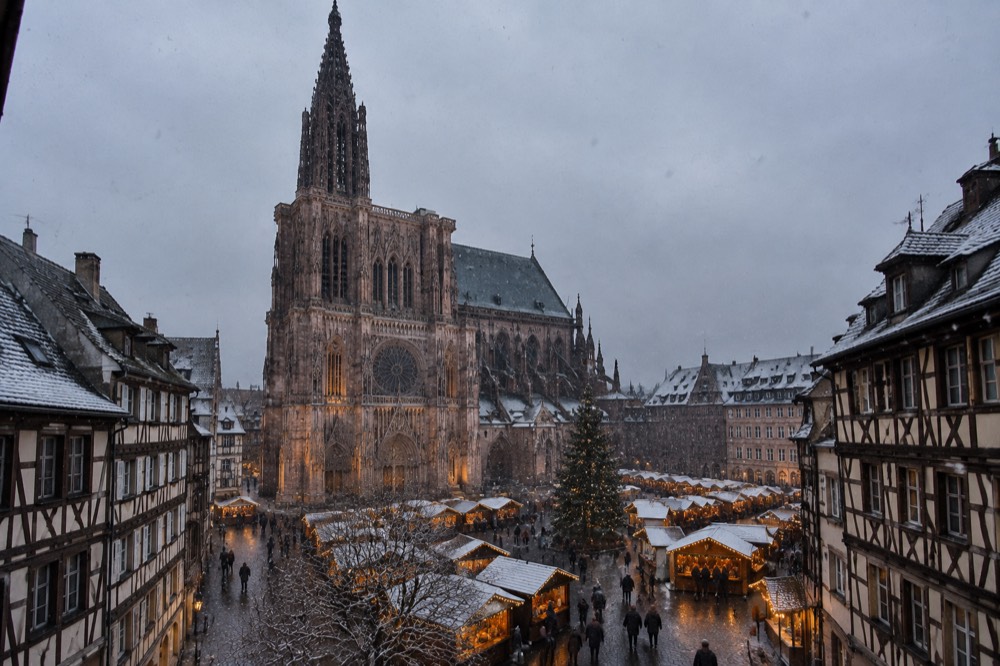
Cold-weather tactics matter more than the forecast. The chalets serve hot drinks and hot food, so warming stops are built into the route. The Cathedral nave is open to visitors, with visiting hours that shift around services, and the platform at 66 m costs 10 EUR full fare, 6 EUR reduced, for anyone who wants the view and does not mind the wind. The astronomical clock show runs daily at 12:30, indoors, with tickets at 4 EUR bought on the day only.
| Aspect | What The Verified Sources Say |
|---|---|
| 2025 market dates | 26 November to 24 December, closing early on the final day |
| 2026 market dates | Not yet published; check the city's official Christmas site |
| December temperatures | Mean maximum 5.9 C, mean minimum 0.8 C |
| December rain | 45.2 mm over 10.2 days with 1 mm or more |
| 2025 attendance | 3.05 million visitors |
The deeper winter pages handle the planning: winter in Strasbourg for the season beyond the market, the Strasbourg Christmas market guide for the full rundown, and the Christmas market trip from Paris for anyone coming in by train for a day. What the weather page adds is simple: December is a cold, damp month on paper, and visitors dressed for it enjoy the market while visitors dressed for a Mediterranean December do not.
How Warm Does Strasbourg Get In Summer?
Summer afternoons in Strasbourg are warm: July, the warmest month, averages a mean maximum of 26.4 C and a mean minimum of 14.9 C, August sits at 26.1 C and 14.5 C, and June at 24.4 C and 13.4 C. Rain does not disappear, with July averaging 71.9 mm, but the long daylight and mild evenings make summer the season for the river, the parks and the terraces.
Nights matter as much as days. A 14.9 C July mean minimum means evenings outdoors are comfortable rather than sticky, and sleeping is easy without air conditioning in many buildings. The semi-continental pattern delivers warmth without the sustained heat of the Mediterranean south, and the rain shadow keeps the summer months from being washouts even though each still logs around ten days with measurable rain.
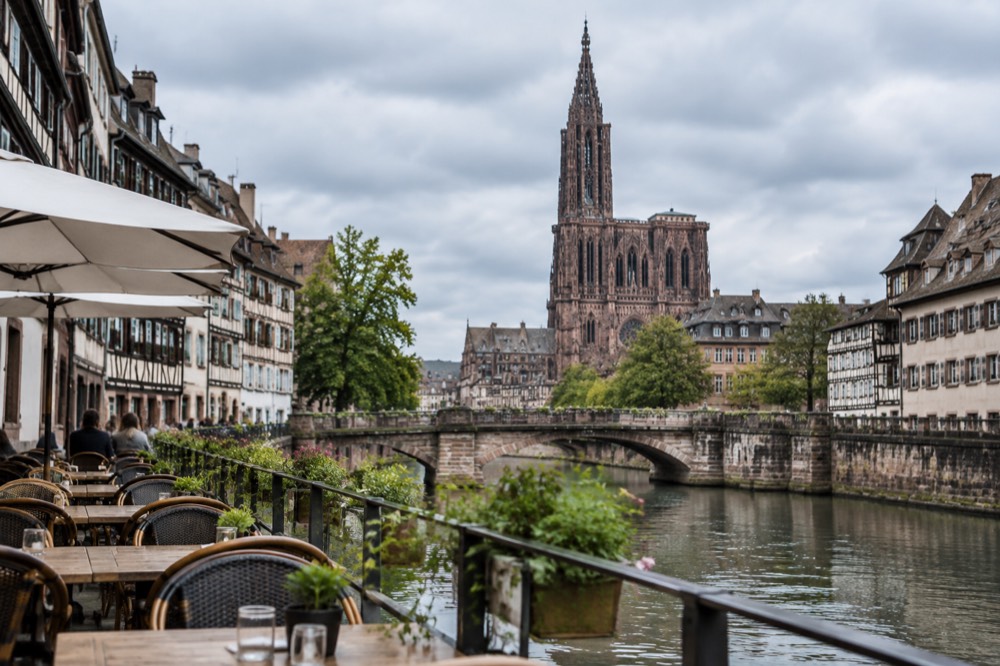
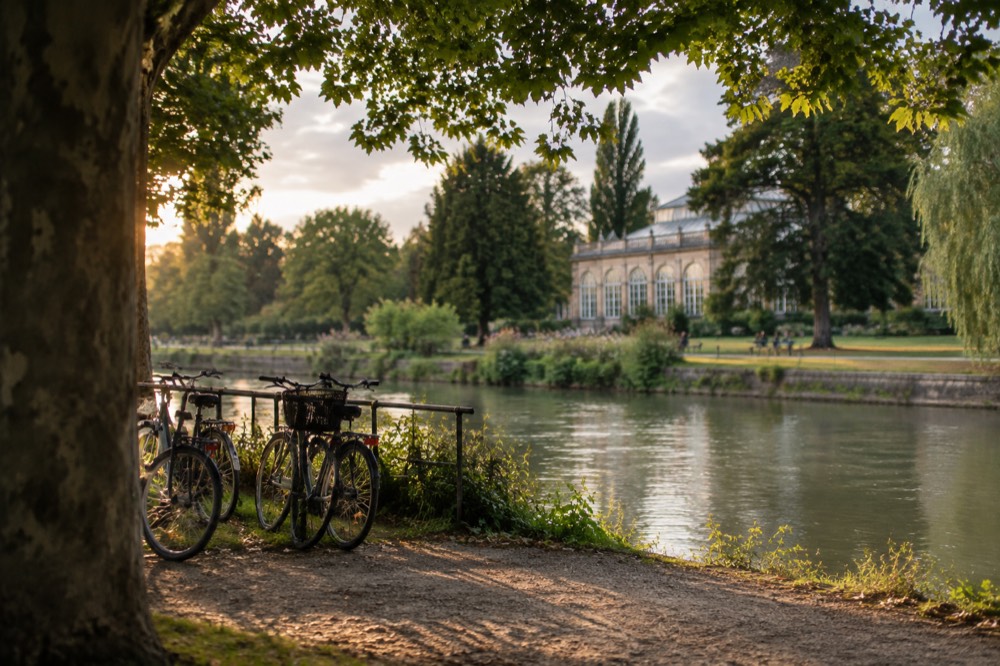
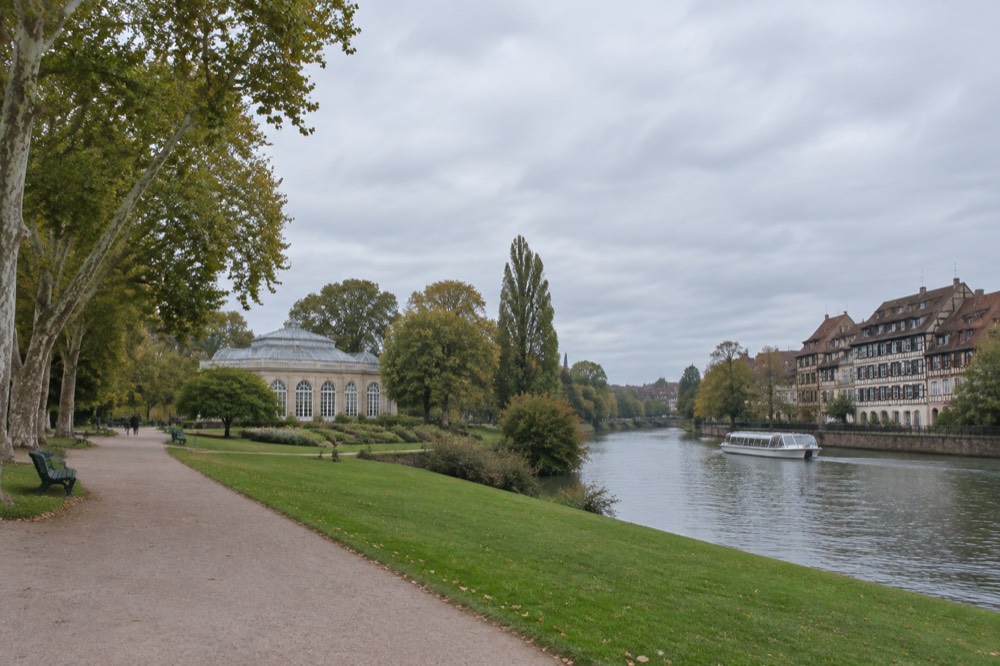
Summer plans follow the water and the shade. The Parc de l'Orangerie has lawns and tree cover, the Ill river banks give the city its long evening walks, and a boat on the river turns the warm afternoons into sightseeing. Bicycles suit the flat city well: a guided bike tour with a local guide covers the Grande Île, the Neustadt and the European quarter in one loop, and the operator's live listing carries the current times and prices.
The seasonal page summer in Strasbourg collects the full warm-weather programme, from river banks to festival calendars. One caution belongs on a weather page: summer rain in the plains can arrive heavily and briefly, so the morning forecast is worth a glance before committing to a long open-air stretch.
| Summer Plan | Conditions It Suits | Where It Works |
|---|---|---|
| Terrace lunch or dinner | Warm afternoons, mild evenings at 14.5 C to 14.9 C mean minimums | Quays and squares across the Grande Île |
| River cruise on the Ill | Any weather, any summer month | Departure points along the Ill in the centre |
| Cycling the flat city | Dry days, 24.4 C to 26.4 C mean maximums | Grande Île, Neustadt, European quarter loops |
| Park afternoon | Warm days with breeze | Parc de l'Orangerie and the riverside lawns |
What Should You Pack For Strasbourg Weather?
Pack for Strasbourg in layers whatever the season: a warm coat, hat and gloves for a December visit around 0.8 C at night, breathable clothing for July days averaging 26.4 C, and a waterproof layer in every month because days with 1 mm or more of rain run from 8.0 to 10.8 across the year. Comfortable walking shoes matter more than anything else: the Grande Île is explored on foot.
The packing logic follows the numbers. Winter visitors face mean minimums below freezing in January, so proper insulation and shoes with grip on wet or icy stone are the priority. Summer visitors need sun protection for 26 C afternoons and a light layer for evenings that cool into the teens. Shoulder-season visitors need both halves of the wardrobe, because April can swing from 5.7 C nights to 17.0 C afternoons, and October from 7.2 C to 15.8 C.
| Visit Window | Daytime Range | Night Range | Core Packing |
|---|---|---|---|
| December to February | 5.2 C to 7.3 C mean maximums | -0.2 C to 0.8 C mean minimums | Winter coat, hat, gloves, waterproof shoes with grip |
| March to May | 12.1 C to 20.9 C mean maximums | 2.6 C to 10.1 C mean minimums | Layers, light waterproof, warm layer for March evenings |
| June to August | 24.4 C to 26.4 C mean maximums | 13.4 C to 14.9 C mean minimums | Breathable clothing, sun protection, light jacket for evenings |
| September to November | 9.4 C to 21.6 C mean maximums | 3.3 C to 10.7 C mean minimums | Layers, waterproof, warm coat from late October |
Two Strasbourg-specific notes. First, the Christmas market in December is an outdoor event spread across squares, so thermal socks and a scarf earn their place next to the sightseeing list. Second, the city's stone and cobblestone centre holds damp cold and damp heat differently from paved cities, so shoes that handle both wet stone and long days are the single most useful item in any season. The where to stay in Strasbourg page helps with the other half of the comfort question, since a well-placed base shortens every cold or wet walk.
Which Tours And Days Out Suit Which Weather?
Wet days suit the covered experiences, the museums and the food-led walks, while dry days open the bike and Segway circuits, the boat trips on the Ill and the day trips into the Alsace wine country. The Cathedral platform at 66 m and the Barrage Vauban terrace are open-air, so check the sky before climbing, and the astronomical clock show at 12:30 runs indoors with tickets at 4 EUR bought on the day.
Format is the planning variable. Walking tours of the historic centre run in nearly any weather because the route is compact, and the guided cathedral tour spends its time inside one building. Boat trips on the Ill work in rain as well as sunshine, since the river is calm and the sights line both banks. The open-air formats, the platform, the terrace at the Barrage Vauban with its seasonal hours, and the cycling circuits, are the ones that need a dry window.
Walking tours of the historic centre run in nearly any weather. Book a free walking tour here.
| Weather You Wake Up To | Formats That Work | Notes |
|---|---|---|
| Clear and warm | Bike and Segway circuits, boat trips, park afternoons | Book the open-air formats for these days |
| Overcast and dry | Walking tours, cathedral tour, day trips into Alsace | The best all-round condition for a full day out |
| Steady rain | Museums, food-led walks, the clock show, winstub lunches | First Sunday of the month: municipal museums free |
| Cold and clear in winter | Christmas market route, platform ascent, riverside walk | Dress for 0.8 C nights and 5.9 C afternoons |
The Segway circuits are a dry-weather format that covers ground quickly: a guided Segway tour loops the centre and the riverside, and the operator's live listing carries the current details. For a longer dry day, the Alsace day trips are the reward for good weather, with a Best of Alsace historical circuit that reaches the wine villages and the castle country in a single long outing.
The river option deserves a special note because it is the least weather-dependent of all. A private cruise on the Ill with a captain aboard carries up to four people and shows Petite France, the Covered Bridges and the European quarter from the water; the operator's live listing has times, prices and the current terms. It pairs naturally with a walking tour on the same day, since the boat covers in an afternoon what a full day of walking would.
Whatever the format, the weather rule that never changes is the city's own geometry: Strasbourg rewards slow, on-foot, on-water and on-bike exploration, and every one of those needs the right clothing more than the right forecast. Check the sky in the morning, keep the waterproof in the bag, and let the rest follow.
Common Questions About Strasbourg Weather
What Is The Hottest Month In Strasbourg?
July, with a mean daily maximum of 26.4 C and a mean minimum of 14.9 C. August is nearly identical at 26.1 C and 14.5 C, and June averages 24.4 C. Summer rain continues, with July recording 71.9 mm over 10.4 days of 1 mm or more.
What Is The Coldest Month In Strasbourg?
January, with a mean daily maximum of 5.2 C and a mean daily minimum of -0.2 C, the only month in the normals table with an average minimum below freezing. February averages 7.3 C by day and 0.0 C by night, and December 5.9 C and 0.8 C.
Does It Rain A Lot In Strasbourg?
Strasbourg averages 635.7 mm of rain a year over 112.3 days with 1 mm or more, which is a moderate total for western Europe. The rain is spread evenly: every month averages between 8.0 and 10.8 such days. May is the wettest month at 77.2 mm and February the driest at 34.1 mm.
Does It Snow In Strasbourg?
Snow is possible in winter but the climate normals quoted here record rain, not snowfall, so no snow-day figure can be given. January's mean minimum of -0.2 C and February's 0.0 C show that frost is a normal part of the season, and December, the Christmas market month, averages 0.8 C at night. Check a short-range forecast before travel for snow-specific warnings.
When Is The Best Time To Visit Strasbourg For Good Weather?
September combines a 21.6 C mean daily maximum with the year's lowest rain-day count at 8.0, and late April and May offer 17.0 C to 20.9 C afternoons, though May is the wettest month at 77.2 mm. December trades comfort for atmosphere: 5.9 C afternoons and the Christmas market, which ran 26 November to 24 December in its 2025 edition.
Is Strasbourg Wetter Than The West Of France?
No, and the reason is geographic. The Vosges mountains to the west strip Atlantic rain before it reaches the Alsatian plain, leaving Strasbourg in a rain shadow with 635.7 mm a year. The city's climate is semi-continental, with sharper winters and warmer summers than the oceanic west, rather than wetter.