Strasbourg In Summer
Summer brings the warmest weather of the year to Strasbourg in Alsace, north-eastern France, with mean daily maxima above 24 C in June, July and August, long evening light along the Ill, and a full programme of river life, parks and open-air eating.
Short answer
Summer in Strasbourg, in Alsace in north-eastern France, is warm rather than scorching: Meteo-France 1991-2020 normals give a mean daily maximum of 26.4 C in July and 26.1 C in August. The city rewards slow touring: boat circuits, riverside parks, evening winstubs and a Segway or bike ride through the European Quarter.
Summer is the season when Strasbourg, the prefecture of the Bas-Rhin in Alsace, north-eastern France, moves outdoors: the quays of the Ill fill with walkers, the Batorama boats run their river circuits, and the half-timbered lanes of the Grande Île stay light until late. The city sits beside the Rhine, the border with Germany, in a semi-continental climate with cold winters and warm summers, and the Meteo-France 1991-2020 normals for Strasbourg-Entzheim put the mean daily maximum at 26.4 C in July. Rain does not disappear in summer either: the normals count 10.2 days with 1 mm or more in June and 10.4 in July, so a light layer and an umbrella both earn their place in a day bag. This guide sets out what the season actually feels like, which sights and hours change, and which ways of touring the city suit warm weather best.
What Is Summer Weather In Strasbourg Really Like?
Strasbourg's summer is genuinely warm but not Mediterranean: the Meteo-France 1991-2020 normals for Strasbourg-Entzheim give mean daily maxima of 24.4 C in June, 26.4 C in July and 26.1 C in August, with mean minima of 13.4 C, 14.9 C and 14.5 C, and every summer month still counts between 9.5 and 10.4 days with 1 mm of rain or more. The climate is semi-continental, in the rain shadow of the Vosges, which is why the city gets cold winters and warm, occasionally humid summers rather than the mild, even temperatures of the Atlantic coast. July afternoons can feel heavy, and the nights cool enough that a jacket is useful beside the river.
The rainfall pattern surprises visitors who expect a dry southern summer. May is the wettest month of the whole year at 77.2 mm, June carries 68.5 mm and July 71.9 mm, against a yearly total of 635.7 mm spread over 112.3 rain days. Summer rain in Alsace tends to arrive in short, heavy showers rather than all-day drizzle, and the normals show August easing to 61.3 mm. Checking the forecast the evening before a boat trip or a bike ride is simply good practice here.
| Month | Mean daily max | Mean daily min | Rain | Days with 1 mm or more |
|---|---|---|---|---|
| June | 24.4 C | 13.4 C | 68.5 mm | 10.2 |
| July | 26.4 C | 14.9 C | 71.9 mm | 10.4 |
| August | 26.1 C | 14.5 C | 61.3 mm | 9.5 |
Daylight is the other story of the season. At this latitude, north-eastern France at the edge of the German border, midsummer evenings stay bright well past the usual dinner hour, and the riverside quays between the Covered Bridges and the Barrage Vauban terrace stay busy until dark. For a fuller month-by-month picture, see the Strasbourg weather guide and the best time to visit Strasbourg, which weigh summer against the December market season that draws the city's biggest crowds.
Which Sights Change Their Hours In June, July And August?
The cathedral's tower platform runs its long summer schedule from 1 April to 30 September, 09:30-13:00 and 13:30-20:00 with the last ascent at 19:15, while the nave keeps its year-round hours of 08:30-11:15 and 12:45-17:45 Monday to Saturday, and the astronomical clock show stays fixed at 12:30 daily with tickets sold on the day only. The platform ticket is 10 EUR full price and 6 EUR reduced, with children under 6 free, and the platform sits at 66 m on the cathedral's single spire. Climbing in the first morning block, before the stones heat up, is the comfortable option in July and August.
The clock deserves a little planning because its ticket rules are strict: 4 EUR for the 12:30 automaton show, day-of purchase only, sold at the cathedral stalls or from 11:30 at the Saint-Michel entrance on Place du Château. The nave itself closes to visitors during the midday window, which is worth knowing before scheduling a hot-afternoon dash. Our Strasbourg Cathedral guide and the astronomical clock guide cover both in depth.
| Sight | Summer schedule | Ticket |
|---|---|---|
| Cathedral platform (1 Apr-30 Sep) | 09:30-13:00, 13:30-20:00, last ascent 19:15 | 10 EUR full, 6 EUR reduced, under 6 free |
| Cathedral nave, Mon-Sat | 08:30-11:15 and 12:45-17:45 | No nave ticket stated on the hours page |
| Astronomical clock show | 12:30 daily, day-of tickets only | 4 EUR full, 2 EUR children 6-17 |
| Barrage Vauban terrace (Sep-Oct) | 08:00-19:00 | Check the official page |
| Municipal museums | Standard opening, free first Sunday of each month | 9 EUR full, 5 EUR reduced |
One closure matters for summer planners: the Musée Alsacien is shut for works until 2028 and should not appear on any itinerary. The other municipal museums charge 9 EUR full and 5 EUR reduced, a one-day Pass Musées costs 20 EUR, and every municipal museum is free on the first Sunday of the month, a useful trick if a summer trip happens to straddle a month's turn. The Strasbourg museums guide lists what each one holds.
Museum hours also pair well with the heat: the middle of a July afternoon, when the normals say the day peaks, is a sensible time to be indoors among the collections of the Palais Rohan or the MAMCS rather than on an unshaded square. The free things to do in Strasbourg guide collects the squares, bridges and riverside walks that cost nothing at all, and they are at their best in summer.
How Do You Tour Strasbourg Without Walking All Day In The Heat?
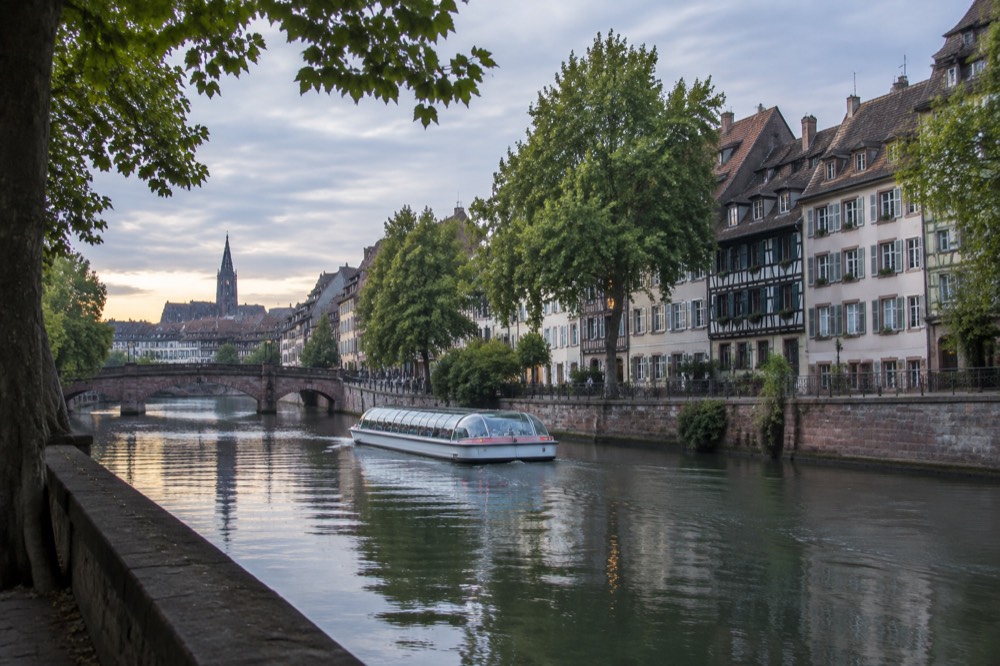
The two warmest months reward tours that move: Batorama's river boats run a Red Tour of 1h10 at 16.20 EUR full and 8.90 EUR reduced and a Blue Tour of 0h45 at 12.50 EUR full and 7.20 EUR reduced, while guided Segway and bike tours cover the Grande Île and the European Quarter in roughly two hours with a local guide leading the way. The boats are the lowest-effort option of all: the river is cooler than the streets, the commentary runs without any walking, and the short circuit fits neatly into a morning before the day warms up.
Prefer the river from a private deck instead? Book a private boat cruise here.
Wheels suit Strasbourg unusually well because the city is flat, the historic core sits on an island, and the tram network reaches the starting points of most tours. A Segway tour with a small group is the pick of this site's summer roster: it crosses from the half-timbered lanes into the modernist European Quarter in one ride, which is a contrast walkers often miss, and the guide's commentary carries the history while the machine carries the distance. Check availability on the operator's live listing if that format appeals.
Cycling is the other natural fit. The Ill has towpaths and the city has bike lanes, and a guided ride removes the route-finding work in a place where the bridge names all look alike on a map. A guided bike tour with a local covers the core sights and the riverside stretches in one loop, and the Strasbourg by bike guide explains the practical side of hiring and riding in the city.
The tram fares make all of this cheap to reach. A CTS single is 1.90 EUR bought through the Badgéo card, the CTS app or contactless payment, or 2.50 EUR bought on board a bus, and a 24h Solo pass is 4.60 EUR. For anyone landing at Entzheim, the combined airport ticket covering the train shuttle plus a 24-hour network pass is the same 4.60 EUR, and the shuttle itself takes 8 minutes to the central station.
| Ticket | Price | Notes |
|---|---|---|
| CTS single (app, Badgéo, contactless) | 1.90 EUR | 2.50 EUR if bought on board a bus |
| CTS 24h Solo | 4.60 EUR | One traveller, whole network |
| CTS 24h Trio | 10.20 EUR | Two to three travelling together |
| Airport combined ticket | 4.60 EUR | Train shuttle plus 24h pass, 8-minute ride |
Where Do You Eat On A Warm Strasbourg Evening?
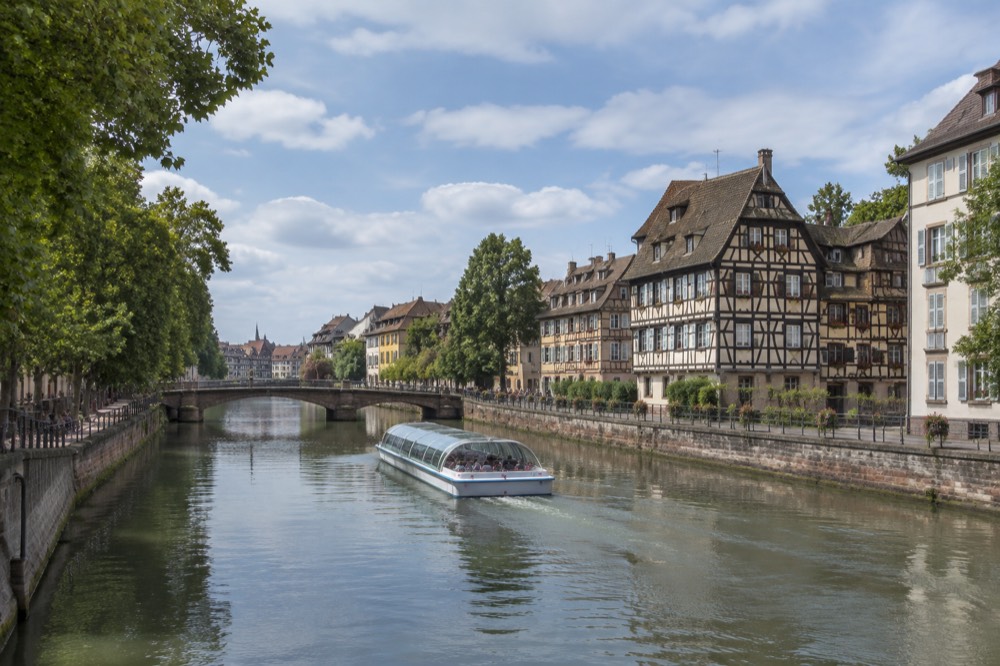
Summer evenings in Strasbourg belong to terrace tables and the winstubs of the Grande Île and the Krutenau, where Alsatian plates like tarte flambée, choucroute and baeckeoffe come with local riesling or a cold beer, and the light lasts long past the hour when kitchens in colder climates have closed. A winstub is the traditional Alsatian eating house, wood-panelled and unhurried, and in summer several put tables out on the street. The winstubs in Strasbourg guide names the ones worth booking, and the best restaurants in Strasbourg guide covers the broader scene.
The classic dishes were built for winter, which is exactly why they suit a summer table in a specific way: tarte flambée, the thin crème fraîche and bacon flatbread, comes out of a wood oven in minutes and is eaten immediately, and it turns up on terrace menus all season. The guides to tarte flambée, choucroute and alsace wine explain what to order and how the local riesling, pinot gris and crémant differ.
For a structured introduction, a two-hour culinary walk with tastings strings together the old town's food stops with a guide who explains each one, a good fit on a warm evening when a long sit-down dinner feels heavy. The operator's live listing carries the current dates and meeting point for that walk.
Which Parks And Riverbanks Fill Up On Summer Days?
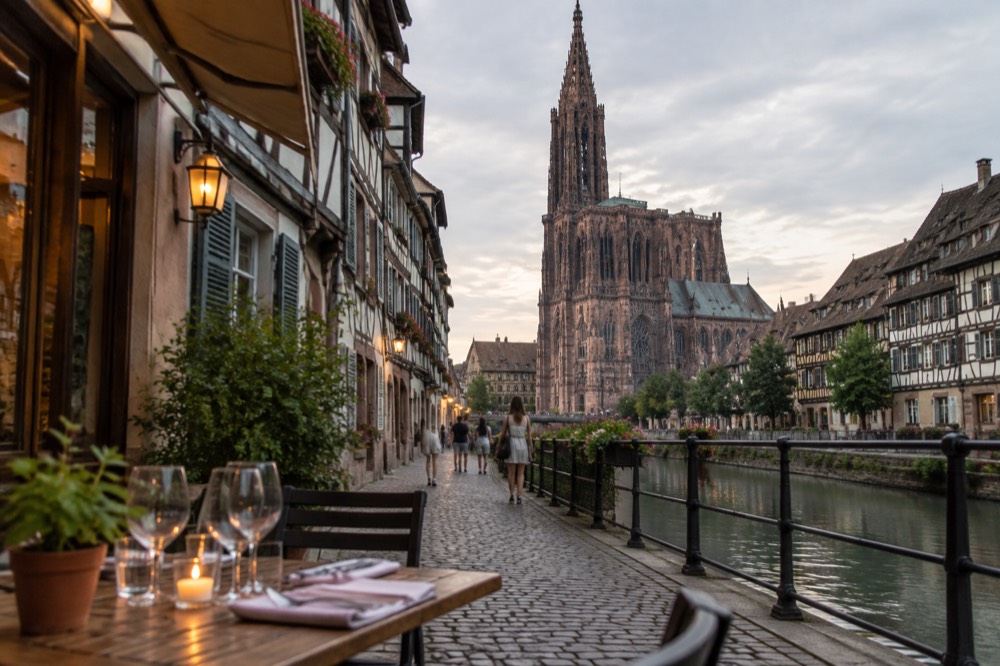
The Parc de l'Orangerie, the city's largest park beside the European Quarter, and the riverside quays of the Grande Île, from the Covered Bridges upstream, are the two green spines of a Strasbourg summer, both free to enter and both within an easy walk or short tram ride of the centre. The Barrage Vauban's panoramic terrace runs on seasonal hours, 08:00-19:00 in September and October, with the winter hours shorter, and the view from its deck over the Ponts Couverts and the cathedral spire is the classic summer photograph in the city.
The park side of the city pairs naturally with the institutions around it. The European Parliament, the Council of Europe and the European Court of Human Rights all sit within reach of the Parc de l'Orangerie, and the Parlamentarium's visitor centre outside plenary weeks opens Monday to Friday 09:00-18:00 and Saturday 09:30-12:00 and 13:00-18:00, with an airport-style security check at the door. The Parc de l'Orangerie guide and the European Quarter guide map the whole walk.
A shorter Segway circuit is a good way to link the park, the quarter and the riverside when the temperature is high, since it covers ground quickly and the guide keeps the route off the steepest, least shaded stretches. The operator's live listing shows the current departure times for that shorter ride, which suits anyone for whom a long ride in the sun sounds like too much.
Riverside evenings deserve their own mention. The quays upstream of the Ponts Couverts are public, free and at their best in the last hours of daylight, and the Strasbourg at night guide picks the spots where the half-timbered façades are lit after dark. The Petite France guide covers the quarter those quays wrap around, the former tanners' and millers' island at the heart of the old city.
What Day Trips Work From Strasbourg In Summer?
The Alsace wine route, the medieval villages of Riquewihr, Eguisheim, Kaysersberg and Obernai, the Haut-Koenigsbourg castle, and the German side of the border from the Black Forest to Baden-Baden are the classic summer day trips from Strasbourg, all reachable on organised small-group tours that handle the driving while the vineyard hills are at their greenest. The wine route in summer is a landscape of slopes and village lanes, and the Alsace wine route guide plus the most beautiful villages in Alsace guide set out the stops.
Organised trips suit the season for a simple reason: the villages are small and the summer sun is real, and a guided circuit moves between shade, cellar and viewpoint without the parking and navigation work. A full-day highlights tour of Alsace runs about eight hours, a longer best-of version about ten and a half, and a half-day wine tour about four, all with the operator's listing carrying the current prices and dates.
| Day trip | What it is | Who it suits |
|---|---|---|
| Alsace wine route | Vineyard villages and cellar tastings | Wine-first travellers, first-time visitors |
| Riquewihr and Eguisheim | Medieval village lanes and half-timbered squares | Photographers, slow walkers |
| Haut-Koenigsbourg | A restored castle above the plain | Families, viewpoint seekers |
| Black Forest | German hills, lakes and woodcarving towns | Anyone wanting a second country in one day |
| Baden-Baden | A German spa town with parks | A quieter, culture-led day out |
The German border is minutes away, Kehl sits across the Rhine, and the Schengen arrangement means no border formalities on the crossing. The euro is the currency on both banks, though that stops at Switzerland: Basel is a day trip option, and Swiss francs, not euros, are the currency there. The Black Forest guide, the Baden-Baden guide and the Basel guide cover the cross-border options, and the Alsace road trip guide covers doing it independently.
What Should You Pack And Plan For A Summer Visit?
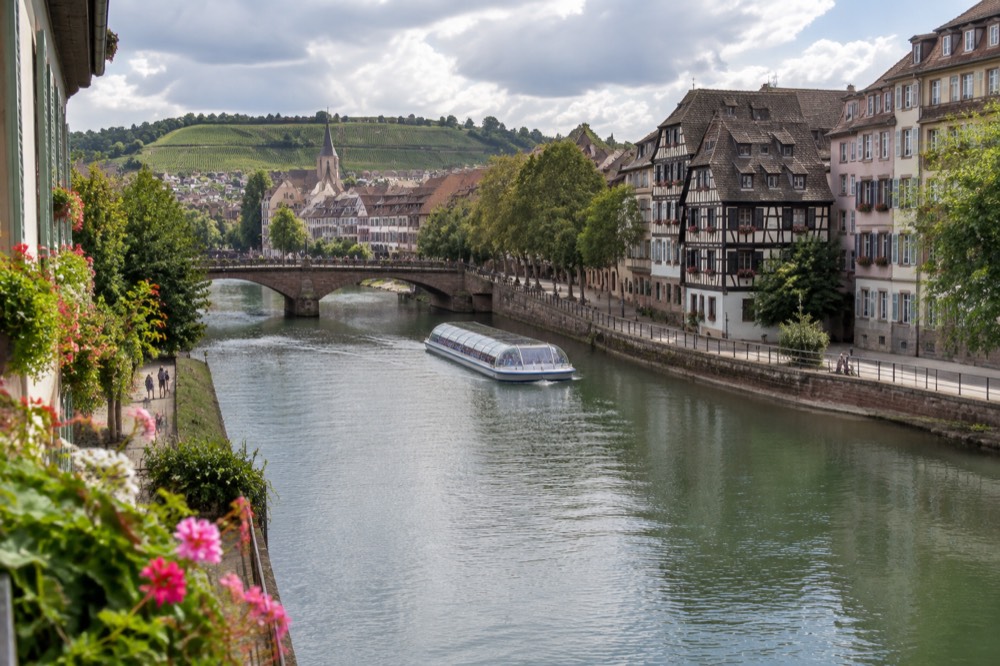
Pack for warm days and cool evenings: with mean July maxima of 26.4 C and minima of 14.9 C, plus 10.4 rain days in the month, a summer bag for Strasbourg needs sun protection, a light layer for the quays after dark, and a compact umbrella or rain jacket for the short heavy showers the normals imply. Comfortable shoes matter more than in December, because the season's best hours are spent walking islands, parks and towpaths rather than standing in market squares.
Water is straightforward: tap water is drinkable in France, and the can I drink tap water in Strasbourg question is answered plainly there. For a longer planning view that weighs summer against spring and the December market season, the Strasbourg in spring and Strasbourg in autumn guides compare the shoulder months, and is Strasbourg worth visiting addresses the question honestly for travellers still deciding.
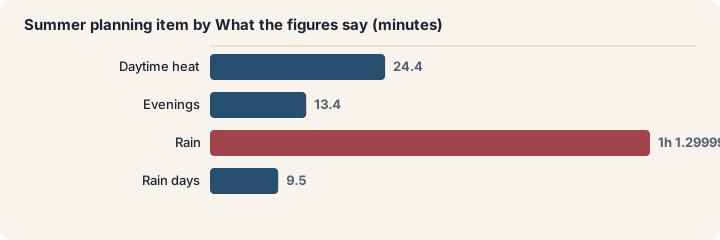
| Summer planning item | What the figures say | Practical read |
|---|---|---|
| Daytime heat | 24.4-26.4 C mean max, Jun-Aug | Plan indoor or river time for mid-afternoon |
| Evenings | 13.4-14.9 C mean min | A light layer for terraces and the quays |
| Rain | 61.3-71.9 mm per summer month | A folding umbrella covers short showers |
| Rain days | 9.5-10.4 per month | Keep one flexible indoor hour per day |
| Free museum day | First Sunday of each month | Time a visit to catch it |
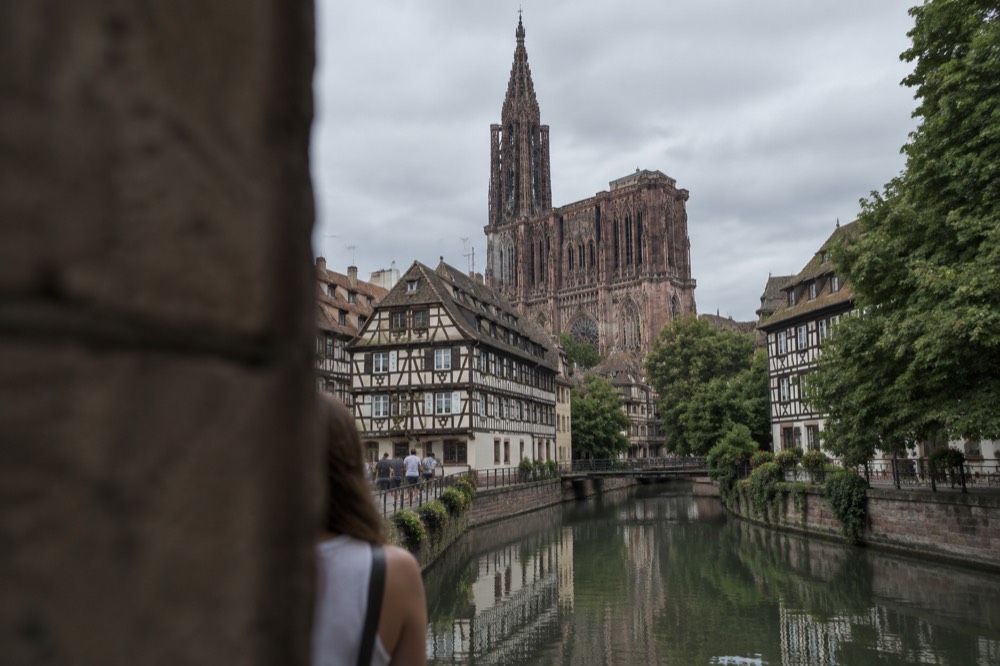
The Strasbourg City Card is worth weighing for a summer stay: it costs 5 EUR for an adult and 3.50 EUR for a child aged 3 to 17, runs for seven days, and is a discount card rather than an all-inclusive pass, taking money off museums, the boat circuit, the cathedral platform and the clock show. The Strasbourg City Card guide runs the arithmetic for different itineraries, and the Strasbourg on a budget guide collects the other savings.
How Does Summer Compare With The Rest Of The Year Here?
Summer is the warmest and greenest of Strasbourg's four distinct seasons but not its busiest visitor period: the December Christmas market draws the city's peak crowds, while June to August offer the longest days, the full river and terrace season, and mean maxima above 24 C against January's 5.2 C. The city's calendar of festivals and events runs all year, and the Strasbourg events and festivals guide is the place to check what coincides with specific dates, since programmes are published and shifted on the tourist office's own calendar.
The seasonal contrast is stark in the numbers. What changes is the shape of the day: winter compresses life into winstubs and market chalets, while summer stretches it along the river from the early morning light on the Ponts Couverts to the last Batorama departures.
| Season | Mean max range | Character |
|---|---|---|
| Winter (Dec-Feb) | 5.2-7.3 C | Christmas market, short days, cold quays |
| Spring (Mar-May) | 12.1-20.9 C | Blossom in the vineyards, May is the wettest month |
| Summer (Jun-Aug) | 24.4-26.4 C | River life, terraces, long evenings |
| Autumn (Sep-Nov) | 9.4-21.6 C | Harvest season, golden parks, thinner crowds |
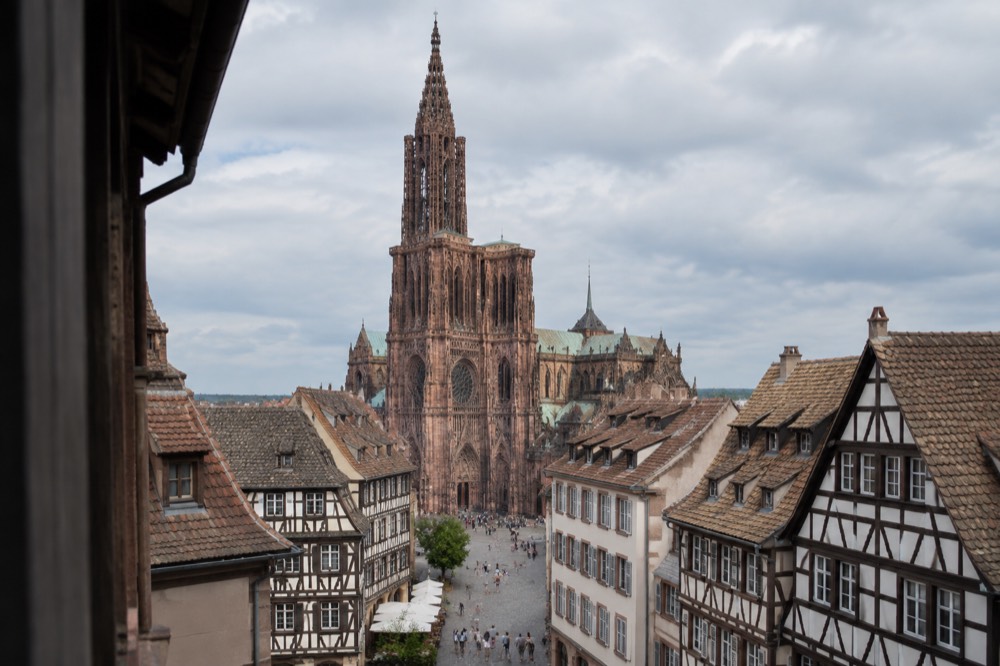
For travellers choosing between the warm half of the year, the Strasbourg in winter guide explains the December trade-off, when hotel prices rise around the market and the city's Christmas market takes over the centre. Summer asks for earlier planning of a different kind: boat times, platform opening blocks and tour availability all benefit from being booked ahead once the school holidays begin.
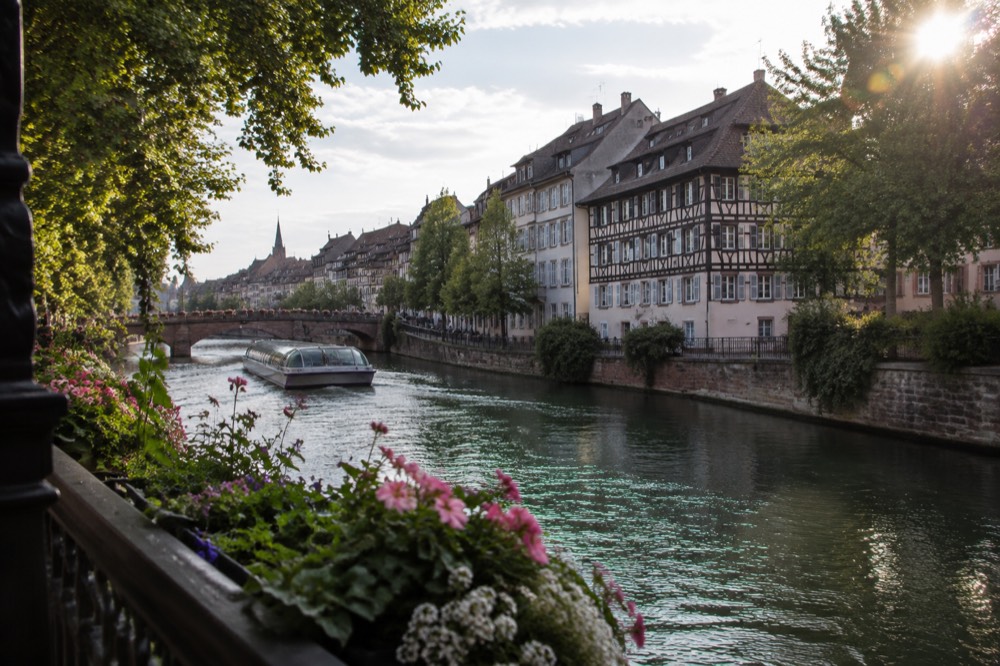
Whatever the season, this Strasbourg Travel Guide site keeps the practical pages, from where to stay in Strasbourg to is Strasbourg safe, within a click of any plan, and summer is the season when the city makes all of that planning feel effortless.
Common Questions About Strasbourg In Summer
Is Strasbourg Too Hot In Summer?
No. The Meteo-France 1991-2020 normals give a mean daily maximum of 26.4 C in July and 26.1 C in August, warm but well short of southern-French summer heat, with mean minima around 14.5-14.9 C cooling the evenings.
Does It Rain In Strasbourg In Summer?
Yes, every summer month counts between 9.5 and 10.4 days with 1 mm of rain or more, and monthly totals run from 61.3 mm in August to 71.9 mm in July. The showers are often short and heavy rather than all-day rain.
What Are The Cathedral's Summer Hours?
The nave is open 08:30-11:15 and 12:45-17:45 Monday to Saturday and 14:00-17:15 on Sundays and feast days, while the tower platform runs 09:30-13:00 and 13:30-20:00 from 1 April to 30 September, with the last ascent at 19:15.
Is The Astronomical Clock Show On In Summer?
Yes, the automaton show runs daily at 12:30. Tickets cost 4 EUR full price and 2 EUR for children aged 6 to 17, sold on the day only at the cathedral stalls or from 11:30 at the Saint-Michel entrance.
How Do You Get Around Strasbourg In Summer?
The tram and bus network covers the city, with a single at 1.90 EUR via the app, Badgéo or contactless and a 24h Solo pass at 4.60 EUR. Boats, Segway tours and bike tours all suit the flat, riverside layout in warm weather.
Is Summer Or December Better For A First Visit?
Summer offers the longest days, the parks, the river circuits and terrace dining; December offers the Christmas market and its crowds. The mean maximum swings from 26.4 C in July to 5.2 C in January, so the choice is between two very different cities rather than a better and a worse one.