Parking In Strasbourg
Strasbourg, in Alsace in north-eastern France, keeps its historic centre largely car-free, which makes parking a planning question rather than an afterthought.
Short answer
Strasbourg, in north-eastern France, protects its UNESCO-listed centre from through traffic, so driving into the old streets is rarely the right move. The practical pattern is to leave the car on the edge of the city and take the tram in: a CTS 24h Solo pass costs 4.60 EUR and a single ticket 1.90 EUR. Check the operator's own pages for car park prices and hours before you set off.
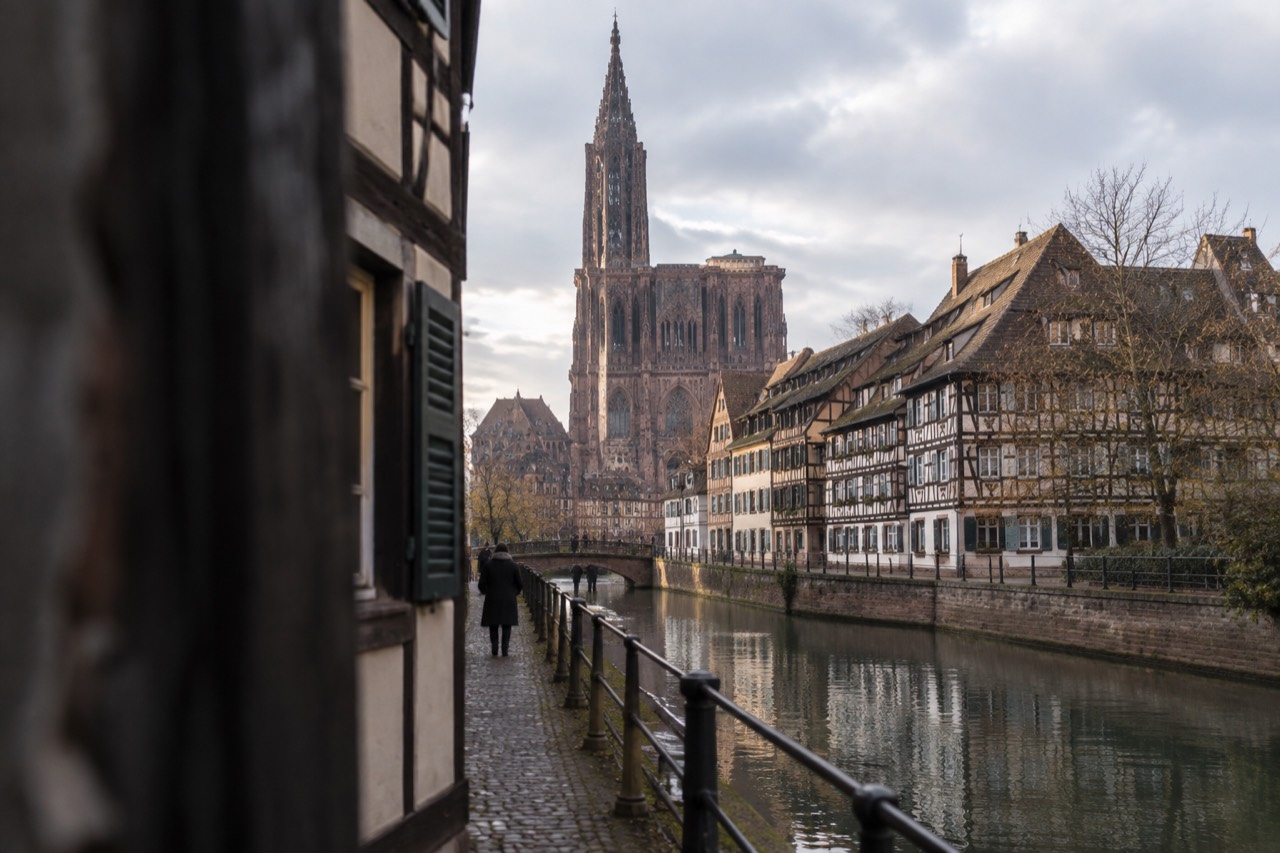
Strasbourg, the prefecture of the Bas-Rhin in Alsace, in the Grand Est region of north-eastern France, sits on the River Ill beside the Rhine, which forms the border with Germany. Its historic core, the Grande Île, is a UNESCO World Heritage property, and the city treats it accordingly: through traffic is kept out, the tram network is extensive, and the centre is built around pedestrians, cyclists and boats rather than cars. That makes parking in Strasbourg a different question from parking in a typical French city of 293,771 people. The decision that matters is not which underground car park has the cheapest hourly rate, it is whether the car needs to come into the centre at all.
This page lays out the honest picture. What is verified is the transport arithmetic that makes the car optional: the CTS tram fares, the airport shuttle arrangement, the seasonal realities of a semi-continental climate, and the way the Christmas market reshapes the centre. Readers planning a winter visit may also want the Strasbourg Christmas market guide, which covers the centre when it is at its busiest.
Do You Actually Need A Car In Strasbourg?
The honest answer is that a car is a burden inside Strasbourg and an asset only outside it. The Grande Île and its surrounding quarters are compact, walkable and tram-served, and the city's transport network was designed to make driving into the centre unnecessary. Travellers arriving by train or plane can see the cathedral, Petite France, the European Quarter and the museums without ever touching a steering wheel.
The geography explains the policy. Strasbourg's centre sits on an island formed by the River Ill, with Petite France at its western tip and the cathedral at its heart. Around it lie the Neustadt, the Krutenau and the Gare district, all of them dense, all of them old enough that the street plan predates the automobile by centuries. The city's answer to the car was to build one of the country's developed tram networks and to give the historic streets back to people on foot.
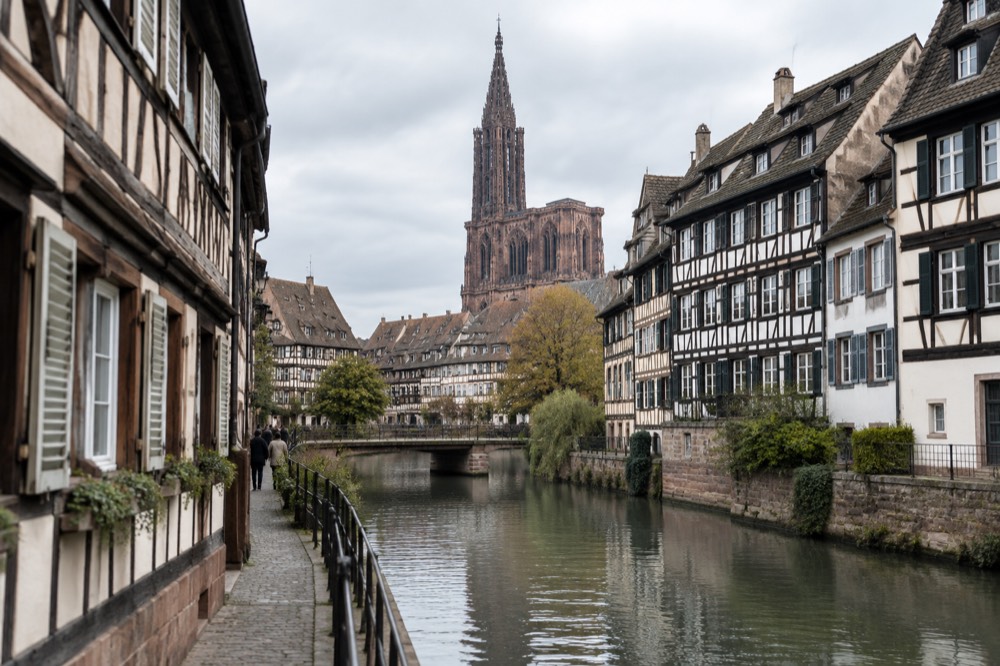
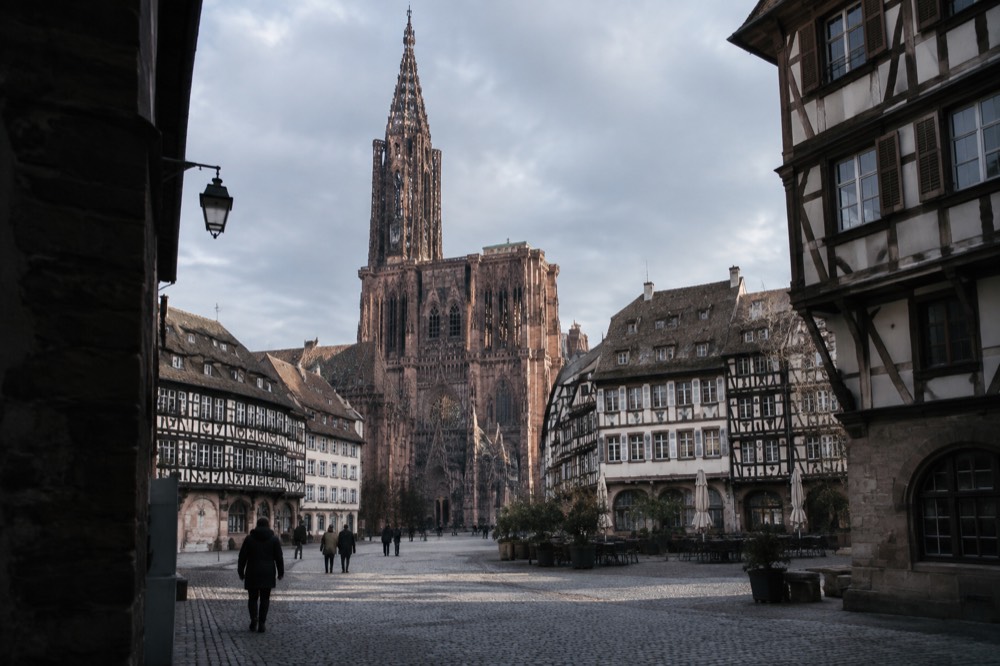
That choice has consequences for a visitor. The streets that photographs make famous, the half-timbered lanes of Petite France and the lanes around the Musée de l'Œuvre Notre-Dame, are not places you drive into, park in and stroll out of. They are places you arrive at by tram or on foot. A traveller who plans the trip around that reality spends nothing on city-centre parking and loses no time circling for a space.
The car remains genuinely useful for one thing: the region. The Alsace wine route, the castles, the villages of the Vosges foothills and the German side of the Rhine are all easier with wheels. The pattern that works is simple and is worth repeating: drive between the region and the city, park at the edge, and let the tram finish the job.
For a sense of how the city rewards being car-free, the free things to do in Strasbourg guide shows how much of the centre, from the public squares to the riverside walks, costs nothing at all.
Where Should You Leave The Car In Strasbourg?
The working pattern is to park on the city's edge and take the tram into the centre, and Strasbourg is built for exactly that. The CTS network reaches the historic quarters from peripheral stops, a 24h Solo pass costs 4.60 EUR and a 24h Trio pass for two to three people costs 10.20 EUR. Treat park-and-ride locations and prices as things to confirm on the CTS site.
Park-and-ride is the standard answer in cities that have decided against cars in the centre, and Strasbourg fits the model. The idea is unglamorous: a car park at a tram stop on the ring, a tram that runs every few minutes, and a fare that costs less than an hour of central parking would in a city that priced it. The CTS fare page is the primary source for what the combined options cost, and it is where to check before committing to a plan.
| Option | What it is | Who it suits | What to check first |
|---|---|---|---|
| Park at the edge, tram in | Car park near a peripheral tram stop, tram to the centre | Anyone staying outside the centre or passing through | Car park opening hours and the tram route on the CTS site |
| Hotel parking | A space at or near your accommodation | Visitors staying in or near the centre | Whether the hotel has spaces at all and what they cost |
| Central car park | Structured car park inside or near the Grande Île | Short stays, loading, travellers with reduced mobility | Price per hour and per day, and height limits |
| No car at all | Arrive by train or plane, use trams and feet | Anyone whose trip is Strasbourg itself | Nothing beyond your train or flight times |
The table is deliberately qualitative. Car park prices in Strasbourg move with the season, so check the operator's own page for the specific car park you are considering. What can be stated firmly is the fare side of the trade: the tram tickets above are the verified prices, and they are the numbers that make the edge-parking pattern work.
Once the car is settled, the centre opens up on foot. A guided walk with a local guide is one way to get oriented fast, and it pairs naturally with a day that begins at a tram stop rather than a parking meter: Check availability.
What Should You Check Before Choosing A Car Park?
Five things decide whether a Strasbourg car park suits you: the price per hour and per day, the height limit if you drive a van or a tall SUV, the opening hours if you plan an evening in the centre, the distance to the Grande Île, and the cancellation terms if you reserve online.
Height limits matter more in old cities than people expect. Car parks built under historic quarters often have entrances sized for the cars of an earlier era, and a modern van or a roof-boxed estate can be turned away at the ramp. If you are arriving in anything larger than a standard saloon, the height limit is the first number to find, before price.
Hours are the second. An evening meal in a winstub, or a night walk along the Ill, can outlast a car park that closes at a fixed hour. Ask whether the car park is open 24 hours or whether it locks, and what happens if you return late. The answer is a sentence on the operator's page, and it is worth the thirty seconds it takes to find.
Distance is the third. A car park a tram ride from the centre is not a worse car park, it is often the better one, provided the tram runs when you need it. The CTS network runs late into the evening, but the specific line serving your car park is the thing to check, and the CTS site has the timetables.
Booking terms are the fourth. Pre-booked spaces are common in the market season, and the terms, refundability and the window in which you can cancel, are on the booking page. Read them before paying rather than after.
The fifth is the simplest: ask your hotel. Many central hotels have arrangements with nearby car parks, and some have their own. The where to stay in Strasbourg guide helps with choosing a district in the first place, and the district you choose changes your parking problem more than any individual car park does.
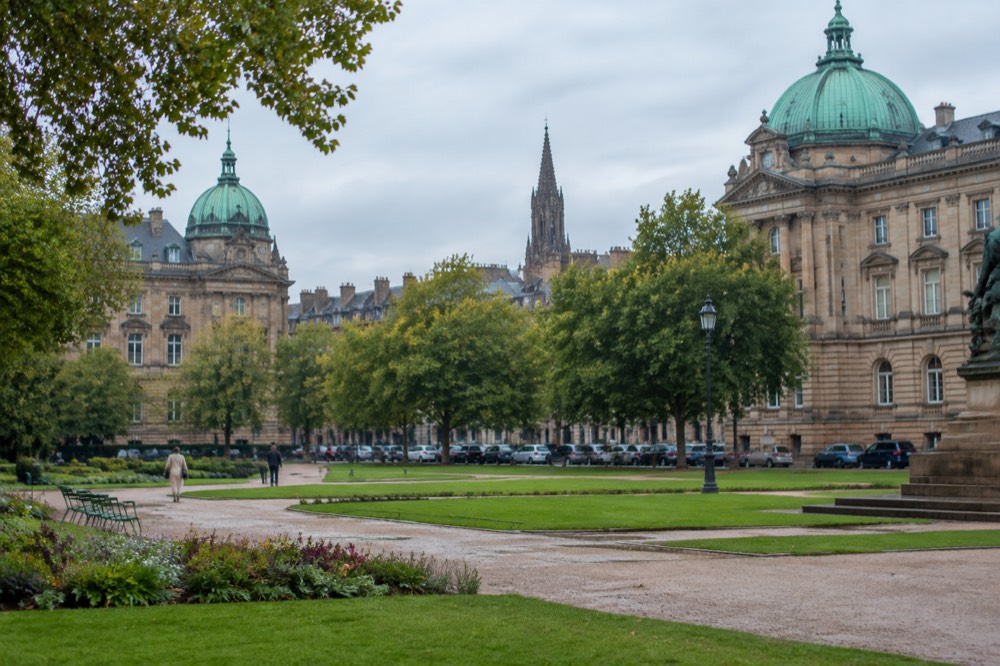
Is Park And Ride The Easiest Option In Strasbourg?
For a day visit, park and ride is usually the cleanest option, because it removes the two hardest problems at once: finding a space and driving streets that were not built for cars. The tram fare side is verified and cheap, with a 24h Solo pass at 4.60 EUR covering a full day of network travel.
The airport pattern is worth understanding because it mirrors the whole city's approach. Strasbourg Airport at Entzheim connects to the central station by a regional train that takes 8 minutes and runs up to five times an hour, and the combined ticket that bundles the train with a day of city transport costs 4.60 EUR. The city's answer to arrivals by air is: do not drive in, ride in. The same instinct governs arrivals by car.
| CTS ticket | Price | What it covers |
|---|---|---|
| Single ticket | 1.90 EUR via Badgéo, the CTS app or contactless | One journey on the network |
| Single ticket bought on board a bus | 2.50 EUR | One journey, bought from the driver |
| 24h Solo | 4.60 EUR | One person, unlimited network travel for 24 hours |
| 24h Trio | 10.20 EUR | Two to three people travelling together, 24 hours |
| Airport combined ticket (Alsa+ 24h EMS) | 4.60 EUR | Train from Entzheim plus a day of city transport |
The fares are the verified part of the arithmetic. What they add up to is a day of moving around Strasbourg for less than the cost of an hour or two of central parking in a comparable French city, and with none of the search time. For a family, the Trio pass at 10.20 EUR covers two adults and a child for a day, which is the kind of number that decides the plan before you leave home.
What park and ride does not solve is the start of the journey. If you are driving from far away, the question is where the ring road delivers you and which peripheral stop sits on your route. That is trip-planning detail, and the CTS network map is the tool for it. Print nothing from this page about specific stops: the map on the operator's site is the current one.
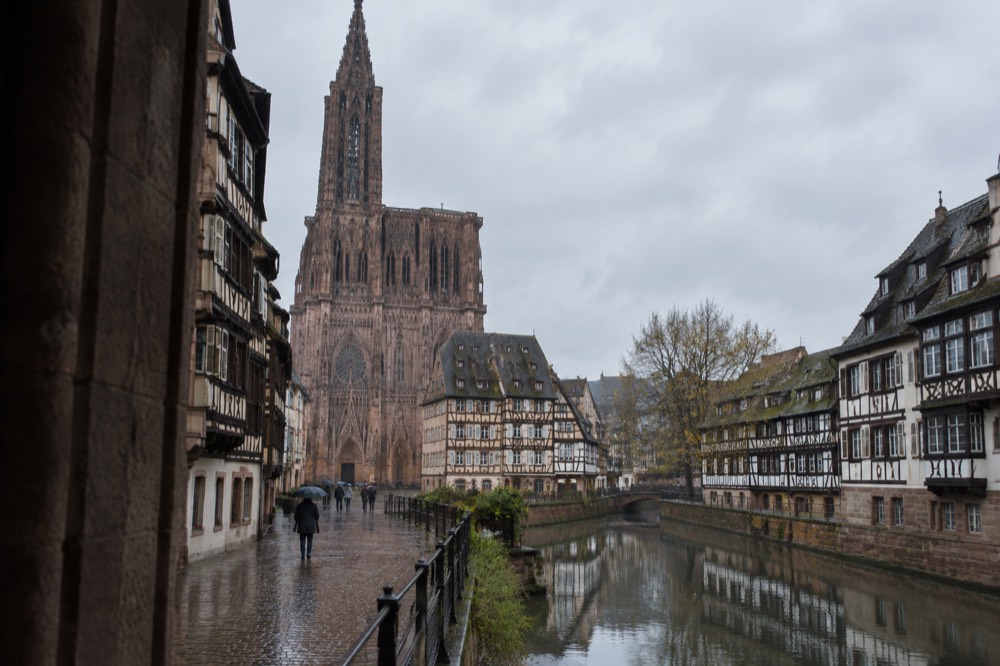
What Is Driving In The Centre Of Strasbourg Like?
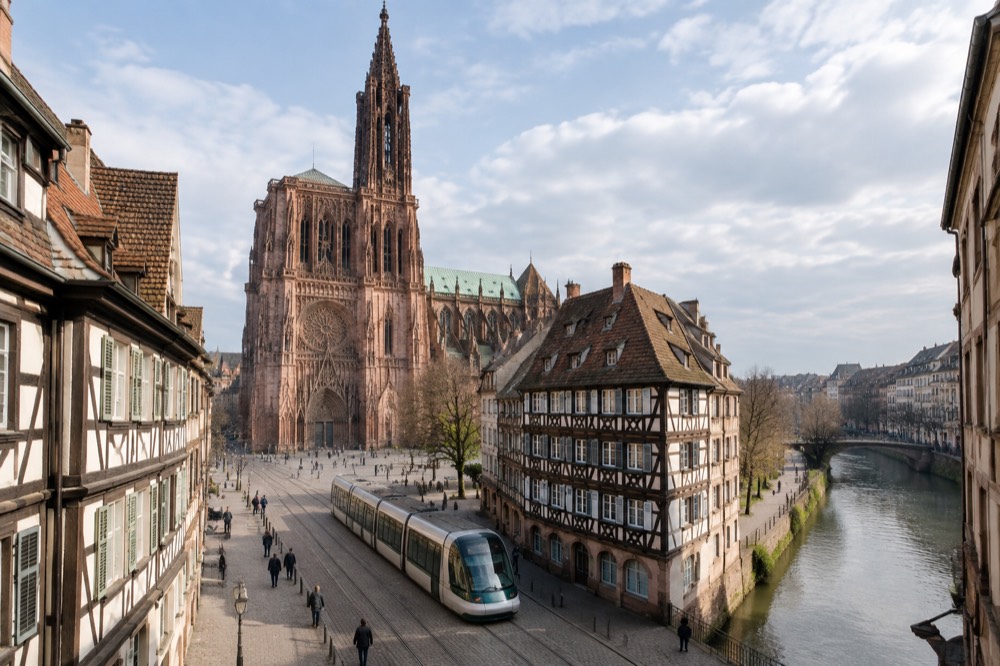
Driving inside Strasbourg's central quarters is slow, restricted and unrewarding: the Grande Île is protected, the streets are narrow, and the tram has priority on reserved tracks that a car cannot cross carelessly. The practical risks are logistical rather than dramatic, missing a restriction or circling for a space that does not exist. The centre is best treated as a place you arrive at by tram, by boat or on foot.
The tram changes the driving experience in a way visitors from cities without trams underestimate. Reserved tram tracks run down the middle of major streets, and the rules around them, when you may cross, when you must wait, are local knowledge. Add cyclists, who are numerous and confident, and pedestrians in a centre that belongs to them, and the picture is one where the driver is the least convenient road user. That is by design. Everything else covered here is indexed on Strasbourg Travel Guide.
The historic fabric sets the physical limits. Half-timbered lanes and medieval street widths do not accommodate two-way traffic and parked cars, so the city does not pretend they do. Restrictions, pedestrian priority and limited access define the Grande Île, and the Neustadt and Krutenau quarters are only marginally more forgiving. A driver who treats the centre as a no-go zone and plans around it loses nothing.
The one genuinely car-friendly frame is the ring: Strasbourg sits on a motorway network that links it to the rest of France and to Germany across the Rhine, and the approach roads deliver you to the edge efficiently. The transition point, where you stop and the tram starts, is the single decision that defines driving in Strasbourg. Choose it before you arrive, not while circling.
For travellers who find the car-free centre appealing, two wheels are another way to cover ground once the car is parked. The city's flat terrain and cycle paths reward a guided bike tour, which the roster lists with bikes included.
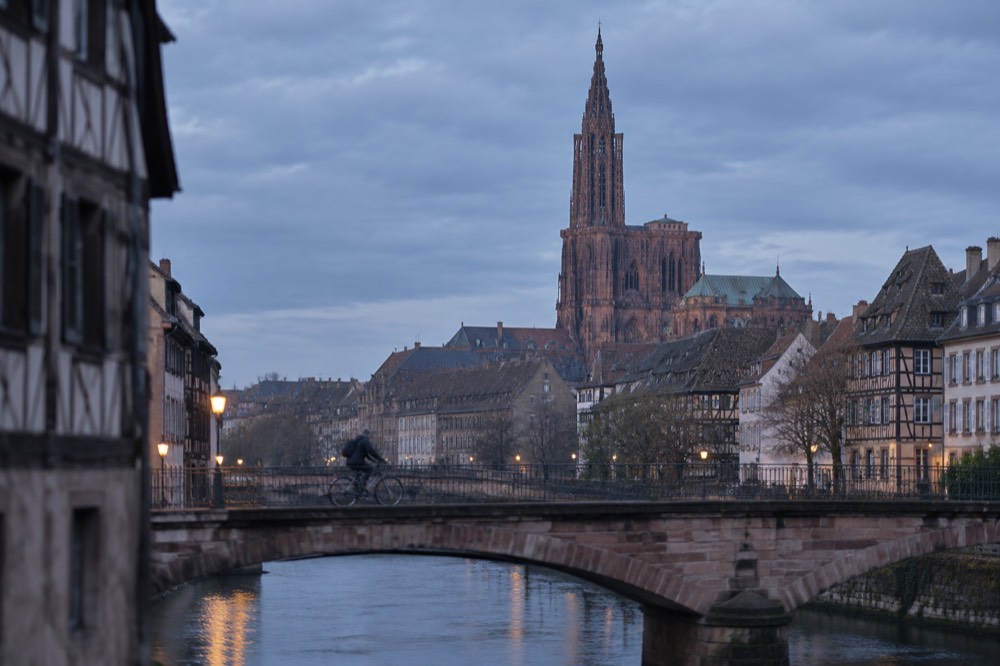
How Does The Christmas Market Change Parking In Strasbourg?
The Christmas market season turns the centre into the busiest it gets all year: demand for central spaces peaks, restrictions tighten, and the city pushes visitors toward public transport and edge parking. The 2025 edition ran from 26 November to 24 December and drew 3.05 million visitors, and the 2026 dates are not yet published. Anyone driving in the market season should plan on parking well outside the centre and arriving by tram.
The scale is the thing to internalise. Three million visits over roughly a month means the streets around the cathedral, Place Kléber and Petite France are full from late morning to close, and the roads that feed them feel it. The city's own messaging in the season is unambiguous: come by train, come by tram, park at the edge. A driver who ignores that finds the market, but only after the queue.
| Season factor | What it means for the car | What to do |
|---|---|---|
| Market opening period, late November to 24 December | Peak demand for central spaces, tightened restrictions | Park at the edge, tram in, arrive early in the day |
| December weather | Mean daily maximum 5.9 C, 10.2 rain days of 1 mm or more | Allow extra time on wet or icy approach roads |
| Evening crowds | Streets around the market busiest after dark | Prefer a tram over any central driving after dusk |
| 24 December | The market closes early in the evening | Check the closing time on the city's Christmas site before planning the day |
The 2026 dates are the open question. The city's Christmas site states the official dates and programme. The pattern, an opening in the last week of November and a run to 24 December, is the shape to plan around, and the site is where the confirmation lands. Travellers weighing Strasbourg against Colmar for the season can compare the two in the Colmar Christmas market guide, and the wider regional picture is in the Christmas markets in Alsace guide.
Accommodation interacts with parking in the season more than at any other time. Central hotels fill, their car parks fill with them, and the edge-parking plan becomes the default rather than the fallback. The where to stay for the Strasbourg Christmas market guide covers that decision, and the Strasbourg in winter guide covers everything else the season brings.
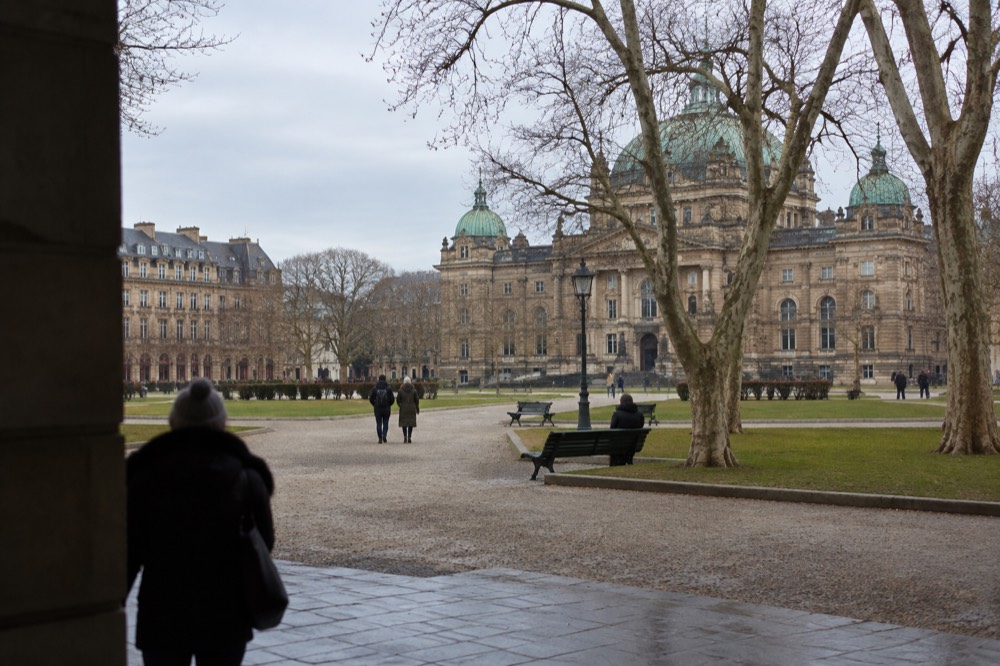
Car Or Tour: Which Works Better For Day Trips From Strasbourg?
The car wins on flexibility and the tour wins on ease, and the honest dividing line is how many places you want to reach in one day. A self-driven day trip lets you set the pace and stop where a schedule would not, but it puts the driving, the parking in each village and the navigation on you. A guided day trip handles the road and the timings, and in the wine villages that convenience is worth weighing against the freedom.
The wine route is the case where the trade-off is sharpest. Villages like Riquewihr and Eguisheim are small, beautiful and narrow, and the pleasure of them is walking their lanes with a glass behind you rather than moving a car between them. A driver can do it, but each stop adds a parking question, and the answers in high season are not always generous. A tour removes the question entirely.
The region beyond the wine route adds castles, the Vosges and the German border, and there the car's flexibility starts to matter. Long days with several stops, a route that changes because a viewpoint looked good, these are the car's strengths. The Alsace road trip guide covers that style of travel in detail, and the Alsace region guide covers the geography.
| Day-trip style | What the car gives you | What a guided tour gives you | Who it suits |
|---|---|---|---|
| Wine villages in one loop | Chosen stops, own pace, spontaneous tastings | A planned route, no parking in narrow villages, a driver who stays sober | Tasters and first-time visitors lean tour; repeat visitors lean car |
| Castle and villages combined | Flexibility to linger or skip | Fixed timings that fit several stops into one day | Anyone who values a full agenda over freedom |
| City-to-city, Colmar or beyond | Door-to-door control | Comfort, commentary, no navigation | Travellers who dislike driving abroad |
The roster's guided option for the classic loop is the Best Of Alsace historical day trip, which pairs the car-free logic of the city with a full day in the region and removes every village parking question at a stroke.
What Does The Weather Mean For Driving And Parking In Strasbourg?
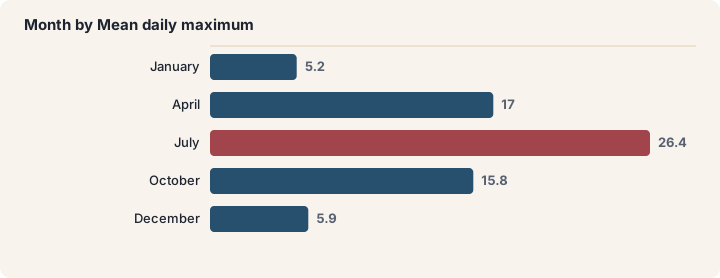
Strasbourg has a semi-continental climate, and the numbers that matter to a driver cluster at the cold end of the year: December brings a mean daily maximum of 5.9 C, a mean minimum of 0.8 C and 10.2 days with 1 mm of rain or more, while January sits at 5.2 C and -0.2 C. Summer driving is easier, with July means of 26.4 C and 14.9 C, but rain days run between 8.0 and 10.8 in every month.
The semi-continental label means real winters and warm summers, not the mild oceanic pattern of western France. For a driver, the practical translation is that winter mornings can be near freezing, and the season that fills the city, late November and December, is also the season that asks the most of the approach roads. None of this argues against driving; it argues for time margins.
| Month | Mean daily maximum | Mean daily minimum | Rain days of 1 mm or more |
|---|---|---|---|
| January | 5.2 C | -0.2 C | 9.1 |
| April | 17.0 C | 5.7 C | 8.6 |
| July | 26.4 C | 14.9 C | 10.4 |
| October | 15.8 C | 7.2 C | 9.6 |
| December | 5.9 C | 0.8 C | 10.2 |
The figures are the 1991-2020 Meteo-France normals for Strasbourg-Entzheim, and they describe the climate the city actually has. A visitor parking at the edge and taking the tram in December trades a cold walk from a distant car park for a warm carriage, which is a small comfort that compounds over a market evening. The full monthly picture is in the Strasbourg weather guide, and the timing question, season by season, is covered in the best time to visit Strasbourg.
Summer drivers face the opposite problem: heat in a car park with no shade, and a centre that belongs to terraces and riverbanks. The Strasbourg in summer guide covers the warm months, and the shoulder seasons have their own pages for spring and autumn. None of them changes the parking rule, which holds all year: the edge is for the car, the centre is for you.
Is Strasbourg An Expensive City To Park In?
What can be said is that the tram side of the equation is verified and modest, 1.90 EUR for a single ticket and 4.60 EUR for a 24h Solo pass, and that the city's transport design pushes spending toward the tram. Budget travellers should treat any central parking as a cost to check in advance.
The budget question is really a design question. Cities that have decided against cars in the centre do not usually price central parking kindly, because kindness would undermine the policy. Strasbourg's investment went into trams, cycle paths and pedestrian streets, and the pricing follows the priorities. A traveller who aligns with the priorities spends little; one who fights them spends more and enjoys less.
The Strasbourg on a budget guide covers the wider arithmetic of a cheap visit, from the municipal museums' free first Sunday of every month to the walks that cost nothing. Parking belongs in that conversation as the first line of the budget, because it is the one cost a traveller can zero out entirely by arriving by train or parking at the edge.
Two verified numbers frame the museum side of a cheap day, since a parked car and a museum visit often share an afternoon: municipal museum tickets are 9 EUR full price and 5 EUR reduced, and every municipal museum is free on the first Sunday of the month. The Musée Alsacien is closed for works until 2028, so strike it from any plan; the others are open and covered by those figures. The Strasbourg museums guide has the detail.
For anyone who would rather not think about wheels at all once the car is parked, a segway circuit of the European Quarter is the roster's other car-free way to cover ground, with a guide leading the way through the district's modern architecture.
Common Questions About Parking In Strasbourg
Can I drive into the centre of Strasbourg?
The historic centre is protected from through traffic and the streets were not built for cars, so driving into the Grande Île is slow, restricted and rarely worth it. The standard pattern is to park at the edge of the city and take the tram in. A CTS single ticket costs 1.90 EUR and a 24h Solo pass 4.60 EUR.
Where do I park for the Strasbourg Christmas market?
Plan on parking well outside the centre and arriving by tram. The market season brings peak demand for central spaces, and the city's own messaging pushes visitors toward public transport. The 2025 edition ran 26 November to 24 December and drew 3.05 million visitors; the 2026 dates are not yet published, so confirm them on the city's Christmas site.
Is there parking at Strasbourg hotels?
Many hotels have arrangements with nearby car parks and some have their own, so ask yours directly before arrival. The district you stay in changes the parking question, so choose it with that in mind.
Do I need a car in Strasbourg at all?
Not for the city itself. The centre is compact, walkable and tram-served, and the cathedral, Petite France, the European Quarter and the museums are all reachable without one. A car earns its keep for the Alsace wine route, the castles and the villages beyond the city.
What does the tram cost compared with parking?
A single CTS ticket is 1.90 EUR bought through the app or contactless, or 2.50 EUR on board a bus, and a 24h Solo pass is 4.60 EUR, with a 24h Trio for two to three people at 10.20 EUR. Those are the tram fares; car park prices should be checked with the operator.
Is winter driving around Strasbourg difficult?
The climate is semi-continental, with December means of 5.9 C by day and 0.8 C by night and 10.2 rain days of 1 mm or more, and January slightly colder. Allow time margins on approach roads in the market season, and prefer the tram for evening trips into the centre.
The pattern that runs through every answer on this page is the one Strasbourg built its transport network around: the car belongs at the edge and the centre belongs to people on foot. Plan the transition point before you arrive, check the car park details on the operator's own pages, and the city takes care of the rest.