Strasbourg And Colmar Itinerary
Two cities, one short break: how to divide your days between Strasbourg, the Alsatian capital in north-eastern France, and Colmar, and what each leg of the trip is actually for.
Short answer
Plan two days in Strasbourg and one full day in Colmar for a three-night break. The cathedral platform costs 10 EUR, a 24-hour CTS transport pass is 4.60 EUR, and municipal museums are free on the first Sunday of each month. Base yourself in Strasbourg and travel out to Colmar, which keeps every transport option open.
Strasbourg, in Alsace in north-eastern France, and Colmar, the wine capital an hour down the plain, are the two names that pull travellers into this corner of the Grand Est. Pairing them is the natural first trip here: one gives you a cathedral city that seats the European Parliament, the other gives you canals, vineyards and a historic centre you can cross on foot in an afternoon. This itinerary lays out how many days each city deserves, what to do on each day, how to move between them, and what to book ahead. The two centres are different enough that the split matters more than the total length of the trip.
How Many Days Do You Need For Strasbourg And Colmar?
The workable minimum is three nights: two full days in Strasbourg and one full day in Colmar, sleeping in Strasbourg throughout. Strasbourg is the bigger city and the transport hub, so it rewards the longer stay, while Colmar's old town is compact enough that a single well-planned day covers it. With five nights or more, add the wine villages around Colmar and a castle day, which turns the trip into a small Alsace circuit.
The split is not symmetrical, and that surprises people who have seen photographs of both. Colmar's historic core is small and dense; you can walk its lanes, its quay and its main museums between mid-morning and dusk. Strasbourg spreads across the Grande Île, the Neustadt and the European Quarter, and its headline sights carry queues and ticketed hours that eat a morning on their own.
Basing yourself in Strasbourg for the whole trip keeps things simple. The city's tram network runs from the station to the centre, and day trips by regional train leave from the same station, so you never change hotels. Travellers who prefer a quieter base at night sometimes split the stay, and there is a full discussion of that trade-off in is it better to stay in Colmar or Strasbourg, but for a first visit one hotel in Strasbourg is the lower-friction choice.
| Trip length | Base | Days in Strasbourg | Days in Colmar | What the extra days add |
|---|---|---|---|---|
| 3 nights | Strasbourg | 2 | 1 day trip | The two city centres only |
| 4 nights | Strasbourg | 2 | 2 | Wine route villages and a castle |
| 5 nights | Strasbourg or split | 2-3 | 2 | Haut-Koenigsbourg, Eguisheim, Riquewihr |
| 7 nights | Split | 3 | 2 plus villages | A full Alsace circuit |
If you are still deciding whether the region justifies the flight at all, the site's Strasbourg versus Colmar comparison breaks the two cities down sight by sight, and how many days in Colmar is enough covers the Colmar side of the equation in detail.
What Should Day One In Strasbourg Cover?
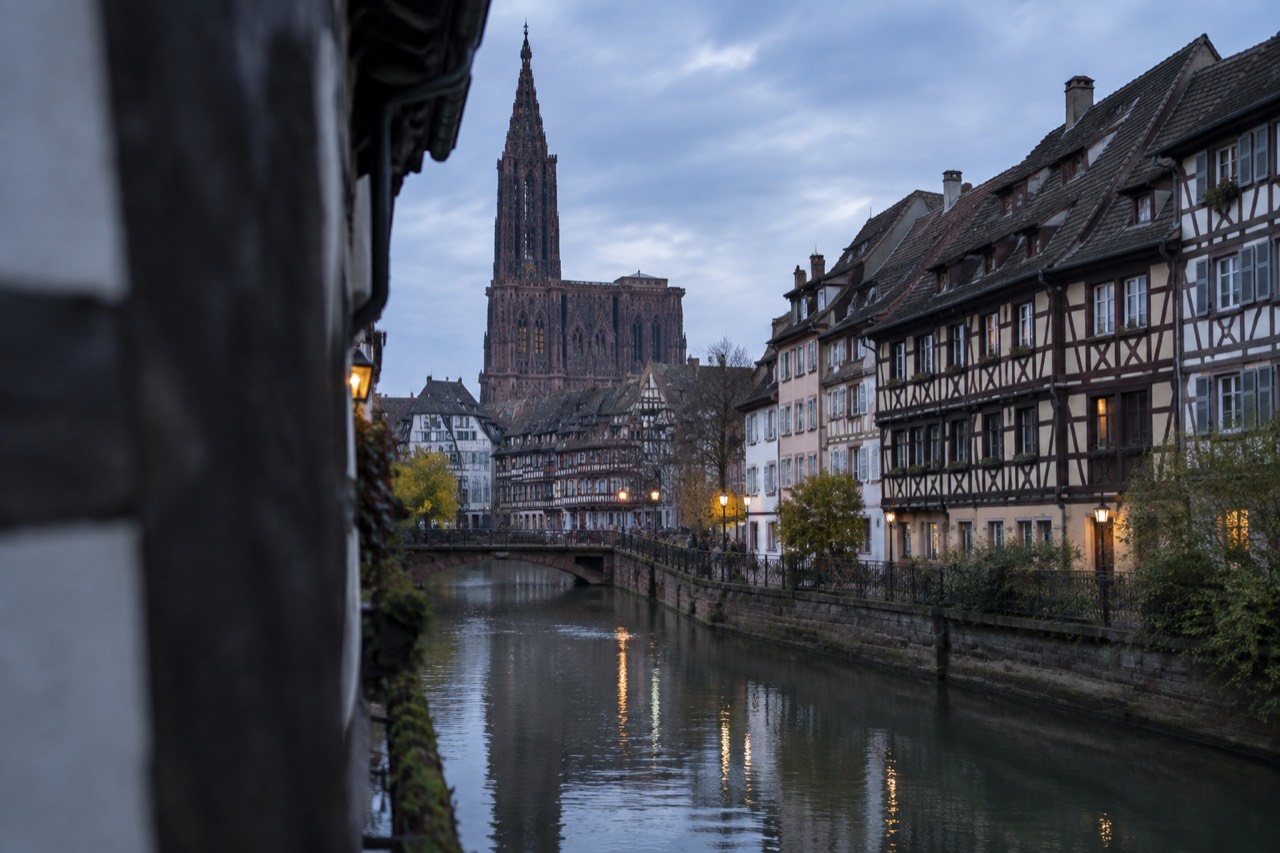
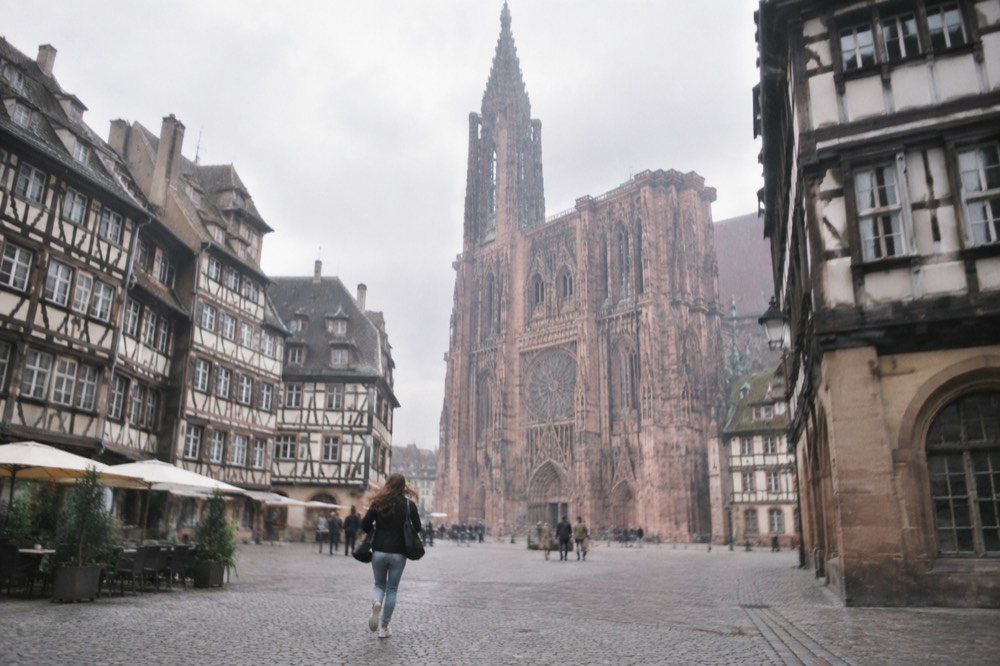
Day one belongs to the Grande Île, the UNESCO-listed river island that holds the cathedral, Place Kléber, Maison Kammerzell and Petite France. Start at the cathedral when it opens at 08:30, climb the platform if the weather holds, then walk south through the old streets to Petite France and the Ponts Couverts before finishing on the Barrage Vauban terrace. One well-ordered day covers all of it on foot.
The cathedral's nave opens Mon-Sat 08:30-11:15 and 12:45-17:45, and on Sunday afternoons from 14:00-17:15. The viewing platform at 66 m has separate seasonal hours and a separate ticket: 10 EUR full price, 6 EUR reduced, free for children under 6. If the platform is part of your plan, go early, because the last ascent is 19:15 in the summer season and 17:15 in the winter one. The astronomical clock inside has its automaton show at 12:30 sharp, and tickets for it, 4 EUR, are sold on the day only, so build the clock into your morning rather than treating it as an afterthought.
| Cathedral sight | Hours | Ticket | Notes |
|---|---|---|---|
| Nave, Mon-Sat | 08:30-11:15, 12:45-17:45 | On the listing | Continuous hours on the Place du Chateau side during the Christmas market |
| Nave, Sun and feast days | 14:00-17:15 | On the listing | Morning is given to services |
| Platform, 1 Apr-30 Sep | 09:30-13:00, 13:30-20:00 | 10 EUR / 6 EUR | Last ascent 19:15 |
| Platform, 1 Oct-31 Mar | 10:00-13:00, 13:30-18:00 | 10 EUR / 6 EUR | Last ascent 17:15 |
| Astronomical clock show | 12:30 daily | 4 EUR | Day-of purchase only, no reservations |
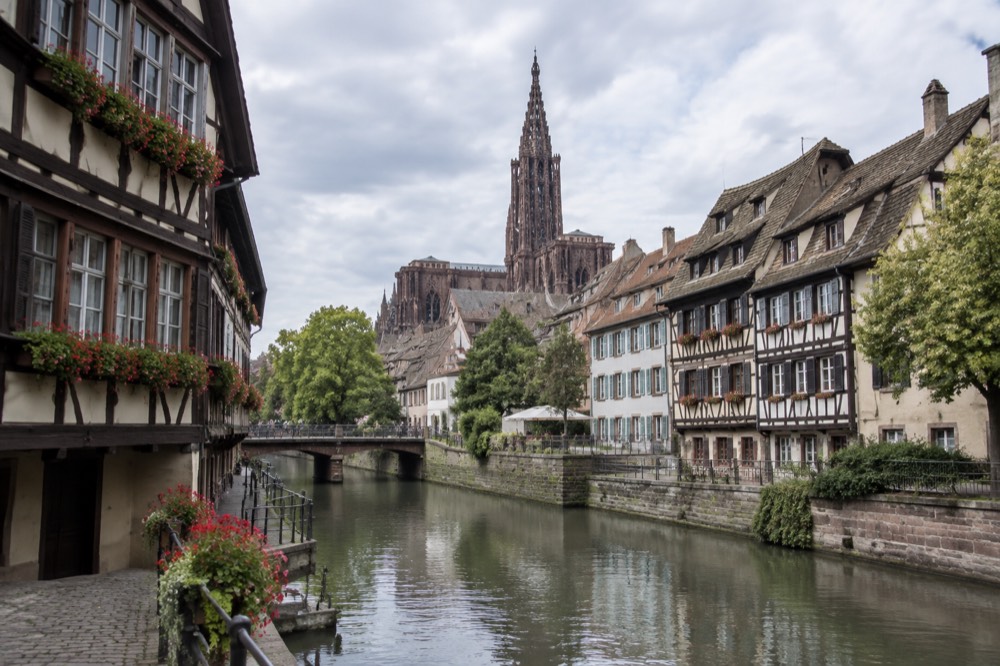
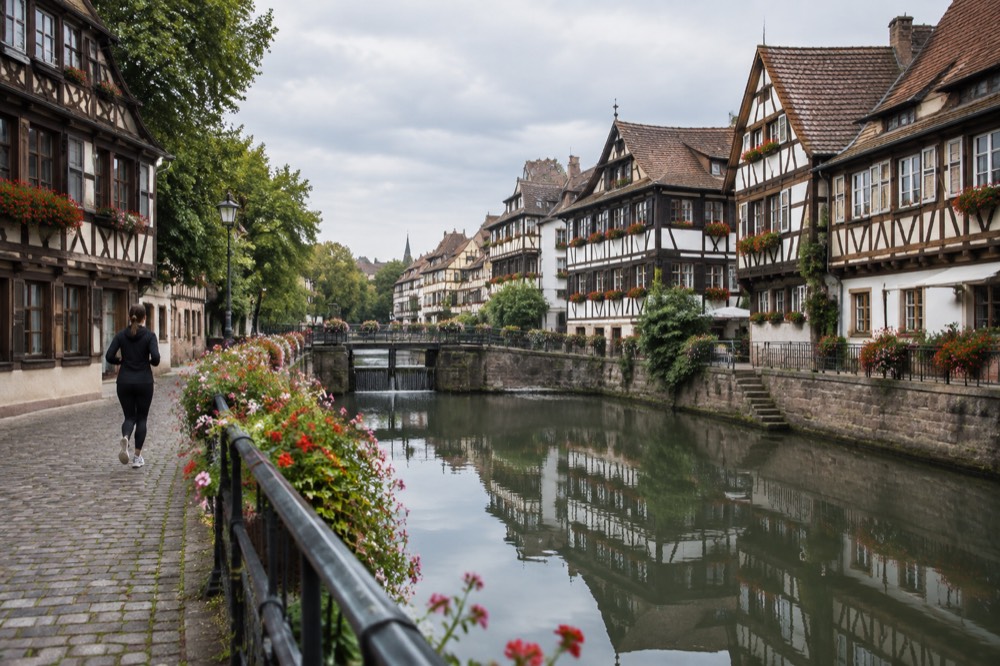
After the cathedral, the walk south takes you past Maison Kammerzell on Place de la Cathédrale and down to Petite France, the former tanners' quarter where the River Ill splits around half-timbered houses. The Petite France guide maps the quarter lane by lane, and the Ponts Couverts and the Barrage Vauban terrace sit at its western edge, giving you the classic rooftop view back over the whole island. The terrace has seasonal hours, 08:00-19:00 in September and October, so check the city's page before you count on a sunset from up there.
A guided walk on the first morning is a sound way to fix the city's geography in your head, and the street-art walk is the version of this that does something the standard history tour does not: it takes you off the Grande Île into the Krutenau and the gare district, where the murals are. Check availability on the operator's live listing if that angle appeals, and see the street art tour page for what it covers.
Where Should You Eat And Drink In Strasbourg On The Itinerary?
Book one winstub dinner for your Strasbourg nights and keep lunches light, because the Alsatian table is heavy: tarte flambée, choucroute and baeckeoffe are the three dishes to aim at, and a winstub is the traditional setting for them. Pair the food with the local wines, Riesling and Gewurztraminer, or with one of the city's craft beers. A guided tasting walk compresses several stops into one evening.
A winstub is the Alsatian equivalent of a tavern, wood-panelled and unhurried, and the historic ones cluster around the cathedral and the Grand'Rue. The dishes travel with the region rather than the city: tarte flambée is a thin crusted oval baked in a wood oven, choucroute is the sauerkraut platter, and baeckeoffe is a slow-cooked meat and potato casserole. The site's winstubs in Strasbourg guide lists the addresses worth the walk, and the individual dish guides go deeper on each one.
Wine is the other half of the meal. Alsace runs on single-varietal whites, and a short tasting before your trip heads out to the vineyards teaches you the difference between a dry Riesling and an aromatic Gewurztraminer faster than a restaurant list ever will. The one-hour tasting in the city is the compact version of this, and it sits well on the evening of day one or the afternoon before you leave for Colmar.
Beer drinkers are also covered: Strasbourg has a working brewing scene beyond the big industrial lager the city is known for, and one tasting runs before the breweries open to the public, which is a slot you cannot recreate on your own.
That evening slot, before the doors open to the public, is also the calmest hour a brewery has all day, and it leaves the rest of your night free for dinner afterwards. It pairs naturally with a winstub booking at 19:30 or later, since the tasting finishes while the kitchens are still serving.
One practical note on timing: the astronomical clock show at 12:30 and the cathedral's midday closure interact. If you want the clock, buy the ticket at a stall between 10:00 and 11:00 or at the Saint-Michel entrance from 11:30, then use the 11:15 to 12:45 nave closure for lunch before the show. That single scheduling move saves you a second trip to the cathedral.
What Does The Colmar Day Look Like?
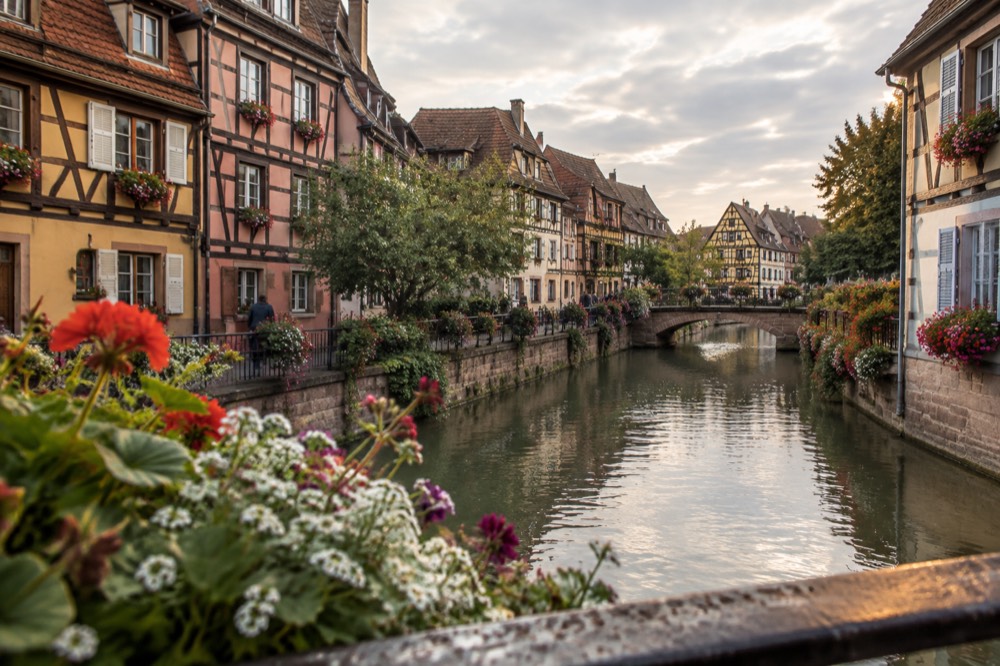
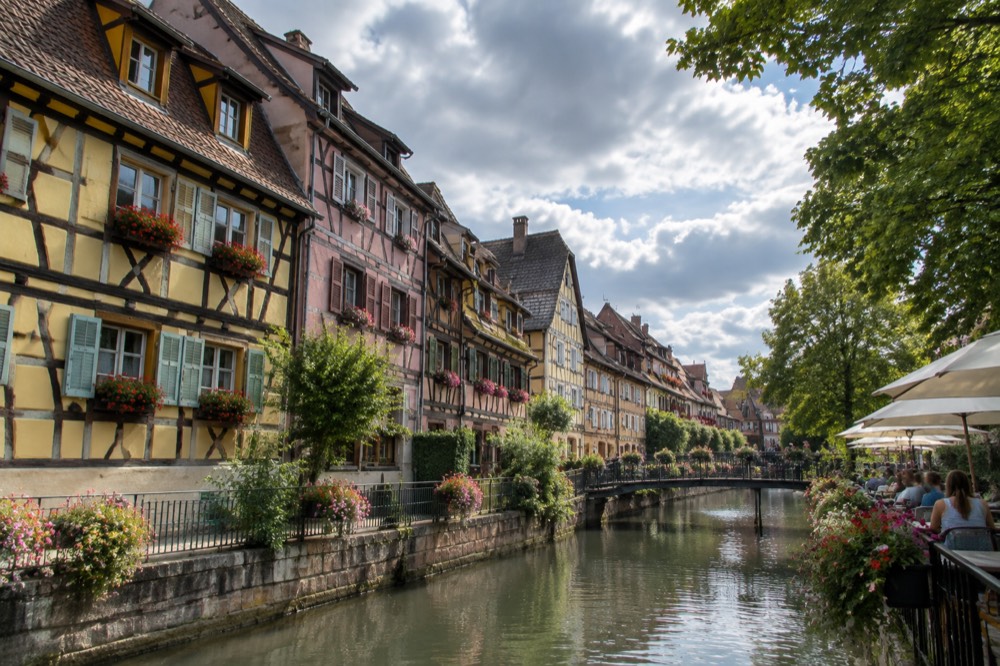
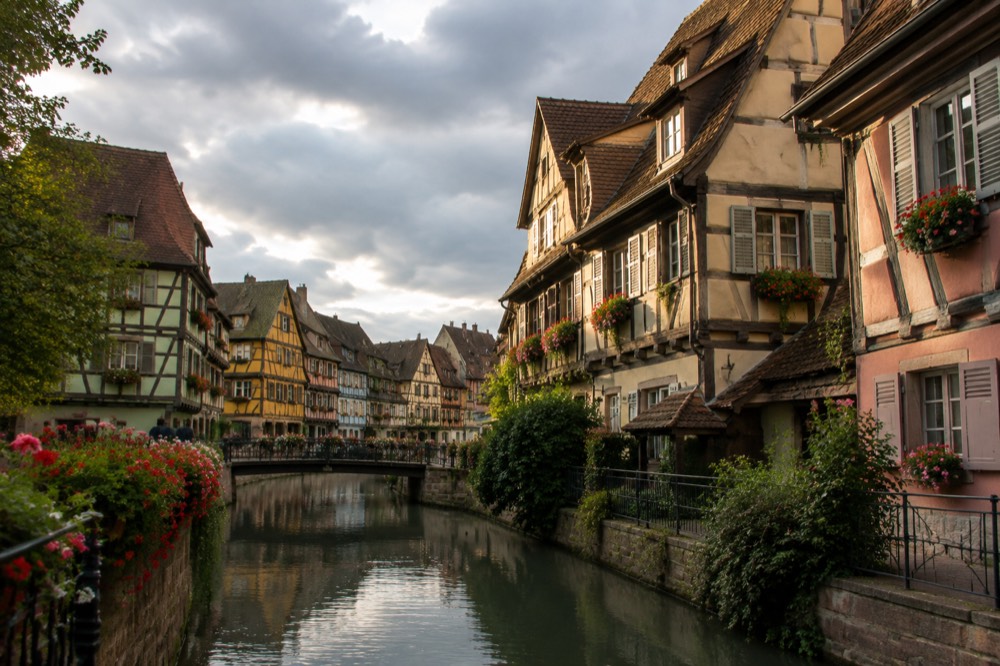
Colmar is a walking day, not a ticketing day: the old town's lanes, the canals of the Little Venice quarter and the Unterlinden area are the substance of the visit, and the train or bus from Strasbourg drops you within reach of all of it. Arrive mid-morning, walk the centre until late afternoon, and return to Strasbourg for dinner. There is no need to book a Colmar sight in advance.
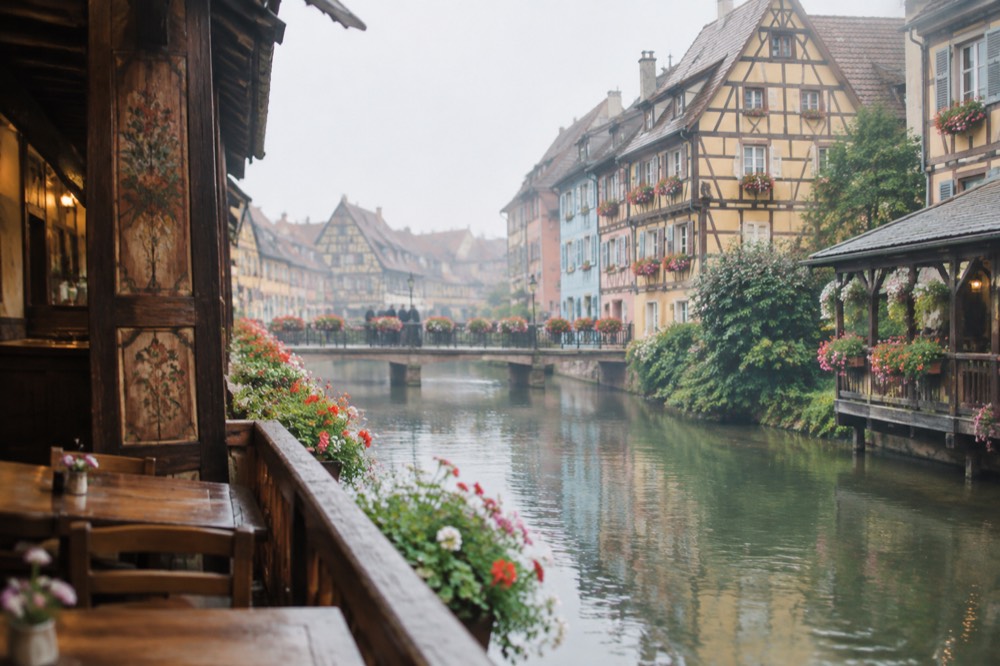
The old town is small and self-contained. Colmar's place in the Alsatian imagination comes from its canals, its painted merchant houses and its position at the head of the wine route, and the Colmar day trip guide on this site walks the route in order. The city is also the natural jumping-off point for the wine villages, Eguisheim, Riquewihr and Kaysersberg, which is why the four-night and five-night versions of this itinerary move one night's base or add a second Colmar day.
For travellers who would rather not organise the wine villages themselves, a guided day tour from Strasbourg bundles Colmar with the vineyards and the castle at Haut-Koenigsbourg, which is the version of the day that covers the ground when time is short.
| Strasbourg | Colmar | |
|---|---|---|
| Scale | City, spreads across several districts | Compact old town, walkable end to end |
| Headline sight | Cathedral with platform at 66 m | Canals and merchant houses of the old town |
| Best use of a day | Cathedrals, museums, European Quarter | Lanes, quays, wine tasting |
| Pairs well with | Boat tour, museums, street art | Wine route villages, Haut-Koenigsbourg |
| Fits in one day? | No, needs two | Yes, comfortably |
The honest comparison between the two cities, including the question of whether Colmar's prettiness has tipped into tourist-trap territory, is covered in is Colmar a tourist trap, and the seasonal face-off between the two Christmas markets sits in which Christmas market is better, Strasbourg or Colmar. Both answers feed back into how you weight the days.
How Do You Travel Between Strasbourg And Colmar?
Regional trains link Strasbourg and Colmar directly, and the run is short enough that a day trip needs no forward planning beyond checking the timetable on SNCF Connect before you leave. Within Strasbourg itself the tram and bus network is run by CTS, and a 24-hour pass at 4.60 EUR covers a full day of city movement. Do not rent a car for this itinerary unless the wine villages are in it.
The rail option is the one to default to. Trains run through the day between the two stations, and Colmar's station sits at the edge of the old town, so the transfer from platform to lanes is a short walk. Buy on the day or through the app; the fare is dynamic, so check the live price rather than planning around a fixed number. More of these guides are collected on Strasbourg Travel Guide.
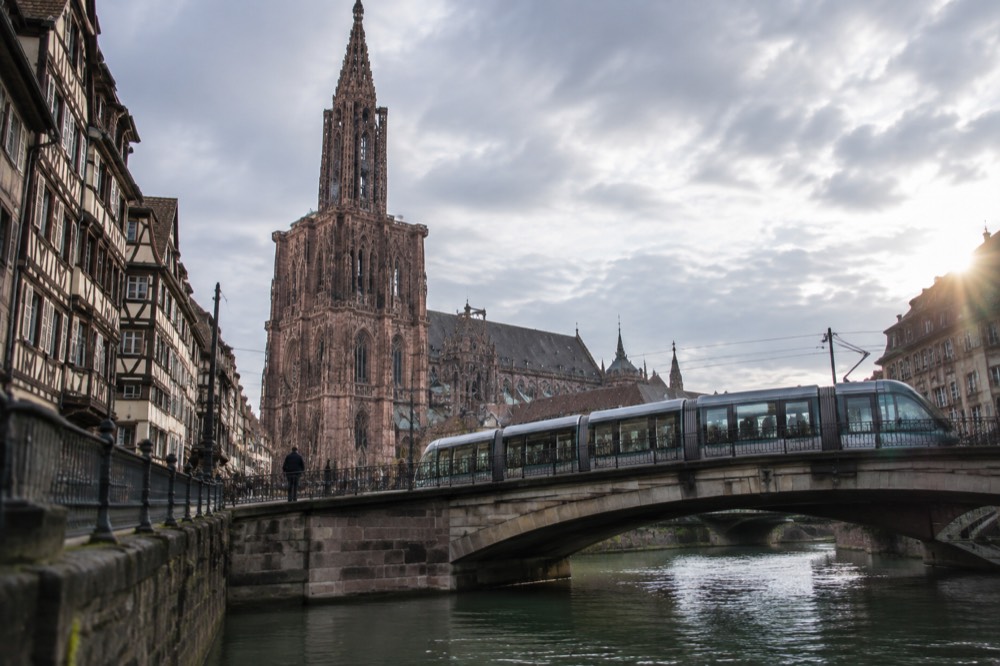
Inside Strasbourg, the CTS network does the work. The single ticket is 1.90 EUR bought through the app, a Badgéo card or contactless, or 2.50 EUR bought on board a bus, and the day passes are the better deal the moment you make a third trip. The airport shuttle deserves its own mention: the combined train-plus-city ticket at 4.60 EUR covers the shuttle from Entzheim and a day of urban transport, and the shuttle itself takes 8 minutes.
| CTS ticket | Price | Covers |
|---|---|---|
| Single, app / Badgéo / contactless | 1.90 EUR | One journey with changes |
| Single, bought on board bus | 2.50 EUR | One journey with changes |
| 24H Solo | 4.60 EUR | One traveller, unlimited for 24 hours |
| 24H Trio | 10.20 EUR | Two to three travellers together |
| Alsa+ 24h EMS airport ticket | 4.60 EUR | Entzheim shuttle plus 24H EMS travel |
A car earns its keep only when the itinerary grows. The wine villages between Colmar and the Vosges are stitched together by minor roads, and the Alsace road trip itinerary is the version of this trip where driving is the point. For the plain three-night Strasbourg-plus-Colmar break, the tram and the train beat the parking question entirely, and parking in Strasbourg is its own small discipline.
What Does A Longer Version Of The Itinerary Add?
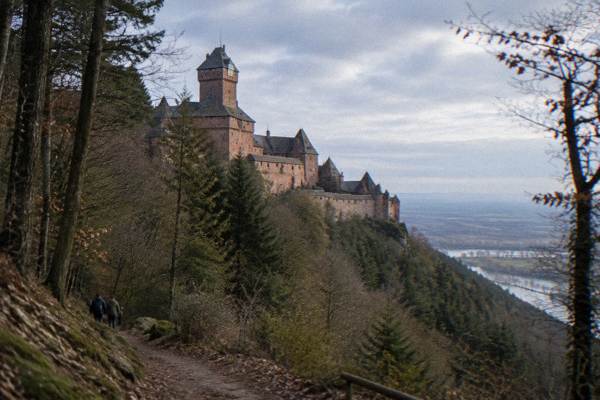
From four nights upward, the additions are the Alsace wine route villages, the castle at Haut-Koenigsbourg and, in season, the Christmas markets in both cities. Eguisheim and Riquewihr are the two villages travellers name afterwards, and both work as half-day stops on a loop out of Colmar. The five-night plan also opens the Black Forest across the Rhine in Germany, which is a border crossing, not a detour.
The wine route is the region's spine. It runs through villages of half-timbered houses and tasting cellars, and while no single village demands more than a stroll and a glass, the cumulative effect is the reason people extend the trip. The Alsace wine route guide maps it end to end, and the individual village guides, Riquewihr and Eguisheim among them, break down where the hours go.
A guided version of the wine day solves the driving question outright. The medieval-villages day trip from Strasbourg pairs the lanes with a tasting stop, and the half-day wine tour is the shorter cut for a schedule that also holds the Black Forest or a museum afternoon.
| Extension | Where it fits | Who it suits | What to check first |
|---|---|---|---|
| Wine route villages | Day 3 or 4, from Colmar | First-time visitors, wine drinkers | Village parking and cellar hours |
| Haut-Koenigsbourg castle | Day 4, full day | Families, castle visitors | The castle's own opening page |
| Black Forest, Germany | Day 4 or 5, full day | Travellers wanting a second country | Border is open, Schengen, euro on both sides |
| Christmas markets | Late November to 24 December | Everyone, once | The city's Christmas site for dates |
The Christmas version of this itinerary deserves its own mention because it changes the arithmetic. Strasbourg's market ran 26 November to 24 December in the 2025 edition and drew 3.05 million visitors, and the city posts each edition's dates on its Christmas site, so confirm them there before you book anything. The market itinerary on this site, the Strasbourg Christmas market itinerary, rebuilds the whole day plan around the chalets, and where to stay for the Strasbourg Christmas market handles the accommodation squeeze that December brings.
When Is The Best Time Of Year For This Itinerary?
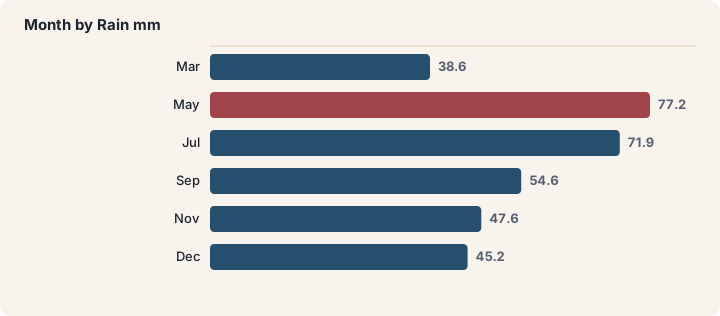
May to September gives this itinerary its best odds: the climate is semi-continental, with mean daily maxima from 20.9 C in May to 26.4 C in July, and the long summer evenings suit the platform and the river terraces. December is the other peak, colder at a mean maximum of 5.9 C but transformed by the Christmas markets. Spring and autumn are the quiet shoulder choices, with rain on roughly nine days a month.
The normals tell the story plainly. Strasbourg-Entzheim's 1991-2020 record puts July and August within a fraction of a degree of each other at the top of the year, and January at the bottom with a mean maximum of 5.2 C and a mean minimum just below freezing. Rain falls somewhere between 8 and 11 days a month in every season, so no month is dry; the difference is temperature, not shelter.
| Month | Mean max C | Mean min C | Rain mm | Rain days >= 1 mm |
|---|---|---|---|---|
| Mar | 12.1 | 2.6 | 38.6 | 8.5 |
| May | 20.9 | 10.1 | 77.2 | 10.8 |
| Jul | 26.4 | 14.9 | 71.9 | 10.4 |
| Sep | 21.6 | 10.7 | 54.6 | 8.0 |
| Nov | 9.4 | 3.3 | 47.6 | 9.2 |
| Dec | 5.9 | 0.8 | 45.2 | 10.2 |
December deserves its own warning about weight of numbers rather than weather. The market's 3.05 million visitors across the 2025 edition are spread over a month, but they concentrate on weekends, and hotel prices follow. The site's best time to visit Strasbourg guide works through the whole calendar, and is December a good time to visit Strasbourg answers the market question directly.
What Should You Not Miss If You Only Have One Day In Each City?
In Strasbourg, the unmissable spine is the cathedral with its clock show, Petite France and the Ponts Couverts, walked in that order in a single morning-to-afternoon arc. In Colmar, it is the old town lanes and the Little Venice canals, taken slowly. Everything else, the museums, the boat tour, the European Quarter, is a second-day reward rather than a first-day requirement.
The single-day Strasbourg version of this page already exists in expanded form: one day in Strasbourg sequences the whole city from breakfast to nightfall. For a trip of this shape, that page is day one, and two days in Strasbourg or three days in Strasbourg is the reference if the Colmar leg drops off.
Two things lift a one-day Strasbourg above the average. The first is the boat: the Batorama river tour runs from the quay by the Palais Rohan, with a long circuit of 1h10 and a short circuit of 0h45, and the long tour at 16.20 EUR full fare is the one that reaches the European institutions. The second is the museums cluster, where a 9 EUR full-price ticket per municipal museum and the 20 EUR 1-day pass make a rainy afternoon cheap to fill, as the rainy day in Strasbourg itinerary sets out.
| Batorama tour | Duration | Full fare | Reduced fare |
|---|---|---|---|
| Red Tour, long circuit | 1h10 | 16.20 EUR | 8.90 EUR |
| Blue Tour, short circuit | 0h45 | 12.50 EUR | 7.20 EUR |
For a river-cruise arrival rather than a land trip, the Strasbourg river cruise stop itinerary compresses the city into the hours a ship actually gives you, which is a different and tighter problem than this page's.
Common Questions About The Strasbourg And Colmar Itinerary
How many days do you need for Strasbourg and Colmar together?
Three nights is the practical minimum: two full days in Strasbourg and one full day in Colmar. Four nights adds the wine route villages, and five nights turns the trip into a small Alsace circuit with the castle at Haut-Koenigsbourg and a Black Forest day across the German border.
Is it better to stay in Strasbourg or Colmar?
For a first visit, stay in Strasbourg: it is the transport hub, the tram runs from the station to the centre, and day trips by regional train leave from the same station. Colmar works as a base when the wine villages are the focus of the trip or when you want quieter evenings.
Can you do Colmar as a day trip from Strasbourg?
Yes. Direct regional trains link the two stations, the run is short, and Colmar's old town is compact enough to walk end to end between mid-morning and late afternoon. Check the timetable on SNCF Connect before you leave and buy the fare at the live price.
What is the best month for a Strasbourg and Colmar trip?
May to September for the warmest, longest days, with mean daily maxima from 20.9 C in May to 26.4 C in July. December is the other peak, colder at a mean maximum of 5.9 C, but transformed by the Christmas markets in both cities.
Do you need a car for Strasbourg and Colmar?
No. The tram covers Strasbourg, the train covers Colmar, and a car earns its keep only when the wine villages or the Black Forest enter the itinerary. Parking in Strasbourg is a discipline of its own, and the car-free version of this trip avoids it entirely.
What should you book ahead for this itinerary?
Accommodation, especially for December, and nothing else is strictly required. The cathedral platform and the astronomical clock are both bought on the day, the clock tickets are sold on the day only, and guided tours and tastings are worth reserving once your dates are fixed, with free cancellation on the operator's listings if plans shift.
The Strasbourg and Colmar pairing works because the two cities divide the labour: one carries the Gothic weight and the institutions, the other carries the vineyards and the postcard lanes. Fix the number of nights first, book the Strasbourg base second, and let the train timetable dictate the Colmar day, and the rest of this itinerary falls into place around those three decisions.