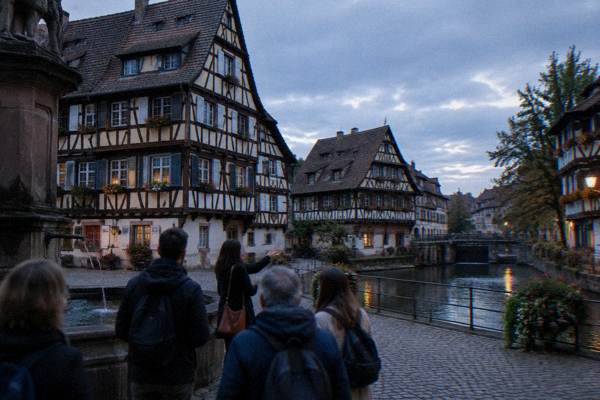
Free Walking Tour Strasbourg
Strasbourg, in north-eastern France on the border with Germany, has several genuinely free walking tours in English, all pay-what-you-want. This guide explains how they work, what you see, and how they compare with paid options.
Short answer
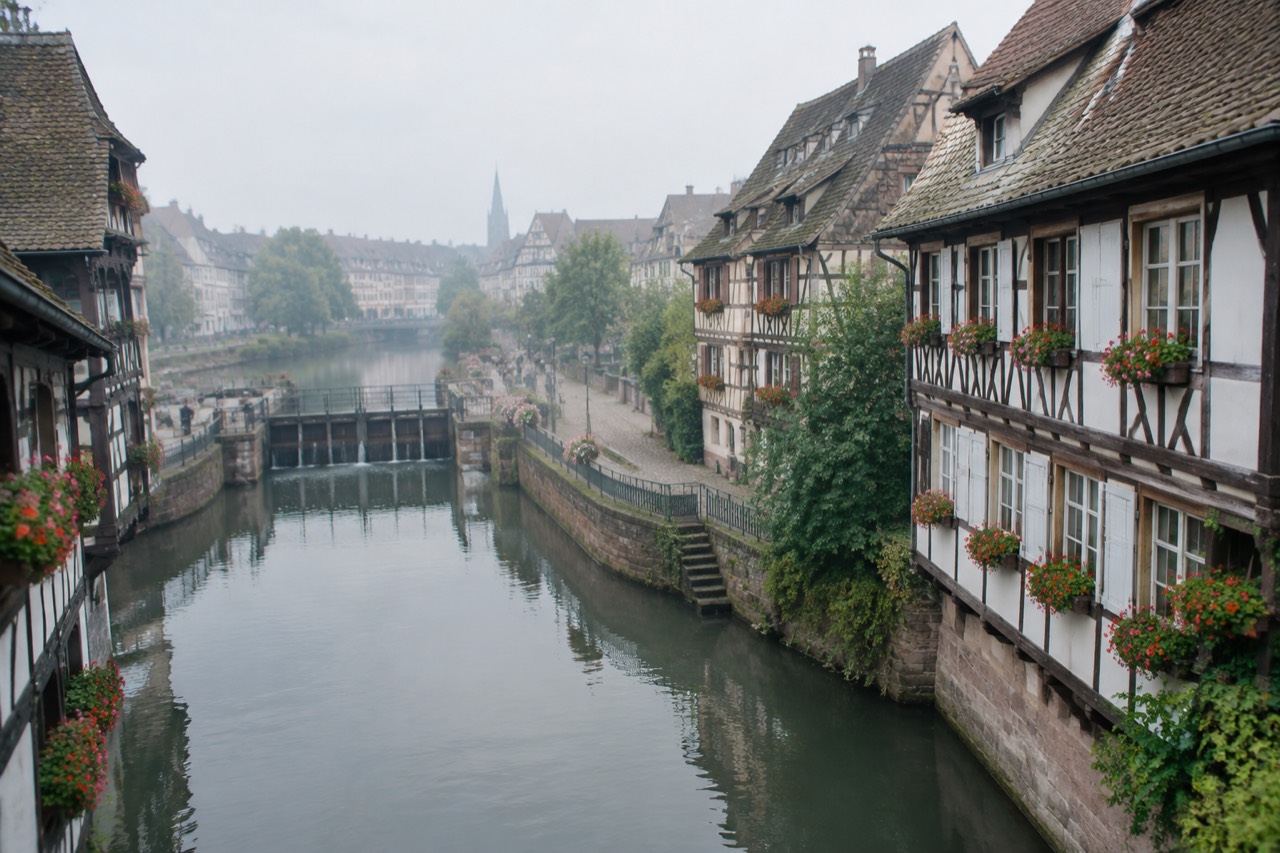
Free walking tours in Strasbourg run on a pay-what-you-want basis through GuruWalk, with English-language walks covering the Grande Île, Petite France and the cathedral district. You book a spot, walk with a guide, and tip at the end. A day pass for trams and buses costs 4.60 EUR, and the cathedral platform is 10 EUR if you climb it afterwards.
Strasbourg, the prefecture of the Bas-Rhin in Alsace, sits in north-eastern France on the River Ill, a short distance from the Rhine and the German border. Its historic core, the Grande Île, is compact enough that a walker can cross it in well under an hour, which is exactly why the free walking tour format works so well here. Several English-language walks run on a pay-what-you-want basis through GuruWalk, and they cover the same half-timbered lanes and cathedral squares that paid tours sell. This guide, from the Strasbourg Travel Guide editorial desk, explains how those walks work, what they show you, what a fair tip looks like, and when a paid tour is genuinely the better buy.
What Is A Free Walking Tour In Strasbourg?
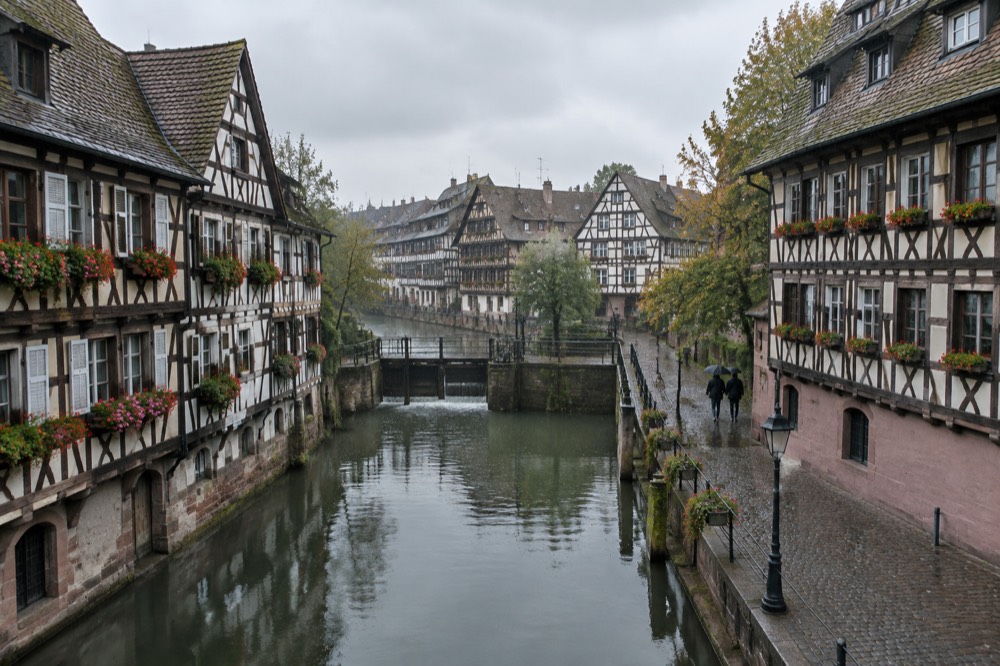
A free walking tour in Strasbourg is a guided walk with no fixed ticket price: you reserve a place, join the group, and pay the guide what you think the walk was worth at the end. In Strasbourg the English-language free walks run through GuruWalk, a platform built specifically for pay-what-you-want tours, and the guides depend on tips for their income. The format is well established across Europe, and Strasbourg's compact, walkable centre makes it one of the cities where it works best.
Ready to reserve your spot on a pay-what-you-want walk? Book a free walking tour spot here.
The mechanics are simple. You book a spot online, which costs nothing, turn up at the advertised meeting point, and walk. At the end, the guide invites tips in cash or by card, and you decide the amount. There is no minimum and nobody chases you, but the walks only exist because people pay, so treating one as a freebie rather than a tipped service is poor form.
The model matters in Strasbourg for a practical reason. The city's headline sights, the cathedral, Petite France, the Ponts Couverts and the covered squares of the Grande Île, are all public space you can stroll at no cost. What a guide adds is context: why the half-timbered buildings look German, why the city has changed hands between France and Germany, what the astronomical clock actually does. A pay-what-you-want walk lets you buy exactly as much of that context as you want, after you have received it.
Which Free Walking Tours Run In Strasbourg?
Strasbourg has four English-language free walking tours bookable through GuruWalk: an original highlights walk, a historian-led walk of the historic centre and Petite France with audio guides for larger groups, a Petite France highlights walk, and a general 2026 free tour. All four are pay-what-you-want, all are led in English, and their durations and meeting points are stated on each listing. The historian-led Petite France walk is the one this site features.
The differences between the walks are smaller than the listings suggest. All of them start in or near the Grande Île, all pass the cathedral and the river canals, and all end somewhere in Petite France or on its edge. What varies is the emphasis: some lean on anecdotes and photo stops, others on the Alsace question, the region's repeated transfers between France and Germany, and the architecture that records them. Reading two or three listings before booking is worth ten minutes, because the guide's angle shapes the whole walk.
Booking behaviour matters more in high season. In December, when the Christmas market fills the centre, and in July and August, the free walks fill up, and GuruWalk listings carry no-show policies: reserve a spot and fail to show, and you may be blocked from future bookings on the platform. Reserve only for days you will actually attend, and cancel through the listing if plans change.
Between them they show the honest range of the format, from a tip-based stroll to a private skipper.
For a wider picture of what costs nothing in this city, the companion page on free things to do in Strasbourg lists the squares, riverbanks and viewpoints you can enjoy without a guide at all.
What Will You See On A Historic Strasbourg Free Walk?
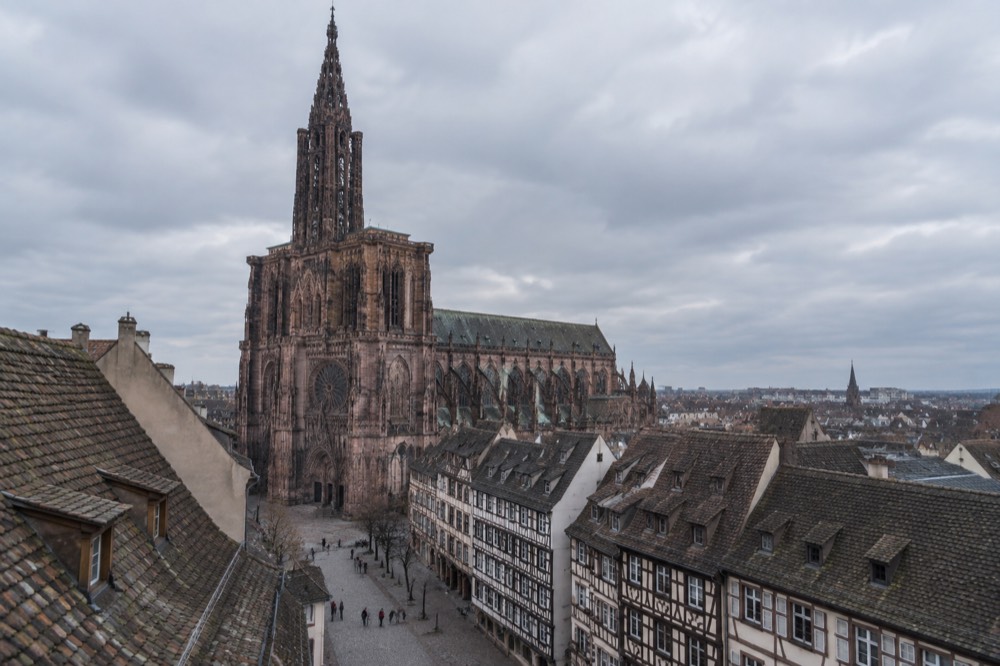
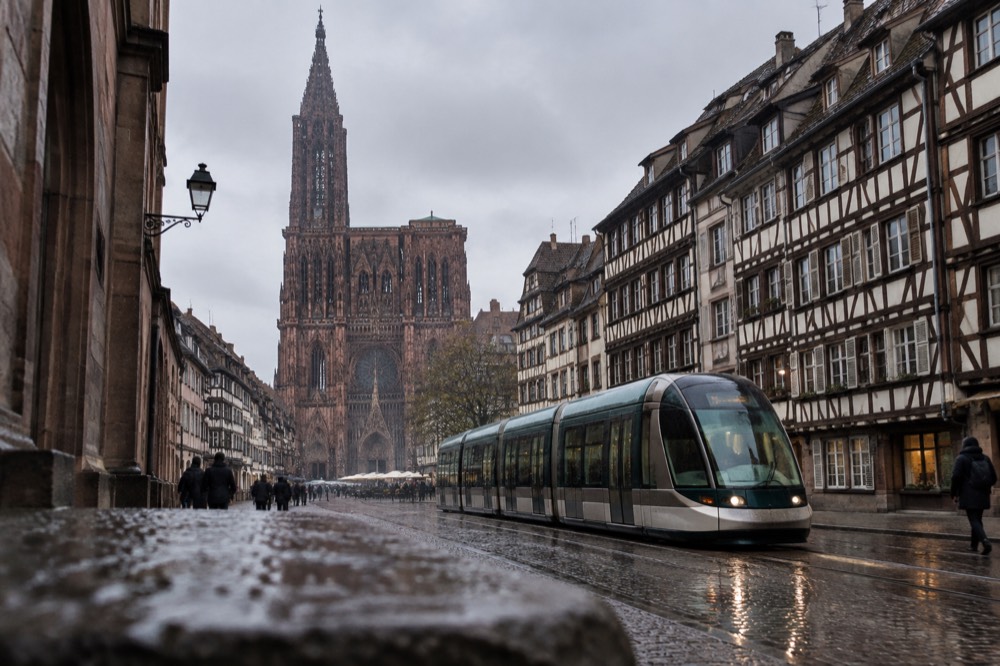
A historic Strasbourg walking tour on a pay-what-you-want basis typically covers the cathedral and its square, the Rue des Orfèvres and the merchant streets of the Grande Île, the Alsatian half-timbered architecture, the Ponts Couverts, the Barrage Vauban terrace viewpoint, and the canals and tanners' houses of Petite France. The route stays inside the old centre, and every stop is public space, so you can return to any of them afterwards on your own.
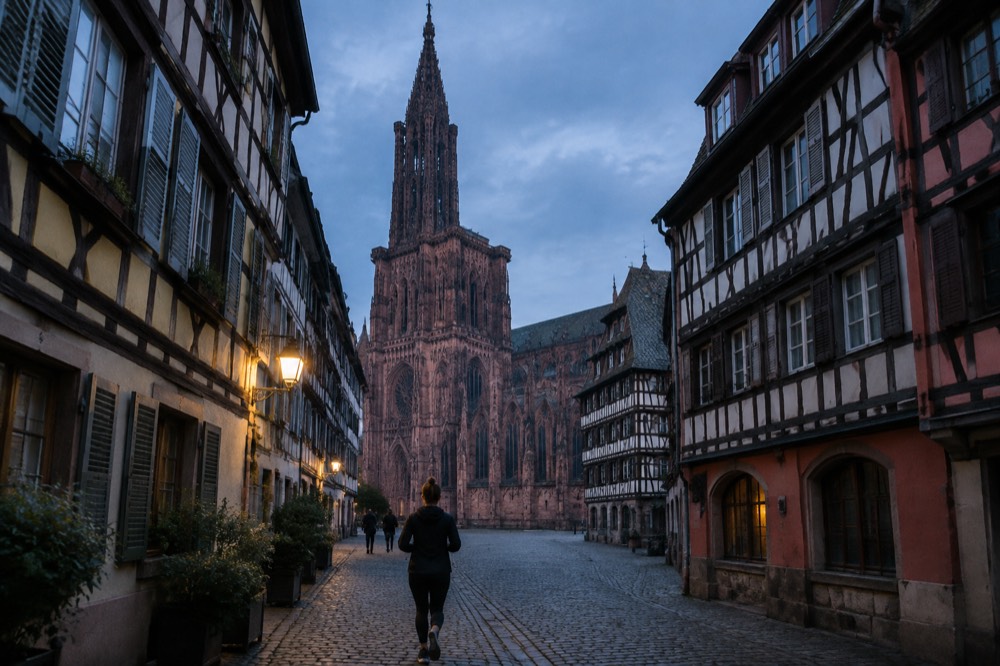
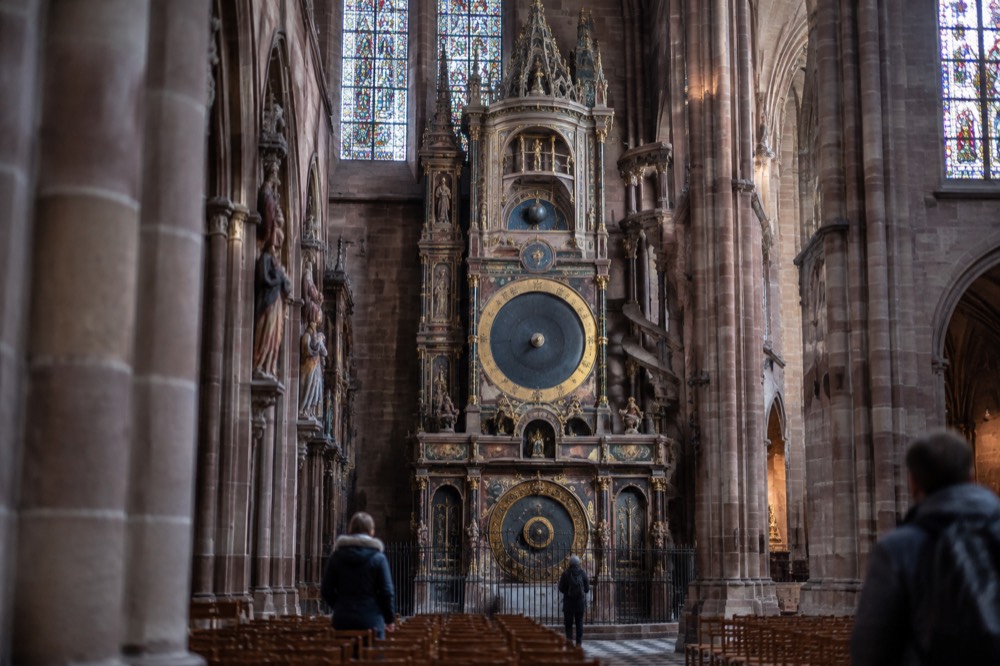
The cathedral stop is the anchor. Strasbourg Cathedral has a single spire, and the guides use it to explain the city's medieval wealth and its later place between two kingdoms. The nave is open to visitors, with hours published on the cathedral's own access page: Monday to Saturday 08:30-11:15 and 12:45-17:45, and Sunday afternoons from 14:00 to 17:15. The astronomical clock inside performs its full automaton show daily at 12:30 sharp, and the ticket costs 4 EUR, sold on the day only. If your walk ends near midday, the clock show is a natural add-on.
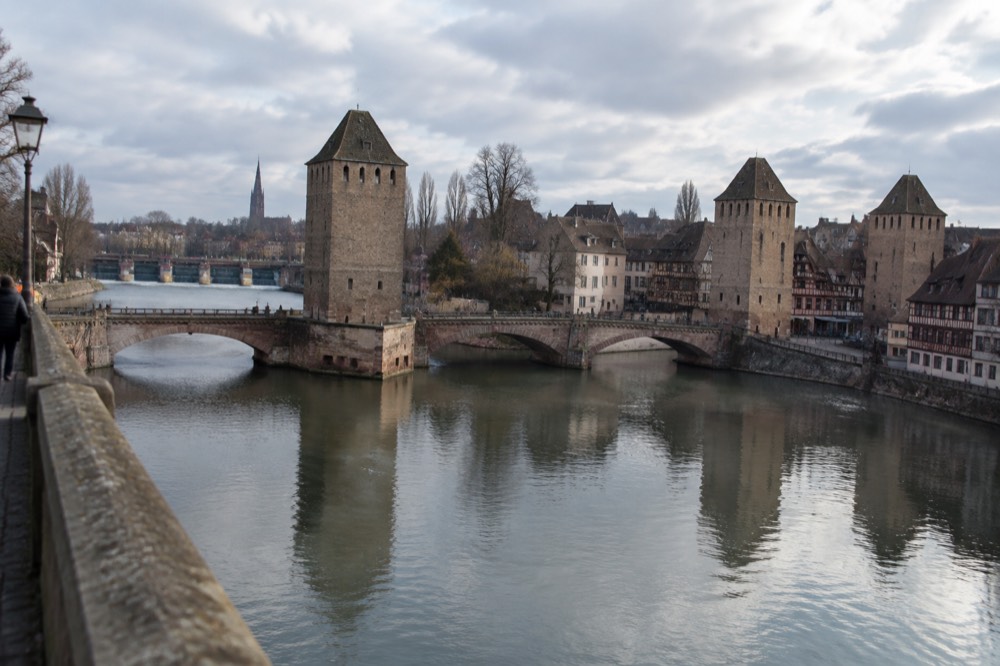
From the cathedral the walks drop toward the river. The Ponts Couverts, the covered bridges that once guarded the city's western waterways, and the Barrage Vauban, whose panoramic terrace looks back over Petite France and the spire, form the classic photo stop. The terrace has seasonal opening hours; from 1 September to 31 October it is open 08:00-19:00, and in the November to February stretch it closes much earlier in the day, which matters if your walk is a late-afternoon one in winter.
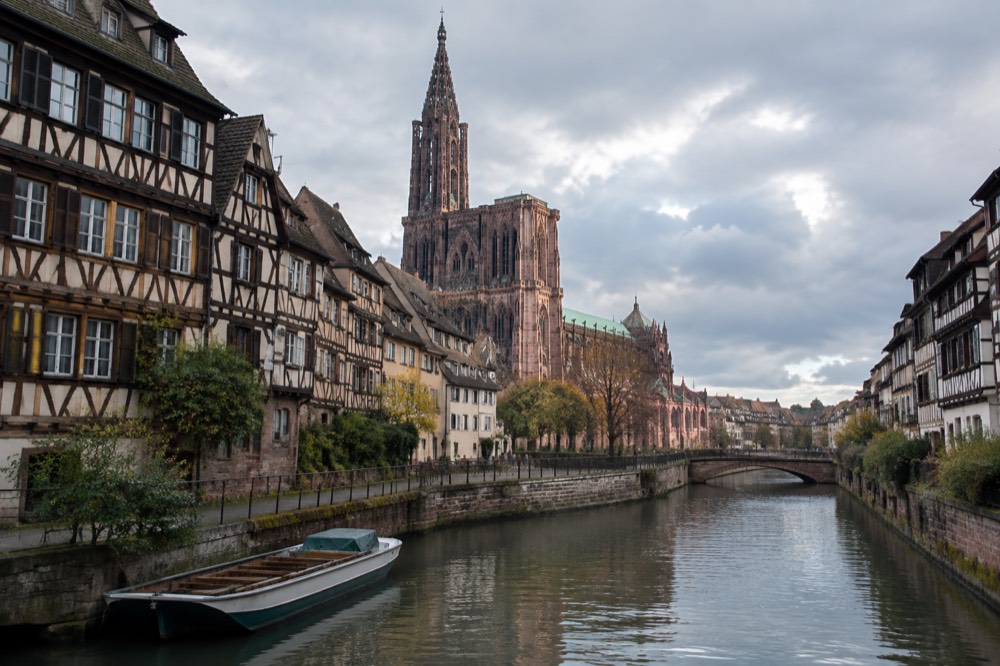
Petite France itself is the finale. The quarter was the tanners' district, and the guides explain the working river: the canals that drove the mills, the drying attics under the roofs, the way the half-timbered houses crowd the water. It is the most photographed corner of Strasbourg, and a good guide earns their tip by making it read as a working neighbourhood rather than a backdrop.
How Much Should You Tip On A Pay What You Want Walk?
There is no fixed rule, but the working convention on pay-what-you-want walks in French cities is a tip that reflects the value of a solid walk, more for a small group or an exceptional guide, less for a short or crowded one. Guides on GuruWalk depend entirely on tips, so a nominal coin gesture reads as a review of the walk rather than a saving. Families with children usually tip per adult rather than per person.
Think of the tip as a price you set after the fact. If a paid guided walk of similar length would have cost you a fixed fee in the same range as the paid walks on this site's roster, a tip in the 15 EUR range for a guide who delivered is fair, and 20 EUR or more for a historian-led walk that genuinely taught you something. If the walk was rushed, crowded far beyond the listing's promise, or the guide seemed to be phoning it in, a smaller tip is an honest signal, and the low-star review is the other half of that signal.
Cash is still the smoothest way to tip, and Strasbourg is in the euro zone, so bring notes rather than coins. Card tipping through the platform exists on some listings, but a guide standing in a square at the end of a walk cannot always process cards, and an ATM detour at the end is awkward. Withdraw what you expect to tip before the walk starts.
One habit worth avoiding: booking several free walks in one day to sample them all and tipping lightly on each. The guides talk to each other, the format only works if the median tip is decent, and one well-chosen walk serves you better than three half-attended ones.
What Does A Free Walk Skip, And When Is A Paid Tour The Better Choice?
A free walk skips everything outside the historic core: the European Quarter, the Neustadt's imperial boulevards, food and wine tastings, and any interior visit such as the cathedral platform or a museum. Choose a paid tour when you want a fixed itinerary, a small group, a specific theme such as street art or the European institutions, or tastings, and choose a private option when the schedule matters more than the price.
The European Quarter is the clearest example. The free walks stay in the old centre because that is where the footfall is, but Strasbourg's second identity is institutional: the European Parliament, the Council of Europe and the European Court of Human Rights sit in a district a tram ride east of the cathedral. A themed paid walk covers that ground properly. The Parlamentarium, the European Parliament's visitor centre, opens Monday to Friday 09:00-18:00 and Saturday mornings and afternoons outside plenary weeks, with an airport-style security check at entry; plenary weeks change the hours, so check the official page before planning a visit around one.
Food is the other gap. A free walk will point at winstubs; a food tour takes you inside them, with tastings included and the price fixed up front. For travellers whose interest is dinner rather than dynasties, the paid format is simply the right tool.
The paid walk with a local guide below is the standard upgrade path from a free walk: same scale of city, fixed price, smaller commitment to luck.
The private boat cruise is the other end of that spectrum: a skippered cruise on the Ill for a group of up to four, on water the free walks only look at from the banks.
How Do Free Walks Compare With Paid Strasbourg Tours?
Free walks win on flexibility and price control: you pay nothing until the end and set the amount yourself, but you accept a larger group, a fixed route and variable guide quality. Paid tours win on guarantees: a fixed itinerary, a stated group size, themed content and pre-booked reliability, at a known price paid up front. In Strasbourg both formats cover the same historic core, so the choice is about certainty versus freedom, not coverage.
The table below sets the formats side by side. Prices for individual products are not typed here because they change; the live listings carry current figures.
| Factor | Free (pay what you want) walk | Paid guided walk | Private tour or cruise |
|---|---|---|---|
| Payment | Tip at the end, amount you choose | Fixed price per person, paid on booking | Fixed price per person or per group |
| Group size | Set by the listing, often the largest | Stated on the listing, usually capped | Your own party |
| Route | Historic core, fixed by the guide | Fixed itinerary, sometimes themed | Tailored or fixed, your choice |
| Coverage | Grande Île and Petite France | Old centre, or themed districts such as the European Quarter | Whatever the product states |
| Best for | First-time visitors, budget travellers | Travellers wanting certainty or a theme | Families, tight schedules, special occasions |
| Risk | Guide quality varies | Little, but you pay even if tired | Highest cost, lowest risk |
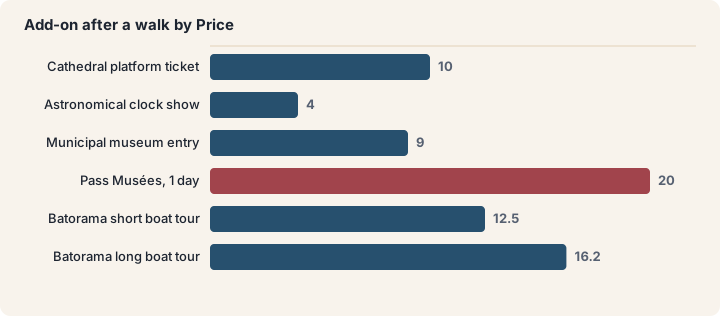
A second comparison helps with the add-ons, because the walk itself is free but the city around it is not. These figures come from official tariff pages.
| Add-on after a walk | Price | Notes |
|---|---|---|
| Cathedral platform ticket | 10 EUR full, 6 EUR reduced | Platform at 66 m, under 6s free |
| Astronomical clock show | 4 EUR | Daily at 12:30, day-of tickets only |
| Municipal museum entry | 9 EUR full, 5 EUR reduced | Free on the first Sunday of each month |
| Pass Musées, 1 day | 20 EUR | Covers the municipal museums in one day |
| Batorama short boat tour | 12.50 EUR full, 7.20 EUR reduced | Blue Tour, 45 minutes |
| Batorama long boat tour | 16.20 EUR full, 8.90 EUR reduced | Red Tour, 1 hour 10 minutes |
Note that the Musée Alsacien is closed for works until 2028 and does not appear in any museum planning; the other municipal museums remain open.
What Should You Bring, And When Do The Walks Run?
Bring cash for the tip, water, and shoes that handle cobbles, because the free walks run year-round and in whatever weather the day brings. Strasbourg's climate is semi-continental, with mean daily maxima from 5.2 C in January to 26.4 C in July and 635.7 mm of rain a year, so a rain layer is wise in every season. Walks run most frequently from spring through autumn and daily around the Christmas market, with meeting points and times stated on each listing.
The seasonal shape of the city matters for planning. The Meteo-France 1991-2020 normals for Strasbourg-Entzheim show the wettest months are May through July, each with between 10.2 and 10.8 rain days of 1 mm or more, while September is the driest stretch of the autumn with 8.0 such days. December, the market month, averages a mean maximum of 5.9 C and a mean minimum of 0.8 C, cold enough that an evening walk needs gloves and a proper coat.
| Month | Mean daily maximum | Mean daily minimum | Rain days of 1 mm or more |
|---|---|---|---|
| January | 5.2 C | -0.2 C | 9.1 |
| March | 12.1 C | 2.6 C | 8.5 |
| June | 24.4 C | 13.4 C | 10.2 |
| September | 21.6 C | 10.7 C | 8.0 |
| December | 5.9 C | 0.8 C | 10.2 |
For the fuller month-by-month picture, including what it means for crowds and opening hours, see the site's guide to Strasbourg weather and the broader best time to visit Strasbourg.
Getting to the meeting point is cheap. A single CTS tram or bus ticket costs 1.90 EUR bought through the app, a Badgéo card or contactless payment, or 2.50 EUR if bought on board a bus. A 24-hour Solo pass is 4.60 EUR, and the 24-hour Trio pass for two to three people travelling together is 10.20 EUR. If you are arriving from the airport, the train shuttle runs up to five times an hour and takes 8 minutes to the central station, and a combined airport ticket covering the train plus a day of city transport is 4.60 EUR.
| CTS ticket | Price | What it covers |
|---|---|---|
| Single, app or contactless | 1.90 EUR | One journey on tram or bus |
| Single, bought on board a bus | 2.50 EUR | One journey, bus only |
| 24H Solo | 4.60 EUR | One person, 24 hours |
| 24H Trio | 10.20 EUR | Two to three people, 24 hours |
| Airport combined ticket | 4.60 EUR | Airport train plus 24H Solo |
How Do Free Walks Fit A Strasbourg Christmas Market Trip?
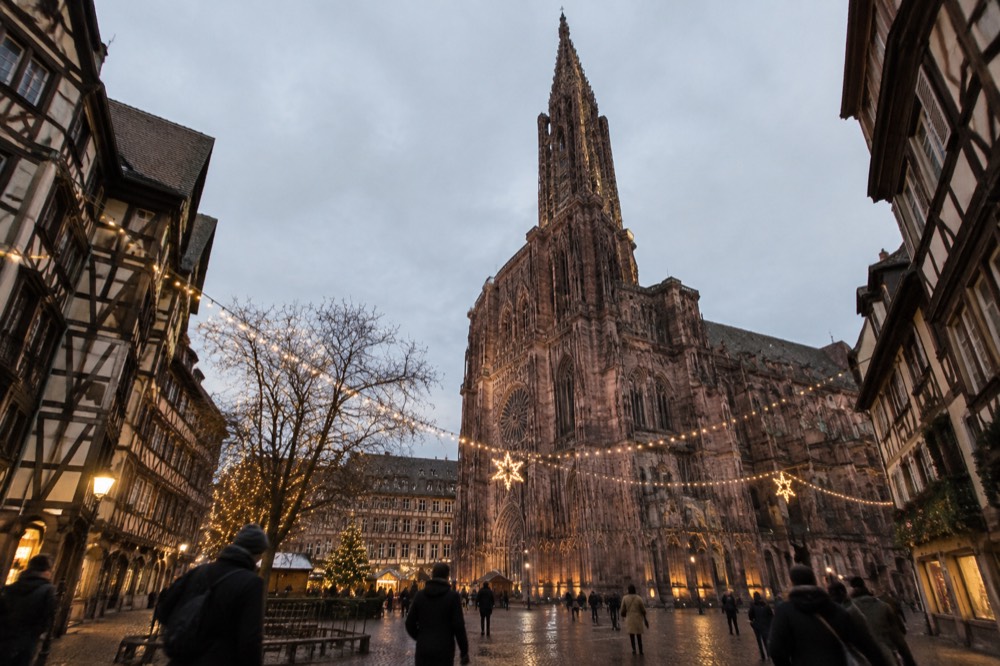
In December the free walks become a practical orientation tool: the Christmas market spreads across several squares in the historic centre, and a guided walk on your first afternoon maps the whole layout on foot before you commit evenings to it. The 2025 edition ran from 26 November to 24 December and drew 3.05 million visitors, so book walks early, expect crowds on every route, and confirm the 2026 dates on the city's official Christmas site.
The usual pattern, in words rather than dates, is that the market opens in the last week of November and runs to 24 December, with chalets typically open from late morning into the evening and an early-evening close on the final day. The city's own Christmas site is the place to confirm the 2026 dates and the programme, both still being finalised there. The 2025 attendance figure, 3.05 million visitors against 3.4 million the year before, gives a sense of scale: the centre in December is a crowded place, and a guide who knows the quieter squares earns their tip twice over.
A free walk also pairs well with a market day because the walk's stops and the market's squares overlap. The cathedral square, Place Kléber and the riverside terraces are all market ground in December, so the orientation walk you take at 14:00 is the map you use at 19:00. For the deeper planning, the site's guides to the Strasbourg Christmas market, Christmas markets in Alsace and Strasbourg in winter cover dates, stalls, food and where to sleep.
If December brings you rather than the reverse, the where to stay for the Strasbourg Christmas market page sorts the neighbourhoods by walking distance to the stalls, and where to stay in Strasbourg does the same job for the rest of the year.
Which Walk Should You Actually Book First?
Book the historian-led free walk of historic Strasbourg and Petite France first, because it covers the whole core in one route with the strongest framing, and reserve it for your first full day in the city. Add a themed paid tour later only if a specific interest, food, the European Quarter or a private format, pulls you that way. Reserve through the operator's live listing, check the cancellation terms there, and tip in cash at the end.
The featured walk runs through GuruWalk, is led in English, and is pay what you want, with the guide's historian background doing the work that a fixed-price walk would charge for. Because it is the site's featured tour rather than a product it sells, the honest framing is this: it is a good first walk in a city that rewards walking, and the price is the one you set. Check availability on the live listing for current meeting points and times.
Common Questions About Free Walking Tours In Strasbourg
Are The Free Walking Tours In Strasbourg Really Free?
They are free to book and free to join, but they are not free for the guide. The walks run on a pay-what-you-want basis through GuruWalk, which means you reserve a place at no charge, take the walk, and tip the guide at the end. Treating them as a no-cost activity rather than a tipped service undermines the format.
How Much Should I Tip A Free Walking Tour Guide In Strasbourg?
Tip what the walk was worth to you, with more for an exceptional guide or a small group, and less for a rushed or overcrowded one. Bring cash in euros, since guides standing in a square cannot always take cards.
Do I Need To Book A Free Walking Tour In Strasbourg In Advance?
Yes, reserve through the listing, because spots are capped and the December market season and the summer months fill the walks. Booking costs nothing, but repeated no-shows can get you blocked from future bookings on the platform, so cancel through the listing if your plans change.
What Areas Of Strasbourg Do The Free Walks Cover?
The free walks cover the Grande Île and Petite France: the cathedral and its square, the merchant streets of the old centre, the Ponts Couverts and the canals of the former tanners quarter. They do not cover the European Quarter, the Neustadt or any museum interiors.
Can I Do A Free Walking Tour During The Christmas Market?
Yes, and it is a good way to map the market squares on your first day. The market normally opens in the last week of November and runs to 24 December; the 2025 edition ran 26 November to 24 December and drew 3.05 million visitors. Confirm the 2026 dates on the city's official Christmas site before booking, and reserve the walk early.
Is A Free Walk Or A Paid Tour Better For A Short Visit?
For a first visit of one or two days, a free walk is usually the better start: it covers the whole core in one route and lets you judge the guide before paying. Choose a paid tour when you want a fixed itinerary, a theme such as food or the European institutions, or a private format, and check the live listing for current prices.