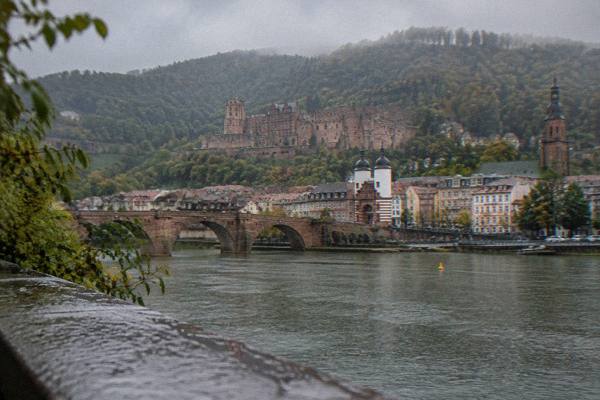
Heidelberg Day Trip From Strasbourg
Heidelberg, a university city on the River Neckar in south-west Germany, sits within practical day-trip range of Strasbourg, the prefecture of the Bas-Rhin in Alsace, north-eastern France. Both countries use the euro and sit inside Schengen, so the border crossing is a formality rather than an event.
Short answer
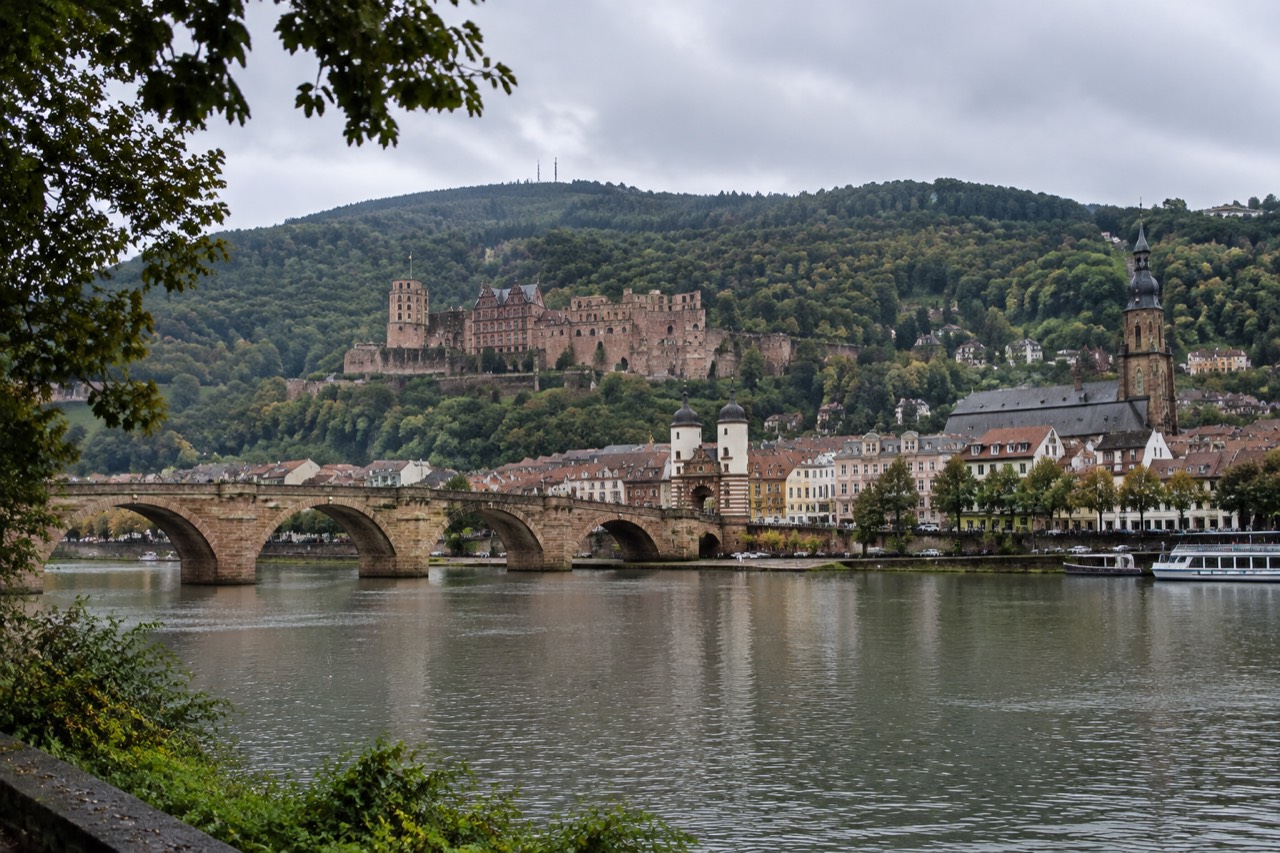
Heidelberg is a university city on the River Neckar in Germany, reachable as a full-day rail trip from Strasbourg in Alsace, north-eastern France. Both countries use the euro and sit in Schengen, so there are no border formalities. Check times on SNCF Connect and Deutsche Bahn, and plan the day around the castle, the old town and the riverside.
Heidelberg, a university city on the River Neckar in south-west Germany, sits within practical day-trip range of Strasbourg, the prefecture of the Bas-Rhin in Alsace, north-eastern France. The two cities belong to different countries but to the same broad river world: Strasbourg stands on the Ill beside the Rhine, which forms the border with Germany, and Heidelberg lies on a Neckar valley. France and Germany share the euro and the Schengen area, so a day trip between them involves no currency exchange and no border stop. This guide lays out how the trip works, what to see once you are there, how it compares with the other cross-border options from Strasbourg, and what the Strasbourg end of the day costs in hard figures.
Why Heidelberg Makes A Good Day Trip From Strasbourg
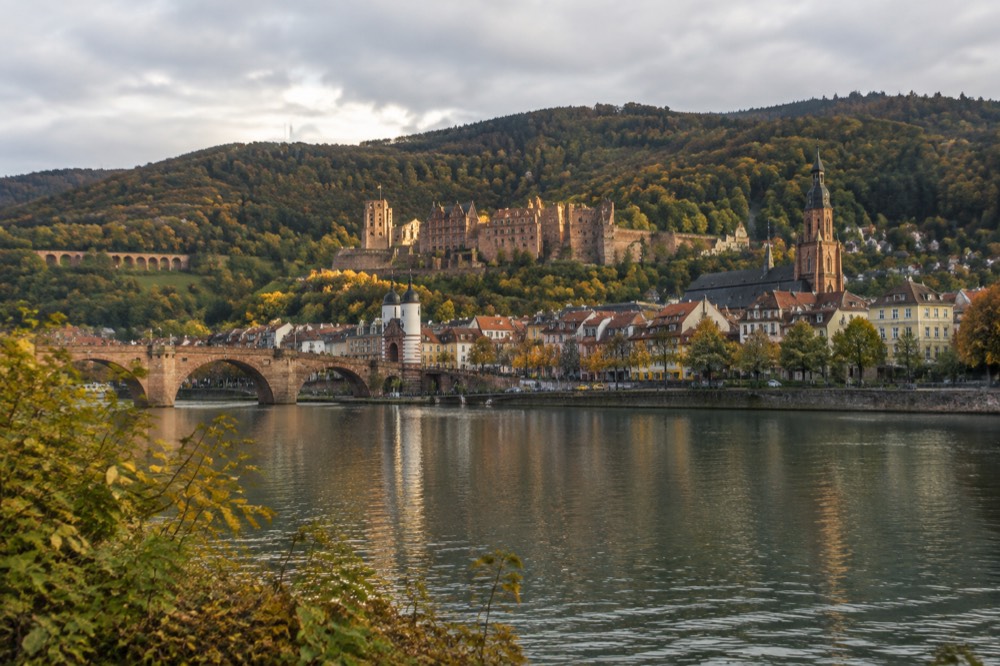
Heidelberg works as a day trip because it compresses a castle, a baroque old town and a riverside setting into one walkable area, because it sits in the same Schengen and euro zone as Strasbourg so the practical friction of crossing a border disappears, and because it offers a German counterweight to the Alsatian half-timbered scenery you have already been walking through in France. The change of register is the point. Strasbourg gives you a single-spired cathedral, canals and winstubs; Heidelberg gives you hilltop castle ruins, a long main street and a different food tradition, all without leaving the euro or changing money.
The character contrast is real and easy to describe. Strasbourg's Grande Île is a medieval island core of half-timbered houses and water, with the Musée de l'Œuvre Notre-Dame and the cathedral's platform at 66 m as its vertical punctuation. Heidelberg is built along a river rather than around an island, with its castle looking down from a hillside above the town. One city is French and Alsatian; the other is German and Badish. The languages on the shop signs change, the bakery windows change, and the beer culture changes, yet the journey between them is a domestic-feeling train ride rather than an expedition.
There is also a planning argument. Strasbourg makes an efficient base for the whole upper Rhine region: the Alsatian wine villages sit to the south-west, and the German spa town of Baden-Baden is a short hop away. Adding Heidelberg to that list lets you build a varied week from one hotel, mixing French and German day trips rather than repacking. Travellers who base themselves in Strasbourg for three or four days can pair Heidelberg with an Alsatian villages day and a Black Forest day and see three quite different versions of the Rhine world.
The trip suits a particular kind of traveller especially well: someone who has already seen Strasbourg's core sights, holds a second or third day open, and wants a walkable destination where the main attractions sit close together. It suits families with teenagers, since a castle ruin and a river walk need no museum stamina. It suits anyone travelling without a car, because the sights cluster around the old town and the river. What it does not suit is a half-day plan: the round journey eats the edges of the day, so treat it as a full outing and leave Strasbourg in the morning.
How To Get From Strasbourg To Heidelberg Without A Car
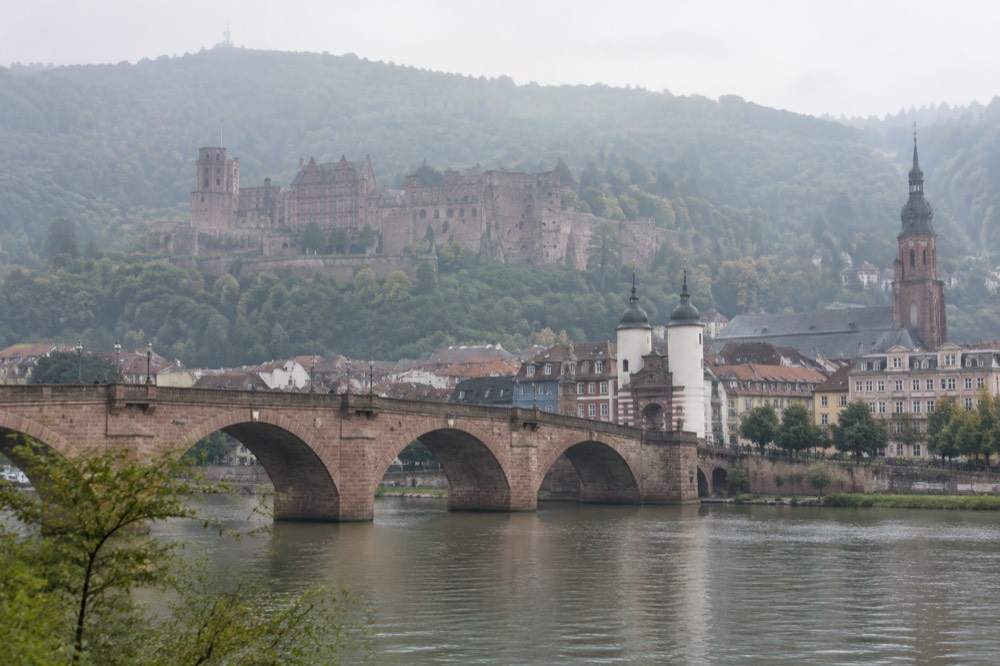
The practical answer is the train: Strasbourg's Gare Centrale is a cross-border hub with direct services into Germany, and Heidelberg is reachable by rail with a connection on the German network, booked through SNCF Connect, Deutsche Bahn, or a joint ticket. Both countries use the euro, both are in Schengen, and there is no border control on the route. Look the current timetable and price up on the operators' own journey planners before you commit to a departure.
The first step is getting to the station, and that part is straightforward. A single CTS ticket in Strasbourg costs 1.90 EUR bought through the Badgéo card, the CTS app or contactless payment, or 2.50 EUR if bought on board a bus. A 24-hour Solo pass is 4.60 EUR and a 24-hour Trio pass for two or three people travelling together is 10.20 EUR. If your day trip starts from the airport side of the city, the combined train-and-network ticket covering the Entzheim shuttle plus a day of CTS travel is 4.60 EUR. Any of these gets you to Gare Centrale, where the German-bound trains leave.
| Option | What it involves | Who it suits | What to check before you go |
|---|---|---|---|
| Rail with a German connection | Train from Strasbourg Gare Centrale into the German network, changing onto a regional or long-distance service towards Heidelberg | Independent travellers who enjoy planning | Timetables and fares on SNCF Connect and Deutsche Bahn |
| Organised day trip | A guided excursion booked from Strasbourg, with transport and a guide arranged for you | Visitors who prefer not to manage connections | The operator's live listing for departure point and schedule |
| Car hire | Driving across the Rhine and up the German side | Groups carrying luggage or extending beyond one day | Parking arrangements in Heidelberg, and opening hours of your first stop |
Booking deserves a small note of caution. Cross-border fares between the French and German systems do not always price the way a domestic journey does, and the cheapest option can be a combination of a French ticket to the border and a German regional ticket rather than a single through fare. Check both operators' planners, and check the German side in particular, because regional tickets there often cover a whole day of travel for one price. Whichever way you buy, keep the ticket on your phone and charged.
One more practical point: the return leg matters more than the outbound. Heidelberg's old town is pleasant in the early evening, but a missed connection on the way back turns a good day into a late one, so decide your latest acceptable return train before you sit down to dinner, and work backwards from it. Give yourself a buffer on the outbound too, since the whole plan depends on the first German connection.
What To See In Heidelberg In One Day
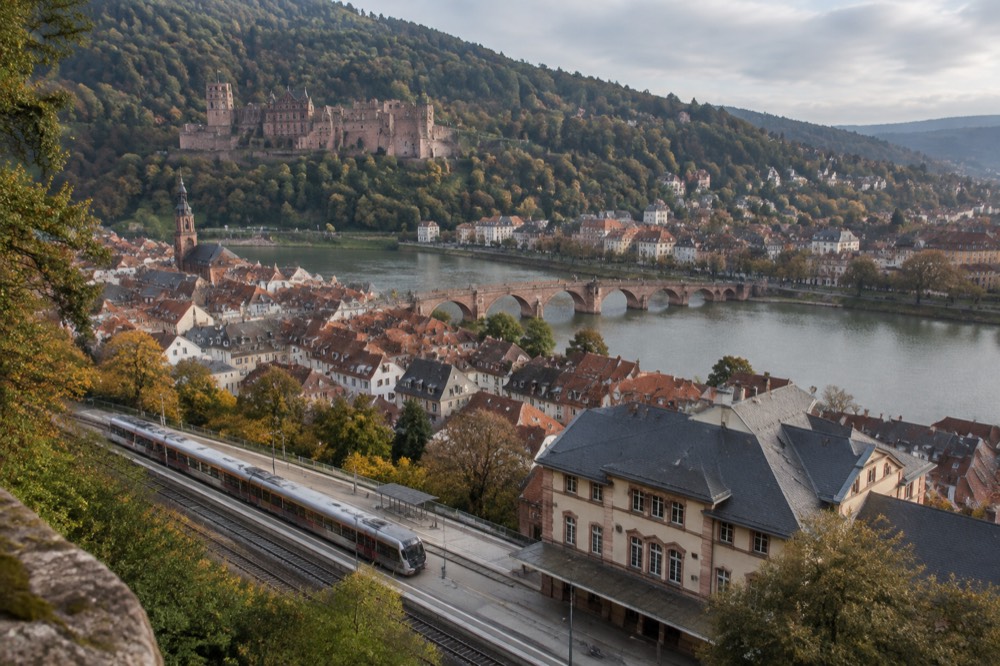
A one-day Heidelberg visit should centre on three things: the castle ruins on the hillside above the old town, the old bridge over the Neckar with its view back up at those ruins, and the long main street of the old town that runs between them, with the Philosopher's Walk on the far bank as the optional fourth act if your legs allow. All of these sit within walking distance of one another, which is what makes the day manageable. Nothing on this list requires a car, and the vertical layout, castle above, river below, gives the day a natural shape: climb first, wander second, finish by the water.
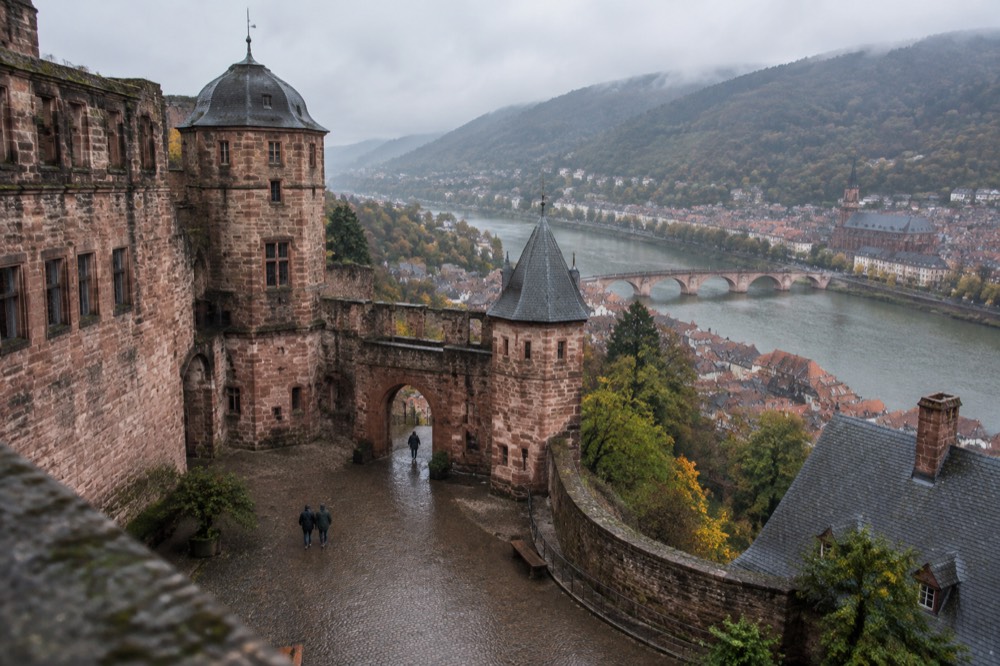
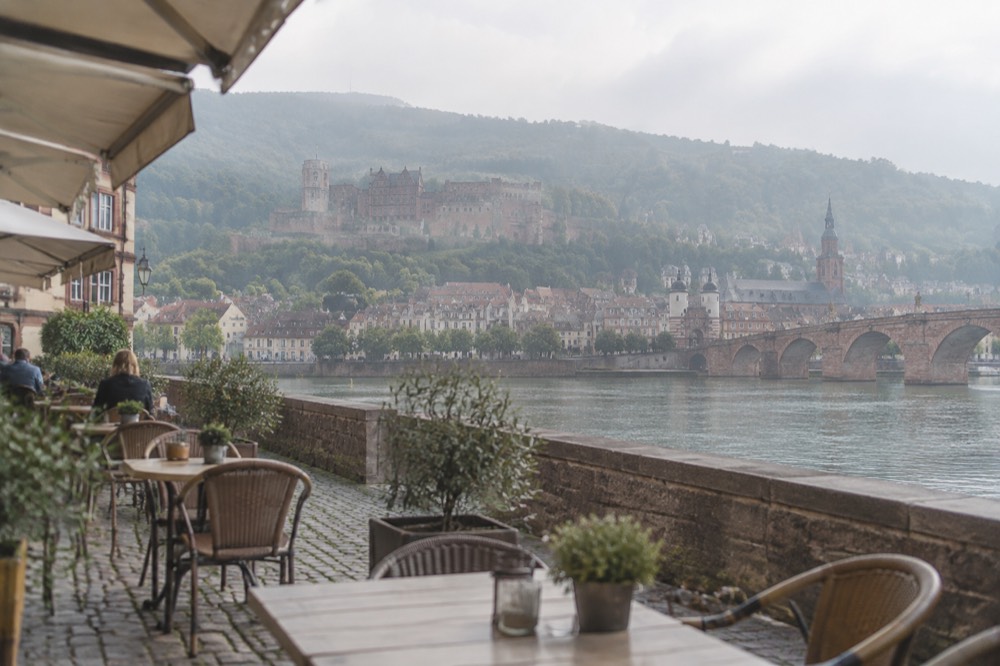
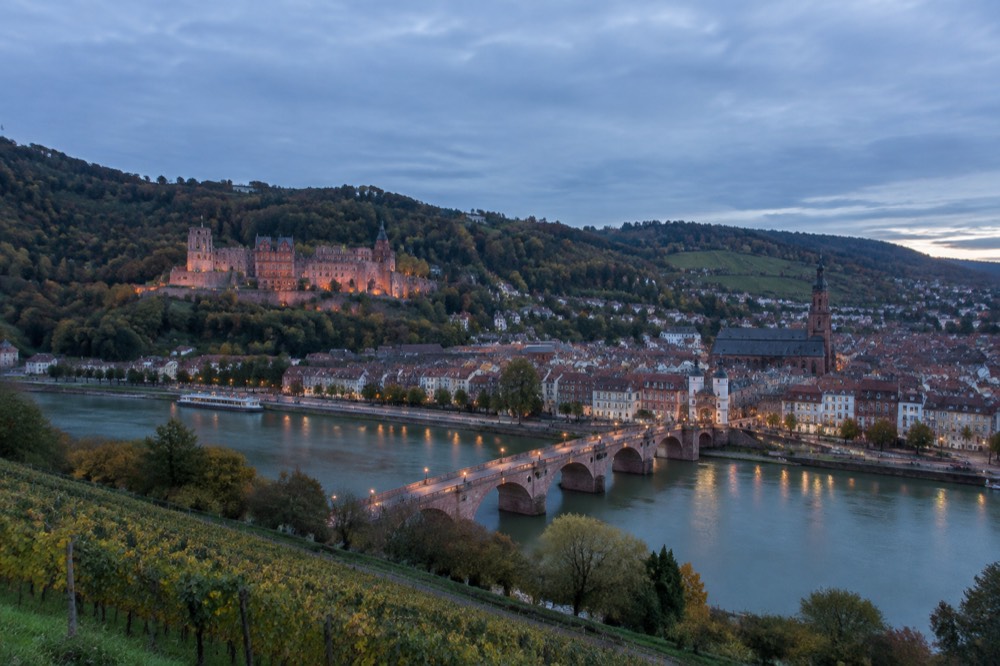
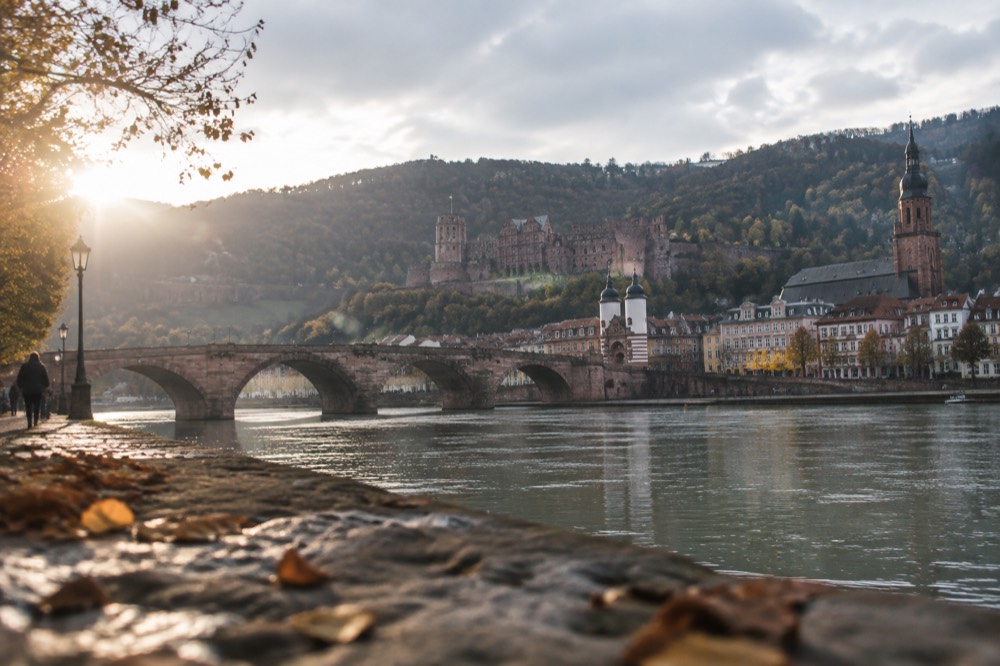
The castle is the anchor. It is a sprawling ruin of reddish stone, partly destroyed and partly preserved, standing above the town on a terraced hillside reached on foot by a stepped path or by a funicular. The interior spaces and the terrace viewpoint have their own opening arrangements, which change with the season, so check the castle's official site before you set out from Strasbourg rather than trusting a summary. Allow the largest single block of the day here. The walk up is part of the experience, and the view down over the red roofs and the Neckar is the picture people cross the border for.
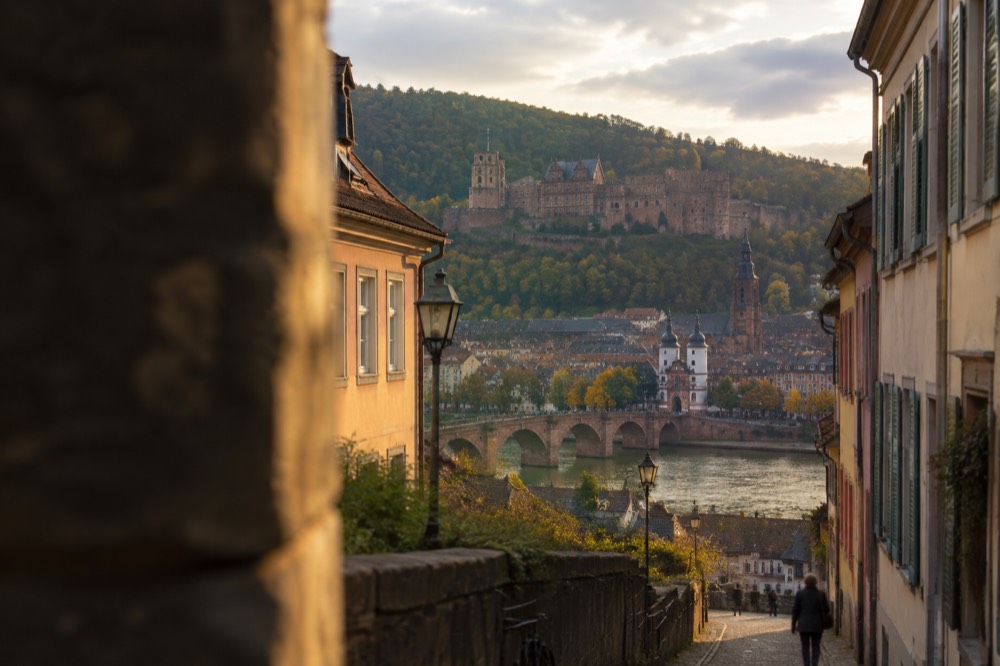
The old town below is compact and largely pedestrianised. Its main street, one of the longest market streets of its kind in Germany, runs the length of the old core from the Bismarckplatz end up towards the bridge, lined with façades, shops and cafés. The church of the Holy Spirit sits at its centre, and small squares open off it on either side. This is where the middle of the day goes: an unhurried walk, a coffee, a browse. The old bridge at the top end frames the classic view of the castle, and crossing it puts you on the far bank where the Philosopher's Walk climbs the hillside opposite.
| Sight | What it is | Who it suits | What to check |
|---|---|---|---|
| Heidelberg Castle | Hilltop castle ruins above the old town, with terraces and interior spaces | Everyone; the headline sight | Opening hours and ticket arrangements on the official castle site |
| Old Bridge over the Neckar | Historic stone bridge giving the classic castle view | Photographers and short visits | Nothing to book; the view is from the bridge itself |
| Old town main street | Long, largely pedestrianised street through the old core | Shoppers, café dwellers | Shop and café hours, which vary by day of the week |
| Philosopher's Walk | Climbing path on the far bank with views back over the town | Walkers with time and energy | Weather and daylight, especially outside summer |
Sequencing advice is simple: go up to the castle in the morning while your legs are fresh and the terraces are quieter, come down into the old town for lunch, spend the afternoon on the main street and the bridge, and cross the river for the Philosopher's Walk only if the day still has room in it. Doing it in reverse means climbing the hill at the hour you are tiredest. If the weather turns, the old town is the fallback, since its covered arcades and café interiors give you somewhere to wait out a shower.
Be honest with yourself about pace, too. A day trip from Strasbourg is not a fortnight in Bavaria, and the visitors who enjoy Heidelberg most are the ones who treat three sights done properly as a full programme. Build in the return journey when you plan the afternoon, and leave the old town in time to make the connection you identified in the morning, not the one you hope still exists.
Should You Take A Guided Tour Or Go Independently
For Heidelberg itself, this site's tour roster runs from Strasbourg rather than to Heidelberg, so the honest answer is: go to Heidelberg independently by train, and spend your guided-tour budget on the Strasbourg-based walks and day trips that do carry a local guide, which is where a guide genuinely changes what you see. A guide adds most value where the stories are layered and the guide lives there. In Heidelberg you will be walking a well-signposted old town on your own; in Strasbourg and the Alsace countryside around it, the roster's guided products cover exactly that ground.
The comparison is worth spelling out. An independent Heidelberg day gives you freedom: you set the pace, linger where the light is good, and change the plan when the weather does. A guided product gives you interpretation: a local guide on the Best Of Alsace day trip, for instance, moves a small group through the region's historical sites and villages with the context a guidebook compresses into a paragraph. Neither is the better choice in the abstract; they answer different needs, and a well-built trip can contain both, a guided day in Alsace and an independent day across the border.
| Format | What it covers | Who it suits | Where it starts |
|---|---|---|---|
| Independent rail day trip | Heidelberg castle, old town and river, at your own pace | Confident planners | Strasbourg Gare Centrale |
| Guided regional day trip | Alsatian villages and historical sites with a local guide | Visitors who want context and no logistics | Central Strasbourg |
| City walking tour | Strasbourg's old streets and hidden corners with a local guide | First-time visitors to the base city | Central Strasbourg |
| Bike or Segway tour | Strasbourg and its river surroundings on two wheels or a Segway | Active travellers with a spare half day | Central Strasbourg |
If you do want a guided element on the Strasbourg side, the Secrets walk is a strong candidate: it is a two-hour guided route through the city's less obvious corners, and pairs well with an early-evening return from Germany, since a walk that starts after you are back in Strasbourg rescues a day that the train schedule has cut short. Check availability on the operator's live listing if that shape appeals, because departure times and days are set there rather than in any guide.
The same logic applies to the evening. Strasbourg's food scene rewards a late return less than you might think, since winstubs fill up and kitchens close, so a guided food walk booked for the following evening often works better than trying to squeeze dinner into the tail of a cross-border day. Treat the Heidelberg trip as a sightseeing day, and give Strasbourg its own separate evening, guided or not, on another date.
Where To Eat On A Heidelberg Day Trip
Eat in Heidelberg's old town, on or just off the main street, where the traditional German options are hearty and sit-down rather than grab-and-go, and where a midday main meal is the normal local rhythm; the specifics of what to order are a matter of regional German cooking rather than anything this site can price for you. What can be said with confidence is the shape of the day: a proper lunch in the old town between the castle and the bridge, and something lighter if you are travelling back in the early evening.
The German food tradition you will meet there is the one Strasbourg's own cooking half shares. The Alsatian table, choucroute, baeckeoffe, tarte flambée, sits on the same culinary fault line as the Badish and Swabian cooking across the river, and Heidelberg's menus lean to the German side of it: sausages, pork dishes, dumplings, and the breads and pretzels of a southern German bakery tradition. Travellers who have been eating their way through Alsace will recognise the family resemblance immediately, and will equally notice what is different: the beer culture above all, since the German side of the border drinks pilsner and wheat beer the way the Alsatian side drinks Riesling and local beer. Other pages covering the same trip are gathered on Strasbourg Travel Guide.
For planning purposes, the useful advice is structural rather than gastronomic. The old town's main street and its side lanes hold the densest cluster of cafés and traditional restaurants, so you are never more than a few minutes' walk from a table. Midday is the safe bet for a full meal, because kitchens in smaller German towns can narrow their offerings in the late afternoon, and a day-tripper's dinner window may collide with a return train. If you plan to eat in Heidelberg before travelling back, pick the restaurant before 17:00, not at 19:00 when the choice has thinned.
One pairing worth planning is the reverse direction. Some travellers do Heidelberg by day and then come back to eat in Strasbourg, which works if the return connection is early enough; the Alsatian winstub tradition, described in this site's guide to winstubs in Strasbourg, is a different experience from a German evening meal and makes a good closing act. Others prefer to stay in Germany for the evening and accept a later arrival. Both are legitimate; the mistake is committing to neither and ending up with a station sandwich.
How Heidelberg Compares With Other Day Trips From Strasbourg
Heidelberg is the history-and-castle option among Strasbourg's day trips, and it stands apart from the French Alsatian villages, the Black Forest, the spa town of Baden-Baden and the Swiss city of Basel by combining a university old town with a major ruined castle; the choice between them comes down to whether you want German heritage, French wine villages, forest scenery, spa culture or Swiss city life, and only the French and German options share the euro with Strasbourg. Basel, in Switzerland, does not: it is Schengen but outside the euro, so budget for a currency change if that is your pick.
The comparison is easiest to see laid out. Each of the destinations below has its own full guide on this site, and each rewards a different kind of day: the Black Forest day trip from Strasbourg is about scenery and small towns, Freiburg is a second German university city with a milder, sunnier feel, Baden-Baden is a spa town built around bathing and elegance, Basel is a Swiss art and Rhine city, Colmar is the Alsatian canals-and-wine classic, and Nancy is a French city of grand squares and Art Nouveau. Heidelberg's specific pitch is the castle: none of the others pairs a ruined hilltop fortress with a pedestrian old town on this scale.
| Destination | Country | Character | Best for |
|---|---|---|---|
| Heidelberg | Germany | Castle ruins, university old town, river | History and a classic view |
| Black Forest | Germany | Forested hills, lakes, craft towns | Scenery and half-timbered villages |
| Freiburg | Germany | Warm university city with a stream-lined old core | A relaxed German city day |
| Baden-Baden | Germany | Historic spa town and parks | Bathing culture and slow afternoons |
| Basel | Switzerland | Swiss city on the Rhine with major museums | Art and a different currency to plan for |
| Colmar | France | Alsatian canals, wine, half-timbered streets | Wine-country charm without a border |
| Nancy | France | Grand squares and French elegance | Architecture and city strolling |
For visitors who want a guided day rather than a self-planned one, the roster's cross-border guided option runs to the Black Forest rather than to Heidelberg: the Black Forest day trip to Freiburg, Titisee and Triberg covers the German side with a guide and transport arranged. Heidelberg, by contrast, is the independent traveller's German day. If a guided format matters more to you than the castle specifically, the Black Forest trip is the natural substitute; if the castle is the draw, take the train and go yourself.
Rather have a guided day across the German border? Book a Black Forest day trip here.
The Alsatian alternative deserves the final word in this comparison. The Best Of Alsace day trip from Strasbourg keeps you on the French side of the border with a local guide, moving through the region's historical sites and villages in one long, organised day. It is the mirror image of the Heidelberg plan: guided and French versus independent and German. Some visitors do both in one week and report that the contrast is the point, since the two days show the same border region from opposite banks. Check availability on the operator's live listing if the guided French day appeals.
How The Seasons Shape The Trip
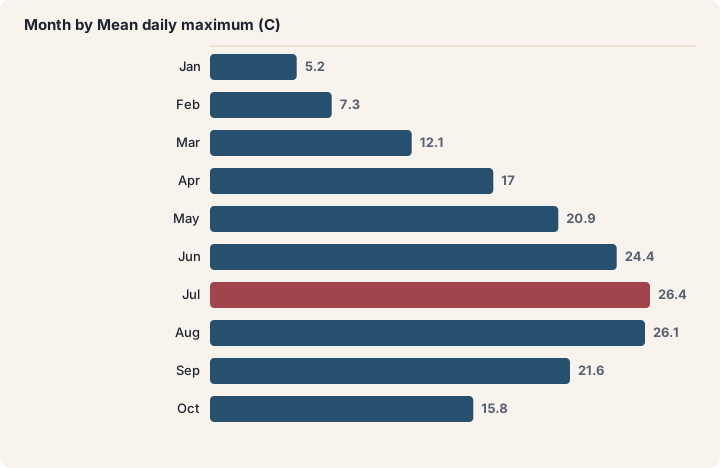
The best planning data this site can put beside a Heidelberg trip is the verified climate record for Strasbourg-Entzheim, the departure city, which shows a semi-continental pattern: mean daily maxima run from 5.2 C in January to 26.4 C in July, with 635.7 mm of rain spread over 112.3 rain days a year, so the trip is a fair-weather plan in late spring through early autumn and a short-day, wrap-up plan from late autumn to early spring. December adds a complication worth planning around, because Strasbourg's own Christmas market fills the base city with visitors.
The table below is the Meteo-France 1991-2020 normals for Strasbourg-Entzheim, the nearest verified series to this route. It describes the French end of the journey, and the upper Rhine valley as a whole shares the same semi-continental character, cold winters, warm summers, rain in every month, but the numbers themselves belong to Strasbourg's station and are labelled as such.
| Month | Mean daily maximum (C) | Mean daily minimum (C) | Rain days of 1 mm or more |
|---|---|---|---|
| Jan | 5.2 | -0.2 | 9.1 |
| Feb | 7.3 | 0.0 | 8.3 |
| Mar | 12.1 | 2.6 | 8.5 |
| Apr | 17.0 | 5.7 | 8.6 |
| May | 20.9 | 10.1 | 10.8 |
| Jun | 24.4 | 13.4 | 10.2 |
| Jul | 26.4 | 14.9 | 10.4 |
| Aug | 26.1 | 14.5 | 9.5 |
| Sep | 21.6 | 10.7 | 8.0 |
| Oct | 15.8 | 7.2 | 9.6 |
| Nov | 9.4 | 3.3 | 9.2 |
| Dec | 5.9 | 0.8 | 10.2 |
Read the table as a packing and pacing guide. May through September gives you long evenings and warm terraces, with July and August the warm months and rain days still hovering near ten a month, so a light rain layer belongs in the bag even in summer. April, May, June and October are the sweet spots for a walking-heavy day: warm enough for the Philosopher's Walk, cool enough that the climb to the castle is not a slog. From November to February the mean minimum sits at or near freezing, daylight is short, and the castle terraces and the riverside walk lose their charm in a cold wind, though the old town itself remains perfectly visitable.
December needs a special note because of the base city. Strasbourg's Christmas market, the event that defines the city's winter, opens in the last week of November and runs until 24 December, closing early on the evening of the 24th; last year's edition ran 26 November to 24 December 2025 and drew 3.05 million visitors, and the city publishes each year's dates on its official Christmas site. A Heidelberg day trip in that window means leaving a crowded, festive Strasbourg behind for the day and returning to it at night, which some travellers love and others regret. Confirm the current edition's dates on the city's Christmas pages before you build a December itinerary around them.
What The Strasbourg End Of The Trip Costs
The figures all sit on the Strasbourg side: 1.90 EUR for a single CTS ticket or 4.60 EUR for a 24-hour Solo pass, 10 EUR full and 6 EUR reduced for the cathedral platform, 4 EUR for the astronomical clock show, 9 EUR full and 5 EUR reduced for municipal museums with a 20 EUR one-day pass, and a 5 EUR Strasbourg City Card for seven days. No Heidelberg prices appear here, so budget the German end from the official castle and transport pages. The table below gathers the verified Strasbourg figures in one place.
| Item | Full price | Reduced price | Notes |
|---|---|---|---|
| CTS single ticket | 1.90 EUR | - | Badgéo, CTS app or contactless for the lower price; 2.50 EUR from a bus driver |
| CTS 24h Solo pass | 4.60 EUR | 24h Trio 10.20 EUR for 2-3 people | Covers the whole CTS network for a day |
| Cathedral platform | 10 EUR | 6 EUR | Children under 6 free; platform at 66 m |
| Astronomical clock show | 4 EUR | 2 EUR children 6-17 | Day-of purchase only, no reservations |
| Municipal museums | 9 EUR | 5 EUR | Pass Musées 1 day 20 EUR |
| Strasbourg City Card | 5 EUR adult | 3.50 EUR child 3-17 | A 7-day discount card, not an all-inclusive pass |
The City Card deserves its explanation, because visitors misread it more than any other product. It is a 5 EUR discount card valid for seven days, not a pass that includes attractions: it knocks money off museums, the Batorama boat tours, the cathedral platform, the clock and other sights, so it pays for itself only if you visit enough of them. Batorama's own prices, for reference, are 16.20 EUR full and 8.90 EUR reduced on the long tour and 12.50 EUR full and 7.20 EUR reduced on the short tour. None of this touches Heidelberg, but it shapes the day before and after the border crossing.
If your trip leaves spare time on the Strasbourg side, the guided bike tour is the roster's most natural fit for a half day in the base city: it covers Strasbourg and its river surroundings on two wheels with a local guide, and a city built around cycling, with its flat Ill-side paths, makes the format genuinely efficient. Check availability on the operator's live listing for departure days and times.
Budget the whole outing in two halves, then. The Strasbourg half is priced above in verified euros: transport to the station, any morning sightseeing, and the evening you return to. The Heidelberg half, castle entry, lunch, and the German train fare, should be looked up on the official German pages for the day you travel, because this site publishes no unverified figures for the destination. Planning that way, from both ends, is slower than copying a single number from a blog, but it is the only version of the plan that survives contact with the actual ticket counter.
Common Questions About A Heidelberg Day Trip
Is Heidelberg doable as a day trip from Strasbourg?
Yes. Heidelberg is a practical full-day rail trip from Strasbourg across the German border, with a connection on the German network, and both countries use the euro and sit in Schengen so there are no border formalities. Check the current timetables on SNCF Connect and Deutsche Bahn before planning, and treat it as a full day rather than a half day.
Do I need a passport or a currency exchange for the trip?
You are crossing from France into Germany, both Schengen countries, so there is no border control on the route, though carrying ID is always wise when travelling internationally. Both countries use the euro, so no currency exchange is needed. This is different from a Basel day trip, where Switzerland is outside the euro.
What should I see first in Heidelberg?
Go up to the castle ruins first, while your legs are fresh and the terraces are quieter, then come down into the old town for lunch, spend the afternoon on the pedestrianised main street and the old bridge, and add the Philosopher's Walk on the far bank only if the day still has room. Check the castle's official opening arrangements before you leave Strasbourg.
Is a guided tour available from Strasbourg to Heidelberg?
This site's tour roster runs guided products from Strasbourg into Alsace and the Black Forest rather than to Heidelberg, so the Heidelberg day is an independent rail trip. If a guided format matters more to you than the castle itself, the Black Forest day trip to Freiburg, Titisee and Triberg is the roster's guided German option, and the Best Of Alsace trip is its French counterpart.
When is the best season for the trip?
Late spring through early autumn gives the friendliest conditions: the verified Strasbourg-Entzheim climate normals show mean daily maxima of 20.9 C in May and 26.4 C in July, against 5.2 C in January, with rain days near ten a month all year, so pack a light rain layer even in summer. December adds the complication of Strasbourg's Christmas market crowds in the base city.
How does Heidelberg compare with Colmar or the Black Forest?
Heidelberg is the castle-and-old-town history option; Colmar, in France, is the canals-and-wine-route option with no border to cross; and the Black Forest is the scenery option, covered in this site's guides to Colmar and the Alsatian day trips and the German forest route. The choice depends on whether you want German heritage, French wine villages or forest landscape.