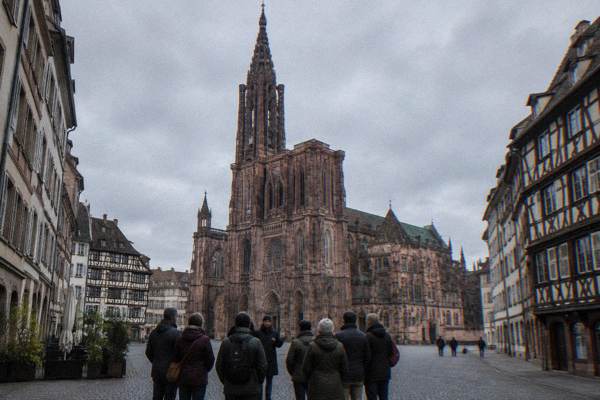
Is Strasbourg A Walkable City?
Yes, Strasbourg is one of France's easiest cities to explore on foot: a compact UNESCO-listed island core, pedestrianised squares and a tram network for the longer hops. Here is what walkers should know before lacing up.
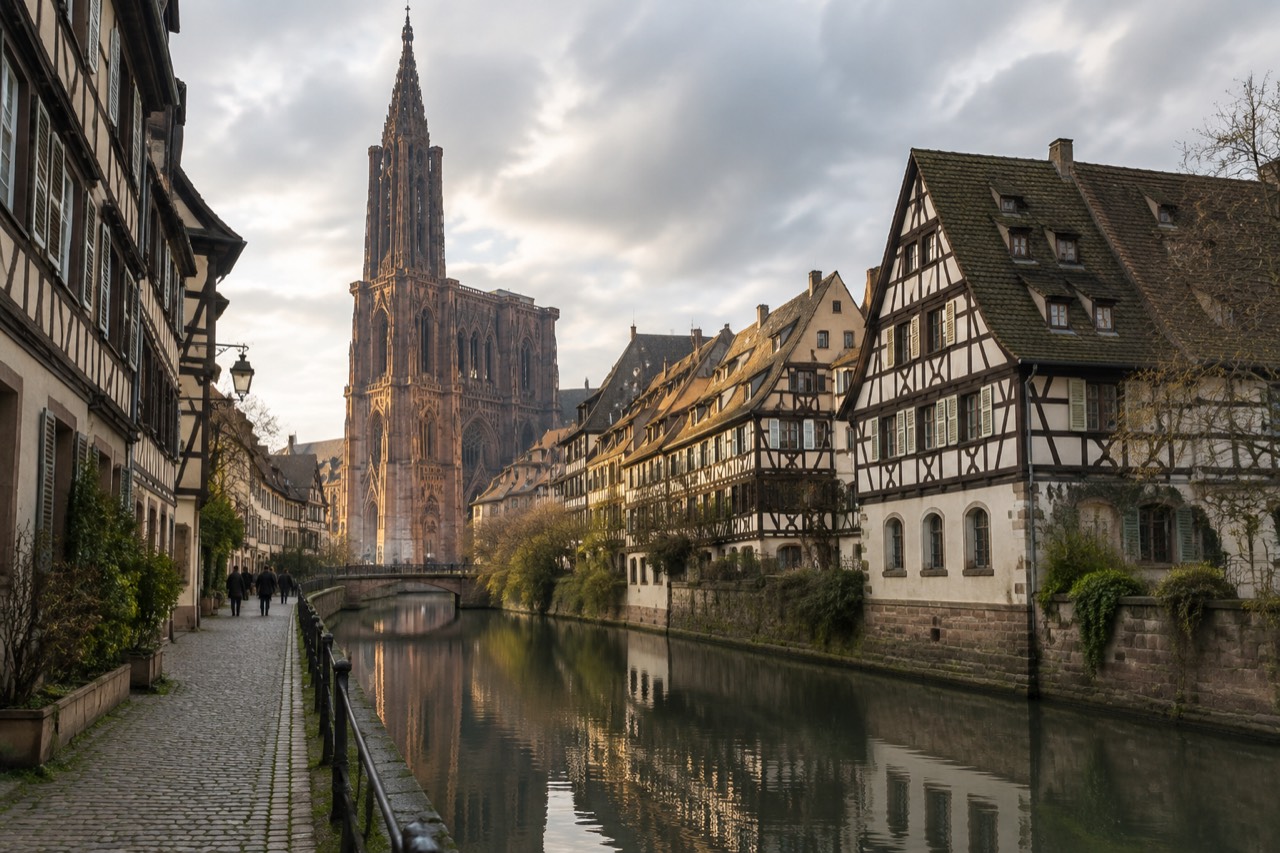
Strasbourg, in Alsace in north-eastern France, sits on the River Ill a short way upstream from the Rhine, which forms the border with Germany at Kehl. It is a city of 293,771 residents, yet the part visitors come for, the Grande Île and the streets around the cathedral, occupies a compact island where the church spire, the half-timbered lanes of Petite France and the great squares of Place Kléber and Place Gutenberg sit one behind the other. The question of whether Strasbourg is a walkable city has a short answer, and this page gives it, then explains district by district where shoes are enough, where the tram earns its fare, and what the Alsatian climate does to a walking plan through the year.
Is Strasbourg A Walkable City?
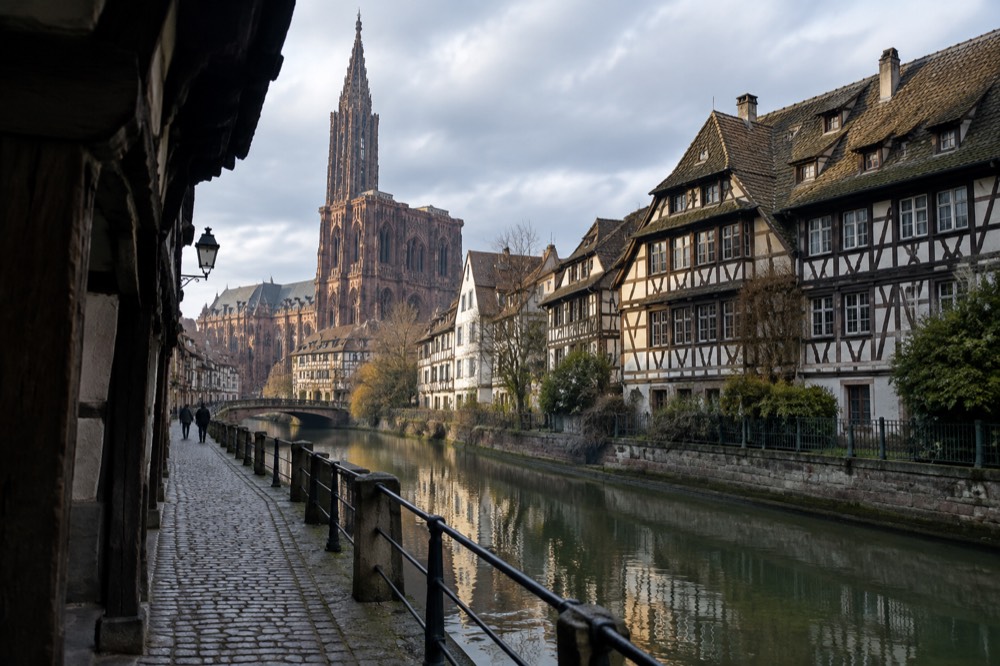
Yes, Strasbourg is a genuinely walkable city. Its historic core, the Grande Île, forms a UNESCO World Heritage property together with the Neustadt extension, and it is compact enough that the cathedral, Petite France, Place Kléber and the riverside terraces all belong to a single stroll rather than a transit plan. The lanes are cobbled, the quays are traffic-light, and a dense tram network exists for exactly the journeys that outlast a pair of shoes.
That verdict is not a matter of opinion dressed up as fact. The layout does the work. The medieval core grew on an island where nothing could spread out, so the distances between the sights a visitor actually wants are short by design rather than by planning accident. The city later absorbed its Neustadt quarter and its European institutions across the water, and it connected all of it with trams rather than expecting anyone to drive between them.
| What shapes the walk | The detail |
|---|---|
| Historic core | The Grande Île, a World Heritage property alongside the Neustadt extension, holding the cathedral, Petite France and the main squares |
| Cathedral reference point | Single spire with a visitor platform at 66 m, visible from across the centre |
| Climate | Semi-continental, with 112.3 days of rain of 1 mm or more per year and 635.7 mm of annual rainfall |
| Tram fallback | Single CTS ticket at 1.90 EUR from the app or a contactless card, or 2.50 EUR bought on board a bus |
| One closure to know | The Musée Alsacien is closed for works until 2028, so no walking route should count on it |
The pedestrian character is strongest inside the old streets, where delivery vehicles appear early in the morning and the rest of the day belongs to people on foot. The riverside quays, the Ponts Couverts and the terrace of the Barrage Vauban, with its seasonal opening hours, are all linked by walking paths rather than roads. Anyone who wants a fuller picture of how the city earned its reputation can read why Strasbourg is so famous, but for the purposes of this page the relevant point is simpler: the fame is concentrated in a space that shoes can cover.
How Compact Is The Centre For Someone On Foot?
The centre is compact in the way island cities tend to be: the cathedral stands roughly at its heart, Petite France hugs the south-western tip of the island, and the main squares sit between them, so a walker crosses the historic core without ever needing a timetable. Nothing in the visitor core demands a vehicle, and the tram network is there for comfort and for the quarters beyond the island rather than out of necessity.
The practical geography rewards a loose plan. A morning that begins at the cathedral can drift down to the river, along the Ill to the Ponts Couverts, up through the tanners' lanes of Petite France and back to Place Kléber without repeating a street. The Musée de l'Œuvre Notre-Dame sits beside the cathedral itself, and the Palais Rohan with its museums stands just behind it, so the museum quarter and the church quarter are effectively the same quarter. A cathedral platform ticket even carries a reduced rate at the Musée de l'Œuvre Notre-Dame, which rewards walkers who cluster their visits.
The one thing shoes cannot do is describe what the walls are hiding. Centuries of changing hands between France and Germany, a story traced in whether Strasbourg is more German or French, are written into the façades, and a guide reads that layer far faster than a plaque. A short guided walk is the standard fix for travellers who want the stories and not just the streets, and the options below cover the two most useful formats: a district walk with a local guide, and a tasting route through the winstub quarter.
Do You Need A Car Or Public Transport In Strasbourg?
No, a car is not needed in Strasbourg, and bringing one into the centre mostly works against the visitor. The CTS network of trams and buses covers the city for 1.90 EUR a single ticket, 4.60 EUR for a 24-hour Solo pass or 10.20 EUR for a 24-hour Trio pass covering two to three people, and the airport link is a train that reaches the central station in 8 minutes. Walking remains the default inside the island.
The fare structure matters because it decides how freely a visitor hops on and off. A single ticket bought through the Badgéo card, the CTS app or a contactless bank card costs 1.90 EUR, while the same ticket bought from the driver on a bus costs 2.50 EUR. The day passes reward anyone planning three rides or more, and the Trio pass exists precisely for families or small groups walking the centre and tramming the outskirts.
| CTS ticket | Price | What it covers |
|---|---|---|
| Single, bought in the app or by contactless | 1.90 EUR | One journey on the network |
| Single, bought on board a bus | 2.50 EUR | One journey, driver-sold |
| 24H Solo | 4.60 EUR | One person, unlimited rides for a day |
| 24H Trio | 10.20 EUR | Two to three people travelling together |
| Airport combined ticket | 4.60 EUR | Train plus tram or bus, the Alsa+ 24h EMS |
The airport link deserves its own sentence because it answers the walkability question from the moment of arrival. The shuttle train runs up to five times an hour and takes 8 minutes to the Gare Centrale, and the combined ticket folds the onward tram or bus ride into the same 4.60 EUR purchase, so a visitor can step off a plane and be inside the pedestrian core without ever considering a taxi. The station itself sits at the northern edge of the centre, close enough that the walk from platform to cathedral needs no transport at all.
For the quarters beyond the island, the tram is the honest answer. The European institutions, the Neustadt's broad avenues and the Orangerie park spread north and east of the old core, and the network stitches them to the centre efficiently. A walker who enjoys riverside paths can also cover that ground along the Ill, but the tram exists for the days when feet disagree.
Which Neighbourhoods Are Best Explored On Foot?
Petite France and the Grande Île are the walking heart of Strasbourg: cobbled, canal-crossed and almost free of through traffic. Beyond them, the Krutenau student quarter south of the island and the Neustadt's imperial quarter north of the river both reward walkers who like their streets with a different flavour, while the European District is the one area where a guide adds real value because the buildings explain themselves poorly.
Petite France is the postcard and the reality at once: former tanners' houses with timber frames lean over the branches of the Ill, and the walk along the water to the Ponts Couverts and the Barrage Vauban terrace is the single stretch visitors remember longest. Travellers deciding where to sleep can read up on where to stay in Petite France, since staying inside the walking core removes even the tram from the daily equation.
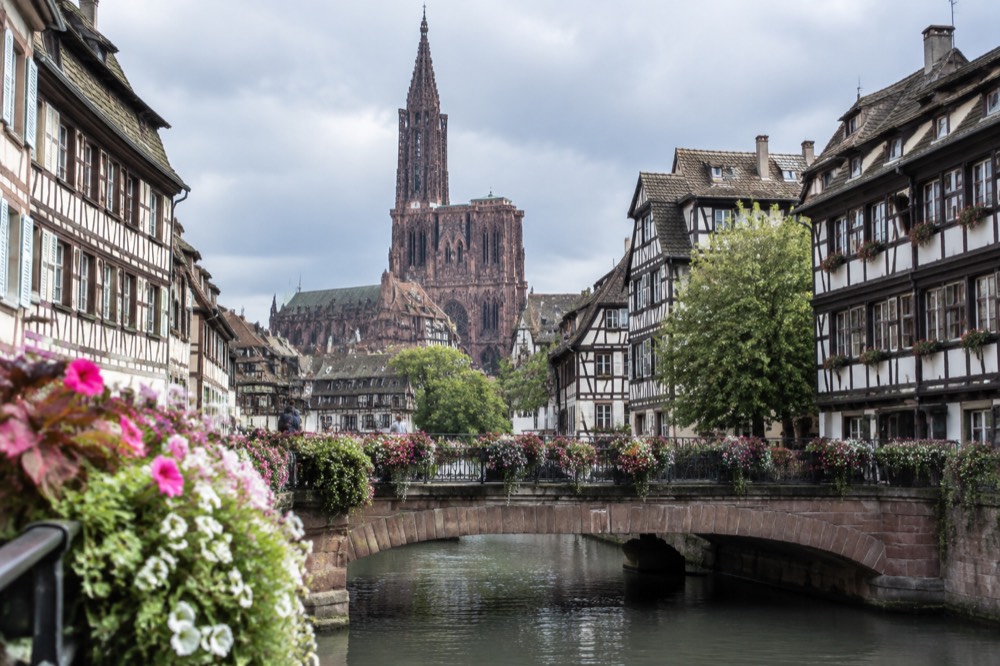
The Krutenau, east of the island, is where the city stops performing for visitors: independent shops, small restaurants and the everyday Alsatian street life that what to avoid in Strasbourg pages rarely mention because there is nothing here to avoid. The Neustadt, the German-built extension across the Ill, is the opposite walk in character, with wide avenues, grand façades and monumental squares that read like a different city, which in a historical sense they are, as the pages on whether Alsatians are ethnically French or German explain.
The European District is the one quarter where walking and understanding part company. The buildings of the European Parliament, the Council of Europe and the European Court of Human Rights are spaced along avenues built for processions rather than pedestrians, and their significance is institutional rather than architectural. The Parlamentarium Simone Veil keeps visitor hours outside plenary weeks, Monday to Friday 09:00-18:00 and Saturday mornings and afternoons, with an airport-style security check at the door, and plenary weeks change the schedule. A guided walk of the district turns a long, self-effacing stroll into a comprehensible one, which is why this site points walkers there with a guide rather than alone.
What Is Walking In Strasbourg Like Through The Year?
Strasbourg's semi-continental climate sets the rhythm for walkers: mean daily maxima run from 5.2 C in January to 26.4 C in July, and rain falls on 112.3 days of 1 mm or more across an average year, so the comfortable walking seasons are late spring and early autumn, while December trades warmth for the atmosphere of the Christmas market. Shoes, layers and an umbrella cover the whole calendar.
The numbers behind that summary come from the Meteo-France 1991-2020 normals for Strasbourg-Entzheim, and they translate directly into planning advice. Summer walking is warm rather than scorching, with mean July nights at 14.9 C, which makes early starts and long evening strolls pleasant. Winter walking is a different activity: December averages a mean daily maximum of 5.9 C and a mean nightly minimum of 0.8 C, cold enough that the market season is a mulled-walk rather than a marathon.
| Month | Mean daily maximum | Mean nightly minimum | Days with 1 mm of rain or more |
|---|---|---|---|
| January | 5.2 C | -0.2 C | 9.1 |
| April | 17.0 C | 5.7 C | 8.6 |
| July | 26.4 C | 14.9 C | 10.4 |
| October | 15.8 C | 7.2 C | 9.6 |
| December | 5.9 C | 0.8 C | 10.2 |
Rain is the honest variable, not cold. No month of the year averages fewer than eight days with measurable rain, and the wettest months on this measure, May at 10.8 days and December at 10.2, are also two of the months visitors choose for very different reasons. The practical response is not to avoid any season but to plan indoor anchors, the museums at 9 EUR full price and free on the first Sunday of every month, within walking distance of the outdoor route. December visitors weighing the trade-off can read whether December is a good time to visit Strasbourg before committing, and anyone curious about how long the market season keeps the centre lively should check how many days you need in Strasbourg for the Christmas markets.
Should You Take A Guided Walking Tour Of Strasbourg?
A guided walk is worth booking in Strasbourg precisely because the city is so walkable: the distances are trivial, so the only thing a visitor can still be missing is the story, and a local guide supplies it in a couple of hours. Pay-what-you-want English walks run through GuruWalk, with the tip settled at the end, while fixed-price tours cover the historic centre, the European District and the food quarter.
A local guide can supply the story in a couple of hours. Book a free walking tour here.
The free-format walks suit a first morning: a guide leads a group through the Grande Île at a pace set by the group, the price is whatever the walker decides to tip, and the roster of English-language walks on GuruWalk covers the highlights, Petite France and a historian-led variant. The fixed-price alternatives earn their fee where a theme needs depth. A gourmet tasting walk turns the winstub quarter into a moving lunch, and a short orientation walk with a local compresses the whole centre into a single hour, which suits travellers arriving late or leaving early.
For the European District, this site's featured pick is the guided walking tour of the quarter, a walk with a local guide that makes sense of the institutions, the architecture and the political geography of a neighbourhood that gives nothing away for free. Walkers who prefer to book ahead can Check availability on the operator's live listing. The same logic applies to the food quarter: a guide who knows which winstub door to open saves a visitor the guessing game, and the tasting format turns a walk into a meal.
None of this is required to enjoy Strasbourg on foot. The city remains legible to a solitary walker with a paper map and a sense of direction, and the Strasbourg Travel Guide exists for exactly that reader. But the guided options convert walkable into understood, and they cost less than a tank of fuel in a hire car that the island never needed in the first place.
Common Questions About Walking In Strasbourg
Is Strasbourg a walkable city?
Yes. The Grande Île historic core is compact, largely pedestrianised and fully covered on foot, with trams handling the longer journeys to the Neustadt, the European District and the airport link.
Can you see Strasbourg without using public transport at all?
Inside the historic core, yes: the cathedral, Petite France, the main squares and the riverside quays all connect on foot. The European institutions and the Orangerie area stretch the walk considerably, and the tram fare of 1.90 EUR a single is a reasonable price for the shortcut.
Is Strasbourg pedestrian friendly for children and older walkers?
The centre is flat, cobbled and closed to through traffic for the better part of the day, which suits slower walkers and children. Cobbles and the occasional bridge step are the main obstacles, and comfortable shoes matter more than stamina.
Is Petite France easy to walk around?
Petite France is small, car-light and crossed by canals with modest bridges, so it is one of the easiest quarters in the city to explore entirely on foot, and it links directly to the Ponts Couverts and the Barrage Vauban terrace along the water.
Does the weather in Strasbourg affect walking plans?
Rain rather than cold is the planning factor: the 1991-2020 normals show between 8.0 and 10.8 days of measurable rain every month, so a light rain layer belongs in the bag in any season, and the municipal museums at 9 EUR, free on the first Sunday of each month, are the natural wet-weather anchors.