What Are The Top 3 Christmas Markets In Europe?
Strasbourg, Vienna and Nuremberg top Europe's Christmas market list. A research-led comparison of the three, with verified Strasbourg figures and advice on timing.
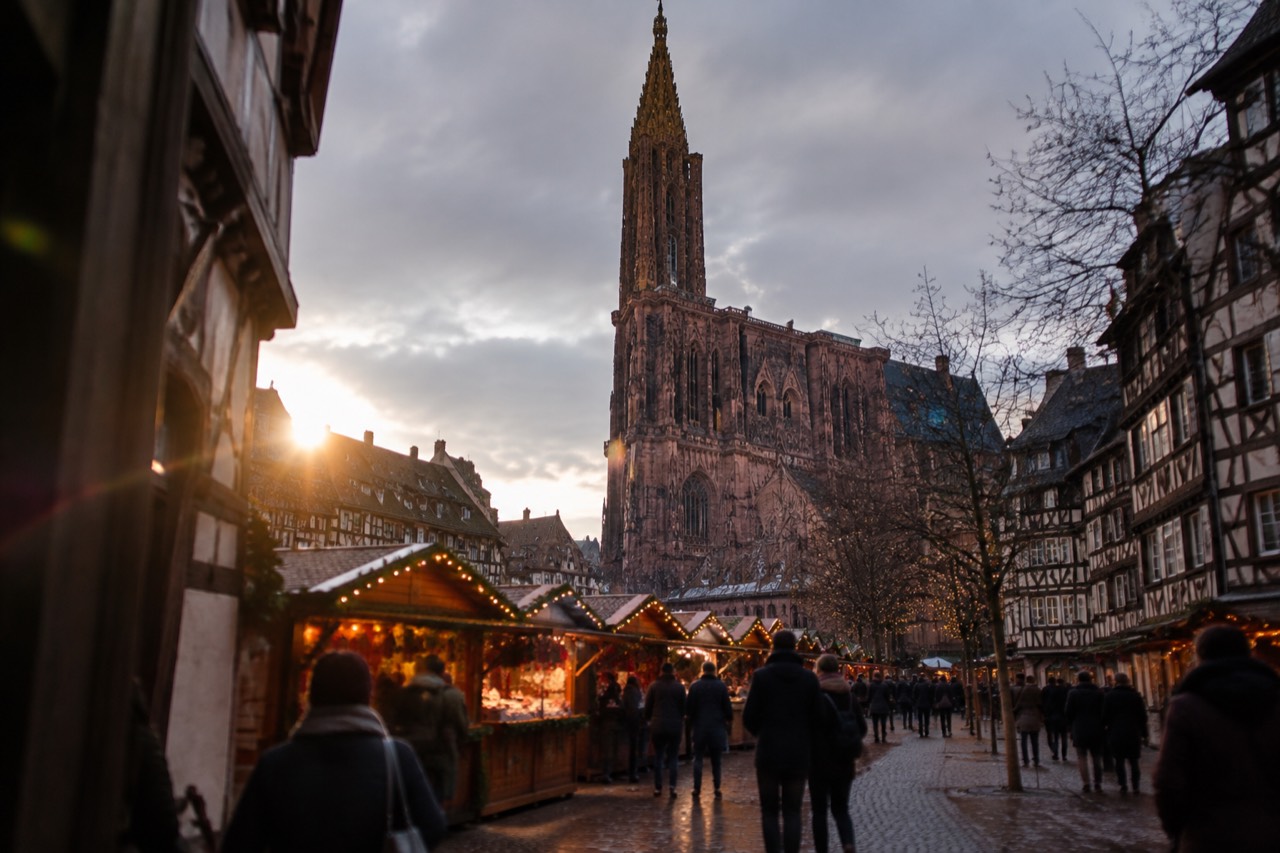
Strasbourg, in Alsace in north-eastern France, is the city that European Christmas markets are measured against, and any honest ranking of the continent's top three starts there. The Alsatian capital calls itself the Capital of Christmas, a claim backed by an unbroken tradition of December markets stretching back further than any other French city can match, and by a setting, a UNESCO-listed old town of half-timbered houses around a single-spired cathedral, that no competitor can copy. The other two names that belong in the top three are Vienna, whose market in front of the city hall turns the Austrian capital into a giant advent calendar, and Nuremberg, whose Christkindlesmarkt in Bavaria is the reference point every German market is compared with. This page compares the three and explains what each does best.
What Are The Top 3 Christmas Markets In Europe?
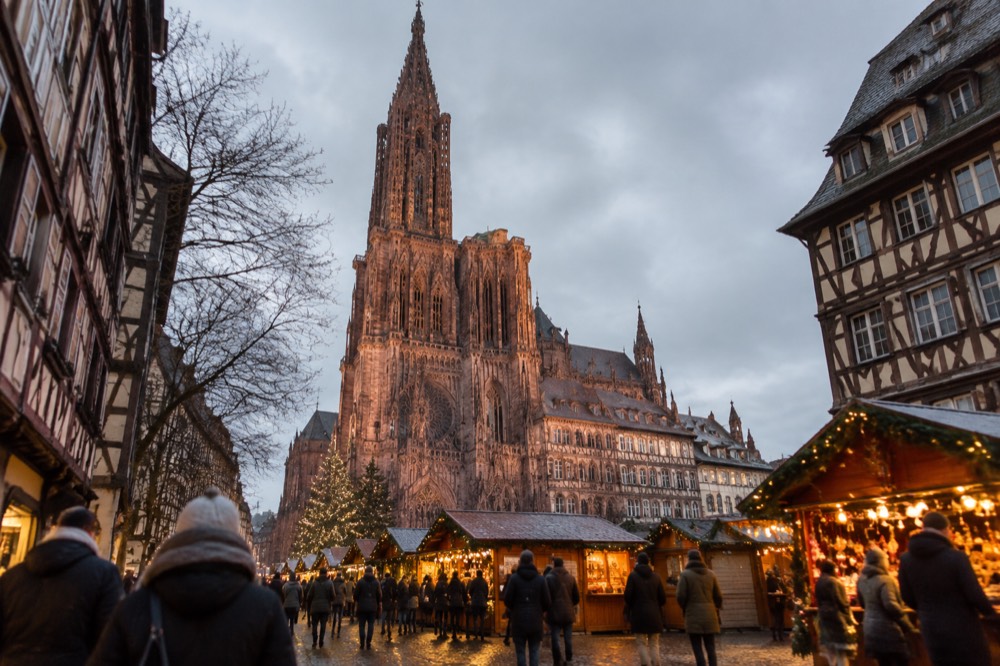
The top three Christmas markets in Europe are Strasbourg in France, Vienna in Austria and Nuremberg in Germany. Strasbourg wins on authenticity and setting: its 2025 edition ran from 26 November to 24 December and drew 3.05 million visitors. Vienna wins on scale and grandeur around its city hall. Nuremberg wins on tradition and atmosphere in a compact old town. All three reward a full day each, and Strasbourg pairs best with a wider regional circuit.
Rankings like this are always argued over, and the argument usually centres on whether atmosphere or scale matters more. Strasbourg's case rests on the city itself. The market spreads across the Grande Île, the island core of the city inscribed by UNESCO alongside the later Neustadt extension, so the stalls sit among medieval streets, canals and the cathedral rather than in a purpose-built plaza. The city's December tradition is tied to the decorated tree, a custom Strasbourg has long claimed as its own, a story told in more detail on the page about the real story behind the Christmas tree. Vienna's case rests on spectacle: the Rathausplatz market faces a neo-Gothic city hall dressed in lights, with a giant tree, an ice trail and a programme of concerts across the advent weeks. Nuremberg's case rests on restraint: a single main market on the Hauptmarkt, stalls of traditional craft goods, and an opening ceremony led by the Christkind, a golden-veiled figure who appears on the balcony of the Church of Our Lady.
| Market | City and country | What it is known for | Best for | Plan around |
|---|---|---|---|---|
| Strasbourg, Capital of Christmas | Strasbourg, France | Half-timbered old town, cathedral, Alsatian food and wine | Atmosphere, history, food | Late November to 24 December |
| Wiener Christkindlmarkt | Vienna, Austria | City hall setting, lights, ice trail, concerts | Scale, families, grandeur | Advent weekends |
| Nürnberger Christkindlesmarkt | Nuremberg, Germany | Traditional craft stalls, Christkind opening, old town | Classic German market feel | Advent weekends |
The comparison is not purely aesthetic. Food and drink differ sharply. Strasbourg's stalls serve Alsatian specialities, tarte flambée, choucroute, bredele biscuits and mulled wine made from Alsatian white wine, in a country where wine is the local drink. Vienna leans toward punch, Kaiserschmarrn and baked chestnuts against an imperial backdrop. Nuremberg is the home of gingerbread, Lebkuchen, and its stalls keep to a traditional goods list that limits plastic and mass-produced items. Travellers who care about eating well usually put Strasbourg first; travellers who care about postcard grandeur put Vienna first; travellers who want the archetypal German market put Nuremberg first.
Why Does Strasbourg Keep The Top Spot?
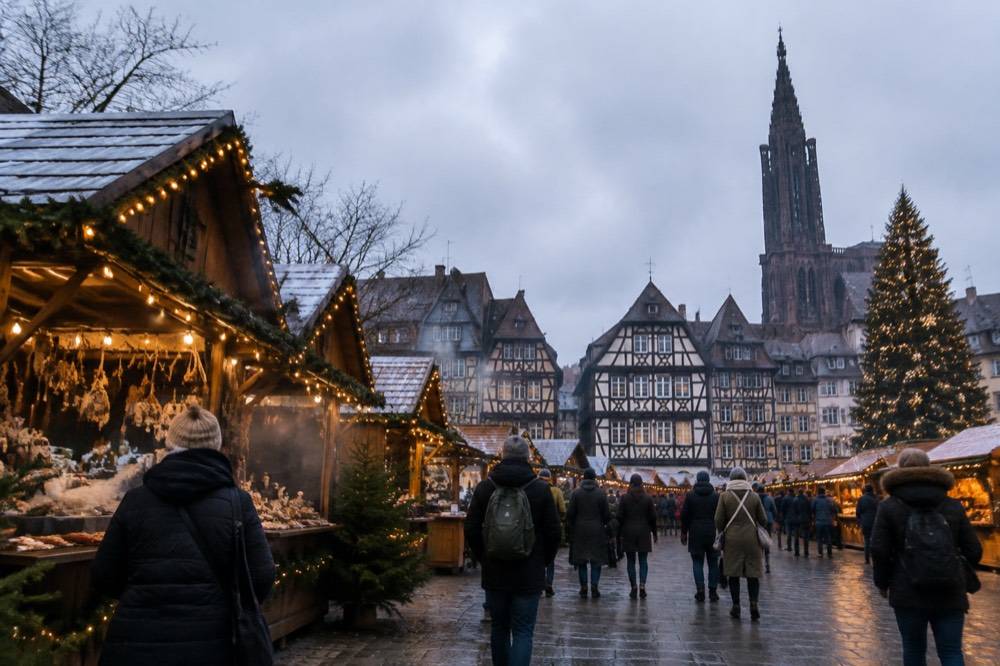
Strasbourg holds the top spot because it combines a genuinely historic market with a World Heritage old town, a food culture built on Alsatian wine and cooking, and a scale that fills the city centre rather than a single square. Its 2025 edition drew 3.05 million visitors, down from 3.4 million in 2024, and the city's December identity is inseparable from the cathedral and the half-timbered streets around it. No other market town in Europe offers all three at once.
The 2025 edition ran from 26 November to 24 December, and the city's own bilan put attendance at 3.05 million, a fall of 4.4 percent from the 3.4 million recorded in 2024. Those are the last official figures available, and they matter because they show the market's pull even in a softer year. The 2026 dates have not been published yet: the city's Christmas site states that the official dates and programme are still being finalised, and the usual pattern is an opening in the last week of November with a close on 24 December, early in the evening. Anyone planning a trip should confirm the 2026 dates on the city's own Christmas pages rather than trusting secondary listings.
The setting is the second reason. The market is not one square but a string of them: Place Kléber with its giant tree, Place Gutenberg, the cathedral's Place du Château and the riverside lanes of Petite France, all walkable in a loop. The question of which Strasbourg market is best has its own answer page, but the short version is that the cathedral square and Petite France carry the atmosphere, while the smaller squares carry the food. A walking structure that links them, the kind a guided walk handles well, is worth considering in December crowds.
Curious to wander the squares and lanes behind the chalets? Book a free walking tour here.
The third reason is the wine. Alsace is one of France's great white wine regions, and the mulled wine in Strasbourg is made from local grapes rather than anonymous red. That single fact changes the character of the whole market: the stalls feel like an extension of the region's winstubs rather than a pop-up. Travellers who want to go deeper can read about the Alsace wine route, whose villages are within day-trip range of the city.
How Does Strasbourg Compare With The Rest Of Alsace?
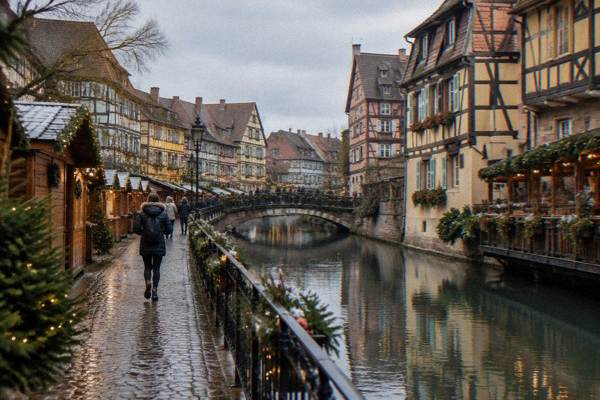
Strasbourg is the anchor of a regional circuit rather than a standalone market. Colmar, a smaller Alsatian city with its own canalside market, is the usual second stop, and the wine villages between the two hold small markets that are quieter and, in the evenings, more intimate. The trade-off is simple: Strasbourg has the scale and the cathedral, Colmar has the postcard intimacy, and the villages have neither crowds nor queues.
The choice between the two has a dedicated comparison page on Strasbourg or Colmar at Christmas. In December the practical answer is to do both if time allows, because they sit on the same rail line and the drive between them is short. The question of how many days you need in Strasbourg for Christmas markets has its own answer too, but a first visit in December deserves at least two nights in the city itself, with a day for Colmar or the villages if the trip stretches to three.
The regional circuit is where a guided day tour earns its keep. The Christmas markets day tour from Strasbourg runs to the Alsatian markets beyond the city, with transport and timing handled, which matters in December when daylight is short and parking in the wine villages is scarce. The tour pairs naturally with the city market: spend the arrival evening around the cathedral, take the day tour through the region, then finish with a final night in Petite France. For travellers who prefer to stay on foot in the city itself, a small-group welcome walk covers the old town's core in a single guided loop.
For independent travellers, the same circuit is doable by train with patience. The wine villages each have their own character, and the question of whether Strasbourg's market is worth it, which has its own answer page, usually resolves itself once visitors see how the city's market connects to the region behind it. The Strasbourg Travel Guide covers the individual villages and the market food in depth for anyone building a longer itinerary.
When Is The Best Time To Visit The Strasbourg Market?
The Strasbourg market runs from late November to 24 December, and the best time inside that window is the first two weekends for atmosphere without peak crowds, or midweek evenings for the lights at their best. Weekends in mid-December are the busiest stretch of the whole season. The 24 December close comes early in the evening, so plan the final day around daytime browsing rather than a late session.
The verified pattern is consistent: the market opens in the last week of November and closes on 24 December, with chalets typically open from late morning into the evening. The 2025 edition opened on 26 November at 2pm and closed on 24 December at 6pm, and that shape is the safest guide to what 2026 will look like, though the official dates are still being finalised and should be confirmed on the city's Christmas site. The dates question has a full answer page for anyone planning around a specific week.
| Timing | What to expect | Who it suits |
|---|---|---|
| Opening week, late November | Full stall lineup, thinner crowds, lights on from dusk | First-time visitors, photographers |
| Early December weekends | Lively but manageable, choirs and events running | Families, weekend travellers |
| Mid-December weekends | The busiest stretch of the season, evening queues at food stalls | Shoppers who want the full buzz |
| 23 to 24 December | Wind-down, some stalls selling off stock, early close on the 24th | Locals, last-minute trips |
Day versus night is a real question, and it has its own answer page on Christmas markets by day or night. The honest summary is that the market is a different place after dark, when the lights on the cathedral square and the tree on Place Kléber do the work, but the food stalls are easier to reach at midday and the half-timbered detail of Petite France reads better in daylight. December weather in Strasbourg is semi-continental: the Meteo-France 1991-2020 normals give a mean December maximum of 5.9 C, a mean minimum of 0.8 C and 10.2 days of rain of 1 mm or more, so layers and a waterproof layer are both needed, and the warm drink is not a cliché.
Which Other Markets Deserve A Mention?
Beyond the top three, the strongest contenders are Cologne with its cathedral backdrop, Munich with several markets across the old town, and Prague with its old-town square setting. In France, Colmar is the clear runner-up to Strasbourg, and the Alsatian villages offer a quieter version of the same tradition. None of these quite match the top three on the combination of setting, food and history, but each beats them on some single dimension.
Cologne's market clusters around a Gothic cathedral of its own and draws vast weekend crowds from the surrounding region. Munich spreads across several squares, letting visitors walk between distinct markets with different characters. Prague's market sits under towers and astronomical detail that photograph beautifully at dusk, though the food leans more toward sausage and mulled wine than regional cooking. For travellers already committed to Strasbourg, the more useful comparison is not with these cities but with the river cruise format, which strings several markets together along the Rhine and Danube, a question with its own dedicated answer page on the Rhine or Danube for Christmas markets.
The Rhine and Danube question is worth a sentence here because it changes the ranking: a cruise passenger sees four or five markets in a week, and in that frame Strasbourg competes as one stop among several rather than as a destination. The city's advantage, that its market is inseparable from a walkable old town you can explore for days, matters less from a ship's gangway. That is also why the three-day Strasbourg itinerary in December is a popular format: the market rewards time, and the city rewards the market.
Common Questions About Europe's Christmas Markets
What are the top 3 Christmas markets in Europe?
Strasbourg in France, Vienna in Austria and Nuremberg in Germany. Strasbourg combines a historic market with a UNESCO-listed old town and Alsatian food culture, and its 2025 edition drew 3.05 million visitors. Vienna offers the grandest setting around its city hall, and Nuremberg is the classic German market with the strongest sense of tradition.
Which is better, Strasbourg or Colmar at Christmas?
Strasbourg for scale, the cathedral and the food; Colmar for intimacy and canalside charm. The two sit close together on the same regional circuit, so the usual advice is to base yourself in Strasbourg and give Colmar a day. The full comparison has its own answer page on this site.
When does the Strasbourg Christmas market run?
The usual pattern is an opening in the last week of November and a close on 24 December, early in the evening. The 2025 edition ran from 26 November to 24 December. The city posts each edition's dates on its Christmas site, so confirm them there before booking travel.
Are Christmas markets better in the day or at night?
At night for the lights, at midday for the food stalls and the half-timbered detail. Strasbourg's market works well in both modes because the old town loop between the cathedral, Place Kléber and Petite France is short enough to do twice in one day.
Is a Christmas market river cruise worth it?
It depends on what you want. A cruise strings several markets together along the Rhine or Danube in a single week, which suits travellers who want breadth. Staying in Strasbourg suits travellers who want depth, since the city's market rewards several evenings rather than a single afternoon ashore.
How cold is Strasbourg in December?
Cold but not severe. The Meteo-France 1991-2020 normals for Strasbourg-Entzheim give a mean December maximum of 5.9 C and a mean minimum of 0.8 C, with 10.2 days of rain of 1 mm or more in the month. Pack warm layers and something waterproof.
The top three answer holds up across years because it rests on things that do not change: Strasbourg's old town, Vienna's city hall, Nuremberg's traditions. What does change is the detail, the dates, the programmes and the crowds, and that is what to check on the official pages before committing to a trip.