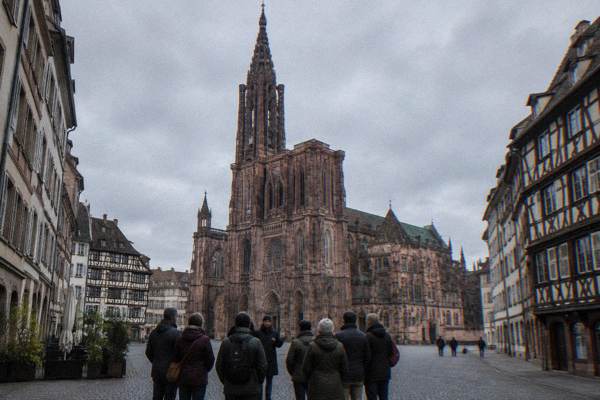
Strasbourg Events
Strasbourg, in Alsace, north-eastern France, builds its year around a handful of moments when the whole city changes character, and this guide walks through them season by season.
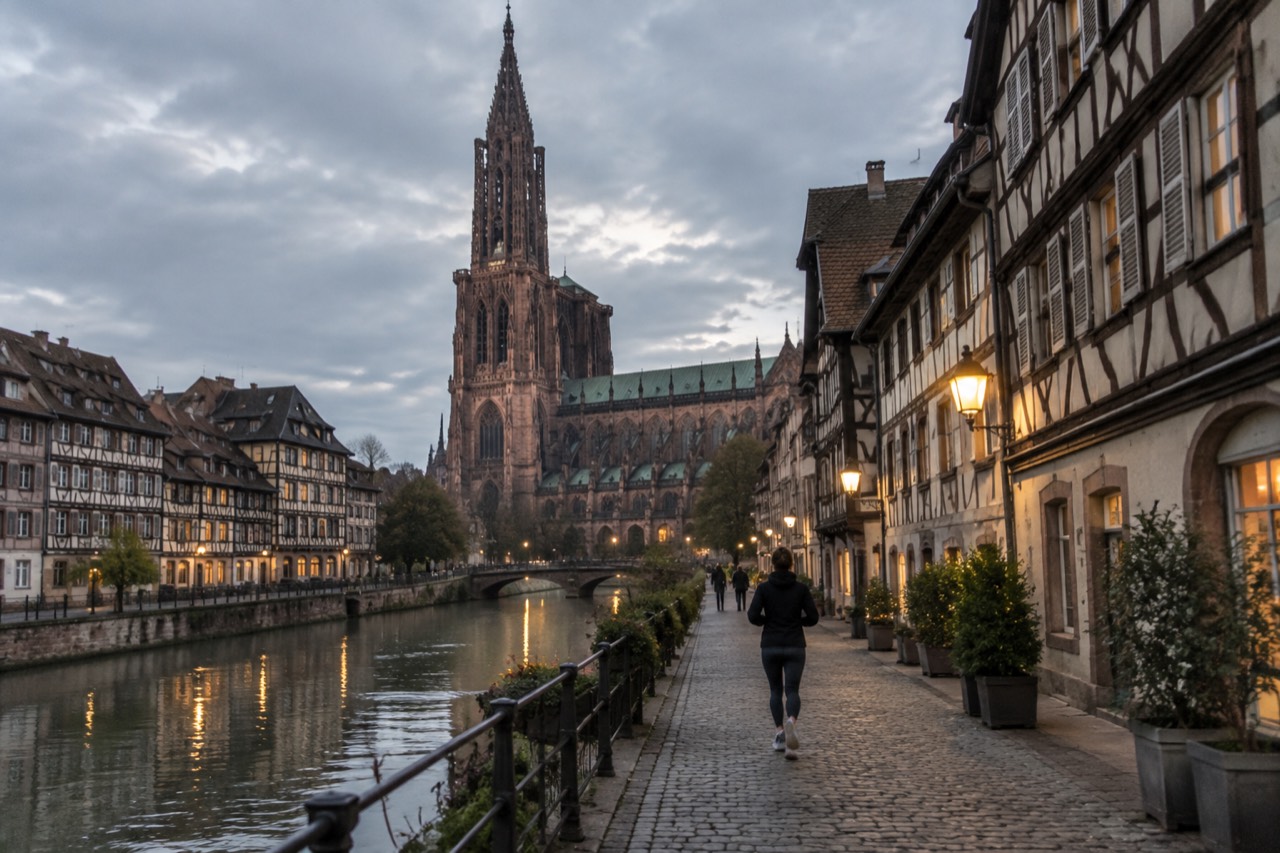
Short answer
Strasbourg's event year peaks with the Christmas market, which last year ran 26 November to 24 December 2025 and drew 3.05 million visitors. Around it sit spring and summer festivals, European institution open days and year-round ticketed sights: the cathedral platform at 10 EUR, municipal museums at 9 EUR and a 24-hour tram pass at 4.60 EUR.
Strasbourg, the prefecture of Bas-Rhin in Alsace, north-eastern France, is a city that runs on a calendar. It sits on the River Ill beside the Rhine, the border with Germany, and its year swings from a summer of riverside life to a late-November switchover when the whole of the Grande Île turns into a Christmas stage. The commune counted 293,771 residents at the last INSEE census figure, yet last year's Christmas edition alone drew 3.05 million visits, which tells you how much of this city's event life is built for people arriving from somewhere else. This guide walks through the Strasbourg event year season by season: what happens, what it costs, and what to check before you book anything.
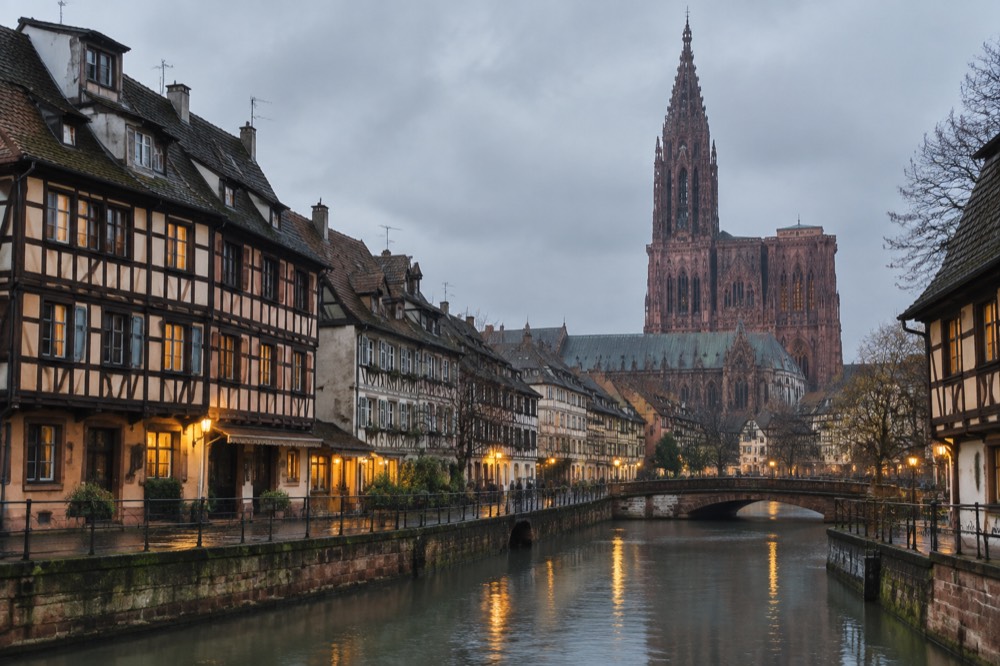
What Events And Festivals Shape The Year In Strasbourg?
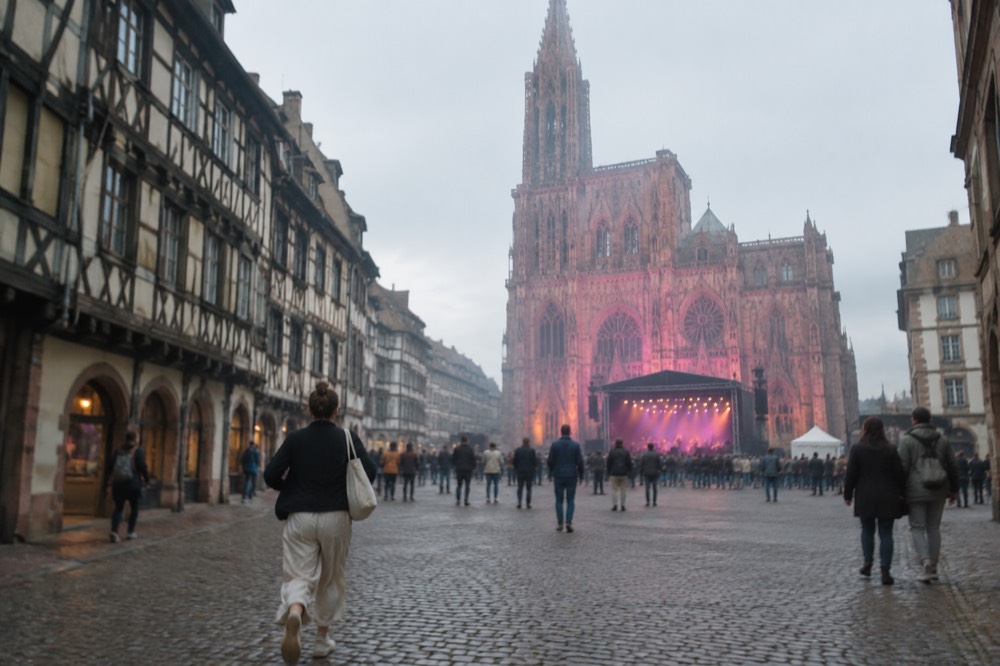
The Strasbourg event year divides into four clear blocks: the Christmas market from late November to 24 December, a spring season of fairs and cultural festivals on the squares, a summer of riverside and open-air programming, and an autumn that builds back toward the Christmas opening. The Christmas edition is the anchor, and everything else is planned around it. The city's own Christmas site states that the 2026 dates and programme are still being finalised, so the pattern, not a published date, is what you can plan on: an opening in the last week of November and a close on 24 December, early in the evening.
Beyond Christmas, the calendar belongs to music festivals, museum programming and the European institutions. The tourist office's events calendar is the place where festival dates appear first, and for anything outside the Christmas market this page deliberately avoids quoting dates, because several of Strasbourg's festivals publish their editions late. What stays stable is the geography: events cluster on Place Kléber, Place Gutenberg and the cathedral square in the Grande Île, spread into the Neustadt, and line the riverbanks in summer.
For first-time visitors the practical question is not which festival but which season. A winter trip is a Christmas trip. A summer trip is a river and terrace trip. Spring and autumn sit between the two, with thinner crowds and the same ticketed sights. The table below is the honest skeleton of the year.
| Season | What defines it | Anchor events | What to book early |
|---|---|---|---|
| Winter (late Nov to 24 Dec) | Christmas market across the Grande Île | Christkindelsmärik tradition, Saint-Nicolas season | Central hotels, Christmas-market tours |
| Winter (Jan to Feb) | Quiet, cold, museum season | Reduced programming, carnival season in the region | Little; walk-in sights |
| Spring (Mar to May) | Fairs and cultural festivals return | Spring festivals on the squares, museum reopenings | Guided walks, food tours |
| Summer (Jun to Aug) | Long evenings, river life | Open-air programming, riverside terraces | Boat tours, evening walks |
| Autumn (Sep to Nov) | Festival build-up | Contemporary music and jazz festivals, then the market build | Festival tickets, early December rooms |
When Is The Strasbourg Christmas Market And What Changes For The City?
The 2025 Strasbourg Christmas Market ran from 26 November to 24 December and drew 3.05 million visitors. The dates for the 2026 edition have not yet been published, as the city's official Christmas site states that the dates and programme are still being finalised. The pattern you can plan on is an opening in the last week of November and a close on 24 December, with the final day ending early in the evening. Chalets typically open late morning and run into the evening. Confirm the 2026 dates on the city's own Christmas site before you book anything, because the city publishes them there first and nowhere else.
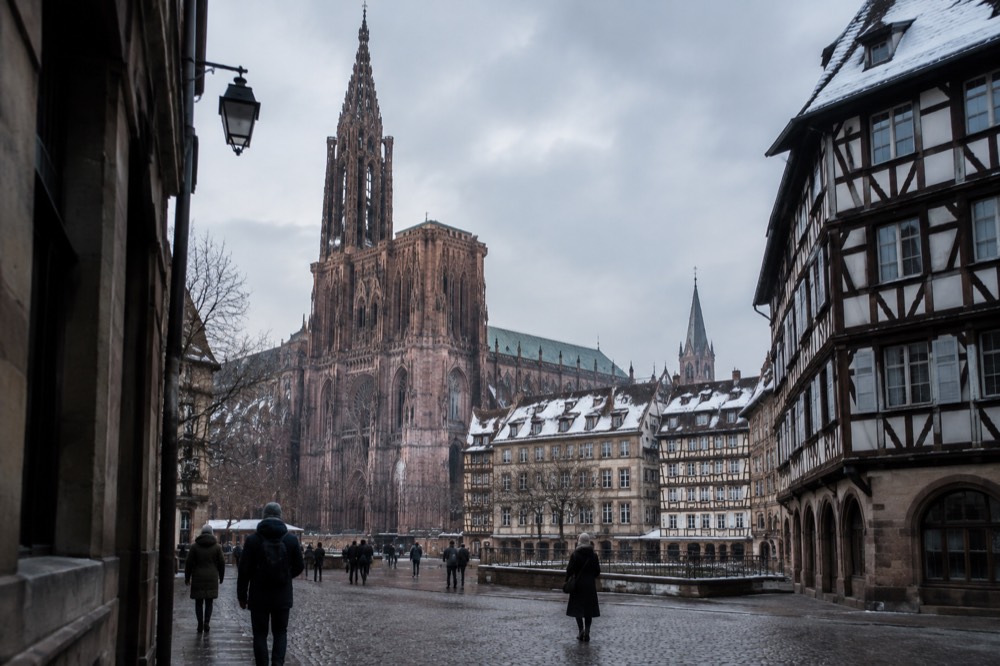
The market changes the city physically. The cathedral stays open continuously on the Place du Château side during the market, Monday to Saturday, 08:30 to 17:45, which is longer than its usual visiting windows of 08:30 to 11:15 and 12:45 to 17:45. The 2025 edition drew 3.05 million people, down from 3.4 million in 2024, and the city treats the whole thing as its flagship event, branding Strasbourg as a Christmas capital. Dozens of chalets spread across several squares in the historic centre.
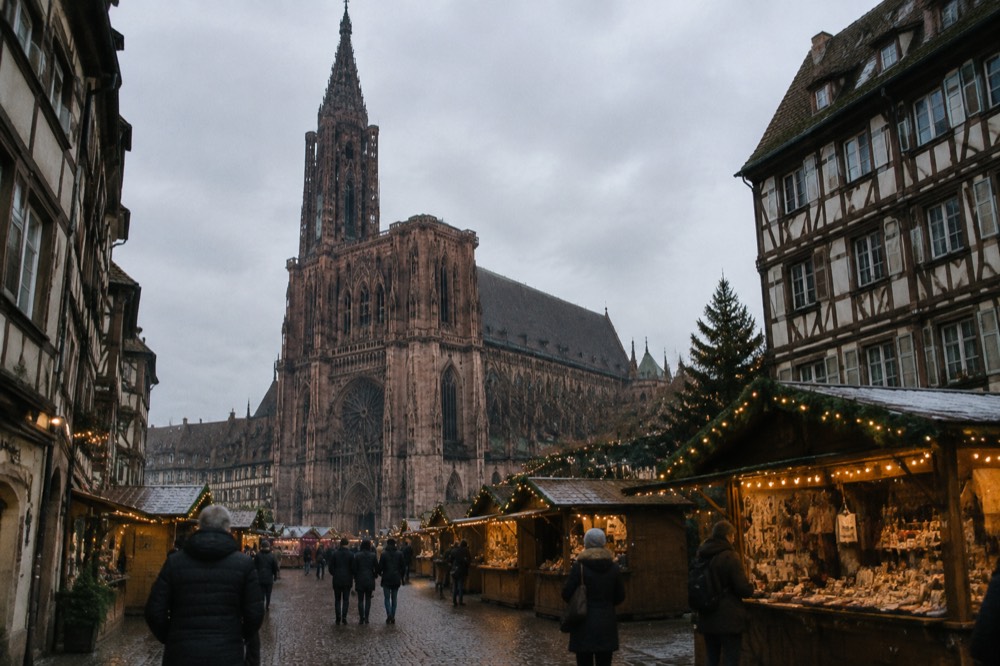
Two practical notes shape a market visit. First, December is a genuinely cold, damp month: Meteo-France 1991-2020 normals for Strasbourg-Entzheim give a mean December maximum of 5.9 C, a mean minimum of 0.8 C and 10.2 days of rain of 1 mm or more, so pack for it. Second, the market is free to wander; the costs inside are food, drink and the ticketed sights around it. The cathedral platform costs 10 EUR full and 6 EUR reduced, and the 12:30 astronomical clock show costs 4 EUR, with tickets sold on the day only.
The full market picture, including food and where to sleep, has its own pages: start with the Strasbourg Christmas Market guide, then the Christmas market food guide and where to stay for the market. If you are pairing Strasbourg with other Alsatian markets, the Christmas markets in Alsace overview and the Colmar Christmas market guide cover the wider circuit.
If you want the city explained while the lights are up, a guided format does the work of an evening. Three options below span the range: a segway circuit of the grand European spaces, a full-day Alsace history trip for the region around the market, and a food walk that doubles as dinner.
Which Music And Arts Festivals Fill The Strasbourg Calendar?
Strasbourg's festival year is real but deliberately date-shy. Contemporary music, jazz and classical programmes run through autumn and spring, and each festival publishes its own dates every season, so the tourist office calendar is the reliable place to check before you plan a visit around any single event. This page will not print festival dates, because the primary pages for the current editions carry them and secondary summaries get them wrong. What you can rely on is the shape: a contemporary music festival in early autumn, a jazz festival in November, and classical and choral programming tied to the city's churches and its concert institutions through the rest of the year.
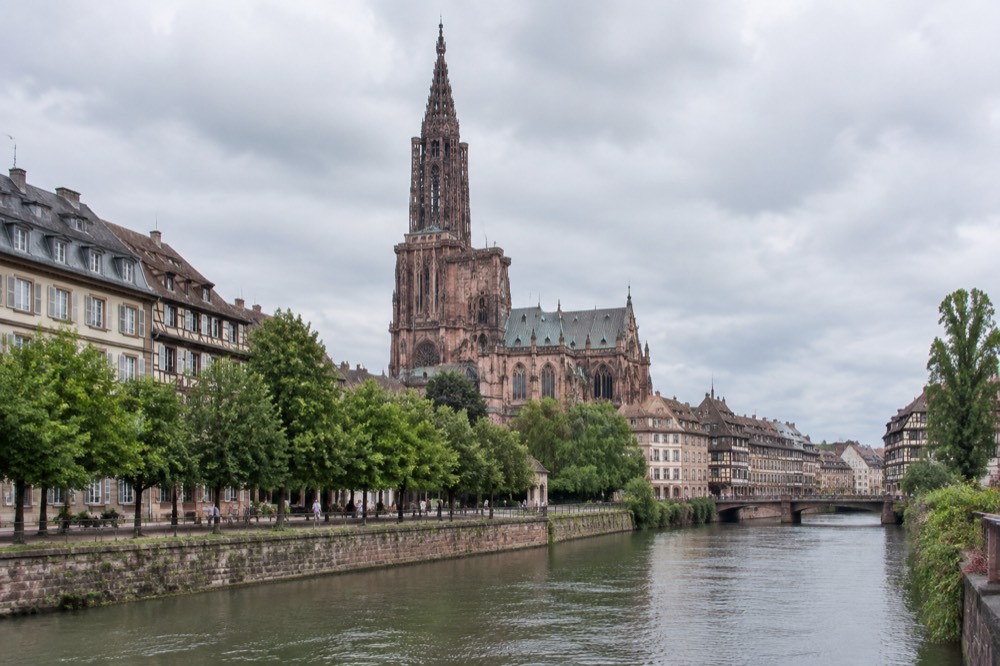
The churches matter here. Saint-Thomas, Saint-Pierre-le-Jeune and the cathedral itself host choral and organ programmes through the year, and the nave hours, Monday to Saturday 08:30 to 11:15 and 12:45 to 17:45, Sunday 14:00 to 17:15, frame when you can simply walk in. Museum programming runs in parallel: the municipal museums cost 9 EUR full and 5 EUR reduced, are free on the first Sunday of every month, and the one-day Pass Musées is 20 EUR. Note that the Musée Alsacien is closed for works until 2028 and should not be on any itinerary.
For visitors whose festival trip is really a city trip, the pairing question is what to do between events. A street-art walk fits the contemporary music season well: it covers the Krutenau and the walls that the festival crowd walks past anyway, and the operator's live listing carries the current price and times. The Strasbourg at night guide covers the evenings between performances, and the Strasbourg museums guide handles the rainy afternoon between them.
Where Do European Institutions Fit Into Strasbourg's Event Life?
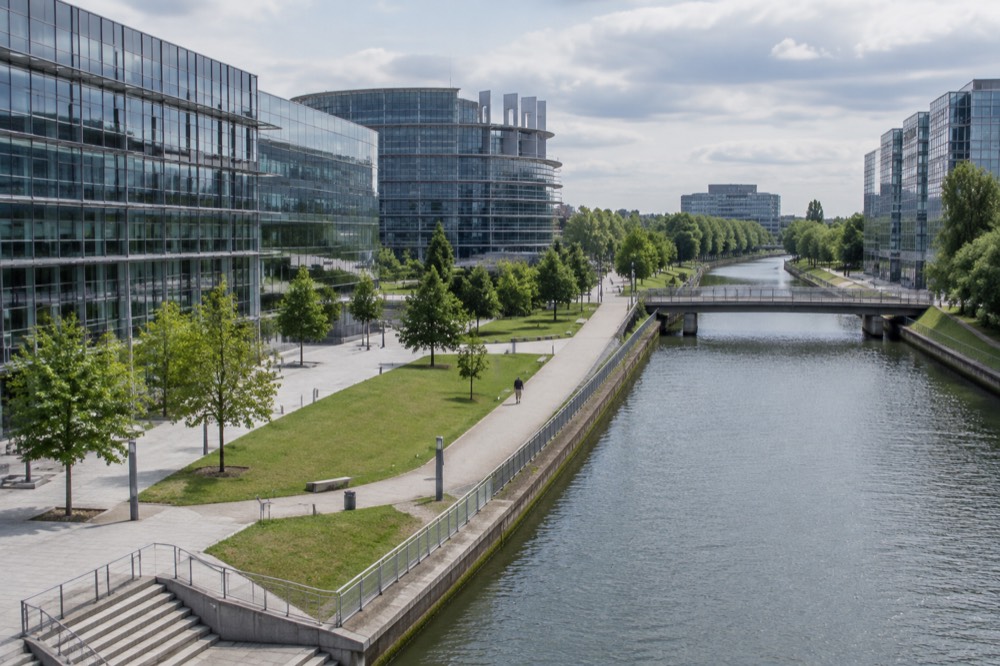
Strasbourg's European quarter gives the city a year-round programme of institutional visits, and the Parlamentarium is the anchor: it opens Monday to Friday 09:00 to 18:00 and Saturday 09:30 to 12:00 and 13:00 to 18:00 outside plenary weeks, with an airport-style security check at the door. Plenary weeks change the hours, so the European Parliament's visitor page is the one to check against your dates. Admission terms are stated on that page, and this guide will not guess them.
The quarter sits across the Ill from the historic core, and it is a part of Strasbourg that visitors tend to overlook. That is a miss in event terms: the institutions host open days, debates and exhibitions that appear on the tourist office calendar, and the architecture alone, wide avenues and modern institutional buildings, is a change of scene from half-timbering. The European Parliament guide and the European quarter area guide cover the buildings in detail.
The quarter's scale rewards wheels. Check availability if the format appeals, and read the best time to visit Strasbourg guide for how the quarter fits a first trip.
What Happens In Strasbourg In Summer?
Summer in Strasbourg is a river and terrace season: the long evenings, mean July maximum 26.4 C, push life onto the Ill's banks, the Batorama boats run their full circuits and the open-air programming spreads across the squares. The rivers are the event. The long Batorama tour costs 16.20 EUR full and 8.90 EUR reduced and runs 1h10 on the Red Tour circuit; the short tour costs 12.50 EUR full and 7.20 EUR reduced and runs 0h45 on the Blue Tour. Those are the official prices and durations, and they hold through the season.
The Orangerie park and the Two Rhine Gardens carry the daytime crowds, and the terraces of the Grande Île carry the evenings. Summer is also the season when the city's walkability pays off: the core is compact, and the Strasbourg in summer guide lays out the full day-by-day structure. Rain still happens, with 10.4 rain days of 1 mm or more in July on the 1991-2020 normals, so the museums remain the backup plan, and the rainy day in Strasbourg guide is built for exactly that.
For a summer evening with structure, a food walk is the format that suits the season best: the terraces are open late and the walk doubles as dinner. The traditional food walk with tastings runs about three and a half hours and is one of the stronger pairings with a first summer visit, and its live listing carries the current price. The wider set of guides lives on Strasbourg Travel Guide.
How Do Spring And Autumn Events Use The City's Squares?
Spring and autumn events in Strasbourg center on the city's public squares, with Place Kléber and Place Gutenberg serving as the main stages for seasonal fairs, markets, and cultural programming during these shoulder seasons. Between the square-based festivities, visitors can fill their days with the city's museums and guided walks, which continue their regular schedules. The squares effectively act as open-air venues that anchor the calendar of events from March through May and again from September through November. The squares are the city's stages, and both seasons use them. Spring brings the fairground tradition and the reopening of terrace life, with a mean May maximum of 20.9 C on the normals; autumn brings the festival build and then the physical construction of the Christmas market itself, visible across the Grande Île in November.
These are also the seasons when the ticketed sights are easiest to see. The cathedral platform, 10 EUR full and 6 EUR reduced, children under 6 free, runs 09:30 to 13:00 and 13:30 to 20:00 from 1 April to 30 September, and 10:00 to 13:00 and 13:30 to 18:00 from 1 October to 31 March, with the last ascent 45 minutes before close. The astronomical clock shows daily at 12:30 sharp, ticket 4 EUR, day-of purchase only. The Strasbourg in spring and Strasbourg in autumn guides carry the fuller seasonal detail.
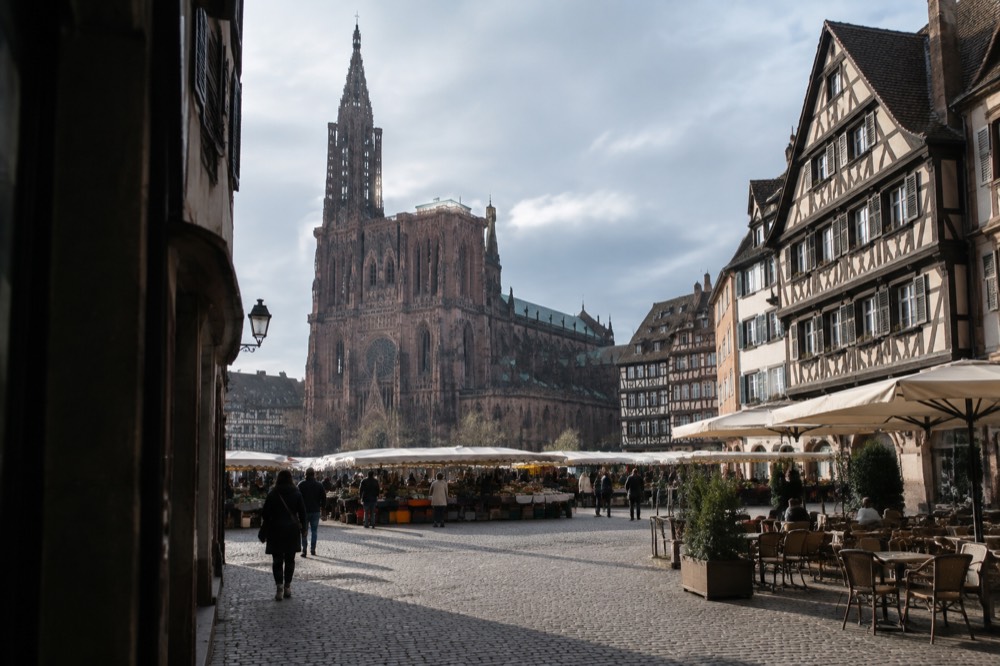
The shoulder seasons are also where a free walking tour earns its keep. Strasbourg has pay-what-you-want English walks that run through GuruWalk, tip the guide at the end, and their listings carry the current meeting points and durations. The original free tour is the longest-running of them and suits a first orientation in either shoulder month.
A pay-what-you-want walk is an easy way to get your bearings. Book a free walking tour here.
What Do Tickets And Transport Cost On Event Days?
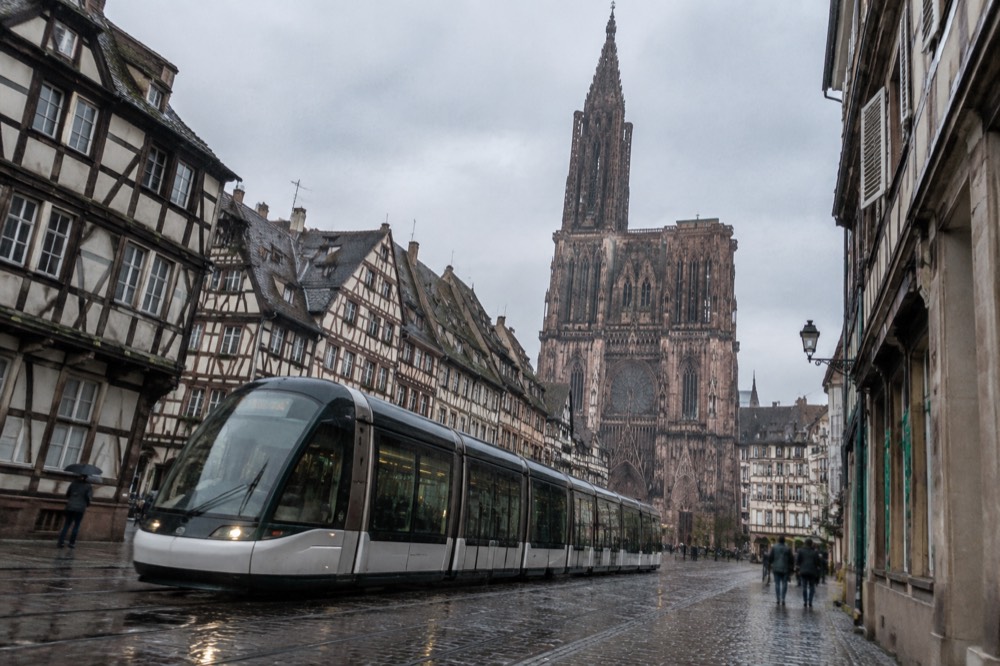
On any event day in Strasbourg the fixed costs are small: a single tram ticket is 1.90 EUR from the app or contactless, a 24-hour Solo pass is 4.60 EUR, and the airport shuttle combined ticket is 4.60 EUR including the 8-minute train ride and a day of city transport. The CTS fare page is the source for these, and the 24-hour Trio pass for two to three people travelling together is 10.20 EUR. A single bought on board a bus costs 2.50 EUR, so the app or contactless is always the better move.
The sight tickets stack up separately, and the table below gathers every figure an event-day plan needs. The Strasbourg City Card, 5 EUR adult and 3.50 EUR child for 7 days, is a discount card rather than a pass: it takes money off the museums, the boat, the platform and the clock, and the Strasbourg city pass guide works out when it pays for itself.
| Item | Full price | Reduced price | Notes |
|---|---|---|---|
| Cathedral platform | 10 EUR | 6 EUR | Under 6 free; platform at 66 m |
| Astronomical clock show | 4 EUR | 2 EUR children 6-17 | Daily 12:30; day-of tickets only |
| Municipal museums (each) | 9 EUR | 5 EUR | Free first Sunday of every month |
| Pass Musées, 1 day | 20 EUR | - | All municipal museums |
| Strasbourg City Card | 5 EUR | 3.50 EUR child | 7 days; discount card only |
| Batorama long tour | 16.20 EUR | 8.90 EUR | Red Tour, 1h10 |
| Batorama short tour | 12.50 EUR | 7.20 EUR | Blue Tour, 0h45 |
| Transport ticket | Price | Where it applies |
|---|---|---|
| CTS single | 1.90 EUR | Badgéo, CTS app or contactless |
| CTS single, bought on board | 2.50 EUR | Buses only |
| 24h Solo pass | 4.60 EUR | One person, whole CTS network |
| 24h Trio pass | 10.20 EUR | Two to three people together |
| Airport combined ticket | 4.60 EUR | Train, 8 minutes, plus 24h city transport |
Event days change one thing: crowding on the trams around the Christmas period and on festival evenings. Nothing gives queue lengths or extra services, so the honest advice is simply to buy the day pass and travel early. The getting around Strasbourg guide is not on this page's link list, so use the Strasbourg weather guide for the seasonal packing side instead.
How Do You Plan A Trip Around The Strasbourg Event Calendar?
Plan backwards from the Christmas market if December is your month: last year's edition ran 26 November to 24 December 2025, the next edition's dates are unpublished, and the two things to lock first are the room and the return train. For every other month, pick the season first, book the ticketed sights for the days you actually want them, and leave the squares and riverbanks to chance, because they are the part of Strasbourg's event life that needs no ticket at all.
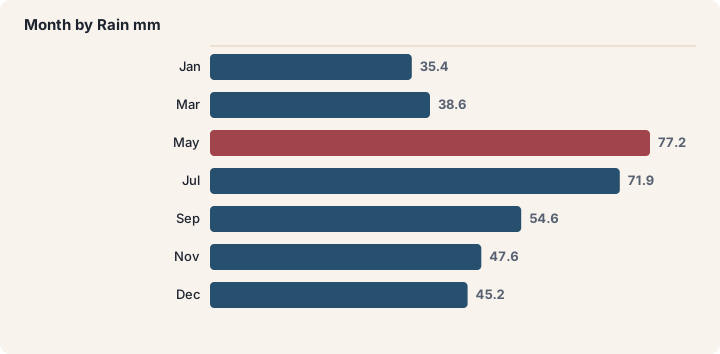
The climate is the planning constant. Strasbourg is semi-continental, with a mean annual maximum of 16.0 C, 635.7 mm of rain across 112.3 rain days on the 1991-2020 normals, and the honest monthly spread is below. It is not a Mediterranean city, and December visitors feel that most.
| Month | Mean max C | Mean min C | Rain mm | Rain days >= 1 mm |
|---|---|---|---|---|
| Jan | 5.2 | -0.2 | 35.4 | 9.1 |
| Mar | 12.1 | 2.6 | 38.6 | 8.5 |
| May | 20.9 | 10.1 | 77.2 | 10.8 |
| Jul | 26.4 | 14.9 | 71.9 | 10.4 |
| Sep | 21.6 | 10.7 | 54.6 | 8.0 |
| Nov | 9.4 | 3.3 | 47.6 | 9.2 |
| Dec | 5.9 | 0.8 | 45.2 | 10.2 |
Budget-wise, Strasbourg rewards the same tactics as any French regional capital: the Strasbourg on a budget guide and the free things to do in Strasbourg guide cover the no-ticket side, and the is Strasbourg worth visiting answer is honest about who should skip it. If your event is the Christmas market and Paris is your base, the Christmas market from Paris guide handles the rail side, and the Strasbourg in winter guide covers the rest of the cold months.
Whatever the season, the same three formats do the heavy lifting for first-time visitors: a guided circuit of the grand European spaces, a full-day trip into the Alsace history around the city, and a food walk that turns the evening into the event itself.
Common Questions About Strasbourg Events
When is the Strasbourg Christmas market?
The 2026 dates are not yet published; the city's Christmas site states that the dates and programme are still being finalised. The pattern is an opening in the last week of November and a close on 24 December, early in the evening. Last year's edition ran 26 November to 24 December 2025 and drew 3.05 million visitors.
Is the Strasbourg Christmas market free to enter?
Yes, wandering the squares and chalets costs nothing; you pay for food, drink and any ticketed sights around the market. The cathedral platform costs 10 EUR full and 6 EUR reduced, and the 12:30 astronomical clock show costs 4 EUR with day-of tickets only.
What festivals does Strasbourg host outside Christmas?
Contemporary music and jazz festivals run through autumn, and choral and organ programmes use the churches through the year. Each edition publishes its own dates on the tourist office's events calendar, so check there rather than relying on secondary summaries.
What is the weather like at Strasbourg event season?
Strasbourg is semi-continental. December averages a maximum of 5.9 C and a minimum of 0.8 C with 10.2 rain days, while July averages 26.4 C maximum. Pack for cold and damp if your event is the Christmas market.
Can you visit the European institutions during an event trip?
Yes. The Parlamentarium opens Monday to Friday 09:00 to 18:00 and Saturday 09:30 to 12:00 and 13:00 to 18:00 outside plenary weeks, with an airport-style security check. Plenary weeks change the hours, so check the European Parliament's visitor page for your dates.
Strasbourg's event year rewards planning but does not demand it: the squares, the riverbanks and the cathedral nave cost nothing, and the one date that sells out the city, the Christmas opening, follows a pattern you can book against with confidence once the city publishes the year's dates on its own Christmas site.