Strasbourg River Cruise Port
River cruise passengers calling at Strasbourg, in north-eastern France, step off beside one of the smallest World Heritage city cores in Europe. This guide sets out what a single day ashore can hold, with verified ticket prices, tram fares and boat tour costs.
Short answer
River cruise passengers stepping off in Strasbourg, France, land on the Ill beside the Grande Île, a UNESCO World Heritage core. A Batorama short boat tour costs 12.50 EUR, the cathedral platform 10 EUR, the 12:30 astronomical clock show 4 EUR, and a 24-hour CTS tram pass 4.60 EUR, so a full day ashore is inexpensive to run.
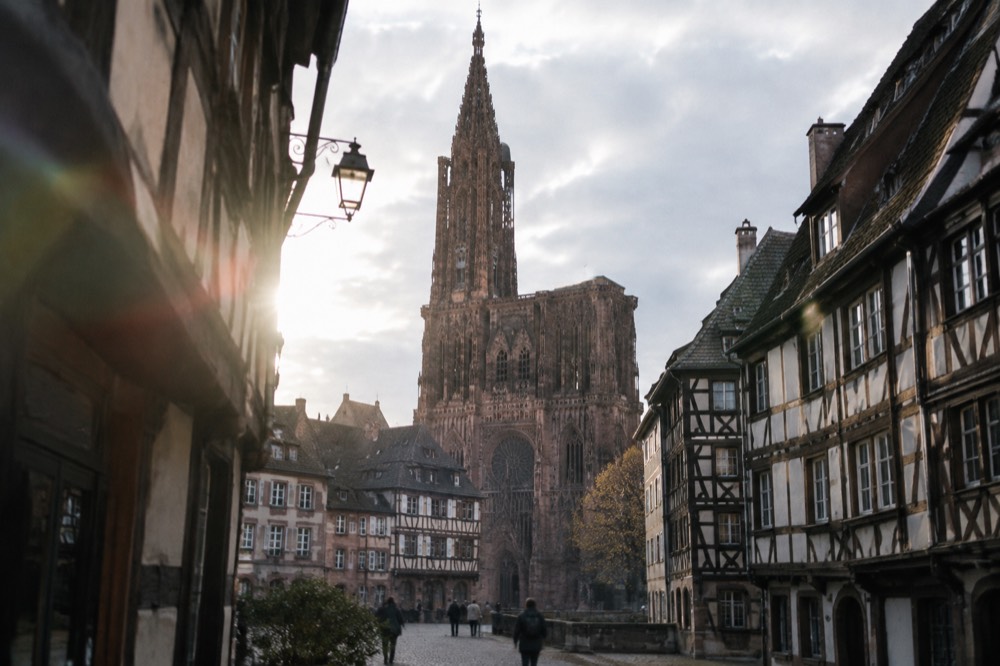
Strasbourg, the prefecture of the Bas-Rhin in Alsace, part of the Grand Est region of north-eastern France, sits on the River Ill a short distance from the Rhine, which forms the border with Germany; Kehl lies on the far bank. For river cruise passengers this is an unusually generous port. The city's whole historic core, the Grande Île, is an island threaded by the same river the ships arrive on, and it is inscribed as part of the UNESCO World Heritage property "Strasbourg, Grande-Île and Neustadt", with the Neustadt district as the later extension. A passenger can step ashore, walk along the water, and be among half-timbered houses within minutes of leaving the gangway, without a transfer, a taxi or a timetable.
This page, from the Strasbourg Travel Guide editorial desk, is written for one specific reader: the cruise passenger with a single call, a fixed departure time and no wish to waste it. Every price below is a verified official fare in euro, the currency on both banks of the Rhine here, since France and Germany share it.
Where Do River Cruise Ships Dock In Strasbourg?
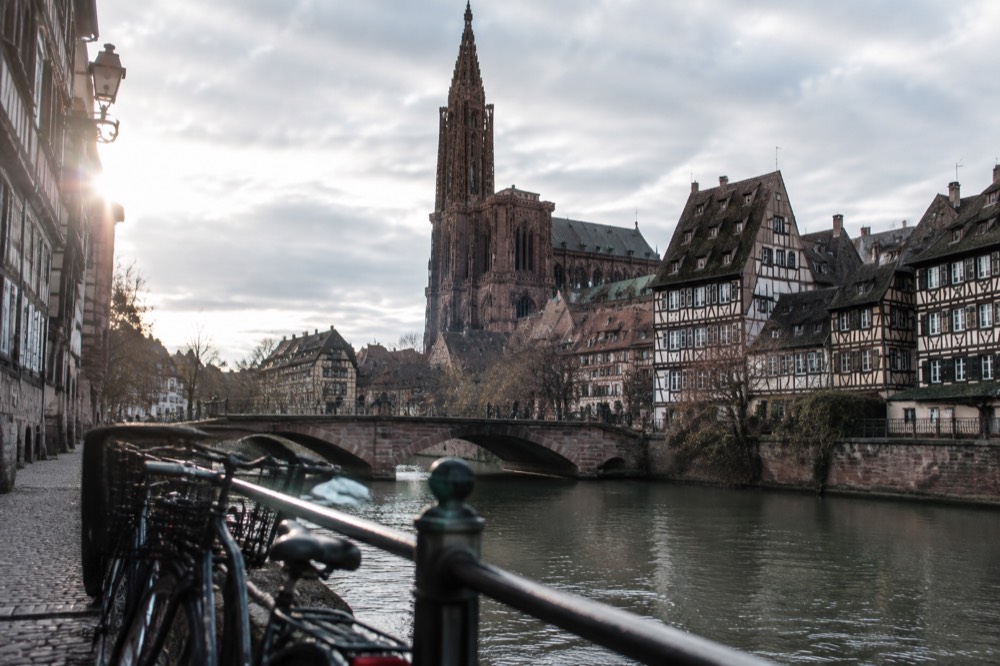
Strasbourg's river cruise berth sits on the Ill, the narrow river that loops around the Grande Île, so passengers step off inside the city rather than at an out-of-town terminal. The historic core, the cathedral district and Petite France all sit on or beside that same loop of water, which means the walk into town follows the river itself. No shuttle, no port bus and no ticket is needed to reach the first sights.
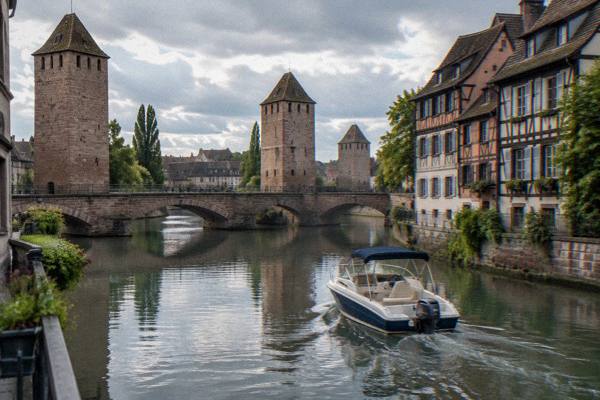
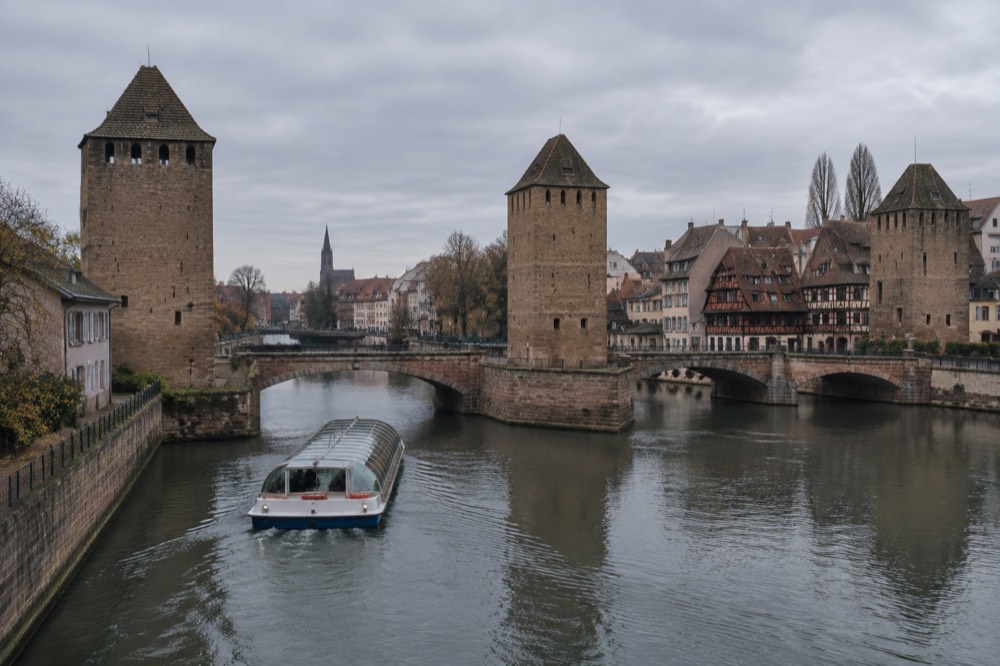
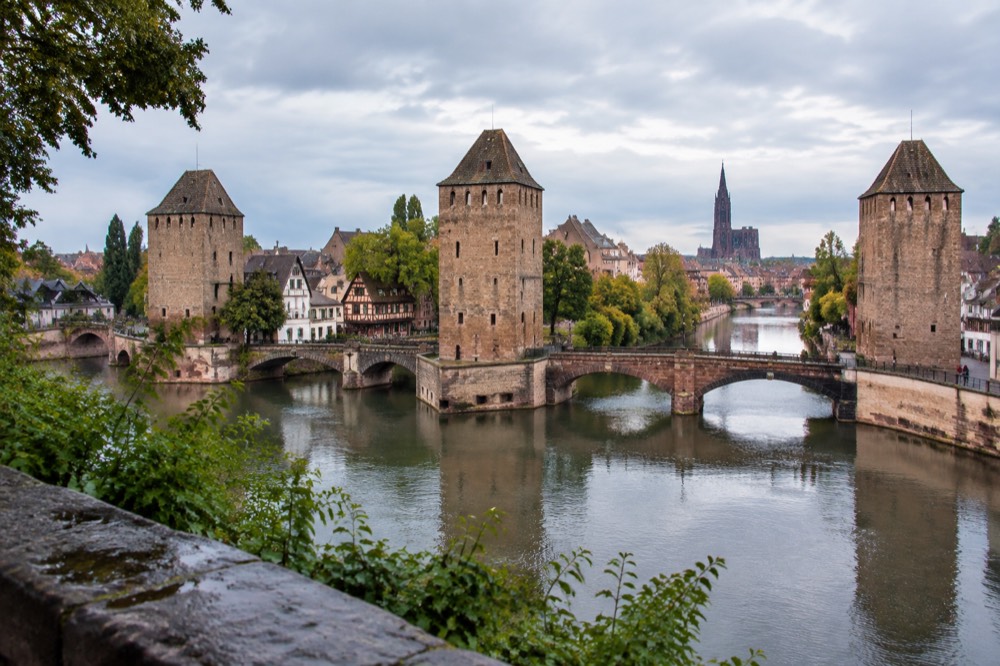
The Ill is not the Rhine. Cruise itineraries that include Strasbourg usually arrive from the Rhine via the short approach to the city, then the vessel ties up on the Ill, where the water is calm and the banks are low. From the berth, the river runs past the Ponts Couverts, the covered bridges that once guarded the city's western entrance, and past the Barrage Vauban, the defensive weir whose rooftop terrace gives one of the finest panoramic views over the whole island core. Both are described in the walk section below.
What makes this port easy is scale. The commune counted 293,771 residents at the last INSEE census year, 2023, yet the sights that draw visitors are packed onto one island and its immediate edges. The cathedral, Place Kléber, Place Gutenberg, the Palais Rohan and Petite France all sit within the Grande Île. Beyond it, the Neustadt, the imperial-era extension across the Ill, holds the broader boulevards and several of the European institutions.
| Fact | Detail |
|---|---|
| City | Strasbourg, prefecture of Bas-Rhin, Alsace, Grand Est, France |
| River at the berth | The Ill, which joins the Rhine north of the city |
| Border | Germany, with Kehl on the far bank of the Rhine |
| Heritage | "Strasbourg, Grande-Île and Neustadt", a UNESCO World Heritage property |
| Commune population | 293,771 (INSEE, 2023) |
| Currency | Euro, on both the French and the German bank |
| Climate | Semi-continental, with cold winters and warm summers |
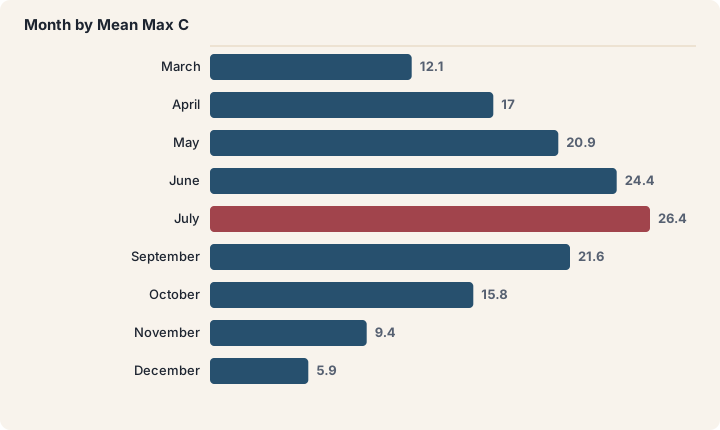
One warning worth carrying from the gangway: do not judge the day by the sky at breakfast. Strasbourg's climate is semi-continental, which in practice means a summer day can start grey and finish at 26.4 C, the July mean maximum in the Meteo-France 1991-2020 normals, and a December day sits around a 5.9 C mean maximum with a mean minimum of 0.8 C. Layers beat a single warm coat here.
How Much Of Strasbourg Can One Port Call Cover?
A single day ashore covers the Grande Île thoroughly: the cathedral, the astronomical clock, Petite France, the Ponts Couverts and the Barrage Vauban terrace, plus a boat tour and a proper winstub lunch. A half day forces a choice between the cathedral district and Petite France, since the clock show runs at 12:30 only. Two days, which few itineraries allow, would add the European Quarter and a wine village.
Stop lengths vary by itinerary, so plan against the ship's sailing time rather than a rule of thumb. The honest division is between a morning-only call, an afternoon-only call and a full day. A morning call should head straight for the cathedral, because the nave opens Mon-Sat at 08:30 and closes for the midday window at 11:15, reopening at 12:45; if the ship sails at midday, the 12:30 clock show is already lost. An afternoon call inverts the plan: the clock show is gone, but the nave reopens at 12:45 and stays open until 17:45, and the platform in the summer season takes its last ascent at 19:15.
The site's fuller plans translate directly to port calls. The one day in Strasbourg itinerary is the right template for a full call, and the two days in Strasbourg itinerary shows what a generous overnight stop can absorb. Passengers with a second day, or those sailing on toward Colmar, may prefer the Strasbourg and Colmar itinerary, which pairs the city with the wine country downstream of the same rail line.
For cruise passengers the arithmetic is kind. The three anchor sights, the cathedral, Petite France and the riverbank walk, cost almost nothing to reach on foot, and the two paid essentials, the platform and the clock show, remain modest per adult. The rest of the day is a matter of food, a boat ticket and energy.
Which Tour Format Suits A Short Stop?
A guided bike tour suits a full-day call best, because it sweeps the Grande Île, the riverbanks and the European Quarter in one loop that walking cannot match in the time. A segway tour covers similar ground with less effort. On foot, the island core itself is compact enough that a guide adds depth rather than distance. The choice is really about how much of the city beyond the island you want.
The bike option is the strongest single buy for a port call. For a passenger who wants to say they saw Strasbourg rather than one square of it, that breadth is the point. Bikes are the normal way locals move here too; the city is flat, and the Ill's banks carry cycle paths.
The segway format divides opinion but fits a short stop neatly. A one-and-a-half-hour guided segway tour covers the same kind of loop with more standing and less pedalling, which appeals after a morning on a ship. It is worth being honest that segways draw attention and a short training period at the start; the operator's live listing states the exact meeting point and what to wear.
| Format | What It Covers | Who It Suits | What To Check On The Listing |
|---|---|---|---|
| Guided bike tour | Grande Île, riverbanks, Neustadt, European Quarter | Full-day calls, confident cyclists | Meeting point and bike sizes |
| Segway tour | Similar loop, less effort | Short calls, first-time riders | Training time and weight rules |
| Walking tour | The island core in depth | Half-day calls, cathedral focus | Route and finish point |
| Boat tour | The Ill from the water | Any call, all weathers | Circuit choice, Red or Blue |
| Food walk | Winstubs and tastings | Long lunch calls | Dietary options and start time |
Walking remains the fallback that needs no booking at all. The island is small, the lanes are the attraction, and a passenger who simply walks from the berth to the cathedral and back through Petite France will have seen the core of the city. What a guide adds, on any format, is the story: why the houses lean, why the river splits, why one district speaks German architecture and another does not.
If you would rather walk the lanes with someone who knows them, book a guided walking tour here.
What Does A Boat Tour On The Ill Cost?
Batorama, the city's main sightseeing boat operator, charges 16.20 EUR full fare and 8.90 EUR reduced for its long tour, and 12.50 EUR full and 7.20 EUR reduced for the short tour. The Red long circuit runs 1 hour 10, the Blue short circuit 45 minutes, and there is a 17-minute Parliament-Cathedral return. These are the operator's official open-ticket fares.
For a cruise passenger the irony is obvious: you have just arrived by boat, and the temptation is to skip the water. Resist it. A river cruise ship sits low and moves at walking pace on the approach, but the Batorama circuits thread the canals through Petite France itself, past the Ponts Couverts and under the covered bridges, which the big vessels cannot do. The short Blue circuit at 45 minutes is the one that fits a tight call; the Red circuit at 1 hour 10 adds the European Quarter stretch.
The practical detail is departures. The operator runs from the quayside by the Palais Rohan, in the heart of the island, and frequency is highest in the warmer months. The site's fuller Strasbourg boat tour guide explains the circuits in depth. Reduced fares apply to children and the categories the operator lists on its own page; check the age thresholds there before assuming.
| Batorama Tour | Full Fare | Reduced Fare | Duration |
|---|---|---|---|
| Long tour (Red circuit) | 16.20 EUR | 8.90 EUR | 1 h 10 |
| Short tour (Blue circuit) | 12.50 EUR | 7.20 EUR | 0 h 45 |
| Parliament-Cathedral return | On the operator's page | On the operator's page | 17 min |
One pairing works especially well for a port call: take the boat first, at the start of the day, and use it as a moving orientation. The circuit shows you the island's shape, the weirs, the lock-free inner canals and the terrace you will climb later. Then walk back through what interested you.
How Do You Fit The Cathedral And The Astronomical Clock Into A Port Call?
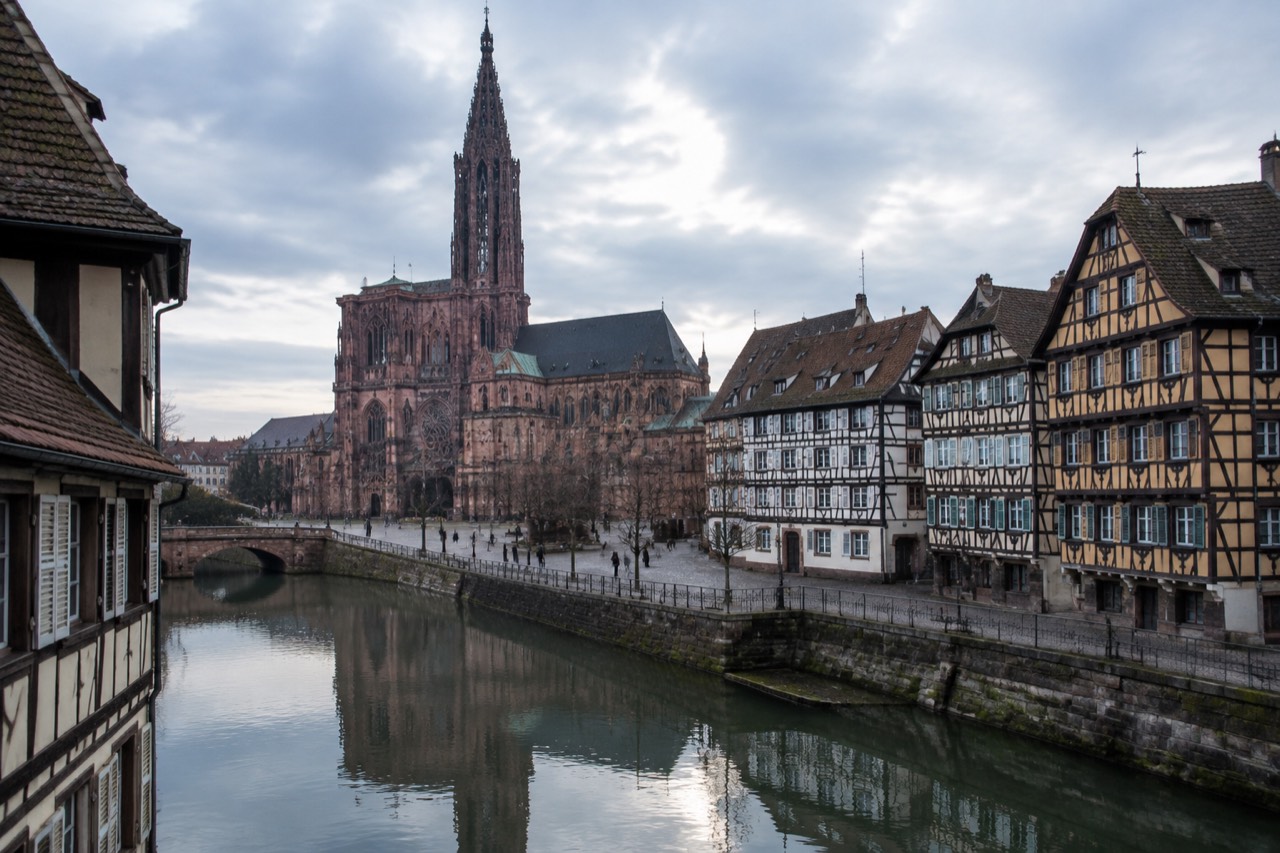
The cathedral nave is open Mon-Sat 08:30-11:15 and 12:45-17:45, and on Sundays and feast days 14:00-17:15. The astronomical clock show runs once daily at 12:30 sharp, tickets cost 4 EUR, and they are sold on the day only. The platform ticket is 10 EUR full and 6 EUR reduced, with children under 6 free, and the platform stands at 66 m.
This is the one sight where the clock, pun intended, matters. The nave closes between 11:15 and 12:45 on weekdays, and the automaton show happens at 12:30, inside that closed window, which is why ticket sales are split: at the cathedral stalls from 10:00 to 11:00, or from the Saint-Michel entrance on the Place du Château from 11:30. Miss the morning stall and the 11:30 entrance is the fallback. Groups of 12 or more pay 3 EUR, students to 25 pay 3 EUR, and children 6 to 17 pay 2 EUR.
The platform is a separate ticket and a separate decision. It sits at 66 m, partway up the single spire, and the hours are seasonal: 09:30-13:00 and 13:30-20:00 from 1 April to 30 September, with the last ascent at 19:15, and 10:00-13:00 and 13:30-18:00 from 1 October to 31 March, last ascent 17:15. The platform closes on 1 January, 1 May and 25 December. A platform ticket also gives a reduced rate at the Musée de l'Œuvre Notre-Dame next door, and there are no luggage lockers at the cathedral, which matters to a passenger carrying ship documents.
| Cathedral Item | Price | Key Rule |
|---|---|---|
| Nave entry | Check the cathedral's own page | Mon-Sat 08:30-11:15 and 12:45-17:45; Sun 14:00-17:15 |
| Platform, full | 10 EUR | At 66 m; last ascent 19:15 in summer, 17:15 in winter |
| Platform, reduced | 6 EUR | Children under 6 free |
| Astronomical clock show | 4 EUR | 12:30 daily, day-of tickets only |
| Clock, groups and students | 3 EUR | Groups of 12+, students to 25 |
| Clock, children 6-17 | 2 EUR | Sold at stalls 10:00-11:00 or Saint-Michel entrance from 11:30 |
The fuller Strasbourg Cathedral guide and the astronomical clock guide cover the building's history and the automaton's mechanics. For the port call itself, the sequence that works is: nave at 08:30 or at 12:45, clock ticket bought before 11:00 if possible, the show at 12:30, then the platform in the afternoon window. During the Christmas market the cathedral stays open continuously on the Place du Château side, Mon-Sat 08:30-17:45, which eases a winter call considerably.
What Should You Walk To: Petite France Or The Barrage Vauban?
Walk to both, in one loop: Petite France, the Ponts Couverts and the Barrage Vauban sit in a line along the western tip of the island, and the terrace of the Barrage Vauban looks back over the whole of Petite France. The terrace keeps seasonal hours, 08:00-19:00 in September and October, and 08:30-16:00 from November to February.
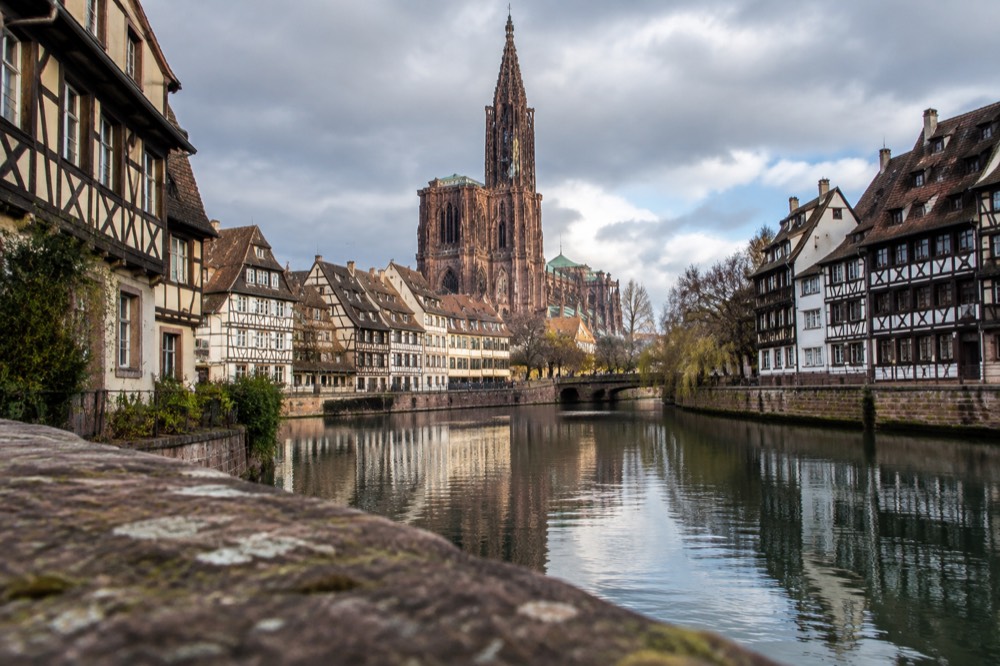
Petite France is the former river-quarter of tanners and millers, where the Ill splits into channels around half-timbered houses. It is the image most passengers have of Strasbourg before they arrive, and it earns it: the lanes are narrow, the water runs under the buildings, and the Ponts Couverts, the square towers and covered spans that closed the city's river entrance, stand at the quarter's edge. The Petite France guide maps the lanes worth turning down.
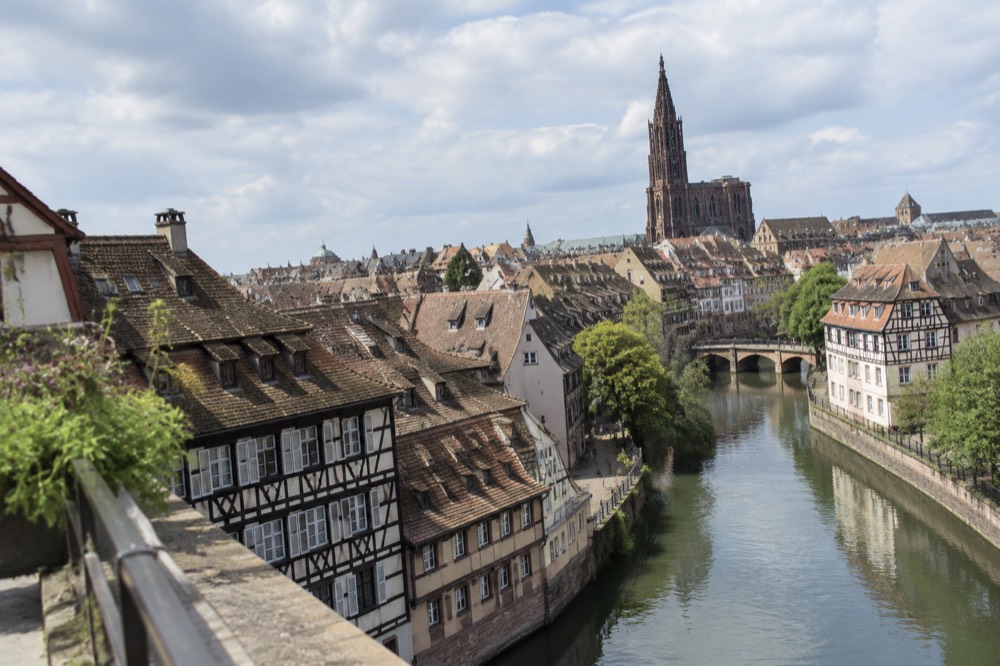
The Barrage Vauban sits just downstream. It is a defensive weir, a long vaulted wall built to flood the southern approaches if the city were attacked, and its rooftop terrace is now the lookout. From it, the whole spread of Petite France and the Ponts Couverts faces you, with the cathedral spire behind. Admission arrangements are not printed here; the terrace's seasonal hours are the ones given above, and the city's own page for the site lists anything else. The Barrage Vauban guide and the Ponts Couverts guide give the detail.
For a port call the loop is short and flat: from the cathedral, down through the lanes to Petite France, along the water to the Ponts Couverts, up onto the Barrage Vauban terrace, then back along the opposite bank. A passenger with two spare hours can do it at a stroll with a stop for photographs.
Where Should You Eat With Only A Few Hours Ashore?
Eat in a winstub, the Alsatian tavern style, and order tarte flambée, the thin flatbread baked with cream, onions and bacon, or choucroute, the Alsatian sauerkraut plate. Both are quick, local and served everywhere in the island core, which matters when the ship sails at four. Skip anything that needs a reservation.
The winstub is the honest answer to a short call. It is a small, wood-panelled room, often with shared tables, serving Alsatian food and local wine by the glass, and it exists precisely for people who want a plate and a glass without ceremony. The classics travel well: tarte flambée arrives in minutes and is eaten fast while it stays crisp; a kougelhopf, the Alsatian cake baked in a fluted ring mould, is the thing to take back to the ship. Riesling and gewurztraminer are the local grapes, and a glass of Crémant d'Alsace, the region's sparkling wine, is the aperitif.
| Dish Or Drink | What It Is | How It Fits A Port Call |
|---|---|---|
| Tarte flambée | Thin flatbread, cream, onions, bacon | Fast, served everywhere, eat while hot |
| Choucroute garnie | Sauerkraut with sausages and pork | A long lunch plate, better on a full day |
| Baeckeoffe | Meat and potato casserole baked in wine | Slow-cooked, ask what time it is served |
| Kougelhopf | Ring-moulded Alsatian cake | Buy one whole for the sail-away |
| Riesling | Dry Alsatian white wine | By the glass in any winstub |
| Crémant d'Alsace | Local sparkling wine | The standard aperitif |
Timing advice is simple. A full-day call can afford a proper choucroute at lunch; a half-day call should order tarte flambée, which kitchens turn out quickly. The Christmas market period adds its own food stalls, and the Christmas market food guide covers that separately, but the principle holds: in December, the stalls themselves are a fast lunch.
How Do Tram Tickets And Fares Work For Cruise Passengers?
A single CTS tram ticket costs 1.90 EUR bought through the Badgéo card, the CTS app or contactless payment, or 2.50 EUR bought on board the bus. A 24-hour Solo pass costs 4.60 EUR and a 24-hour Trio pass for two or three people costs 10.20 EUR. The airport shuttle combined ticket, train plus tram plus a day pass, also costs 4.60 EUR.
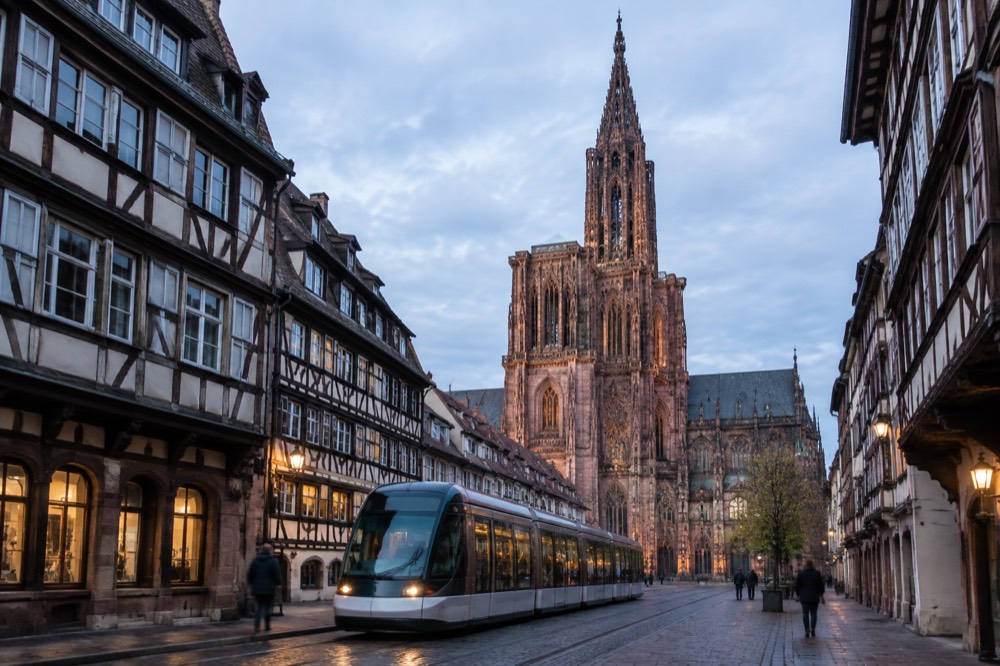
For most port calls the tram is a convenience rather than a necessity, because the island core is walkable. It earns its place in three situations: the berth lies some distance from the centre, the weather turns, or the call includes the European Quarter, which sits beyond the island in the Neustadt. Strasbourg's tram network is one of the largest in France and runs on vehicles that are quiet enough to share the pedestrian streets.
| CTS Ticket | Price | Notes |
|---|---|---|
| Single | 1.90 EUR | Badgéo card, CTS app or contactless |
| Single on board | 2.50 EUR | Bought from the driver on buses |
| 24h Solo | 4.60 EUR | One person, all CTS network |
| 24h Trio | 10.20 EUR | Two or three people together |
| Airport combined | 4.60 EUR | Train shuttle, tram, bus and a 24h pass |
Buy before boarding where you can. The contactless option on board trams removes the need for a ticket machine, and the app does the same. Passengers arriving or leaving through the airport, which is rare for river cruise passengers but possible for a pre-cruise night, should note that the train shuttle runs up to five times an hour and takes 8 minutes to the station, and the combined 4.60 EUR ticket covers the train, the city network and a day pass in one purchase.
What If Your Call Falls During The Christmas Market?
The Christmas market normally opens in the last week of November and runs to 24 December, closing early on the final evening. The 2025 edition ran 26 November to 24 December and drew 3.05 million visitors. The city posts each edition's dates on its Christmas site, so confirm them there before relying on them.
A December call is the jackpot itinerary for this port. Strasbourg styles itself as the capital of Christmas, and the market spreads across several squares in the historic core, with the great tree on Place Kléber. Chalets typically open from late morning into the evening. The cathedral, as noted above, stays open continuously on the Place du Château side during the market, Mon-Sat 08:30-17:45, which removes the midday closure that trips up summer visitors.
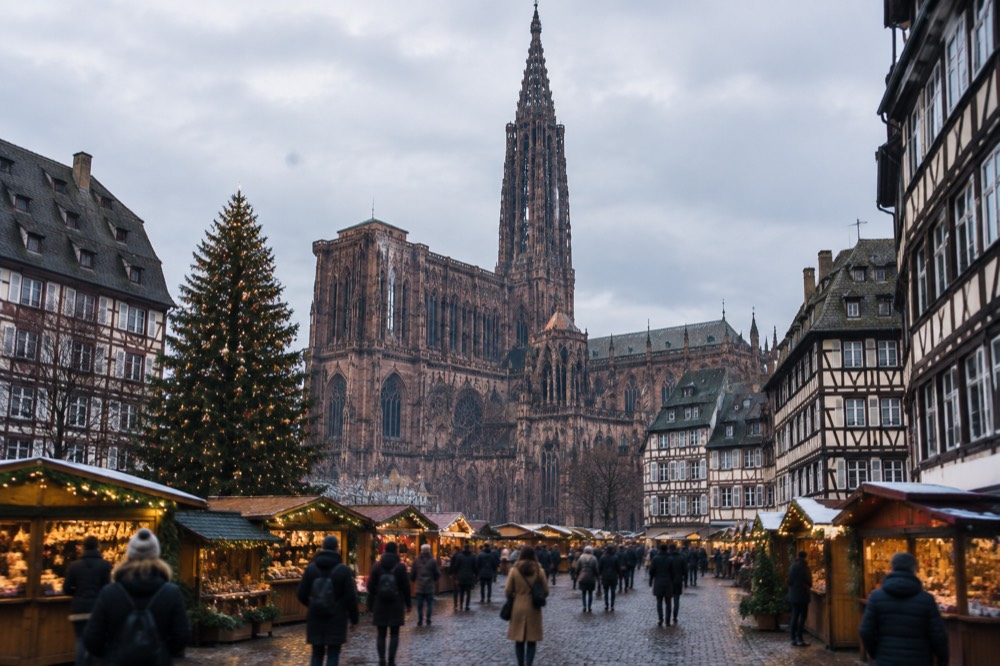
The honest caution is crowding and cold. December brings a mean maximum of 5.9 C and a mean minimum of 0.8 C, with 10.2 days of rain of 1 mm or more in the month, so warm layers and waterproof shoes matter more than in any other month. The market's own food stalls solve lunch quickly, and the mulled wine, vin chaud, solves the hands. Passengers weighing whether the market justifies the itinerary at all can read the site's answer on whether a Christmas market river cruise is worth it.
For a port call in this season, the plan compresses: cathedral and clock in the morning, the market squares through the middle of the day, Petite France in the short winter light, and the Barrage Vauban terrace before its 16:00 winter close. The Christmas market itinerary gives the full version for longer stays.
What Does The Weather Do Across The Seasons?
Strasbourg's climate is semi-continental: the mean maximum runs from 5.2 C in January to 26.4 C in July, the mean minimum from -0.2 C to 14.9 C, and the city records 635.7 mm of rain across 112.3 rain days a year. River cruise calls here cluster in the warmer half of the year, but shoulder-season calls are cooler and wetter than many passengers expect.
The numbers below come from the Meteo-France 1991-2020 normals for Strasbourg-Entzheim, the airport station. The pattern to plan around is not any single month but the spread: even in July, the mean minimum is 14.9 C, so evenings on the water are cool. In the shoulder months that bookend the cruise season, rain days sit near ten a month.
| Month | Mean Max C | Mean Min C | Rain Days >= 1 mm |
|---|---|---|---|
| March | 12.1 | 2.6 | 8.5 |
| April | 17.0 | 5.7 | 8.6 |
| May | 20.9 | 10.1 | 10.8 |
| June | 24.4 | 13.4 | 10.2 |
| July | 26.4 | 14.9 | 10.4 |
| September | 21.6 | 10.7 | 8.0 |
| October | 15.8 | 7.2 | 9.6 |
| November | 9.4 | 3.3 | 9.2 |
| December | 5.9 | 0.8 | 10.2 |
A wet call is not a lost call. The municipal museums charge 9 EUR full and 5 EUR reduced, the 1-day Pass Musées costs 20 EUR, and every municipal museum is free on the first Sunday of the month, though the Musée Alsacien is closed for works until 2028 and should not be on any plan. The rainy day in Strasbourg guide lists the indoor options in order, and the Palais Rohan, which holds three museums beside the cathedral, is the obvious first shelter.
Should You Book A Tour Before Your Ship Arrives?
Yes, for anything with a fixed start time and a small group: a guided bike tour, a segway tour or a food walk is worth booking before you sail, because port calls concentrate demand into a few hours and the best-attended departures fill first. The cathedral platform and the clock show need no booking at all, since both are bought on the day.
The economics of a shore day reward a little preparation. The free sights, the nave, the squares, the riverbank walk, cost nothing and need no plan. The two cathedral tickets are bought in person on the day. Everything else on this page, the boat circuits, the bike and segway tours, the food walks, runs to schedules, and a ship in port means a crowd of people with the same deadline. The operator's live listing states the meeting point, the inclusions and the cancellation terms, and reading them before the cruise beats reading them on the quay.
The second bike option on this page's trio, a bike tour with bikes included, is the compact alternative when the call is shorter than the local-guided loop needs. It covers the same kind of ground with a tighter clock, which suits a ship sailing mid-afternoon.
For passengers whose itinerary continues into the region, the Alsace road trip guide and the three days in Strasbourg itinerary show what the surrounding wine country and villages add. For the port call itself, the plan is simple: confirm the sailing time, choose one guided format, book the clock ticket window in your head, and let the river show you the rest.
Common Questions About A Strasbourg River Cruise Stop
How Far Is The Strasbourg Cruise Port From The City Centre?
The berth sits on the Ill, the river that loops around the Grande Île, and the historic core sits on that same loop, so passengers reach the first sights on foot along the riverbank. No shuttle or transfer is needed. The exact walking distance depends on the berth assigned, so treat the river itself as the route.
Can You Walk From The Ship To Strasbourg Cathedral?
Yes. The cathedral stands on the Grande Île, the island the Ill surrounds, and the lanes between the riverbank and the cathedral square are the oldest part of the city. The nave is open Mon-Sat 08:30-11:15 and 12:45-17:45, and on Sundays 14:00-17:15, so time the walk against those windows.
What Is The Cheapest Way To See Strasbourg In A Few Hours?
Walk. The island core, the cathedral nave, Petite France, the Ponts Couverts and the riverbank cost nothing to enter, and the municipal museums are free on the first Sunday of every month. A single tram ticket at 1.90 EUR covers a one-way ride if the berth lies further out.
Is The Astronomical Clock Show Worth The 4 EUR?
The show runs once daily at 12:30 sharp, lasts a short while and is the only time the automata move. Tickets are 4 EUR, sold on the day only, at the cathedral stalls from 10:00 to 11:00 or at the Saint-Michel entrance from 11:30. For a passenger whose ship sails after midday, it is a compact, scheduled highlight that fits a short call exactly.
Do River Cruise Passengers Need Euros In Strasbourg?
Yes, a few. France uses the euro, and Germany on the far bank does too, so the same cash works across the border. The paid essentials are small: 4 EUR for the clock, 10 EUR for the platform, 12.50 EUR for the short boat tour, and lunch in a winstub. Cards are widely accepted, but the chalets and small stalls in the Christmas season run more smoothly on cash.
What If It Rains During The Port Call?
Shift to the covered sights. The Palais Rohan museums beside the cathedral charge 9 EUR full and 5 EUR reduced, the 1-day Pass Musées costs 20 EUR, and Batorama boats run in all weathers with covered seating. The Musée Alsacien is closed for works until 2028, so plan around it.