Strasbourg Train Station Area
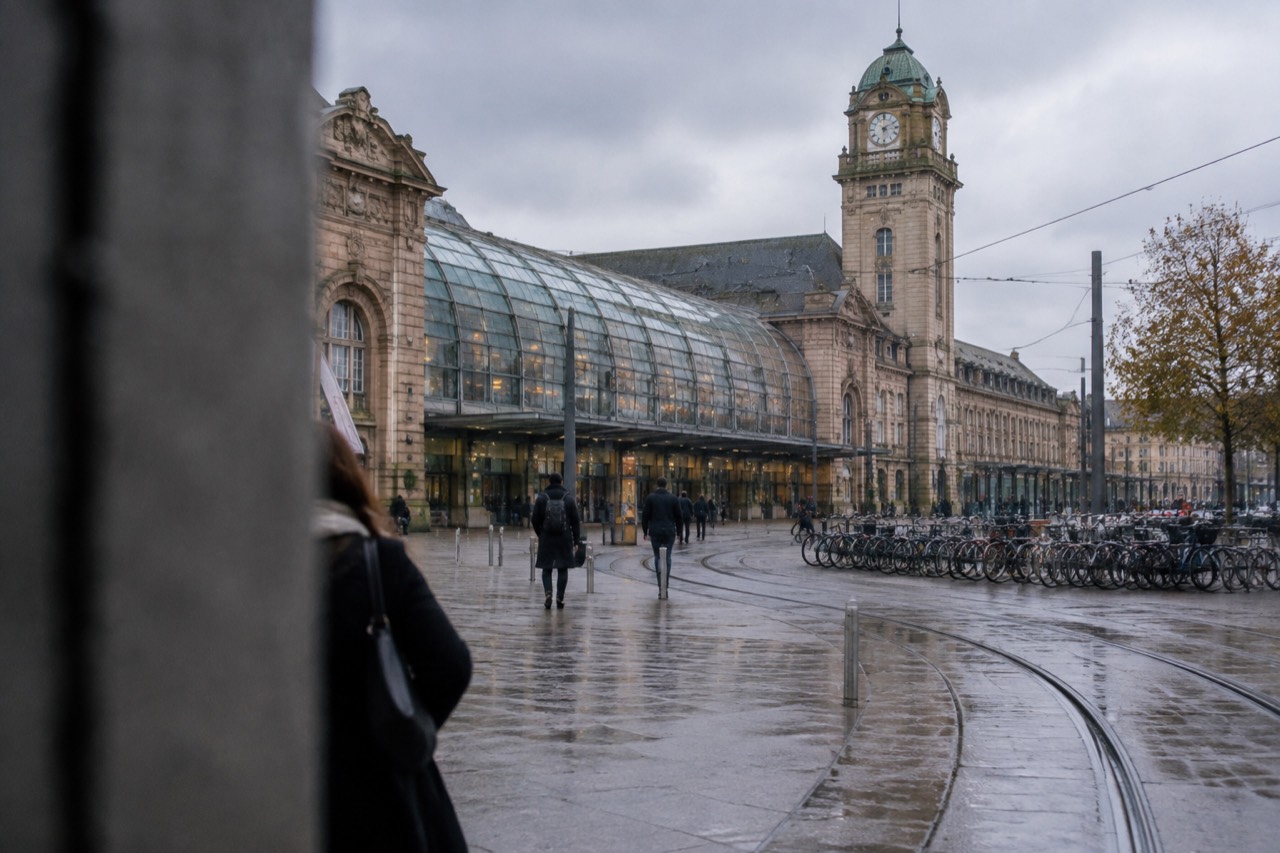
The district around Strasbourg's Gare Centrale is the city's front door: a working quarter of tram interchange, hotel blocks, quick lunch spots and a short walk south to the Grande Île. This guide covers what the area is, how to move through it, and what is worth your time between trains.
Short answer
The Strasbourg train station area sits on the western edge of the city centre in Alsace, north-eastern France, with the Grande Île a short walk south. A CTS single ticket costs 1.90 EUR, a 24h Solo pass 4.60 EUR, and the airport train shuttle covers the 8 minutes from Entzheim for a 4.60 EUR combined ticket. Expect practical hotels, quick food and easy tram access rather than postcard lanes.
Strasbourg, prefecture of the Bas-Rhin in Alsace, part of the Grand Est region of north-eastern France, keeps its main railway station on the western side of the city centre, a short distance from the River Ill and the German border at the Rhine. The station district, known locally as the quarter around Gare Centrale, is where an enormous share of visitors first set foot in the city: rail arrivals from Paris, regional trains from across the Grand Est, the airport shuttle from Entzheim. The commune counted 293,771 residents at the last INSEE figure, and this is the neighbourhood through which a large part of that city moves every working day.
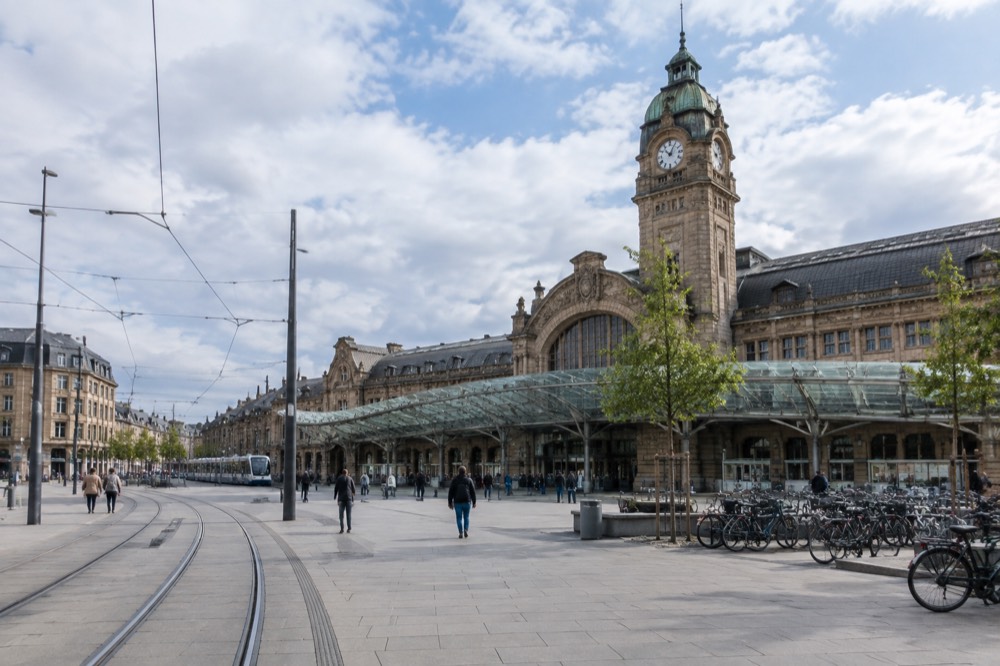
What follows is a district guide rather than a station review. The pages on getting around Strasbourg by tram and bus and the Strasbourg train station guide cover the mechanics in more depth; this page is about the streets around the station, what they are good for, and how to use them well.
Where Is The Strasbourg Train Station Area?
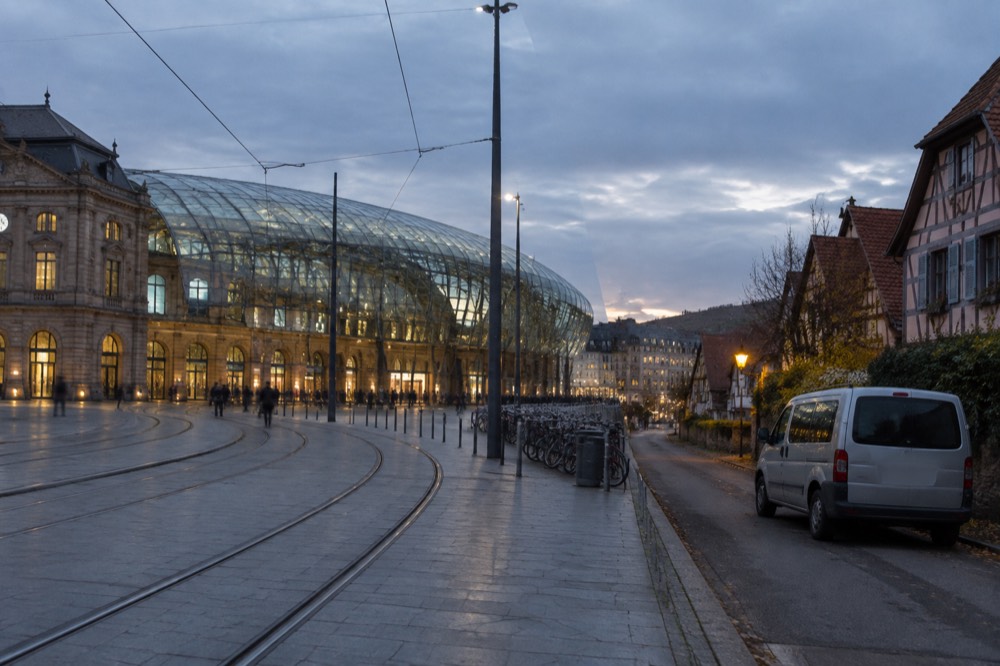
The station sits on the north-western edge of Strasbourg, facing towards the Vosges and Paris. The tracks run broadly north to south, the main forecourt opens east towards the historic centre, and the district is bounded by the River Ill to the south-east and by the Neustadt, the German-built extension of the city, immediately to its north. Everything a visitor usually wants, from the Grande Île to Petite France, lies within an easy flat walk.
The geography matters more here than in many station districts because Strasbourg's centre is compact and almost entirely flat. Step out of the main entrance and you face the boulevards that ring the historic core. Cross them and you are into the Grande Île, the river-island core of the city and a World Heritage property together with the Neustadt, within a few blocks. The Neustadt begins almost at the station's northern side, which is why the district feels half French and half German in its architecture: broad avenues, solid apartment blocks and institutional buildings from the period when the city was administered from Germany.
The immediate station quarter itself is not a protected old-town landscape. It is a mixed business and transit district: hotels, offices, kebab counters, florists, a covered market hall a little further out, and the constant movement of trams. That mix is precisely its value. Visitors who arrive late, leave early, or need to be near the rails can sleep here cheaply and walk to the sights, while visitors staying on the Grande Île pass through twice on arrival and departure.
For orientation, three directions cover everything. South and east takes you across the Ill into the historic core. North takes you into the Neustadt and its showpiece squares. West takes you away from the centre, towards the residential quarters and the roads that lead out towards the Vosges foothills.
Is The Strasbourg Station District A Good Place To Stay?
For practicality it is one of the best bases in the city: you are on six tram lines, within walking distance of the historic centre, and surrounded by the hotels that serve rail and business travellers. As an atmosphere it is ordinary, a transit and office quarter rather than a romantic one, so the trade-off is convenience against charm. Visitors who want half-timbered lanes outside the window should stay on the Grande Île and accept a longer walk with luggage.
The honest assessment is that the district earns its keep on logistics. The forecourt is the busiest tram interchange in the city, which means that from your hotel door you can reach the European Quarter, the Neustadt, the Krutenau and the western suburbs without changing lines in some cases and with one change in others. The Krutenau student quarter to the south-east and the European Quarter to the north-east are both easy tram rides, and the Robertsau district beyond them is reachable the same way.
Price is the other argument. Hotel stock around a main station in a French regional capital is built for people who need a bed near the rails, and that keeps the range wider than on the island, where the supply is smaller and the demand from leisure travellers is heavier. December changes the arithmetic, because the Christmas market fills the whole city, and this is covered in detail on the page about where to stay for the Strasbourg Christmas market.
One caution worth stating plainly: the quarter is busy late and early because trains and trams run late and early. Light sleepers should ask for a room facing away from the forecourt. That single question does more for a stay here than any amount of neighbourhood research.
If you are staying here and want an organised first evening in the centre, a guided walk is a sound way to get your bearings. The Secrets From Strasbourg walk, a guided tour of hidden corners, is one such option, and you can Check availability on the operator's live listing.
Want an organised first evening in the centre? Book a guided walking tour here.
How Do You Get From Strasbourg Station To The Old Town?
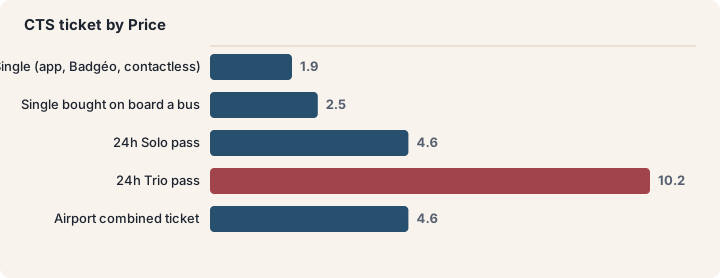
On foot, by tram or by bike, and in that order of simplicity. The historic centre begins a few blocks south-east of the forecourt, the whole walk is flat, and no transfer is needed. If you take the tram, a CTS single costs 1.90 EUR bought through the app, a Badgéo card or contactless, or 2.50 EUR bought on board the bus, and a 24h Solo pass costs 4.60 EUR. Trams on the forecourt serve the lines that cross the centre directly.
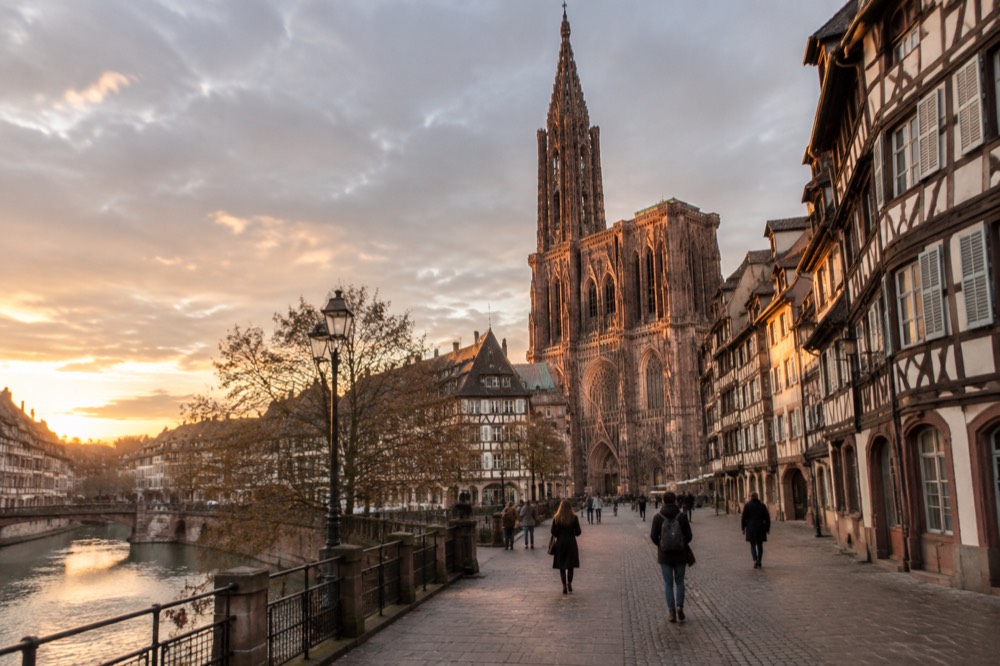
The walking route is the one residents use. Leave the forecourt heading east, cross the boulevard, and continue straight; the streets narrow and age as you go, ending in the pedestrian core around the cathedral and Place Kléber. Nothing on this walk climbs, and the whole distance is short enough that luggage on wheels is the only reason to consider a tram.
The tram network is the district's second function. CTS, the city operator, sells a single ticket at 1.90 EUR through the app, a Badgéo card or contactless payment, at 2.50 EUR if bought on board a bus, a 24h Solo pass at 4.60 EUR, and a 24h Trio pass at 10.20 EUR covering two to three people travelling together. The exact lines and stop names are on the operator's own fare and network pages, which are the authoritative source for anything that changes.
| CTS ticket | Price | Notes |
|---|---|---|
| Single (app, Badgéo, contactless) | 1.90 EUR | Cheapest way to buy one ride |
| Single bought on board a bus | 2.50 EUR | Buy in advance where possible |
| 24h Solo pass | 4.60 EUR | One person, unlimited rides for a day |
| 24h Trio pass | 10.20 EUR | Two to three people travelling together |
| Airport combined ticket | 4.60 EUR | Train shuttle plus the CTS network for a day |
For arrivals from the airport, the station is the transfer point. Entzheim airport is linked to Gare Centrale by a train shuttle running up to five times an hour, covering the distance in 8 minutes, and the combined ticket at 4.60 EUR covers the shuttle plus a day of the CTS tram and bus network. The details for that connection are on the Strasbourg airport to city centre page.
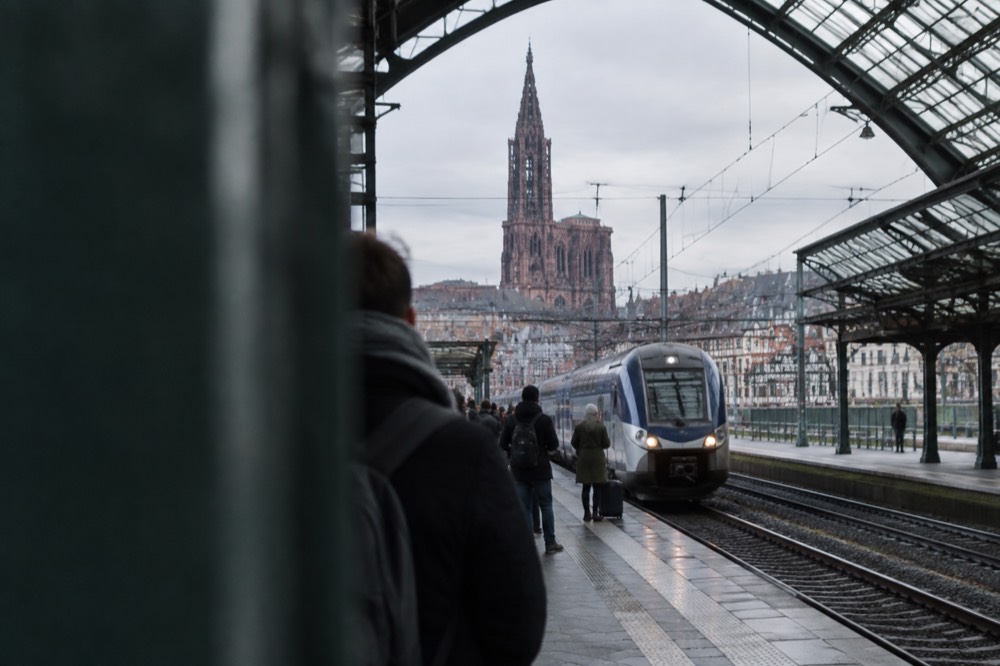
Long-distance arrivals land here too. The fastest trains from Paris are reported at about 1 hour 45, a figure worth treating as approximate until you check a live timetable, and the pages on travelling from Paris to Strasbourg and reaching Strasbourg from Frankfurt airport cover those routes in full. If you are weighing onward destinations, the train connections from Strasbourg answer page lists what is reachable by rail, and the cost of the Paris train is explained on its own page.
What Is There To Do Near Strasbourg Gare Centrale?
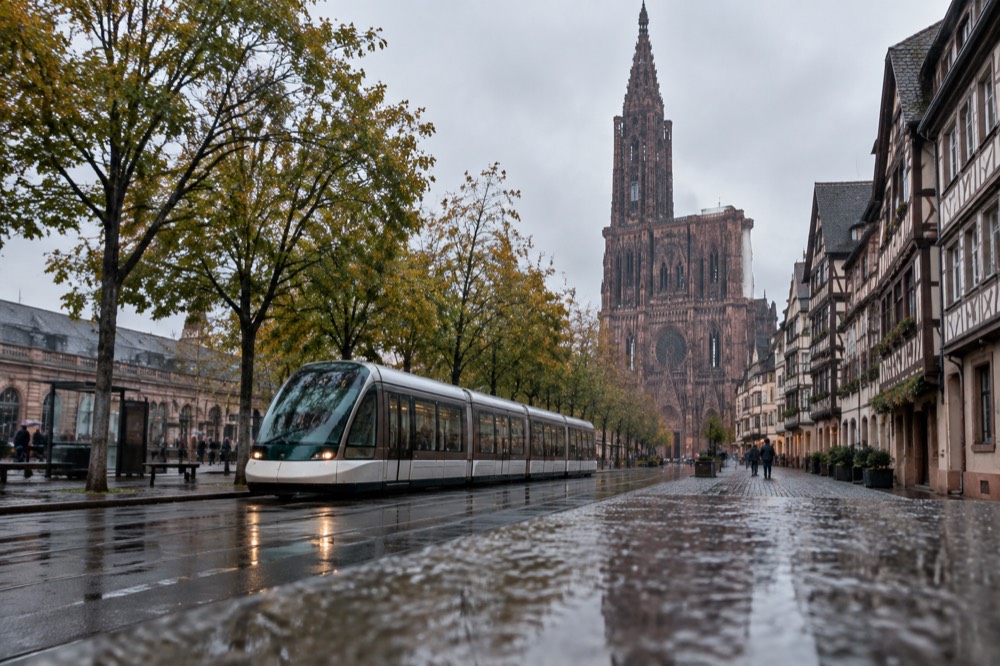
Within the station district itself the sights are civic rather than medieval: the Neustadt's grand avenues and squares begin immediately to the north, the Musée de l'Œuvre Notre-Dame and the cathedral lie a short walk south-east on the Grande Île, and the river boat tours leave from the quays a little beyond. The district rewards visitors with a spare hour or two rather than a full day, and its best use is as a base from which the whole centre is walkable.
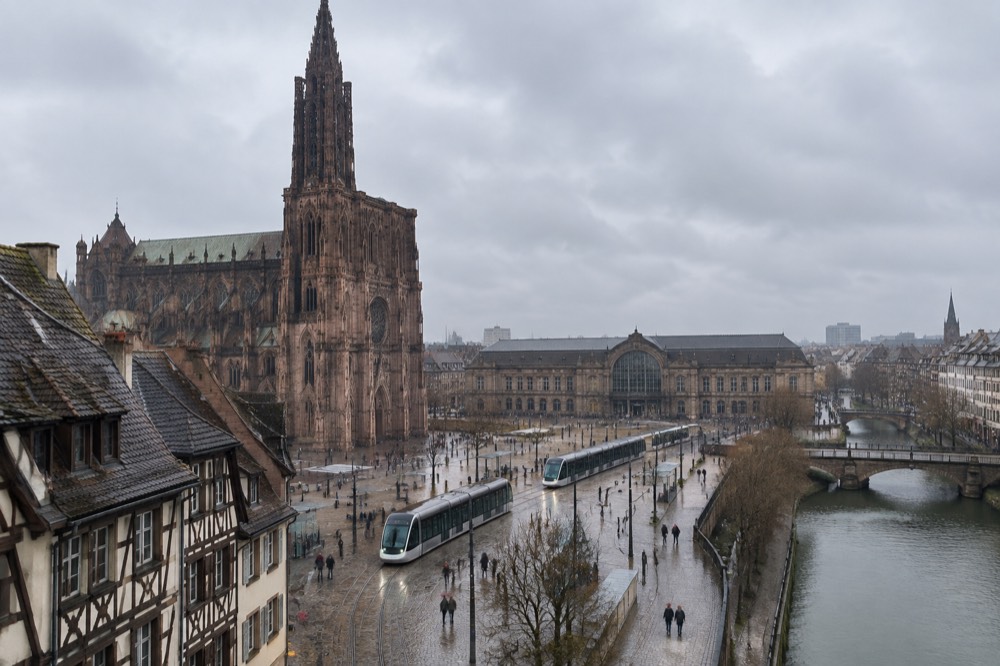
The nearest genuinely visitor-facing sights sit just across the line into the historic core. Strasbourg Cathedral, with its single spire and viewing platform at 66 m, and the astronomical clock, whose automaton show runs daily at 12:30 with tickets at 4 EUR bought on the day only, are the anchors. The Musée de l'Œuvre Notre-Dame beside the cathedral holds the medieval sculpture, and the municipal museums charge 9 EUR full price, 5 EUR reduced, with a 1-day Pass Musées at 20 EUR. Every municipal museum is free on the first Sunday of the month. Note that the Musée Alsacien is closed for works until 2028 and should not be planned into a visit.
| Sight or activity | What it offers | Who it suits | What to check |
|---|---|---|---|
| Strasbourg Cathedral platform | View from 66 m, single spire | Anyone comfortable with stairs | Hours split by season; 10 EUR full, 6 EUR reduced |
| Astronomical clock show | Automaton display at 12:30 | Families, first-time visitors | Day-of tickets only, 4 EUR |
| Batorama river tours | Commented boat circuits from the quays | All ages; sheltered in rain | Red Tour 1h10 at 16.20 EUR full, Blue Tour 0h45 at 12.50 EUR |
| Neustadt squares and avenues | Imperial-era architecture north of the station | Walkers, photographers | Free public space, open at all hours |
| Petite France | Half-timbered river quarter | Everyone; the postcard Strasbourg | Public lanes, no ticket needed |
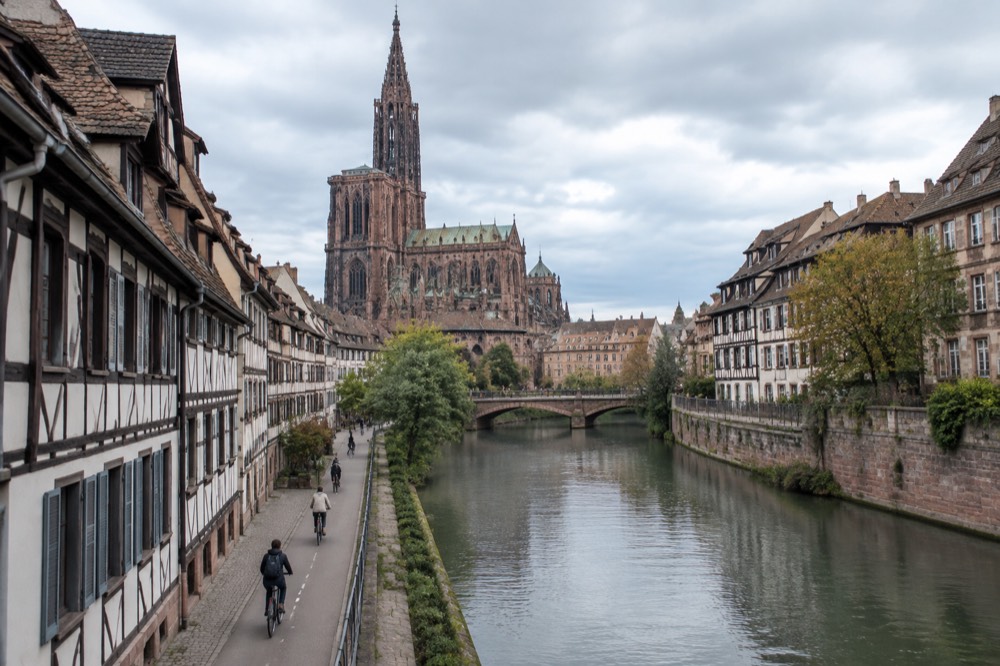
For the river, Batorama's official prices are the long tour at 16.20 EUR full and 8.90 EUR reduced, and the short tour at 12.50 EUR full and 7.20 EUR reduced, with the Red Tour lasting 1h10 and the Blue Tour 0h45. Boats leave from the quays a walk south-east of the station, and the fuller picture is on the Strasbourg boat tour page. Petite France, the former tanners' and millers' quarter at the western tip of the Grande Île, is the classic walk from the station, with the Barrage Vauban terrace and the Ponts Couverts at its edge.
A different way to cover ground from the station is by bike. Strasbourg is flat, cycle-friendly and crossed by dedicated lanes, and a guided ride starting near the centre is a fast way to see the Neustadt, the riverbanks and the farther quarters in one loop. The guided bike tour with a local guide is the strongest fit for a station-based stay, since you can be rolling within minutes of leaving your luggage. The wider set of guides lives on Strasbourg Travel Guide.
Where To Eat Around Strasbourg Train Station
The station district eats well at the practical end of the scale: quick lunch counters, bakery windows, kebab and pizza spots, and a cluster of brasseries serving the commuter flow, with the winstub tradition beginning a few streets into the centre. For the classic Alsatian dishes, tarte flambée, choucroute and kougelhopf, the best tables sit on or just off the Grande Île rather than beside the rails. Plan on fast and cheap near the forecourt, slow and regional a short walk away.
The honest division is between transit food and destination food. Around the forecourt you are eating for time: sandwiches, pastries from bakery counters, slices, bowls and the coffee that a 7 am TGV makes necessary. The quality is respectable because the customers are locals who come back daily, not one-off visitors. A little further out, towards the boulevards, sit the neighbourhood brasseries where station staff and office workers take a proper lunch.
For the dishes the region is known for, walk in. A winstub, the Alsatian tavern, serves tarte flambée, the thin oven-baked crêpe with cream and onions, and choucroute garnie, the dressed sauerkraut platter, alongside local Riesling. The traditions behind each are covered on the pages about tarte flambée, choucroute and the winstubs of Strasbourg, and the wider food culture, from baeckeoffe to kougelhopf, is laid out in the Strasbourg food guide. Anyone wanting the dishes walked through with tastings along the way can look at the gourmet walking tours on the food tour page.
| Eating option near the station | What you get | When it works best |
|---|---|---|
| Bakery and pastry counters | Bread, viennoiserie, kougelhopf slices | Breakfast before an early train |
| Kebab and pizza counters | Fast, inexpensive hot food | Late arrivals and quick lunches |
| Neighbourhood brasseries | Set lunches, daily specials | A proper midday break |
| Winstubs on the Grande Île | Tarte flambée, choucroute, Riesling by the glass | Evenings and unhurried meals |
| Market hall stalls | Regional produce and simple meals | Mid-morning shopping and grazing |
One timing note that matters more than any single address: kitchens in this part of France keep traditional hours. Lunch service starts around midday and winds down by early afternoon, and dinner does not begin in earnest until evening. Arriving off a train at an off hour, the counters near the station are the reliable option, and the winstubs are the reward for walking ten minutes further.
Which Day Trips Start From Strasbourg Station?
Practically all of them, because the station is the natural assembly point for tours that leave the city by minibus or coach, and the rail hub for trips you make yourself. The wine route villages, the Haut-Koenigsbourg castle, Colmar, and the Black Forest across the border in Germany are the four classic directions, and organised versions of each pick up within a short walk of the forecourt. If your base is a station hotel, every day trip in the region starts at your doorstep.
The logic is simple. Strasbourg is the region's transport centre, and operators running guided day trips collect participants centrally, near the station or just inside the boulevards, before heading out. For a visitor staying in the gare district that removes the single biggest friction of day tripping, the early-morning transfer across town with a suitcase-free walk to a pickup point.
The four directions split cleanly. South and east lie the wine route and its villages, Riquewihr, Eguisheim, Kaysersberg and Obernai among them, strung along the foothills of the Vosges, with Colmar as the region's second city at the heart of it. East and up the ridge stands Haut-Koenigsbourg, the restored castle looking over the plain. Across the Rhine to the east is Germany: the Black Forest, Freiburg and Baden-Baden are the classic crossings, all inside the Schengen area so there is no border formalities to plan for, though Switzerland via Basel is in Schengen but outside the euro, so euros do not work there.
For a first taste of the wine route on a half-day schedule, the half-day Alsace wine tour from Strasbourg fits a morning or an afternoon around a station-based stay, and returns you to the centre with the evening free.
For a fuller day, the Best Of Alsace historical day trip covers the region's signature villages and sights in one loop, a format that suits visitors using Strasbourg as a base for a single ambitious day. It is one of the most reviewed options on the roster, and it collects centrally, which is the whole point of staying here.
What Should You Know Before Arriving At Strasbourg Station?
Bring the essentials for a semi-continental climate, buy tram tickets before boarding, and expect the forecourt to be the busiest interchange in the city. A single costs 1.90 EUR from the app or contactless and 2.50 EUR on board a bus, the airport shuttle takes 8 minutes with up to five trains an hour, and winter arrivals should plan for a mean January maximum of 5.2 C. Luggage storage, hotel timing and the December crowds are the three practical points that catch visitors out.
The climate is the first thing to pack for. Meteo-France 1991-2020 normals for Strasbourg-Entzheim put the mean daily maximum at 5.2 C in January against 26.4 C in July, with 635.7 mm of rain across the year over 112.3 days with 1 mm or more. Winters are cold and grey, summers are warm, and the rain shadow of the Vosges keeps the city drier than the mountains to its west without making it dry in any absolute sense. An umbrella and layers cover both seasons.
| Month | Mean daily maximum | Mean daily minimum | Days with 1 mm of rain or more |
|---|---|---|---|
| January | 5.2 C | -0.2 C | 9.1 |
| April | 17.0 C | 5.7 C | 8.6 |
| July | 26.4 C | 14.9 C | 10.4 |
| October | 15.8 C | 7.2 C | 9.6 |
Tickets are the second practical point. Nothing on the trams is sold by a conductor, so a visitor arriving without the app, a Badgéo card or a contactless card set up for transit needs to use a ticket machine or a shop before boarding, and the on-board bus price of 2.50 EUR is the penalty for leaving it late. The 24h Solo pass at 4.60 EUR is the sensible buy for a first day of sightseeing, and the airport combined ticket at the same price bundles the shuttle with a full day of the network.
The third point is December. The Christmas market fills the historic centre, hotel prices across the whole city rise sharply, and the station runs at its fullest. The market's usual pattern opens in the last week of November and runs to 24 December, with an early evening close on the final day; the 2025 edition ran 26 November to 24 December and drew 3.05 million visitors, and the 2026 dates were still being finalised on the city's Christmas site, so confirm them there before booking. The pages on the Strasbourg Christmas market and on staying near the market cover the season in detail.
Finally, a word on time. The fastest Paris trains are reported at about 1 hour 45, but treat any rail figure as approximate until you have a live timetable, and remember that the station's own facilities, shops and quick-food counters exist precisely because so many journeys pass through here. The district rewards travellers who treat it as what it is: a well-connected front door to one of the most rewarding small cities in France, with the whole of Alsace and the Black Forest beyond it.
Common Questions About The Strasbourg Train Station Area
Is The Strasbourg Train Station Area Safe At Night?
It is a busy, well-lit transit district with constant foot traffic and a strong police presence around the forecourt, and it behaves like main-station quarters across France: lively at rush hour, quieter late, with the usual city caution around cash machines and unlit side streets. Nothing about the quarter makes it a place to avoid, and hotel guests move through it at all hours without incident.
How Far Is Strasbourg Station From The City Centre?
The historic core of the Grande Île begins a few blocks south-east of the forecourt, an easy flat walk with no climb, and the cathedral stands a little further on within the same walk. No transfer is needed, and luggage is the only reason to take a tram.
Which Tram Tickets Should I Buy At Strasbourg Station?
For one ride, a single at 1.90 EUR bought through the CTS app, a Badgéo card or contactless. For a day of sightseeing, the 24h Solo pass at 4.60 EUR. For two or three people travelling together, the 24h Trio at 10.20 EUR. Buying on board a bus costs 2.50 EUR, so purchase before you board.
Can I Store Luggage At Strasbourg Station?
Luggage storage options around the station exist through dedicated services rather than at the cathedral, which has no lockers of its own. Check current operators and prices on the Strasbourg luggage storage page before you arrive, since availability shifts with demand in peak season.
Is It Better To Stay Near The Station Or On The Grande Île?
Near the station for convenience, price and transport, on the Grande Île for atmosphere and postcard streets. The walk between them is short and flat, so neither choice strands you, and December visitors should weigh the trade-off against the Christmas market crowds, which fill the island but leave the station quarter comparatively calm.
Do Day Trips From Strasbourg Leave From The Station?
Organised tours to the Alsace wine villages, Colmar, Haut-Koenigsbourg and the Black Forest collect at central points within a short walk of the station, making a station-area hotel the most practical base for day tripping. Rail trips you make yourself also start here, since Gare Centrale is the region's hub.