Car Rental Strasbourg
Strasbourg, in Alsace in north-eastern France, is a city best explored on foot, by tram and by boat, but a hire car unlocks the wine villages, the Vosges castles and the German border country within an easy drive.
Short answer
A rental car is a poor tool for central Strasbourg and a good one for the region around it. The Grande Île is compact and pedestrian-friendly, CTS day tickets cost 4.60 EUR, and the airport train takes 8 minutes. Hire a car for Alsace wine villages, Haut-Koenigsbourg and the Black Forest, then park it and walk.
Strasbourg, the prefecture of the Bas-Rhin in Alsace, sits in north-eastern France on the River Ill, a short distance from the Rhine and the German border town of Kehl. It is a city that rewards walking above all: the Grande Île, the river island at the centre, holds the cathedral, Petite France and the covered bridges within a stroll of one another, and the tram network stitches the rest together. Yet plenty of visitors arrive with a plan that runs well beyond the city, towards the Alsace wine route, the Vosges foothills, the Black Forest across the river, and the Christmas markets that spill through the region each December. That is where the question of car rental in Strasbourg stops being abstract and becomes a genuine planning decision.
This guide works through the decision in the order a traveller actually faces it: whether the car is worth having inside the city at all, where to pick one up, which day trips genuinely need four wheels, what changes at the German border and in the Christmas season, and how a rental compares with the bike and boat alternatives the city is better known for. The Strasbourg Travel Guide treats Strasbourg as a base first and a driving destination second, and the honest answer is that many three-day itineraries never need a car at all.
Do You Need A Rental Car In Strasbourg Itself?
No, and for most short visits a hire car is a cost and a liability rather than a help. The Grande Île and the streets around it are walkable end to end, the CTS tram and bus network covers the districts a visitor actually reaches, and a Solo ticket costs 4.60 EUR while a single journey is 1.90 EUR bought through the app or contactless payment. Parking in the centre is scarce. The car earns its keep outside the ring road, not inside it.
The arithmetic is not close. Strasbourg's commune counted 293,771 residents in the 2023 INSEE figures, and the city long ago tilted its centre towards pedestrians, trams and bicycles. The main sights cluster tightly: the cathedral and its astronomical clock, Place Kléber, Petite France, the Ponts Couverts and the Barrage Vauban terrace all sit within the Grande Île or a few minutes of it, and the European Quarter, the Parc de l'Orangerie and the Neustadt are straightforward by tram. A visitor who plans to stay within the city, as many do on a two-night break, gains nothing from a car and pays for the privilege of parking it.
| CTS ticket | Price | What it covers |
|---|---|---|
| Single ticket | 1.90 EUR | One journey, bought via Badgéo, the CTS app or contactless |
| Single on board a bus | 2.50 EUR | One journey, bought from the driver |
| 24H Solo | 4.60 EUR | One person, unlimited tram and bus travel for 24 hours |
| 24H Trio | 10.20 EUR | Two or three people travelling together |
| Alsa+ 24h EMS | 4.60 EUR | Airport train, then tram and bus travel, combined |
The airport line in that table deserves a note, because it settles the first instinct many visitors have. Strasbourg Airport is linked to the central station by a regional train shuttle that runs up to five times an hour and takes 8 minutes, and the combined ticket covering that train plus a day of city transport costs 4.60 EUR. Hiring a car purely to cover the airport-to-hotel leg buys a drive that a train and a tram do better, faster and cheaper. Readers weighing the wider question of how the city fits together will find the detail in the guide to getting the most from Strasbourg and the neighbourhood-by-neighbourhood overview of where to stay in Strasbourg.
There is one honest exception. A traveller staying out towards the Vosges edge, arriving with heavy luggage, or shepherding a family with small children may find a car on day one simply convenient, and that is a legitimate choice. But it is a choice about comfort, not necessity, and it should be priced as such. For everyone else the pattern that works is: arrive by train, buy a day ticket, and reserve the hire car for the days the itinerary leaves the city.
Where To Pick Up A Hire Car In Strasbourg?
The practical pickup points are Strasbourg's central station, the airport at Entzheim, and a handful of city-centre branch offices, and the right one depends on the shape of the trip. Collecting at the station suits a rail arrival from Paris or elsewhere in France, with the car held until the day it is needed. The airport suits fly-in travellers heading straight out to the wine route. City-centre branches suit visitors already installed in a hotel who only want the car for a day or two.
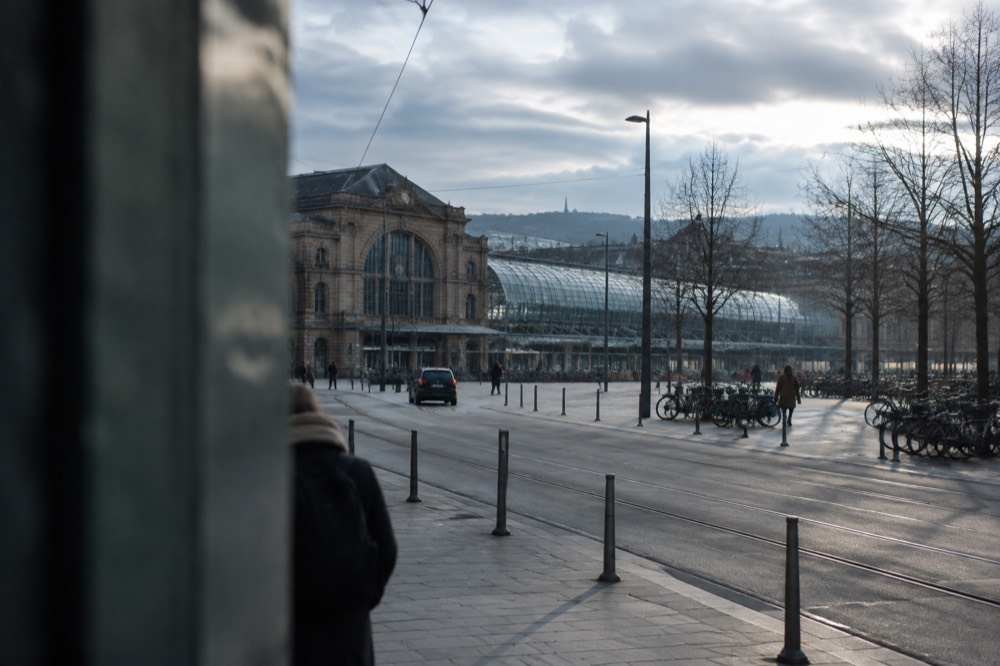
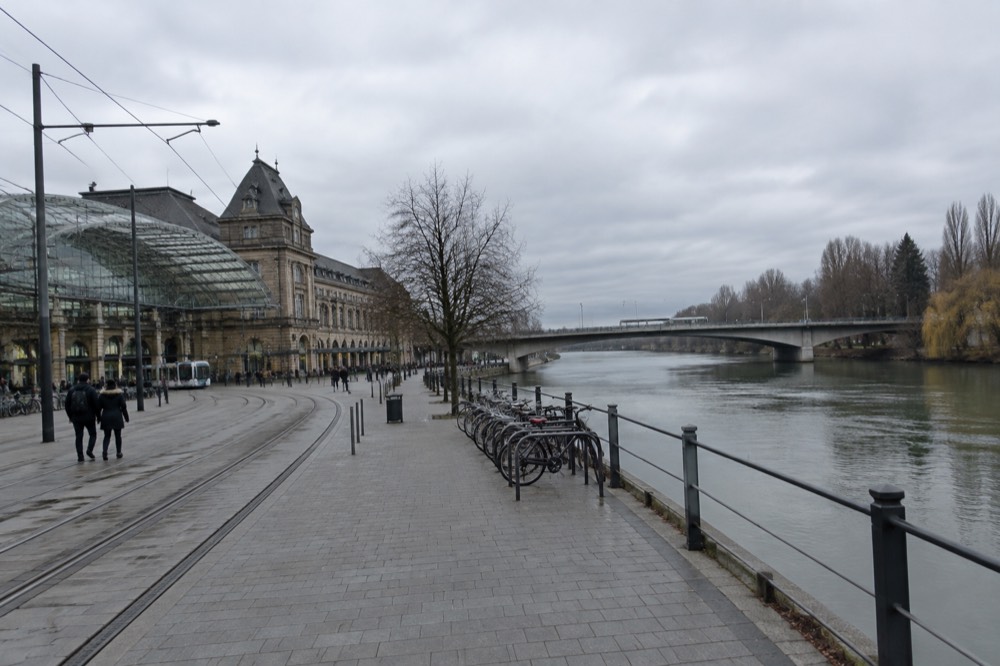
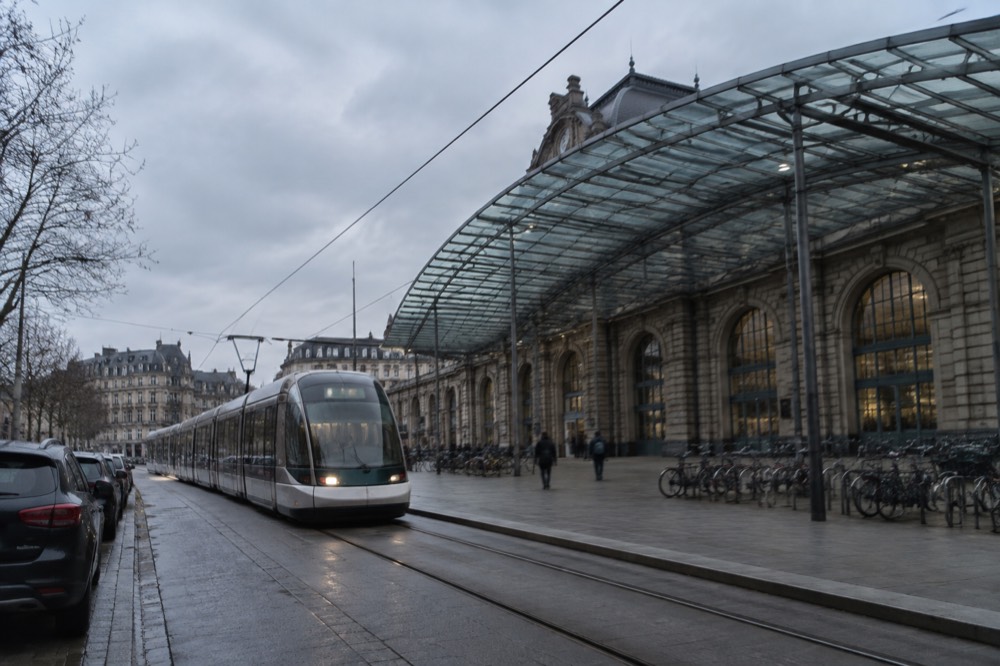
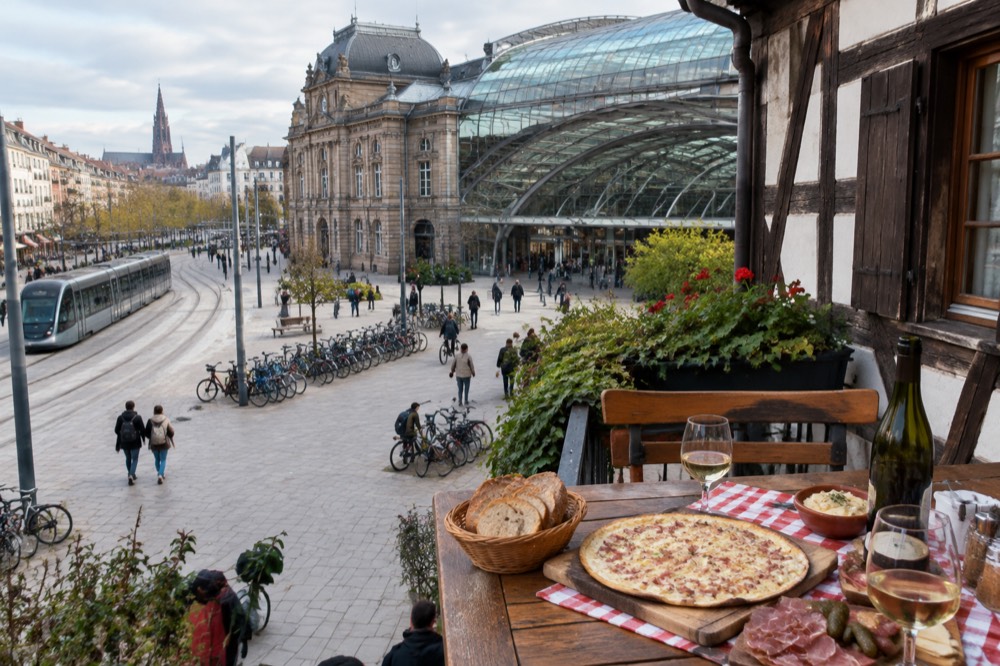
The station option is the one experienced visitors lean on. Strasbourg's Gare Centrale sits at the western edge of the centre, on the tram side of the ring road, so a car collected there can be driven out towards the Alsace countryside without ever crossing the pedestrian heart of the city. That matters: the Grande Île is not a place to learn a hire car's turning circle, and the streets around the cathedral are narrower than photographs suggest. The station also lets a visitor arrive by train from Paris, spend a car-free day or two in town, and only take the wheel when the wine route day arrives.
For the booking itself, the site carries a car hire comparison link that renders live availability across the main suppliers: compare car hire in Strasbourg, and a second link for the budget end of the market at economy car hire options. Neither carries a price on this page, because rental rates move with the season and with the fleet, and a printed figure would be stale before it was read. What is worth stating flatly is the seasonal pattern: demand peaks in the weeks of the Christmas market, when the city draws visitors from across France and Germany, and again in summer. Anyone travelling in those windows should book the car when the trip is booked, not on arrival.
One further note on timing, since Strasbourg's December season is the single biggest driver of rental demand in the region. The Christmas market follows its usual pattern of opening in the last week of November and running to 24 December, with the closing day finishing early in the evening; the 2025 edition ran from 26 November to 24 December and drew 3.05 million visitors. The city posts each edition's dates on its Christmas site, so confirm them there before locking a December itinerary. The Strasbourg Christmas market guide and the guide to the wider Christmas markets in Alsace carry the fuller planning detail.
Which Day Trips Actually Justify The Car?
The trips that reward a hire car are the Alsace wine villages along the Route des Vins, the castle of Haut-Koenigsbourg and the Vosges viewpoints, and the German Black Forest towns across the Rhine. Colmar and the closer wine villages can also be reached by train, and the guided day tours from Strasbourg cover the same ground without a driver. The car's real advantage is freedom of pace: an unplanned stop in a village, a second hour in a tasting room, a detour when the light is right.
The wine route is the classic case. The string of villages between Strasbourg and Colmar, names like Riquewihr, Eguisheim, Kaysersberg and Ribeauvillé, is the region's signature drive, and a car lets a visitor set their own rhythm through it rather than following a coach timetable. The Alsace wine route guide covers the route in full, and the individual village pages, among them Riquewihr, Eguisheim and Kaysersberg, describe what each stop is for. The honest caveat is that a car and a wine tasting do not mix well: designate a driver, keep the tasting light, or let a guided tour carry the responsibility instead.
Rather leave the driving to someone else on the wine route? Book a half-day wine tour here.
Guided day tours are the direct alternative to driving, and for a traveller who does not want the wheel at all they cover the same territory. The Best Of Alsace historical day trip runs the region's highlights in a single long day:
For the castle, Haut-Koenigsbourg perches on a Vosges ridge with the plain spread below, and it pairs naturally with a wine-route day or with the eagle park and monkey reserve at Kintzheim nearby. The Haut-Koenigsbourg guide covers the visit itself. What a car adds here is the ability to reach the ridge on your own schedule and to continue south afterwards towards Mont Sainte-Odile or the Route des Crêtes, country a scheduled coach does not serve.
| Day trip from Strasbourg | Why take a car | Alternative without a car |
|---|---|---|
| Alsace wine villages | Set your own pace between tastings | Guided small-group day tours |
| Haut-Koenigsbourg and the Vosges | Reach the ridge and the high roads freely | Guided tours that include the castle |
| Colmar | Useful with village stops en route | Direct regional train, then a local tour |
| Black Forest towns | Cross-border freedom, forest stops | Guided Black Forest day trips |
| Basel, Switzerland | Border crossing and onward travel | Direct train, and no parking worry |
It is reachable by train, and the guide comparing Strasbourg and Colmar and the Colmar page set out the trade-offs. A car helps for Colmar only when the plan is to break the journey with wine villages along the way; a train does the job for Colmar alone, and does it without a search for parking in a town whose old centre is tighter than Strasbourg's.
For travellers who prefer to leave the driving to someone else on at least one day out, a guided excursion removes the route-planning entirely.
The choice between those formats is really a choice about how much of the region a single visit can hold. A food walk keeps the day inside Strasbourg and its winstubs, a Segway circuit sweeps the European Quarter and the river banks in an afternoon, and a guided bike ride does the same with more effort and more flexibility. None of them replaces the wine-route day out, but together they let a visitor fill the car-free days of a stay with things that are better done without keys in a pocket.
Cross-Border Driving: Germany, And The Basel Question
Driving from Strasbourg into Germany is border-free: both countries are in the Schengen area and both use the euro, so the crossing to Kehl needs no paperwork or currency stop. The things to check are on the rental agreement, not at the border: confirm the car may be taken abroad, carry the documents the contract requires, and note that winter tyre rules in Germany are stricter than in France. Basel, in Switzerland, is different: it is Schengen but outside the euro, so euros are not the currency there.
The German side of the river is the part of Strasbourg's geography that surprises first-time visitors. Kehl sits directly across the Rhine, and the Black Forest begins a short drive beyond it, with Freiburg the natural gateway town and the Black Forest guide covering the wider region, including Baden-Baden and Europa-Park. For a car-based trip this is a genuine two-country itinerary: French wine villages one day, German forest towns and spa architecture the next, with no border formalities between them. The practical checks sit with the rental company. Cross-border permission is standard for the major suppliers at Strasbourg, but it must be confirmed in the agreement, and the contract will name the documents to carry.
Switzerland needs a separate paragraph because it is the trip where assumptions fail. Basel is close enough to be a tempting day trip, and the Basel guide covers the visit, but Switzerland uses the Swiss franc and no amount of euros in the glovebox changes that. A hire car taken into Switzerland may also need a motorway vignette, and the rental agreement again governs whether the vehicle is insured for the trip. The train, by contrast, runs to Basel without any of those questions, which is why the guide to reaching Strasbourg and travelling onward tends to steer Switzerland-bound readers towards the rail option. The rule of thumb: Germany by car, yes; Switzerland by car, only with the paperwork read first.
Winter Driving And The Christmas Season
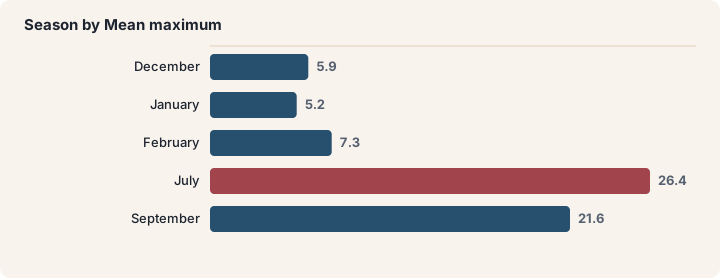
Winter is Strasbourg's busiest and most demanding rental season: the Christmas market runs from late November to 24 December, filling the city and the surrounding roads with tour groups. Snow is possible rather than constant, as December averages a mean maximum of 5.9 C and a mean minimum of 0.8 C, with 10.2 rain days of 1 mm or more, so book early, expect ice on shaded Vosges roads, and check the winter-tyre terms of the rental before driving into Germany.
The climate numbers frame the season honestly. Strasbourg sits in a semi-continental climate zone, with Meteo-France 1991-2020 normals showing January mean maxima of 5.2 C and July mean maxima of 26.4 C, and 635.7 mm of rain spread over 112.3 rain days across the year. That is a climate of cold, damp winters rather than deep snow in the city itself, but the Vosges roads on a Haut-Koenigsbourg or wine-route day run higher and colder, and a shaded bend that has been wet all afternoon can be ice by early evening. Winter tyres are less of a legal question in France than in Germany, where requirements bite in icy conditions, and a cross-border winter trip should be planned with that difference in mind.
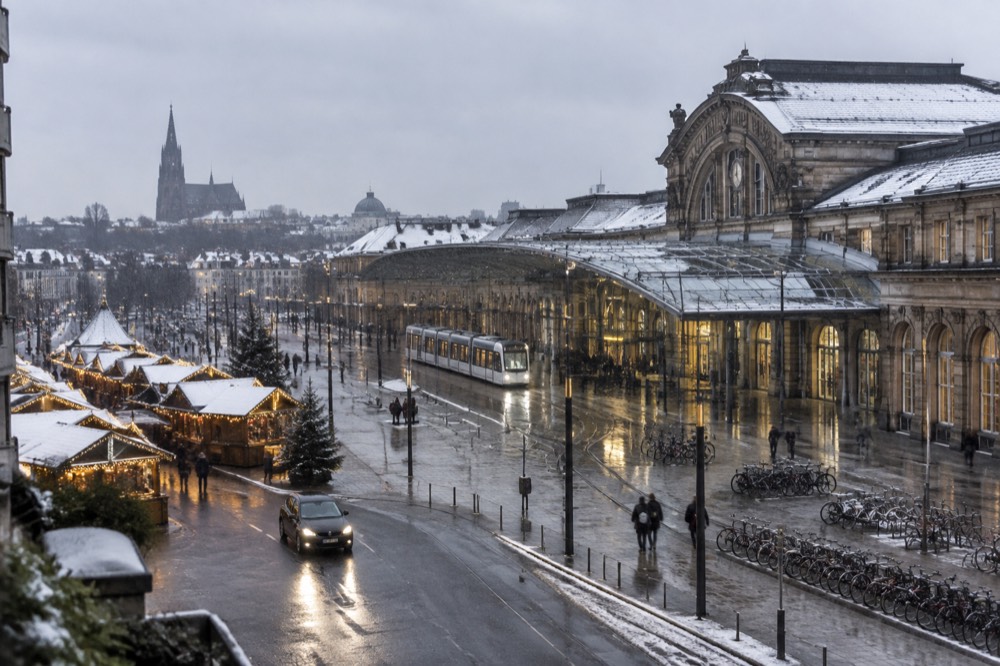
The Christmas dimension is covered in depth elsewhere on the site, in the winter guide to Strasbourg, the Christmas market food guide and the guide to where to stay for the Christmas market. For a car driver the seasonal facts that matter are three. First, the market pattern runs late November to 24 December, with the final day closing early; the 2025 edition ran 26 November to 24 December, and the 2026 dates were still being finalised on the city's official Christmas site, so confirm before booking. Second, the regional market circuit, covered in the Colmar Christmas market guide and the guide to reaching the Strasbourg market from Paris, is exactly the kind of multi-town itinerary where a car tempts, and where an organised market day tour is often the calmer choice. Third, parking near any market square in December is a contest, so plan to park at the edge and walk in.
| Season | Mean maximum | Mean minimum | Rain days of 1 mm or more | Driving note |
|---|---|---|---|---|
| December | 5.9 C | 0.8 C | 10.2 | Ice on shaded roads, peak demand |
| January | 5.2 C | -0.2 C | 9.1 | Coldest month, check winter tyres |
| February | 7.3 C | 0.0 C | 8.3 | Quietest roads of the winter |
| July | 26.4 C | 14.9 C | 10.4 | Heat, summer holiday traffic |
| September | 21.6 C | 10.7 C | 8.0 | Comfortable, harvest-season roads |
Parking, Fuel And The Practicalities
The practical advice is structural rather than numeric: park at the edge of the centre and walk or tram in, refuel before returning the car rather than trusting a station near the drop-off, and read the fuel and mileage terms of the agreement before signing. The city centre is not built around the car, and the visitor who plans for that does not fight it.
The structural point is the one worth internalising. Strasbourg's centre is a tram-and-pedestrian city, and the ring of park-and-ride and edge-of-centre parking exists precisely so that visitors do not bring cars into the Grande Île. The pattern that works for a day trip out is the mirror of the pattern that works for a day in: collect the car in the morning, drive out, return it in the evening, and never let it sit in the centre overnight, where a hotel's own arrangement, if it has one, is the thing to confirm at booking rather than on arrival. The budget guide to Strasbourg and the city pass guide cover the costs of the car-free days between the driving ones.
Fuel and drop-off are where rental trips go wrong in small, expensive ways. The two checks that matter are the fuel policy, full-to-full arrangements reward a final top-up away from the station where prices are gentler, and the return-time clause, which turns a late handover into a day's charge. Mileage caps matter on this itinerary more than on a beach holiday, because a two-day loop of the wine route, the castle and a Black Forest crossing is a real distance, and an agreement with a tight cap should be flagged before the keys are taken. The terms live on the rental agreement, and that is where they should be read.
Car, Bike Or Boat: What Strasbourg Actually Does Best
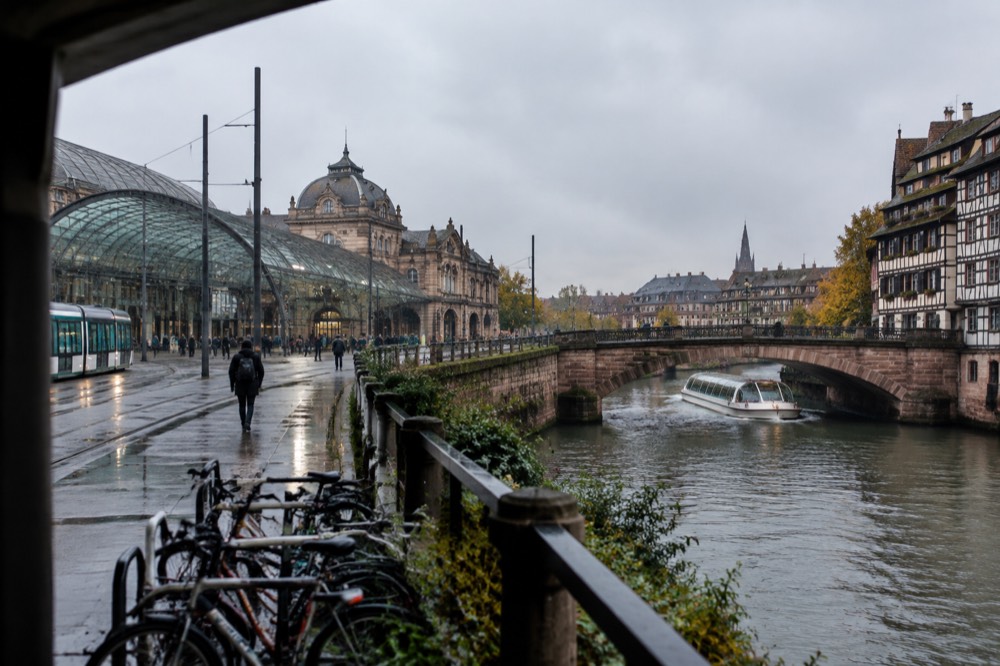
Strasbourg's own signature ways of covering ground are the bicycle and the river boat, and both beat a car inside the city. The bike network is flat, extensive and largely separated from traffic, and guided bike tours run around two and a half hours with a local guide. The Batorama river tours run from the heart of the city, with the long tour lasting 1h10 and the short tour 0h45. The car serves the region; the bike and the boat are how the city itself is seen.
The bicycle deserves more of a hearing than it usually gets from visitors. The centre is flat, the river paths run for kilometres in both directions, and a bike turns the stretch between Petite France, the European Quarter and the Neustadt from a tram ride into a route past the water. The guide to Strasbourg by bike covers the practical detail, and a guided ride is the easiest version for a visitor without local knowledge:
The river is the other answer. Batorama's boats leave from the heart of the city and cover the Ill through the covered bridges and out towards the European institutions, with the long tour at 16.20 EUR full fare and 8.90 EUR reduced, and the short tour at 12.50 EUR and 7.20 EUR, durations of 1h10 and 0h45 respectively. It is the one way of seeing Strasbourg that a car cannot imitate, and it sits within sight of the cathedral. The boat tour guide covers the circuits.
| Way of covering ground | Best inside the city | Best for the region | What to check |
|---|---|---|---|
| Hire car | Weak: parking and narrow streets | Wine route, Vosges, Black Forest | Cross-border and winter-tyre terms |
| Bicycle | Strong: flat, river paths | Wine villages for confident riders | Guided tour or rental terms |
| River boat | Strong: the classic city view | Not applicable | Long tour 16.20 EUR, short 12.50 EUR |
| Tram and bus | Strong: the everyday network | Airport shuttle, 8 minutes by train | 24H Solo at 4.60 EUR |
| Guided day tour | Not applicable | Strong: no driving, no planning | Duration and inclusions on the listing |
Segways sit between the bike and the walking tour, and they suit a visitor who wants the city's spread covered quickly on a first afternoon. The Euro circuit by Segway is the established option:
For the evenings, when the car is parked and the city is the destination, the guide to Strasbourg at night and the roundup of free things to do in Strasbourg cover the hours a hire car contributes nothing to. And for the first day in town, before any of the driving begins, a food walk is the introduction the city answers best. The Do Eat Better traditional food tour runs about three and a half hours through the old quarters with tastings along the way, and it can be booked through Check availability on the operator's live listing.
How To Build The Driving Days Into A Longer Stay
A pattern that works well is car-free days in the city at each end of the stay, with the hire car collected for a single block in the middle. On a four-night stay, that means two walking days, one full wine-route or castle day behind the wheel, and a final day returned to trams and boats. It concentrates the cost of the rental onto the days the car is genuinely earning it, and it keeps the centre of Strasbourg, where the car is a burden, car-free.
The reasoning is simply about where each tool works. The city's paid sights, the cathedral platform at 10 EUR full and 6 EUR reduced, the astronomical clock show at 4 EUR, the municipal museums at 9 EUR full and 5 EUR reduced with a 1-day Pass Musées at 20 EUR, all sit within walking or tram distance of one another, and the first Sunday of each month opens the municipal museums free. Note that the Musée Alsacien is closed for works until 2028 and cannot be routed into any museum day. The museums guide and the hidden gems guide cover what to fill a car-free day with, and the best time to visit guide and the weather guide handle the seasonal timing of the whole plan.
| Element of the stay | Car-free or driving | What it costs, where verified |
|---|---|---|
| Cathedral platform | Car-free | 10 EUR full, 6 EUR reduced, under 6 free |
| Astronomical clock show | Car-free | 4 EUR, tickets on the day only |
| Municipal museums | Car-free | 9 EUR full, 5 EUR reduced, first Sundays free |
| Pass Musées, one day | Car-free | 20 EUR |
| Batorama long river tour | Car-free | 16.20 EUR full, 8.90 EUR reduced |
| Wine-route day | Driving day | Car hire, terms on the agreement |
| Black Forest crossing | Driving day | Car hire, cross-border terms apply |
For the driving block itself, the season decides the shape. Spring and autumn, with mean maxima of 12.1 C in March and 21.6 C in September, are the comfortable months for long days out, and the spring guide and the notes in the summer guide cover what the region adds in the warm half of the year. December is the season of the market circuit, covered above, and it is the one month where a visitor should weigh the car against a guided market tour honestly rather than assume the car wins by default.
Whichever mix is chosen, the closing thought is the one this guide opened with: Strasbourg rewards the pedestrian first, and the car is a regional tool. Book it for the days the itinerary leaves the city, park it when the itinerary returns, and let the trams, the boats and the river paths carry the rest.
Common Questions About Renting A Car In Strasbourg
Do I Need A Car To Visit Strasbourg?
No. The city centre is compact and walkable, the CTS tram and bus network covers the districts visitors reach, and a 24H Solo ticket costs 4.60 EUR. A hire car becomes useful for day trips into Alsace, the Vosges and the Black Forest, not for the city itself.
Can I Drive A Hire Car From Strasbourg Into Germany?
Yes in principle, since both countries are in the Schengen area and both use the euro, so there is no border paperwork on a routine crossing to Kehl. Confirm that the rental agreement permits taking the vehicle abroad, carry the documents the contract names, and check the winter-tyre terms for German roads in cold months.
Where Is The Best Place To Collect A Rental Car?
Strasbourg's central station suits rail arrivals and lets you collect the car only for the driving days. The airport at Entzheim suits travellers heading straight out to the wine route. City-centre branches suit visitors already in a hotel who want a car for a day or two only.
Is Parking Difficult In Central Strasbourg?
Yes, and the practical answer is not to try. The Grande Île is a pedestrian-and-tram quarter, and the sensible pattern is to park at the edge of the centre and walk or take the tram in.
Should I Drive The Alsace Wine Route Or Take A Tour?
A car gives freedom of pace, which suits a day of unplanned village stops. A guided day tour removes the driving, which matters on a wine-tasting day, and covers the same villages without a designated driver. The choice comes down to whether the tasting or the timetable is the priority.
Can I Take The Hire Car To Basel In Switzerland?
Only after reading the agreement. Switzerland is in Schengen but outside the euro, so euros are not the currency in Basel, and a Swiss motorway vignette may be required. The train to Basel avoids all of those questions, and is the option this site recommends for that day trip.