What Are The 4 Wonders Of Alsace?
The four wonders of Alsace explained: Strasbourg Cathedral, Haut-Koenigsbourg Castle, Mont Sainte-Odile and the Alsace Wine Route, with how to plan them from Strasbourg.
Alsace is the region of north-eastern France whose capital, Strasbourg, sits on the River Ill beside the Rhine and the German border, and its four wonders are the sights that anchor almost every first visit. Two of them lie in the countryside to the south and south-west, close enough to reach on a day trip. This page from the Strasbourg Travel Guide names the four, explains why each earned its place, and sets out a realistic way to see them all from a Strasbourg base.
What Are The 4 Wonders Of Alsace?
The four wonders of Alsace, in north-eastern France around Strasbourg, are Strasbourg Cathedral, Haut-Koenigsbourg Castle, Mont Sainte-Odile, and the Alsace Wine Route with its half-timbered villages. The label is tourism shorthand rather than an official list: some versions swap the wine route for a single village such as Eguisheim or Riquewihr, but the cathedral, the castle and the mountain monastery hold their place on the usual versions.
The list works because the four balance each other. One wonder is urban and Gothic, one is a castle on a summit, one is a quiet pilgrimage mountain, and one is a whole landscape of vines and villages rather than a single monument. Together they cover the range of what Alsace actually is: a border region that has changed hands between France and Germany, with a culture that belongs to neither side alone.
It is worth being honest about the label before planning around it. No official tourist body certifies the four, and you will meet different counts in different guidebooks. Some writers fold the wine route and the villages into one entry and add a museum or a stork reserve as a fourth. The version above is the one you will meet on the region's own tourism pages and in the brochures at the Strasbourg tourist office, and it is the version that maps most cleanly onto a trip based in the city.
| Wonder | What it is | Where it sits | What it pairs with |
|---|---|---|---|
| Strasbourg Cathedral | Gothic cathedral with a single spire and an astronomical clock | In the centre of Strasbourg, on the Grande Île | A city walking tour, a boat trip on the Ill |
| Haut-Koenigsbourg Castle | Restored hilltop castle with ramparts and furnished rooms | South of Strasbourg, above the Alsace plain | The wine villages, on a full-day loop |
| Mont Sainte-Odile | Summit monastery and pilgrimage site with long views | South-west of Strasbourg, in the hills | A half-day by car, or a walking excursion |
| The Alsace Wine Route | A string of walled, half-timbered wine villages | Between Strasbourg and Colmar | Tastings, vineyard walks, an overnight stay |
Why Is Strasbourg Cathedral First Among The Wonders Of Alsace?
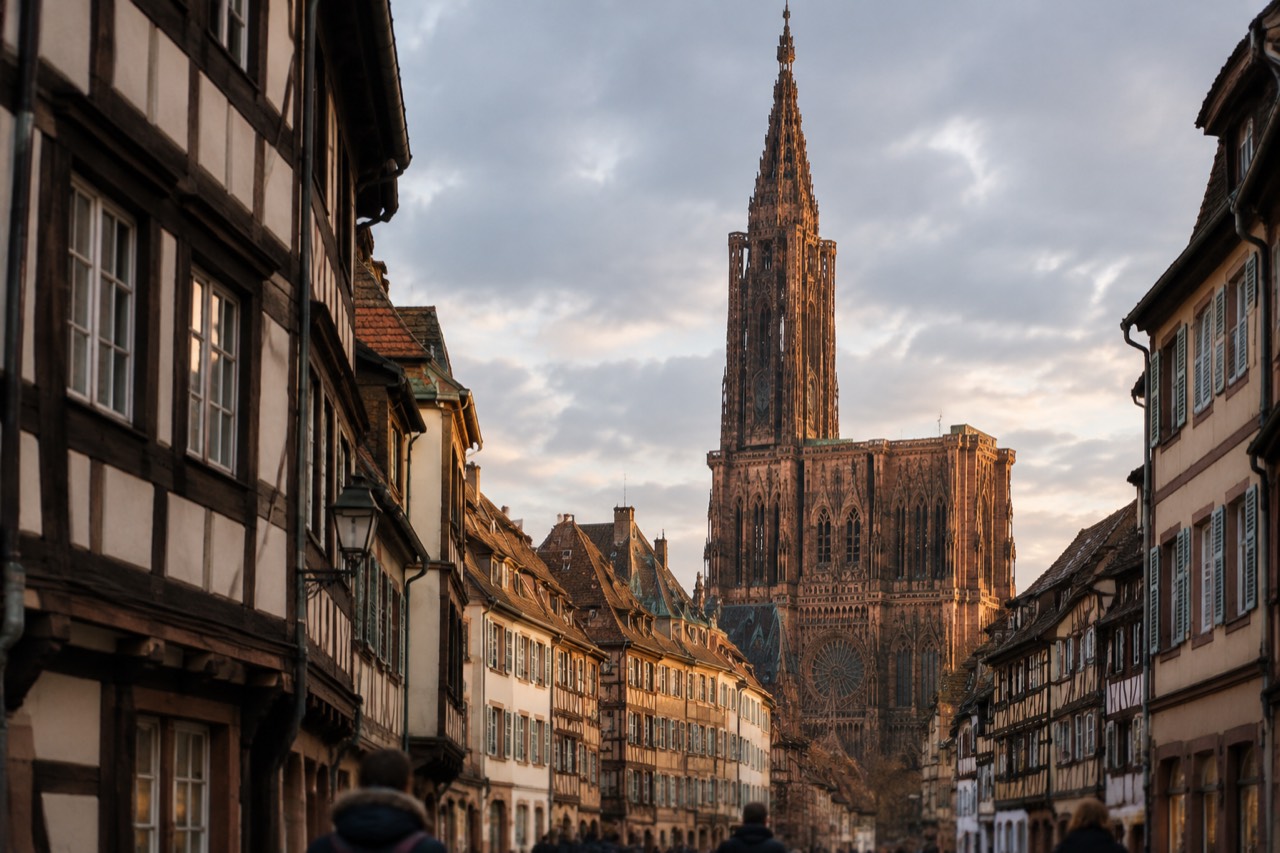
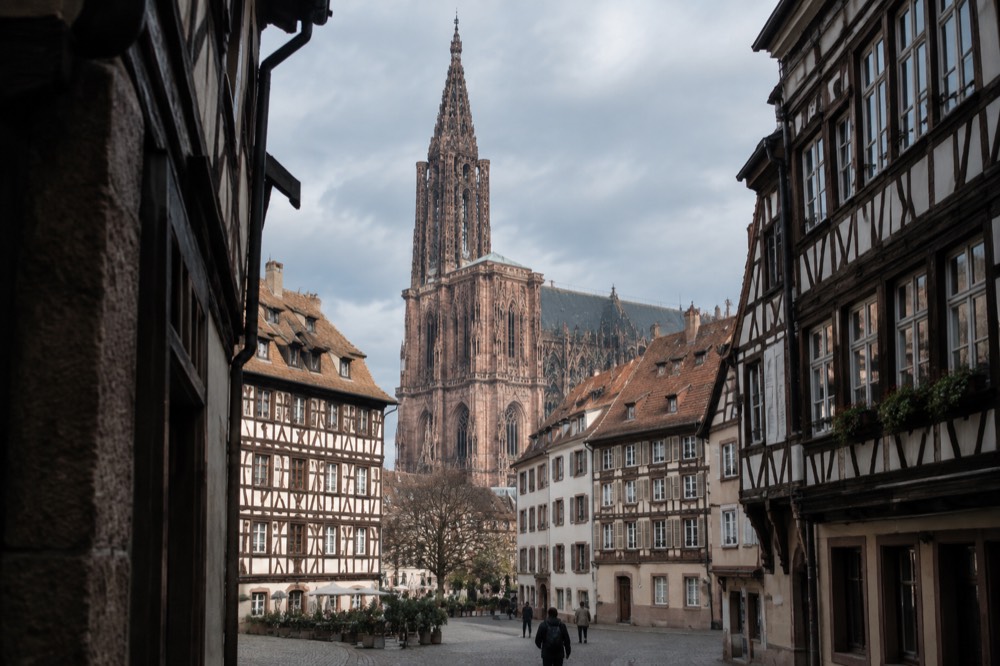
Strasbourg Cathedral is the wonder you can reach on foot from the city centre, and it anchors every version of the list. It is a Gothic cathedral with a single spire, a viewing platform at 66 m, and an astronomical clock whose automaton show runs daily at 12:30. The platform ticket costs 10 EUR full price and 6 EUR reduced, with children under 6 free. The nave keeps visitor hours of its own, published on the cathedral's site.
The cathedral rewards a slow visit rather than a glance. The nave opens to visitors Monday to Saturday from 08:30 to 11:15 and from 12:45 to 17:45, and on Sunday afternoons from 14:00 to 17:15, so a morning arrival in Strasbourg can fit in the interior before lunch and the clock show at 12:30. The clock ticket is 4 EUR for adults, sold on the day only, with no reservations taken in advance. That day-of rule matters: in December, when the Christmas market fills the surrounding squares, the queue for clock tickets forms early.
The platform is the other half of the visit. It closes on 1 January, 1 May and 25 December, and its hours shift with the seasons, running later into the evening from April to September than in the winter half of the year. The climb gives you the city laid out below: the tiled roofs of the Grande Île, the Ill looping through Petite France, and on a clear day the Black Forest line on the German side of the Rhine. For the full background on the building, see the companion page on why the cathedral is so famous, and for the practical question of entry costs, the page on whether the cathedral is free to enter.
If you want a guide rather than a self-guided hour, the roster of Strasbourg tours includes a dedicated cathedral guided walk, plus general city walks that stop here as a centrepiece.
Want the city's stories told as you walk? Book a guided walking tour here.
What Makes Haut-Koenigsbourg Castle A Wonder Of Alsace?
Haut-Koenigsbourg is a restored hilltop castle that looks out over the Alsace plain from a summit position, and it is the wonder that pairs naturally with the wine villages on a day trip from Strasbourg. The site is run as a historic monument, with ramparts, furnished rooms and exhibitions inside. Opening hours and admission change with the season, so the official page is the place to confirm both before you set out.
The castle earns its slot on the list through sheer presence. It appears suddenly at the top of a wooded climb, and the terrace views run across the plain toward the Rhine. Inside, the rooms are dressed to give a sense of a working fortress, and the rampart walk is the part visitors remember longest. Because the whole site sits on a summit, the visit is a half-day affair at a relaxed pace, not a quick photo stop.
The practical point for a Strasbourg visitor is that Haut-Koenigsbourg combines cleanly with the wine route. The villages of Riquewihr and Kaysersberg sit on the route between the castle and Colmar, and a single day can carry all three without feeling compressed. That loop is the standard shape of the castle-and-villages day trips that run from Strasbourg, and the roster carries a well-established version of it: a full-day excursion from Strasbourg that takes in Colmar, Riquewihr, Kaysersberg and the castle, with Check availability on the operator's live listing. It suits travellers who would rather not drive the wine road themselves, and it is one of the few formats that reaches the castle without a hire car.
Why Does Mont Sainte-Odile Belong On The List?
Mont Sainte-Odile is a mountaintop monastery and pilgrimage site that looks out over the Alsace plain, and it is the quiet wonder of the four: a summit, a chapel and long views rather than a castle or a market square. It is reached by road from Strasbourg, as a half-day or full-day excursion. Admission and access details sit on the official site, and the mountain is also a walking destination with marked trails.
Where the cathedral is Gothic and the castle is martial, Mont Sainte-Odile is contemplative. The monastery buildings cluster on the summit, the chapel draws pilgrims through the year, and the viewpoints take in the plain on one side and the wooded hills on the other. The mountain has a walking culture of its own, with trails radiating from the summit, so it doubles as a hiking half-day for visitors who have had their fill of town centres.
The honest planning note is that this is the hardest of the four without a car. The castle and the wine villages appear on scheduled day trips from Strasbourg; the mountain leans on a hire car, a private driver or a determined bus-and-walk plan. If it is on your list and you are not driving, check the official access page first and treat it as the flexible item of the four, the one to drop first if the weather turns. The semi-continental climate means the summit can be cold and grey on a day when Strasbourg itself feels mild.
How Does The Alsace Wine Route Complete The Four Wonders?
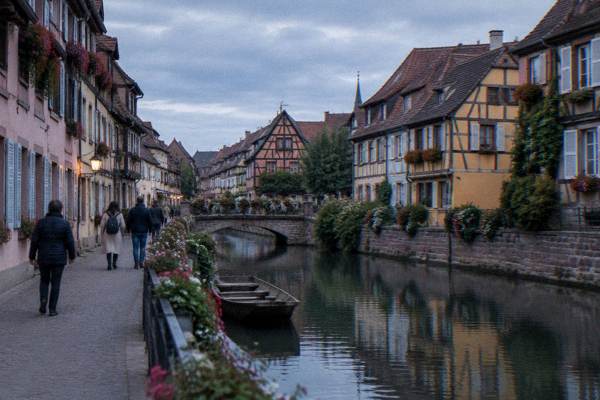
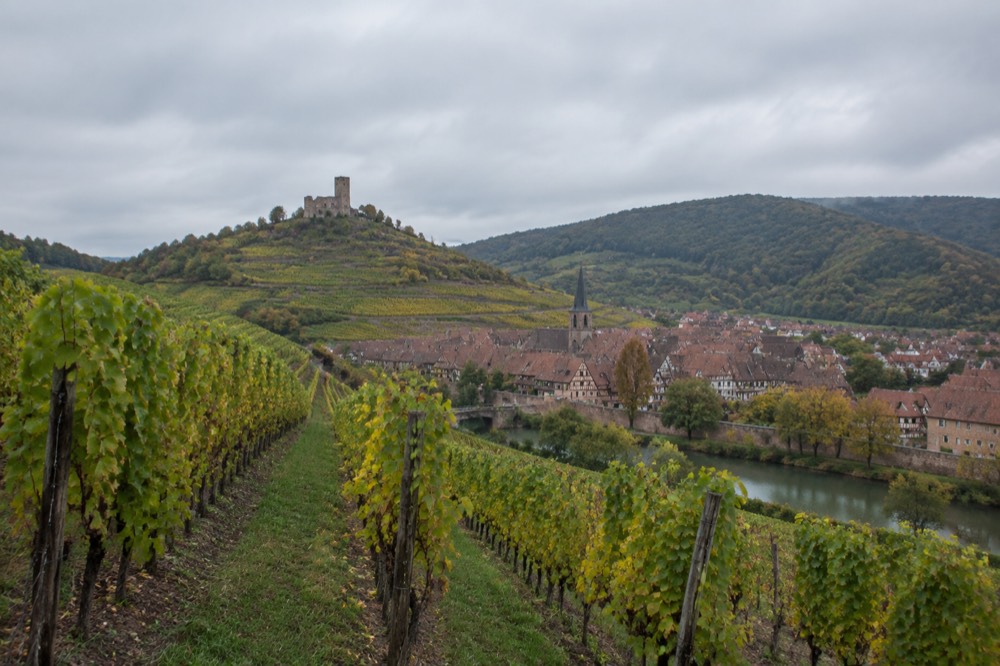
The Alsace Wine Route is the fourth wonder because it is not one building but a string of walled, half-timbered wine villages between Strasbourg and Colmar, each with tasting cellars and vineyard walks. Villages such as Eguisheim, Riquewihr and Kaysersberg sit along it. It is the wonder you experience rather than look at, and it is the part of the list that rewards an overnight stay rather than a flying visit.
The route is what most people picture when they picture Alsace: narrow streets, geranium-lined bridges, storks on rooftops, and cellars selling riesling and other regional whites straight from the barrel door. Tasting fees vary from cellar to cellar, so check the room before you sit down, and treat any printed range as a planning guide rather than a promise. The villages are small enough that two or three in a day is a comfortable count, with a long lunch as the hinge of the itinerary.
Two practical notes shape a wine-route day. First, the villages are working towns with narrow lanes, so parking fills early in high season and a guided excursion saves the circling. Second, the route runs through rolling country rather than dramatic cliffs, so the pleasure is in the sequence: a village, a tasting, a vineyard walk, then the next village. Travellers weighing a Strasbourg base against a Colmar base for this part of the trip will find the two cities sit at either end of the same corridor, and either works as a starting point for the villages between them.
How To See The Four Wonders Of Alsace From Strasbourg
Strasbourg delivers the first wonder on foot, and the other three sit in the countryside south and south-west of the city, reached by hire car, small-group day trip, or a mix of train and local transport. A realistic plan gives the cathedral a full morning, the wine route and Haut-Koenigsbourg a full day together, and Mont Sainte-Odile either the same day or its own half-day. Allow two or three days in total.
The cathedral needs no logistics beyond a comfortable pair of shoes and a clock ticket bought on the day. The castle-and-villages loop is the natural second day, and it is where a guided excursion earns its keep: the driving is delegated, the parking is solved, and the villages arrive in an order that makes sense. Between the two big days, a city walk fills the evening or the spare morning well, and the roster's small-group curiosities walk is a strong pick for that slot, covering the streets and stories around the Grande Île in the company of a local guide. The question of overall trip length is covered in detail on how many days in Strasbourg is enough.
| Wonder | How it fits a Strasbourg trip | What to book or check |
|---|---|---|
| Strasbourg Cathedral | A morning in the city centre, clock show at 12:30 | Platform and clock tickets, sold on the day |
| Haut-Koenigsbourg Castle | The anchor of a full-day loop with the villages | Seasonal hours on the official page, or a guided day trip |
| Mont Sainte-Odile | A half-day by car, or a walking excursion | Access details and trail conditions on the official site |
| The Alsace Wine Route | A full day of villages and tastings, or an overnight | Cellar tasting fees, checked at the door |
For travellers who want the four without a car, the honest summary is this: book the cathedral and the city on foot, book the castle and villages as a guided day, and treat Mont Sainte-Odile as the stretch goal.
Common Questions About The Four Wonders Of Alsace
What are the 4 wonders of Alsace?
The four wonders of Alsace are Strasbourg Cathedral, Haut-Koenigsbourg Castle, Mont Sainte-Odile, and the Alsace Wine Route with its half-timbered villages. The label is tourism shorthand rather than an official list, and some versions swap the wine route for a single village such as Eguisheim or Riquewihr, but those four are the ones the usual versions name.
Is Strasbourg Cathedral One Of The Four Wonders?
Yes, and it is the only one of the four inside Strasbourg itself. It is a Gothic cathedral with a single spire, a viewing platform at 66 m and an astronomical clock whose show runs daily at 12:30, with tickets sold on the day only.
Can You Visit Haut-Koenigsbourg And The Wine Route In One Day?
Yes, and that pairing is the standard shape of a full-day excursion from Strasbourg: the castle in the morning or afternoon, with villages such as Riquewihr and Kaysersberg and a stop in Colmar filling the rest of the day. No door-to-door times are printed here, because they depend on traffic and season, so treat the day as full rather than measured.
Is Mont Sainte-Odile Easy To Reach Without A Car?
It is the hardest of the four without a car. The castle and the wine villages appear on scheduled day trips from Strasbourg, while the mountain leans on a hire car, a private driver or a determined bus-and-walk plan. Check the official access page before committing, and keep it as the flexible item of the four.
How Many Days Do You Need For The Four Wonders?
Two days covers the core plan: a morning for the cathedral and the city, then a full day for Haut-Koenigsbourg and the wine villages. Three days adds Mont Sainte-Odile at a relaxed pace and leaves room for the astronomical clock show, a boat trip on the Ill and a long winstub lunch, which is the pace Alsace rewards.