What Is Alsace Famous For?
From half-timbered wine villages and Strasbourg's Gothic cathedral to Christmas markets and choucroute, discover what makes Alsace one of France's most distinctive regions.
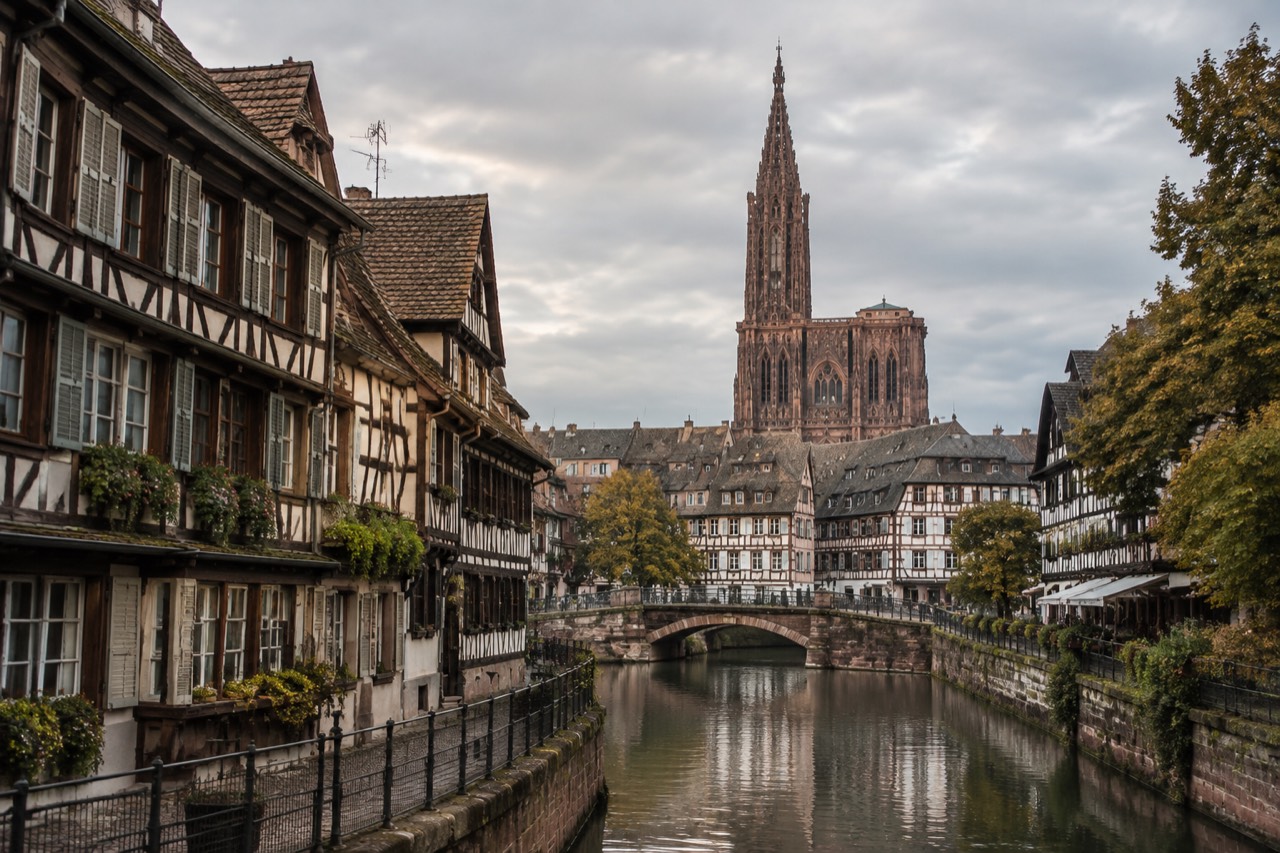
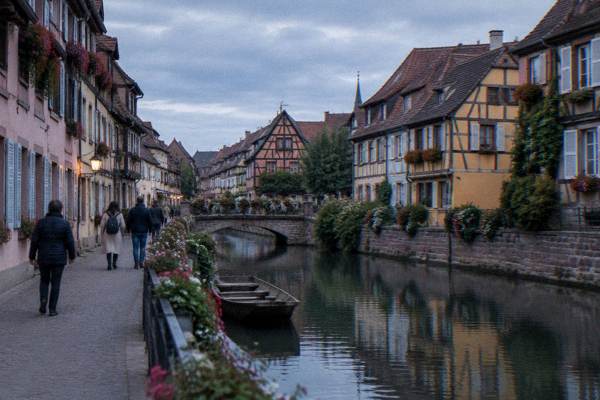
Alsace sits in the far north-east of France, pressed between the Vosges mountains and the Rhine, with Strasbourg as its capital and the German border a short tram ride away. The region is famous for a handful of things that feel both unmistakably French and quietly Germanic: villages of half-timbered houses painted in pastel shades, a wine route that threads through hillside vineyards, a Gothic cathedral with a single spire that dominates the plain, and Christmas markets that draw millions of visitors every December. Strasbourg Travel Guide covers the city at the centre of that story, but the region's fame stretches well beyond the Grande Île. For a deeper look at the city's own renown, why Strasbourg is so famous is a natural companion piece.
What Is Alsace Famous For?
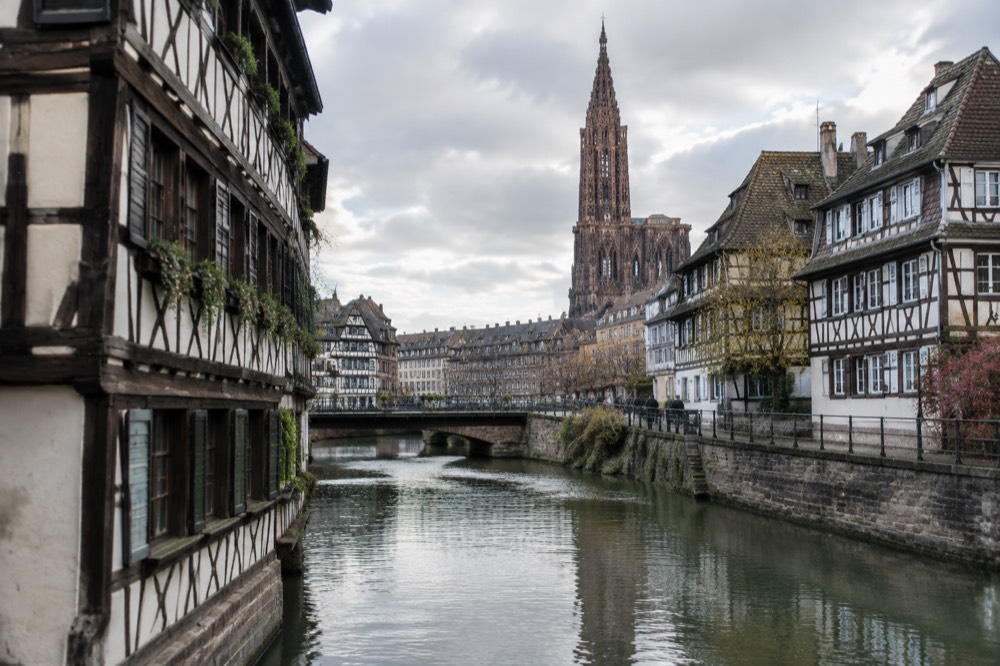
Alsace is famous for its half-timbered wine villages along the Route des Vins, for Strasbourg's single-spire Gothic cathedral and its UNESCO-listed historic centre, for the Christkindelsmärik that turns the city into a Christmas capital, and for a rich food culture built around choucroute garnie, tarte flambée, kougelhopf and aromatic white wines. The region's storks, its position on the Rhine border with Germany, and its blend of French and German heritage give it a character found nowhere else in France.
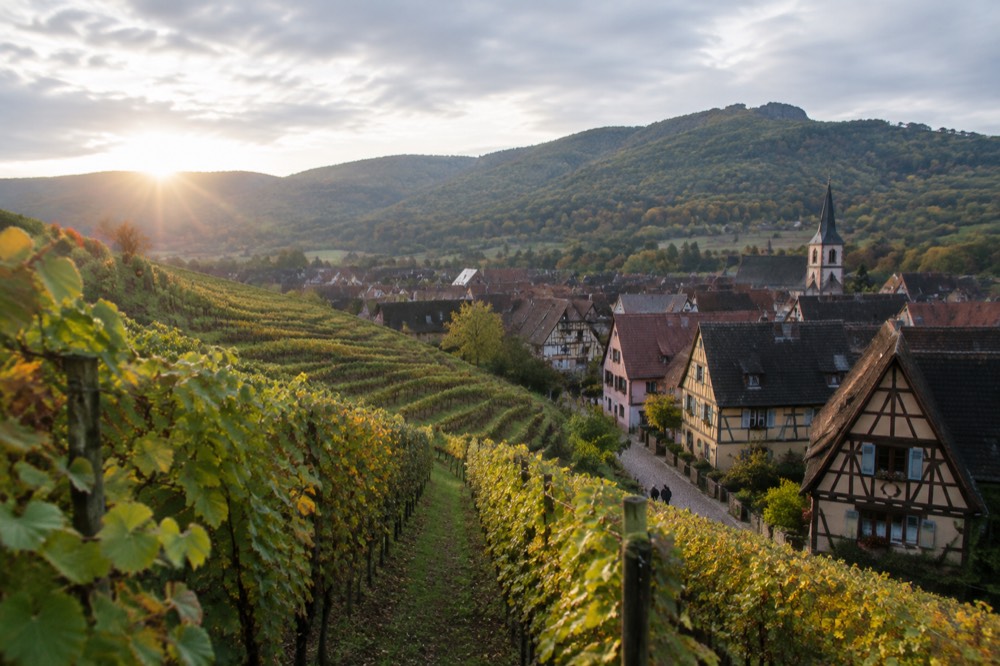
That short list barely scratches the surface. The Alsace Wine Route threads along the eastern edge of the Vosges, linking more than a hundred wine-producing villages. Many of them look like they have been lifted from a fairy tale: Riquewihr with its fortified walls and cobbled lanes, Eguisheim arranged in concentric circles around a central castle, and Colmar, the larger town whose canals and painted facades earned it the nickname "Little Venice". The route is planted overwhelmingly with white grape varieties: Riesling, Gewurztraminer, Pinot Gris and Muscat dominate, producing aromatic wines that are drier and more structured than many visitors expect.
The villages are not just backdrops for tasting rooms. They are living communities where the half-timbered architecture is protected by strict planning rules, and where the flower displays that cascade from window boxes are taken seriously enough to have their own competitions. A day trip from Strasbourg can take in several of the most celebrated stops, often combined with a visit to Haut-Koenigsbourg, a restored hilltop castle that commands views across the plain to the Black Forest.
Strasbourg Cathedral And The Grande Île
Strasbourg's Notre-Dame cathedral is famous for its single 142-metre spire, its intricate façade of rose sandstone, and the astronomical clock whose automaton show draws a crowd every day at 12:30. The cathedral stands at the heart of the Grande Île, the historic island district that together with the Neustadt forms a UNESCO World Heritage property inscribed for its exceptional ensemble of medieval and German imperial architecture.
The cathedral's platform sits at 66 metres, reached by a spiral staircase that climbs through the stonework, and the view takes in the whole of the old city, the Ill river, and on clear days the Vosges and the Black Forest. The clock puts on its full display once a day at 12:30, with figures of Christ, the apostles and a crowing rooster moving to a mechanism that also tracks the date of Easter. Tickets for the clock show are sold on the day only, while the platform ticket is 10 EUR for adults and 6 EUR for reduced-rate visitors.
The Grande Île is a dense tangle of pedestrian lanes, canals and squares that hold some of the city's finest half-timbered and Renaissance buildings: the Maison Kammerzell with its carved wooden façade, the Palais Rohan housing three museums, and the Ponts Couverts with their medieval towers. The Neustadt, added to the UNESCO listing in 2017, spreads out to the north-east with broad boulevards and monumental buildings from the German imperial period, including the university and the national theatre. The whole ensemble is one of the reasons why Strasbourg is so famous well beyond the borders of Alsace.
The best introduction to this layered city is a guided walk that starts in the cathedral square and winds through Petite France, the former tanners' quarter where canals lap against the walls of old timbered houses. A short, well-paced tour covers the key sights and sets the historical context in about an hour.
Want a local to walk you through it all? Book a free walking tour here.
The coach or minibus journey weaves through the vineyards, stopping at medieval villages and the castle, while a guide explains the history and viticulture of the region. It is a practical choice for travellers who want to see the famous villages without hiring a car.
Alsatian Food And Drink
Alsatian cuisine is famous for hearty, Germanic-influenced dishes: choucroute garnie, a mountain of fermented cabbage piled with sausages, pork and potatoes; tarte flambée, a thin, wood-fired flatbread topped with crème fraîche, onions and bacon; and kougelhopf, a tall yeasted cake baked in a distinctive fluted mould. The region's white wines, especially Riesling and Gewurztraminer, are among the most celebrated in France, and Strasbourg has a long brewing tradition that produces crisp, hop-forward lagers.
Choucroute is the dish that most people picture when they think of Alsace. It is served in winstubs, the traditional wood-panelled taverns that are the region's answer to the bistro, and the best versions use three or four different cuts of pork alongside Strasbourg sausages. Tarte flambée, known locally as Flammekueche, is the go-to sharing dish: a rectangle of dough rolled paper-thin, smeared with fromage blanc or crème fraîche, scattered with lardons and onions, and slid into a wood-fired oven for a couple of minutes until the edges blister and char.
Kougelhopf straddles the line between bread and cake, enriched with butter and eggs and studded with raisins soaked in kirsch. It appears at breakfast and as an afternoon snack, and the ceramic mould that gives it its shape is a souvenir in its own right. The drink that washes all of this down is overwhelmingly white: Riesling, dry and mineral, is the flagship grape, while Gewurztraminer brings lychee and rose-petal aromatics, and Pinot Gris offers a richer, rounder texture. The Alsace wine route is the only French wine region to label its bottles primarily by grape variety rather than by village or vineyard, a nod to the Germanic tradition. For a closer look at the local drinking culture, what drink Strasbourg is famous for breaks down the wines, beers and spirits that define the region.
| Dish or Drink | What It Is | Where To Try It |
|---|---|---|
| Choucroute garnie | Fermented cabbage with sausages, pork and potatoes | Winstubs across Strasbourg, especially in Petite France and the cathedral quarter |
| Tarte flambée (Flammekueche) | Thin wood-fired flatbread with crème fraîche, onions and bacon | Any traditional restaurant; the Krutenau district has several specialists |
| Kougelhopf | Yeasted cake with raisins and almonds, baked in a fluted mould | Bakeries and patisseries throughout the city |
| Riesling | Dry, mineral white wine, the signature grape of Alsace | Wine bars and tasting rooms along the Route des Vins |
| Gewurztraminer | Aromatic white wine with notes of lychee and rose | The same cellars and tasting rooms, especially around Turckheim and Eguisheim |
| Alsace beer | Crisp lagers and wheat beers from historic breweries | Brasseries and beer halls near the station and the European quarter |
The Alsace Christmas Markets
Alsace is famous for its Christmas markets, and Strasbourg's Christkindelsmärik is the oldest and largest in France. The 2025 edition ran from 26 November to 24 December and attracted 3.05 million visitors. The market spreads across several squares in the historic centre, with hundreds of wooden chalets selling decorations, mulled wine, bredele biscuits and regional crafts, all beneath a giant Christmas tree on Place Kléber.
The market's exact dates shift slightly each year. The city posts each edition's dates on its Christmas site, and the pattern is consistent: the market opens in the last week of November and runs every day until the evening of 24 December, when the chalets close early. The chalets typically operate from late morning into the evening, and the atmosphere is at its most intense after dark, when the lights strung across the streets and the smell of cinnamon and hot wine fill the air.
Strasbourg is not the only Christmas market in Alsace. Colmar, Eguisheim, Riquewihr and Kaysersberg all run their own markets, each with a distinct character, and a day trip from Strasbourg can combine several of them. The city's tourism office releases the official programme and a map of the market layout each autumn, and checking that page before travel is the only way to get the confirmed opening hours and any special events. The market's fame is such that what is the most famous Christmas market in France is a question that almost always leads back to Strasbourg.
Storks, The Rhine And Cross-Border Culture
Alsace is famous for its white storks, which nest on rooftops, chimneys and specially erected platforms across the region and have become a symbol of good luck. The Rhine, which forms the border with Germany, has shaped the region's economy, its dialect and its identity, creating a place where French and German influences sit side by side in the language, the architecture and the everyday rhythm of life.
Nests are a common sight in villages and even in central Strasbourg, where the Parc de l'Orangerie has a small breeding centre. The birds migrate south in winter and return in spring, and their arrival is treated as a seasonal marker almost as reliable as the first asparagus.
The Rhine is a working river, carrying barges and cruise ships past the port of Strasbourg, and the border with Germany is porous in the way that Schengen borders are: the tram line D crosses into Kehl with no more ceremony than a change of fare zone. The cultural overlap is visible in the bilingual street signs of the old town, in the Alsatian dialect that older generations still speak, and in the way a meal can start with a glass of Riesling and end with a slice of Black Forest gateau. The region's history of shifting sovereignty between France and Germany over several centuries left a deep imprint, and the result is a place that does not feel quite like anywhere else in either country. That layered identity is explored further in whether Strasbourg is more German or French, a question that gets to the heart of what makes Alsace distinctive.
Common Questions About What Alsace Is Famous For
What Is Alsace Famous For?
Alsace is famous for its half-timbered wine villages, the Strasbourg Cathedral, the Christmas markets, choucroute and tarte flambée, white wines like Riesling and Gewurztraminer, and a distinctive Franco-German culture shaped by centuries of shifting borders.
Why Is Strasbourg So Famous?
Strasbourg is famous as the capital of Alsace, home to the Gothic Notre-Dame cathedral and the Grande Île UNESCO site, the seat of several European institutions, and the host of one of the oldest and largest Christmas markets in Europe.
What Drink Is Strasbourg Famous For?
Strasbourg and Alsace are famous for their white wines, particularly Riesling, Gewurztraminer and Pinot Gris, as well as for the region's long brewing tradition that produces crisp lagers and wheat beers.
Is Alsace More German Or French?
Alsace is politically and administratively French, but its culture, cuisine, dialect and architecture carry a strong Germanic imprint from the periods when the region was part of the German Empire and earlier Germanic states.
What Is The Most Famous Christmas Market In France?
The Strasbourg Christkindelsmärik is widely regarded as the most famous Christmas market in France, drawing millions of visitors each December to its chalets spread across the historic city centre.
What Is The Signature Dish Of Alsace?
Choucroute garnie, a generous plate of fermented cabbage piled with sausages, smoked pork and potatoes, is the signature dish of Alsace, served in traditional winstubs throughout the region.
Strasbourg's cathedral, the wine route, the Christmas markets and the cuisine are not separate attractions so much as overlapping expressions of a single regional identity. The same half-timbered architecture that frames a tasting room in Riquewihr appears around the corner from a choucroute restaurant in Petite France, and the same Riesling that is poured at a winstub in the city is grown on the slopes that the day-trip coaches pass on their way to Colmar. Understanding what Alsace is famous for is really a matter of understanding how all of those things fit together, and the best way to start is to walk the streets of Strasbourg with someone who can tell the story.