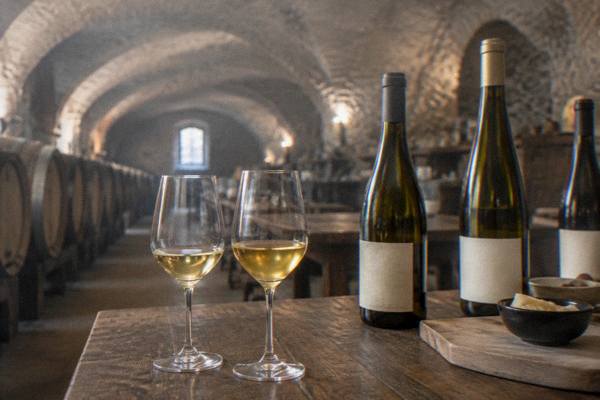
What Drink Is Strasbourg Famous For?
Strasbourg, in north-eastern France, is famous for Alsace wine, above all Riesling, plus Crémant d'Alsace, amber beer and fruit eaux-de-vie. Here is what to order and where.
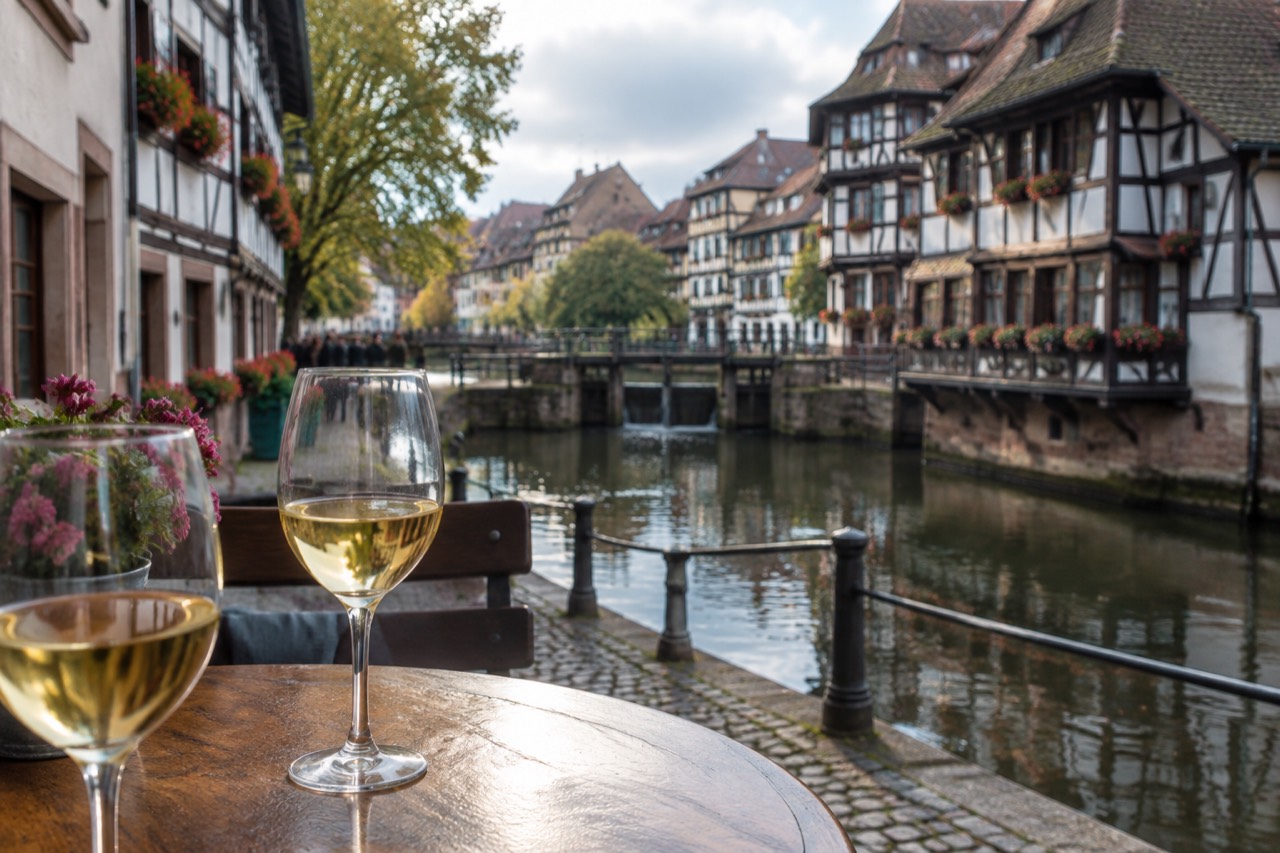
Strasbourg, in Alsace in north-eastern France, is famous first and foremost as a white-wine city. The town is the working capital of one of France's great white-wine regions, and the drink that carries its name furthest is Alsace Riesling: a dry, precise white that locals pour by the carafe in the winstubs of the Grande Île. Around it sit Crémant d'Alsace, the region's sparkling wine, amber lager from a city with deep brewing habits, fruit eaux-de-vie, and, each December, spiced mulled wine at the Christmas market. The city's whole drinking culture is shaped by its position on the border: French technique, Germanic grape names, and a cellar list that reads differently from anywhere else in the country. For the wider regional picture, the companion page on what Alsace is famous for covers the food side of the same story.
What Drink Is Strasbourg Famous For?
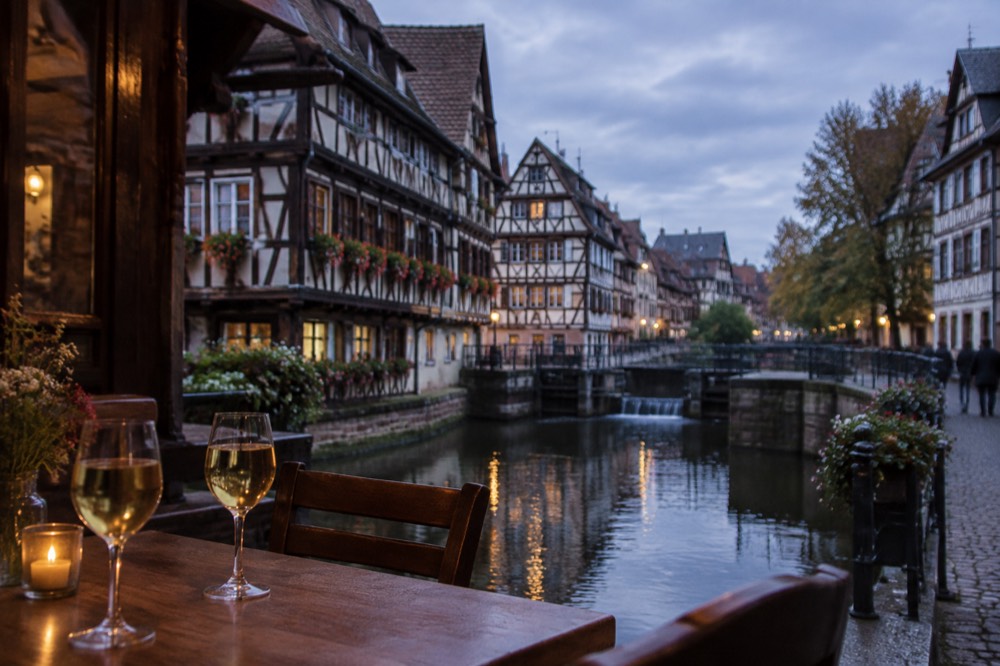
Strasbourg is famous for Alsace Riesling, the dry white wine that anchors the region's cellar, followed closely by Crémant d'Alsace, the traditional-method sparkling wine that locals open for celebrations large and small. The city also drinks amber and blonde Alsatian beer, fruit eaux-de-vie such as mirabelle and framboise, and, in late November and December, spiced vin chaud served at the Christmas market. Riesling is the name to remember: it is the region's signature grape and the wine a Strasbourg winstub pours without being asked.
That answer surprises travellers who expect France to run on red wine. Alsace is the outlier among French regions: nearly everything in the glass is white, the labels name the grape rather than the village, and the bottles come in the tall, slim flûte d'Alsace shape that law reserves for the region. The reason is partly geological and partly historical. The vineyards sit on the eastern foothills of the Vosges, protected from rain by the mountains and warmed by long, dry autumns, and the region spent centuries moving between French and German rule, so grape naming and dry styles took hold here in a way they never did in Bordeaux or Burgundy. The cultural blend behind that is explored in whether Strasbourg is more German or French, a question the wine list answers in its own way.
In the city itself, the drink arrives in a particular setting. A winstub, the Alsatian tavern of the Grande Île and the Krutenau, pours wine by the carafe or the glass alongside choucroute and tarte flambée, and the house Riesling is usually the cheapest and best thing on the list. Nobody in Strasbourg treats the local wine as a souvenir. It is table wine in the honest sense, poured every day of the week.
Which Wines Does Alsace Put In The Glass?
Alsace puts seven main grape varieties in the glass: Riesling, Gewurztraminer, Pinot Gris, Muscat, Pinot Blanc, Sylvaner and Pinot Noir, the region's only significant red. Riesling, Gewurztraminer and Pinot Gris are the three the region calls its noble grapes, and they are the ones a visitor will meet everywhere in Strasbourg, from winstub carafes to wine-shop shelves. Crémant d'Alsace, made mainly from Pinot Blanc and Auxerrois, is the sparkling option.
Riesling is the region's flagship and the driest of the noble three. Gewurztraminer, aromatic and often off-dry, is the wine people either love at first glass or never order again; it carries lychee and rose aromas that make it unmistakable on a tasting flight. Pinot Gris sits between the two, fuller-bodied and rounder than Riesling. Muscat, all perfume and no sweetness despite the smell, and Sylvaner, a light, honest everyday white, fill out the list. Pinot Noir is the exception: a light, delicate red that has grown more serious in recent decades, but still a supporting act in a white-wine region.
| Grape | Style in the glass | What it suits |
|---|---|---|
| Riesling | Dry, precise, mineral, high-acid | Choucroute, river fish, everyday carafe wine |
| Gewurztraminer | Aromatic, often off-dry, full-bodied | Spicy dishes, Munster cheese, aperitif sipping |
| Pinot Gris | Round, rich, gently spiced | Roast poultry, mushroom dishes |
| Muscat | Perfumed, dry, intensely floral | Aperitifs, asparagus in spring |
| Pinot Blanc and Auxerrois | Soft, easy, neutral | The base of Crémant d'Alsace, simple meals |
| Sylvaner | Light, fresh, gently fruity | Winstub lunches, casual drinking |
| Pinot Noir | Light red, delicate, red-fruit | The region's only mainstream red |
Tasting all of this in one sitting is the point of the wine-tasting experiences on the city's roster, and a guided gourmet walk through the centre pairs the glasses with the foods built around them. The same logic applies to a guided walk with a local guide, which routes visitors past the winstubs and wine merchants of the Grande Île while explaining how the border shaped what the city pours. For travellers who prefer to keep moving, a Segway tour covers the riverside quarters where the drinking happens, trading the tasting room for the panorama.
Is Crémant D'Alsace The Sparkling Answer?
Crémant d'Alsace is the region's sparkling wine and the bottle Strasbourg opens when something needs celebrating. It is made by the traditional method, the same second-fermentation-in-the-bottle technique used in Champagne, from grapes grown in Alsace, and it is the best-selling Crémant appellation in France by volume. It costs a fraction of Champagne while keeping the bready, fine-bubbled character of the method, which is exactly why it dominates local tables.
The comparison with Champagne comes up constantly, and it deserves its own honest treatment rather than a one-line verdict. The question whether Crémant is as good as Champagne is answered in full elsewhere on this site, but the short version for Strasbourg is this: the method is shared, the climate is not, and the price difference reflects land values more than effort. A bottle of Crémant d'Alsace brut is the default festive pour at Alsatian family tables, and the city's wine shops stock dozens of them at every price point from everyday to prestige.
Ordering it in a winstub is simple. Ask for a Crémant by name and it arrives chilled in the same tall flute-shaped bottle as the still wines, marked as brut, demi-sec or, less often, rosé. The rosé version, made mainly from Pinot Noir, is the one to look for in summer. Around the Christmas market, Crémant also appears at the chalet bars alongside the mulled wine, poured by the glass for people watching the lights come on over Place Kléber.
What About Beer And The Stronger Stuff?
Strasbourg's second famous drink is beer. The city and its region brew both the huge industrial lagers that made Alsace one of France's brewing heartlands and a growing roster of small craft breweries, and the typical Alsatian order is a blonde or amber lager served cold with a thick head. Alongside it sit the eaux-de-vie, clear fruit brandies of mirabelle, framboise, kirsch and quetsch, which are the traditional end to a heavy Alsatian meal.
Beer in Alsace is not an afterthought to the wine. The region grows its own hops and barley, lager brewing took root here under German influence, and the winstub that pours Riesling at dinner will pour a half-litre of amber with lunch without anyone raising an eyebrow. Craft brewing has added a modern layer: small breweries in and around Strasbourg now make IPAs, wheat beers and barrel-aged styles, and one tasting experience on the roster visits a brewery before opening hours, when the tanks are quiet and the guide can talk. Beer pairing, brewery visits and the city's brewing history are gathered on the site's beer page, which covers the subject in more depth than this page needs to. Other pages covering the same trip are gathered on Strasbourg Travel Guide.
Keen to taste what the local breweries pour? Book a craft beer tasting here.
The eaux-de-vie are the quieter part of the answer. Distilled from fermented fruit rather than grain, they arrive in tiny stemmed glasses after the cheese, and they are strong enough that two is the customary limit. Mirabelle, the yellow plum, is the classic; framboise, kirsch and quetsch, the Alsatian damson, are the alternatives. A tourist taking a bottle home should know the customs rules for spirits, which the shop will explain at the till.
| Drink | What it is | Where to meet it in Strasbourg |
|---|---|---|
| Blonde and amber lager | Alsatian bottom-fermented beer, served cold | Winstubs, brewery taprooms, riverside terraces |
| Craft beer | Small-batch IPAs, wheat beers, barrel-aged styles | Craft breweries and specialist bars in the centre |
| Eau-de-vie de mirabelle | Clear plum brandy, served neat in a small glass | The end of a winstub meal, distillery shops |
| Framboise, kirsch, quetsch | Raspberry, cherry and damson brandies | The same digestif trolley |
| Sirop d'Alsace | Fruit syrup diluted with water, a café classic | Café terraces, family tables |
| Vin chaud | Mulled spiced wine, served hot in a ceramic mug | Christmas market chalets, late November to 24 December |
Where To Taste The Local Drinks In Strasbourg?
The best place to taste Strasbourg's drinks is a winstub in the Grande Île or the Krutenau, where the house carafe of Riesling costs less than a glass of anything in Paris and comes with the food it was grown for. Wine shops around the cathedral run tastings of Crémant and the noble grapes, breweries pour their own beer at source, and the Christmas market adds vin chaud stands from late November. A guided food walk strings several of these stops into one evening.
The winstub is the institution that ties the whole drinking culture together. It is small, wood-panelled, often crowded, and it pours the local wines by the carafe at prices that encourage a second round. Order a carafe of Riesling with a tarte flambée and the drink answers the question this page asks: this is what Strasbourg has always drunk, in the room where it has always been drunk. The winstub tradition, and the dishes that come with it, are covered on the site's dedicated winstub page.
For tasting rather than drinking, the wine merchants of the city centre are the practical option. Several offer flights of the main Alsace grapes, which is the fastest way to understand the difference between Riesling's steel and Gewurztraminer's perfume. The wine route itself starts outside the city, and the villages along it, from Obernai southwards, are where the grapes actually grow; day trips from Strasbourg reach them in a morning.
One pairing worth planning is the river. A private cruise on the Ill with a skipper drifts through Petite France and past the covered bridges with the wine quarter on either bank, and it turns the drinking evening into something slower and quieter than a bar crawl: Check availability. The same logic makes a simple walk along the quai des bateliers a good pre-dinner move, since the river is never more than a few minutes from a glass.
How The Seasons Change What Strasbourg Drinks?
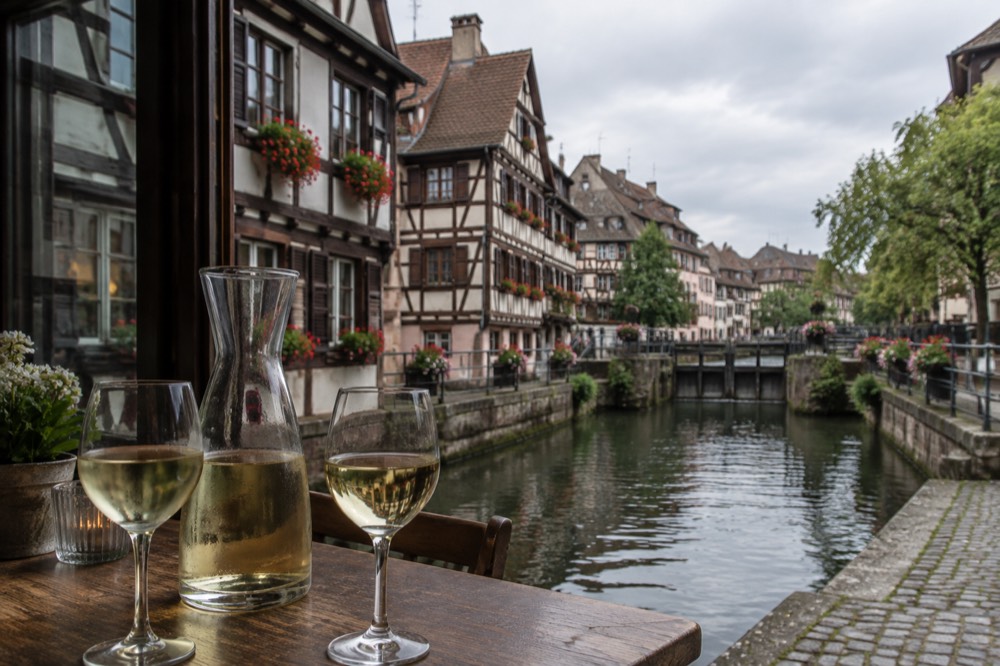
The seasons change the city's glass more than visitors expect. Summer belongs to Crémant and cold blonde beer on terraces along the Ill; autumn is the harvest season, when the new wine and the first choucroute of the cold months arrive together; and from late November to 24 December the drink of Strasbourg is vin chaud, the spiced mulled wine sold at the Christmas market chalets. Riesling and the other still wines stay constant underneath all of it.
The winter answer deserves its own note, because the Christmas market is the one moment when the whole city drinks the same thing at once. Last year's edition ran from 26 November to 24 December and drew 3.05 million visitors, and the chalet bars poured vin chaud by the thousands of litres through all of it. The 2026 dates are still being finalised on the city's Christmas site, so anyone planning around the mulled wine should confirm the dates there before booking anything.
The December cold is not an exaggeration. Strasbourg's climate is semi-continental, with a mean maximum of 5.9 C in December against 26.4 C in July, and the first week of the market often runs on frost and early darkness. That is precisely why the hot, spiced wine works: it is a drink engineered for the season, and the market's lights turn it into the whole point of an evening. Anyone weighing whether December is worth the cold can read the site's full answer on whether December is a good time to visit Strasbourg, which balances the crowds against the atmosphere.
Spring brings the opposite shift. The first warm weeks move drinking back outdoors, the Crémant rosé reappears, and the cafés revert to sirop diluted with water, the old Alsatian soft drink that children and drivers order without embarrassment. Tap water, incidentally, is drinkable everywhere in the city, a practical point covered in full on the page about drinking tap water in Strasbourg. Summer completes the cycle with the riverside terraces and the beer gardens, and then the harvest brings it all back to Riesling again.
Common Questions About Drinks In Strasbourg
What drink is Strasbourg famous for?
Strasbourg is famous for Alsace Riesling, the dry white wine that the city's winstubs pour by the carafe, together with Crémant d'Alsace, the region's traditional-method sparkling wine. Amber and blonde Alsatian beer, fruit eaux-de-vie such as mirabelle, and spiced vin chaud at the Christmas market complete the picture.
Is Riesling the main grape of the Strasbourg region?
Yes. Riesling is Alsace's signature grape and the driest of the region's three noble varieties, alongside Gewurztraminer and Pinot Gris. It is the default white in a Strasbourg winstub and the wine the region has built its reputation on.
Is Crémant d'Alsace the same as Champagne?
No, but the method is shared. Both are made by second fermentation in the bottle; the difference lies in the grapes, the Alsace terroir and the price. Crémant d'Alsace is the festive pour of the region and costs a fraction of Champagne.
What do people drink at the Strasbourg Christmas market?
Vin chaud, the hot spiced mulled wine sold in ceramic mugs at the chalet bars, is the standing order, with Crémant poured by the glass at some stands. Last year's edition ran 26 November to 24 December; the 2026 dates are still being finalised on the city's Christmas site.
Can you visit breweries in Strasbourg?
Yes. The city has craft breweries with taprooms, and one tasting experience on the local roster visits a brewery before opening hours for a quiet look at the tanks. Alsatian lager is also on tap in every winstub.
What is an eau-de-vie, and when is it served?
An eau-de-vie is a clear fruit brandy, distilled from mirabelle plums, raspberries, cherries or damsons, and served neat in a small stemmed glass at the end of a heavy Alsatian meal. Mirabelle is the classic choice.
The short version of everything above: order the Riesling, keep the Crémant for a celebration, finish with a mirabelle if the meal was long, and save the vin chaud for the last week of November onwards. That sequence is the drinking culture of Strasbourg in one evening, and it has barely needed changing in generations.