What Is The Easiest Way To Get To Strasbourg?
The simplest ways to reach Strasbourg in north-eastern France: the airport shuttle train, the TGV from Paris, driving across the Rhine from Germany, and the local transport tickets that finish the journey.
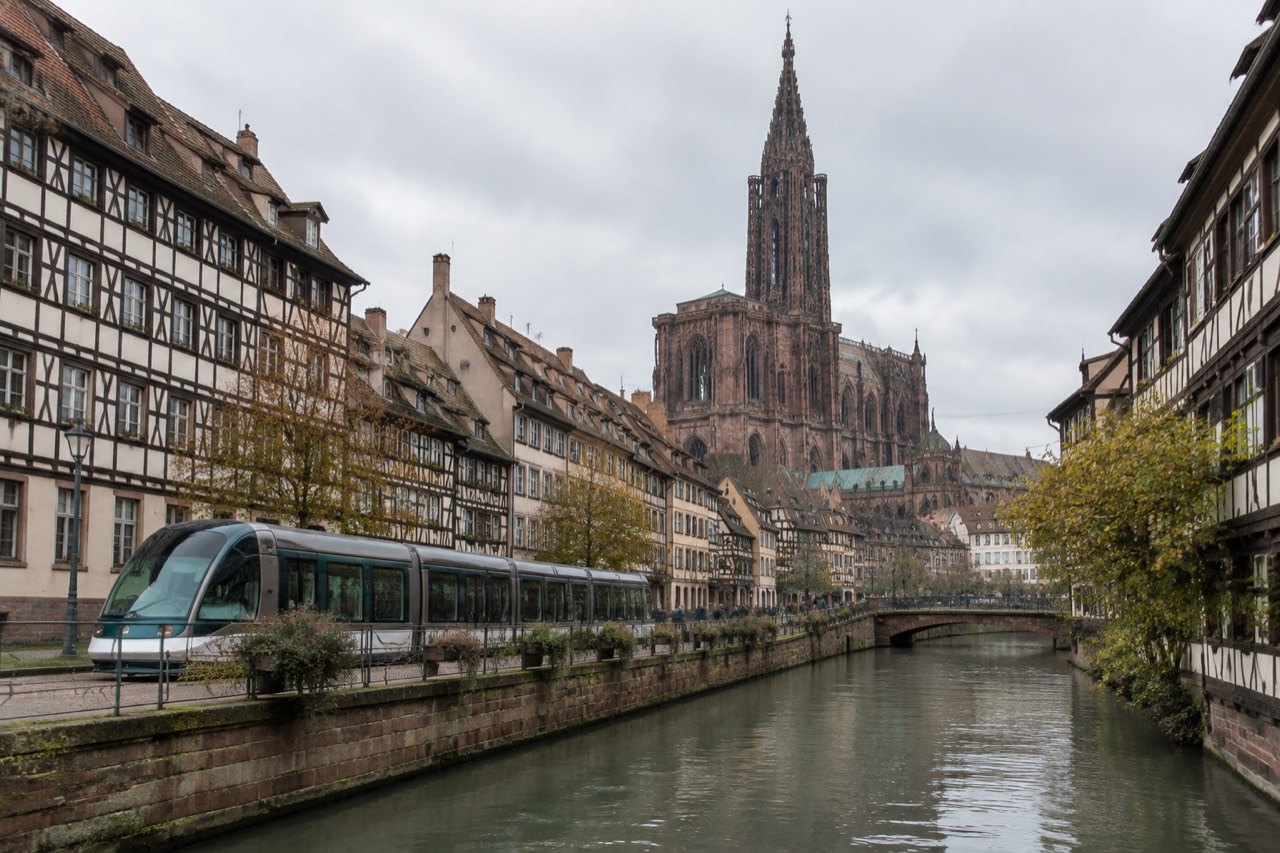
Strasbourg, the prefecture of the Bas-Rhin in Alsace, part of the Grand Est region of north-eastern France, is one of the easiest mid-sized cities in Europe to arrive in, because nearly every approach funnels into a single hub. The River Ill, a tributary of the Rhine, runs through the centre, and the German town of Kehl sits just across the border water. Flyers land at Strasbourg Airport at Entzheim, eight minutes from the central station by a dedicated shuttle train. Rail travellers pull into Gare de Strasbourg, which sits directly on the city's tram network. Drivers from Germany cross the Rhine with no border formalities at all, since both countries are inside Schengen and share the euro. This page compares each approach and names the one that suits each starting point.
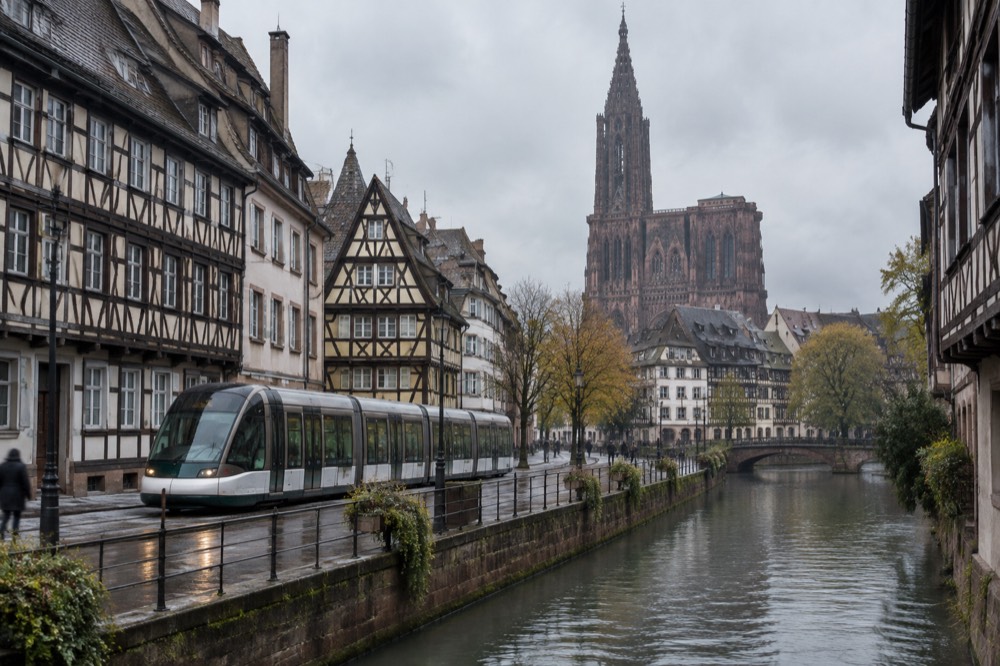
What Is The Easiest Way To Get To Strasbourg?
The easiest way depends on where you start. From Paris, the direct TGV takes under two hours, and current times and fares are on SNCF Connect. From the air, the simplest arrival is Strasbourg Airport at Entzheim, linked to the central station by a shuttle train that runs up to five times an hour and takes 8 minutes, with a combined train-and-tram ticket at 4.60 EUR.
Drivers from Germany cross the Rhine at Kehl with no border checks, since both countries are in Schengen and use the euro.
That three-way split covers almost every real journey. The airport shuttle deserves its reputation as the least stressful airport transfer in France: you step off the plane, walk to the station at Entzheim, and eight minutes later you are at Gare de Strasbourg with trams waiting outside. The combined ticket, sold as a train plus 24-hour CTS travel option at 4.60 EUR, covers the shuttle ride and then a full day of trams and buses in the city, which is usually all a short-stay visitor needs. Travellers coming from Paris by rail avoid the airport entirely, stepping from the TGV straight onto the tram platform.
The one genuinely awkward case is a long-haul arrival. Strasbourg Airport is compact and regional rather than intercontinental, so anyone flying in from outside Europe changes planes or trains somewhere on the way, and the sensible move is to compare the connection times before booking. Once you are in Strasbourg, the city itself is famously compact, and the question of how many days in Strasbourg is enough matters more than the question of how you arrived.
How Do You Fly Into Strasbourg?
Strasbourg Airport, SXB at Entzheim, is the closest airport to the city and the easiest to use, because its station connects directly to Gare de Strasbourg with a journey time of 8 minutes and up to five trains per hour in the daytime. The combined ticket at 4.60 EUR covers the shuttle train plus 24 hours of CTS trams and buses. Jet2 added twice-weekly winter routes from Edinburgh, Manchester and London Stansted from late November 2026, so the route map keeps widening.
The shuttle is the detail that changes everything. Airport rail links in France range from excellent to nonexistent, and Entzheim's is firmly in the first group: a short, frequent regional service that terminates at the central station, where the A and D tram lines and several bus routes take over. Daytime service runs roughly every twenty minutes, so there is no need to plan around a timetable. The airport's own passenger pages list the current shuttle details and the combined ticket terms, and they are the place to confirm anything before you fly.
Wider route choice is the trade-off. Strasbourg Airport is served mainly by regional and low-cost carriers, and travellers heading to Strasbourg from further afield often fly into a larger hub and continue by train. That continuation is easier than it sounds, because the city's rail links are strong, but it does mean the last leg of the journey is on the ground. The airport's destination map is the honest source for what is and is not direct; anything not listed there needs a connection, and the connection is usually through Paris or a German hub.
| Airport step | What to expect | Figure to plan around |
|---|---|---|
| Entzheim to Gare de Strasbourg | Dedicated shuttle train, no changes | 8 minutes |
| Shuttle frequency | Daytime service, up to peak frequency | Up to 5 trains per hour |
| Combined ticket | Shuttle train plus 24 hours of CTS trams and buses | 4.60 EUR |
| New UK links | Jet2 winter routes, twice weekly | Edinburgh, Manchester, London Stansted |
One practical note on arrival: the central station sits at the western edge of the city centre, and the walk from the platform to the historic core is short and flat. If you are staying in the riverside lanes of the old town, the question of where to stay in Petite France answers itself once you see how close the station is on a map.
How Do You Reach Strasbourg By Train?
From Paris, the direct TGV is the easiest route into Strasbourg, with the fastest journeys taking under two hours; exact times and fares live on SNCF Connect. From elsewhere in France, long-distance and regional trains converge on Gare de Strasbourg, which is on the city's tram network, so the last mile of any rail journey is a tram ride measured in minutes rather than a transfer by taxi. Rail is the approach that needs the least planning once you are on the train.
The Paris link is the one many visitors use, and it is the reason Strasbourg works as a short-break destination from the capital. Book on SNCF Connect rather than assuming a pattern, because fares move with demand and the cheapest tickets go early. The same booking advice applies to arrivals from Germany: cross-border regional trains reach Strasbourg from the German side of the Rhine, and both countries are in Schengen, so there is no passport control to build time around. The Rhine crossing at Kehl is, in practice, a bridge like any other. The full index of guides sits on Strasbourg Travel Guide.
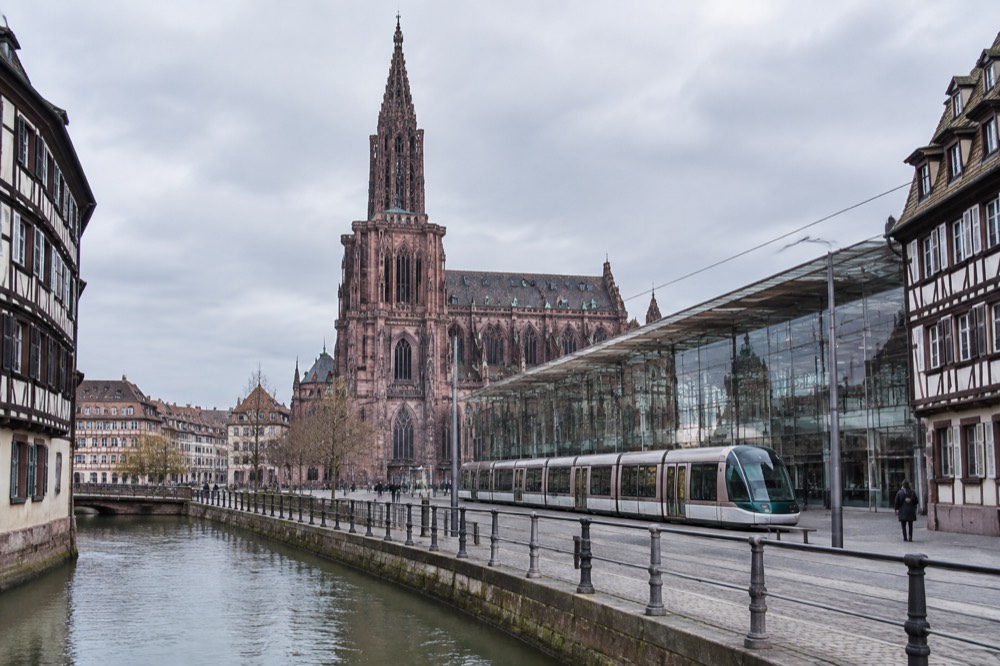
Arriving by rail also puts you in the best position to spend your first afternoon well. The station is a short tram or walk from the Grande Île, the river-island core of the city and a UNESCO World Heritage property under the name Strasbourg, Grande-Île and Neustadt, with the Neustadt as the later extension. A guided walk is an efficient first move for orientation, and the roster includes a walk with a local guide that covers the historic centre and Petite France; the operator's live listing carries the current times and prices.
If you would rather wander alone on day one, the city rewards it. Strasbourg is compact, flat and threaded with tram lines, and the separate question of whether Strasbourg is a walkable city has a short answer: the historic centre is best seen entirely on foot, and the trams exist for the longer hops.
Is Driving Or The Bus A Sensible Option?
Driving into Strasbourg is straightforward, especially from Germany: the Rhine crossings at Kehl involve no border checks because both countries are in Schengen, and both use the euro, so there is no currency stop either. The catch is parking, since the city centre is restricted, so the standard move is a park-and-ride paired with a CTS tram, where a single ticket costs 1.90 EUR bought via a Badgeo card, the CTS app or contactless, or 2.50 EUR on board the bus.
The park-and-ride pattern is the one locals use, and it removes the only genuinely difficult part of driving in, which is the centre itself. Tram tickets are cheap and the 24-hour passes cover a full day of wandering, so a car becomes a tool for the arrival and the day trips rather than something you fight with inside the city. If Alsace's wine villages are on your plan, a car or an organised tour both work, and the vineyards are the classic use for wheels once you are settled.
| CTS ticket | Price | What it covers |
|---|---|---|
| Single, bought in advance | 1.90 EUR | One journey, via Badgeo card, CTS app or contactless |
| Single, bought on board | 2.50 EUR | One journey on the bus |
| 24h Solo | 4.60 EUR | One person, unlimited CTS travel for a day |
| 24h Trio | 10.20 EUR | Two to three people travelling together |
Long-distance coaches also serve Strasbourg, and for some routes they are the cheapest way in, but journey times vary enormously by operator and origin, so the honest advice is to check the specific service before comparing it with a train. As a rule of thumb, the further your starting point, the more the train's speed and the coach's price trade off against each other. Neither option involves a border procedure if you are coming from Germany.
Once you have arrived and parked or stepped off the coach, a guided walk is a good way to turn a travel day into a sightseeing one. The two-hour walk with a local guide is the roster's most-reviewed option of its kind, and its times and prices are on the operator's live listing.
Which Route Into Strasbourg Suits Your Trip?
From Paris, take the TGV; it is the fastest and simplest link, under two hours door to platform. From within Europe by air, fly to Strasbourg Airport and ride the 8-minute shuttle, buying the 4.60 EUR combined ticket that includes a day of trams. From Germany, drive or take the regional train across the Rhine at Kehl, with no border checks to plan around. From further afield, connect through a larger hub and finish by rail.
What the table can state firmly is which approach wins on simplicity for each starting point, and where to check the live details before you commit.
| Starting point | Easiest approach | Why it wins | Where to confirm |
|---|---|---|---|
| Paris | Direct TGV | Under two hours, station to station, tram at the far end | SNCF Connect |
| Elsewhere in France | Rail to Gare de Strasbourg | One hub, tram interchange on arrival | SNCF Connect |
| Germany | Cross the Rhine at Kehl | Schengen, no border checks, euro on both banks | Your rail or route app |
| Short-haul flights | Strasbourg Airport, SXB | 8-minute shuttle, up to 5 trains per hour | Airport destination map |
| Long-haul flights | Connect through a hub, finish by rail | Strasbourg Airport is regional, not intercontinental | SNCF Connect |
A final thought on the day after arrival. Strasbourg's position on the Alsace Wine Route makes it a natural base for vineyard trips, and a half-day wine tour from the city is the lowest-effort way to see the wine country without renting a car or studying a timetable. The tour leaves from Strasbourg, visits vineyards with a guide, and returns the same day; you can Check availability on the operator's live listing. Between the TGV, the airport shuttle and the cross-border crossings, the journey in is rarely the hard part of a Strasbourg trip, and the city's tram network quietly finishes the job.
Planning to continue onward from the city by rail? Book a train ticket here.
Common Questions About Getting To Strasbourg
What is the easiest way to get to Strasbourg?
From Paris, the direct TGV, which takes under two hours; from the air, Strasbourg Airport at Entzheim with its 8-minute shuttle train to the central station; from Germany, the Rhine crossing at Kehl, which has no border checks because both countries are in Schengen. Each approach ends at or beside Gare de Strasbourg, on the tram network.
How far is Strasbourg Airport from the city centre?
The airport station at Entzheim connects to Gare de Strasbourg by a shuttle train with a journey time of 8 minutes, running up to five trains per hour in the daytime. A combined ticket at 4.60 EUR covers the train plus 24 hours of CTS trams and buses, which is enough for a full first day of sightseeing.
Do I need a passport to cross from Germany into Strasbourg?
There are no routine border checks on the Rhine crossings at Kehl, because France and Germany are both inside the Schengen area. Carry a valid passport or national ID card anyway, since spot checks remain possible in Schengen, and both countries use the euro, so there is no currency exchange to plan for.
Can I get to Strasbourg without flying?
Yes, and for many travellers it is the better option. Direct TGV trains link Paris with Strasbourg in under two hours, regional and long-distance trains converge on the city from across France and Germany, and long-distance coaches serve the city for tighter budgets. The central station sits on the tram network, so the last leg of any rail journey is a short tram ride.
What transport tickets should I buy on arrival in Strasbourg?
A single CTS ticket costs 1.90 EUR via a Badgeo card, the CTS app or contactless payment, or 2.50 EUR if bought on board a bus. A 24h Solo pass costs 4.60 EUR, and a 24h Trio pass covering two to three people together costs 10.20 EUR. The airport's combined ticket at 4.60 EUR bundles the shuttle train with a 24-hour CTS pass.
Is Strasbourg a good base for day trips once I arrive?
Yes. The city sits on the Alsace Wine Route with the vineyards of the region within easy touring range, and the Rhine border puts Germany's Black Forest side within day-trip distance. Organised tours from Strasbourg, including half-day wine tours into the nearby vineyards, remove the need for a car; the operator's live listing carries current prices and times.