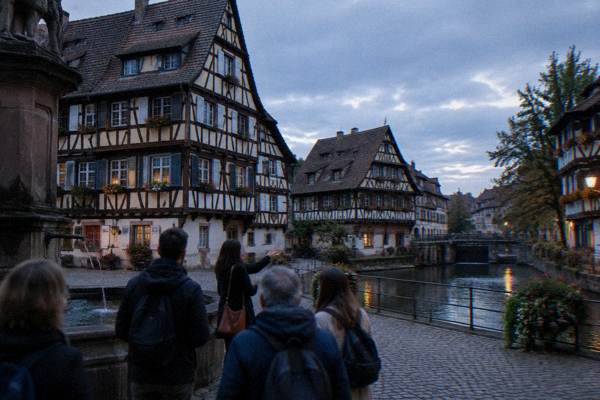
Can I Drink Tap Water In Strasbourg, France?
Yes, tap water in Strasbourg is safe to drink. A practical answer for travellers, with notes on refilling bottles, ordering water in restaurants and day trips into Germany.
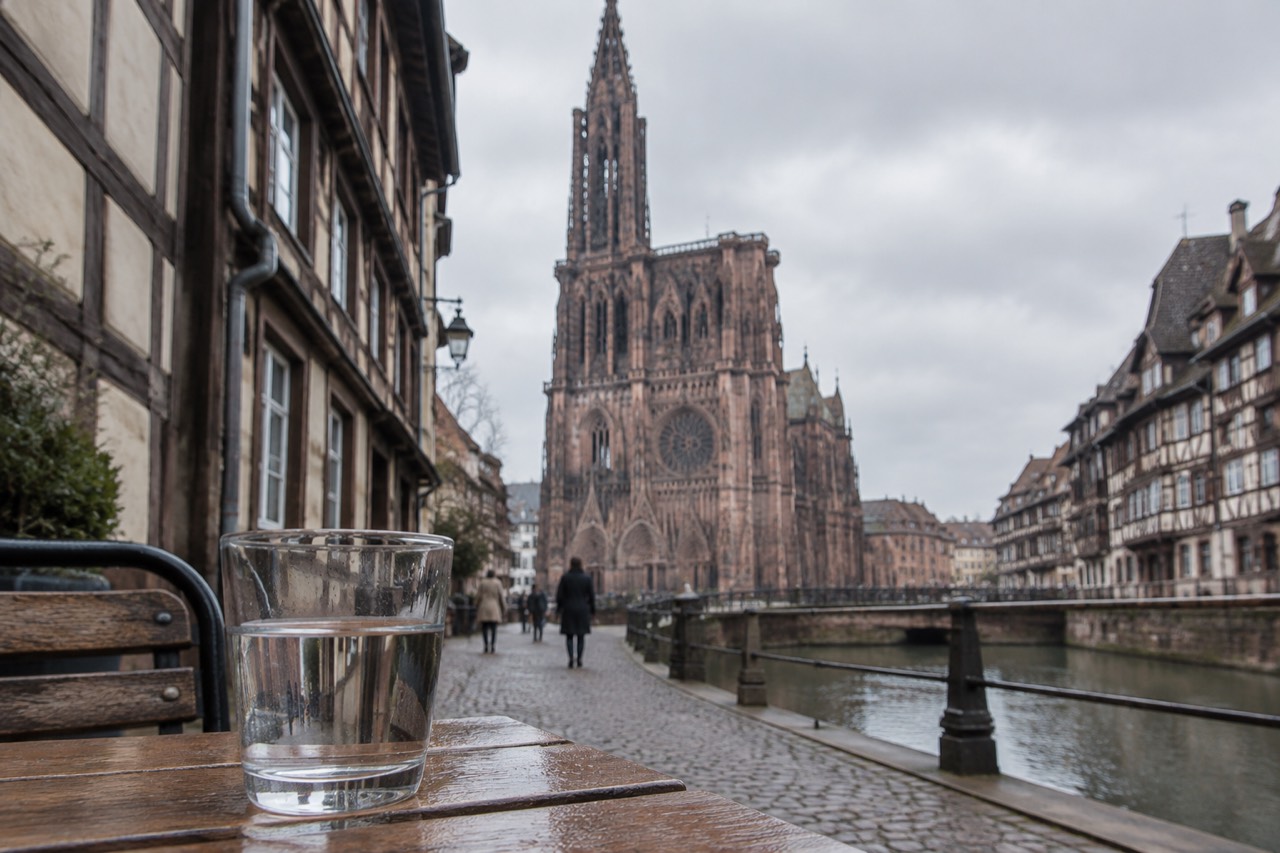
Strasbourg sits on the River Ill beside the Rhine, the border with Germany, and it is the prefecture of the Bas-Rhin in Alsace, part of the Grand Est region of north-eastern France. It is a city of half-timbered streets, a single-spired cathedral and a semi-continental climate that Meteo-France's 1991-2020 normals record as 635.7 mm of rain a year across 112.3 rain days. All that water matters to the question: can you drink what comes out of the tap? The answer is yes, and this page explains what that means in practice, from restaurant tables to bottle refills to day trips across the German border.
Can I Drink Tap Water In Strasbourg, France?
Yes, the tap water in Strasbourg, France, is safe to drink. The municipal supply is treated and monitored under French and European drinking-water standards, the same rules that apply across France, and no traveller needs to buy bottled water for health reasons in this city. Tap water is the normal, everyday drink in local homes, cafés fill glasses from the mains, and the supply is continuous and reliable throughout the year.
That single sentence settles the core question, but the practical details around it are where a trip actually gets easier or harder. Tap water in France is a regulated utility, and Strasbourg's supply is part of that system: it is treated, tested and distributed to homes, hotels, restaurants and public buildings on the same basis as in Paris or Lyon. Nothing about the city's position beside the Rhine or its German neighbour changes that. A traveller arriving at Strasbourg station, a hotel in the Krutenau or a guesthouse near the cathedral can fill a glass from the bathroom or kitchen tap and drink it without a second thought.
The everyday habit matters too. Bottled water is sold everywhere in Strasbourg, from supermarkets to kiosks, and plenty of locals buy it for taste or convenience rather than safety. But the default in the city's cafés, winstubs and homes is tap water, and asking for it is neither rude nor unusual. Carrying a refillable bottle is the cheapest and lightest way to stay hydrated on a walking day, and it saves the weight of plastic in a suitcase.
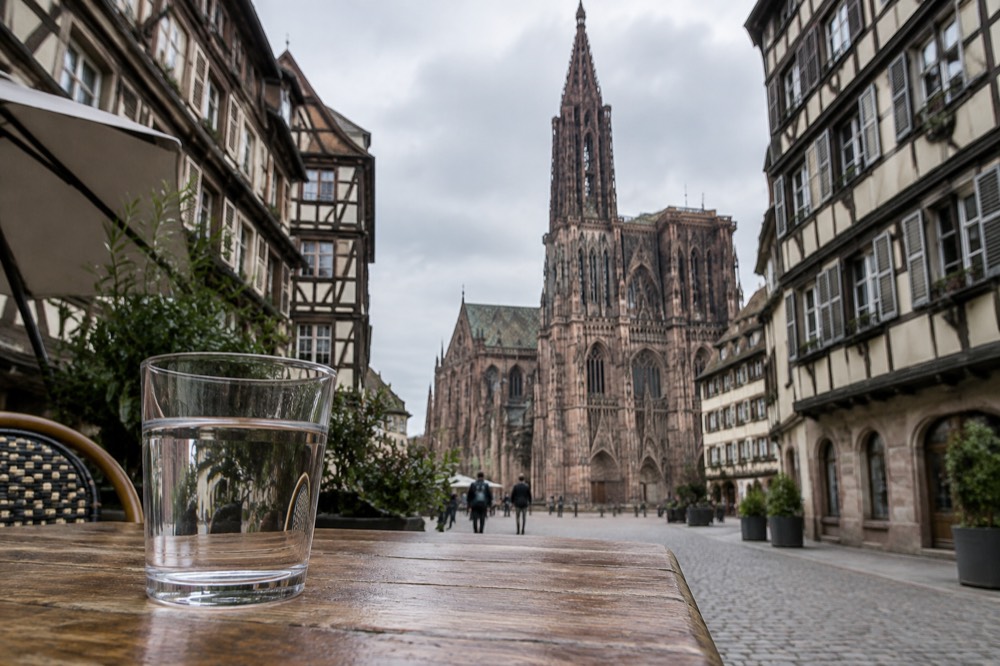
Is The Tap Water In Strasbourg Safe For Everyone?
The tap water in Strasbourg is safe for the general population, including children, and it is the water used in ice cubes, coffee, tea and restaurant kitchens. Anyone with a specific medical instruction about water, such as an immunocompromised traveller following a doctor's advice, should follow that advice as they would at home. For everyone else, mains water in Strasbourg requires no boiling, no filtering and no special precaution at any time of year.
Ice served in Strasbourg's cafés, restaurants and bars is made from the same mains supply, so a cold drink on a warm July afternoon, when the mean daily maximum is 26.4 C, carries no different risk from a glass of still water. The same applies to coffee, tea, hot chocolate and anything prepared in a kitchen. There is no separate "tourist water" and no separate supply for drinks: one treated network serves the whole city, from Place Kléber to the European Quarter.
Taste is a different matter from safety, and it is honest to separate the two. Mains water anywhere has a taste that depends on the source and the treatment, and some travellers simply prefer the flavour of bottled water or of water run through a filter bottle. That preference is legitimate and easy to act on: a filter bottle or a jug in a hotel room solves it without buying plastic. But a taste preference is not a health warning, and it is worth being clear about the difference when planning what to pack.
| Situation | Is tap water fine? | What to do |
|---|---|---|
| Hotel bathroom or kitchen tap | Yes | Fill a bottle each morning before heading out |
| Café or restaurant table water | Yes | Ask for a carafe of tap water rather than bottled |
| Ice in cold drinks | Yes | Ice is made from the same mains supply |
| Coffee and tea | Yes | Boiling is standard preparation anyway |
| Public fountains and refill points | Yes | Run the water briefly first, then fill |
| Day trip into Germany | Yes | German tap water is also treated and monitored |
Where Can You Refill A Water Bottle In Strasbourg?
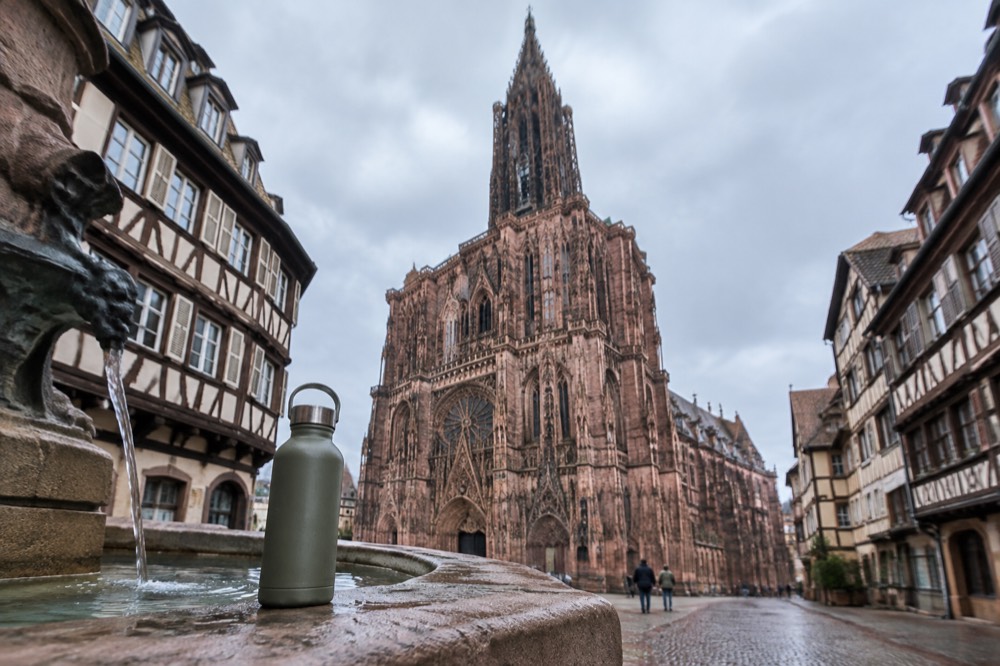
Refilling a bottle in Strasbourg is straightforward: the city has public drinking fountains in its squares and parks, cafés will fill a bottle on request, and every hotel tap is a refill point. A traveller walking the Grande Île or the Neustadt with a refillable bottle has no need to carry more than one bottle's worth of water, because a refill is rarely more than a short walk away in the city centre.
The habit of carrying a bottle pays off most on long walking days. Strasbourg rewards walkers: the UNESCO-listed property "Strasbourg, Grande-Île and Neustadt" covers the historic core, and the distances between the cathedral, Petite France, the Barrage Vauban terrace and the Orangerie park add up over a full day. In summer, when the mean daily maximum reaches 26.4 C in July and 26.1 C in August, a refillable bottle is genuinely more useful than a camera strap. In winter the need is smaller, but dry cold air and long market walks still leave travellers thirstier than they expect.
Cafés are the reliable fallback. A traveller who sits down for a coffee or a tarte flambée can ask staff to fill a bottle, and this is a normal request in France rather than an imposition. Hotel reception desks will do the same. The one place not to rely on is a museum or a shop: staff there may not have a tap they can offer, so it is better to refill where food and drink are served. Anyone planning a packed sightseeing day can read the how many days in Strasbourg is enough answer to pace the walking, and treat refills as part of the same plan.
Do Restaurants Serve Tap Water Free In Strasbourg?
In French restaurants, including Strasbourg's winstubs, asking for tap water is a normal request and staff will bring it or fill a glass without charge, though the custom is to ask rather than to expect it to appear unrequested. Ordering bottled water is also completely normal and appears on menus at a price. The practical rule for travellers: say the word for a carafe of tap water and you will be understood anywhere in the city.
The phrase that unlocks this is short. "Une carafe d'eau, s'il vous plaît" means a carafe of tap water, please, and it is one of the most useful sentences a traveller can learn for France. Staff in Strasbourg hear it daily from locals as well as visitors, so there is no awkwardness in it. A glass or jug of tap water brought this way is the same mains water discussed above, safe to drink, and it is the standard accompaniment to a long Alsatian lunch of choucroute or baeckeoffe.
It helps to know what to expect rather than what to demand. In France, bottled water is a menu item with a price, and many diners order it deliberately, still or sparkling, by name. Tap water, by contrast, is brought when asked. This is different from countries where a free glass of water lands on the table automatically, and travellers from those countries sometimes sit waiting for a carafe that will not come unless requested. Asking is not penny-pinching; it is how the local system works.
| French phrase | What it means | When to use it |
|---|---|---|
| Une carafe d'eau, s'il vous plaît | A carafe of tap water, please | At any restaurant, winstub or café table |
| De l'eau du robinet | Tap water | Clarifying that you want mains, not bottled |
| Une eau plate | A still bottled water | When you prefer bottled still water |
| Une eau gazeuse | A sparkling bottled water | When you prefer bottled sparkling water |
| Où est la fontaine? | Where is the fountain? | Looking for a refill point in a square or park |
Winstubs deserve a special word because they are where the question comes up most often. A winstub is the traditional Alsatian tavern, warm, wood-panelled and built around regional food and local wine or beer, and it is the setting many travellers picture when they imagine eating in Strasbourg. The water rules are the same there as anywhere: ask for a carafe and one comes. Anyone curious about what else fills the glasses in this city can start with the what drink is Strasbourg famous for answer, which covers the Alsatian specialties that make tap water only the beginning of the story.
Should You Still Try The Local Drinks In Strasbourg?
Drinking the tap water does not mean drinking only water. Strasbourg is famous for Alsatian wine, local beer and a deep café culture, and tap water is simply the free, safe baseline beneath all of it. A sensible plan is to carry a refillable bottle for the walking hours and to spend the drinking budget on the regional specialties, from Riesling and Crémant d'Alsace to the beers brewed in and around the city.
The balance is worth stating plainly because travellers sometimes treat a destination's drinks as either-or. It is not. Tap water keeps a walking day going between the cathedral, the Musée de l'Œuvre Notre-Dame and the river banks, and the evening winstub is where the interesting liquids live. Alsace is one of France's defining wine regions, its whites anchored by Riesling, and the question of whether Riesling is a cheap wine or a serious one has its own answer on this site. Crémant, the region's traditional-method sparkling wine, is the local pour at celebrations.
In December the whole equation shifts outdoors. The Christmas market, which last year ran from 26 November to 24 December 2025 and drew 3.05 million visitors to the city's edition, is a walking event above all: chalets spread across the historic squares, and the December climate, with a mean daily maximum of 5.9 C and a mean minimum of 0.8 C, keeps everyone moving between hot drinks. Vin chaud, hot spiced wine, is the classic market cup, and it pairs naturally with carrying a bottle of water as well, because cold air and long hours dehydrate people quietly. Travellers weighing the December trip itself can read is December a good time to visit Strasbourg.
For those who want the December atmosphere beyond the city, the Alsace Christmas markets day tour from Strasbourg is the roster's escorted option for visiting several market towns in one day, and it suits travellers who would rather not plan the regional transport themselves. Check availability on the operator's live listing if that pairing fits the dates.
What About Tap Water On Day Trips From Strasbourg?
Tap water is equally safe to drink on the German side of the border, so a day trip from Strasbourg to Kehl, the Black Forest or Baden-Baden changes nothing about the water question. France and Germany are both in the Schengen Area and both use the euro, so no currency switch interrupts the day either. The one direction that needs a different wallet is Switzerland, via Basel, which is in Schengen but not in the euro, and euros are not the currency there.
Strasbourg's position is the whole point of its day-trip geography. The Rhine is the border, Kehl is the German town on the far bank, and the Black Forest rises beyond it. A traveller who fills a bottle in a Strasbourg hotel in the morning can drink from taps in Freiburg, Triberg or Titisee at midday under exactly the same assumption of treated, monitored mains water. German drinking water is regulated to its own national standards, which are strict, and no boiling or filtering is needed anywhere on that route.
The escorted version of the Black Forest day is on the roster: the Black Forest day trip from Strasbourg to Triberg, Titisee and Freiburg, which covers the cuckoo-clock town, the lake and the university city in one outing. It suits travellers who would rather have a guide handle the crossing than plan it themselves. Either way, the water bottle that left Strasbourg in the morning can be refilled on either side of the river.
Switzerland is the exception worth flagging, and only for money, not water. Basel makes a rewarding day trip from Strasbourg, and the tap water there is safe to drink as well, but Switzerland is not in the euro: a card or a small amount of Swiss francs is the practical way to pay, and assuming euros will be accepted everywhere is a mistake. The water question, by contrast, stays answered everywhere on the map within a day of Strasbourg.
Is Strasbourg's Water Supply Affected By The Weather?
Strasbourg's semi-continental climate brings cold winters and warm summers, with Meteo-France 1991-2020 normals showing a mean daily maximum of 5.2 C in January against 26.4 C in July, and rain spread through the year rather than concentrated in one season. None of this affects the safety of tap water: the supply is treated and monitored year-round, and seasonal weather changes how much water travellers want to carry, not whether it is safe to drink.
The numbers behind that are the city's climate record. Annual rainfall is 635.7 mm across 112.3 days with a millimetre or more of rain, and the wettest months by rainfall are May with 77.2 mm and July with 71.9 mm, while December has 45.2 mm across 10.2 rain days. What that means in practice is hydration planning, not safety planning. A July afternoon walking the Grande Île calls for more water than a December one, and a rainy day sends people into museums, cafés and the covered comfort of a winstub, all of which have taps.
Winter travellers should not skip the bottle either. Cold air, wind off the river and hours of standing at the Christmas market all draw moisture out of a body quietly, and hot wine does not replace water. The habit that works in July works in December: fill the bottle at the hotel, refill at a café at lunch, and drink through the day. Anyone building a full winter itinerary can start from the why is Strasbourg so famous answer and work outward, with the water bottle as the quiet constant under the whole plan.
For travellers who prefer their December evenings guided, the mysterious Strasbourg private evening walking tour is the roster's after-dark option, a private walk through the city's shadowed lanes, and it pairs naturally with a long dinner that begins, as always, with a carafe of tap water on the table.
Common Questions About Tap Water In Strasbourg
Can I drink tap water in Strasbourg, France?
Yes. The municipal supply in Strasbourg is treated and monitored under French and European drinking-water standards, and tap water is safe for the general population throughout the year. Locals drink it daily, cafés serve it on request, and no traveller needs bottled water for health reasons in this city.
Is restaurant tap water free in Strasbourg?
Tap water brought on request in a carafe is the normal free accompaniment to a restaurant meal in France, but it does not arrive unrequested. Ask for "une carafe d'eau, s'il vous plaît" and staff will bring it. Bottled water, still or sparkling, is a menu item with a price.
Is ice safe in drinks in Strasbourg?
Yes. Ice in cafés, bars and restaurants is made from the same treated mains water as the tap supply, so cold drinks carry no different risk from still water. This applies year-round, including the warm July and August weeks.
Can I refill a water bottle in Strasbourg?
Yes. Public drinking fountains stand in squares and parks, cafés and hotel taps will fill a bottle on request, and the historic core is compact enough that a refill is rarely far away. Run a fountain briefly before filling, as with any public tap.
Can I drink tap water in Germany on a day trip from Strasbourg?
Yes. German tap water is treated and monitored to strict national standards, so a day trip to Kehl, the Black Forest or Baden-Baden changes nothing about the water. France and Germany are both in Schengen and both use the euro, so the border crossing is administratively light.
Does the tap water in Strasbourg taste good?
Taste varies by source and treatment, as it does in any city, and some travellers prefer filtered or bottled water for flavour rather than safety. A filter bottle or a jug in a hotel room solves the preference without buying plastic. The taste is a preference question, not a health one.
The short version of this whole page fits in one sentence: fill your bottle in Strasbourg, order the carafe at lunch, and spend your attention on the cathedral spire, the winstub menus and the river instead of the water. For everything else to plan around a visit, the Strasbourg Travel Guide homepage gathers the city's sights, itineraries and day trips in one place, and the water question, now answered, is one less thing to carry.