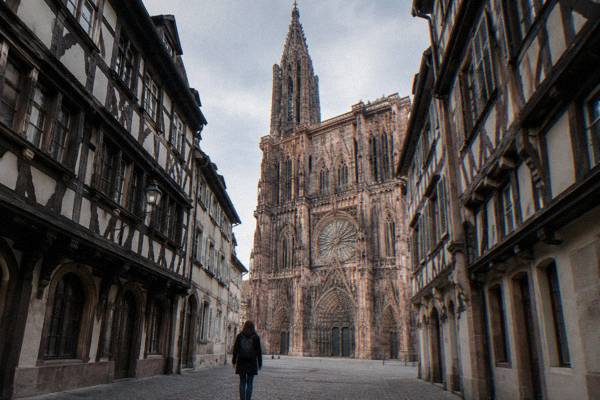
Is Notre-Dame In Paris Or Strasbourg?
There are two famous Notre-Dame cathedrals in France, one in Paris and one in Strasbourg. Here is how to tell them apart, and what each one is actually like.
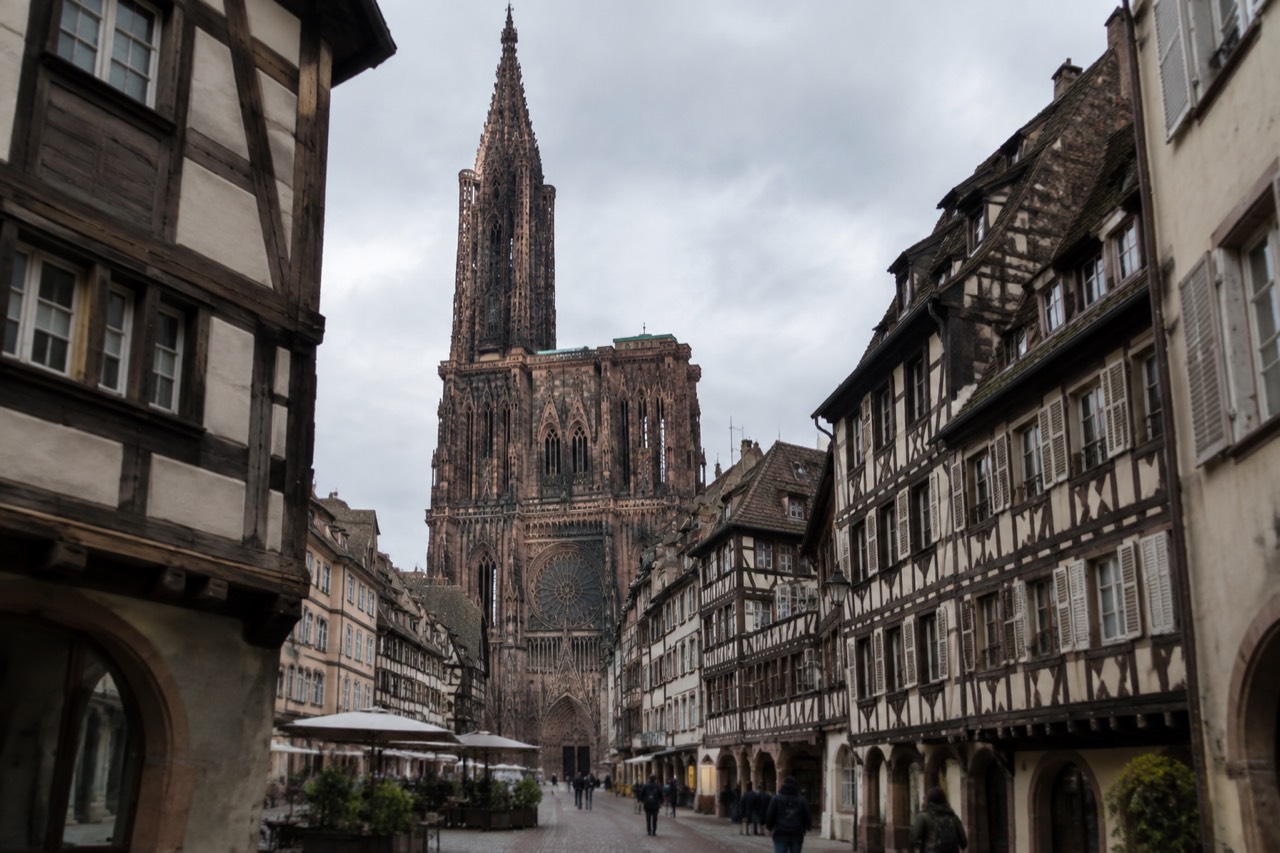
Travellers asking this question are usually standing in one of two places: the Île de la Cité in Paris, or the Place du Château in Strasbourg, the capital of Alsace in north-eastern France, on the River Ill beside the German border. The confusion is entirely reasonable. France has hundreds of churches dedicated to Notre-Dame, "Our Lady", and two of them are world-famous Gothic cathedrals. One stands in Paris. The other stands in Strasbourg, and it is the one with the single spire, the astronomical clock and the sandstone façade that shifts from pink to red as the sun moves. This page untangles which is which, what each is famous for, and how the two fit into one French itinerary.
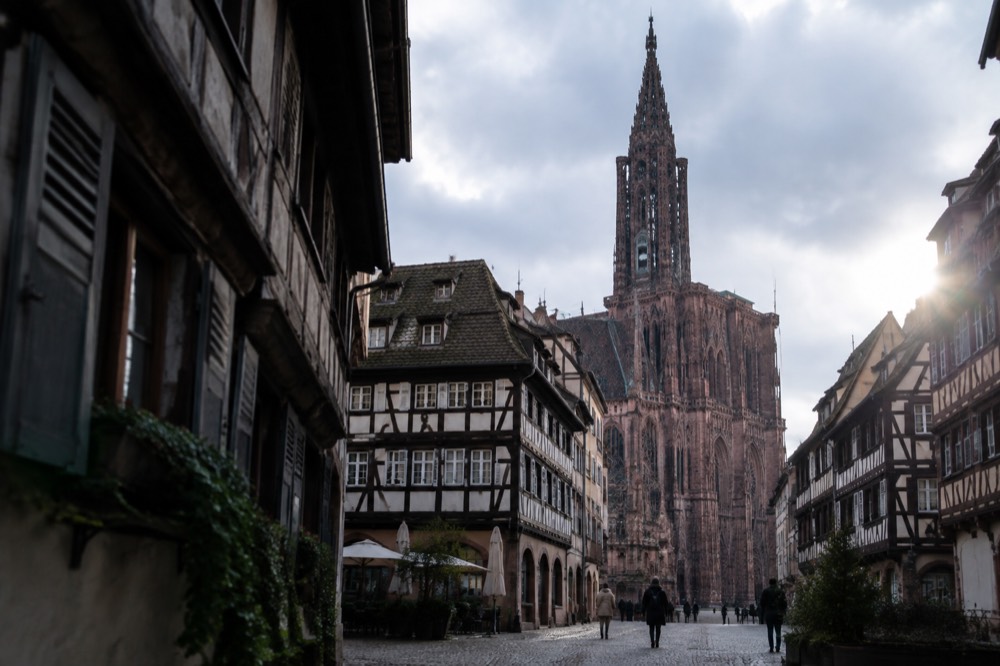
Is Notre-Dame In Paris Or Strasbourg?
Both, honestly: there is a Notre-Dame cathedral in Paris and a separate Notre-Dame cathedral in Strasbourg, in Alsace, north-eastern France. The Paris one sits on an island in the Seine; the Strasbourg one stands on the Place du Château in the historic centre, a short walk from Petite France. When people say "Notre-Dame of Strasbourg" they mean Strasbourg Cathedral, whose full name is Cathédrale Notre-Dame de Strasbourg, and when they say "Notre-Dame" with no city attached they usually mean Paris.
The two buildings share a dedication and almost nothing else. The Paris cathedral is a wide, twin-towered Gothic church on a small island in the middle of the French capital. The Strasbourg cathedral is a taller, narrower building with one spire, a platform open to visitors at 66 m, and a famous astronomical clock inside. Strasbourg's is the one you reach by tram or on foot from the city's station district, in a city of 293,771 residents (INSEE 2023) that sits beside the Rhine, the border with Germany.
If a photo shows a single soaring tower over half-timbered streets, that is Strasbourg. If it shows two matching towers beside a river, that is Paris. The rest of this page explains why the shared name trips so many people up, and what each cathedral actually offers a visitor.
Why Two Cathedrals Are Both Called Notre-Dame
"Notre-Dame" is a dedication, not a name, and it simply means "Our Lady", the Virgin Mary, so hundreds of French churches carry it. Medieval builders dedicated cathedrals to Mary as a matter of course, and each city kept its own. Paris and Strasbourg were rival cathedral cities in the same broad Gothic building tradition, and both raised major churches under the same dedication. The shared wording is a coincidence of devotion, not a sign that one is a copy of the other or that the two were ever connected.
Dedications like this one travel badly. A visitor who has only ever heard "Notre-Dame" attached to the Paris cathedral reasonably assumes the phrase points to one building. In France it points to many, from village churches to the great cathedral at Strasbourg, whose full dedication gives the city's name to tell them apart: Cathédrale Notre-Dame de Strasbourg. Strasbourg's cathedral is the mother church of a city that has spent centuries moving between French and German rule, which is part of why its architecture and its reputation stand slightly apart from the Parisian one. For more on that layered identity, see is Strasbourg more German or French.
The practical consequence is that search results, guidebooks and travel forums frequently mix the two up. Someone asking whether they can climb the towers of "Notre-Dame" may get an answer about Paris when they meant Strasbourg, or the reverse. The fix is to name the city every time: Notre-Dame de Paris, and Notre-Dame de Strasbourg. Both are open to visitors, both are working places of worship, and both sit in city centres that reward a full day of exploring beyond the church itself.
The question also matters for planning. Visitors who want to see the Strasbourg cathedral usually want Strasbourg itself: the Grande Île, the covered bridges, the winstubs and the Christmas market that runs in late November and December. That is a different trip from a Paris city break, and the two cities are linked by a high-speed rail line that covers the distance quickly at its fastest. A Paris to Strasbourg rail guide covers the practical side of combining both cathedrals in one French itinerary.
Planning your visit around the Strasbourg cathedral and the Grande Île? Book a free walking tour here.
What Each Cathedral Is Famous For
The Paris Notre-Dame is famous as the island cathedral of the French capital, a twin-towered Gothic landmark badly damaged by fire and closed for a long restoration before reopening to visitors. The Strasbourg Notre-Dame is famous for its single spire, its pink sandstone façade, its astronomical clock with a daily show at 12:30, and a visitor platform at 66 m with views over the city and, on clear days, to the Black Forest hills across the Rhine. Neither is a substitute for the other.
The Strasbourg cathedral's verified visitor details come from its own site. The nave opens Monday to Saturday 08:30-11:15 and 12:45-17:45, and on Sundays and feast days 14:00-17:15. During the Christmas market it stays open continuously Monday to Saturday, 08:30-17:45, on the Place du Château side. The platform runs two seasonal schedules: from 1 April to 30 September it opens 09:30-13:00 and 13:30-20:00 with the last ascent at 19:15, and from 1 October to 31 March it opens 10:00-13:00 and 13:30-18:00 with the last ascent at 17:15. Platform tickets cost 10 EUR full fare and 6 EUR reduced, with children under 6 free. The clock show at 12:30 costs 4 EUR, with 3 EUR for groups of 12 or more and students up to 25, and 2 EUR for children aged 6 to 17, sold on the day only. The rest of the planning pages sit on Strasbourg Travel Guide.
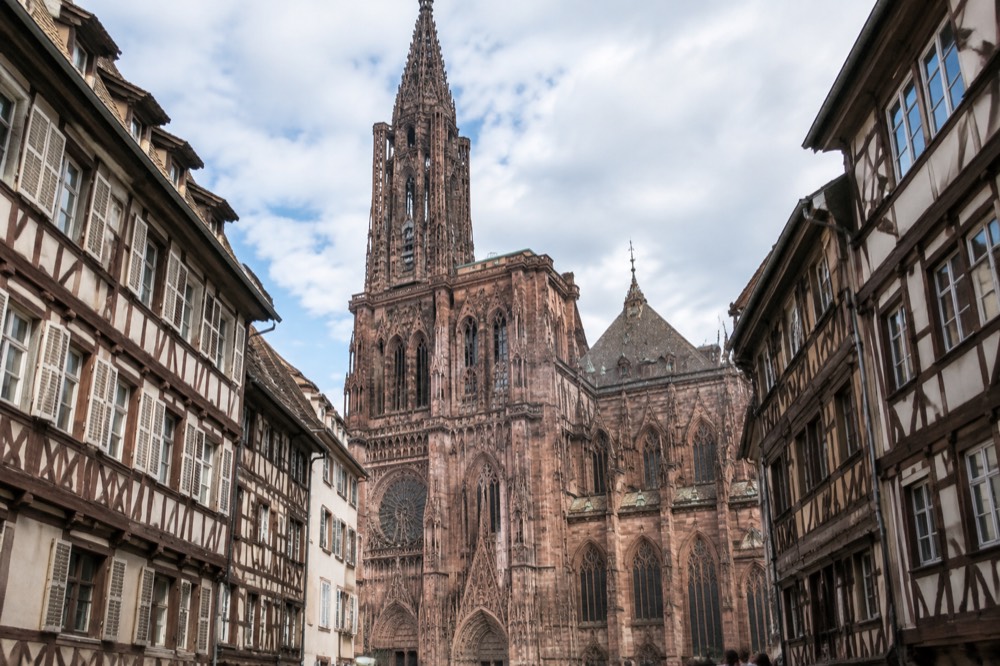
In general terms: the Paris building is a large island cathedral in the heart of the capital, reachable on foot from much of central Paris, with its own visitor arrangements that change with demand, so the official Paris cathedral site is the place to check hours and access before travelling. What can be said firmly is that the two cities' experiences differ completely. Strasbourg's cathedral sits in a compact, walkable old town where the church, the canals of Petite France and the covered bridges sit within a short stroll of one another, and is Strasbourg a walkable city covers how little transport a visitor actually needs there.
| Feature | Notre-Dame de Paris | Notre-Dame de Strasbourg |
|---|---|---|
| Setting | Island in the Seine, central Paris | Place du Château, Grande Île, Strasbourg, Alsace |
| Towers | Twin western towers | One single spire, never described as two towers |
| Signature interior feature | Rose windows and the great nave | Astronomical clock, full automaton show daily at 12:30 |
| High viewpoint | Check the official Paris site for tower access | Platform at 66 m, 10 EUR full / 6 EUR reduced |
| Nave hours | Check the official Paris site | Mon-Sat 08:30-11:15 and 12:45-17:45; Sun 14:00-17:15 |
| Surroundings | River island, central Paris streets | Half-timbered old town, Petite France, covered bridges |
A useful shorthand for photos: if the tower is singular and the stone is pink, it is Strasbourg. If there are two matching towers and the Seine is in frame, it is Paris. Strasbourg's façade is Vosges sandstone, which gives the building its colour shift through the day, and the single spire is the feature that appears in nearly every image of the city. For the deeper story of the building, why is Strasbourg Cathedral famous goes into the spire, the clock and the stained glass in detail, and is the Strasbourg Cathedral the tallest in the world settles the height question that the two cathedrals' rivalry keeps raising.
How To Fill The Rest Of A Strasbourg Stay
A cathedral visit fills half a day, and the rest of Strasbourg plus the Alsace region around it fills several more. The Grande Île and the later Neustadt extension together form a UNESCO World Heritage property, Petite France sits a few minutes' walk from the west front, and the wider region offers wine villages, the Vosges mountains and the Black Forest just across the Rhine in Germany. Two or three days can pair the cathedral with a guided walk, a boat tour or a day trip into the countryside.
The museum next to the cathedral deserves its own mention. The Musée de l'Œuvre Notre-Dame, a short walk from the west front, holds the medieval sculpture and art associated with the cathedral, and the platform ticket gives a reduced rate there. Note one closure that catches visitors out: the Musée Alsacien, the city's folk-life museum, is closed for works until 2028, so it should not be on any current itinerary. The other municipal museums charge 9 EUR full fare and 5 EUR reduced, and all of them are free on the first Sunday of every month, which is worth building an itinerary around if the dates line up.
Beyond the city, the region carries heavier history too. The Natzweiler-Struthof site, in the Vosges above the Alsace wine route, is the only concentration camp built on French soil, and a half-day guided visit from Strasbourg is the practical way to see it: the memorial sits on a mountain ridge that is awkward to reach without a car, and a guided trip handles the transport and the context. The Struthof camp tour covers the site with a guide, and the operator's live listing carries the current price, duration and departure details. Check availability if that history is part of what draws you to the region.
For a lighter day, the Alsace villages do the opposite job. The Christmas markets day tour from Strasbourg links the city's own market with the smaller markets of the surrounding towns, which suits visitors in late November and December who want the region's seasonal atmosphere without hiring a car or planning train connections. Last year's Strasbourg edition ran 26 November to 24 December 2025 and drew 3.05 million visitors, and the 2026 dates were still being finalised on the city's Christmas site, so confirm them there before locking in a winter trip. The Strasbourg Christmas market itinerary lays out how the market squares, the cathedral and the old town fit into a single short stay.
Planning A Visit To The Strasbourg Cathedral
Arrive early, buy the clock ticket on the day, and climb the platform if your knees allow it. The nave's morning opening ends at 11:15, which makes the 08:30 slot the quietest time inside, and the clock show at 12:30 sharp needs a ticket bought that day only. The platform, at 66 m, costs 10 EUR full fare or 6 EUR reduced, with children under 6 free, and the last ascent is 19:15 in the summer season and 17:15 in the winter season.
Two details from the cathedral's own pages are worth repeating because they change plans. First, there are no luggage lockers at the cathedral, so anyone arriving from the station with bags should use the city's luggage storage before visiting; the Strasbourg luggage storage guide lists the options near the station. Second, the platform ticket gives a reduced rate at the Musée de l'Œuvre Notre-Dame, so the two visits pair naturally in one morning or afternoon.
| Cathedral visit item | Detail | Cost |
|---|---|---|
| Nave, Mon-Sat | 08:30-11:15 and 12:45-17:45 | Check the cathedral site for admission terms |
| Nave, Sun and feast days | 14:00-17:15 | Check the cathedral site for admission terms |
| Astronomical clock show | Daily at 12:30 sharp, day-of tickets only | 4 EUR full, 3 EUR groups of 12+ and students to 25, 2 EUR ages 6-17 |
| Platform, 1 Apr-30 Sep | 09:30-13:00 and 13:30-20:00, last ascent 19:15 | 10 EUR full, 6 EUR reduced, under 6 free |
| Platform, 1 Oct-31 Mar | 10:00-13:00 and 13:30-18:00, last ascent 17:15 | 10 EUR full, 6 EUR reduced, under 6 free |
The platform closes entirely on 1 January, 1 May and 25 December, and it can shut for weather or crowding, so a same-day check on the cathedral's own page is wise in winter. For the fuller question of what the visit costs, is Strasbourg Cathedral free to enter covers the nave, the clock and the platform in one place, and how many days in Strasbourg is enough helps with the surrounding schedule. Visitors weighing the two cathedrals against France's other great churches may also find what is the nicest cathedral in France useful, since it puts Strasbourg in national context.
Common Questions About Notre-Dame In Strasbourg
Is Notre-Dame in Paris or Strasbourg?
There is a Notre-Dame cathedral in Paris and a separate one in Strasbourg, in Alsace, north-eastern France. The Strasbourg one is the single-spired building on the Place du Château, with the astronomical clock and the 66 m platform. The Paris one is the twin-towered island cathedral in the capital. Name the city whenever you book or ask for directions.
Are the two Notre-Dame cathedrals related?
Only by dedication. "Notre-Dame" means "Our Lady", the Virgin Mary, and both cities dedicated their great medieval churches to her, as did hundreds of other French towns. The buildings were raised in the same broad Gothic tradition but by different workshops, centuries apart in emphasis, and neither is a copy of the other.
Which Notre-Dame can you climb?
In Strasbourg, yes: the platform at 66 m is open to visitors, 10 EUR full fare and 6 EUR reduced, with seasonal hours and a last ascent at 19:15 in summer and 17:15 in winter. For the Paris cathedral's tower or gallery access, check the official Paris site, since arrangements there have changed since the fire and the restoration.
Can you see both cathedrals on one trip to France?
Yes, easily. The high-speed rail link between Paris and Strasbourg covers the distance in about 1 hour 45 at its quickest, so a Paris stay can be extended with two or three days in Strasbourg, or the reverse. The Strasbourg day trip from Paris guide covers the timing question in detail.
Is Strasbourg Cathedral open during the Christmas market?
Yes. During the market the cathedral stays open continuously Monday to Saturday, 08:30 to 17:45, on the Place du Château side, which is the square where the market itself sits. The market's usual pattern runs from late November to 24 December, and the city's Christmas site publishes the confirmed dates for each edition.
Which cathedral is more worth visiting?
They serve different trips. The Paris cathedral is a landmark inside a vast capital with everything a big city offers around it. The Strasbourg cathedral anchors a compact, walkable old town, sits beside canals and half-timbered quarters, and offers the clock show and the platform climb. Travellers who like one usually make time for the other when the itinerary allows.
The two cathedrals will keep sharing a name, but the cities around them could not feel more different, and knowing which Notre-Dame you are heading for is the difference between a well-planned Alsace stay and a confusing search result.