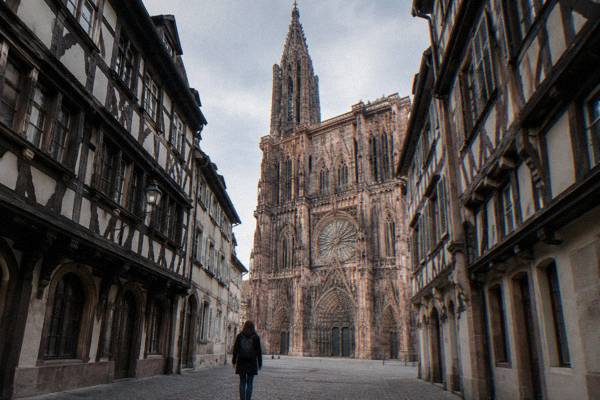
Is The Strasbourg Cathedral The Tallest In The World?
No, the Strasbourg Cathedral in Alsace, France, is not the tallest in the world, but its single Gothic spire and 66 m viewing platform make it one of the great church towers of Europe. Here is what the record actually says.
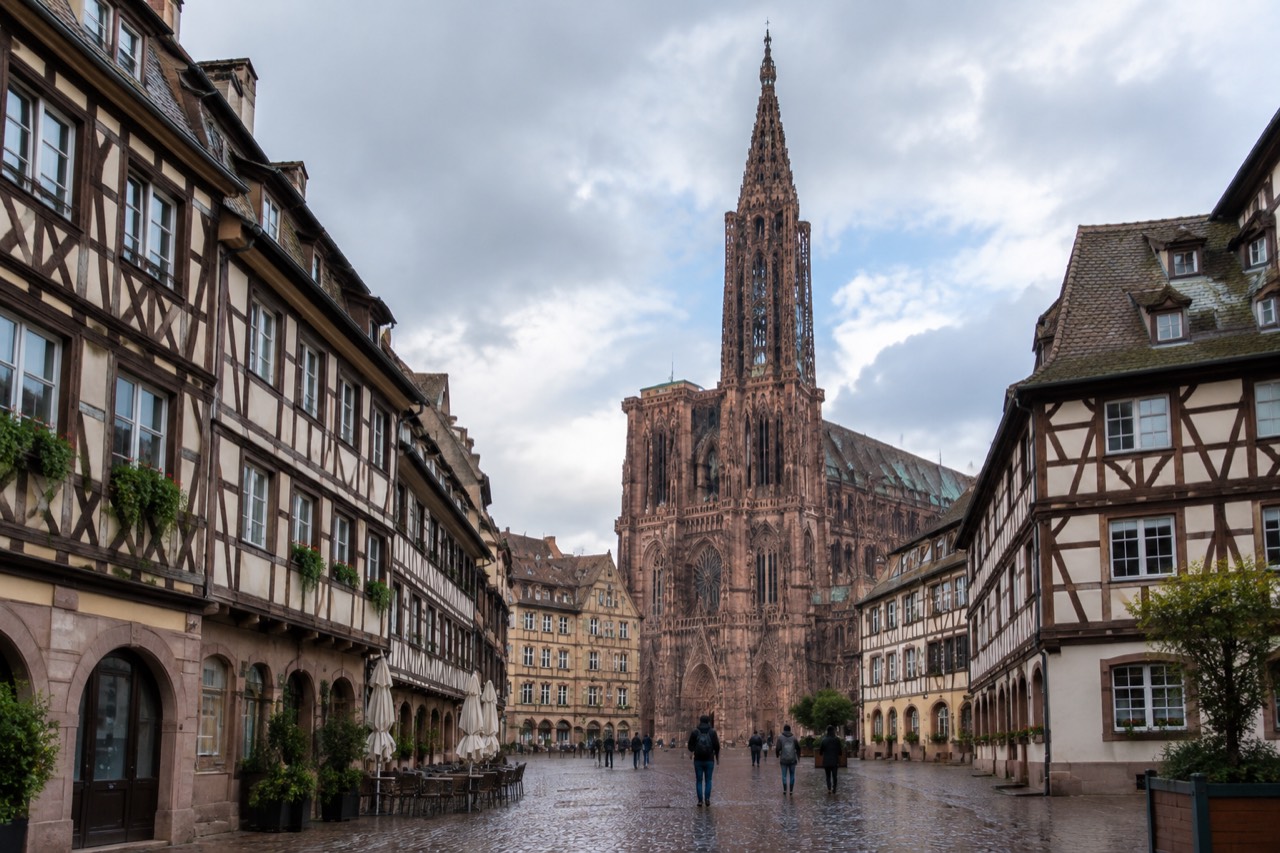
Strasbourg, the prefecture of the Bas-Rhin in Alsace, north-eastern France, is a city whose skyline is owned by one building. The Cathedral of Notre-Dame de Strasbourg stands on the Grande Île, the river-girdled medieval core that gives the city its shape, and its single sandstone spire is visible from streets far beyond the old town. The short answer is no, and the interesting answer is about why the question gets asked at all.
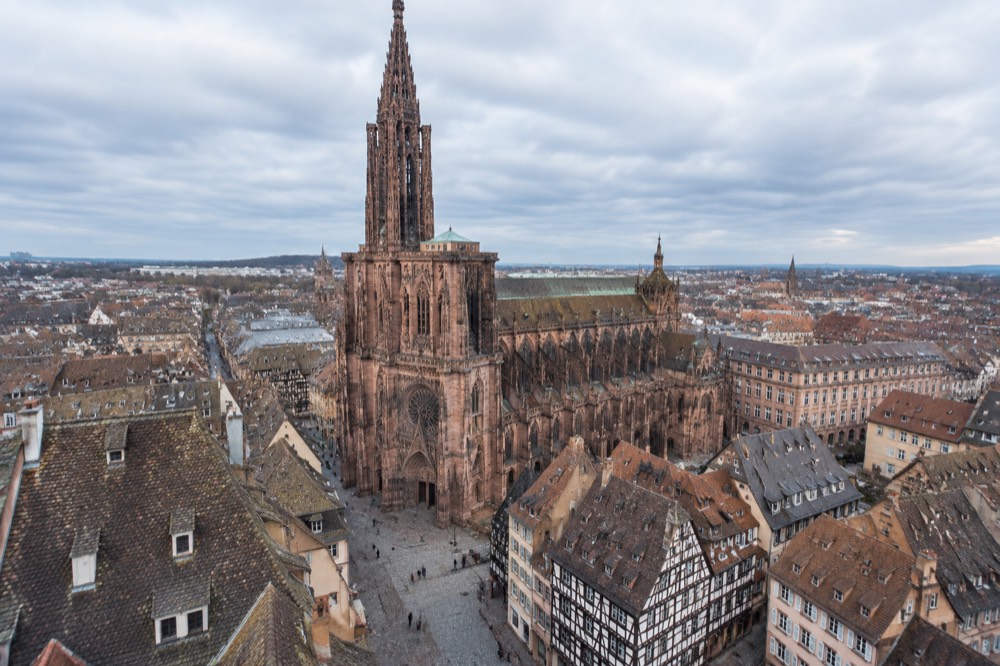
Is The Strasbourg Cathedral The Tallest In The World?
No, the Strasbourg Cathedral is not the tallest in the world. Taller church towers exist, in Germany and elsewhere, and modern structures of every kind stand far higher. What the cathedral does have is one of the most extraordinary single spires in Europe, a Gothic tower of pink sandstone that dominates Strasbourg's Grande Île in Alsace, France. The only height figure the cathedral's own site publishes for visitors is the viewing platform at 66 m, reached by stairs and lift.
The confusion is understandable, and it has a real basis. The spire is often described in guidebooks and by the city's own tourism materials as having held the record for the tallest building in the world for a remarkably long stretch, before taller towers were completed elsewhere in Europe. That historical record is a matter of architectural history rather than a claim this page needs to settle with a number, and the sources that repeat it do not agree on a precise figure for the spire's total height.
What can be said without any doubt is what stands in Strasbourg today. The building has a single spire, not a pair of towers, and that asymmetry is part of what makes it so striking: the west front carries one enormous openwork tower that was clearly conceived to be seen on its own. The stone is Vosges sandstone, pinkish in daylight and famously reddish at sunset, which gives the facade a warmth that grey-stone cathedrals never achieve.
For a deeper look at why this building matters so much to the city, the companion page on why the Strasbourg Cathedral is famous covers the art, the facade and the astronomical clock in detail.
How Tall Is The Strasbourg Cathedral, And What Can You Climb?
The cathedral's own visitor information gives one hard figure: the platform sits at 66 m, with a ticket at 10 EUR full price and 6 EUR reduced, free for children under 6. The spire above the platform is taller again, but the cathedral does not publish a visitor figure for its total height, and this page will not guess one. The climb is open seasonally, with different hours in summer and winter.
The platform is the part of the building ordinary visitors can actually experience vertically. From 1 April to 30 September it runs 09:30-13:00 and 13:30-20:00, with the last ascent at 19:15. From 1 October to 31 March the hours shift to 10:00-13:00 and 13:30-18:00, with the last ascent at 17:15. The ascent combines stairs and a lift, and the reward is a view across the whole Grande Île, the Ill river channels and, on clear days, the Black Forest line on the German horizon.
The nave below keeps its own rhythm. It opens Monday to Saturday 08:30-11:15 and 12:45-17:45, and on Sundays and feast days 14:00-17:15. During the Christmas market season the cathedral stays open continuously Monday to Saturday, 08:30-17:45, on the Place du Château side, which is worth knowing if a December visit is on the cards. The astronomical clock runs its full automaton show daily at 12:30 sharp, with tickets at 4 EUR, 3 EUR for groups of 12 or more and students up to 25, and 2 EUR for children aged 6 to 17, sold on the day only.
| What | Hours | Ticket |
|---|---|---|
| Nave, Mon-Sat | 08:30-11:15 and 12:45-17:45 | Entry details on the cathedral's page |
| Nave, Sun and feast days | 14:00-17:15 | Entry details on the cathedral's page |
| Platform, 1 Apr-30 Sep | 09:30-13:00 and 13:30-20:00, last ascent 19:15 | 10 EUR full, 6 EUR reduced, under 6 free |
| Platform, 1 Oct-31 Mar | 10:00-13:00 and 13:30-18:00, last ascent 17:15 | 10 EUR full, 6 EUR reduced, under 6 free |
| Astronomical clock show | Daily at 12:30 sharp | 4 EUR, 3 EUR groups and students, 2 EUR children 6-17 |
The question of entry cost comes up almost as often as the height question, and the answer has its own page: is the Strasbourg Cathedral free to enter explains what the nave, the platform and the clock each cost.
Why Does The Single Spire Make The Question Complicated?
The Strasbourg Cathedral was designed with one spire, not the twin west towers of so many French Gothic cathedrals, and that single tower is what people mean when they ask about height. Because the building's plan stops at one tower, all of its vertical ambition is concentrated there, which is why it reads as taller than it measures. The cathedral itself publishes only the 66 m platform figure for visitors.
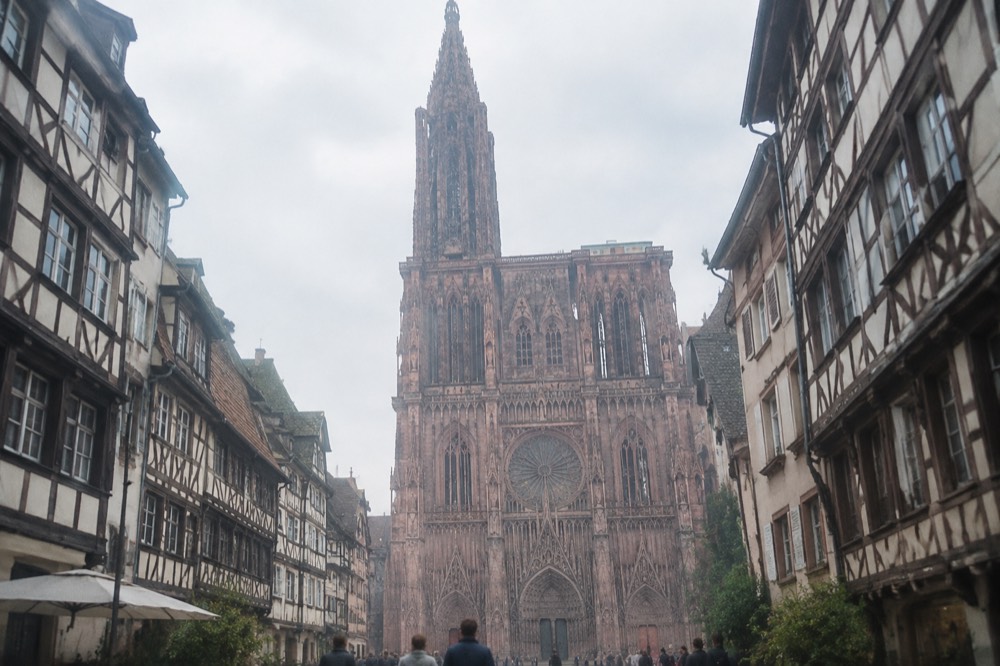
That concentration of height in one place has a practical consequence for the visitor. From the streets of the Grande Île, especially from the narrow lanes off the Place du Château, the tower fills the sky in a way that a twin-towered facade never does. Photographers hunting the classic shots work this angle hard, and the surrounding lanes of the old town, a short walk from Petite France, are where the best frames are found. Other pages covering the same trip are gathered on Strasbourg Travel Guide.
The spire is openwork, meaning its upper stages are pierced stone rather than solid masonry, so light passes through it. This is one of the reasons the tower survived centuries of Alsatian weather, and it is also why the sunset effect is so strong: the pink Vosges sandstone glows while the sky shows through the tracery. The stone itself is the reason the facade needs constant care, and the cathedral workshop that maintains it, the Fondation de l'Œuvre Notre-Dame, is among the oldest continuously working building workshops of its kind in Europe, a fact the museum across the square documents.
The religious history of the building has its own surprises. The cathedral became a Protestant church for a period before returning to Catholic use, a story told on the page about whether the Strasbourg Cathedral is Catholic or Protestant.
How Does The Strasbourg Cathedral Compare With Other Great Churches?
Against the tallest churches in the world, Strasbourg does not hold the record: several towers, above all in Germany, stand higher, and no serious source claims otherwise today. What Strasbourg holds instead is a different kind of standing, as one of the finest single-spired Gothic cathedrals anywhere, sitting at the heart of a World Heritage property, "Strasbourg, Grande-Île and Neustadt", recognised for its medieval core and its German imperial extension.
The comparison people usually reach for is with the great Gothic churches of northern France, and Strasbourg sits oddly among them. It is far from Paris, close to the German border, and its architecture reflects that borderland position, mixing French Gothic proportion with Germanic craft traditions. The city's dual French and German inheritance is the subject of the page on whether Strasbourg is more German or French, and the cathedral is the clearest single piece of evidence in that argument.
| Feature | Strasbourg Cathedral | What It Means For The Height Question |
|---|---|---|
| Tower design | Single spire, no second tower | All vertical emphasis in one structure |
| Published visitor height | Platform at 66 m | The only figure the cathedral prints for visitors |
| World Heritage status | "Strasbourg, Grande-Île and Neustadt" | Recognised for the city core, not a height record |
| Sandstone | Pink Vosges stone, openwork spire | Gives the sunset glow and the sense of height |
| Climb | Stairs and lift to the platform | The practical way to experience the height |
For readers weighing Strasbourg against other French cathedrals as a destination, the page on the nicest cathedral in France puts the building in a national context.
What Should You Do Around The Cathedral After The Climb?
The practical answer is to build a half-day around the Place du Château and the streets immediately south of it: the Musée de l'Œuvre Notre-Dame, the cathedral's own sculpture museum, the lanes down toward the Ill, and then a proper winstub lunch. The museum gives a reduced rate to platform ticket holders, so the order matters: climb first, museum second, food last. A guided food walk turns that last part into a meal with context.
To see the quarter around the spire with a guide, book a free walking tour here.
The Musée de l'Œuvre Notre-Dame holds the cathedral's medieval sculpture, including original figures removed from the facade for safekeeping, and it is the place where the building's workshop history becomes visible. Note that the other great Alsatian museum, the Musée Alsacien, is closed for works until 2028, so do not route a visit there. The municipal museums cost 9 EUR full price and 5 EUR reduced, with a 1-day Pass Musées at 20 EUR, and every municipal museum is free on the first Sunday of the month.
The food around the cathedral quarter is the other reason people linger. The traditional Alsatian table, tarte flambée, choucroute, baeckeoffe and kougelhopf, is served in the winstubs within a few streets of the west front, and a guided walk with tastings is an efficient way to eat through it without gambling on a random dining room. The Traditional Food Walking Tour with Tastings covers exactly this ground, and Check availability if that sounds like the right pace for your afternoon.
After the food, the river is the natural next move. A boat tour on the Ill, including the private options that run with a captain aboard, gives the city back to you from the water, and the cathedral spire seen from the river channels, framed by half-timbered facades, is one of the classic Strasbourg images. The full picture of the building and its setting is on the Strasbourg Cathedral attraction page, and if the visit is turning into a longer stay, the guide to how many days in Strasbourg is enough will help you size it.
Common Questions About The Strasbourg Cathedral
Is the Strasbourg Cathedral the tallest in the world?
No. Several church towers, above all in Germany, stand taller, and no serious source claims the record for Strasbourg today. The cathedral's single spire is nonetheless one of the great Gothic towers of Europe, and the only visitor height the cathedral publishes is the 66 m platform.
How high is the viewing platform at Strasbourg Cathedral?
The platform sits at 66 m, reached by a combination of stairs and a lift. Tickets cost 10 EUR full price and 6 EUR reduced, with children under 6 free. Hours change with the seasons: from April to September the platform runs into the evening, and from October to March it closes earlier, with the last ascent at 17:15.
When does the astronomical clock show run?
The full automaton show runs daily at 12:30 sharp. Tickets are 4 EUR, 3 EUR for groups of 12 or more and students up to 25, and 2 EUR for children aged 6 to 17, and they are sold on the day only, so arrive early enough to buy one.
Can you see the cathedral without paying?
The nave's visiting hours are published on the cathedral's own page, Monday to Saturday 08:30-11:15 and 12:45-17:45, and Sundays and feast days 14:00-17:15, and the details of what is free and what is paid are set out on the page about whether the Strasbourg Cathedral is free to enter.
Is the Musée Alsacien worth combining with a cathedral visit?
Not at present. The Musée Alsacien is closed for works until 2028. The museum that pairs naturally with the cathedral is the Musée de l'Œuvre Notre-Dame on the Place du Château, which holds the cathedral's medieval sculpture and offers a reduced rate to platform ticket holders.
Strasbourg's cathedral does not need a world record to justify the queue for its platform. The single spire, the pink sandstone at sunset and the 66 m view over the Grande Île do that work on their own, and the honest answer to the height question is simply the start of the visit, not the end of it.