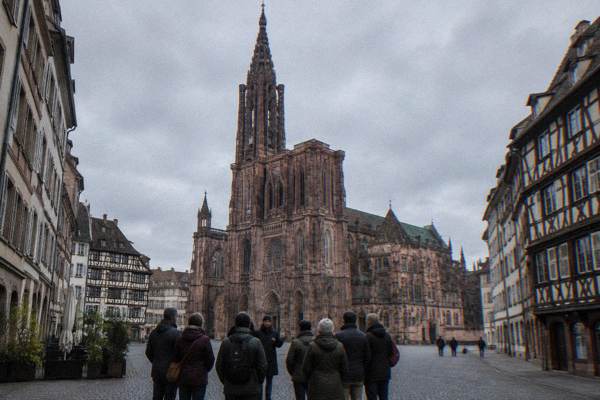
What Is The Largest City In Alsace-Lorraine?
Strasbourg, in north-eastern France, is the largest city in Alsace-Lorraine. Here is how it compares with Metz, Nancy and Mulhouse, and what its size means for a visit.
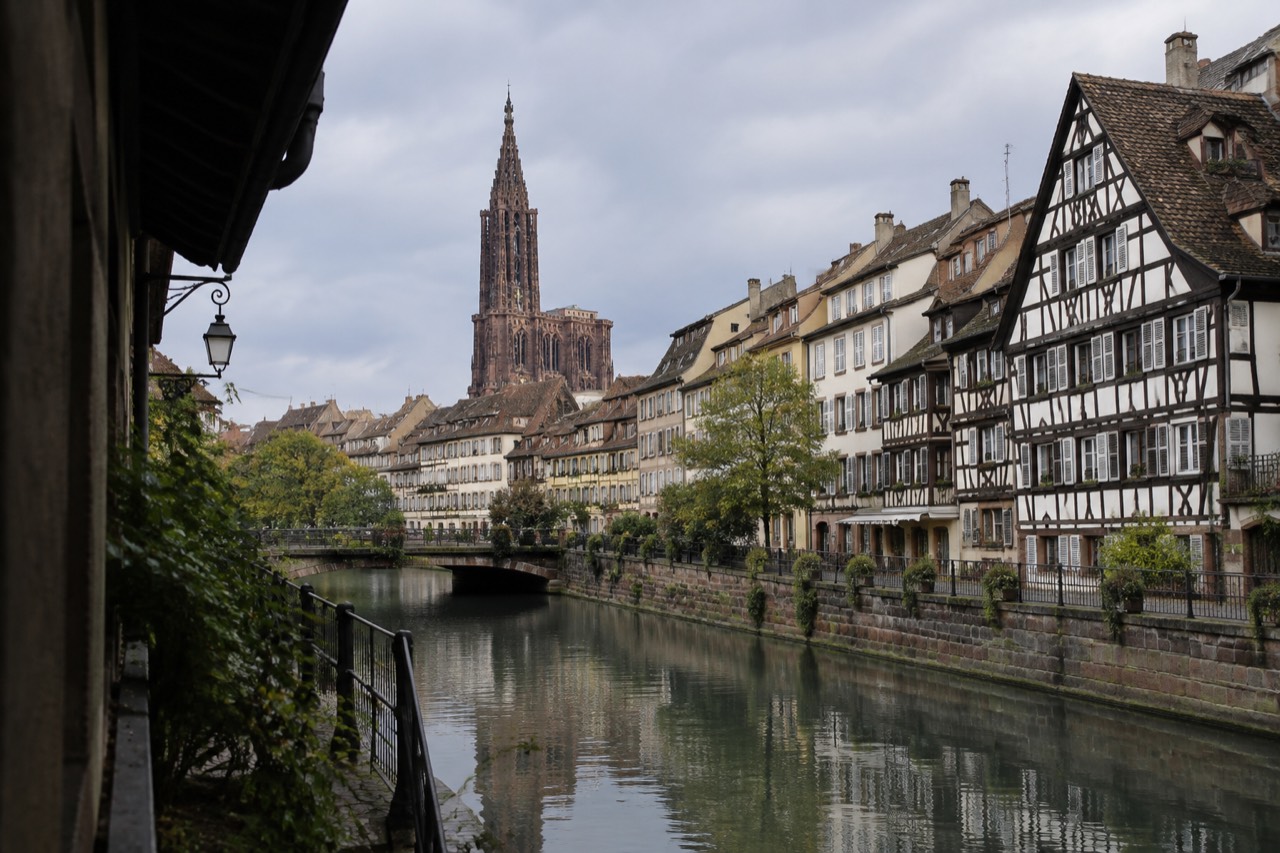
Strasbourg, in Alsace in north-eastern France, is the largest city in Alsace-Lorraine, and it is not a close call. The city sits on the River Ill beside the Rhine, which forms the border with Germany here, with Kehl on the far bank, and it serves as the prefecture of the Bas-Rhin and as the seat of the Grand Est regional authorities. INSEE counted 293,771 residents in the commune in 2023, and no other city in the old imperial territory of Alsace-Lorraine comes near that figure. The name Alsace-Lorraine itself belongs to history now: the two territories were joined under that label during the German annexation, and today they sit inside the Grand Est region, where Strasbourg functions as the regional capital.
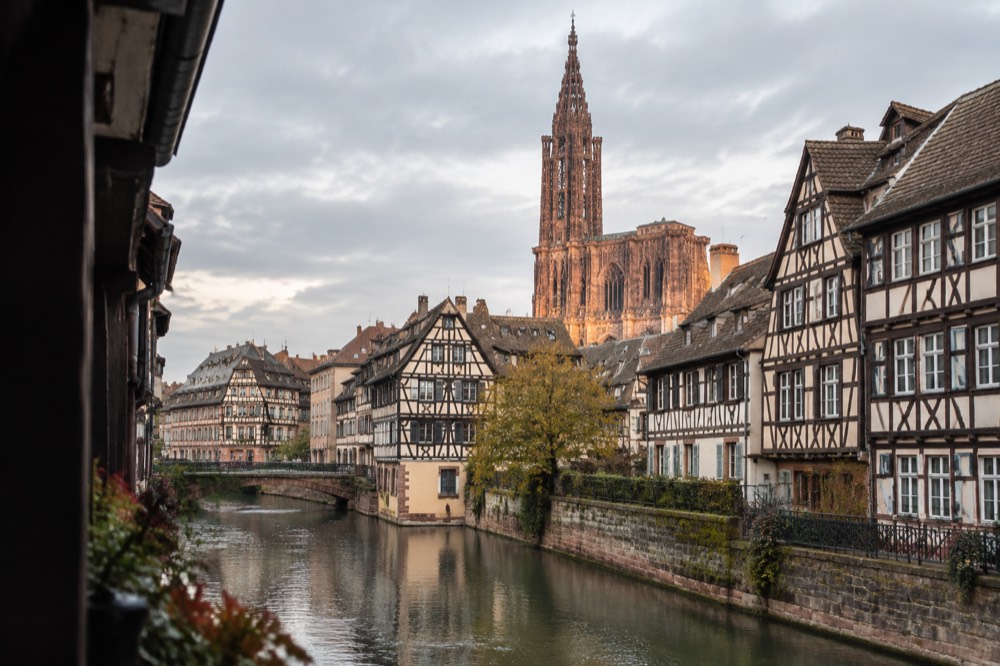
What Is The Largest City In Alsace-Lorraine?
Strasbourg, in Alsace, north-eastern France, is the largest city in Alsace-Lorraine. The commune counted 293,771 residents in the 2023 INSEE figures, and it is the prefecture of the Bas-Rhin as well as the seat of the Grand Est regional authorities. Metz and Nancy, the historic capitals of Lorraine, and Mulhouse, the second city of Alsace, are all considerably smaller. Strasbourg also hosts the European Parliament, the Council of Europe and the European Court of Human Rights.
The question usually comes from two directions. Some readers meet the name Alsace-Lorraine in a history book, where it describes the annexed territory that passed between France and Germany, and they want to know which city anchored it. Others are planning a trip and want to know which base gives them the widest choice of streets, museums, food and day trips. Both answers point to the same place.
Strasbourg's size is not just a population figure. It shows in the spread of the city: the medieval core of the Grande Île, the German-built Neustadt, the riverside quarters along the Ill, the Krutenau student neighbourhood and the European Quarter with its institutional buildings. UNESCO lists the whole property as "Strasbourg, Grande-Île and Neustadt", and the Neustadt is described as a later extension of the inscribed area, a reminder that the city grew in distinct waves rather than around a single square.
For orientation, the practical centre of gravity is the cathedral on Place Kléber's side of the old town, with Petite France at the south-west corner and the European institutions a tram ride to the north-east. A traveller deciding between the cities of the old Alsace-Lorraine lands will find that only Strasbourg offers all of these layers at once.
How Does Strasbourg Compare With Metz, Nancy And Mulhouse?
Strasbourg is the largest of the four cities travellers usually shortlist in the old Alsace-Lorraine lands, and each of the others plays a different second role. Metz and Nancy anchor Lorraine to the north, Mulhouse sits in southern Alsace near the Swiss border, and Strasbourg alone combines a regional capital's institutions, a World Heritage old town and an international border position. so the comparison below is qualitative rather than numerical.
The honest way to compare them, without inventing figures, is by what each city is for. Metz holds a celebrated gothic cathedral and a strong museum scene. Nancy is famous for its elegant ducal squares, the work of a court that left the city a unified architectural set. Mulhouse built its identity on industry and is the practical gateway to the southern Alsace wine route and to Basel in Switzerland. Strasbourg has the cathedral, the half-timbered river quarter, the winstubs and the European institutions in one city, plus a Christmas market that drew 3.05 million visitors in the 2025 edition, a figure the city published in its own bilan.
| City | Historic territory | What it is known for | How it pairs with Strasbourg |
|---|---|---|---|
| Strasbourg | Alsace (Bas-Rhin) | Prefecture of the Bas-Rhin, seat of the Grand Est authorities, European Parliament, single-spired cathedral, Petite France | The base itself |
| Metz | Lorraine (Moselle) | Gothic cathedral, museum quarter | Reached by rail; check SNCF Connect for times |
| Nancy | Lorraine (Meurthe-et-Moselle) | Ducal squares and place Stanislas | Reached by rail; check SNCF Connect for times |
| Mulhouse | Southern Alsace (Haut-Rhin) | Industrial heritage, gateway to the southern wine route and Basel | Reached by regional train; check SNCF Connect for times |
A note on the rail advice above: the table deliberately says where to check rather than quoting minutes. What can be said is that Strasbourg's station is the hub of the network for the whole north-eastern corner, and the city's transport system, CTS, sells a 24h Solo pass at 4.60 EUR and a 24h Trio pass at 10.20 EUR for groups of two or three, both verified on the CTS fare pages.
Choosing between them is really a question of trip shape. A visitor with three or four days and an interest in food, river scenery and European politics does best in Strasbourg. A visitor building a Lorraine itinerary around Nancy and Metz can still add Strasbourg as a rail stop, and many do exactly that in December, when the Christmas market turns the city into the seasonal centre of gravity for the whole region.
Why Is Strasbourg The Capital Rather Than Metz Or Nancy?
Strasbourg holds the regional capital role because the Grand Est, formed by merging the former Alsace, Champagne-Ardenne and Lorraine regions, placed its assembly and its main institutions in Strasbourg, and because the city already carried the European Parliament, the Council of Europe and the European Court of Human Rights. Metz and Nancy kept prefecture and university functions of their own, but neither hosts a comparable institutional cluster. The decision followed the institutions, and the institutions had followed Strasbourg's border position on the Rhine.
The European presence deserves its own sentence or two, because it explains a large part of the city's modern size and feel. The European Parliament holds its plenary sessions in Strasbourg, the Council of Europe and the European Court of Human Rights are both based here, and the Parlamentarium Simone Veil visitor centre opens outside plenary weeks from Monday to Friday 09:00-18:00 and on Saturday 09:30-12:00 and 13:00-18:00, with an airport-style security check at the door. Plenary-week hours differ, and the European Parliament's visiting page carries the detail. More of these guides are collected on Strasbourg Travel Guide.
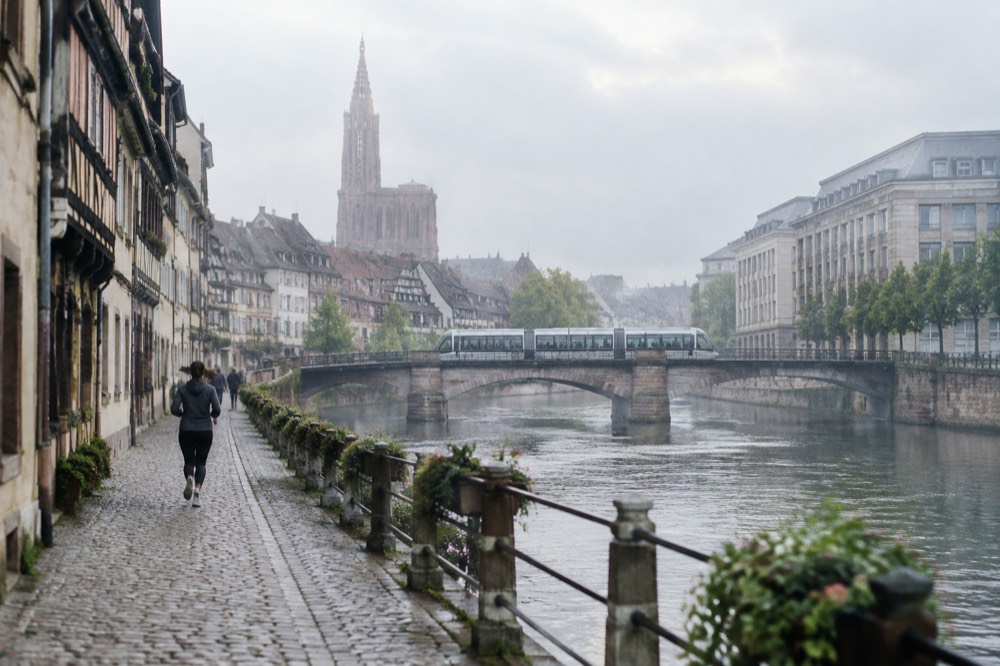
There is also a historical logic to it. The old Alsace-Lorraine label was an artefact of annexation, and when the region was reorganised into Grand Est, the planners needed one city that could carry both French regional administration and the European institutions already anchored on the Rhine. Strasbourg, sitting beside the German border with Kehl across the river, was the natural choice. Readers curious about the German-French back-and-forth that shaped this can follow it in why Strasbourg is more German or French and in how people in Strasbourg speak French or German.
The capital role feeds the visitor economy directly. Sessions bring thousands of staff, journalists and lobbyists into the city each month, which supports a hotel and restaurant base far larger than a city of this population would otherwise sustain, and which in turn makes the city an easy place to visit without a car. The answer is shaped by this institutional weight: the city offers more than its commune population suggests.
What Does Strasbourg's Size Mean For A Visit?
Strasbourg's size means the city rewards a full day at minimum, spreads its sights across walkable but distinct quarters, and supports a transport network, a museum set and a food scene on a scale the other Alsace-Lorraine cities cannot match. The old core is compact enough to cover on foot, while the European Quarter and the Neustadt stretch the city north-east and are best reached by tram. A single CTS ticket at 1.90 EUR covers any one tram or bus ride.
To get your bearings across a city this size, book a free walking tour here.
The practical shape of a visit follows the geography. The Grande Île holds the cathedral, whose platform stands at 66 m and costs 10 EUR full price or 6 EUR reduced, and whose astronomical clock stages its automaton show daily at 12:30 for a 4 EUR ticket sold on the day only. Petite France sits at the south-west corner of the same island, and the Barrage Vauban terrace beside the Ponts Couverts gives the classic panorama over the river quarter, with seasonal opening hours listed on the city's page for the site.
| What | Figure | Where it comes from |
|---|---|---|
| Commune population | 293,771 (INSEE, 2023) | INSEE |
| Cathedral platform ticket | 10 EUR full, 6 EUR reduced, under 6 free | Cathedral and Œuvre Notre-Dame pages |
| Astronomical clock show | 12:30 daily, 4 EUR, day-of purchase only | Cathedral's clock page |
| Municipal museum ticket | 9 EUR full, 5 EUR reduced, free first Sunday of each month | Musées de Strasbourg tariff page |
| 1-day Pass Musées | 20 EUR | Musées de Strasbourg tariff page |
| Batorama long river tour | 16.20 EUR full, 8.90 EUR reduced, Red Tour 1h10 | Batorama's official site |
Two cautions belong on any Strasbourg planning page. The Musée Alsacien is closed for works until 2028, so it should not appear on an itinerary, and the other municipal museums are the working alternatives. And the Strasbourg City Card is a 5 EUR discount card, 3.50 EUR for a child aged 3 to 17, valid for seven days, not an all-inclusive pass; it takes money off museums, the boat tour, the cathedral platform and the clock rather than covering them.
The city's scale also shows up after dark, which is when the largest city in the old Alsace-Lorraine territory looks least like its smaller neighbours. A private evening walking tour runs through the Grande Île with the cathedral floodlit, covering lanes that feel empty once the day crowds thin out; it is the related tour for this page and can be checked via Check availability. For a daytime angle on the same scale, a street-art walk through the Krutenau and the canal-side walls shows the contemporary side of a city that is far more than its medieval core.
Common Questions About The Largest City In Alsace-Lorraine
What is the largest city in Alsace-Lorraine?
Strasbourg, in Alsace in north-eastern France, is the largest city in Alsace-Lorraine. Its commune counted 293,771 residents in the 2023 INSEE figures, and it serves as the prefecture of the Bas-Rhin and the seat of the Grand Est regional authorities, as well as hosting the European Parliament.
Is Strasbourg bigger than Metz and Nancy?
Yes. Strasbourg's commune population of 293,771 in the 2023 INSEE count makes it the largest city of the old Alsace-Lorraine lands. Metz and Nancy remain important regional cities in Lorraine, but neither approaches Strasbourg's population or its institutional weight.
Is Strasbourg the capital of the Alsace-Lorraine region?
Alsace-Lorraine no longer exists as an administrative region. The former territories now sit inside the Grand Est region, and Strasbourg is the seat of its regional authorities, which makes it the effective regional capital. It is also the prefecture of the Bas-Rhin department.
What is the second largest city in Alsace?
Mulhouse, in the Haut-Rhin in southern Alsace, is generally described as the second city of Alsace. No verified population figure for Mulhouse is carried on this page, so treat that ranking as qualitative rather than numerical.
Why does Strasbourg host the European Parliament?
Strasbourg's position on the Rhine border, between France and Germany, made it a symbolic choice for post-war European institutions. The European Parliament, the Council of Europe and the European Court of Human Rights are all based in the city, and plenary sessions are held there. The Parlamentarium Simone Veil visitor centre opens to the public outside plenary weeks.
Is Strasbourg worth visiting compared with the smaller cities?
Strasbourg offers the widest range of any city in the old territory: a World Heritage old town, the cathedral and its 66 m platform, Petite France, the Neustadt, the European Quarter, a strong food scene and the December Christmas market. Readers weighing the trade-offs can start with the question of why Strasbourg is so famous.
The short version stands: Strasbourg is the largest city in Alsace-Lorraine by a clear margin, and it uses that size well, with a walkable historic core, a tram network that reaches every quarter, and an institutional and food scene the other cities of the old territory do not attempt to match. Anyone planning a first visit should budget at least a full day for the old town and the river, and check the cathedral's hours page before committing to a platform ascent.