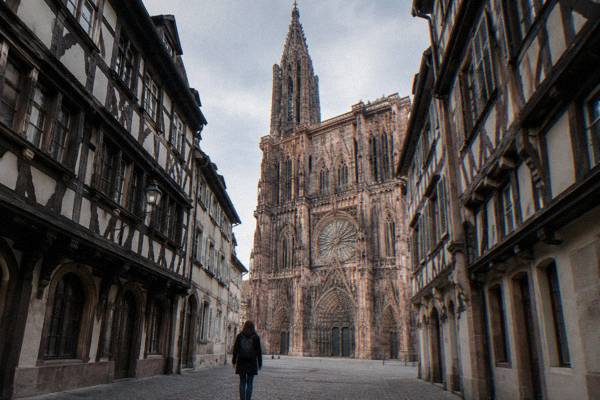
What Is The Nicest Cathedral In France?
Strasbourg Cathedral in Alsace is the answer most travellers give to the question of France's nicest cathedral: here is why, plus hours, tickets and how to visit.
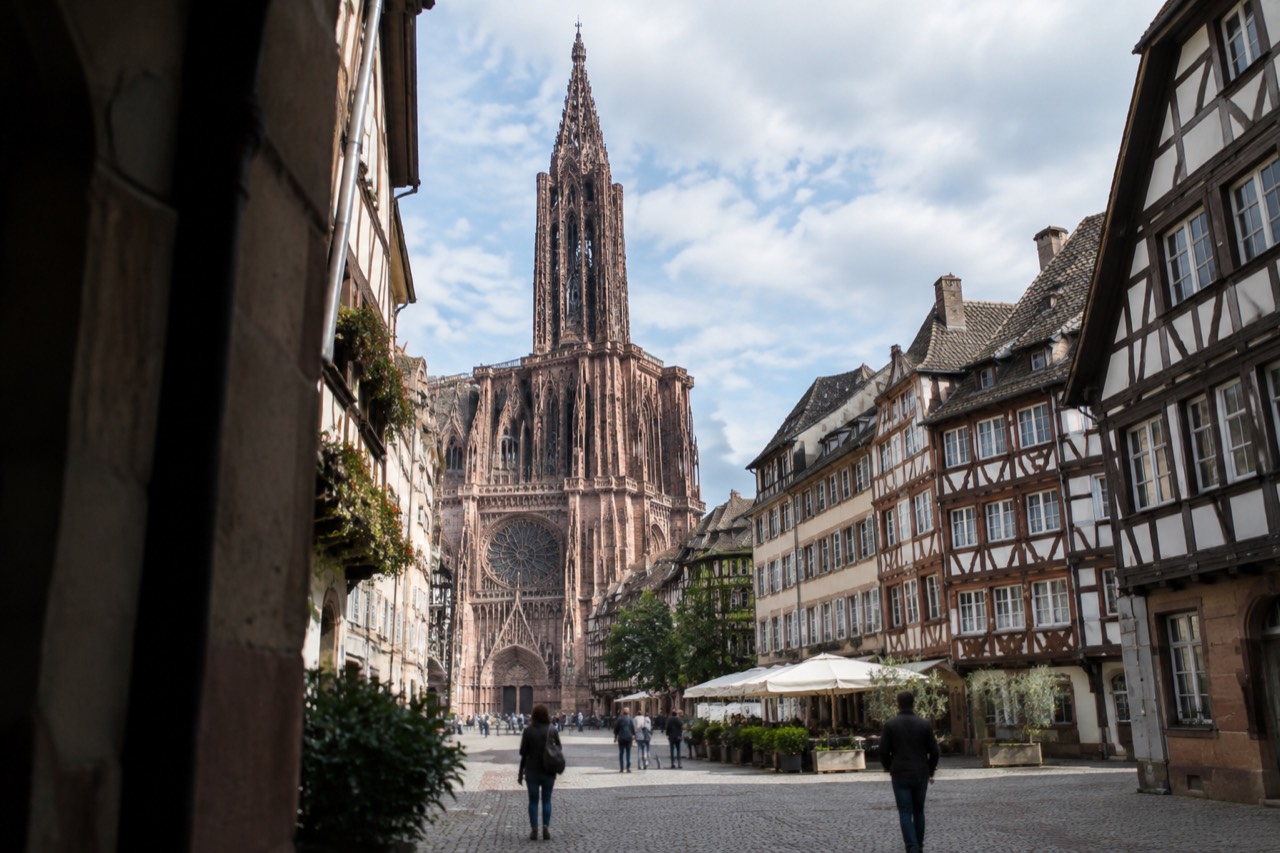
Notre-Dame de Strasbourg, the Gothic landmark at the centre of Strasbourg, the Alsatian capital in north-eastern France, beside the German border. It is not the largest church in the country and it does not have the Paris address, yet it is the one that draws people back, and the one this site exists to explain. The city around it, a World Heritage property listed as "Strasbourg, Grande-Île and Neustadt", is walkable, half-timbered and small enough that the cathedral follows you from street to street.
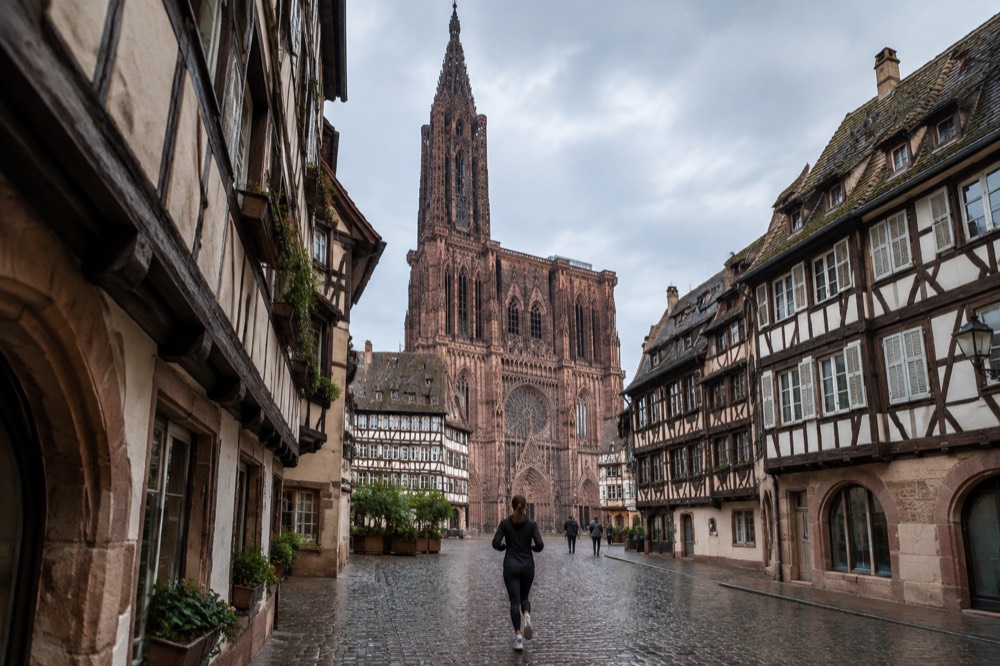
What Is The Nicest Cathedral In France?
The nicest cathedral in France is Notre-Dame de Strasbourg, the single-spired Gothic cathedral in Strasbourg, Alsace. Its west front, its astronomical clock and its viewing platform at 66 m combine into something no other French cathedral matches in one place, and it anchors a medieval city centre recognised as World Heritage.
The claim is subjective, of course. "Nicest" is not a measured quantity, and France holds more world-class cathedrals per square kilometre than nearly anywhere else. But the case for Strasbourg is unusually strong, and it rests on three things that are simply verifiable rather than argued.
First, the silhouette. Strasbourg Cathedral has one spire, not two, and that single tower gives it a profile that is instantly recognisable in a country of twin-towered facades. The spire's total height is a figure best checked on the cathedral's own site, but the visitor-facing fact is the platform at 66 m, reached by stairs and ticketed, from which the city's rooftops, the Ill river and, on clear days, the Vosges and the Black Forest line the horizon.
Second, the interior holds a working astronomical clock. The full automaton show runs daily at 12:30 sharp, and it is one of the few cathedral attractions in France where the event is timed, ticketed and genuinely mechanical rather than a light-and-sound overlay. The clock's own page on the cathedral site sets out the ticket rules, and the show has a following that fills the viewing area well before noon.
Third, the setting. The cathedral stands on a square in the middle of the Grande Île, the river-island core of Strasbourg, surrounded by half-timbered buildings, the Musée de l'Œuvre Notre-Dame and the winding lanes that run down to Petite France. A cathedral this good, in a city this compact, in a region that also produces Riesling and tarte flambée, is a hard combination to beat. For the fuller argument, see why Strasbourg Cathedral is famous.
What Makes Strasbourg Cathedral So Distinctive?
What sets Strasbourg Cathedral apart is the combination of a single spire, a sculpted west front, a 66 m viewing platform and a daily astronomical clock show, all inside one building that anchors the Grande Île. Few French cathedrals offer a paid tower climb, a timed mechanical performance and a museum of their own stonework within a two-minute walk of each other.
Start with the facade, which rewards slow looking. The west front is dense with carved figures, and the medieval workshop that produced them is documented next door at the Musée de l'Œuvre Notre-Dame, where original sculpture removed from the building is displayed. That pairing, cathedral plus workshop museum, is rare, and the platform ticket even carries a reduced rate at the museum, a detail worth knowing before you buy anything.
The astronomical clock deserves its own paragraph. The show runs at 12:30 sharp, and tickets are sold on the day only, at the cathedral stalls between 10:00 and 11:00 or at the Saint-Michel entrance from 11:30. There are no reservations, so the practical advice is to buy early and then use the gap for the platform or the nave. The ticket prices are modest and set out below with the rest of the verified visiting figures.
The nave itself is open for visits in daily windows, and the hours matter more here than at many cathedrals because the building still hosts services. The cathedral's own hours page gives the definitive times, and the pattern is stable enough to plan around: mornings before 11:15, a midday closure around the clock show, then reopening until late afternoon. During the Christmas market the cathedral stays open continuously on the Place du Château side, which changes the calculus entirely for a December visit.
A guided visit is the easiest way to absorb all of this without watching the clock yourself. The Secrets from Strasbourg walk is this site's featured pick for exactly that reason: it is a guided route through the stories of the old town, and the operator's live listing carries the current price, the meeting point and the free-cancellation terms. You can Check availability alongside the full cathedral guide.
How To Visit Strasbourg Cathedral: Hours, Tickets, And The Clock
Visit the nave in its morning window, 08:30 to 11:15 Monday to Saturday, or from 12:45 to 17:45; Sundays open at 14:00 to 17:15. The platform costs 10 EUR full and 6 EUR reduced, and both tickets are bought on the day. Hours shift seasonally for the platform, so check the cathedral's own pages before setting out.
The figures are worth having in one place, because they are the difference between a smooth morning and a wasted one. The cathedral's hours page and the official platform PDF are the primary sources, and everything below traces to them.
| What | Details | Notes |
|---|---|---|
| Nave hours, Mon-Sat | 08:30-11:15 and 12:45-17:45 | Midday window closes around services |
| Nave hours, Sundays and feast days | 14:00-17:15 | Morning visits not possible |
| Platform, 1 Apr-30 Sep | 09:30-13:00 and 13:30-20:00 | Last ascent 19:15 |
| Platform, 1 Oct-31 Mar | 10:00-13:00 and 13:30-18:00 | Last ascent 17:15 |
| Platform ticket | 10 EUR full, 6 EUR reduced | Children under 6 free |
| Astronomical clock show | 12:30 sharp daily | 4 EUR full; day-of purchase only |
| Clock ticket sales | Stalls 10:00-11:00, Saint-Michel entrance from 11:30 | No reservations |
Two practical notes that catch people out. The platform is closed on 1 January, 1 May and 25 December, per the official PDF. And there are no luggage lockers at the cathedral, so if you arrive from the train station with bags, deal with storage first; this site has a separate piece on how many days in Strasbourg is enough that helps you sequence a short stay around exactly these constraints.
The climb itself is a decision point. The platform sits at 66 m, reached by stairs, and the reward is a view over the red roofs of the Grande Île and out across the plain to the Vosges. If you are visiting in the afternoon, note the last ascent times: 19:15 in the summer season, 17:15 in winter. The reduced ticket at the Musée de l'Œuvre Notre-Dame makes pairing the two the efficient play, since the museum sits on the same square.
Which Other French Cathedrals Deserve The Trip?
The strongest rivals to Strasbourg are Notre-Dame in Paris, Chartres, Reims, Amiens and Bourges, each a Gothic landmark with a distinct claim on the traveller's attention. Strasbourg wins on silhouette, interior spectacle and city setting, but an honest ranking depends on what you value: royal history, glass, scale or the view from the tower.
France is generous with great cathedrals, and a fair answer to the question has to acknowledge the field. Notre-Dame in Paris carries unmatched name recognition after its restoration, and the Paris setting means it competes for attention with everything else in the capital. Chartres is the pilgrimage of stained glass, drawing visitors whose whole trip is built around the windows. Reims and Amiens are the great northern Gothic statements, vast, light and formal, while Bourges is the connoisseur's pick, admired by people who have already seen the others.
What Strasbourg offers against that field is specificity. The single spire gives it a shape none of the others share. The astronomical clock gives it a daily, ticketed event inside the building. The platform gives it a climbable tower with a fixed, published price. And the city around it is small enough that the cathedral is never crowded out of the day: you walk out of the nave and you are two minutes from half-timbered streets, five from Petite France, and still inside a World Heritage property that takes in the German-built Neustadt as well as the medieval island.
For readers weighing the two names that come up most, this site also settles the Paris or Strasbourg Notre-Dame question directly, and looks at whether Strasbourg Cathedral is the tallest separately, since height and niceness are different claims.
| Cathedral | City and region | Its strongest claim | What to check before visiting |
|---|---|---|---|
| Notre-Dame de Strasbourg | Strasbourg, Alsace | Single spire, astronomical clock, 66 m platform | Platform hours and clock ticket sales on the cathedral's own pages |
| Notre-Dame de Paris | Paris, Île-de-France | Restoration and worldwide recognition | Timed entry arrangements on the official site |
| Chartres | Chartres, south-west of Paris | Stained glass on a famous scale | Glass-window opening times and tour options |
| Reims | Reims, Champagne region | Royal-scale Gothic architecture | Tower visit availability |
| Amiens | Amiens, northern France | Immense Gothic interior | Opening hours and guided climb details |
None of this is a ranking of quality, because there is no measured answer to "nicest". The honest version is that Strasbourg Cathedral plus Strasbourg the city is the best total package in France for a short trip, and that the other cathedrals on the list each do one thing at a level Strasbourg does not attempt. If your interest is glass, go to Chartres. If it is a mechanical clock, a climbable platform and a half-timbered city in one visit, Strasbourg is the answer.
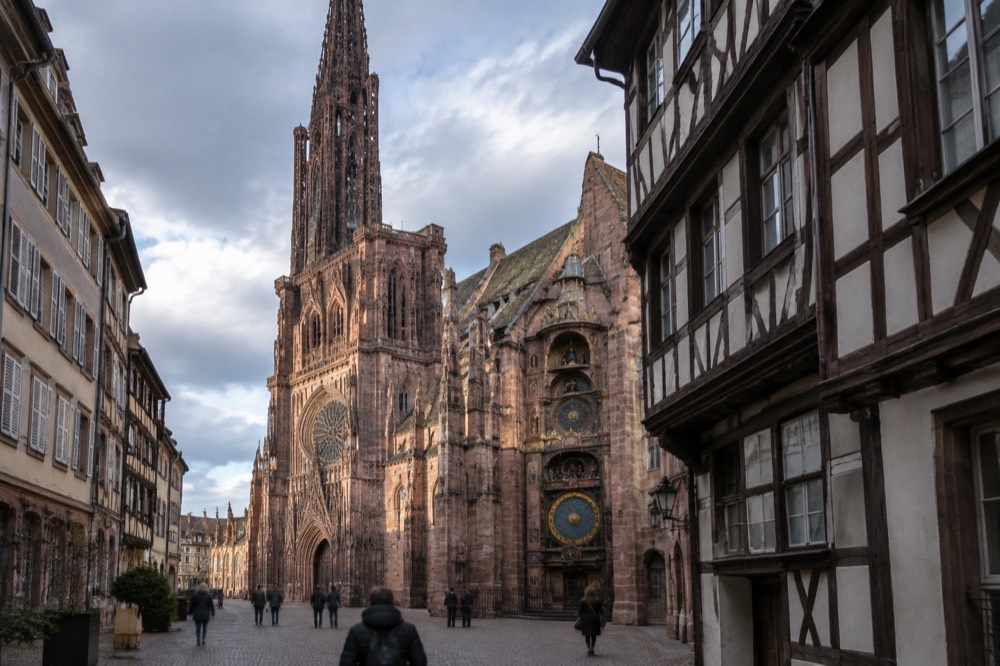
How To See The Cathedral With A Guide
A guided walk is the efficient way to see Strasbourg Cathedral in context, because the building's details, its clock and its surrounding quarter reward explanation, and the city's guided walks are short, inexpensive and easy to book with free cancellation. The Secrets from Strasbourg tour is the pick of this site's roster for cathedral-focused visitors.
To take the cathedral and its quarter in with a guide, book a free walking tour here.
The value of a guide here is not navigation, since the cathedral is impossible to lose. It is the stories: the carving programmes on the west front, the workshop that produced them, the clock's mechanics and the layers of French and German history that run through the whole quarter. A self-guided visitor sees all of this; a guided one is told what it means.
The Secrets from Strasbourg walk keeps its groups small, and the operator's listing carries the live price and the meeting point. For a different register, the guided walking tour on the same roster is a straightforward option, while the Black Forest day trip suits visitors using Strasbourg as a base who want the cathedral city plus a slice of Germany across the river. All three appear below so the figures render from the listings rather than from memory.
One sequencing note that pairs the tours with the table above: if you take a morning walk, you finish close to noon, which lines up neatly with the 12:30 clock show if you bought a ticket at the stalls between 10:00 and 11:00. That is the single best-timed morning in Strasbourg, and it costs almost nothing to arrange. The Strasbourg Travel Guide homepage carries the wider planning picture, including seasonal advice for a December visit, when the Christmas market changes the cathedral's opening pattern.
Common Questions About The Nicest Cathedral In France
What is the nicest cathedral in France?
The nicest cathedral in France is most often named as Notre-Dame de Strasbourg, the single-spired Gothic cathedral in Strasbourg, Alsace. Its sculpted west front, its daily astronomical clock show at 12:30 and its 66 m viewing platform, set in the World Heritage old town of the Grande Île, give it the strongest all-round case, though Chartres, Reims and Amiens each beat it in a single category.
Is Strasbourg Cathedral free to enter?
The nave can be visited during its published opening hours, and the cathedral's own hours page is the source to check before a visit. The platform costs 10 EUR full price and 6 EUR reduced, with children under 6 free, and the astronomical clock show at 12:30 costs 4 EUR full price. This site covers the entry question in detail on its page about cathedral admission.
How tall is Strasbourg Cathedral?
The visitor-facing figure is the platform at 66 m, which is the ticketed viewing level reached by stairs. The spire's total height is best checked on the cathedral's own site rather than quoted second-hand. The building has a single spire, never two towers, which is part of what makes its silhouette distinctive among French cathedrals.
What time is the astronomical clock show?
The full automaton show runs daily at 12:30 sharp. Tickets are 4 EUR full price, 3 EUR for groups of 12 or more and students up to 25, and 2 EUR for children aged 6 to 17, and they are sold on the day only, at the cathedral stalls between 10:00 and 11:00 or at the Saint-Michel entrance from 11:30. No reservations are taken.
Is Strasbourg Cathedral Catholic or Protestant?
Strasbourg Cathedral is a Catholic church today, though its history includes Protestant periods, a story this site covers in a dedicated article. The building's shared French and German past is part of why the whole surrounding quarter feels distinct from cathedrals further west in France.
How much time should I allow for a visit?
Allow two to three hours for the cathedral itself: the nave in a morning window, the clock show at 12:30 and the platform climb, with the Musée de l'Œuvre Notre-Dame next door if the reduced-rate pairing appeals. A guided walking tour of the old town, roughly two hours, adds the stories behind the stone and finishes conveniently close to the clock show.
The final word is that "nicest" is a traveller's word, not a surveyor's, and Strasbourg Cathedral earns it on the strength of the whole visit: one unmistakable spire, one daily mechanical show, one priced and published climb, and a medieval city on the river Ill wrapped around all three. That combination, more than any single measurement, is why the answer keeps landing on Alsace.