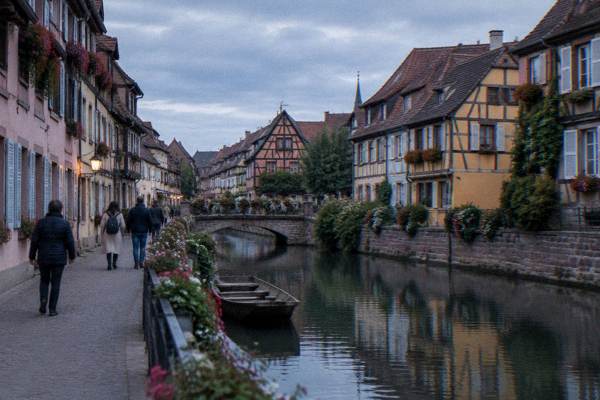
Sélestat
Sélestat packs more than a thousand years of Alsatian history into its compact centre. A short regional train ride south of Strasbourg brings you to half-timbered streets, two remarkable churches, a library that is a UNESCO Memory of the World, and a gateway to the Alsace Wine Route.
Short answer
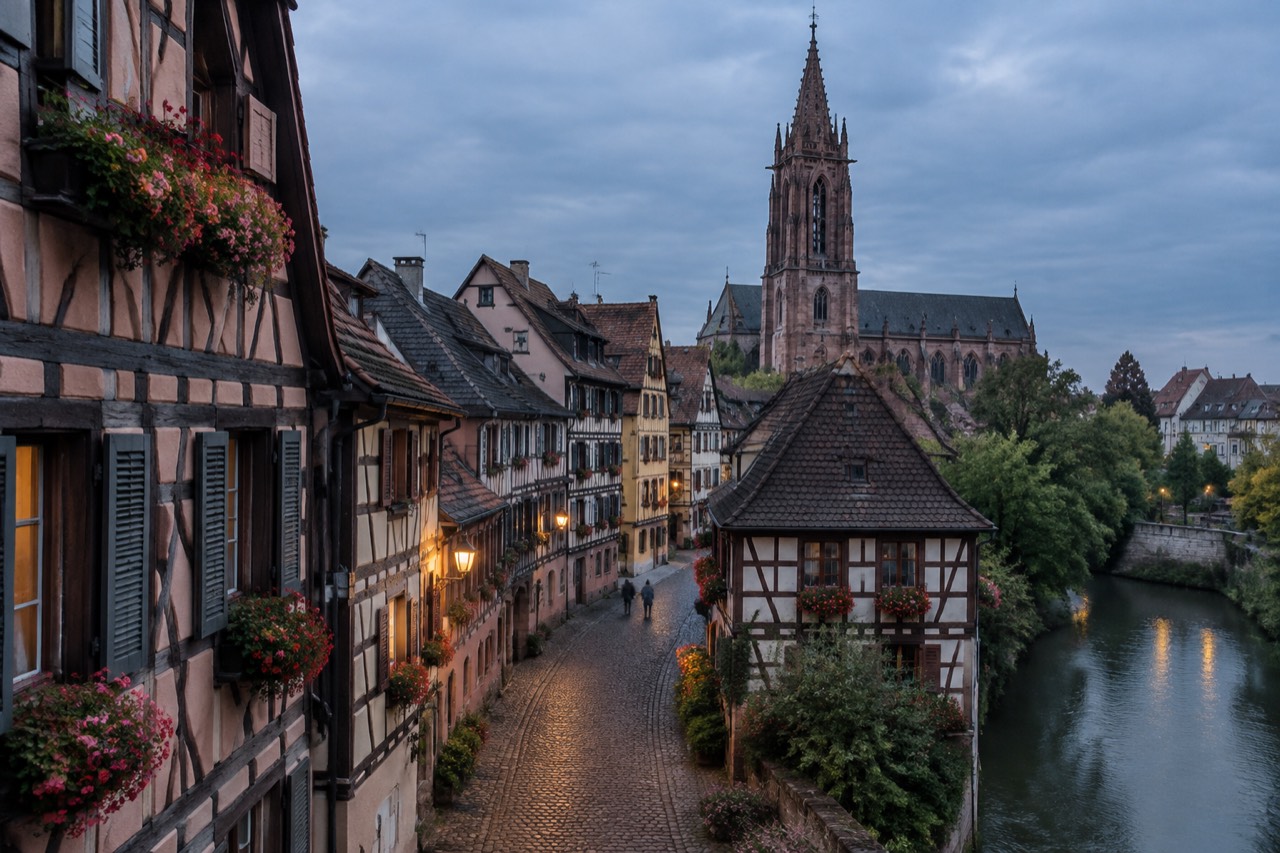
Sélestat is a historic Alsatian town in the Bas-Rhin department of north-eastern France, a short regional train journey south of Strasbourg. Its compact old town holds the Humanist Library, the Romanesque St. Faith’s Church and the Gothic St. George’s Church, making it an easy half- or full-day excursion.
Sélestat is a historic Alsatian town in the Bas-Rhin department of north-eastern France, a short regional train ride south of Strasbourg. Its compact old town holds a remarkable collection of half-timbered houses, two standout churches and the Humanist Library, a collection so significant it was added to the UNESCO Memory of the World register. The town also marks the northern gateway to the Alsace Wine Route, making it a natural pairing with a day of vineyard villages. For anyone building a Strasbourg Travel Guide itinerary that reaches beyond the city, Sélestat delivers a quieter, deeply layered slice of Alsace without the crowds of Colmar or Riquewihr.
Why Visit Sélestat As A Day Trip From Strasbourg?
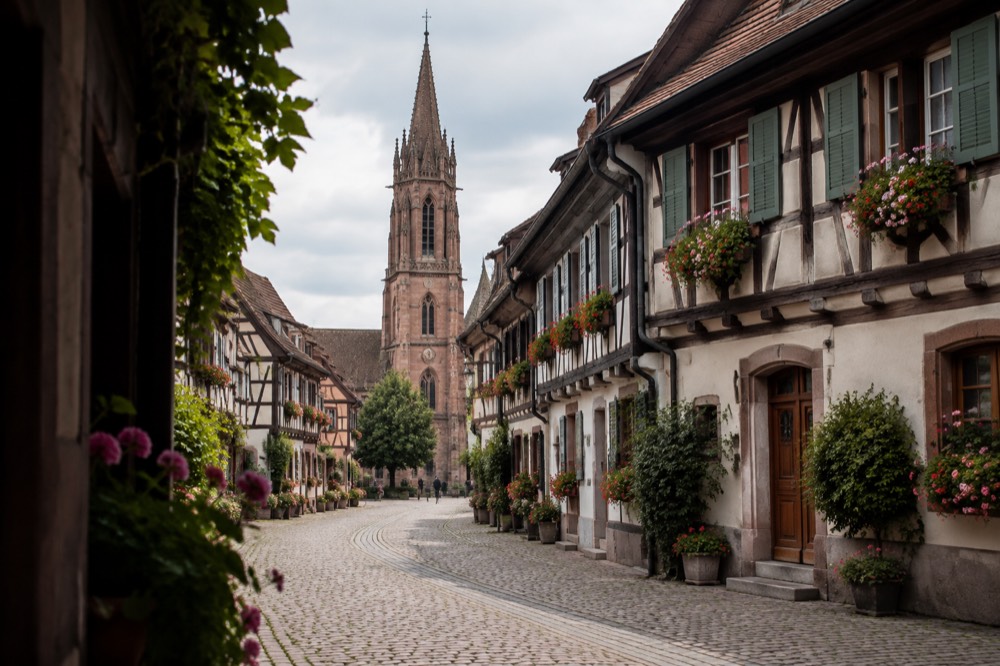
Sélestat offers an easy, uncrowded day trip from Strasbourg with a walkable medieval centre, two striking churches, and a world-famous humanist library, all wrapped in authentic Alsatian atmosphere. A short regional train ride delivers you to a compact old town that can be explored on foot in a few hours, leaving ample time for a winstub lunch or a ramble into nearby wine villages.
Sélestat sits right on the TER line that runs south from Strasbourg toward Colmar and Mulhouse, so the journey is straightforward and frequent. The station sits within easy walking distance of the old town, and the route takes you past the town’s medieval rampart towers before you reach the central squares. Because Sélestat is not a headline day-trip name in the way Colmar or Riquewihr are, its streets stay calmer, and the pace feels more like a local market town than a tourist stop.
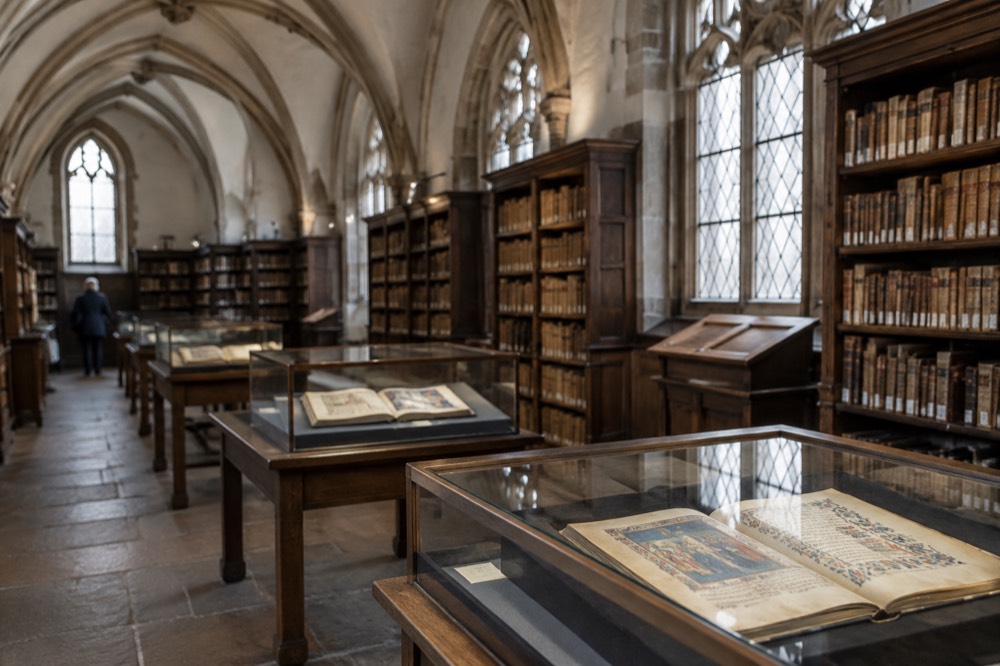
The town’s intellectual heritage is its most surprising draw. The Humanist Library, housed in a former grain hall, holds the personal collection of Beatus Rhenanus, a Renaissance scholar whose books and manuscripts form one of the most complete Renaissance libraries to survive in situ. The collection includes the oldest known schoolbook in Europe, a Merovingian lectionary, and the library was inscribed on the UNESCO Memory of the World register. Visitors can see a rotating display of the collection and walk through the atmospheric reading room.
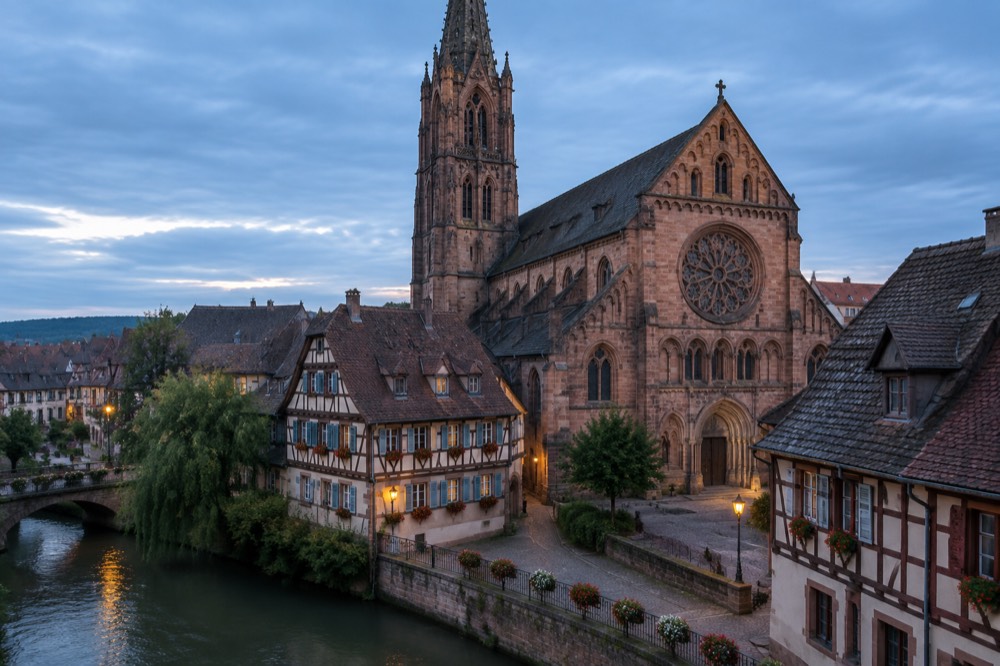
The two main churches give the town its other historical anchor. St. Faith’s Church, a Romanesque building, has a strikingly austere sandstone interior and a crypt that predates the Gothic style. St. George’s Church, a few streets away, is a Gothic hall church with a luminous stained-glass programme and a tower that dominates the skyline. Both are free to enter, and a walk between the two takes you through the heart of the old town.
| Reason | What It Means For Your Day Trip |
|---|---|
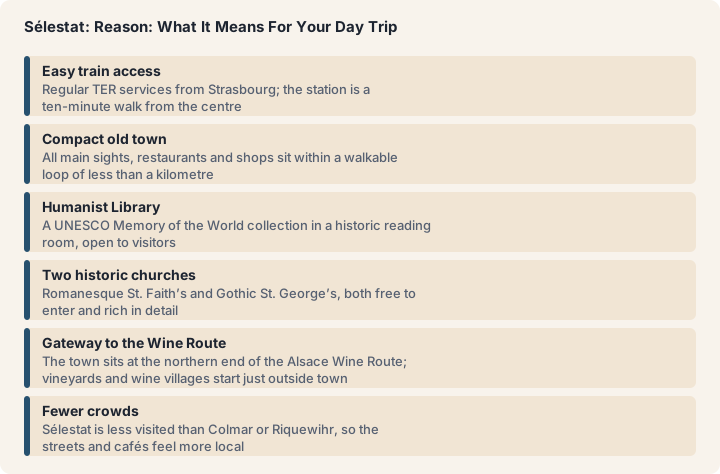
| Easy train access | Regular TER services from Strasbourg; the station is a ten-minute walk from the centre |
| Compact old town | All main sights, restaurants and shops sit within a walkable loop of less than a kilometre |
| Humanist Library | A UNESCO Memory of the World collection in a historic reading room, open to visitors |
| Two historic churches | Romanesque St. Faith’s and Gothic St. George’s, both free to enter and rich in detail |
| Gateway to the Wine Route | The town sits at the northern end of the Alsace Wine Route; vineyards and wine villages start just outside town |
| Fewer crowds | Sélestat is less visited than Colmar or Riquewihr, so the streets and cafés feel more local |
What Is Sélestat Known For?
Sélestat is celebrated for its extraordinary Humanist Library, a Renaissance treasure trove of early printed books, and for its twin architectural gems: the Romanesque St. Faith’s Church and the Gothic St. George’s. The town also marks the northern gateway to the Alsace Wine Route, with a beautifully preserved old town of half-timbered houses, medieval towers, and a vibrant Saturday market, retaining the quiet, scholarly atmosphere of its humanist past.
The Humanist Library is the headline sight. Housed in the former Halle aux Blés, the library’s reading room is lined with dark wood shelving and illuminated manuscripts. The collection was assembled by Beatus Rhenanus, who bequeathed his books to his hometown. The library today displays a selection of the hundreds of manuscripts and printed books, including the Merovingian lectionary that is the oldest known schoolbook in Europe. Temporary exhibitions often draw on the collection, and the library’s shop sells scholarly catalogues and reproductions.
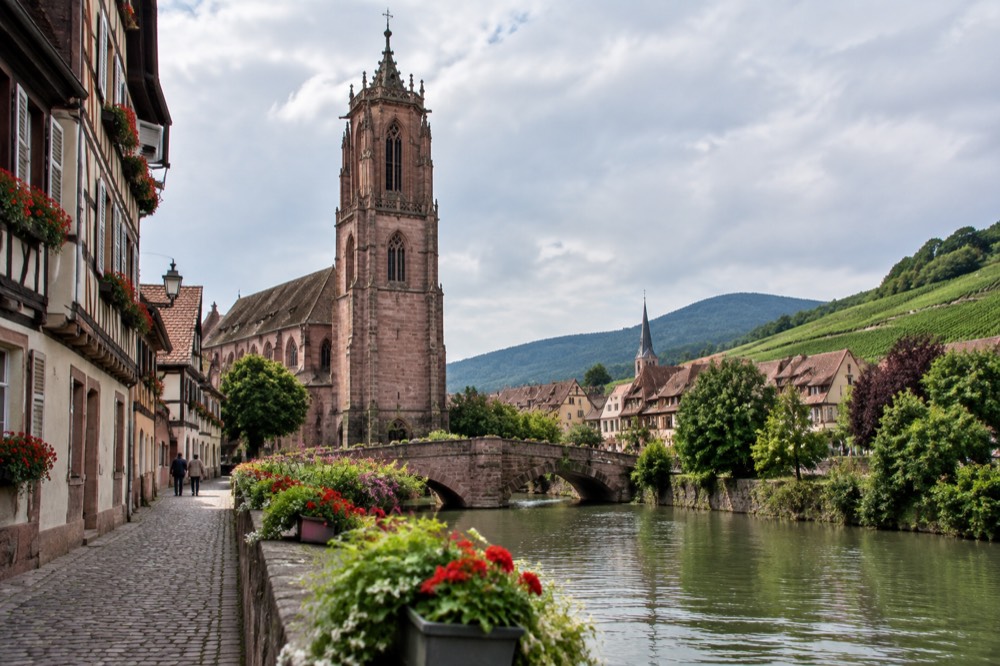
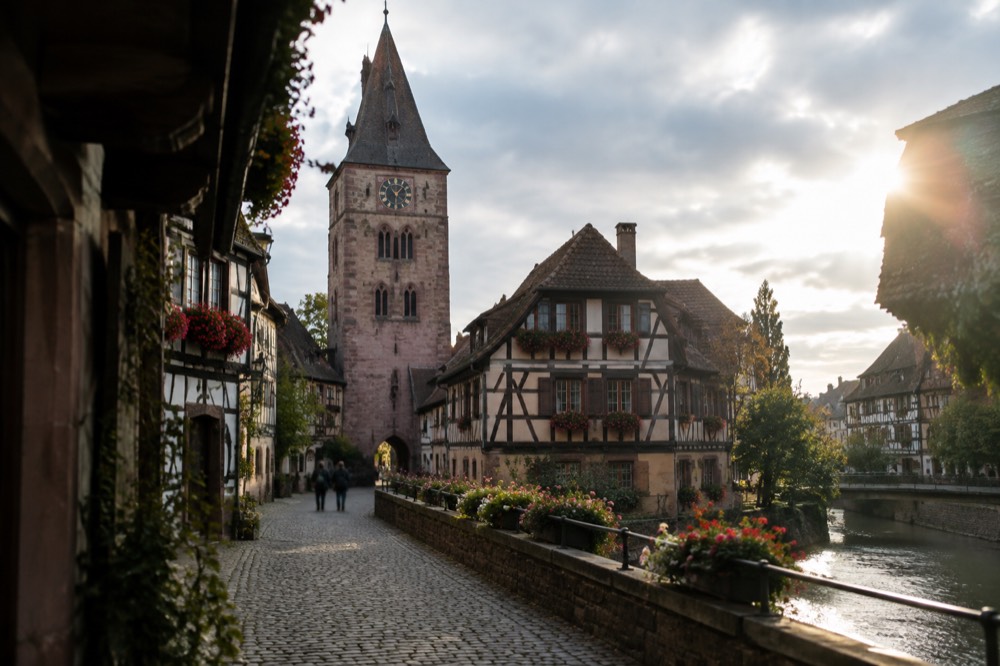
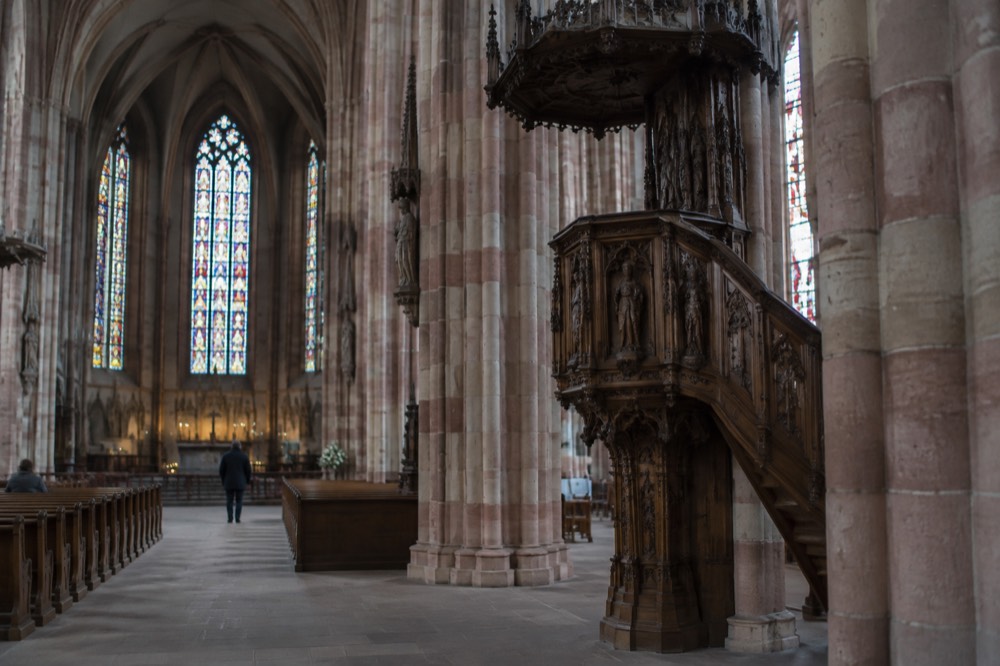
St. Faith’s Church sits on the Place du Marché and is one of the finest Romanesque buildings in Alsace. Its crypt, with its sturdy columns and low vaulting, dates from the Romanesque period and feels far older than the Gothic churches that dominate the region. The church’s exterior is a mix of pink and yellow sandstone, and the interior is deliberately plain, drawing the eye to the architectural lines. St. George’s Church, by contrast, is a soaring Gothic hall church with a richly carved pulpit, a large organ and stained glass that floods the nave with colour. Its tower, visible from the train on the approach to Sélestat, is a landmark for miles around.
The old town itself is a pleasure to walk. Rue des Clefs and Rue des Chevaliers are lined with half-timbered houses in the typical Alsatian palette of ochre, cream and rust red. The Tour de l’Horloge, one of the surviving medieval gates, frames the entrance to the centre, and the Place du Marché hosts a Saturday market that draws producers from across the region. The town’s rampart walk, a green path that follows the line of the old walls, offers a quiet loop with views of the towers and the surrounding plain.
How To Get To Sélestat From Strasbourg
The easiest way to reach Sélestat from Strasbourg is by regional TER train, with frequent services making the short journey ideal for a half-day trip; the station is a ten-minute walk from the old town. Driving via the A35 motorway is an alternative, but central parking is limited. Several full-day guided tours also include Sélestat, combining it with wine villages and Haut-Koenigsbourg castle.
The TER line that serves Sélestat is the Strasbourg-Colmar-Mulhouse route, one of the busiest regional lines in Alsace. Trains depart from Strasbourg’s main station roughly every half hour during the day, and the service is reliable. The train station in Sélestat is modern and compact, with a ticket machine, a waiting room and a small kiosk. From the station, follow the signs for “Centre Ville” along Avenue de la Liberté; the walk is flat and takes about ten minutes. You will pass the Tour Neuve, one of the old town gates, as you enter the historic core.
If you are driving, take the A35 south from Strasbourg and exit at Sélestat. The drive is straightforward, but the old town’s streets are narrow and parking spots near the centre fill quickly. The best strategy is to park in one of the free car parks on the edge of the centre, such as the one near the station, and walk in. On market days, parking is even tighter, so the train is the better option.
Organised day tours from Strasbourg offer the most relaxed way to visit Sélestat, because they bundle the town with the wine villages and the castle of Haut-Koenigsbourg into a single itinerary. The full-day Alsace highlights tour, for example, typically stops in Sélestat for a walk through the old town before continuing to the vineyards and the castle. This is a good choice if you want to see several places without worrying about train connections or parking.
What To See And Do In Sélestat
Spend a morning in Sélestat’s compact old town visiting the Humanist Library, St. Faith’s Church and St. George’s Church, then walk the ramparts, browse the Saturday market and enjoy a meal at a traditional winstub. The town makes an excellent base for cycling into the surrounding vineyards, with route maps and wine-cellar opening hours available from the tourist office. Most sights are free, while the library charges a modest entry fee.
Start your walk at the Place du Marché, where the Saturday market sets up under the shadow of St. Faith’s Church. The market is a proper local affair, with fruit and vegetable stalls, cheese mongers, charcuterie stands and a few florists. Even on other days, the square is a good spot to orient yourself, with several cafés and the tourist office on one side. From the square, walk through the narrow Rue des Chevaliers, past half-timbered houses, to the Humanist Library on Rue de la Bibliothèque. The library is open Tuesday to Sunday, and the displays change regularly, so even a repeat visit can feel fresh. Allow at least forty-five minutes to an hour to read the labels and absorb the atmosphere.
From the library, it is a short walk to St. George’s Church, whose Gothic interior is a contrast to the Romanesque St. Faith’s. The stained glass here is particularly fine, and the organ recitals that sometimes take place on summer afternoons are worth planning around. After the church, follow the rampart walk eastward along the line of the old walls. The path is shaded by plane trees and passes the Tour des Sorcières and the Tour de l’Horloge, two of the surviving medieval towers. The walk loops back toward the station, making it a natural end point if you are heading back to Strasbourg.
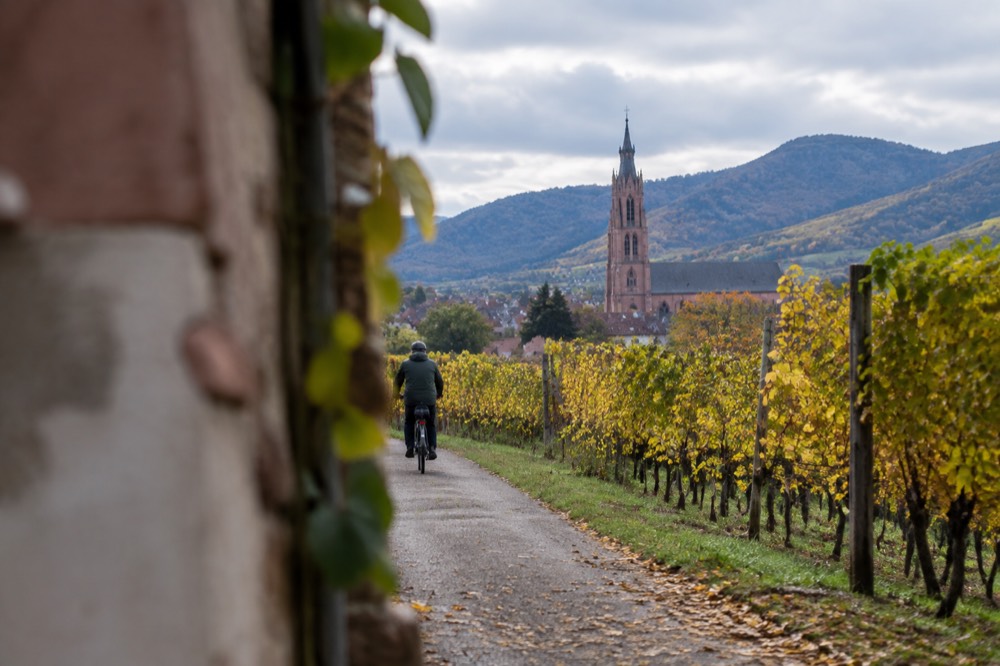
For cyclists, Sélestat sits at the intersection of several signposted cycle routes that lead into the vineyards. The tourist office rents bikes and can suggest loops of fifteen to thirty kilometres that take in villages like Bergheim, Saint-Hippolyte and Châtenois. The terrain is mostly flat, and the routes follow quiet country roads and vineyard tracks. This is one of the best ways to turn a half-day visit into a full day, especially in spring and early autumn when the vines are green and the temperatures are mild.
| Sight | What It Is | Why Visit |
|---|---|---|
| Humanist Library | Renaissance library in a former grain hall, UNESCO Memory of the World | See one of Europe’s most intact scholarly collections, including the oldest known schoolbook |
| St. Faith’s Church | Romanesque church with a crypt | Experience the austere beauty of early Alsatian church architecture |
| St. George’s Church | Gothic hall church with stained glass and a landmark tower | Contrast the Gothic style with St. Faith’s; climb the tower when open |
| Rampart walk | Green path following the medieval walls | A quiet stroll with tower views, away from the main streets |
| Saturday market | Weekly market on Place du Marché | Local produce, cheese, charcuterie and a lively atmosphere |
| Tour de l’Horloge | Medieval gate tower | A photogenic entrance to the old town and a reminder of Sélestat’s fortified past |
Sélestat And The Alsace Wine Route
Sélestat serves as the gateway to the northern Alsace Wine Route, with the vineyard-draped villages of Bergheim, Saint-Hippolyte and Châtenois just a few kilometres away, each offering tasting rooms and half-timbered charm, while the town itself boasts wine shops and a cooperative cellar for sampling local Sylvaner, Pinot Blanc and Riesling.
The Alsace Wine Route is one of the oldest wine routes in France, and its northern section begins right outside Sélestat. The vineyards here grow on the lower slopes of the Vosges, where the soil and the dry, sunny climate produce aromatic white wines. The signature grapes of the area are Riesling, Gewurztraminer, Pinot Gris and Muscat, but around Sélestat you will also find a lot of Sylvaner and Auxerrois. Many of the village cellars offer free tastings, and the tourist office in Sélestat can tell you which ones are open on the day of your visit.
Bergheim, north-west of Sélestat, is a fully walled medieval village with a gate tower, a cobbled main street and several excellent winstubs. Saint-Hippolyte, to the south-west, is smaller and quieter, with a Romanesque church and a hilltop castle ruin above the vineyards. Châtenois, a few kilometres west, has a well-preserved old centre and a Romanesque church. All three can be reached by bike from Sélestat, or by car in a few minutes. If you are relying on public transport, the regional bus network serves some of these villages, but services are infrequent; a taxi or a guided tour is more practical.
A half-day wine tour from Strasbourg that includes Sélestat and the vineyards solves the transport puzzle. These tours typically pick up in Strasbourg, drive south through the wine country, stop for a walk in Sélestat and then visit two or three family-run cellars for tastings. The guides are usually knowledgeable about the local grape varieties and the winemaking process, and you do not need to worry about driving after a tasting.
Where To Eat In Sélestat
For the best local flavors in Sélestat, head to the winstubs and bakeries around Place du Marché and St. George’s Church for choucroute, tarte flambée, and baeckeoffe, or visit the Saturday market to build a picnic of cheese and charcuterie; lunchtime plat du jour offers great value, but book ahead on market days and during harvest.
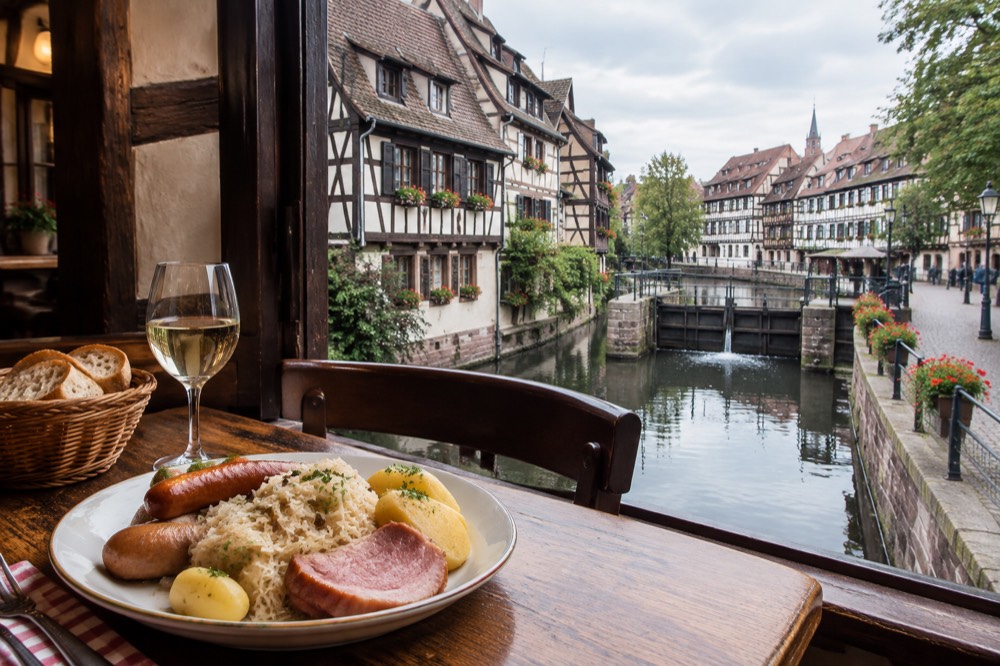
A winstub is the classic Alsatian eating house, a warm, wood-panelled room where the food is hearty and the wine list is local. In Sélestat, the winstubs tend to be family-run and unpretentious. The menu will almost always include choucroute garnie, a piled plate of sauerkraut with sausages, smoked pork and potatoes, and tarte flambée, the thin, crispy flatbread topped with crème fraîche, onions and lardons. Baeckeoffe, a slow-cooked casserole of marinated meats and potatoes, is another staple, though it often needs to be ordered in advance.
For a quicker lunch, the bakeries around the Place du Marché sell sandwiches on fresh baguettes, quiches and slices of kougelhopf, the yeasted cake studded with raisins and almonds that is a symbol of Alsace. The Saturday market is the best place to buy a wedge of Munster cheese, a stick of dry sausage and a bag of pretzels for a picnic on the ramparts. Several wine shops in the centre sell bottles by the glass and can recommend a Sylvaner or a Pinot Blanc to go with your picnic.
If you are staying for dinner, the pace slows down and the restaurants become cosier. Reservations are a good idea, especially on Friday and Saturday evenings, because the dining rooms are small and the locals fill them quickly. The tourist office keeps a current list of opening hours, as some smaller places close for a few weeks in late summer or between Christmas and New Year.
| Dish | What It Is | Where To Find It |
|---|---|---|
| Choucroute garnie | Sauerkraut with sausages, smoked pork and potatoes | Most winstubs, especially on the Place du Marché |
| Tarte flambée | Thin flatbread with crème fraîche, onions and lardons | Winstubs and casual brasseries |
| Baeckeoffe | Slow-cooked casserole of marinated meats and potatoes | Traditional winstubs; often needs advance order |
| Kougelhopf | Yeasted cake with raisins and almonds | Bakeries and the Saturday market |
| Munster cheese | Pungent washed-rind cheese from the Vosges | Market stalls and cheese shops |
Practical Tips For A Day Trip To Sélestat
To make the most of a day trip to Sélestat, aim for spring or early autumn for pleasant walking and vineyard colours; the town is compact and flat, so comfortable shoes suffice, and the tourist office on Place du Marché provides maps and wine-cellar opening hours; bring euros for cash-only market stalls, and rest easy knowing trains to Strasbourg run until late evening.
The climate in this part of Alsace is semi-continental, with warm summers and cold winters. Spring, from April to June, brings blossom in the vineyards and daytime temperatures that are ideal for walking. Autumn, from September to October, is harvest season, and the vineyards turn gold and russet; this is the busiest time for wine tourism, so book any guided tours well ahead. Winter can be cold and grey, but the Christmas market in Sélestat is a smaller, more local affair than the one in Strasbourg, and the town looks beautiful under a dusting of snow.
The tourist office on Place du Marché opens Monday to Saturday and can provide a free town map, a list of wine cellars open for tastings and a timetable of guided visits to the Humanist Library. The office also rents bikes and can suggest vineyard cycling loops. If you plan to visit several museums or attractions in Alsace, the Strasbourg City Card, which costs 5 EUR for adults and 3.50 EUR for children, offers discounts on some regional sights, though it does not cover Sélestat’s library entry; check the current list of partners before you buy.
For a full day, consider combining Sélestat with a wine village or a visit to the Haut-Koenigsbourg castle, which sits on a hilltop about fifteen kilometres away. The castle is one of the most visited monuments in Alsace, and its restored interiors and panoramic views are impressive. There is no direct public transport from Sélestat to the castle, so a car or a guided tour is necessary. The full-day Alsace highlights tour from Strasbourg typically includes both Sélestat and Haut-Koenigsbourg, along with a wine tasting, making it the easiest way to see the area’s three big draws in a single day.
Sélestat Compared To Other Alsace Day Trips
Sélestat offers a middle ground among Alsace day trips: it is smaller and less crowded than Colmar or Riquewihr, yet it has more cultural depth than the quieter wine villages thanks to the Humanist Library and its two churches. Choose it when you want a genuine local feel, a manageable size, and a strong intellectual heritage rather than the busier headline wine-route stops.
Colmar, the best-known day trip from Strasbourg, is a larger town with a bigger collection of museums, including the Unterlinden Museum with its Isenheim Altarpiece, and the picturesque Little Venice quarter. It is also far busier, and its streets can feel overwhelmed by tour groups in summer and during the Christmas market. Riquewihr, a perfectly preserved wine village, is almost too pretty, and its main street is essentially a single-file tourist corridor for much of the year. Both are worth seeing, but neither offers the quiet, scholarly atmosphere of Sélestat.
The smaller wine villages, such as Bergheim, Saint-Hippolyte and Châtenois, are charming but lack the cultural institutions that give Sélestat its depth. They are best visited as part of a driving or cycling loop that includes Sélestat as the anchor. The town’s train station also makes it the most accessible base for car-free visitors, something the villages cannot match.
If you are choosing a single day trip from Strasbourg and want a mix of history, architecture, food and wine, Sélestat is the most well-rounded option. It is not the most famous, but it is the most complete.
| Town | Character | Best For |
|---|---|---|
| Sélestat | Historic, intellectual, local feel | Culture, churches, library, gateway to Wine Route |
| Colmar | Larger, museum-rich, busy | Major museums, Little Venice, Christmas market |
| Riquewihr | Picture-perfect wine village, crowded | Photography, wine tasting, half-timbered streets |
| Bergheim | Walled village, quiet | A short stop on a cycling loop, local winstubs |
| Saint-Hippolyte | Small, rustic, vineyard setting | A peaceful glass of wine, castle ruin views |
| Obernai | Larger market town, lively square | Saturday market, ramparts, family-friendly |
Common Questions About Sélestat
Is Sélestat Worth Visiting As A Day Trip From Strasbourg?
Sélestat is worth visiting if you want a quieter, more intellectual Alsatian town with a UNESCO-listed library, two remarkable churches and a genuine local atmosphere. It is less crowded than Colmar or Riquewihr and easy to reach by train. The town works well as a half-day cultural visit or a full day paired with the surrounding vineyards.
How Long Does It Take To Get From Strasbourg To Sélestat?
The regional TER train from Strasbourg to Sélestat is a short journey with frequent departures throughout the day. Check the SNCF Connect website or app for current timetables and platform information. The station in Sélestat is a ten-minute walk from the old town.
What Is The Humanist Library In Sélestat?
The Humanist Library is a Renaissance collection of manuscripts and printed books bequeathed to the town by the scholar Beatus Rhenanus. It contains hundreds of manuscripts and printed books, including the oldest known schoolbook in Europe. The library is a UNESCO Memory of the World site and is open to visitors.
Can I Visit Sélestat And The Wine Route In One Day?
Yes, Sélestat is close to the Alsace Wine Route, and several wine villages are within a few kilometres. You can combine the town with a morning of wine tasting by bike or car, or join a guided half-day wine tour from Strasbourg that includes Sélestat and the vineyards.
Is Sélestat Better Than Colmar For A Day Trip?
Sélestat and Colmar offer different experiences. Colmar is larger, with more museums and a livelier tourist scene, while Sélestat is quieter, more intellectual and feels more like a local market town. If you prefer culture and calm over crowds and big-name sights, Sélestat is the better choice.
Sélestat rewards the visitor who slows down enough to look past the obvious. Its library, its churches and its quiet streets tell a story of Alsace that is older and deeper than the postcard villages, and its position at the head of the Wine Route makes it a natural starting point for a day that moves from stone to soil. Whether you come for an hour or a whole day, the town leaves you with a sense of having found something real.