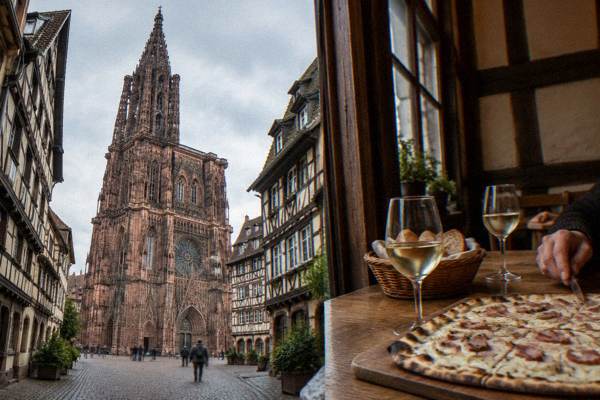
What Is The Signature Dish Of Strasbourg?
The signature dish of Strasbourg is choucroute garnie, Alsatian sauerkraut heaped with charcuterie and potatoes, served in the city's winstubs. Here is what it is, where to eat it, and what else belongs on the table.
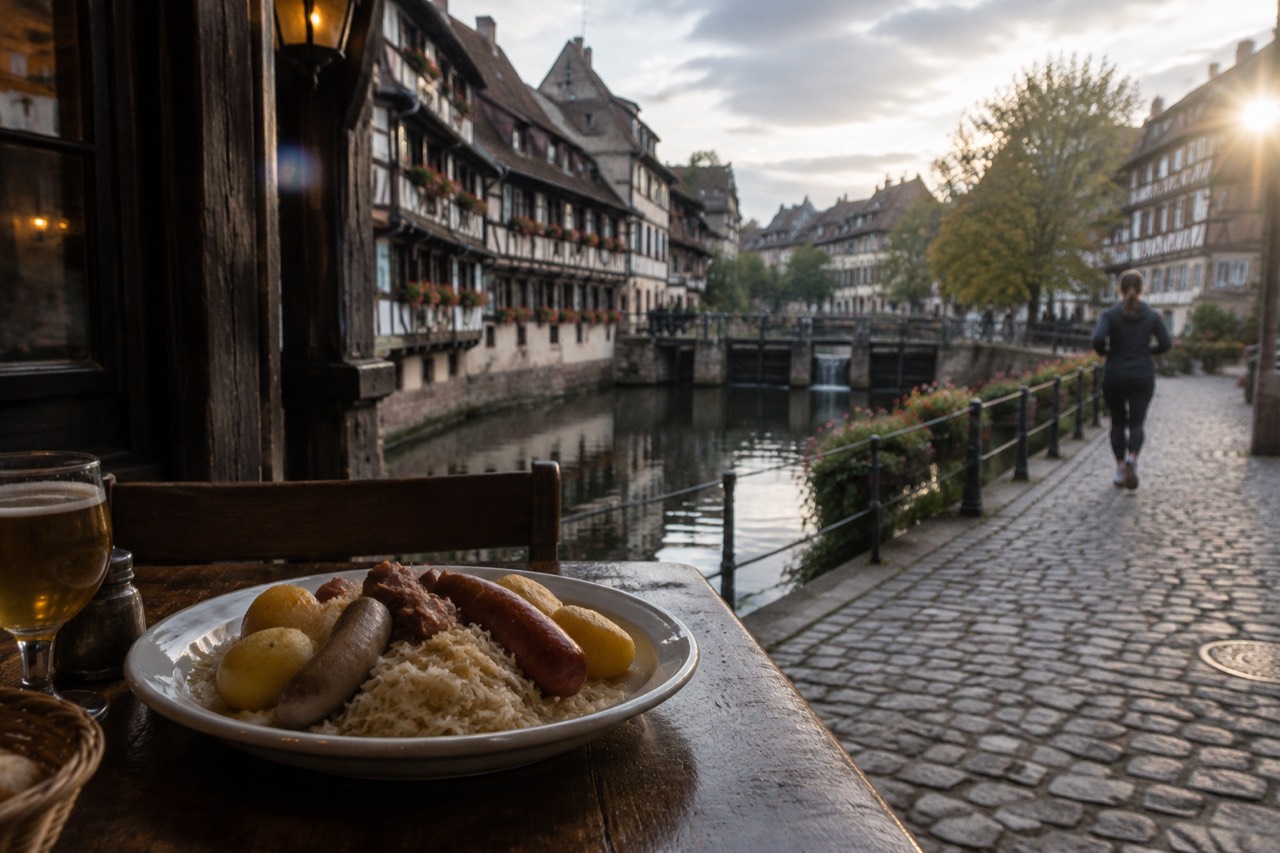
Strasbourg, in Alsace in north-eastern France, answers the question of its signature dish without hesitation: choucroute garnie. This is Alsatian sauerkraut, slowly cooked in white wine, buried under a generous arrangement of pork sausages, smoked meats and potatoes, and served in the wood-panelled dining rooms the city calls winstubs. It is the plate that appears on every postcard menu, the one visiting diners photograph before touching, and the one the city's kitchens have carried across borders and centuries of changing rule. But Strasbourg's table is wider than a single dish, and the honest answer deserves a proper look at what surrounds it.
What Is The Signature Dish Of Strasbourg?
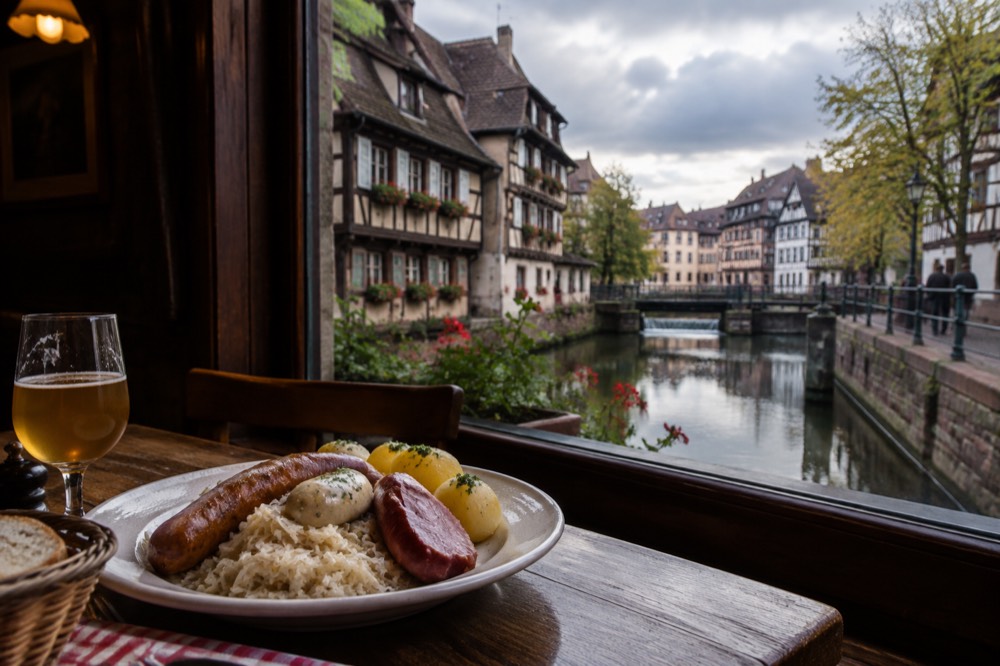
The signature dish of Strasbourg is choucroute garnie: fermented cabbage cooked down with white wine and aromatics, then piled high with sausages, smoked pork belly and potatoes, all served together in a single generous plate. It is the centrepiece of the Alsatian winstub, it pairs with the region's dry white wines, and it appears on menus across the Grande Île. If one plate names the city, this is it.
The word choucroute is the French rendering of the Alsatian and German word for sauerkraut, and the garnie means the cabbage comes loaded, dressed, furnished. The cabbage itself is fermented, then braised long and slow, often with a pour of Riesling in the pot. The garnish is where each kitchen shows its hand: frankfurter-style sausages, smoked pork belly, sometimes salted pork shoulder, and potatoes boiled until they drink up the cooking liquor. A well-made version is richer and softer than the sharp sauerkraut of elsewhere, because the long cooking rounds the fermentation into something mellow.
The setting matters as much as the plate. A winstub, the word means wine room in the Alsatian dialect, is a small tavern with checked tablecloths, carved wooden chairs and a chalkboard menu. The dish belongs to that room, to a carafe of local white wine and to an unhurried evening. Visitors planning a first trip often ask how many days in Strasbourg is enough, and the honest answer includes at least one long winstub dinner, because this food does not reward a rushed plate.
Where Choucroute Garnie Sits On The Alsatian Table
Choucroute garnie is the heavyweight of a whole family of Alsatian dishes rather than a lone speciality. Around it sit tarte flambée, the thin flatbread baked with cream, onions and bacon; baeckeoffe, a slow-baked casserole of meats and potatoes; and kougelhopf, the ring-shaped brioche that closes the meal. Each has its own moment on a Strasbourg menu, and the winstub kitchen serves them all.
The useful way to think about the cuisine is by weight and hour. Tarte flambée, called flammekueche in the Alsatian dialect, is the light, quick plate: paper-thin bread, fromage blanc, onions and lardons, baked fast in a hot oven and eaten in minutes. Baeckeoffe is the opposite, a dish assembled the day before and left to bake for hours, so the meats fall apart under the crust. Choucroute garnie is the fullest expression of that slow tradition, the plate you order when the evening is long and the appetite is real.
| Dish | What It Is | How It Is Served |
|---|---|---|
| Choucroute garnie | Sauerkraut braised in white wine with sausages, smoked pork and potatoes | One large shared plate in a winstub, with Riesling on the table |
| Tarte flambée | Thin flatbread with fromage blanc, onions and lardons | Cut into rectangles and eaten fast, often as a starter or late snack |
| Baeckeoffe | Marinated meats and potatoes baked slowly in a covered dish | A main course ordered ahead in many winstubs |
| Kougelhopf | Ring-shaped brioche with raisins and almonds | A breakfast cake or a dessert, sold whole in bakeries |
None of this food is a museum piece. It is what the city still eats on ordinary weeknights, which is why the question of a signature dish is worth answering carefully. A useful companion read is why Strasbourg is so famous, because the city's reputation rests as much on its table as on its cathedral spire.
Tarte Flambée And The Rival Claimants
If choucroute garnie is the official signature, tarte flambée is the people's counter-claim: a blistered flatbread of cream, onions and bacon that Alsatian families historically baked beside the weekly bread. It is cheaper, faster and lighter, and in the city's dedicated tarte flambée restaurants it arrives in waves, one rectangle after another, until the table calls a stop. Many visitors end up remembering it as the taste of Strasbourg.
The rivalry is friendly but real. Ask for the city's signature dish in a winstub and you will be served choucroute; ask a student where to eat well on a budget and you will be sent to a flammekueche table. The two dishes even mark different corners of the city, with dedicated tarte flambée houses, some of them out in the neighbourhoods beyond the Grande Île, drawing locals for the baked-to-order ritual. Ordering works like a running menu: the plain version arrives first, then variations with mushrooms, cheese or munster, and the kitchen keeps sending them until you say enough.
The wine list explains the rest. Alsace is white-wine country, and the local bottles, Riesling above all, cut through the richness of both dishes. A dry Riesling with choucroute and a lighter sip with tarte flambée are the standard pairings in any winstub, and the region's sparkling crémant d'Alsace handles either. Visitors who want to go deeper into the vineyards themselves can follow the Alsace wine route as a day trip from the city.
How To Eat Your Way Through Strasbourg In One Evening
A single evening can carry the full arc of the city's food: a tarte flambée to start, a choucroute garnie as the main event, a glass of Riesling throughout and a slice of kougelhopf to finish. The winstubs of the Grande Île and the Krutenau quarter make this possible on foot, because the city centre is compact and the dining rooms sit within a short walk of one another.
To eat your way through that whole arc in one evening, book a food tour here.
The practical order matters. Book a winstub for the main plate, because the good rooms fill up, and arrive hungry, because portions are built for appetite. Start with a shared tarte flambée while you read the menu, then commit to the choucroute. Leave the kougelhopf for the walk home, bought whole from a bakery window, because the cake keeps well and makes a fine breakfast the next morning. It is the kind of evening that rewards a guide's local knowledge, and travellers curious about the city's broader reputation can read what to avoid in Strasbourg to keep the night on the right side of the tourist track.
For visitors who want the stories behind the streets as well as the plates, an evening walk with a private guide pairs well with dinner, since the old quarter takes on a different character after dark and the half-timbered lanes between the cathedral and the river are at their quietest before the late tables fill.
Eating In Strasbourg In December: Markets And Winstubs
December is the season when Strasbourg's two food identities, the winstub and the Christmas market, run side by side. The markets open in the last week of November and run to 24 December, filling the squares with chalet kitchens, while the winstubs stay warm and full a few streets away. The signature dish tastes different in that cold: heavier, more welcome, more obviously built for the climate.
The market stalls carry their own smaller menu, and it is no accident that it rhymes with the winstub list: warm bredele biscuits, roasted chestnuts, mulled wine and soup served in the open air. The pattern is to graze at the stalls through the afternoon, then finish with a proper sit-down plate in the evening. Last year's edition drew 3.05 million visitors across its run, so the squares are busy, and the winstub reservation is worth making early. The city's own Christmas site is the place to confirm this year's dates and programme before booking anything, because the 2026 details were still being finalised there.
| What To Plan In December | Figure To Work With | Where To Confirm It |
|---|---|---|
| Christmas market dates | 2025 edition ran 26 November to 24 December; 2026 dates not yet published | The city's official Christmas site |
| A day of transit | 24H Solo pass 4.60 EUR, 24H Trio for two to three people 10.20 EUR | The CTS fare page |
| Museum time between meals | Municipal museums free the first Sunday of the month | The city's museums page |
| Evening temperatures | Mean December maximum 5.9 C, minimum 0.8 C | Meteo-France 1991-2020 normals |
For travellers who want the food city and the market towns in one trip, the Alsace Christmas markets day tour from Strasbourg covers the festive circuit beyond the city, and Check availability if a December visit is on the calendar. It is a natural pairing with a winstub evening, since the tour returns to a city that eats well in every season. This Strasbourg Travel Guide page sits alongside a fuller set of food pieces, including dedicated guides to the winstubs, the tarte flambée and the kougelhopf.
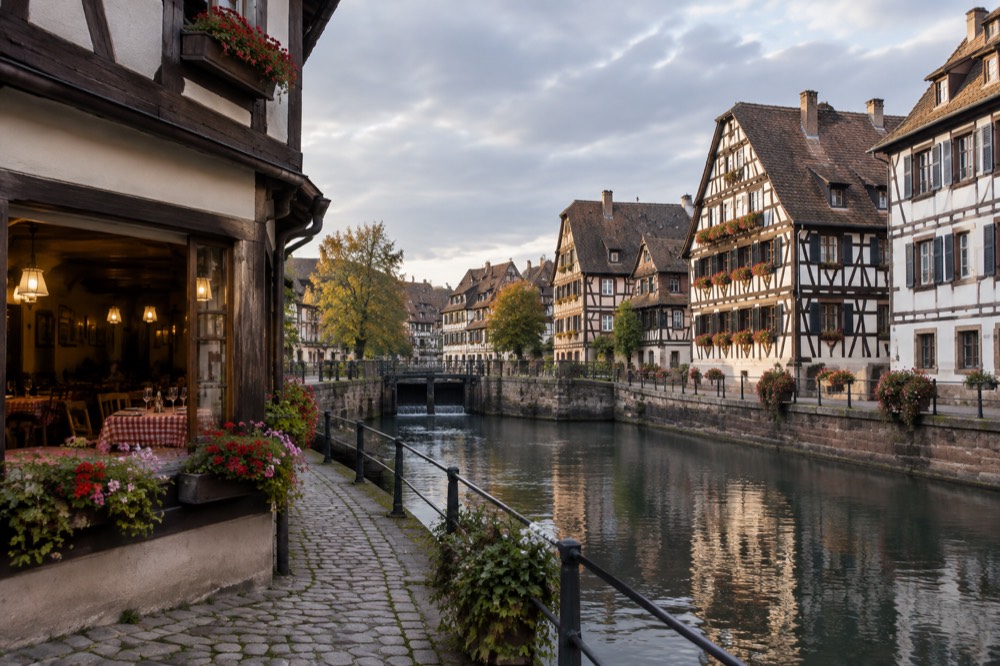
The pairing of plate and season is what makes December the fullest month to eat in Strasbourg, but the signature dish does not wait for it. Choucroute garnie holds the winstub menu all year, and the city's food identity holds with it: the slow cabbage, the local wine, the room built for staying. Whether the trip lands in the market weeks or in a quieter season, the plate that answers this page's question is the same one, and the winstubs of the Grande Île serve it nightly.
Common Questions About The Signature Dish Of Strasbourg
What is the signature dish of Strasbourg?
Choucroute garnie is the signature dish of Strasbourg: sauerkraut braised in white wine and served with sausages, smoked pork and potatoes. It anchors the menus of the city's winstubs and pairs with Alsace's dry white wines, above all Riesling.
Is choucroute garnie the same as ordinary sauerkraut?
No. The Alsatian version is fermented cabbage cooked slowly, often with white wine, until the sharpness softens, and it is served as a full main course with a generous garnish of pork and potatoes rather than as a side.
What is the difference between choucroute garnie and tarte flambée?
Choucroute garnie is a slow, heavy main course of braised cabbage and pork. Tarte flambée is a thin flatbread baked quickly with cream, onions and bacon, served in slices and often eaten as a lighter meal or a shared starter.
Where should I eat choucroute garnie in Strasbourg?
Book a winstub, the traditional Alsatian wine room, in or around the Grande Île. Reservations matter in the good rooms, portions are built for serious appetite, and the local white wine list is part of the experience.
What wine is served with the signature dish?
Dry Alsace whites, with Riesling the classic choice, cut through the richness of the pork and cabbage. The region's sparkling crémant d'Alsace is another common pour at the winstub table.
Is the signature dish a winter food only?
It appears on winstub menus year round, but it belongs to cold weather, and December, with a mean maximum of 5.9 C in the city, is when it tastes most at home alongside the Christmas market season.