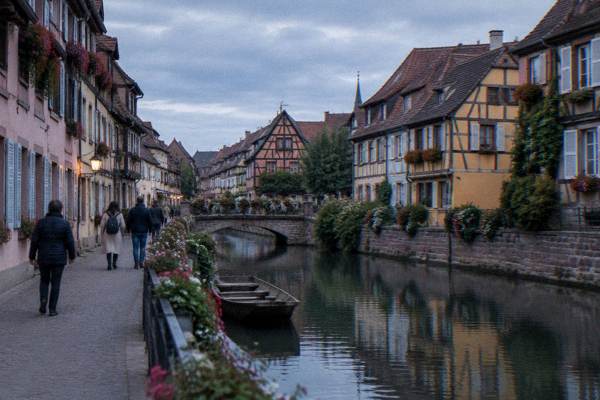
Ecomusee D'Alsace
The Ecomusee d'Alsace is an open-air museum of rural Alsatian life, a day trip south of Strasbourg in the direction of Mulhouse, where farmhouses, workshops and fields have been reassembled into a walkable village.
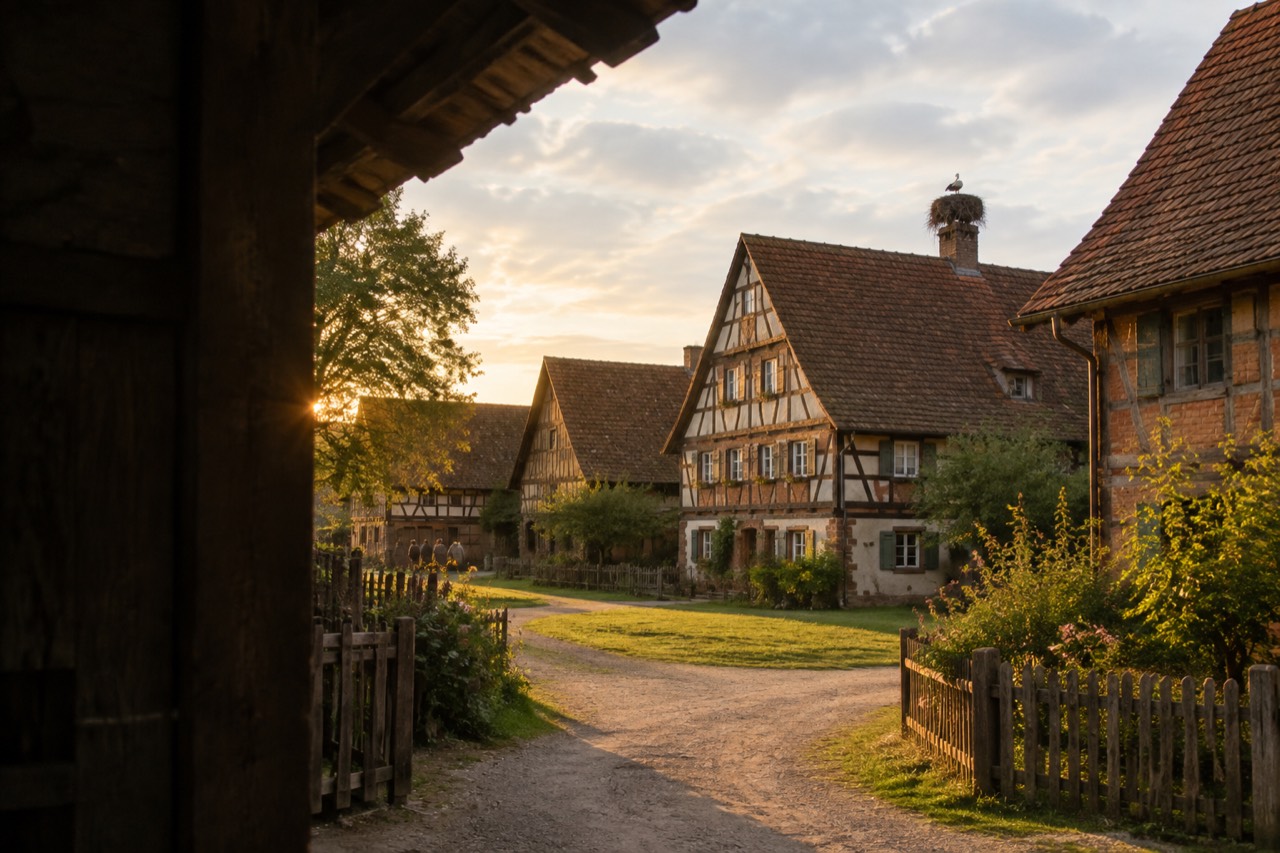
Short answer
The Ecomusee d'Alsace is an open-air museum in the hills between Strasbourg and Mulhouse, where historic farmhouses, barns and craft workshops from across the region have been rebuilt as a walkable village. Plan it as a full day out from Strasbourg, pair it with a guided walk of the city on another day, and check the museum's own site for opening days and ticket prices before you set off.
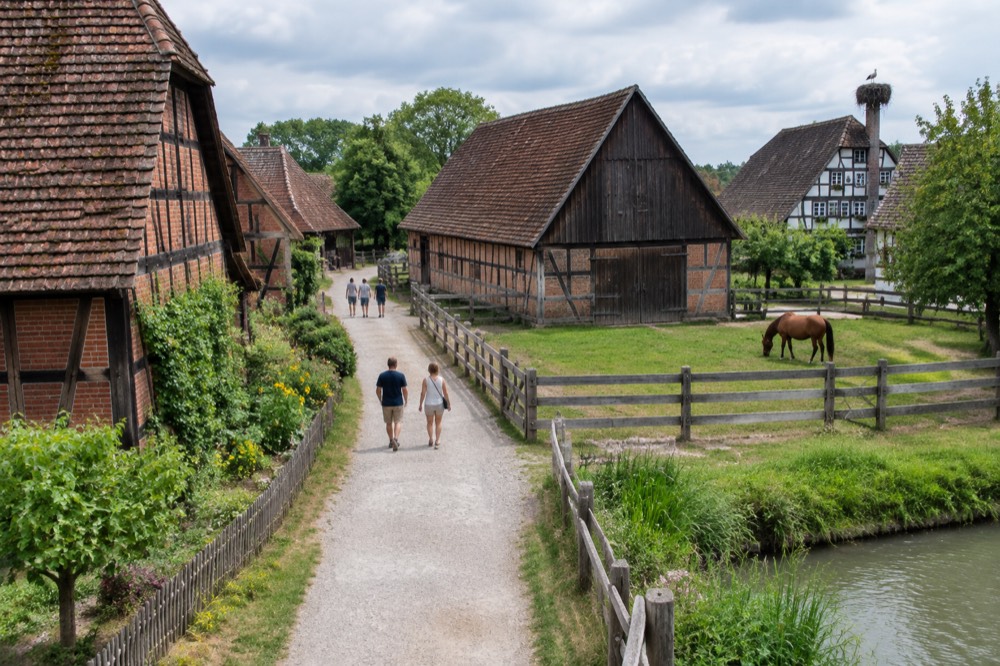
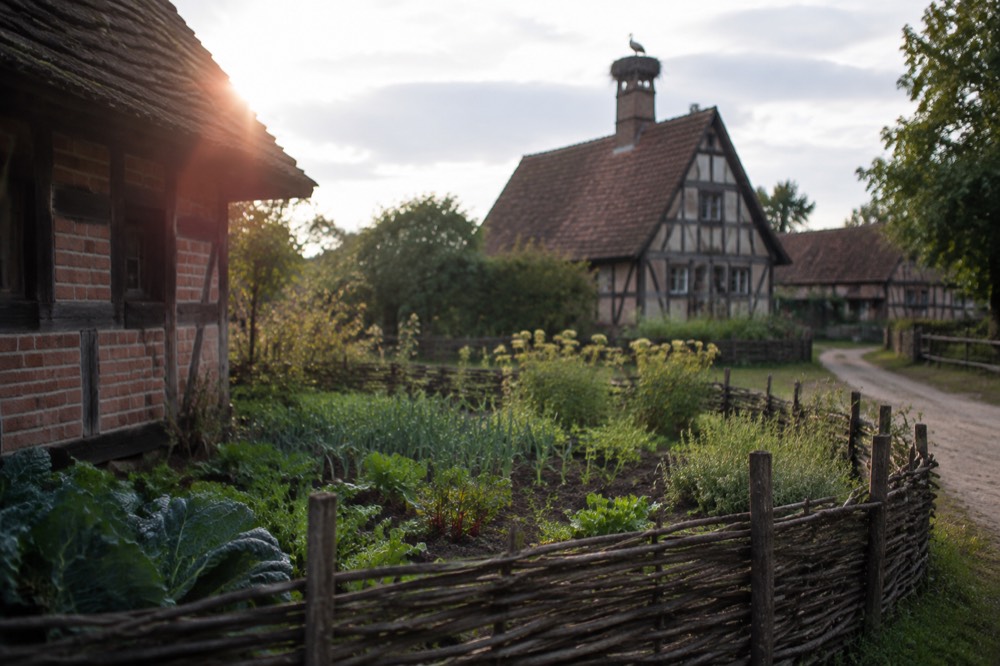
Strasbourg, in Alsace in north-eastern France, is a city of half-timbered streets and river quarters, but the region's older identity is rural: farmhouses with steep tiled roofs, storks on chimney stacks, vineyards climbing the foothills of the Vosges. The Ecomusee d'Alsace, an open-air museum between Strasbourg and Mulhouse, preserves that rural world in physical form. Historic buildings from across Alsace have been taken down, moved and rebuilt on one site as a village you walk through, with gardens, fields, farm animals and costumed interpreters practising traditional crafts. This guide, from Strasbourg Travel Guide, covers what the museum is, how to plan the day trip from Strasbourg, which season suits it, and how it compares with the museums you can visit without leaving the city.
What Is The Ecomusee D'Alsace?
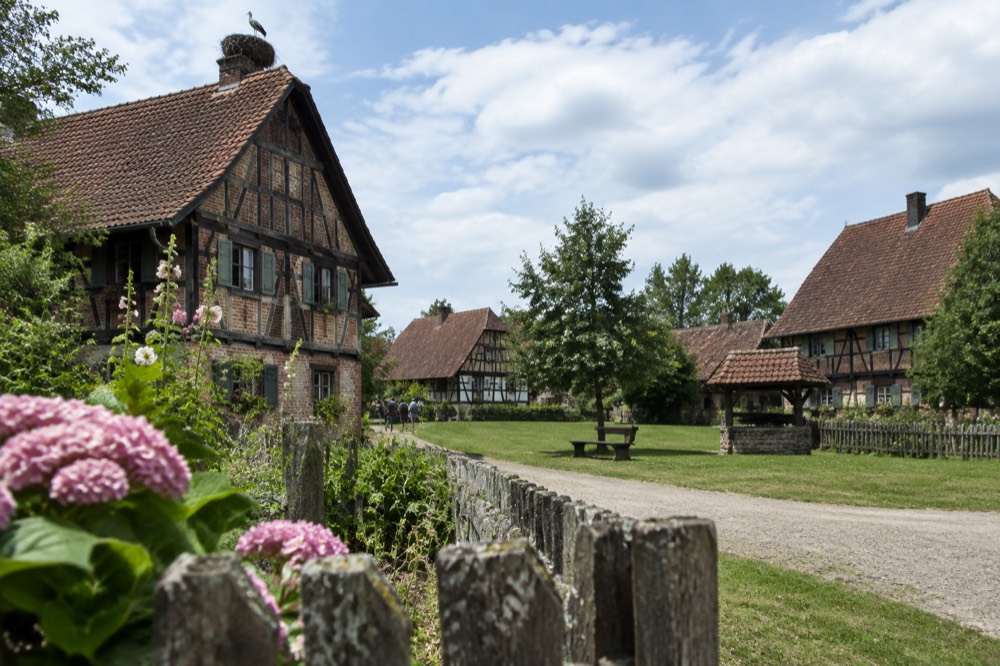
The Ecomusee d'Alsace is an open-air museum of rural Alsatian life, located in the countryside between Strasbourg and Mulhouse, where farmhouses, barns, mills and craft workshops brought from across the region have been reassembled as a walkable historic village. It shows the countryside that shaped Strasbourg's wine, food and building traditions, and it is one of the few places in Alsace where that world is preserved whole rather than as objects behind glass.
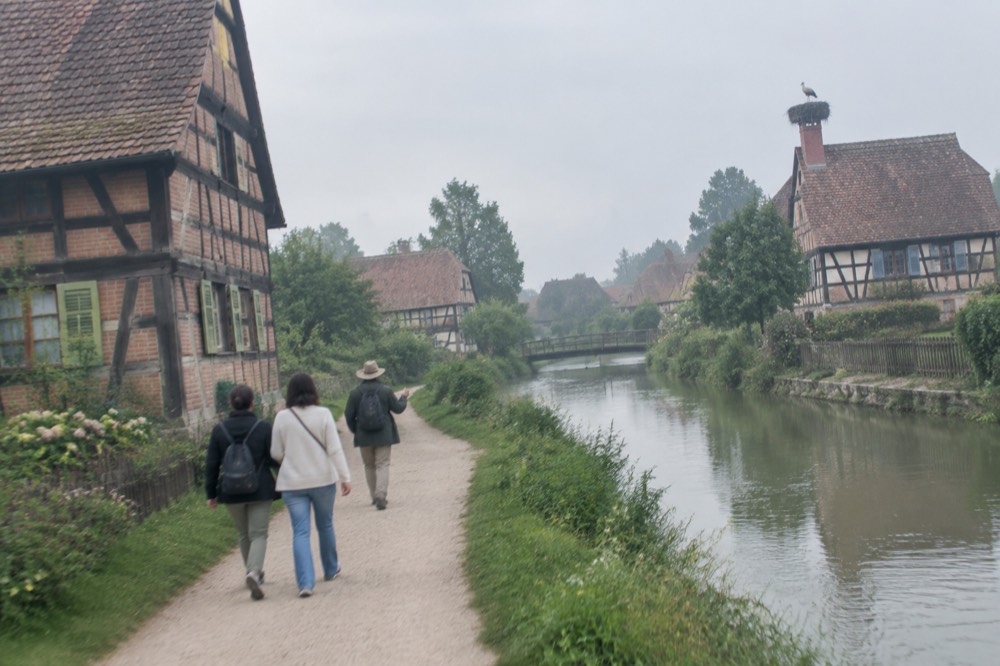
Think of it as the opposite of a conventional museum. Instead of walking past display cases, you walk down lanes between buildings that were once scattered across Alsatian villages, each one rebuilt on the site with its own layout, furniture and tools. Costumed staff work in the workshops: a potter at the wheel, a blacksmith at the forge, a baker firing a wood oven. Fields and paddocks hold the livestock that belonged to this economy, and kitchen gardens grow the vegetables and herbs that Alsatian farm kitchens actually used. The effect is closer to visiting a working village than an exhibition.
The museum exists because rural Alsace changed fast. Farmhouses were abandoned or modernised, outbuildings demolished, crafts replaced by factory production. Rather than let the material culture of the Alsatian countryside disappear piece by piece, the project brought representative buildings to one site and gave them a second life as a living landscape. For a visitor based in Strasbourg, that context is the point: the winstubs, market squares and half-timbered facades of the Grande Île all descend from the world the Ecomusee reconstructs.
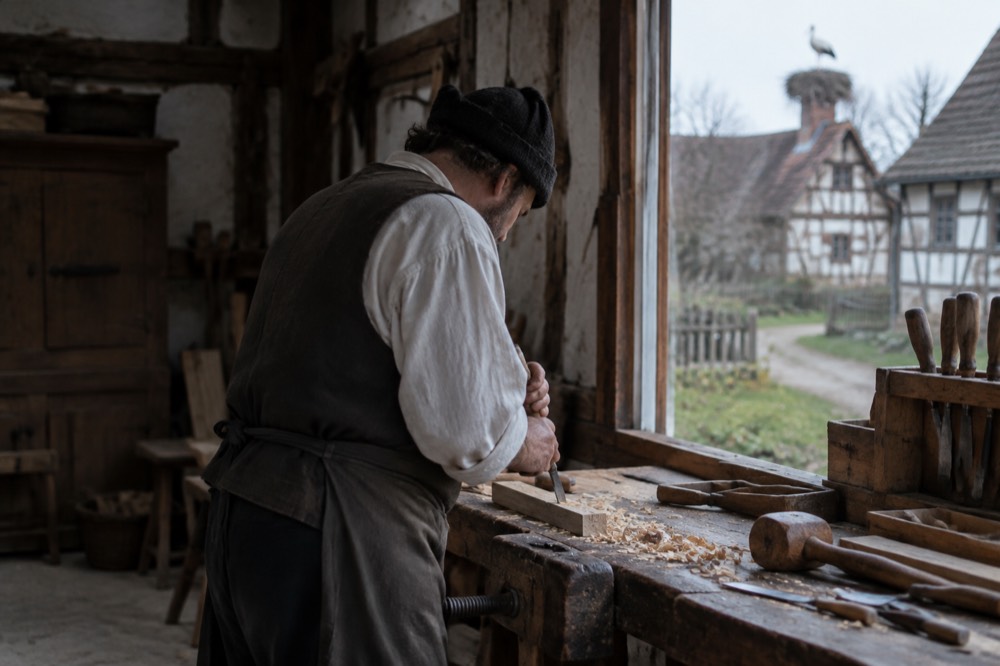
What the site deliberately avoids is the polished theme-park version of the past. Buildings show wear, tools are arranged as they were used, and the interpretation is organised around how people actually lived: how a harvest was brought in, how bread was baked, how cloth was dyed. Families with children tend to spend the longest time here, because nearly everything can be touched, watched or walked through rather than merely looked at.
How To Plan A Day Trip To The Ecomusee From Strasbourg
Treat the Ecomusee d'Alsace as a full-day outing from Strasbourg, not a half-day detour: the museum sits in the Alsatian countryside towards Mulhouse, the visit itself rewards several unhurried hours. Decide first whether you will drive, take a regional train towards Mulhouse and connect locally, or join an organised excursion, then confirm opening days and ticket prices on the museum's own site.
If a full countryside day without the driving appeals, book an Alsace day tour here.
The honest starting point is that this page cannot give you a verified driving time, train connection or ticket price for the Ecomusee, and any page that does should be checked against the official source. What can be said firmly is the shape of the day. Strasbourg sits at the northern end of Alsace; the museum lies well to the south, in the direction of Mulhouse, so the trip crosses a good stretch of the region's plain and foothills. That journey is part of the value: you watch the landscape shift from urban river city to open farmland to wooded hills, which is exactly the transition the museum documents.
| Planning element | What to decide | Where to check |
|---|---|---|
| Day of the week | Opening days vary by season and some weekdays are closed outside summer | The museum's official site |
| Ticket prices | Full, reduced and family rates exist but are not quoted here | The museum's official site |
| Getting there | Hire car, regional train towards Mulhouse with a local connection, or an organised excursion | Rail operator's own journey planner |
| Time on site | Plan several hours; the village is large and walked end to end | The museum's official site |
| Food | On-site eating options vary by season; picnic space is typical of open-air sites | The museum's official site |
| Weather cover | Most of the visit is outdoors; rain changes the day | Meteo-France forecast |
Season matters more here than for a city museum, because nearly everything at the Ecomusee happens outside. A wet weekday in November is a very different visit from a June afternoon with demonstrations running in every workshop. The museum's calendar of craft days, harvest events and seasonal festivals is published on its own site, and timing your visit to one of those events is the single easiest way to raise the value of the trip.
One practical note for the drive back: the return leg lands you in Strasbourg in the evening, and the city centre rewards a slow arrival. A stroll through Petite France or along the quays is a gentle way to end a day of rural walking, and it puts the two halves of Alsace, the village and the city, side by side in a single day.
Which Strasbourg Tour Pairs Best With An Alsace Day Trip?
The natural pairing is a guided walking tour of Strasbourg's historic centre on the day before or the day after your Ecomusee trip: the city walk introduces the urban half of Alsatian culture, the open-air museum supplies the rural half, and together they explain the region far better than either alone. Among this site's featured options, the formats range from a short city-centre loop to a longer small-group walk, so the choice comes down to how much time you want on your feet in town.
If you only have a weekend, a sensible split is one day for the city and one for the countryside. On the city day, a guided walk anchors everything: Strasbourg's street plan, its cathedral quarter and its river geography make sense quickly when someone walks you through them, and the rest of your free time in town becomes easier to navigate afterwards. The featured option on this page is a guided walking tour of Strasbourg with a local guide, which covers the historic centre and suits first-time visitors who want orientation plus stories rather than a deep-dive into one monument.
For travellers who prefer a slower pace or a smaller group, alternatives exist in the same family. A small-group welcome walk gives a similar introduction with more room for questions, while a historic-centre walk focuses on the old town's lanes and squares. Whichever you choose, book the city day first: knowing the city's layout makes the rural day trip easier to plan, because you will know which tram and station connections sit closest to your accommodation. You can check availability for the featured guided walk on the operator's live listing before you commit to a date.
What You See Inside The Open-Air Museum
Inside the Ecomusee d'Alsace you walk through a reconstructed village of relocated Alsatian farmhouses, barns, mills and workshops, staffed by costumed interpreters who demonstrate traditional crafts, surrounded by fields, gardens and livestock. The visit is organised as a circuit through distinct zones, each showing a different face of rural life: the farmhouse interior, the craft workshops, the agricultural buildings and the cultivated landscape around them.
The farmhouse interiors are the heart of the site. Each building was dismantled elsewhere in Alsace and rebuilt here with its original structure, so the differences between regions are visible in the timberwork, the roof pitches and the arrangement of rooms around the central stove, the heart of an Alsatian farm home in winter. Kitchens show the copper, earthenware and long tables that produced the dishes Strasbourg's winstubs still serve; bedrooms show the box beds and painted furniture of a household economy that had no central heating.
| Zone of the site | What it shows | Who it suits best |
|---|---|---|
| Farmhouse interiors | Domestic life, furniture, the stove-heated rooms of an Alsatian farm | Anyone interested in domestic history |
| Craft workshops | Live demonstrations by costumed artisans in period workshops | Families and anyone who likes watching work being done |
| Agricultural buildings | Barns, byres, mills and the machinery of pre-industrial farming | Visitors with an engineering or rural-history bent |
| Fields and gardens | Crops, kitchen gardens and the cultivated landscape of the region | Gardeners and slow walkers |
| Livestock areas | Traditional breeds kept in paddocks around the village | Children, without exception |
| Village square and communal spaces | The social architecture of an Alsatian village | Everyone, as a place to rest between zones |
The demonstrations are what lift the site above a collection of empty buildings. On a well-timed visit you can watch a blacksmith work a forge, see bread come out of a wood-fired oven, and follow a potter or a weaver through a full process from raw material to finished object. These are not static displays; the artisans work at real pace, and questions are generally welcome. Check the day's demonstration schedule when you arrive, because the pattern of activities shifts with the season and with the events calendar.
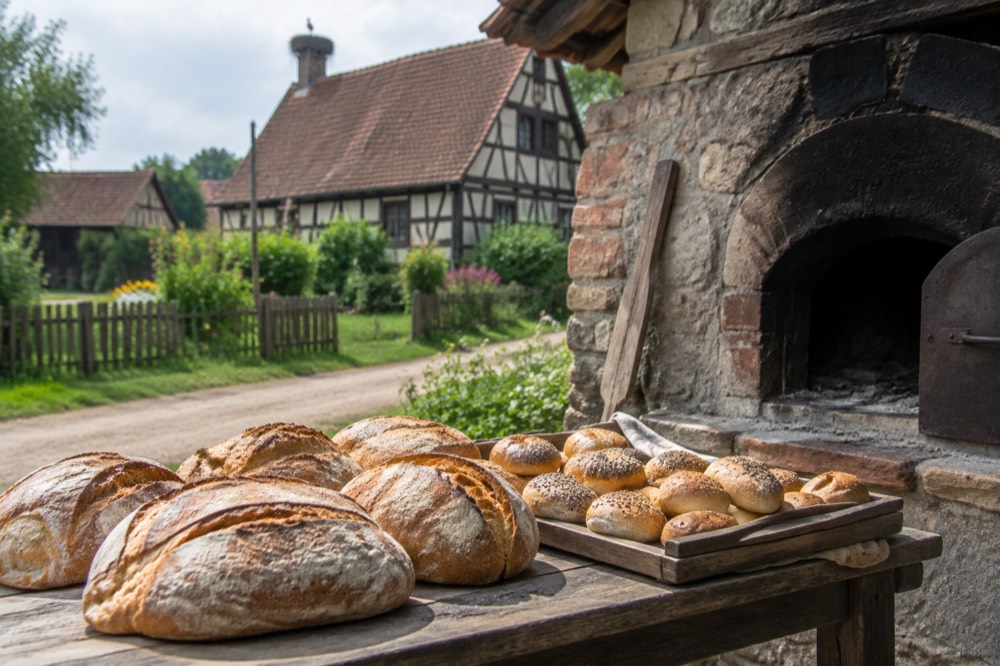
For Strasbourg visitors, one connection is worth carrying in your head all day: the food. Tarte flambée, choucroute, baeckeoffe and kougelhopf, the signature dishes of the region's tables, all began as farmhouse cooking of exactly the kind shown here. Seeing the ovens, the smoke-curing rafters and the kitchen gardens makes the city's restaurant menus read differently afterwards.
Best Time Of Year To Visit The Ecomusee
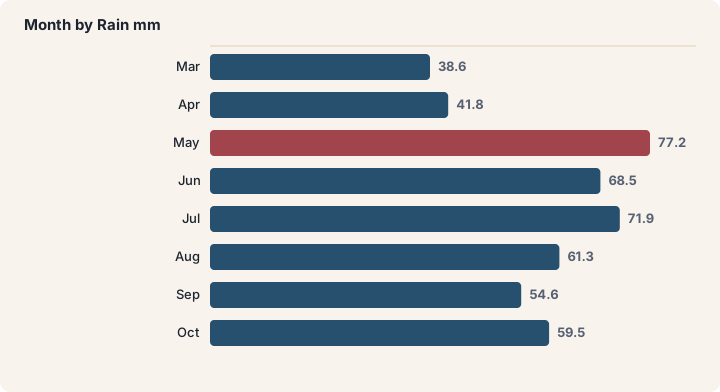
The best time to visit the Ecomusee d'Alsace is late spring through early autumn, when Meteo-France's 1991-2020 normals for Strasbourg-Entzheim show mean daily maxima from 20.9 C in May to 26.4 C in July and the lowest rain-day counts fall in September at 8.0 days of 1 mm or more; the museum is overwhelmingly an outdoor site, so the climate of the region, semi-continental with cold winters, should drive your date choice more than it would for a city museum.
The normals below are measured at Strasbourg-Entzheim, the region's reference station, and they describe the climate you will meet anywhere in the Alsatian plain. Winters are cold, with a mean maximum of 5.2 C in January and a mean minimum below freezing; summers are warm and the rain is spread evenly through the year, with 635.7 mm falling over 112.3 rain days annually.
| Month | Mean max C | Mean min C | Rain mm | Days rain >= 1 mm |
|---|---|---|---|---|
| Mar | 12.1 | 2.6 | 38.6 | 8.5 |
| Apr | 17.0 | 5.7 | 41.8 | 8.6 |
| May | 20.9 | 10.1 | 77.2 | 10.8 |
| Jun | 24.4 | 13.4 | 68.5 | 10.2 |
| Jul | 26.4 | 14.9 | 71.9 | 10.4 |
| Aug | 26.1 | 14.5 | 61.3 | 9.5 |
| Sep | 21.6 | 10.7 | 54.6 | 8.0 |
| Oct | 15.8 | 7.2 | 59.5 | 9.6 |
Two readings follow from that table. First, May is the wettest of the warm months at 77.2 mm over 10.8 rain days, so a May visit should carry a rain layer even though the gardens look their best. Second, September combines a comfortable mean maximum of 21.6 C with the driest profile of the year at 8.0 rain days, which makes it a strong candidate for the outdoor walk the museum demands. October cools quickly to a 15.8 C mean maximum, and the museum's season typically narrows outside the summer months, so confirm opening days before you build an autumn trip around it.
Winter deserves a special word. The Alsatian countryside in December belongs to the Christmas markets, and Strasbourg's own market, the 2025 edition of which ran from 26 November to 24 December and drew 3.05 million visitors, fills the city with chalets in the late-November-to-24-December window that is the market's usual pattern. A rural open-air museum is a different proposition in that season: cold, shorter days and a reduced programme. If your trip is a December one, keep the Ecomusee as a fair-weather option and let the markets lead.
Ecomusee D'Alsace Or Strasbourg's Museums: Which To Choose?
Choose the Ecomusee for a full day of rural, outdoor, family-friendly immersion, and choose Strasbourg's municipal museums for a half-day of conventional collections at a verified 9 EUR full or 5 EUR reduced ticket, with a 1-day Pass Musees at 20 EUR and free entry on the first Sunday of each month; note that the Musée Alsacien, the city's museum of Alsatian life, is closed for works until 2028, which makes the Ecomusee the only way to see that world in depth on a current trip.
That closure is the most useful piece of planning information on this page for anyone whose real interest is Alsatian folk culture. The Musée Alsacien in Strasbourg, which once covered exactly this territory indoors, is shut for a works programme that runs until 2028, so it cannot be routed into any itinerary. The Ecomusee, outdoors and in the countryside, now carries that story almost alone.
| Option | Ticket | Best for | Note |
|---|---|---|---|
| Musée des Beaux-Arts (Palais Rohan) | 9 EUR full, 5 EUR reduced | Painting collections in a palace setting | Open |
| MAMCS (modern art) | 9 EUR full, 5 EUR reduced | Modern and contemporary art | Open |
| Musée de l'Œuvre Notre-Dame | 9 EUR full, 5 EUR reduced | Medieval sculpture and Upper Rhine art | Open; near the cathedral |
| Musée Archéologique | 9 EUR full, 5 EUR reduced | Regional archaeology from prehistory onward | Open |
| Pass Musees 1 day | 20 EUR | Several municipal museums in one day | Covers the municipal network |
| First Sunday of the month | Free entry | Budget timing | Applies at all municipal museums |
| Ecomusee d'Alsace | Price on the museum's own site | Rural life, crafts, families, a full day out | Outdoor site; check opening days |
The choice is not really either-or. A three-day stay in Strasbourg comfortably holds one museum morning in the city and one Ecomusee day, and the two complement rather than compete: the Musée de l'Œuvre Notre-Dame, a short walk from the cathedral, shows the medieval art of the Upper Rhine region, while the Ecomusee shows the rural society that produced it. If rain settles in for your whole visit, the balance tips to the city museums, since their collections sit indoors and the first Sunday of the month removes the ticket cost entirely.
Combining The Ecomusee With Other Alsace Day Trips
The Ecomusee sits in southern Alsace, which makes it a natural companion to the wine route and the region's southern destinations rather than to the northern sights: Colmar, the Alsace wine route, Riquewihr and Eguisheim lie to the north-west of it, Mulhouse to the south-east, and Haut-Koenigsbourg and the hill country to the north-east, so a two-day southern loop pairing the museum with one wine village or with Colmar is the classic combination.
Plan the combination by character rather than by minutes. The pattern that works is contrast: a countryside day at the Ecomusee followed by a town day in Colmar, whose canalled old quarter and Unterlinden collections are the urban counterpart to the museum's village. Travellers with a car and two spare days can extend the loop along the Alsace wine route, where villages such as Riquewihr, Eguisheim, Kaysersberg and Ribeauville each give a compact, walkable version of the Alsatian streetscape.
| Day-trip destination | Country | What it pairs with at the Ecomusee | What to check before you go |
|---|---|---|---|
| Colmar | France | Town architecture and museums after rural village life | Opening hours of the Unterlinden |
| Alsace wine route | France | Vineyard landscape after farmland and crafts | Which villages you will stop in |
| Riquewihr | France | A living wine village beside a reconstructed one | Parking arrangements in high season |
| Eguisheim | France | Concentric lanes compared with the museum's lanes | Crowd levels in summer |
| Mulhouse | France | An industrial city as the other half of the region's story | Museum opening days |
| Haut-Koenigsbourg | France | A castle above the same rural landscape | Castle opening calendar |
Two cautions apply to any multi-stop plan. First, Alsace is bigger than it looks on a map, and a day that tries to hold the Ecomusee plus two wine villages plus Colmar usually collapses into a drive with brief photo stops; one anchor per day, with a single short stop en route, is the realistic shape. Second, the German border is close: the Black Forest, Baden-Baden and Freiburg sit across the Rhine and belong to a different country's transport and pricing systems, even though both sides use the euro. A mixed France-and-Germany itinerary is entirely doable, but it should be planned as such, not slipped in as an afterthought.
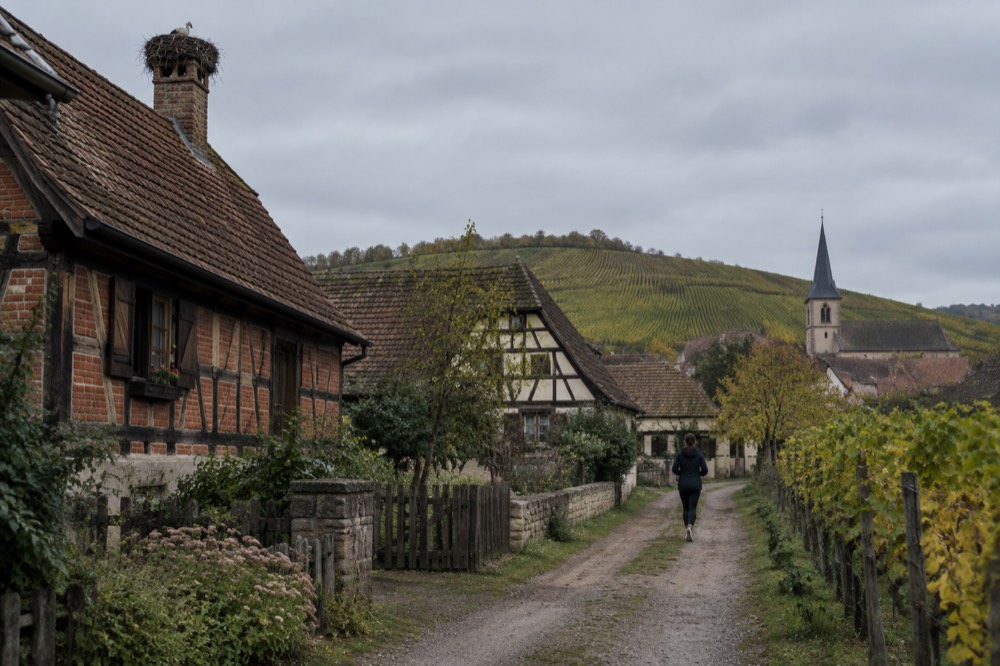
For travellers without a car, the honest advice is to build the trip around one destination and the rail network. The regional trains that link Strasbourg with the towns of the plain make a Colmar old-quarter day trip or a Selestat day straightforward, and an organised excursion that includes rural stops solves the last-mile problem that the Ecomusee's countryside location creates. Decide your anchor, then let the connections determine the rest. If the castle country appeals more than the wine villages, Haut-Koenigsbourg sits above the same rural landscape the museum reconstructs, and Riquewihr gives you the living version of the lanes you walked among the rebuilt farmhouses.
Practical Tips For Visiting With Family
Families should plan the Ecomusee visit around the demonstrations and the animals, allow more time than a museum visit would suggest because the site is walked outdoors, bring weather gear matched to the season, and treat the visit as a living lesson in where Alsatian food and buildings come from; the site rewards slow pacing, and children generally engage longest where they can watch a craft happen or meet livestock rather than read a panel.
The practical list is short but worth following. Wear shoes that can handle gravel lanes and grass, since the village is a landscape rather than a corridor. Check the day's demonstration schedule at the entrance and plan a loose circuit around it, leaving the farmhouse interiors for the warmest or driest part of the day. Bring water, and plan lunch around whatever the site offers in the season you visit, with a picnic as the fallback that open-air sites almost always accommodate. If your children have a favourite Alsatian dish, find its birthplace here: the oven that bakes tarte flambée, the barrels behind choucroute, the moulds that shape kougelhopf.
| Family consideration | What to do | Why it matters |
|---|---|---|
| Footwear | Closed shoes with grip | Lanes are gravel and grass, not pavement |
| Timing | Arrive at opening, walk the outer zones first | Demonstrations fill up later in the day |
| Weather layer | Rain jackets in May, sun hats in July | May averages 10.8 rain days; July a 26.4 C mean max |
| Food | Check on-site options, carry a picnic fallback | Seasonal offerings vary |
| Duration | Plan a long half-day or more | The site is large and walked end to end |
| Follow-up | Revisit a winstub menu in Strasbourg afterwards | The museum explains the city's dishes |
The site is built for wandering, and its value concentrates in the small moments: a conversation with an artisan, a pause at the oven, a child watching a horse being led to water. Budget the time those moments need.
How To Book The Strasbourg Side Of The Trip
Book a guided walking tour of Strasbourg's historic centre for the city half of your trip, and check availability on the operator's live listing rather than committing blind: the featured walk is a local-guide format covering the centre, small-group alternatives run in the same family, and free cancellation on the listings means a weather-driven reshuffle costs nothing if you change your mind in time.
For a slower, more conversational pace, the small-group welcome walk covers similar ground in a smaller party, and the historic-centre walk keeps the focus tightly on the old town. All three sit in the same price family and the same walking-tour category, so the decision is about pace and group size rather than substance.
A sensible booking order is the city walk first, the Ecomusee day second. The walk gives you the city's geography and story on day one, and the open-air museum then answers the question the city raises: where did all this timbered wealth and farmhouse cooking come from? Travellers who reverse the order report the same effect in the other direction, so the pairing works either way round; what matters is doing both.
For anyone weighing a small-group format against the standard walk, the trade-off is simple. The small-group welcome walk costs a little more and moves a little slower, with more room to ask questions; the standard guided walk is the efficient orientation option. Both cover the same historic ground, and both leave you in the centre of town with the rest of the day to explore on foot.
One last planning note: keep the Ecomusee day and the city-walk day on separate days if you can. A long rural drive followed by a stretch on cobblestones is a lot of walking in one outing, and Strasbourg's evening light on the Ill is best enjoyed sitting down, from a riverside terrace or a bench on the quays, rather than at pace.
Common Questions About The Ecomusee D'Alsace
What is the Ecomusee d'Alsace?
The Ecomusee d'Alsace is an open-air museum of rural Alsatian life in the countryside between Strasbourg and Mulhouse, where farmhouses, barns, mills and craft workshops brought from across the region have been rebuilt as a walkable village with costumed artisans, fields, gardens and livestock.
How do you get to the Ecomusee d'Alsace from Strasbourg?
You can drive, take a regional train towards Mulhouse with a local connection, or join an organised excursion. No verified door-to-door time or fare can be quoted here, so check the rail operator's journey planner and the museum's own site for directions before you travel.
Is the Ecomusee d'Alsace good for children?
Yes. The site is outdoors, hands-on and built around live craft demonstrations and farm animals, which children engage with far more than display cases. Plan a long half-day or more, wear sturdy shoes, and time the visit around the demonstration schedule.
What should you wear to visit the Ecomusee d'Alsace?
Closed shoes with grip, since the lanes are gravel and grass, plus a rain layer in spring and a sun hat in summer. The region's 1991-2020 normals give a July mean maximum of 26.4 C and a January mean maximum of 5.2 C, so dress for a semi-continental climate and an outdoor site.
When is the best time of year to visit the Ecomusee d'Alsace?
Late spring through early autumn. September combines a 21.6 C mean maximum with the year's lowest rain-day count at 8.0 days of 1 mm or more, and the museum's season narrows outside the summer months, so confirm opening days for any visit beyond summer.
Can you see Alsatian folk culture in Strasbourg instead?
Only partly. The Musée Alsacien, the city's museum of Alsatian life, is closed for works until 2028, so the Ecomusee d'Alsace is currently the region's main living presentation of that heritage. Strasbourg's other municipal museums, at 9 EUR full or 5 EUR reduced and free on the first Sunday of each month, cover art and archaeology rather than rural life.
The Ecomusee d'Alsace gives a Strasbourg trip its second half: the city supplies the cathedral, the river and the winstubs, and the open-air museum explains the countryside behind them. Plan it as a full day, pair it with a guided walk of the historic centre on another day, and check the museum's own site for the opening calendar and ticket prices before you set off.