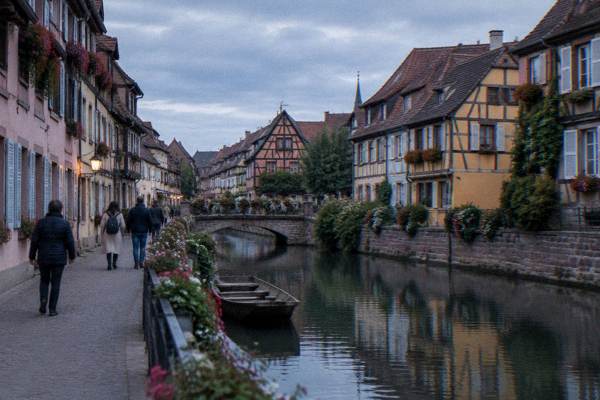
Saverne
Saverne is a small Alsatian town on the Marne-Rhine Canal at the foot of the Vosges, an easy day trip out of Strasbourg for anyone who wants half-timbered streets, a château and walking hills without the crowds of the wine villages.
Short answer
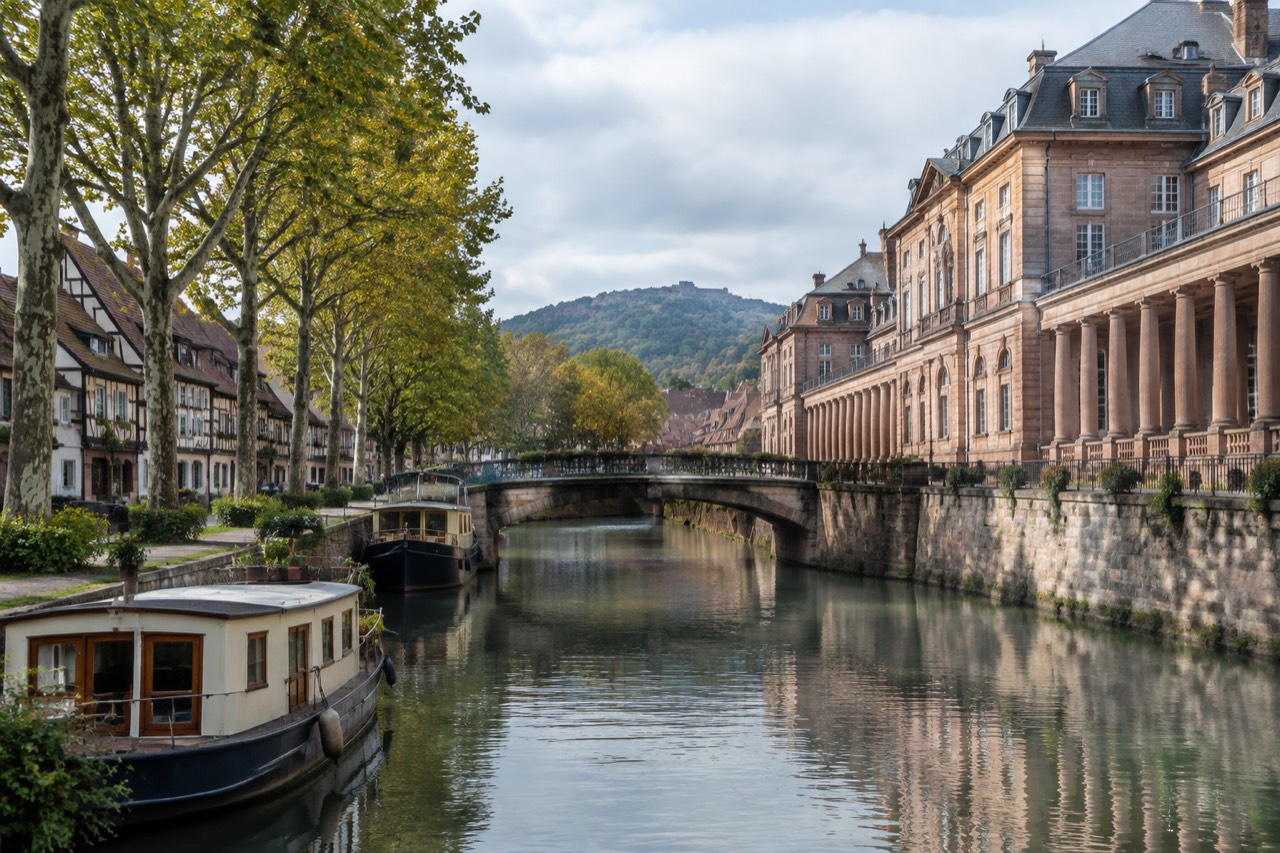
Saverne sits at the foot of the Vosges about an hour from Strasbourg by regional train, in the Bas-Rhin, Alsace, north-eastern France. The town pairs a Rohan château, canalside half-timbered houses and hillside forest paths, and it works as a calm contrast to Colmar and the wine route. No Saverne-specific ticket prices or timetables are fixed here, so check the official pages before you travel.
Saverne is a small town in the Bas-Rhin, in Alsace, part of the Grand Est region of north-eastern France, lying west of Strasbourg at the point where the Alsace plain meets the first hills of the Vosges. It sits on the Marne-Rhine Canal, with the plain of the Rhine, and the German border beyond it, at its back and forested slopes rising directly behind its old streets. For travellers based in Strasbourg it offers something the famous wine villages do not: a genuinely lived-in town, a château, canal towpaths and hill walks, all reachable by regional train without a car. This guide sets out what the town is, what to do there in a day, how the journey works, what to budget for on the Strasbourg side, and how to combine the trip with the rest of an Alsace itinerary.
Where Is Saverne And What Kind Of Day Trip Is It?
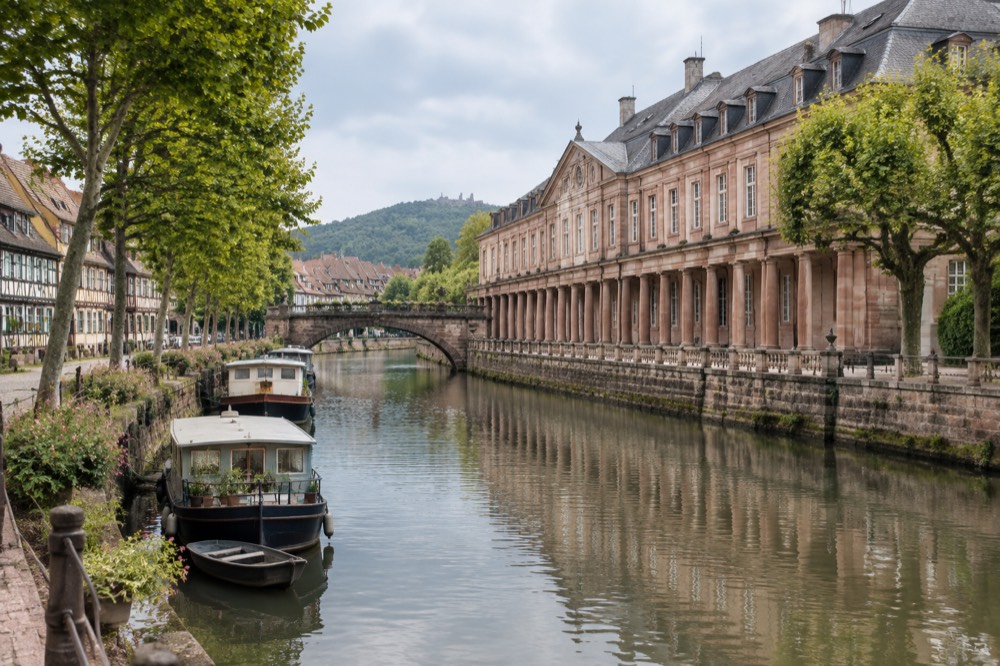
Saverne is a canal town in the Bas-Rhin department of Alsace, in the Grand Est region of north-eastern France, at the foot of the Vosges hills and roughly an hour from Strasbourg by regional train. It is a half-timbered, château-anchored town on the Marne-Rhine Canal, historically a crossing point between the plain and the mountain passes. The day trip suits travellers who want atmosphere and walking rather than a packed checklist of sights.
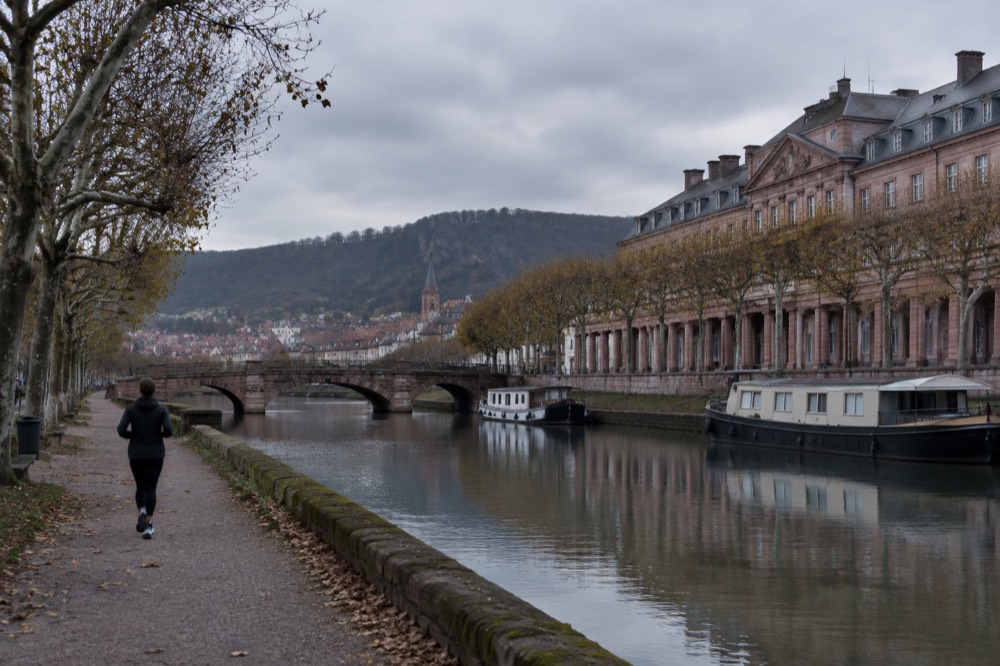
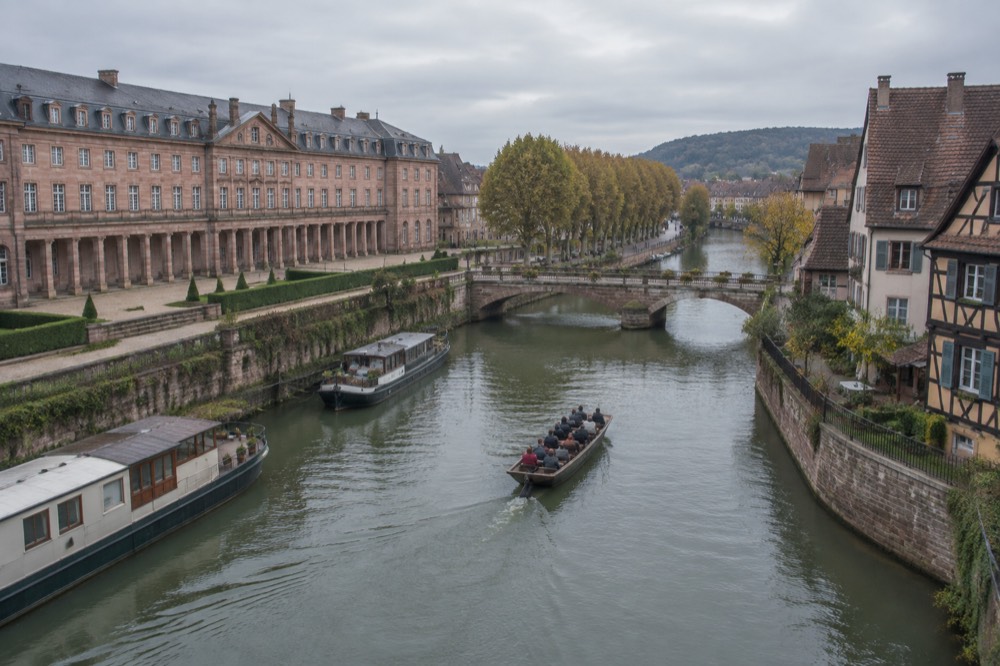
The town's character comes from its setting. The Alsace plain, flat and open, runs east from Saverne towards Strasbourg and the Rhine, while the Vosges rise immediately to the west, so the town acts as a doorway between the two. The Marne-Rhine Canal cuts straight through the centre, and its towpaths give the old town its relaxed, waterside feel. Half-timbered houses line the main street and the squares around the church, in the same Alsatian building tradition you see in Strasbourg's Petite France and across the wine route villages, but here without the crowds that gather in the better-known spots.
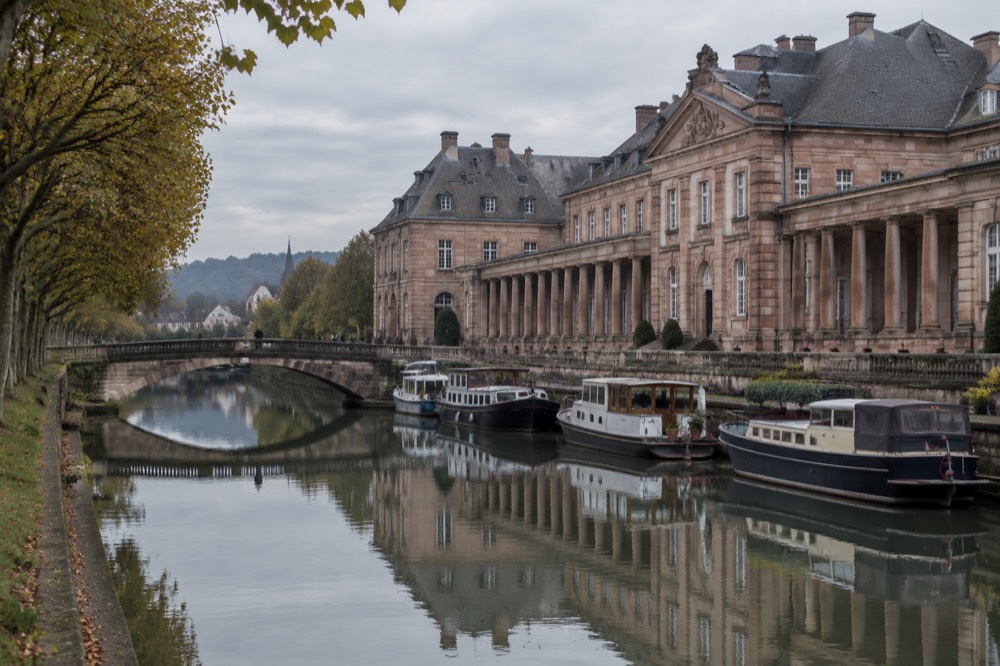
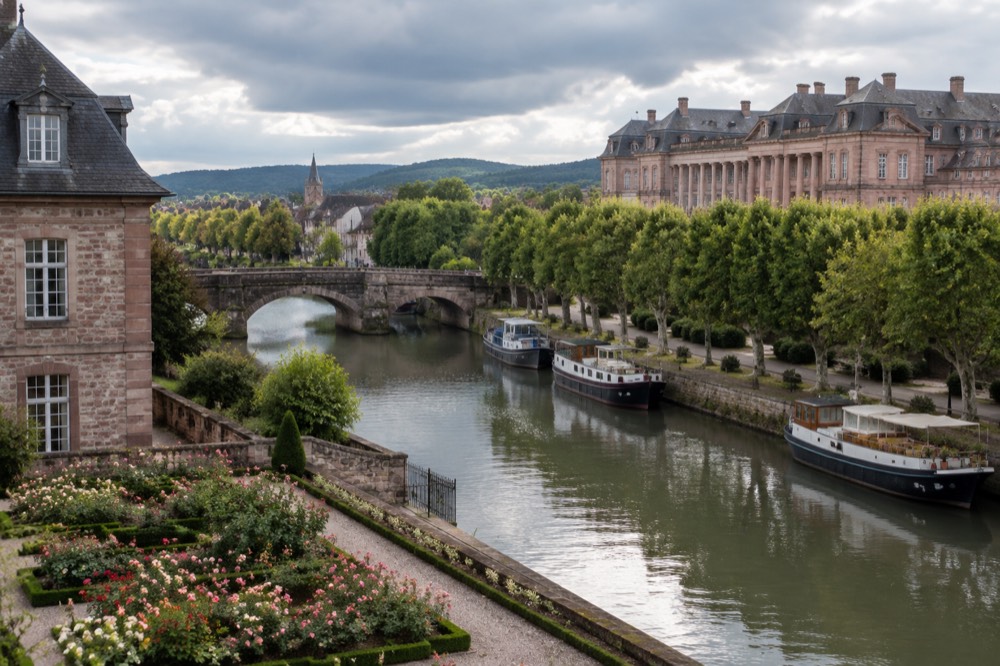
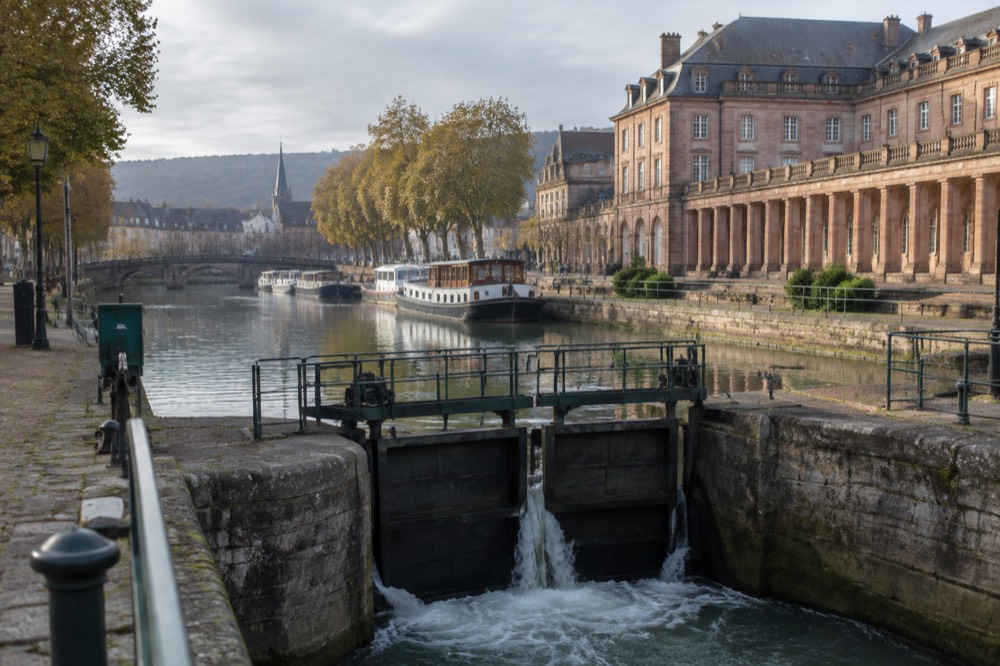
The landmark is the Château des Rohan, a broad classical palace that faces the canal at the edge of the old town. The Rohan family, who also gave Strasbourg its Palais Rohan, left the town a stately frontage, gardens and parkland that now do duty as public space. Behind and above the town the forested hill called the Glasberg is crossed by walking trails, including a long-distance path that follows the crest of the Vosges, and the ruins of old castles sit on the ridgeline. The combination, a palace, a canal, old streets and hill walking within a short stroll of each other, is what makes the town work as a single-day destination.
What the trip is not matters too. Saverne is not a wine-route showpiece, not a Christmas market hub, and not a place with a long ticket queue. It is a working French town with a visitor trail running through it. That makes it a good choice for a second or third day in the region, after the essentials in Strasbourg itself have been covered, and a good choice for anyone travelling in the shoulder months when the wine villages are at their fullest.
What To See In Saverne On A Day Trip
A day in Saverne divides naturally into three parts: the Château des Rohan and its park by the canal, the old town's half-timbered streets and church, and the hill paths behind the town with their views back over the Alsace plain. All three sit within walking distance of each other, so no transport is needed once you arrive. Allow a full day, or a half day if you skip the hill walk.
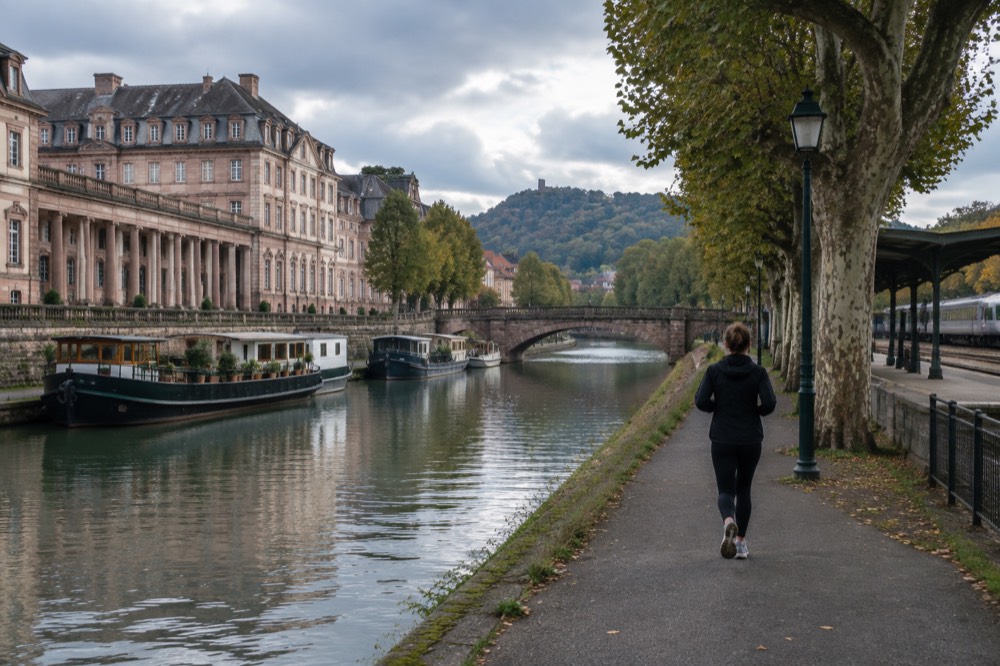
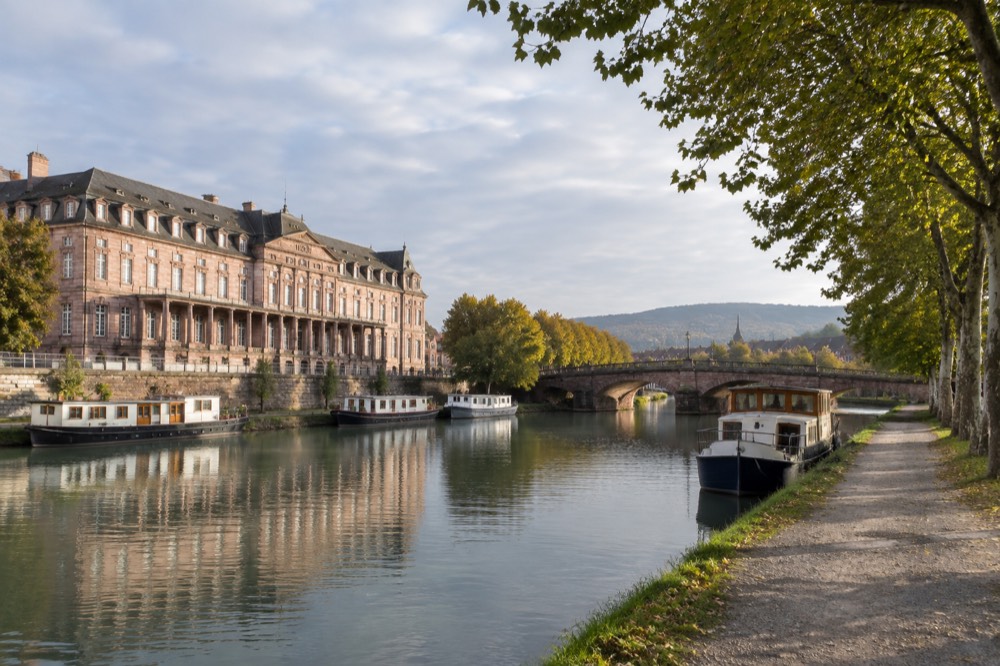
Start at the château. The building fronts the canal with a long classical facade, and the grounds around it are public parkland, open to stroll through at any time of day. The palace now houses civic functions rather than a single blockbuster collection, so treat it as architecture and setting rather than as a museum visit, and check the town's own pages for what is open inside on the day you come. The canal runs past the château's edge, and the towpath here is the prettiest stretch of water in the town, with boats moored along it in the warmer months and plane trees over the path.
From the château, walk into the old town along the main street. The commercial heart of Saverne is a single axis of half-timbered and classical houses, with the parish church of Notre-Dame de la Nativité standing at its centre, a large Gothic building whose tower dominates the skyline from the plain below. The squares around it hold the town's cafés and bakeries, which is where a Saverne day realistically spends its middle hours: this is the Alsace of winstubs and tarte flambée rather than of monuments, and a long lunch is a legitimate part of the itinerary. The town's roseraie, a rose garden laid out as a formal park, is another calm stop on the far side of the centre and is at its best in the early summer months.
The afternoon belongs to the hills. Paths leave the town's western edge and climb into the forest of the Glasberg, where the ridge carries walking trails and the remains of old fortifications look down over the rooftops and the canal. From the heights you can see the whole shape of the trip laid out: the town compact in the foreground, the canal cutting east, and the flat plain running to the horizon towards Strasbourg. The climb is a hill walk, not an alpine route, but it asks for proper shoes and a couple of hours if you mean to enjoy it rather than simply endure it.
If you are choosing a guided experience to anchor the Alsace side of your trip rather than exploring under your own steam, the options below pair well with a Saverne day, either the evening before in Strasbourg or as an alternative day out entirely.
How To Get From Strasbourg To Saverne
Saverne is reached from Strasbourg by regional train towards the west, along the line that follows the canal into the Vosges foothills; the journey is a short regional train ride and the town centre is walkable from the station. No door-to-door time, fare or frequency is quoted here because those figures change with the timetable, so check SNCF Connect and the station boards before you travel. Driving is also straightforward, on the route that runs the length of the plain.
The rail option is the one this guide recommends. Strasbourg's Gare Centrale is the hub for the whole region, and the regional services that leave it towards Saverne follow the corridor of the Marne-Rhine Canal for much of the way, which makes the outward journey itself part of the day: the train runs off the plain and into the hills, and the change in the landscape tells you exactly where Alsace stops being flat. Tickets for regional trains in France are fixed-price and cheap by long-distance standards, but the exact fare is a timetable matter, so buy through SNCF Connect or at the machine and treat any number you read on a third-party page with caution.
If you drive, the route out of Strasbourg heads north-west along the plain before turning into the hills, and Saverne is the first real town on the mountain side. Parking in French provincial towns is generally easier than in Strasbourg's Grande Île, but check your accommodation or the town's own visitor information for the car parks closest to the old centre. A car does open up the second half of the day: the passes and villages of the northern Vosges sit within a short drive of Saverne's western edge, which is one reason the town works as a base as well as a target.
Before you leave Strasbourg, it is worth getting your city-side transport sorted, because the same tickets that get you to the station will get you around the city at either end of the day. The CTS network's fares are simple and the useful ones are fixed:
| CTS ticket | Price | Notes |
|---|---|---|
| Single ticket | 1.90 EUR | Via Badgeo, the CTS app or contactless |
| Single ticket bought on board a bus | 2.50 EUR | More expensive than the app options |
| 24h Solo pass | 4.60 EUR | One person, all CTS trams and buses |
| 24h Trio pass | 10.20 EUR | Two to three people travelling together |
| Airport shuttle combined ticket | 4.60 EUR | Train from Entzheim plus CTS travel |
One planning note if your Saverne day is part of a longer stay: the tram works around Gare Centrale were a summer 2026 disruption on several lines, and while those works have ended, checking the CTS site for the day's service before a tight train connection is simply good practice in a city whose network is being renewed.
What Does A Saverne Day Trip Cost To Plan For?
The Saverne side of the day is cheap by design, because the town's best parts, the canal, the old streets, the park and the hill paths, cost nothing to walk through, and the main spends are lunch and the train. The figures that can be stated with confidence are the Strasbourg-side ones: CTS fares from 1.90 EUR, cathedral platform entry at 10 EUR, municipal museums at 9 EUR full price. Anything priced in Saverne itself, from château rooms to car parks, needs checking on the day.
The honest way to budget a trip like this is to separate what is fixed and published from what is not. The fixed and published figures for the region are the Strasbourg transport and sight prices, which are listed in the tables here because they are the costs you can plan to the euro before you leave. The Saverne-specific costs, the train fare, any château or garden admission, lunch, are either timetable-dependent or set by individual businesses, and inventing a range for them would be exactly the kind of guess that makes travel pages untrustworthy. What can be said is the structure: a day in Saverne is a train ticket, a lunch and not much else, unless you add a guided visit or come back through Strasbourg for paid sights.
These are the Strasbourg figures that a day-tripper actually touches, all confirmed on official pages:
| Item | Full price | Reduced price | Notes |
|---|---|---|---|
| Cathedral platform | 10 EUR | 6 EUR | Children under 6 free; platform at 66 m |
| Astronomical clock show | 4 EUR | 2 EUR children 6-17 | 12:30 daily; tickets on the day only |
| Municipal museums (each) | 9 EUR | 5 EUR | Includes Beaux-Arts, MAMCS, Oeuvre Notre-Dame |
| Pass Musées, 1 day | 20 EUR | N/A | Multiple municipal museums |
| Batorama boat, long tour | 16.20 EUR | 8.90 EUR | Red Tour, 1h10 |
| Batorama boat, short tour | 12.50 EUR | 7.20 EUR | Blue Tour, 0h45 |
| Strasbourg City Card | 5 EUR | 3.50 EUR child | A 7-day discount card, not an all-inclusive pass |
Two notes on that table. First, the municipal museums of Strasbourg are free for everyone on the first Sunday of every month, which is worth building a whole itinerary around if your Saverne day falls on one. Second, the Musée Alsacien, the folk museum that would otherwise be the natural companion to a day in an old Alsatian town, is closed for works until 2028 and must not be planned into any visit. The city's other museums remain open.
When Is The Best Time Of Year To Visit Saverne?
The best months for a Saverne day trip are late spring through early autumn, May to September, when the canal towpaths, the château park and the hill walks are all at their best and the Alsatian climate is at its warmest; December brings cold, short days and the region's crowds shift to the Christmas markets instead. Winter visits work, but they belong to the town streets rather than the hills.
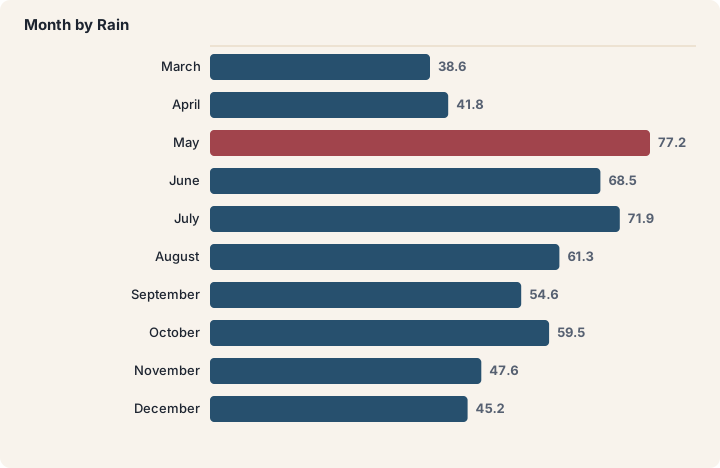
The climate here is semi-continental, which means real summers and real winters rather than the mild, even temperatures of the Atlantic coast. The Meteo-France 1991-2020 normals for Strasbourg-Entzheim, the nearest long measurement series for the Alsace plain, show mean daily maxima rising from 5.2 C in January to 26.4 C in July, with 635.7 mm of rain across the year spread fairly evenly through the months. Saverne sits at the western edge of that same plain, tucked against the hills, so the same seasonal shape applies: warm summers, cold winters, and rain possible in any month.
| Month | Mean daily maximum | Mean daily minimum | Rain | Days with 1 mm or more |
|---|---|---|---|---|
| March | 12.1 C | 2.6 C | 38.6 mm | 8.5 |
| April | 17.0 C | 5.7 C | 41.8 mm | 8.6 |
| May | 20.9 C | 10.1 C | 77.2 mm | 10.8 |
| June | 24.4 C | 13.4 C | 68.5 mm | 10.2 |
| July | 26.4 C | 14.9 C | 71.9 mm | 10.4 |
| August | 26.1 C | 14.5 C | 61.3 mm | 9.5 |
| September | 21.6 C | 10.7 C | 54.6 mm | 8.0 |
| October | 15.8 C | 7.2 C | 59.5 mm | 9.6 |
| November | 9.4 C | 3.3 C | 47.6 mm | 9.2 |
| December | 5.9 C | 0.8 C | 45.2 mm | 10.2 |
Read that table as a walking guide. The hill paths behind the town are the part of the day that is weather-dependent: they are pleasant in the May-to-September window, muddy or icy at the edges of the year, and short-day-limited from late autumn onwards. The canal and the old town, by contrast, are all-weather assets, and the winstubs that make an Alsatian winter bearable are at their best precisely when the weather gives you a reason to sit in one. December is a special case in this region: Strasbourg's own Christmas market, which last year ran from 26 November to 24 December 2025 and drew 3.05 million visitors, pulls the whole region's tourism into the city, and the next edition's dates are still being finalised on the city's Christmas site, so check there before planning a winter trip around them.
How To Pair Saverne With Other Alsace Day Trips
Saverne pairs best with the northern Vosges and the plain's quieter towns: Mont Sainte-Odile and the forest passes sit on the same mountain side, Obernai and the wine route sit on the plain between Saverne and Colmar, and the whole set can be combined into a multi-day loop out of Strasbourg by train and regional bus. The town is also a natural stop if you are driving between Strasbourg and the wine route's northern end.
Think of the region as two corridors out of Strasbourg. The southern corridor runs down the plain through Obernai and into the wine route villages, Riquewihr, Kaysersberg, Eguisheim, and on to Colmar: that is the classic Alsace itinerary, and it is where the crowds are. The western corridor, where Saverne sits, runs into the Vosges towards the passes, the forest and Mont Sainte-Odile, the mountaintop abbey that is one of the region's great sights. A trip that does both corridors gets the two halves of Alsace, the vineyard half and the forest half, and Saverne is the natural base or stop for the second.
For the mountain side, the guide to Mont Sainte-Odile from Strasbourg covers the abbey and the plateau above the plain, and the two destinations genuinely combine: Saverne in the morning, the hills in the afternoon, or the reverse. For the plain side, the Alsace wine route day trip guide sets out the vineyard corridor, and Obernai is the wine-route town that most closely matches Saverne's scale and lived-in feel, if you want a second small-town day without the famous-village crowds. Further south, Colmar is the region's second city and the natural end of the vineyard corridor.
| Pairing | What it is | Who it suits | How it combines with Saverne |
|---|---|---|---|
| Mont Sainte-Odile | A mountaintop abbey site above the plain | Walkers, viewpoints, history | Same western corridor; a full combined day or two half days |
| Obernai | A small walled wine town on the plain | Slow travellers, food, half-timbered streets | A second small-town day on a different corridor |
| Alsace wine route | The vineyard corridor south of Strasbourg | Wine, villages, photography | The other half of an Alsace loop trip |
| Colmar | The region's second city, canals and museums | Museum-goers, first-time visitors | The southern anchor of a multi-day itinerary |
| Natzweiler-Struthof | A former concentration camp site in the Vosges | Visitors seeking wartime history | Same mountain side; a sober day, not a combination stop |
One pairing deserves a separate word. The Natzweiler-Struthof memorial site, high in the Vosges on the same mountain side as Saverne, is a place visitors should plan deliberately rather than slot casually between lunch and a viewpoint. It is reachable on guided tours from Strasbourg, and anyone with wartime history in mind for their Alsace trip should read the Struthof memorial guide before deciding how it fits the day.
What Guided Tours Work With A Saverne Trip?
Guided tours do not run to Saverne itself in any volume; the town is a self-guided destination. What the roster offers instead are Strasbourg-based experiences that anchor the rest of an Alsace stay: a private boat on the Ill with a captain, small-group walking tours of the old city, and full-day minibus trips into the wine route and the Vosges. The sensible pattern is a guided day in Strasbourg, a self-guided day in Saverne, and a guided day trip for the villages.
The private boat experience is the most distinctive of these. A cruise on the Ill, the river that threads through Strasbourg's Grande Île and around the Petite France quarter, shows the city from an angle the street-level visitor never gets, and a private trip with a captain aboard turns it into a slow, personal hour or two on the water rather than a scheduled circuit. It pairs with a Saverne trip as the bookend: the water-level view of the city on one day, the canal town and the hills on the next. If that appeals, Check availability on the operator's live listing, where the current price and the cancellation terms are shown.
For the days you spend in Strasbourg itself, a small-group curiosities walk is the format that suits this city best: the Grande Île rewards a guide who can point at a doorway and explain it, and the two-and-a-half-hour format covers the historic centre without eating the whole day. The shorter one-hour city-centre walk is the option for travellers with a train to catch, which is exactly the situation on a Saverne morning.
The full-day regional trips are the other half of the pattern. A Best of Alsace minibus day runs from Strasbourg through the vineyards and villages on the southern corridor, and it is the practical answer for travellers who want the wine route without a hire car. A half-day wine tour covers a shorter stretch of the same corridor if the Saverne day has already taken the week's walking budget.
What Would A Perfect Saverne Itinerary Look Like?
A perfect Saverne day starts with a morning train out of Strasbourg along the canal corridor, two hours in the old town and château park around a long winstub lunch, an afternoon hill walk on the Glasberg paths above the rooftops, and an early-evening train back to Strasbourg for dinner on the Grande Île. In December, swap the hill walk for the town streets and finish in Strasbourg's Christmas market instead.
The shape matters more than the timings, because the timings belong to the timetable of the day. The morning train should be early enough that you arrive with the town still quiet, which in a place this size means before the lunch service starts. The old town takes a slow couple of hours: the main street, the church, the squares, and then the château park along the canal, in whatever order the light suggests. Lunch is not a pause in the itinerary, it is the itinerary; the Alsatian repertoire of tarte flambée, choucroute and riesling exists for exactly this kind of day, and Saverne's winstubs serve it without the wine villages' queue.
The afternoon fork depends on the season and your legs. The hill walk, up through the forest to the ridge and back down to the town, is the choice from spring to early autumn, and it repays the climb with the view back over the canal and the plain. The flat alternative is the towpath itself, walking out along the canal in either direction and back, which is a gentle hour in any weather. Either way, the last hours of the day belong to the train back east, watching the hills flatten into the plain, and to Strasbourg for the evening. If the trip falls in the market season, the evening finish is the cathedral square with a glass of hot wine; the 2026 market dates are still being finalised, so confirm them on the city's Christmas site before you build an evening around it.
| Itinerary shape | Morning | Middle | Afternoon | Best season |
|---|---|---|---|---|
| The full day | Train out, old town and church | Winstub lunch, château park | Glasberg hill walk, train back | May to September |
| The easy day | Train out, canal towpath | Long lunch, roseraie | Old town streets, early train back | Any month |
| The December day | Train out, town streets | Warm winstub lunch | Old town in the afternoon light, market evening in Strasbourg | Late November to December |
| The combined day | Saverne old town and park | Lunch in town | Drive or bus into the Vosges passes | Spring to autumn |
For travellers building a whole week, the pattern that works is a corridor a day: Strasbourg's own sights first, then the wine route south, then the Vosges side with Saverne and Mont Sainte-Odile, then a German day across the Rhine if the trip allows it. The Strasbourg Travel Guide homepage holds the full set of day trips and city guides if you want to lay the week out in one place. Saverne is the quiet day in that sequence, the one without a headline sight, and that is precisely its value: a real Alsatian town, a canal, a château and a hill, an hour from the city and a world away from the crowds.
Common Questions About A Saverne Day Trip
Is Saverne Worth Visiting On A Trip To Strasbourg?
Yes, for the right kind of day. Saverne suits travellers who have seen Strasbourg's essentials and want a calm, walkable Alsatian town with a château, a canal and hill paths, all reachable by regional train. It is not a headline destination on the scale of Colmar or the wine villages, and that is its appeal.
How Do I Get From Strasbourg To Saverne Without A Car?
Regional trains run from Strasbourg's Gare Centrale along the canal corridor into the Vosges foothills, and Saverne's town centre is walkable from its station. The journey is a short regional train ride. Check SNCF Connect for the day's times and fares, which change with the timetable.
What Is There To Do In Saverne?
The town's assets are the Château des Rohan and its park by the Marne-Rhine Canal, the half-timbered old town and the Gothic parish church, the canal towpaths, the roseraie, and the forest walking trails on the Glasberg hill behind the town, where ridge paths look back over the Alsace plain.
When Is The Best Time To Visit Saverne?
May to September, when the towpaths, park and hill walks are all usable and the semi-continental climate is at its warmest, with mean daily maxima in Strasbourg's normals running from 20.9 C in May to 26.4 C in July. Winter visits are better spent in the town streets and winstubs than on the hills.
Can You Combine Saverne With Mont Sainte-Odile?
Yes, they sit on the same western side of the region, Saverne at the foot of the Vosges and Mont Sainte-Odile on the heights above the plain. A combined day works by car or as two separate trips; read the site's Mont Sainte-Odile guide for the abbey side before planning the pairing.
Are There Guided Tours Of Saverne Itself?
Guided tours of the town are not offered in any volume on the major rosters, so plan it as a self-guided day. The guided options that pair with it are Strasbourg-based: private boat trips on the Ill, small-group walking tours of the old city, and full-day minibus trips into the wine route and the Vosges.