Strasbourg To Stuttgart
Stuttgart sits across the Rhine plain from Strasbourg, in Germany's south-west, and the two cities make a natural pairing for travellers basing themselves in Alsace. This guide sets out how to think about the journey, what Stuttgart offers, and how to fold the trip into a stay built around Strasbourg's tours and day trips.
Short answer
Strasbourg, in Alsace in north-eastern France, sits on the German border, and Stuttgart is the capital of Baden-Württemberg on the far side of the Rhine plain. There is no single fixed journey time or fare to quote here, so check the operator's own journey planner before booking. Plan the trip around what Stuttgart offers, and pair it with Strasbourg's tours and day trips.
Strasbourg, the prefecture of the Bas-Rhin in Alsace, in the Grand Est region of north-eastern France, sits on the River Ill beside the Rhine, and the German town of Kehl lies just across the water. Stuttgart, the state capital of Baden-Württemberg, is one of the nearest big German cities on the far side of the border plain, which makes the Strasbourg to Stuttgart pairing a common one for travellers who want a taste of two countries from a single base. Both cities use the euro, and both sit inside the Schengen area, so there is no border formalities to plan for on the crossing itself.
The honest starting point is this: the verified planning figures this site holds cover Strasbourg and its region in depth, and Stuttgart only in outline. So this guide does what a good planner should. It explains how the journey works in principle, what Stuttgart is for, what sits between the two cities, and how to fold the whole thing into a stay built around Strasbourg's tours, museums and day trips. Where a figure matters, the reader is pointed to the official page that holds it, because a guessed number is worse than none. The Strasbourg Travel Guide homepage carries the full rundown of the city itself if you are still building the Alsace side of the trip.
How Do You Get From Strasbourg To Stuttgart?
The route runs east out of Strasbourg across the Rhine at Kehl and into Baden-Württemberg, and the practical choices are train, coach, private car or a guided tour that crosses the border for you. Times and prices should be checked on the operator's own journey planner before booking. Both cities are on major European transport corridors, Strasbourg as a TGV hub on the Paris line and Stuttgart as a junction for services across south-west Germany, so the connection is a routine one rather than an awkward one. The train is the option that needs the least planning once booked. Coaches run on the same corridor and suit a tighter budget. A hire car gives the freedom to stop in the Black Forest or the wine villages on the way, which is where the Strasbourg-based day trips in this guide come into their own.
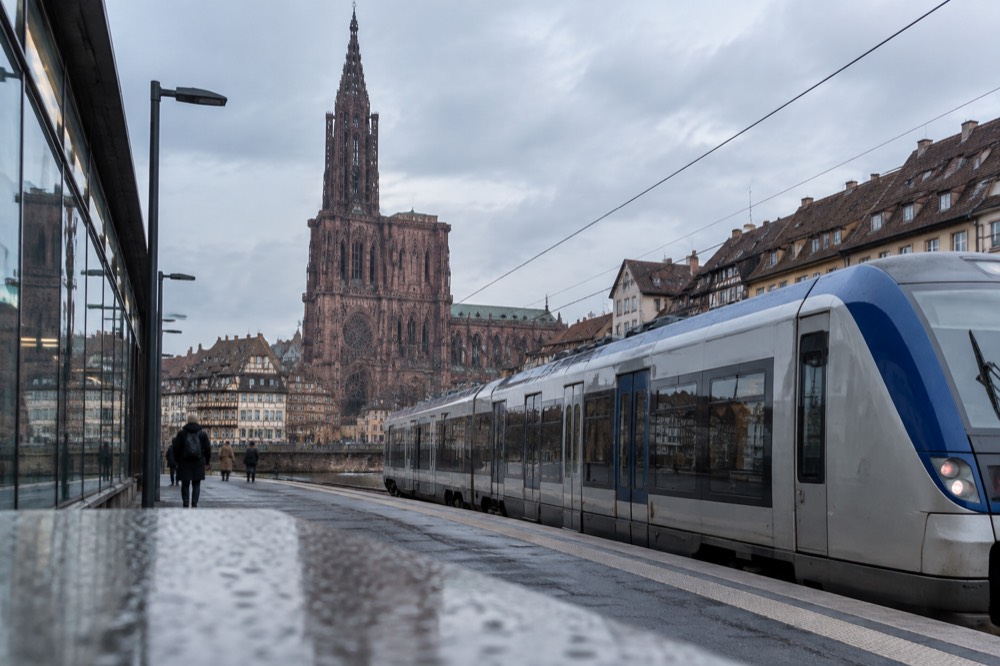
One practical note on the Strasbourg end of the journey. The city's transport network, run by CTS, is cheap and simple by the standards of most French cities, and the airport shuttle is worth knowing about if you are flying in or out. A single ticket costs 1.90 EUR bought through the Badgéo card, the CTS app or contactless payment, or 2.50 EUR if bought on board a bus. A 24-hour Solo pass is 4.60 EUR, and the 24-hour Trio pass for two or three people travelling together is 10.20 EUR. Those figures come from CTS's own fare pages and are the ones to budget for getting to and from the station on departure day.
| Option | Best For | What To Check On The Official Page |
|---|---|---|
| Train | Travellers who want the simplest booked journey | Timetables, fares and seat reservations on the rail operator's journey planner |
| Coach | Tighter budgets and flexible timing | Departure points in Strasbourg and arrival points in Stuttgart |
| Hire car | Stopping in the Black Forest or the wine villages en route | Cross-border drop-off conditions with the rental company |
| Guided tour | Visitors who prefer not to drive or navigate at all | Departure details, inclusions and cancellation terms on the operator's live listing |
Is Stuttgart Worth Adding To An Alsace Trip?
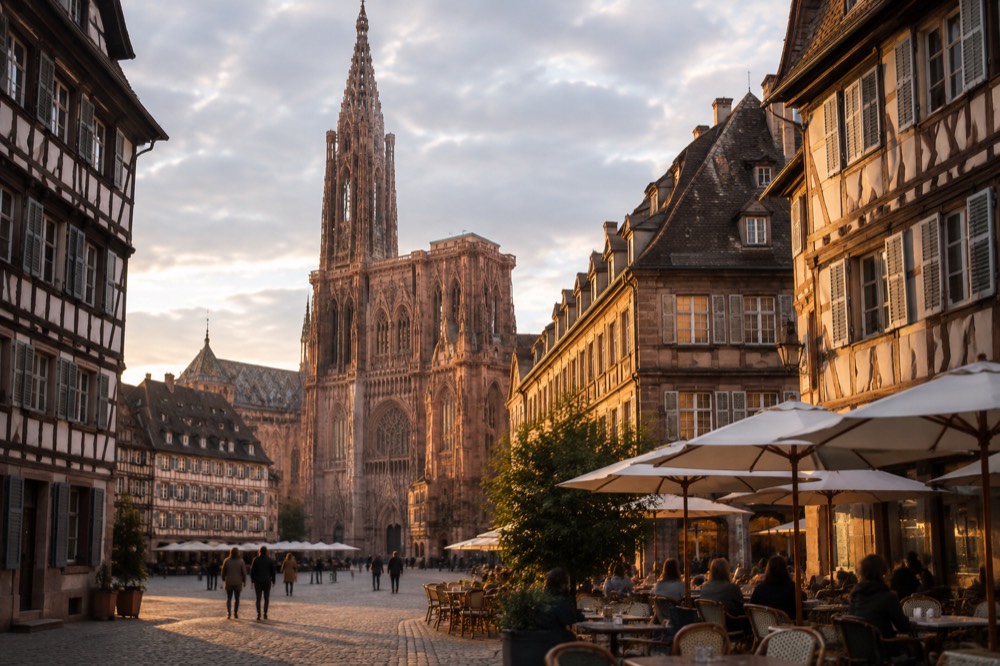
Stuttgart earns its place on an Alsace itinerary if you want a big-city German contrast to Strasbourg's medieval core: state museums, automotive history, hillside vineyards inside the city and a different food culture, all in Baden-Württemberg's capital. It is a working German city rather than a chocolate-box one, so travellers chasing half-timbered charm alone will prefer the Alsatian villages. The pairing works precisely because the two cities are unalike. Strasbourg gives you the Grande Île, the single-spired cathedral and the Petite France quarter; Stuttgart gives you broad squares, gallery-hopping and a car heritage that has no equivalent in Alsace. A common pattern is three or four nights in Strasbourg with one of them, or a standalone day, given over to the German side.
The city's character is shaped by its setting in a bowl of hills, with vineyards on the slopes and mineral springs in the Bad Cannstatt district, which gave the city its spa heritage long before the car industry arrived. Stuttgart is also a green city by German standards, with parks and hillside walks threaded between the neighbourhoods, and the funicular and stairways that link the levels are part of the everyday texture of the place rather than tourist attractions. For a traveller coming from flat, riverside Strasbourg, the change in terrain alone makes the visit feel like a genuine change of country.
Before committing, it is worth being clear about what kind of trip you want. If the answer is a slow, food-and-architecture break, stay in Alsace and read the guide to where to stay in Strasbourg by neighbourhood, then use Stuttgart as a single long day. If the answer is museums and a proper German city, give Stuttgart an overnight and treat Strasbourg as the base either side.
What Should You See In Stuttgart On A Short Visit?
A short Stuttgart visit is best organised around three things: the car museums that made the city's name, the palace square and state galleries at its centre, and the vineyards and mineral springs on its hills. Every one of those has an official page with hours and admission, and none of those figures is quoted here because they are not in this site's verified planning pack, so check each venue's own site before setting out. The museums are the draw that pulls most international visitors, and they sit in the city's inner districts rather than far out, which keeps a short visit walkable. The galleries and the square cluster together, so a morning of art and an afternoon of cars is a realistic shape for one day.
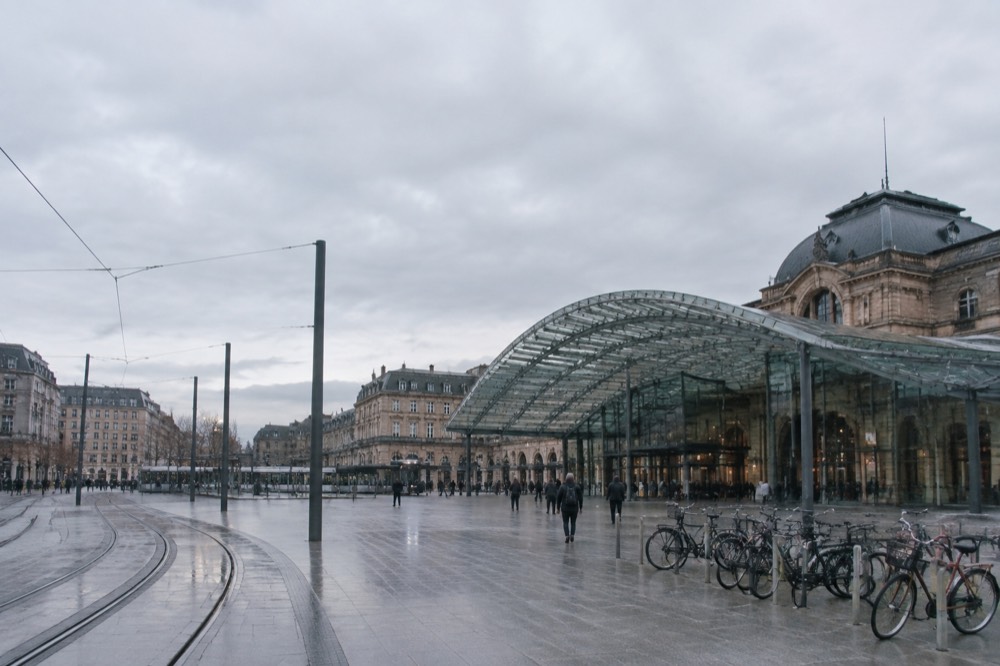
The city's automotive museums, dedicated to the two marques born in the region, tell the story of the car from its earliest decades, and both are purpose-built buildings that are attractions in their own right. The central square, ringed by palace buildings and plane trees, is the natural orientation point, and the state art collections nearby hold Old Masters through to modern work. Out on the hills, the vineyard paths give views back over the bowl of the city, and the Bad Cannstatt springs and its zoo and botanical garden fill a slower second day if you have one.
| Sight | What It Is | Who It Suits | What To Check |
|---|---|---|---|
| The automotive museums | Two marque museums covering the region's car history | Families, engineering enthusiasts, anyone curious why the city is famous | Opening hours, timed tickets and combined offers on each museum's own site |
| The central palace square | The main square, ringed by palace buildings, fountains and arcades | First-time visitors, photographers, anyone wanting the city's centrepiece | Guided walking tour times on the tourist office's page |
| The state galleries | Old Master and modern collections in the city centre | Art lovers, rainy-day planners | Exhibition schedules and admission on the galleries' own site |
| The hillside vineyards | Working vineyard paths inside the city boundary | Walkers, wine-curious travellers, anyone wanting a view | Path conditions and seasonal walking advice on the city's official pages |
| Bad Cannstatt springs | The historic mineral-spa district with parks, a zoo and botanical gardens | Families, slow travellers, second-day visitors | Opening hours for each attraction on its official page |
How Does A Stuttgart Trip Pair With Strasbourg Tours?
The cleanest way to pair the two is to run the Strasbourg side of the trip first, using the city's walking tours and food walks to get oriented, then take the Stuttgart journey as the German chapter, and finish back in Alsace with a guided day trip to the wine villages and Haut-Koenigsbourg. Booking the guided Alsace day for the day after your return means the tour operator handles the driving while you recover from the travel. The logic is simple. Strasbourg's tours are city-scale and mostly on foot, so they slot into the first half of a stay, while the day trips out to the Alsace villages, the castles and the Black Forest are full-day commitments that sit better once you know the city a little.
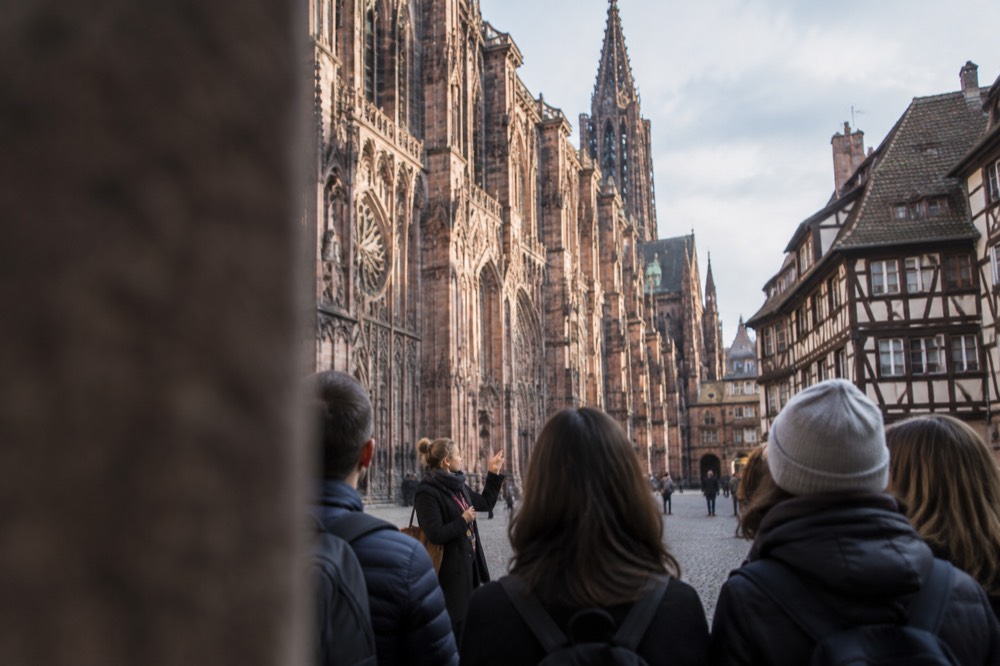
On the Strasbourg side, start with a walking tour. The Secrets Walk is a guided route through the city's less obvious corners, and it suits a second or third day once the cathedral and Petite France are already under your belt. The Colmar, Riquewihr and Haut-Koenigsbourg full-day tour is the natural anchor for the Alsace chapter of the trip: it covers the wine village, the castle and the Alsatian countryside in one guided day, and it pairs well with the Stuttgart visit because the two sit on opposite sides of your Strasbourg base. Check availability on the operator's live listing before locking the rest of the itinerary, because departure days shape everything around them.
Ready to see Strasbourg's less obvious corners? Book a guided walking tour here.
A food walk is the third piece worth slotting in. Strasbourg's winstub culture, its tarte flambée and its Alsatian wine list are a different experience from anything Stuttgart serves, and a guided tastings walk explains what you are eating in a way a restaurant visit alone does not. Run it on the evening before the Stuttgart trip or the evening you return, when you want an easy, city-centre plan that ends near your hotel.
What Can You See Between Strasbourg And Stuttgart?
The country between the two cities is the Black Forest's northern edge and the Rhine plain, and the honest advice is to cross it with a purpose rather than a list: either stop in the forest towns and lakes on a guided Black Forest day trip from Strasbourg, or drive straight through and save the stops for a dedicated trip. The towns on the route are small, and the scenery rewards a slow plan rather than a rushed one. Freiburg, Triberg and Titisee are the names that appear on the Strasbourg-based Black Forest itineraries, and a guided day trip covers all three without the driver having to read a German road atlas. Baden-Baden, the spa town, sits on a different branch of the same region and pairs with the forest on a combined tour.
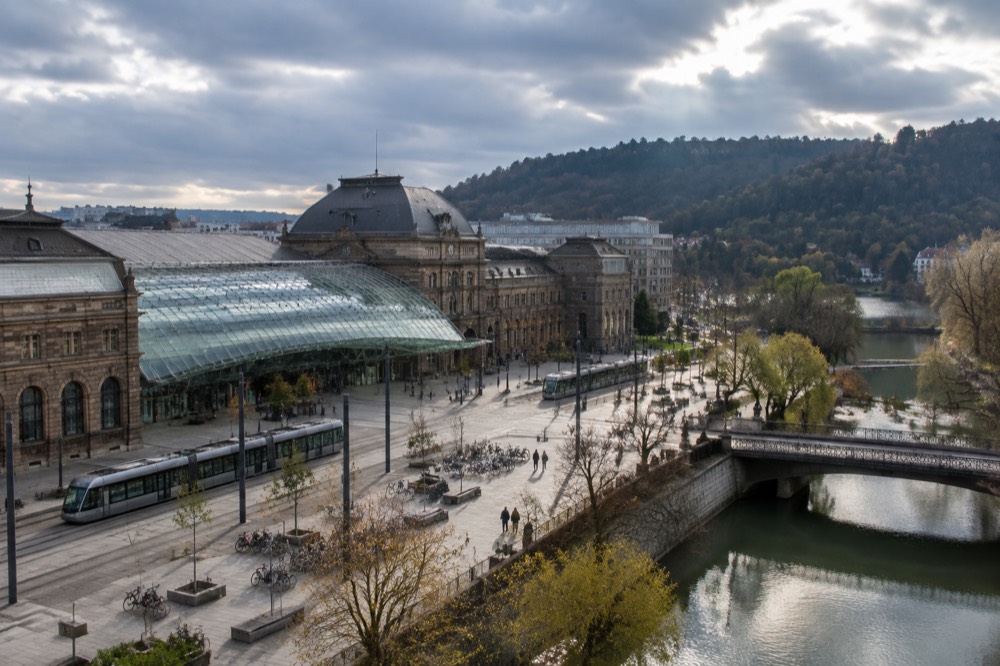
The Black Forest day trip from Strasbourg is the roster's most direct answer to the "what is between the two cities" question, because the route the tour drives is the route you would drive yourself. The tour runs to Freiburg, Titisee and Triberg, which gives you a university city, a lake and the forest's waterfall country in a single guided day, and it removes the parking and navigation questions that a self-drive crossing raises. For travellers who want the German side of the border without committing to Stuttgart itself, it is the lighter option, and it fits a shorter stay.
If you would rather keep the whole Alsace chapter French, the Best Of Alsace historical day trip is the other strong pairing: it runs to the region's villages and heritage sites on the French side of the Rhine and leaves Germany for the Stuttgart day itself. The choice between the two comes down to how much of your holiday you want to spend across the border, and both sit comfortably either side of a Stuttgart visit in a week-long plan.
When Is The Best Time Of Year To Make This Trip?
Late spring through early autumn is the comfortable window for a Strasbourg to Stuttgart trip, because both cities share the same semi-continental climate: Meteo-France's 1991-2020 normals for Strasbourg-Entzheim give a mean daily maximum of 26.4 C in July against 5.2 C in January, with 635.7 mm of rain spread over 112.3 rain days a year. December is a different trip entirely, built around the Christmas market rather than the countryside. The two cities sit close enough that the same weather arrives in both, so there is no season in which one is warm and the other is not. What changes is what you do with the weather: vineyard walks and lake stops want the warm months, museums and galleries carry a winter trip on their own.
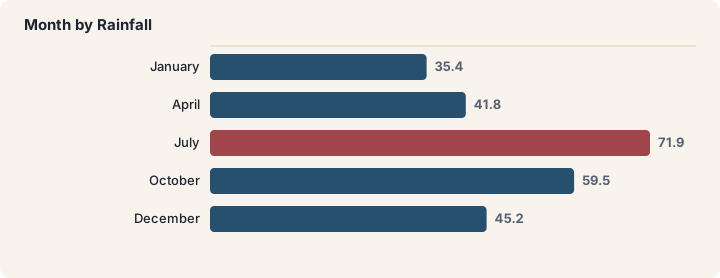
The rain pattern matters more than visitors expect. May, June and July each average more than ten days with at least 1 mm of rain, at 10.8, 10.2 and 10.4 days respectively, so a summer itinerary needs an indoor fallback in both cities, and the Stuttgart museums are exactly that. December averages 45.2 mm of rain over 10.2 rain days with a mean maximum of 5.9 C and a mean minimum of 0.8 C, which is cold-and-damp rather than snowy, and it is the season in which Strasbourg's Christmas market, not the countryside, becomes the reason for the trip. The fuller month-by-month picture is in the Strasbourg weather and climate guide, and the seasonal trade-offs are laid out in the best time to visit Strasbourg.
| Month | Mean Daily Maximum | Mean Daily Minimum | Rainfall | Days With 1 mm Or More Rain |
|---|---|---|---|---|
| January | 5.2 C | -0.2 C | 35.4 mm | 9.1 |
| April | 17.0 C | 5.7 C | 41.8 mm | 8.6 |
| July | 26.4 C | 14.9 C | 71.9 mm | 10.4 |
| October | 15.8 C | 7.2 C | 59.5 mm | 9.6 |
| December | 5.9 C | 0.8 C | 45.2 mm | 10.2 |
One December note worth carrying into the plan. Strasbourg's Christmas market opens in the last week of November and runs to 24 December, with the final day closing early in the evening, and the 2025 edition, the last one with published figures, ran from 26 November to 24 December and drew 3.05 million visitors. The city posts each edition's dates on its Christmas site, so confirm them there, and read the full Strasbourg Christmas market guide before booking anything in that window. Stuttgart runs its own market in the same season, which makes a December version of this trip a two-market itinerary if you want one.
Where Should You Base Yourself: Strasbourg Or Stuttgart?
Base yourself in Strasbourg unless German is the point of the trip, because Strasbourg carries the richer short-stay inventory: a UNESCO-listed historic centre, the Alsace wine country on its doorstep, a large guided-tour roster in English and cheaper city transport, with CTS passes at 4.60 EUR for 24 hours. Stuttgart then becomes a day trip or a one-night stop. The practical arithmetic favours the French side for anything up to about a week. Strasbourg's old core is walkable in a way Stuttgart's spread-out districts are not, its day trips cover two countries, and its tour roster is deep enough that you never need to organise anything yourself if you would rather not.
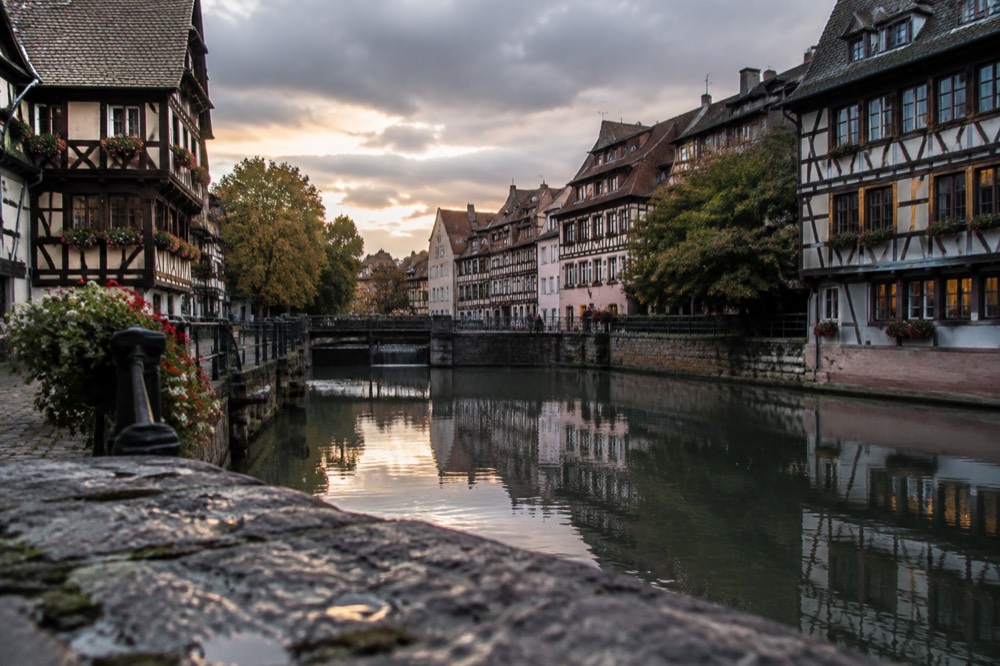
The argument for basing yourself in Stuttgart instead is narrow but real: if the trip is built around the car museums or a specific event, or if you are combining Stuttgart with elsewhere in Baden-Württemberg, the German base makes sense. For everyone else, the Strasbourg base wins on charm, on the food culture and on the range of things within a day's reach. The neighbourhood-by-neighbourhood breakdown, including Petite France and the Grande Île, is in the where to stay in Strasbourg guide, and it is the page to read before booking a hotel for this itinerary.
On the Strasbourg side of the ledger, the fixed costs of a stay are modest by big-city standards. The municipal museums charge 9 EUR full price or 5 EUR reduced, the cathedral's tower platform is 10 EUR full or 6 EUR reduced, the astronomical clock show is 4 EUR, and the Batorama river boats run at 16.20 EUR full or 8.90 EUR reduced on the long circuit. The Strasbourg City Card, at 5 EUR for seven days, is a discount card rather than an all-inclusive pass, and it takes money off several of those. All municipal museums are free on the first Sunday of every month, which is a planning lever worth pulling if your dates allow.
What Does A Sensible Strasbourg To Stuttgart Itinerary Look Like?
A sensible shape is five to seven days: two or three days in Strasbourg itself with a walking tour and a food walk, one full day across the border in Stuttgart, one guided Alsace or Black Forest day trip either side of it, and a final half-day for anything missed. The order matters less than the spacing, because the guided day trips are fixed-departure commitments and the Stuttgart day is the flexible piece that slots around them. Below is a seven-day skeleton that has worked as a pattern for this route. Treat it as a frame rather than a prescription, and swap days to fit the departure days of whichever tours you book.
| Day | Base | Focus |
|---|---|---|
| Day 1 | Strasbourg | Arrival, the Grande Île on foot, the cathedral nave and the astronomical clock show at 12:30 |
| Day 2 | Strasbourg | A guided walking tour in the morning, Petite France and the Ponts Couverts in the afternoon |
| Day 3 | Strasbourg | The Best Of Alsace guided day trip, or the museums if the weather turns |
| Day 4 | Stuttgart | The full day across the border: the palace square, one car museum, the state galleries |
| Day 5 | Strasbourg | A slow return, a food walk with tastings in the evening |
| Day 6 | Strasbourg | The Black Forest day trip to Freiburg, Titisee and Triberg |
| Day 7 | Strasbourg | The Secrets Walk, last souvenirs, departure |
The one fixed point inside that skeleton is the astronomical clock. The automaton show runs at 12:30 daily, tickets are 4 EUR and are sold on the day only, at the cathedral stalls from 10:00 to 11:00 or at the Saint-Michel entrance from 11:30, so Day 1 or Day 7 needs to be built around it if you want to see it. The cathedral nave itself is open Monday to Saturday from 08:30 to 11:15 and from 12:45 to 17:45, and on Sunday afternoons from 14:00 to 17:15, which shapes any cathedral morning.
For travellers with less time, the honest cut is this: with three days, drop the Stuttgart overnight and take the Black Forest day trip as your German chapter instead, because it crosses the border and comes back in a single guided day. With ten days or more, the trip opens out: the Alsace wine route guide and the most beautiful villages in Alsace guide cover the French side at the pace it deserves, and Stuttgart can take two nights rather than one.
Common Questions About Travelling From Strasbourg To Stuttgart
How do you get from Strasbourg to Stuttgart?
Strasbourg, in north-eastern France, and Stuttgart, in south-west Germany, are connected by train, coach and road across the Rhine plain, and no fixed journey time or fare is quoted here because the verified planning pack does not carry those figures. Check the rail operator's own journey planner for times, fares and reservations before booking, and allow time on the Strasbourg end for the CTS tram or bus to the station, where a single ticket is 1.90 EUR via the app or contactless payment.
Is Stuttgart worth a day trip from Strasbourg?
Stuttgart is worth the day if you want German city energy, the automotive museums and a different food and museum culture from Alsace's, and it works as a single long day from a Strasbourg base. It is not a half-timbered village, so travellers chasing the Alsatian look will get more from the wine villages and the Black Forest tours than from a German city day.
Do you need a passport to travel from Strasbourg to Stuttgart?
France and Germany are both in the Schengen area, so there are no routine border checks on the crossing, and the two countries share the euro, so no currency change is needed. Carry your passport anyway, because carriers can ask for identification and non-EU visitors must be able to prove their status anywhere in the zone.
What is there to see between Strasbourg and Stuttgart?
The country between the two cities is the northern Black Forest and the Rhine plain, and the names that appear on Strasbourg's guided itineraries are Freiburg, Titisee and Triberg, with Baden-Baden on a separate branch of the same region. A guided Black Forest day trip from Strasbourg covers the forest towns and the lake in one day, which is easier than self-driving the same route and parking in each place.
Should you stay in Strasbourg or Stuttgart?
Stay in Strasbourg for anything up to about a week, because it carries the walkable UNESCO-listed centre, the deeper English-language tour roster and the Alsace day trips on its doorstep, and use Stuttgart as a day trip or a one-night stop. Base yourself in Stuttgart only if the trip is built around the car museums, an event, or a wider Baden-Württemberg itinerary.
When is the best time of year to travel between the two cities?
Late spring to early autumn is the comfortable window, since both cities share the same semi-continental climate: the Strasbourg-Entzheim normals give a mean daily maximum of 26.4 C in July and 5.2 C in January, with 635.7 mm of rain a year. December turns the trip into a Christmas-market itinerary, with Strasbourg's market opening in the last week of November and running to 24 December, and the 2026 dates should be confirmed on the city's own Christmas site.
The Strasbourg to Stuttgart route is, in the end, a simple idea executed across a border: a French base with a German day or two bolted on, and a corridor of forest and vineyards in between that rewards anyone who slows down to cross it properly. Book the guided days first, build the flexible Stuttgart day around them, and check every fare and timetable on the page that owns it.