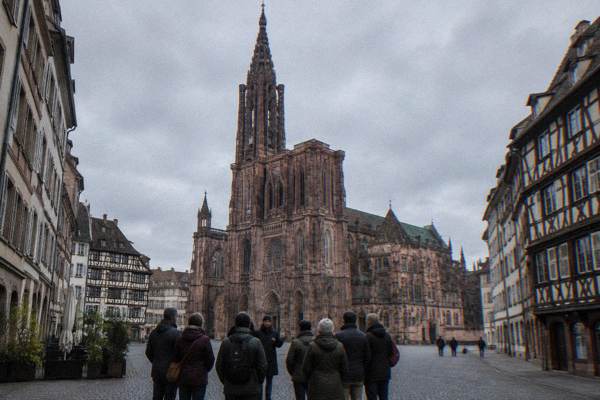
Aubette Strasbourg
The Aubette dominates the north side of Place Kléber in Strasbourg, France, combining a working cinema with restored avant-garde decorated rooms that rank among the most unusual interiors in Alsace.
Short answer
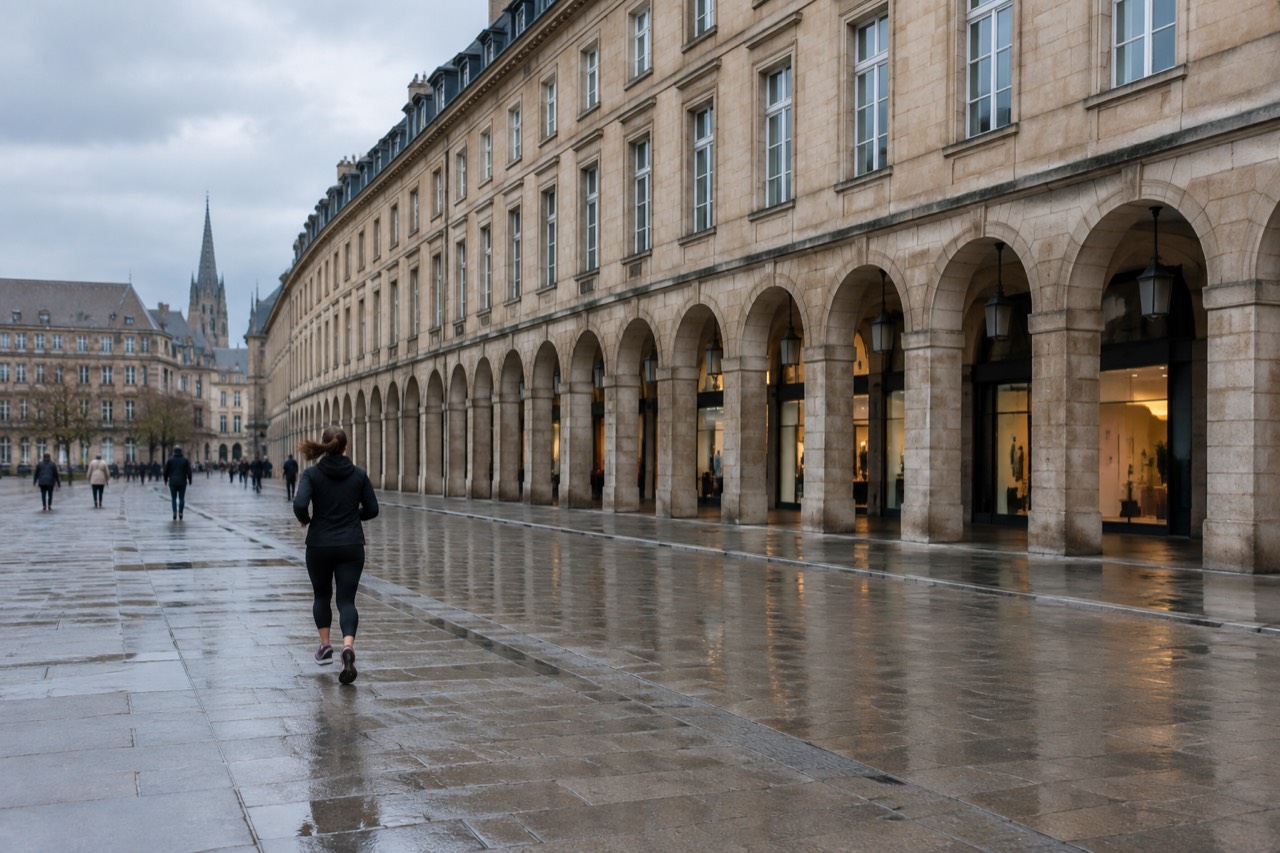
The Aubette is a landmark building on Place Kléber in central Strasbourg, France, housing a multiscreen cinema and a set of restored avant-garde decorated rooms open to visitors. The cathedral platform costs 10 EUR full and 6 EUR reduced, the astronomical clock show 4 EUR, and municipal museums 9 EUR full and 5 EUR reduced, all within a short walk of the building.
The Aubette stands on the north side of Place Kléber, the main square of Strasbourg, a city in Alsace in north-eastern France, prefecture of the Bas-Rhin and part of the Grand Est region, sitting on the River Ill beside the Rhine, which forms the border with Germany. The building gives the square its northern wall and does two jobs at once: it works as a modern multiscreen cinema, and it preserves a set of decorated interiors from the modernist avant-garde that were restored and reopened so the public can walk through them. For a visitor deciding how to spend an afternoon, the Aubette is the rare landmark you can visit in twenty minutes or turn into a whole evening, because the cinema programme, the square outside and the old streets of the Grande Île all sit on top of each other here.
What Is The Aubette In Strasbourg?
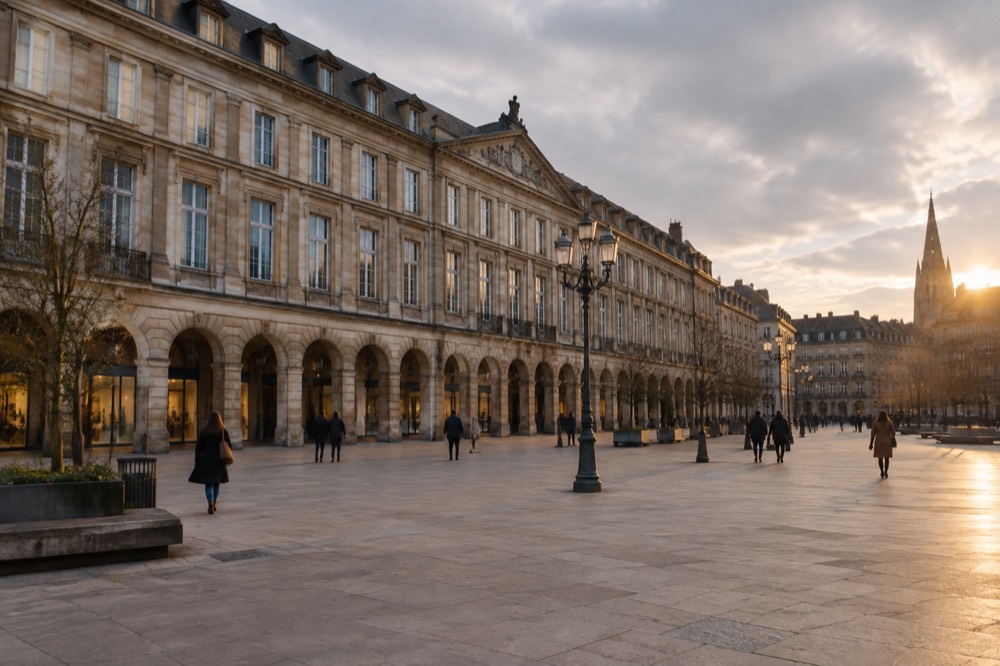
The Aubette is a large historic building on the north side of Place Kléber in Strasbourg, France, that now functions as a cinema complex while preserving a famous suite of avant-garde decorated rooms created by a group of modernist artists and later restored. It is not a museum in the ordinary sense and not a palace: it is a working piece of the city's commercial life, with a multiscreen cinema inside, wrapped around interiors whose bold geometry and primary colours were radical for their moment and have since been recovered and reopened. Visitors come for three reasons: to see the decorated rooms, to watch a film, or simply to use the building as a landmark while exploring the square and the streets that run off it toward the cathedral.
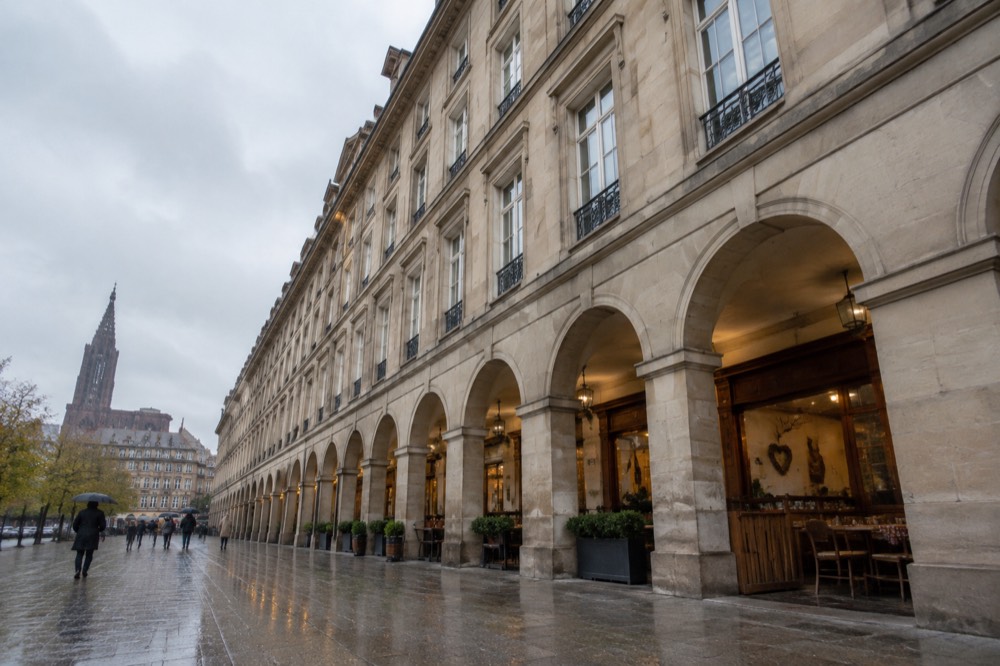
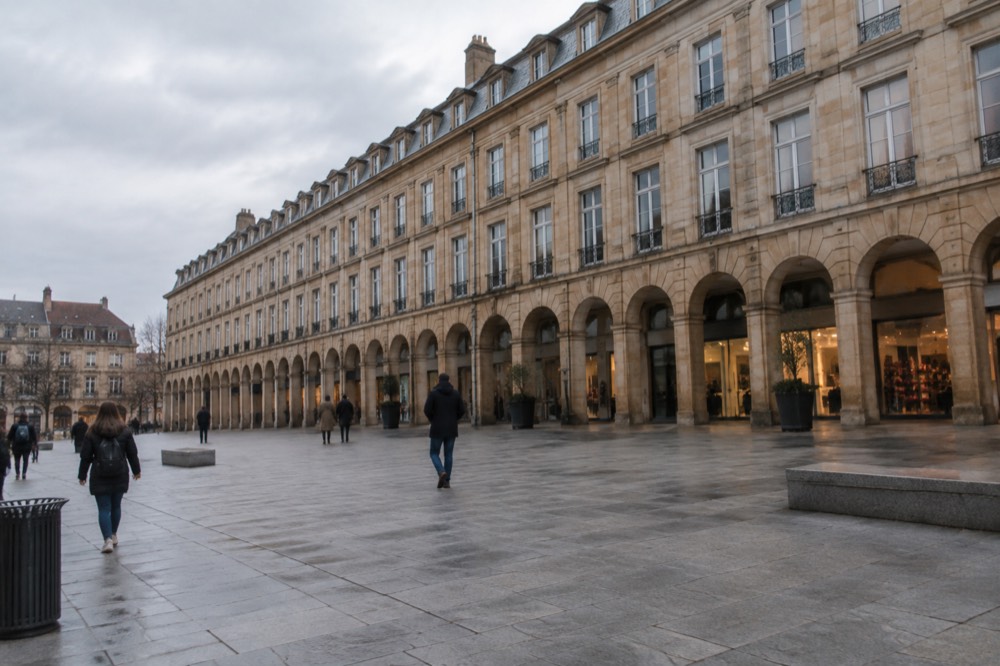
The building's name is the one detail everyone meets first, and it is an old military word: an aubette was a guardhouse or sentry post, and the name stuck to the site long before the present building took its current form. The structure belongs to the fabric of Place Kléber rather than standing apart from it. Walk the square and the Aubette reads as its northern edge, a long classical facade with arcades at street level, shopfronts, café terraces and cinema entrances built into it. The square itself is the largest open space in the city centre and the natural meeting point for locals, which makes the Aubette one of the easiest landmarks in Strasbourg to reach and one of the hardest to miss.
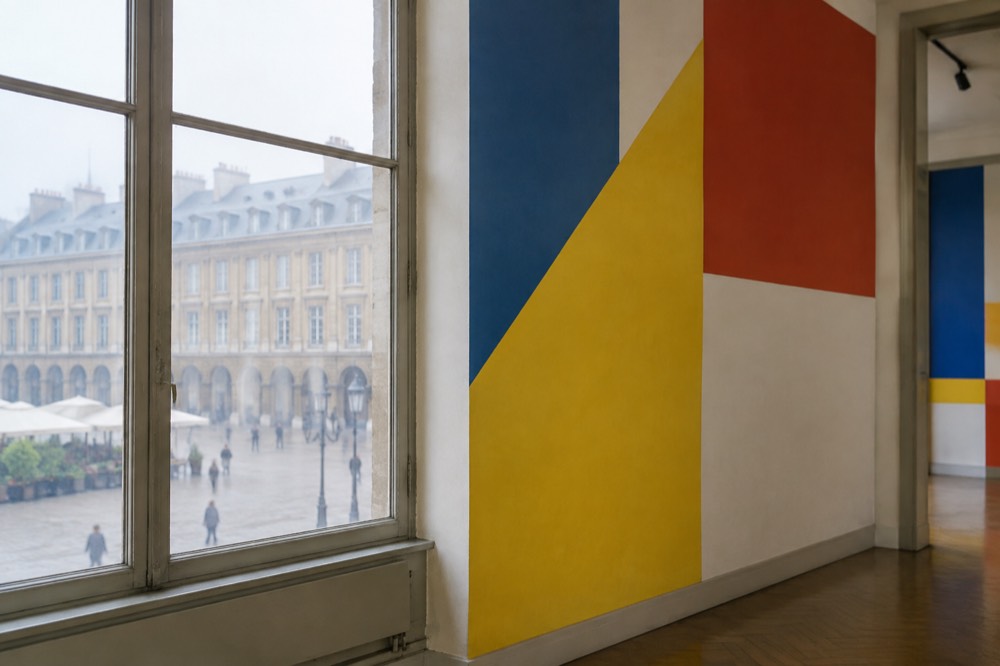
What makes the building genuinely unusual is what happened inside it when its dance hall, cinema and café spaces were handed to avant-garde artists to decorate. The result was an interior of abstract geometric forms, strong diagonals and uncompromising colour that was radical for its era and remains striking today. The decorated rooms were later altered, then recovered and restored, and they can now be visited as a preserved piece of modernist interior design in the middle of a historic Alsatian square. That contrast, a severe modernist interior inside a classical building on a medieval city's grand square, is the reason design enthusiasts put the Aubette on a Strasbourg itinerary alongside the cathedral and Petite France.
Where Is The Aubette And How Do You Get There?
The Aubette sits directly on Place Kléber in central Strasbourg, France, a short walk from the cathedral and the train station, and the whole city centre is served by the CTS tram network, where a single ticket costs 1.90 EUR bought via the app or contactless and 2.50 EUR bought on board a bus. No transport figure is needed for the building itself: it is a pedestrianised-square landmark in the middle of the Grande Île, the river-island historic core that UNESCO lists with the Neustadt as a World Heritage property. If you are staying anywhere in the centre, you will reach it on foot.
The practical question is usually which tram stop to aim for, and the answer is that the stops around Place Kléber and the nearby Homme de Fer interchange put you within a couple of minutes' walk of the Aubette's arcade. The CTS fare structure is simple and worth knowing before you arrive: a single ticket is 1.90 EUR when bought through the Badgéo card, the CTS app or contactless payment, and 2.50 EUR if bought from the driver on board a bus. A 24h Solo pass costs 4.60 EUR and covers one person for a day, while a 24h Trio pass at 10.20 EUR covers two or three people travelling together, which suits families.
| CTS ticket | Price | What it covers |
|---|---|---|
| Single (Badgéo, app, contactless) | 1.90 EUR | One journey on tram or bus |
| Single (bought on board bus) | 2.50 EUR | One journey, purchased from the driver |
| 24h Solo | 4.60 EUR | One person, unlimited rides for 24 hours |
| 24h Trio | 10.20 EUR | Two to three people, unlimited rides for 24 hours |
Once you are at the square, orientation is easy. The cathedral lies to the south-east along the pedestrian streets of the old town, and the Rue des Grandes Arcades, the main shopping street, runs off the square's western side. Petite France and the river are a pleasant stroll further south-west, past the Aubette's arcades and down toward the Ill. Because everything in the centre is compact, a visit to the Aubette usually folds itself into a walking route rather than standing alone, and a guided walk is a good way to anchor that route in context.
A guided walk is also the format that suits the Aubette's story best, since the building's interest is narrative rather than monumental: a guide can set the avant-garde interiors against the medieval streets around them in a way a plaque cannot. The walks on the roster start in the old town and pass through the squares and lanes that connect the cathedral quarter to Place Kléber, and the free pay-what-you-want English walks listed through GuruWalk cover the same ground for travellers who prefer to tip at the end.
What Can You Do Inside The Aubette Today?
Inside the Aubette today you can watch a film at the multiscreen cinema, see the restored avant-garde decorated rooms, and eat or drink at the venues built into its arcades, all without ever leaving Place Kléber in central Strasbourg. The cinema is the building's everyday life: a mainstream multiscreen showing French and international releases, which means an evening at the Aubette is a genuinely local way to spend a rainy evening in Strasbourg rather than a tourist tick-box. The decorated rooms are the heritage draw, and they are the reason the building appears in design histories at all.
For the decorated rooms, treat the visit as a short, focused stop. The restored interiors are compact, and the experience is about looking closely at geometry, colour and proportion rather than covering distance. Check the current visiting arrangements on the official museum pages before you go. Photography is generally welcomed in heritage interiors, but confirm on site, and note that the rooms sit inside a working commercial building, so access can be shaped by cinema operations and events.
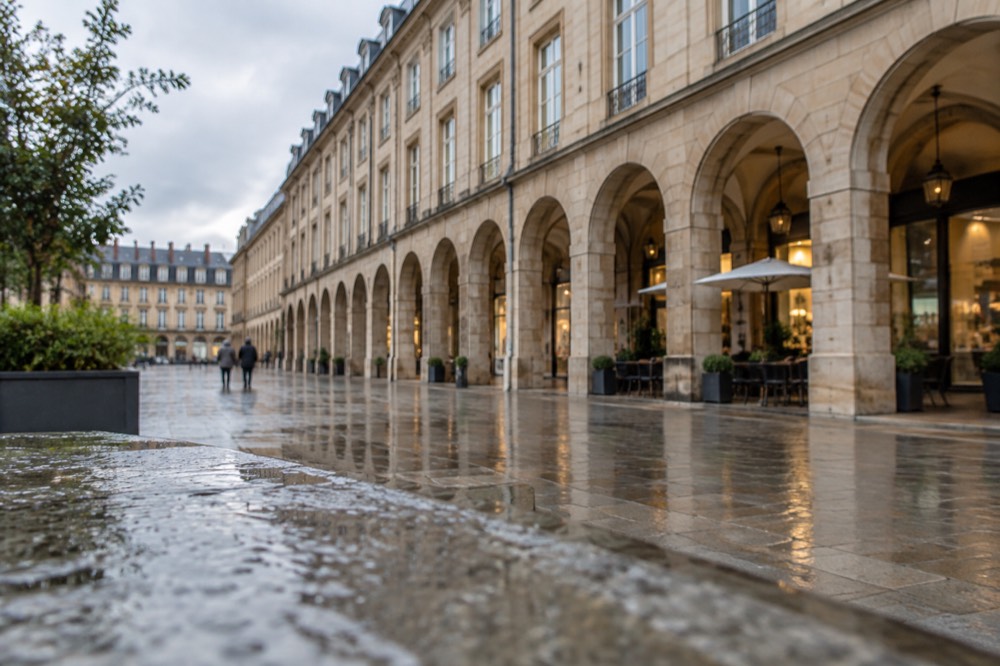
The arcades at street level are the part every visitor uses whether they plan to or not. They hold shopfronts and places to eat that open onto the square, and they give the Aubette its social role: on a cold December evening during the Christmas market, the arcades are where you step out of the wind between a cup of vin chaud and the next stall. The square in front of the building is the city's gathering point year-round, and the Christmas market spreads across it and the surrounding streets in the last week of November through to 24 December, with the 2025 edition having run 26 November to 24 December and drawn 3.05 million visitors. The 2026 dates are still being finalised, so confirm them on the city's Christmas site before you book anything.
If you would rather have the city explained than navigate it alone, a small-group walk is the efficient choice for a first visit, and the paid listings on the roster allow free cancellation so you can move the booking if the weather turns. The walks that pass the cathedral, Place Kléber and Petite France give you the Aubette in context: a modernist anomaly inside a medieval street plan, which is exactly the kind of detail that makes Strasbourg feel different from other French cities.
Want the square and its stories explained by a local? Book a free walking tour here.
Why Are The Decorated Rooms So Famous?
The Aubette's decorated rooms are famous because a group of avant-garde artists of the modernist movement covered the building's dance hall, cinema and café interiors in bold abstract geometry and primary colours, creating one of the boldest total-design interiors of its era, now restored and open to the public. The decoration treated an entire entertainment venue as a single artwork: walls, columns, ceilings and even the cinema screen surround were drawn into one geometric system. That ambition, applied to a popular dance hall rather than a gallery, is what design historians keep coming back to.
The story of the rooms is a loop of radicalism, loss and recovery. After their early moment the interiors were painted over and altered as fashions changed, and for decades the decoration survived only in photographs and in the memory of art historians. Restoration work later recovered the original schemes, and the rooms reopened as a heritage visit inside the still-working cinema building. For a visitor, that means you see two layers at once: a functioning modern cinema, and, behind and above it, a recovered avant-garde artwork you can walk through. Few buildings anywhere offer that double exposure, and none in Strasbourg does it on the main square. The rest of the planning pages sit on Strasbourg Travel Guide.
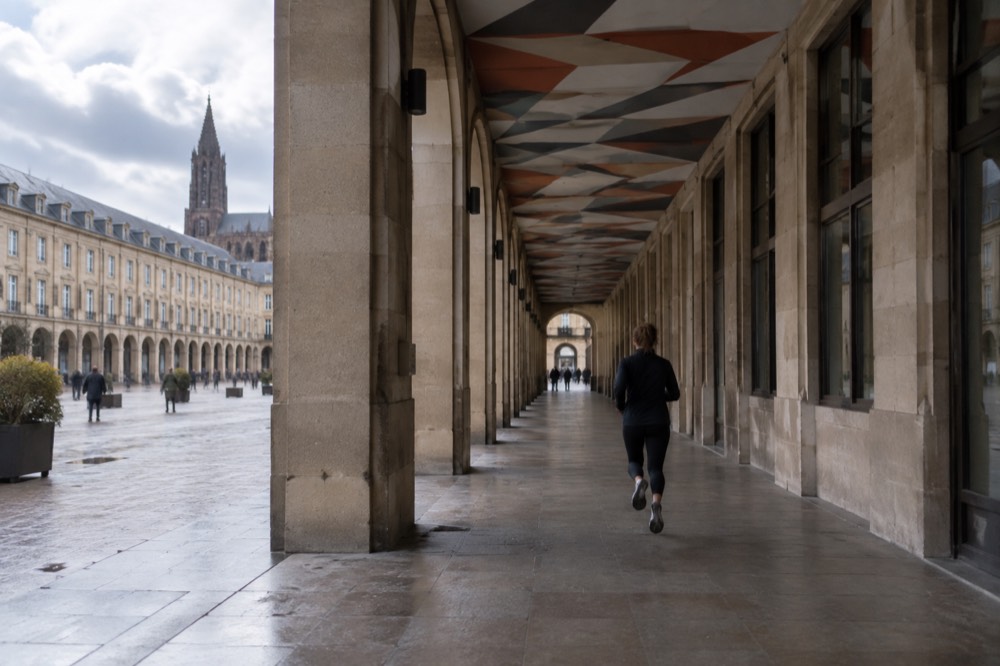
To enjoy the rooms you do not need prior knowledge of the movement involved, but a little framing helps. The artists worked with flat planes, right angles, diagonals and a deliberately narrow palette, rejecting ornament in favour of structure. Look at how the decoration handles corners and columns: instead of softening them, it emphasises them, turning structural elements into the pattern itself. Give the rooms twenty to forty minutes, go in daylight if you can, and read whatever interpretation material is provided on site.
Strasbourg's contemporary-art side continues elsewhere in the city, and the Aubette makes a natural pairing with the modern collections. The MAMCS, the city's modern and contemporary art museum, is a short walk from the square, and the municipal museums charge 9 EUR full and 5 EUR reduced, with every one of them free on the first Sunday of the month. A one-day Pass Musées at 20 EUR covers the municipal museums if you plan to visit several in a day. Note that the Musée Alsacien is closed for works until 2028 and should not be on any current itinerary.
What Else Is Within Walking Distance Of The Aubette?
Everything in Strasbourg's city centre is within an easy walk of the Aubette: the cathedral with its 66 m viewing platform lies a few minutes to the south-east, Petite France and the Ponts Couverts to the south-west, and the Rhine-side institutions of the European Quarter a tram ride to the north-east. The building sits at the centre of the Grande Île, the World Heritage-listed river island that holds the old town, so the Aubette works well as the anchor point of a walking day rather than a destination you travel to and leave.
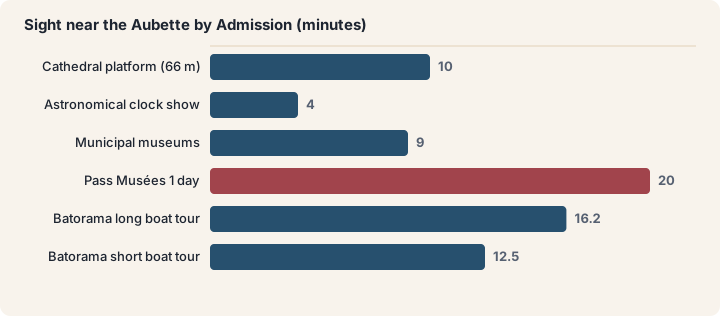
The cathedral is the obvious first stop from Place Kléber. Its single spire dominates the skyline, and the nave is open Mon-Sat 08:30-11:15 and 12:45-17:45, and on Sundays and feast days 14:00-17:15; during the Christmas market it stays open continuously on the Place du Château side. The platform at 66 m costs 10 EUR full and 6 EUR reduced, with children under 6 free, and runs 09:30-13:00 and 13:30-20:00 from April to September, 10:00-13:00 and 13:30-18:00 from October to March. The astronomical clock performs its full automaton show daily at 12:30 sharp, tickets 4 EUR, bought on the day only. A guided cathedral tour is a good way to cover both the architecture and the clock without queueing blind.
| Sight near the Aubette | Admission | Notes from the official pages |
|---|---|---|
| Strasbourg Cathedral nave | Check the cathedral's hours page | Mon-Sat 08:30-11:15, 12:45-17:45; Sun 14:00-17:15 |
| Cathedral platform (66 m) | 10 EUR full, 6 EUR reduced, under 6 free | Seasonal hours; last ascent earlier than closing |
| Astronomical clock show | 4 EUR | Daily at 12:30, day-of tickets only |
| Municipal museums | 9 EUR full, 5 EUR reduced | Free the first Sunday of every month |
| Pass Musées 1 day | 20 EUR | Covers the municipal museums for one day |
| Batorama long boat tour | 16.20 EUR full, 8.90 EUR reduced | Red Tour lasts 1h10 |
| Batorama short boat tour | 12.50 EUR full, 7.20 EUR reduced | Blue Tour lasts 0h45 |
West and south of the square, the streets drop toward the Ill through the boutique lanes of the old town, past the Maison Kammerzell, the ornate half-timbered house beside the cathedral, and on into Petite France, the former tanners' and millers' quarter of half-timbered houses and canals. From there the Ponts Couverts and the Barrage Vauban terrace give the classic rooftop panorama over the river; the terrace runs 08:00-19:00 in September and October and 08:30-16:00 from November to February, and its admission price is not stated on the official page, so check before you go. The Palais Rohan, home to the Beaux-Arts and other municipal collections, sits just south of the cathedral and makes an easy add-on.
Where Should You Eat Around Place Kléber?
Eating around Place Kléber means winstubs, the traditional Alsatian taverns serving tarte flambée, choucroute and baeckeoffe, along with the cafés under the Aubette's own arcades and the food streets that run off the square toward the cathedral and Petite France. The winstub is the local format to seek out: small rooms, shared tables, regional dishes and Alsatian wine by the glass, and the old-town lanes within a few minutes of the Aubette hold a dense concentration of them. The square itself leans more commercial, so the best plan is to use the Aubette-side cafés for a coffee or a break and walk five minutes for a proper meal.
The regional dishes worth knowing by name are few and easy. Tarte flambée is a thin bread base with crème fraîche, onions and lardons, baked fast and eaten immediately; choucroute is the Alsatian sauerkraut platter with sausages and pork; baeckeoffe is a slow-baked casserole of meats and potatoes; kougelhopf is the brioche-like cake baked in a fluted mould, served sweet or with a glass of local riesling. Alsace wine, led by riesling and crémant, is the natural pairing, and a tasting room or a guided gourmet walk is the efficient way to sample several without committing to a full dinner.
A food walk solves another practical problem too: it turns the stretch between Place Kléber and the cathedral, which is the busiest tourist corridor in the city, into a series of stops where someone local tells you which counter is worth returning to. If you prefer to plan your own meals, go one street back from the main pedestrian arteries, look for the winstub signs, and book ahead for dinner in December, when the Christmas market fills the centre and tables go early. The market's own food chalets, typically open from late morning into the evening, are the other option, and the closing evening of 24 December finishes early, around 18:00, so plan that day's meals accordingly.
When Is The Best Time To Visit The Aubette And Place Kléber?
The best time to visit the Aubette is late spring through early autumn for mild weather and long evenings, or late November to 24 December if your goal is the Christmas market, when the square in front of the building becomes the centre of the city's seasonal programme. Strasbourg's climate is semi-continental, which means warm summers, cold winters and rain spread fairly evenly through the year: Meteo-France 1991-2020 normals for Strasbourg-Entzheim show a mean maximum of 26.4 C in July against 5.2 C in January, with 635.7 mm of rain across 112.3 rain days in an average year.
The numbers matter more than you might expect for a square-based visit. December, the market month, averages a mean maximum of 5.9 C and a mean minimum of 0.8 C, with 10.2 days of rain of 1 mm or more, so the evenings around the Aubette are genuinely cold and the arcades earn their keep as windbreaks. July and August average mean maxima of 26.4 C and 26.1 C, and May through July each sees 10 or more rain days, so even summer visitors should keep a light layer and an umbrella in reach. There is no month without rain days in the normals table, which is the honest planning picture for a city whose main attractions are outdoors.
| Month | Mean max (C) | Mean min (C) | Rain (mm) | Rain days >=1 mm |
|---|---|---|---|---|
| March | 12.1 | 2.6 | 38.6 | 8.5 |
| June | 24.4 | 13.4 | 68.5 | 10.2 |
| September | 21.6 | 10.7 | 54.6 | 8.0 |
| December | 5.9 | 0.8 | 45.2 | 10.2 |
Crowd-wise, the pattern is predictable from the calendar. The Christmas season fills the square and the surrounding lanes from late morning onward, and the market's chalets typically run from late morning into the evening. In summer, the long evenings make the square lively without the market crush, and the cinema inside the Aubette becomes a useful refuge on the rain days the normals table says you should expect. Whatever the month, the building's arcades and cinema make it one of the few central landmarks with a built-in bad-weather option, which is worth remembering when the sky turns.
Which Tours Pair Well With A Visit To The Aubette?
The tours that pair best with the Aubette are a city walking tour to place the building in context, a boat trip on the Ill to see the city from the water, and a segway or bike tour if you want to reach the European Quarter and the farther districts in the same afternoon. The building sits so centrally that nearly every guided format in Strasbourg passes within sight of it, so the choice is really about pace and depth rather than about coverage: walks for detail, boats for the skyline, segways and bikes for reach.
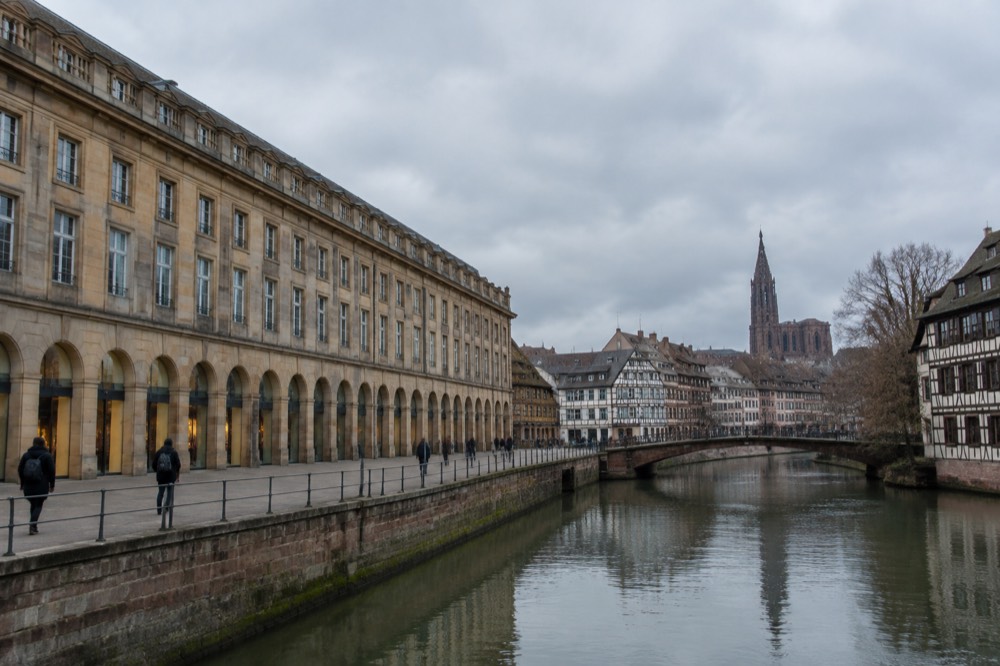
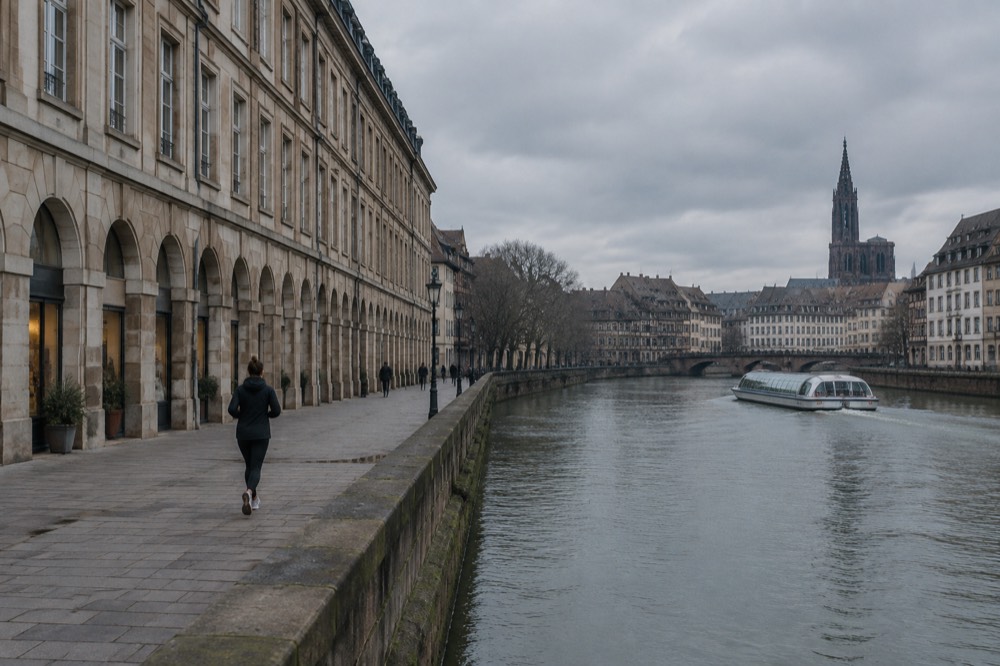
The boat option deserves a special mention because the Aubette and the river belong to the same city picture. A private cruise on the Ill with your own skipper takes up to four people and turns the water-level view of the old town, the covered bridges and the terraces into a private hour, which suits couples and families who want photographs without a crowd in the frame. The scheduled Batorama boats are the shared alternative, with the long tour at 16.20 EUR full and 8.90 EUR reduced lasting 1h10, and the short tour at 12.50 EUR and 7.20 EUR lasting 0h45. Whichever you choose, book the boat for late afternoon and the Aubette's cinema for the evening, and you have a full day that never leaves the centre. Check availability
For the European side of the city, the segway format is the one the roster carries in strength, and it makes sense of a district that is awkward on foot because of its scale. The European Quarter holds the European Parliament, the Council of Europe and the European Court of Human Rights, and a guided roll through it connects the old town you have just walked with the institutional city that explains why Strasbourg hosts so many visitors in suits. The Parlamentarium, the European Parliament's visitor centre, opens Mon-Fri 09:00-18:00 and Saturdays 09:30-12:00 and 13:00-18:00 outside plenary weeks, with an airport-style security check at the door; hours differ in plenary weeks, so check the official page before you set out, and confirm admission there too.
If art is what brought you to the Aubette, the street-art walk is the roster's other design-led option, taking in the contemporary murals and interventions that sit a few streets from the classical facades. It pairs naturally with the MAMCS and with the Aubette's own restored interiors as a one-day thread on how this city treats modern art: preserve it, restore it, and keep using the buildings it lives in.
How Should You Plan A Day Around The Aubette?
Plan a day around the Aubette by anchoring on Place Kléber in the morning, walking the cathedral quarter before the midday clock show at 12:30, eating in a winstub at midday, and giving the afternoon to either the museums, Petite France or a boat trip, with the cinema inside the Aubette as the evening fallback. The building rewards this structure because it sits at the junction of every walking route in the centre, and its cinema gives the day a natural indoor ending that no other landmark offers.
A concrete morning looks like this: start on the square with coffee under the arcades, walk the pedestrian streets to the cathedral, and climb the platform if the sky is clear, budgeting the 10 EUR full ticket and the seasonal hours. Be back near the cathedral for the 12:30 astronomical clock show, tickets 4 EUR bought on the day, then drift back toward the square for lunch in a winstub one street off the main drag. In the afternoon, choose one anchor rather than three: Petite France and the Barrage Vauban terrace for the classic view, the municipal museums if the weather turns, or a Batorama boat for an hour off your feet. Finish on the square at dusk and let the evening decide itself.
| Time of day | Plan A (sights) | Plan B (with children) | Bad-weather option |
|---|---|---|---|
| Morning | Cathedral nave and platform | Square and arcades, then cathedral | Cinema inside the Aubette |
| Midday | Clock show at 12:30, then winstub lunch | Tarte flambée lunch | Winstub lunch |
| Afternoon | Petite France and Barrage Vauban terrace | Batorama short boat (0h45) | Municipal museums, 9 EUR full |
| Evening | Dinner in the old town | Early dinner, then the square at dusk | Cinema at the Aubette |
Budget the day honestly. A museum costs 9 EUR, a boat 12.50 EUR or 16.20 EUR, and CTS passes at 4.60 EUR for a day's transport if you stay outside the centre. The Strasbourg City Card, a 5 EUR discount card valid seven days (3.50 EUR for children aged 3 to 17), takes set amounts off museums, the boat, the cathedral platform and the clock, so it pays for itself within two or three of those visits. First-Sunday visitors get the municipal museums free, which is the single best saving if your dates allow it.
Common Questions About The Aubette
What is the Aubette in Strasbourg?
The Aubette is a landmark building on the north side of Place Kléber in Strasbourg, France. It houses a multiscreen cinema and a suite of restored avant-garde decorated rooms created by a group of modernist artists and later recovered and reopened to the public.
Is the Aubette worth visiting?
Yes, if you have any interest in design or modern art. The decorated rooms are a genuinely rare survival of total avant-garde interior design in a working commercial building. Even without them, the building's arcades, cafés and cinema make it a useful stop on the city's main square.
How do I get to the Aubette?
The Aubette sits on Place Kléber in the pedestrianised centre of Strasbourg, a short walk from the cathedral and the train station. Trams stop within a couple of minutes of the square; a CTS single ticket costs 1.90 EUR via the app or contactless, 2.50 EUR on board a bus, and a 24h Solo pass is 4.60 EUR.
Can you watch films at the Aubette?
Yes. The building operates as a multiscreen cinema showing French and international releases, which makes it one of the few central landmarks with a built-in evening activity. Check the cinema's own programme for what is screening during your visit.
What else is near the Aubette?
The cathedral with its 66 m platform and 12:30 astronomical clock show, the Maison Kammerzell, the Palais Rohan museums, Petite France, the Ponts Couverts and the Barrage Vauban terrace are all within an easy walk of Place Kléber. The MAMCS contemporary art museum lies just north of the square.
When is the best time to see Place Kléber?
Late spring through early autumn offers mild weather and long evenings, while late November to 24 December brings the Christmas market, with the 2025 edition having drawn 3.05 million visitors. The 2026 dates are still being finalised, so confirm them on the city's Christmas site before you travel.
The Aubette earns its place on a Strasbourg itinerary precisely because it refuses to be one kind of attraction: it is a cinema you can use, a design landmark you can walk through, and a sheltered edge of the city's main square, all in one classical facade. Pair it with the cathedral in the morning, a winstub at midday and the river in the late afternoon, and the building does what the best central landmarks do, which is to hold the day together while the city changes character around it.