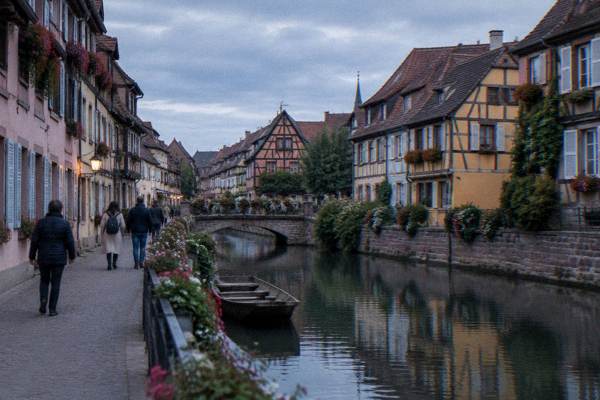
La Petite Pierre
La Petite Pierre is a small village in the Northern Vosges, west of Strasbourg in Alsace, north-eastern France: a cluster of sandstone houses and castle ruins wrapped in forest, and a quiet counterweight to the busier wine-road stops closer to the city.
Short answer
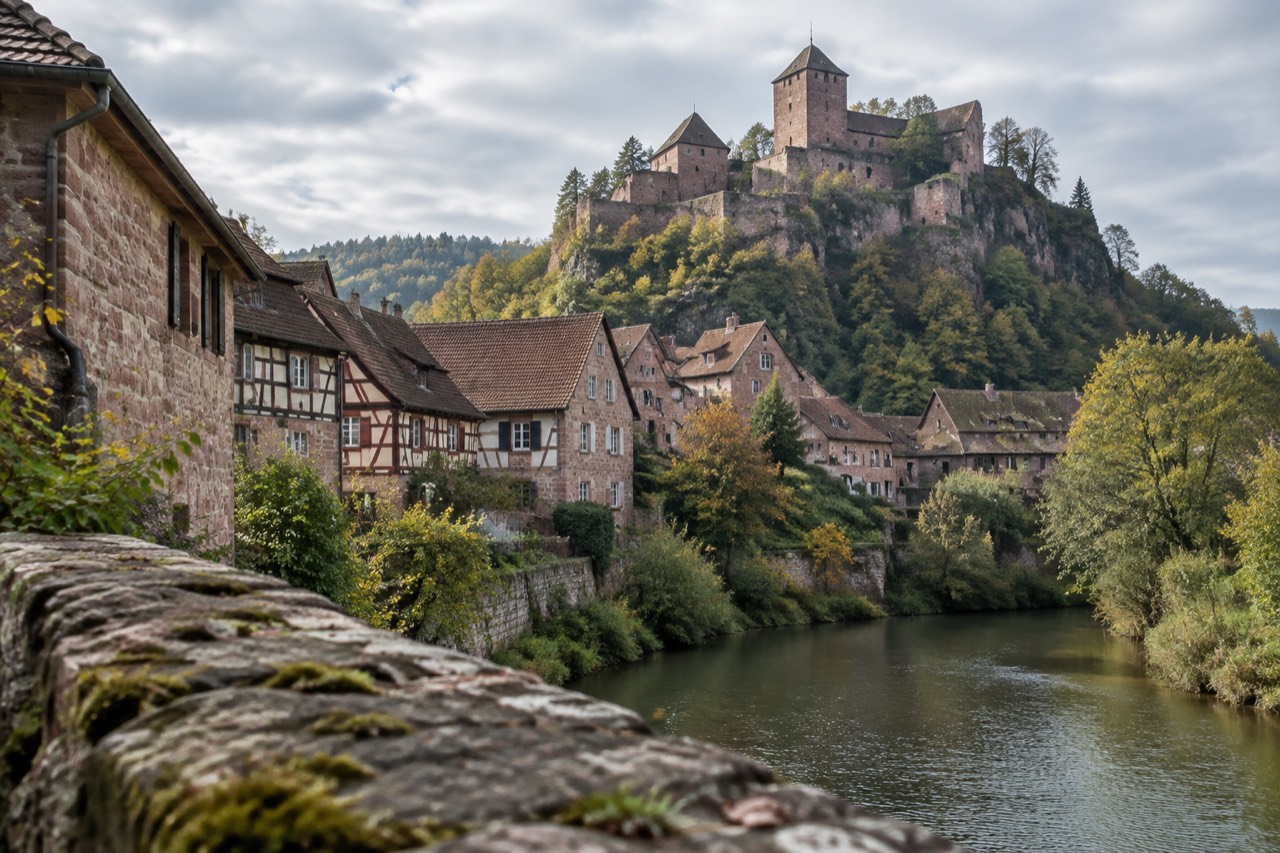
La Petite Pierre is a small sandstone village in the Northern Vosges regional park, west of Strasbourg in Alsace, north-eastern France. It suits travellers who want forest walks, castle views and quiet lanes rather than another wine-road town. There is no direct rail link, so it works best by car, paired on one loop with other Vosges or wine-road stops.
La Petite Pierre is a small village in the Northern Vosges, west of Strasbourg in Alsace, north-eastern France, close enough to the city for a day trip yet far enough into the forested hills to feel like a different country. Where Strasbourg's Grande Île is all tram bells and sandstone civic architecture, this is a handful of lanes stacked on a rocky spur, with a ruined castle above the rooftops and woodland on every side. It is the sort of place travellers reach when they have already seen the cathedral, walked Petite France and eaten their weight in tarte flambée, and are now asking what else this corner of France holds.
This guide lays out what the village actually offers, how to fold it into a day from Strasbourg, and which neighbouring stops earn their place on the same loop. The honest headline: La Petite Pierre is small. Anyone expecting a second Colmar, with museums and restaurant rows, will be done in an hour. Anyone wanting forest air, a short castle climb and a lunch table in a village that still feels lived-in will find the drive repays itself.
Where Is La Petite Pierre?
La Petite Pierre sits in the Northern Vosges, the forested sandstone hills west of the Alsatian plain, roughly an hour's drive from Strasbourg by road in Alsace, north-eastern France. The village belongs to Bas-Rhin, the same department as Strasbourg, and lies inside the Northern Vosges regional natural park, a protected landscape of woodland, red sandstone outcrops and small farming villages along the border country. There is no direct train, so the trip is a driving day, usually combined with other stops on the same westward loop.
The geography explains the village. The Northern Vosges are made of soft pink sandstone, and La Petite Pierre grew on and around a spur of it: houses quarried from the same rock as the ridge they stand on, a castle taking the high point, and forest pressing in from every side. That setting is the whole attraction. Travellers who enjoy geology and landscape will get more from an hour here than travellers chasing gift shops.
The park that surrounds the village is a regional natural park, a French designation that protects rural landscapes while leaving them working: forestry, small farms, hiking trails between villages. The Northern Vosges also sit beside the German Palatinate Forest across the border, and the two form one continuous band of woodland, which is why the area feels more mountain-forest than vineyard. The wine route, by contrast, runs along the foothills to the south-east, closer to Strasbourg. A day built around La Petite Pierre is therefore a different animal from a day built around the Alsace wine route, and the two should not be squeezed into the same outing.
What Makes La Petite Pierre Worth The Trip From Strasbourg?
La Petite Pierre is worth the trip from Strasbourg because it offers a complete change of scene within easy reach: forest instead of floodplain, silence instead of tram bells, and a castle ruin instead of a cathedral. Small enough to see in a morning, it works best as one stop on a loop, rewarding visitors with a short climb to castle terraces overlooking wooded valleys, quiet sandstone lanes with almost no commerce, and trailheads for walks starting at the village edge.
For context on what a day from Strasbourg can hold, the choices below sit on this site's main Strasbourg day trips overview, which groups every reachable destination by direction and travel style.
The practical case for La Petite Pierre is that it costs you nothing but fuel and time. Entry to the village is simply a matter of arriving; the lanes, the viewpoints and the trailheads are public. The castle is a ruin with terraces you can walk, and the scale of the whole place means a first visit needs no planning beyond a lunch reservation in high season. That low-commitment quality is rare among Alsatian day trips, where the famous villages can feel like a queue with scenery attached.
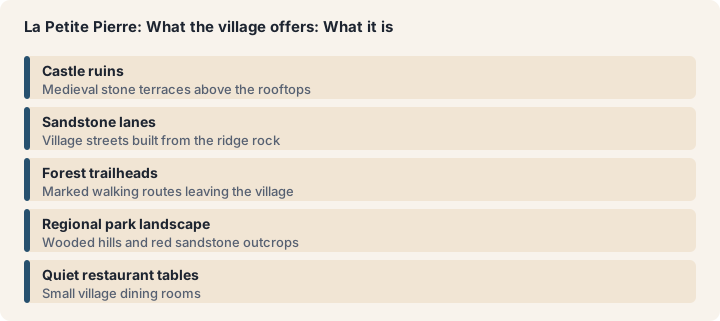
| What the village offers | What it is | Who it suits | What to check before you go |
|---|---|---|---|
| Castle ruins | Medieval stone terraces above the rooftops | Photographers, history-minded walkers | Opening arrangements on the local tourist page |
| Sandstone lanes | Village streets built from the ridge rock | Slow walkers, anyone avoiding crowds | Nothing; the lanes are public |
| Forest trailheads | Marked walking routes leaving the village | Hikers, families with older children | Trail conditions in wet weather |
| Regional park landscape | Wooded hills and red sandstone outcrops | Geology and nature enthusiasts | Park visitor information for maps |
| Quiet restaurant tables | Small village dining rooms | Lunch-stop planners | Reservations in summer and on weekends |
The honest counter-case deserves a line too. La Petite Pierre has no single blockbuster sight. If a traveller's memory of the day needs a cathedral spire or a canalside postcard, the city is a better use of the hours. The village rewards people who can enjoy a viewpoint for its own sake, and who understand that a place this size is a pause, not a programme.
How To Plan A Day Trip From Strasbourg To La Petite Pierre?
Plan La Petite Pierre as a driving loop out of Strasbourg: leave in the morning, reach the village by late morning, climb to the castle terraces, eat lunch in the village, then walk one forest trail before continuing the loop home through the Northern Vosges or the wine-road foothills. There is no rail service to the village, so a hire car or a guided driving tour is the only realistic format. Check parking and restaurant opening days before you set out, because a village this small keeps village hours.
The car question is the planning question. Strasbourg itself is a city best explored on foot or by tram, and plenty of visitors manage a whole stay without a vehicle; a day into the Northern Vosges is the moment that changes. Hire cars are collected in the city, and the route west leaves the Alsatian plain and climbs into the hills. Roads in the park are small and winding, which is part of the pleasure, but it also means the drive itself is the activity: build in time to stop at viewpoints rather than racing between named sights.
Travellers who would rather not drive at all have one clean alternative: a guided day trip that crosses into the hills. Check availability if that format appeals; the operator's live listing carries the current dates and prices. Baden-Baden itself has its own dedicated guide for travellers weighing the two sides of the border.
Two practical warnings from the geography. First, fuel and shops thin out inside the park, so fill up and buy water before leaving the plain. Second, phone signal in the valleys is patchy, which matters if you are following a map application on the road: download an offline map of the park before you leave Strasbourg. Neither warning is dramatic, but both are the difference between a relaxed loop and a stressed one.
| Planning item | The reality on the ground | What to do about it |
|---|---|---|
| Getting there | No train; small winding roads through the park | Hire car in Strasbourg, or a guided driving tour |
| Timing the day | Village sights need a morning, not a full day | Pair with a second stop on the same loop |
| Lunch | Small dining rooms in a small village | Reserve ahead in summer and on weekends |
| Navigation | Patchy mobile signal in forest valleys | Download an offline map before leaving |
| Fuel and supplies | Sparse inside the regional park | Fill up and buy water on the Alsatian plain |
| Footwear | Castle terraces and forest trails on rock and dirt | Proper walking shoes, not city shoes |
What To See In The Village Itself?
The village itself offers three things in a compact hour: the ruined castle with its terraces above the rooftops, the sandstone lanes and flower-hung houses that stack down the spur, and the views from the high point across the wooded valleys of the Northern Vosges. Nothing needs a ticket or a timetable in the way Strasbourg's cathedral platform or its museums do, so the visit bends around lunch rather than the reverse. Walk up first, while legs are fresh, then let the village unfold on the way down.
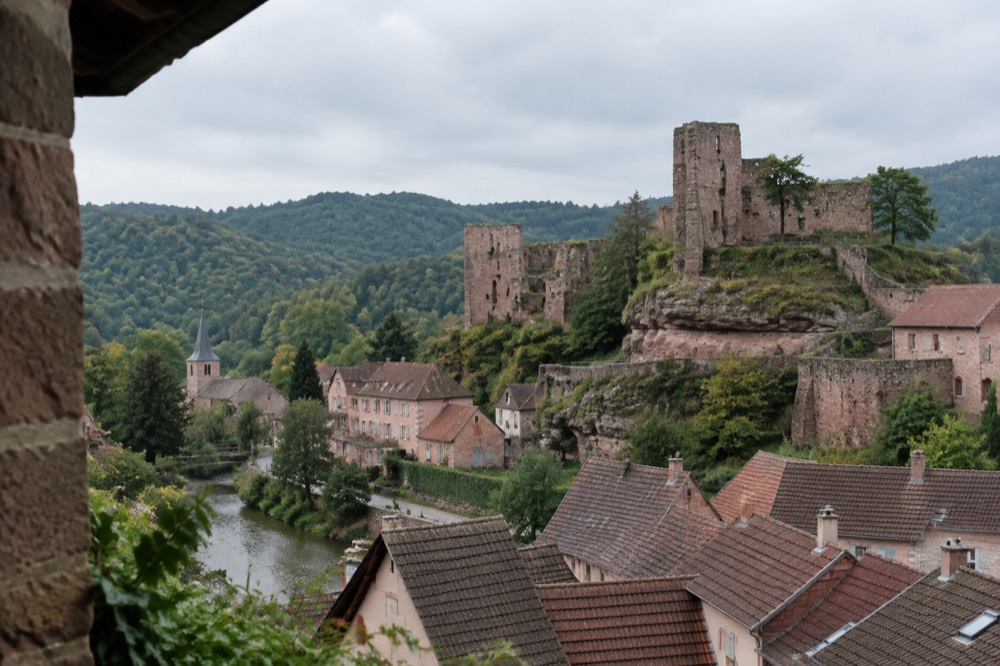
The castle is the anchor. It is not a restored museum piece, and that is its charm: terraces and wall fragments you can move through freely, with the landscape doing the interpretive work. From the top the ground falls away into forest in every direction, and on a clear day the layered ridges of the park read like a relief map of the border country. The climb from the village is short but steep in places, the classic Vosges trade of effort for view.
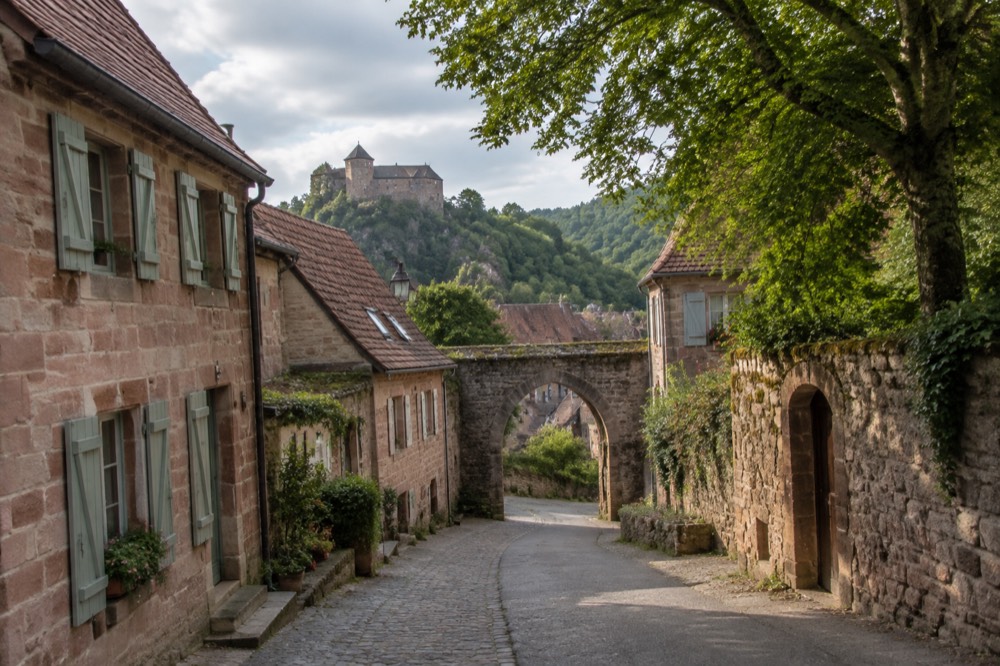
Below the castle, the village is a single compact network of lanes. The houses are built of the local red sandstone, some with half-timbered upper floors in the Alsatian manner, and the overall impression is of a settlement carved out of its own ridge. There are no grand squares here, nothing to compare with Strasbourg's Place Kléber, and that is precisely the point: the village is a scale exercise, a place to recalibrate what "sightseeing" means after a few days in the city.
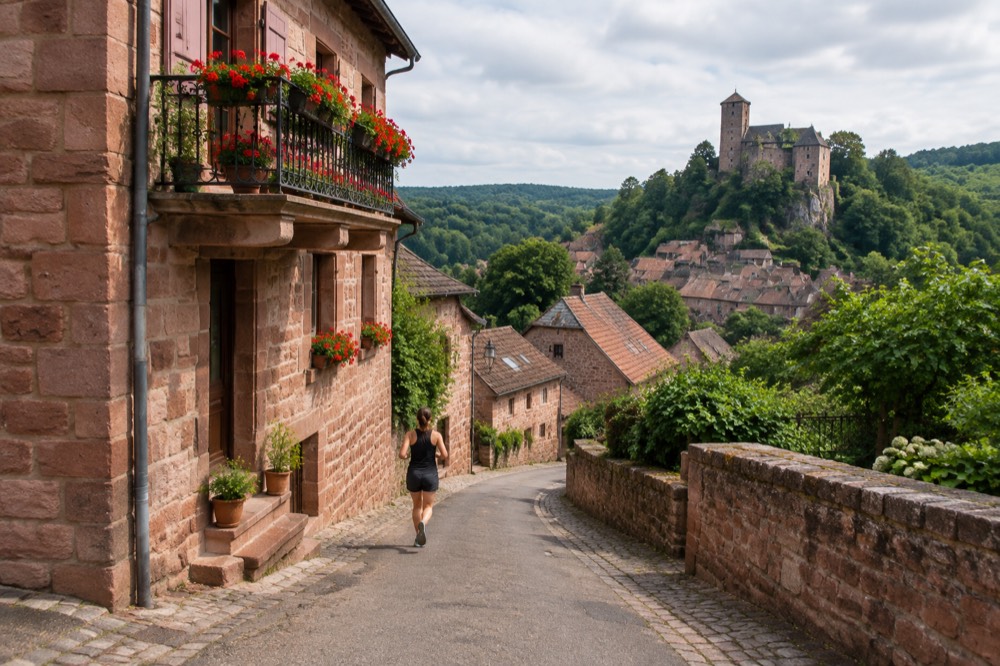
Give the lanes an unhurried loop, then stop. An hour covers the castle and the village comfortably; two hours if you linger over photographs or a coffee. Travellers who finish early and want more should head straight for a trailhead rather than circling the streets again, because the forest is where the village's setting becomes tangible.
What Walks Can You Do Around La Petite Pierre?
Walking is the village's main activity, with marked trails leaving directly from the village into the forested ridges of the Northern Vosges regional park: short loops over sandstone outcrops for a morning, longer village-to-village routes for a full day on foot. The terrain is rolling hill country rather than high mountain, so the walks suit reasonably fit families and casual hikers, not just equipped hillwalkers. Trails are marked, but carry a park map, because junctions in deep forest all look alike.
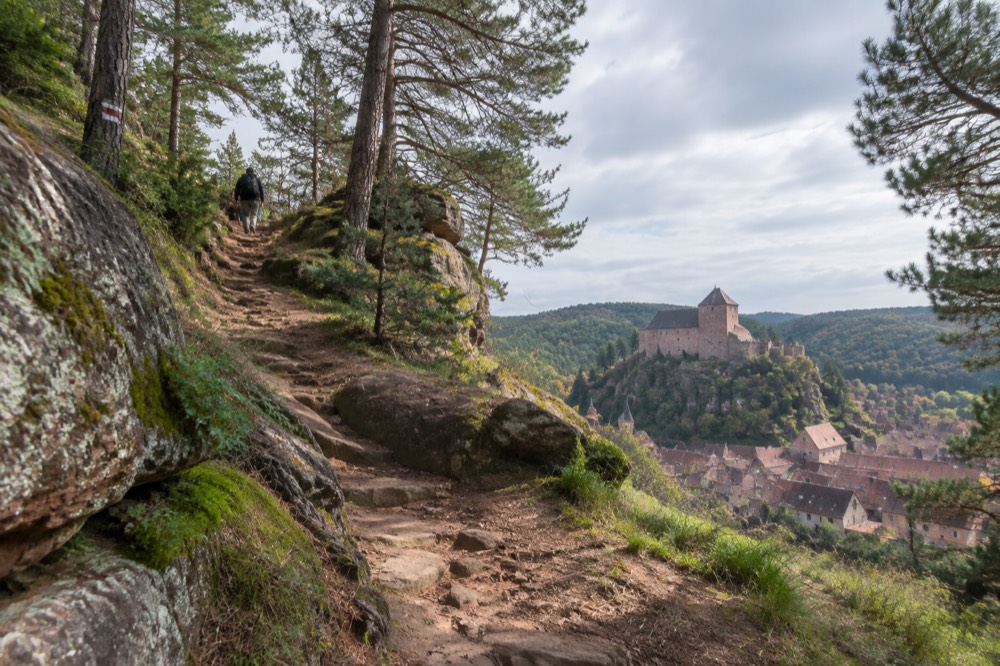
The park's trail network is the great underrated asset of this corner of Alsace. Routes connect the small villages of the hills along old forest tracks, and the sandstone geology keeps the walking interesting: outcrops, small cliffs and sudden clearings rather than uniform plantation. In spring the forest floor flowers; in autumn the beech woods turn, which is the season landscape photographers should weigh most heavily. Summer walks mean shade, which the exposed wine-road villages cannot offer, and that alone justifies the drive on a hot day. More of these guides are collected on Strasbourg Travel Guide.
Choose the walk to fit the day. A short loop from the village fills the gap between lunch and the drive home; a longer route turns the whole outing into a hiking day with the village as base. Whichever you pick, tell someone your route, carry water, and treat the weather seriously: the hills catch rain that the plain misses, and the semi-continental climate that gives Strasbourg warm summers and cold winters applies up here with interest.
| Walk type | What it involves | Who it suits | Best season |
|---|---|---|---|
| Village castle loop | Short steep climb to the ruins and back down through the lanes | Every visitor, all ages | Any |
| Forest outcrop trail | Marked loop over sandstone ridges near the village | Casual hikers, half a day | Spring to autumn |
| Village-to-village route | Longer forest track linking hills settlements | Fit walkers, full day | Spring or autumn |
| Autumn colour walk | Beech and mixed woodland at turn | Photographers | October |
| Winter forest walk | Bare trees and cold-quiet tracks | Well-equipped walkers | Check conditions first |
For travellers whose ideal day pairs walking with wine rather than walking with more walking, a different format exists on the roster: a guided medieval villages and wine tasting day trip from Strasbourg runs the same general region with tastings built in.
The distinction matters when planning. La Petite Pierre is a walk-and-lunch day. The wine-road villages are a taste-and-stroll day. Trying to do both properly in one outing short-changes each, so pick the mood that fits the weather and the company.
Where Should You Eat On A La Petite Pierre Day Trip?
Eat in the village at lunchtime, in one of the small dining rooms serving Alsatian country cooking, and book ahead in summer and on weekends because the village has few tables and they fill with walkers and weekenders. The food to expect is the hearty regional repertoire: choucroute, baeckeoffe, tarte flambée and trout from the region's rivers, portions built for forest appetites. Arriving without a reservation mid-week in the off season usually works; arriving on a sunny Saturday without one is a gamble.
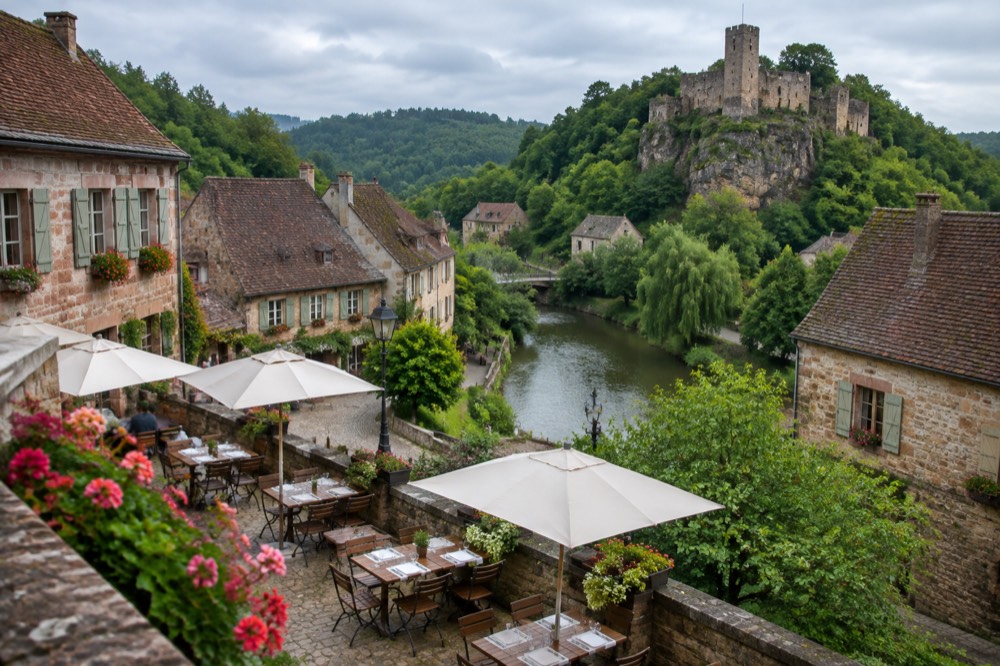
The regional dishes deserve a word because they explain the menu. Choucroute, the fermented-cabbage plate loaded with sausages and pork, is the Alsatian centrepiece and the thing to order on a cold day in the hills. Baeckeoffe, a slow-baked casserole of meats and potatoes, is the farmhouse ancestor of the same tradition. Tarte flambée, the thin crème fraîche and bacon tart baked in a wood oven, is the lighter choice and the one Strasbourg visitors will already know from the city's winstubs. This site carries a full guide to winstubs in Strasbourg for comparison, but the village versions are earthier and the setting is the point.
Practical notes: dining rooms in small villages close one or two days a week, and the closing day is not always the one you would guess, so confirm before promising the family a choucroute. Service in the hills runs at village pace, which is part of the pleasure if you let it be. And if the walk runs long, an afternoon tarte flambée with a local beer solves the dinner question before the drive home.
| Dish | What it is | When it hits the spot |
|---|---|---|
| Choucroute | Fermented cabbage with sausages and pork cuts | Cold-weather walking days |
| Baeckeoffe | Slow-baked meat and potato casserole | A long lunch after a long trail |
| Tarte flambée | Thin wood-oven tart with crème fraîche and bacon | Light lunch or afternoon snack |
| River trout | Local fish, usually pan-fried with almonds | Spring and summer menus |
| Kougelhopf | Yeasted brioche-style cake in a fluted mould | Dessert or the road home |
How Does La Petite Pierre Pair With Other Day Trips?
La Petite Pierre pairs best with other Northern Vosges and foothill stops on one westward loop from Strasbourg: the villages and viewpoints of the regional park itself, the castle of Haut-Koenigsbourg on the ridge road to the south, or wine-road towns such as Obernai on the way back down to the plain. The pairing rule is simple: one forest stop plus one civilised stop makes a balanced day, while two forest stops make a hiking day. Match the loop to the weather.
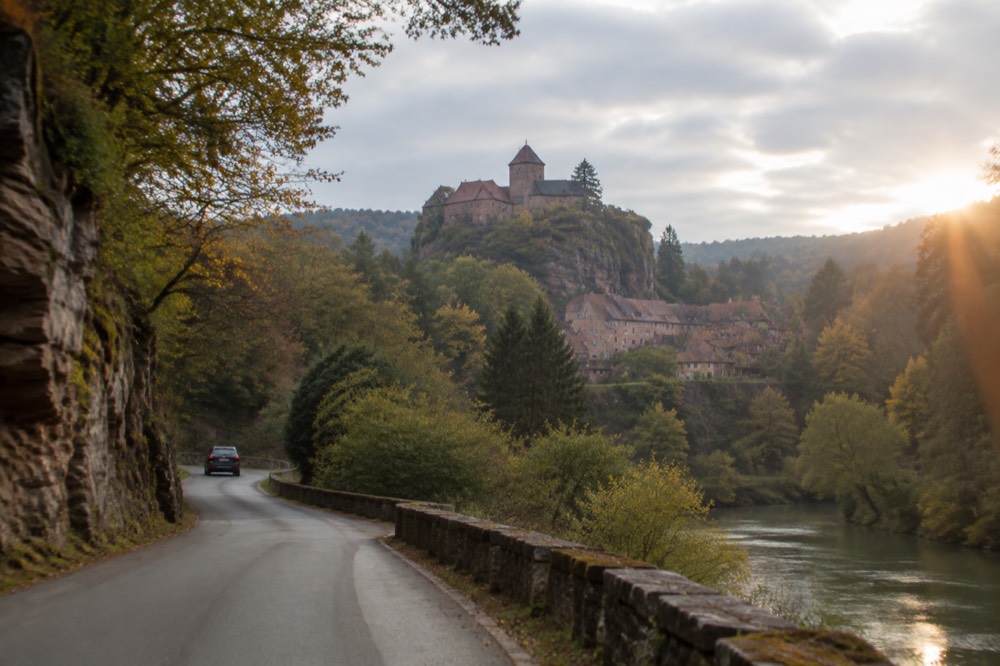
The strongest single pairing is Haut-Koenigsbourg castle, the great restored fortress that dominates the Alsatian skyline from its ridge. It sits south of the Northern Vosges on the route back toward the wine country, and the contrast is instructive: La Petite Pierre's ruin is quiet, free-roaming and rough; Haut-Koenigsbourg is grand, structured and busy. Doing both in a day gives you the two ends of the castle spectrum in Alsace, separated by an hour of beautiful road. In the same corner, the Kintzheim eagle park and monkey mountain adds a family option that sits well with a castle stop.
The softer pairing is a wine-road town on the return leg. Obernai is the classic choice, a walled town with rampart walks and cafés where the forest day resolves into something sweeter, and Riquewihr and Eguisheim are the postcard alternatives further south. The spiritual option is Mont Sainte-Odile, the mountaintop convent that belongs to the same sandstone uplands, though it deserves its own unhurried visit rather than a rushed tag-on. Two wine-road stops together, for the record, make a different day altogether, so keep the pairings to one of each kind.
| Pairing | What it adds to the day | How it fits the loop |
|---|---|---|
| Haut-Koenigsbourg | A grand restored castle after a quiet ruin | Ridge road south, before dropping to the plain |
| Obernai | Ramparts, cafés and an easy end to the drive | Return leg via the wine-road foothills |
| Mont Sainte-Odile | A mountaintop convent in the same uplands | Needs its own half day; do not rush it |
| Kintzheim eagle park | Birds of prey displays for families | Combine with the castle ridge |
| Colmar | Canals and museums, a full day alone | Better as a separate trip, not a tag-on |
For travellers who prefer their hills with a border crossing, the German side of the same uplands is covered in the site's Black Forest guide. The two options are not rivals so much as moods: French lanes and wine, or German forest and lakes.
Whichever loop you build, keep it a loop. The pleasure of this country is the road between the stops, and a day reduced to two parked visits misses the landscape that makes the region distinct from the plains around Strasbourg.
When Is The Best Time To Visit La Petite Pierre?
The best time to visit La Petite Pierre is late spring through early autumn, when the forest trails are open, the village terraces are in flower and the dining rooms run full service: May to October covers the sweet spot, with October delivering autumn colour across the beech woods. Winter strips the village back to stone and quiet, which has its own appeal for hardy travellers but closes options and shortens the days. The village's season is the forest's season, so let the trees set the calendar.
The reasoning follows the climate rather than the crowd calendar. Strasbourg's semi-continental climate, with Meteo-France 1991-2020 normals showing a July mean maximum of 26.4 C and a January mean maximum of 5.2 C, plays out up in the hills with sharper edges: warmer afternoons under the trees in summer, colder and damper ones in winter. Rain falls somewhere in the region on roughly nine to ten days a month through the year, so a waterproof layer belongs in the bag in every season, and forest trails turn muddy after wet weeks.
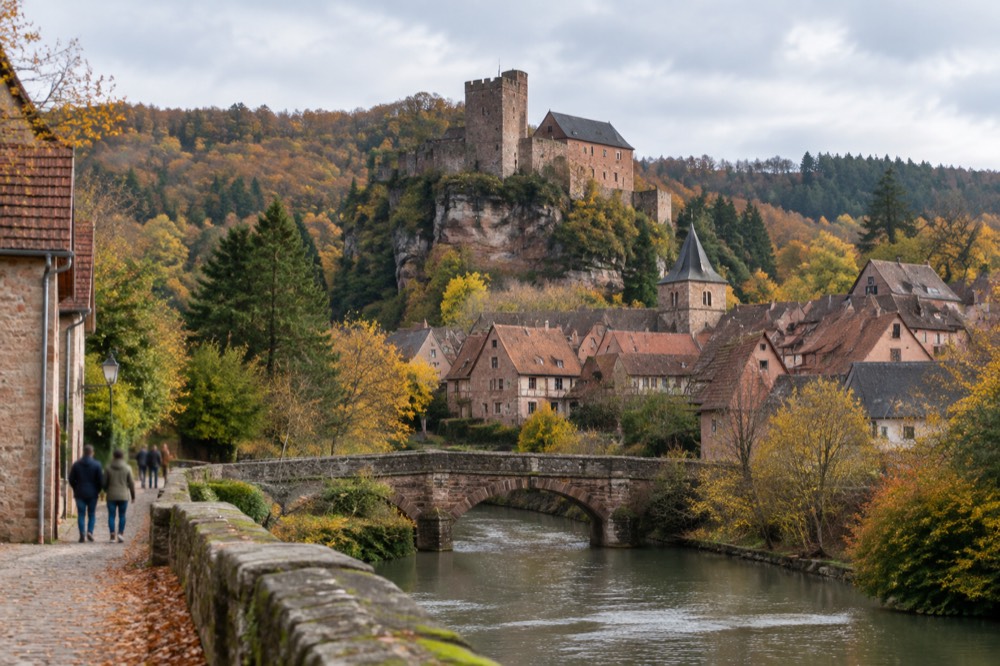
Weekends and French school holidays fill the village's few parking spots and restaurant tables; weekdays in June or September give you the place close to yourself. Christmas-season travellers should note the trade-off honestly: Strasbourg's own Christmas market, which last year ran from 26 November to 24 December 2025 and drew 3.05 million visitors, keeps the city full in December, and a quiet forest day up in the Vosges is one of the better antidotes to that crush, provided lunch is booked and daylight is used early.
| Season | The village in that season | What to plan around |
|---|---|---|
| Spring | Forest flowers, fresh green on the ridges | Muddy trails after wet weeks |
| Summer | Shade, full restaurant service, flower balconies | Book lunch; weekends fill up |
| Autumn | Beech colour at its peak in October | Best photography light, shorter days |
| Winter | Bare stone, quiet lanes, early dusk | Check opening days; carry warm layers |
What Does A Good Day Look Like In Practice?
A good day runs Strasbourg to La Petite Pierre and back as a single loop: an early start west, the castle terraces by late morning, a long village lunch, one forest walk in the early afternoon, then a second stop, Haut-Koenigsbourg or a wine-road town, before the drive back down to the plain. The shape matters more than the stops: one forest anchor, one civilised anchor, and no third commitment. Travellers who overload the loop spend the afternoon watching the clock instead of the ridges.
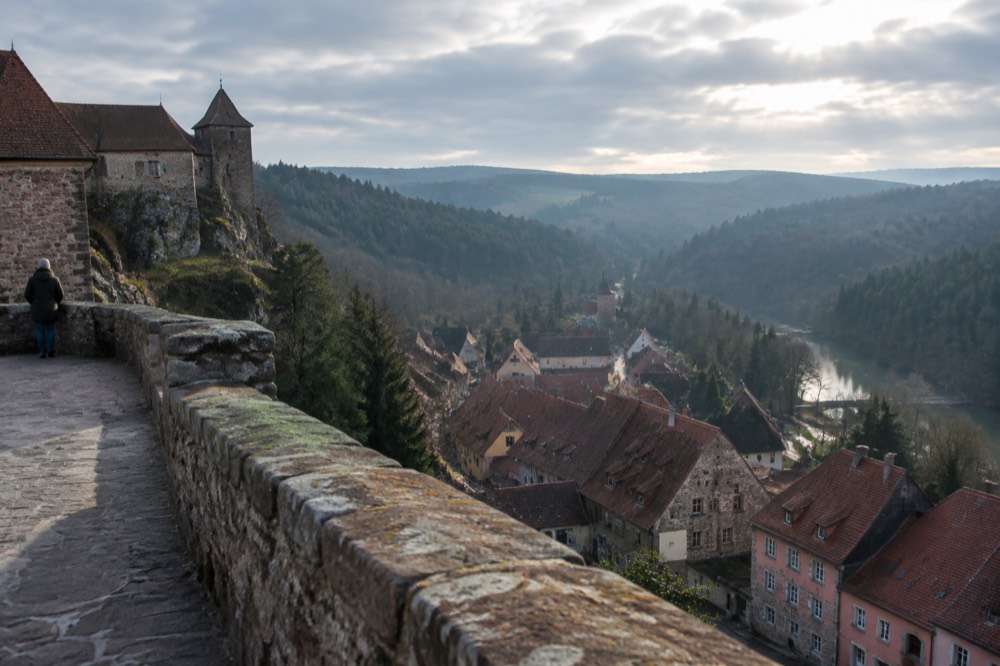
Start early enough that the first hour of driving happens before the day heats up or the clouds build. The climb to the castle should come before lunch, while legs are fresh and the terraces are quiet. Let lunch run long; a village dining room that wants you out in forty minutes would be missing the point of the place. The afternoon walk should be chosen at breakfast, not debated at the trailhead, and the second stop should be reached with enough daylight left to enjoy it rather than photograph it in a hurry.
The return to Strasbourg has its own small decision. Arriving back in time for an evening walk through Petite France rounds the day off nicely, the canals and half-timbered lanes of the old quarter answering the forest ridges you have just left. Travellers staying in the old quarter can weigh the options in the site's answer page on where to stay in Petite France, which sets out the trade-offs between the historic centre and the calmer districts.
Build the day with slack in it. The single most common mistake on Vosges loops is treating the road as dead time between sights, when the road is the sight. An unplanned viewpoint stop, a village you pass through on a whim, a second coffee where the light is good: these are the moments a day trip into the hills is actually for.
Common Questions About La Petite Pierre
Where exactly is La Petite Pierre?
La Petite Pierre is a small village in the Northern Vosges, west of Strasbourg in Alsace, north-eastern France, inside the Northern Vosges regional natural park in the department of Bas-Rhin. It sits on a sandstone spur surrounded by forest, a driving destination with no direct rail link.
Can you reach La Petite Pierre by public transport from Strasbourg?
Not realistically. The village has no train station and no practical bus connection for a day trip, so the realistic options are a hire car collected in Strasbourg or a guided driving tour that covers the border uplands.
How long should you spend in La Petite Pierre?
The village itself needs an hour or two: the castle terraces, the sandstone lanes and a coffee stop. Add a forest walk if the weather holds, and the stop grows to half a day. It works best as one anchor on a loop rather than a full-day destination.
What is there to see in La Petite Pierre?
Three things: the ruined castle with walkable terraces above the rooftops, the red sandstone lanes of the village stacked down the spur, and the views over the wooded valleys of the regional park. There is no museum and no blockbuster sight, and the village is all the better for it.
Is La Petite Pierre worth visiting with children?
Yes, with the right expectations. Children who enjoy climbing, forests and castle ruins will find plenty to like, and the walks can be cut short easily. The village has no playground-style attractions, so pair it with a family stop such as the Kintzheim eagle park if the day needs more variety.
What should you eat on a day trip to La Petite Pierre?
The Alsatian country repertoire: choucroute on a cold day, baeckeoffe after a long walk, tarte flambée as the lighter option, and a kougelhopf for the road home. Book the lunch table in summer and on weekends, because a village this size has few of them.
La Petite Pierre will never top a list of Alsace's famous names, and that is exactly its use to a Strasbourg traveller: a forest day, a castle climb and a long lunch in a village that asks nothing of you but the drive. Pick a clear month between spring and autumn, build one loop, book the table, and let the ridges do the rest.