Parc De La Citadelle Strasbourg
Parc de la Citadelle in Strasbourg, in the Alsace region of north-eastern France, is the city's big green escape on the south-eastern edge of the centre, built around the grassy remains of the old fortress citadel. This guide covers what to see inside it, how to reach it with CTS tickets, when to go, and how to pair it with tours.
Short answer
Parc de la Citadelle is a large public park in south-eastern Strasbourg, France, laid out around the surviving earthworks and walls of the old citadel that gives it its name. A CTS single ticket costs 1.90 EUR from the app or contactless, or 2.50 EUR bought on board the bus, and a 24h Solo pass is 4.60 EUR. The park suits families, runners and anyone wanting green space between the sights.
Parc de la Citadelle in Strasbourg, in the Alsace region of north-eastern France, is the city's broad green lung on the south-eastern side of the centre, wrapped around the surviving walls and grassy banks of the old fortress that gives the park its name. It sits between the Krutenau neighbourhood and the university and hospital district, a short hop from the European Quarter, and it fills a role the historic core cannot: room to run, picnic, play and slow down. This Strasbourg Travel Guide page walks through what the park actually contains, how to reach it with the CTS network, the seasons that suit it, and the tours that pair well with a visit.
What Is Parc De La Citadelle Strasbourg?
Parc de la Citadelle is a large public park in Strasbourg, France, laid out over the site of the old citadel, the fortress that once guarded the city's south-eastern flank. Its ramparts, ditches and surviving stone walls were turned into parkland, so the walks follow military earthworks softened by lawns and mature trees. It is one of the biggest open green spaces within walking reach of the city centre, and it is where local families, students and runners spend their free afternoons.
The park takes its name from the citadel whose remains it holds. Strasbourg grew up as a fortified city on the River Ill, and the citadel was the outwork that covered the approaches on this side. When the fortress lost its military purpose, the site was converted into a public park, and the outlines of the defensive plan survive in the layout: long straight avenues along the old ramparts, wide flat lawns where parade grounds and bastion interiors once lay, and tree-lined ditches at the edges. You do not need any history to enjoy it, but the shape of the place makes sense once you know you are walking on a fortification.
What that means in practice is a park of two characters. The inner lawns are open and social, busy with picnics, ball games and prams on any dry weekend. The outer banks and the tree-lined paths along the old defences are quieter, with shade in summer and a slower rhythm. The Ill runs close by, and the whole district around the park, the Krutenau on one side and the university buildings on the other, has a lived-in, neighbourhood feel that the polished streets around the cathedral never quite manage.
The park also keeps a small collection of animal enclosures, which is a long-standing local tradition rather than a modern attraction, and it is one of the reasons families come here rather than to the more formal Parc de l'Orangerie on the other side of the centre. Between the enclosures, the play areas, the running routes and the sheer space, the park earns its place on a Strasbourg itinerary as the counterweight to the museums and the Christmas crowds.
How To Get To Parc De La Citadelle
The park lies in south-eastern Strasbourg, France, between the Krutenau neighbourhood and the university hospital district, and CTS trams and buses serve the streets around it on the way to the eastern edge of the city. A single ticket costs 1.90 EUR bought through the Badgeo card, the CTS app or contactless payment, or 2.50 EUR if bought on board the bus. A 24h Solo pass at 4.60 EUR covers a day of hopping on and off.
The CTS network is the practical way in. The park has no single front gate, it is bounded by ordinary streets, so the best approach is to pick the side you want and let the tram or bus route decide. Check the CTS network map for the stop closest to your starting point, since routes that serve the Krutenau and the hospital district all pass within a short walk of one edge of the park or another. If you are staying in or near the Grande Île, the walk to the park is also a pleasant one through the Krutenau's small streets, and it costs nothing beyond shoe leather.
For a day that combines the park with other sights, the day passes make sense. The 24h Solo at 4.60 EUR covers one traveller for unlimited rides, and the 24h Trio at 10.20 EUR covers two or three people travelling together, which usually beats buying singles for a family once you make more than a couple of journeys. Visitors flying into Strasbourg Airport can buy the combined airport ticket at 4.60 EUR, which covers the airport train shuttle into the station plus a day of tram and bus travel, a tidy package if the park is on your first afternoon's plan.
| CTS ticket | Price | Notes |
|---|---|---|
| Single, Badgeo card, CTS app or contactless | 1.90 EUR | Cheapest single option |
| Single bought on board the bus | 2.50 EUR | From the driver, no change given |
| 24h Solo pass | 4.60 EUR | One traveller, unlimited rides for a day |
| 24h Trio pass | 10.20 EUR | Two or three travellers together |
| Airport combined ticket | 4.60 EUR | Airport shuttle plus 24h travel pass |
Cycling is the other natural approach. Strasbourg is one of France's great cycling cities, with a flat centre and bike paths along the Ill, and a ride out to the park along the river is one of the nicest ways to arrive. The bike tours and routes around the city on our site cover the riverside path network, and a guided ride is a good option if you would rather not plan the route yourself.
If a relaxed day in the greenery is only part of your plan, a guided excursion can carry the rest.
What To See Inside Parc De La Citadelle
The park's headline sights are the fortress remains themselves, the rampart walks, the wide lawns inside the old defensive outline, the animal enclosures and the play areas. Everything is outdoors and spread out, so the visit is a walk rather than a queue, and the enclosures and the ramparts together fill an easy couple of hours at a family pace. There is no ticketed attraction inside; the interest is in the landscape and the traces of the citadel.
Start with the ramparts. The surviving banks and wall sections are the park's spine, and walking their line gives you both the history and the best views across the lawns. The stone you see along the edges belongs to the old fortress, and the grassed ditches and long straight avenues follow the defensive plan. It is a gentle kind of sightseeing, reading the ground rather than a label, and it suits travellers who have already seen the cathedral and the museums and want the city at a slower pace.
The animal enclosures are the practical draw for families. The park has kept small enclosures, and children can get their wildlife fix without a zoo ticket or a trip out of town. Our page on storks in Alsace explains why the bird matters so much in this region and where else to see it. The enclosures sit alongside the play areas, which makes the corner of the park around them the natural base for a family afternoon.
| Park feature | What it is | Who it suits |
|---|---|---|
| Rampart walks | Grass-covered banks and surviving walls of the old citadel | Walkers and history-minded visitors |
| Inner lawns | Wide open lawns inside the fortress outline | Picnics, ball games, sunbathing |
| Animal enclosures | Small enclosures, storks among them | Families with children |
| Play areas | Equipment and open space for children | Families |
| Tree-lined avenues | Long straight paths following the old plan | Runners and cyclists |
| River proximity | The Ill and its waterside paths nearby | Anyone extending the walk |
Beyond the walls and the lawns, the park works as a running and cycling circuit. The avenues are long, flat and traffic-free, and the connection to the riverside paths means a lap of the park can spill into a longer ride along the Ill toward the Jardin des Deux Rives. In the warmer months the lawns fill from late morning, and the park keeps a genuinely local crowd, students from the nearby campus, families from the surrounding streets, runners at every hour.
If you are visiting Strasbourg in the run-up to Christmas and the market crowds get heavy, the park is the pressure valve. The city's Christmas season draws enormous numbers, last year's edition ran 26 November to 24 December 2025 and brought 3.05 million visitors, and a green afternoon away from the chalets restores some calm before an evening back among the lights.
Is Parc De La Citadelle Good For Families?
Yes, the park is one of the most family-friendly places in Strasbourg, France, precisely because it is built for unstructured time: play areas, animal enclosures, flat safe paths and lawns for running around. There is no ticketed attraction and no schedule to keep, which suits children far better than another museum. The surrounding neighbourhood has bakeries and shops for picnic supplies, and the CTS network makes getting home with tired children simple.
The combination of enclosures and play areas in one corner is the core of the family case. Children can watch the animals, then burn off energy on the equipment, then eat on the lawn, all within a few minutes' walk. That loop fills an afternoon without any of the queuing that comes with ticketed sights in the historic centre. For parents, the park's layout helps: the inner lawns are open and visible, so keeping track of children is easier than in the narrow streets of the Grande Île.
The practical side is straightforward too. The park is flat, which suits prams and beginner cyclists, and the tree-lined avenues give shade in summer. There are no cars inside the park, so the main safety concern is the ordinary one of busy weekends. If the weather turns, the municipal museums are the fallback, at 9 EUR full price or 5 EUR reduced, with a 1-day Pass Musées at 20 EUR covering the group of them, and every municipal museum is free on the first Sunday of the month. Note that the Musée Alsacien is closed for works until 2028, so do not plan around it.
Families who want a guided element to the day have options that suit children well. A bike tour is the obvious pairing, since the park's paths connect into the city's cycling network and a guided ride handles the route planning while the children ride.
For a fuller family plan, our Strasbourg with kids style coverage across the site includes the park among the open-air options, and the Parc de l'Orangerie on the side of the centre is the other big green space worth knowing about, with its own character and its own stork enclosure.
When Is The Best Time To Visit The Park?
The park is at its best from late spring through early autumn, when Strasbourg's semi-continental climate gives warm days and long evenings, with July averaging a 26.4 C daily maximum and June 24.4 C. Winter visits work too, and the Christmas season gives the park a role as an escape from the market crowds, but December averages a 5.9 C maximum and 0.8 C minimum, so dress for cold. Rain falls year-round, so bring a layer whatever the month.
The climate here is semi-continental, which means real summers and real winters rather than the mild winters of the French coast. Meteo-France's 1991-2020 normals for Strasbourg-Entzheim put the mean daily maximum at 26.4 C in July against 5.2 C in January, with 635.7 mm of rain spread over 112.3 days across the year. In other words, there is no dry season to aim for, and the choice of month is really a choice between warm-weather park life and cold-weather brisk walks.
| Month | Mean daily maximum | Mean daily minimum | Rain | Days with 1 mm or more |
|---|---|---|---|---|
| March | 12.1 C | 2.6 C | 38.6 mm | 8.5 |
| June | 24.4 C | 13.4 C | 68.5 mm | 10.2 |
| September | 21.6 C | 10.7 C | 54.6 mm | 8.0 |
| December | 5.9 C | 0.8 C | 45.2 mm | 10.2 |
Spring is the quiet sweet spot. The trees come into leaf, the lawns green up, and the crowds that fill the centre for the Christmas season have long gone. Summer is the social season, with the lawns at their busiest and the long evenings making after-dinner walks worthwhile. Autumn brings colour to the avenues and the September normals still offer a 21.6 C mean maximum, which is comfortable walking weather.
December deserves a special note because of the Christmas market. The market's 2026 dates are not yet published, and the city's Christmas site states that the dates and programme are still being finalised, so confirm them there before you plan. The usual pattern is an opening in the last week of November and a run through to 24 December, with the closing day ending early in the evening. Last year's edition ran 26 November to 24 December 2025. The park is the natural counterweight to that intensity: a green hour between the chalets of Place Kléber and the evening lights.
What To Do Near Parc De La Citadelle
The park's neighbourhood is the Krutenau, Strasbourg's old riverside artisan quarter turned student district, full of small streets, independent shops and modest places to eat. Beyond it, the European Quarter with the European Parliament and the Council of Europe sits to the north-east, and the Ill's waterside paths run toward the Jardin des Deux Rives. The area rewards wandering more than any single sight, and it is the part of Strasbourg where the city feels lived-in rather than staged.
The Krutenau is the immediate context. Its streets sit between the park and the historic core, and they hold the kind of everyday Strasbourg that visitors who never leave the Grande Île miss: corner bakeries, small restaurants, the university's scattered buildings and the quiet reaches of the Ill. Walking from the centre to the park through the Krutenau turns a transit leg into the best kind of detour, and it costs nothing but time.
North-east of the park, the European institutions give the district its other identity. The European Parliament, the Council of Europe and the European Court of Human Rights line the riverside, and the Parliament's Parlamentarium visitor centre is worth knowing about: outside plenary weeks it opens Monday to Friday 09:00-18:00 and Saturday 09:30-12:00 and 13:00-18:00, with an airport-style security check at the door, and plenary-week hours differ, so check the official page before going.
| Nearby place | What it is | Why pair it with the park |
|---|---|---|
| Krutenau | Old artisan quarter, now student streets and small eateries | The natural walking route in |
| European Quarter | Parliament, Council of Europe, Court of Human Rights | Modern architecture after the greenery |
| Jardin des Deux Rives | Parkland on the Ill where France meets Germany | Extends a riverside walk or ride |
| Ill riverside paths | Flat waterside walking and cycling routes | The scenic link between the two parks |
| University campus | Buildings scattered through the district | Gives the area its student life |
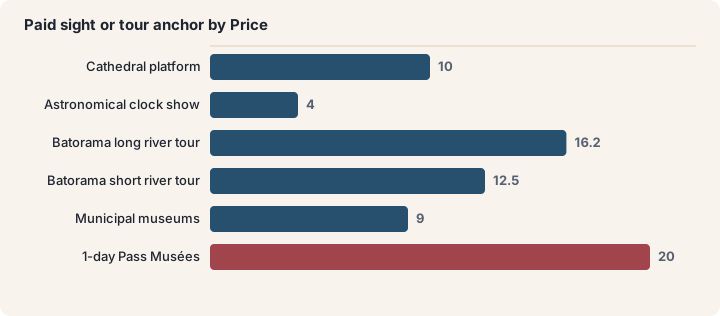
For the paid sights that anchor a fuller day, the classic pairing is a morning in the historic core and a park afternoon. The cathedral platform ticket is 10 EUR full price, 6 EUR reduced, for the 66 m viewpoint, and the astronomical clock show at 12:30 costs 4 EUR with tickets bought on the day only. A Batorama river boat tour, 16.20 EUR full price for the long circuit or 12.50 EUR for the short one, shows the city from the water before you head for the green.
The Krutenau is also one of the best corners of the city for street art, and a guided walk through it turns the district's walls into a proper sight rather than background. That tour fits neatly either side of a park visit.
How To Pair The Park With A Guided Tour
The park pairs best with tours that cover what it lacks: history, food and the wider region. A guided walking tour of the historic centre covers the stories in the morning, the park fills the afternoon, and an evening walk or a food tour rounds off the day. In the Christmas season, the Alsace markets day tour is the strongest pairing, since it carries you to the region's other market towns while the park gives you the calm green hour in between.
For the history side of that pairing, book a free walking tour here.
Think of the park as the free-form block in an otherwise structured day. Guided tours are fixed in time and route, the park is not, so the practical pattern is to book the tour and let the park absorb whatever gaps the day leaves. A morning walk through the Grande Île, from the Maison Kammerzell past the Ponts Couverts and the Barrage Vauban, ends within easy reach of the riverside paths that lead toward the park.
The Christmas season changes the arithmetic. Strasbourg's own market fills the historic squares, and the wider region holds several more, from Colmar to the wine villages along the Alsace Wine Route. A day tour that strings the region's markets together saves you the winter driving and the parking, and the park then works as the quiet stretch of the Strasbourg day before or after the excursion. The featured tour below is exactly that kind of day out, and you can Check availability on the operator's live listing to see the current dates and inclusions.
| Paid sight or tour anchor | Price | How it pairs with the park |
|---|---|---|
| Cathedral platform | 10 EUR full, 6 EUR reduced | Morning viewpoint, park afternoon |
| Astronomical clock show | 4 EUR, day-of tickets only | The 12:30 show, then a green afternoon |
| Batorama long river tour | 16.20 EUR full, 8.90 EUR reduced | See the city from the water first |
| Batorama short river tour | 12.50 EUR full, 7.20 EUR reduced | Quick circuit before the park |
| Municipal museums | 9 EUR full, 5 EUR reduced | Rainy-day fallback, free first Sundays |
| 1-day Pass Musées | 20 EUR | Several museums in one museum day |
For travellers whose interest runs to the European side of the city rather than the medieval one, the district around the Parliament has its own guided walk, and it sits within easy reach of the park's north-eastern edge.
Whatever the pairing, keep the sequencing honest with the seasons. In December, the daylight window is short and the cold is real, so the park fits midday and the market lights take the evening. In summer, the order reverses: sights in the cooler morning, park and riverside in the long evening. Either way, the park is the flexible piece, and that flexibility is exactly why it earns a slot in a planned itinerary.
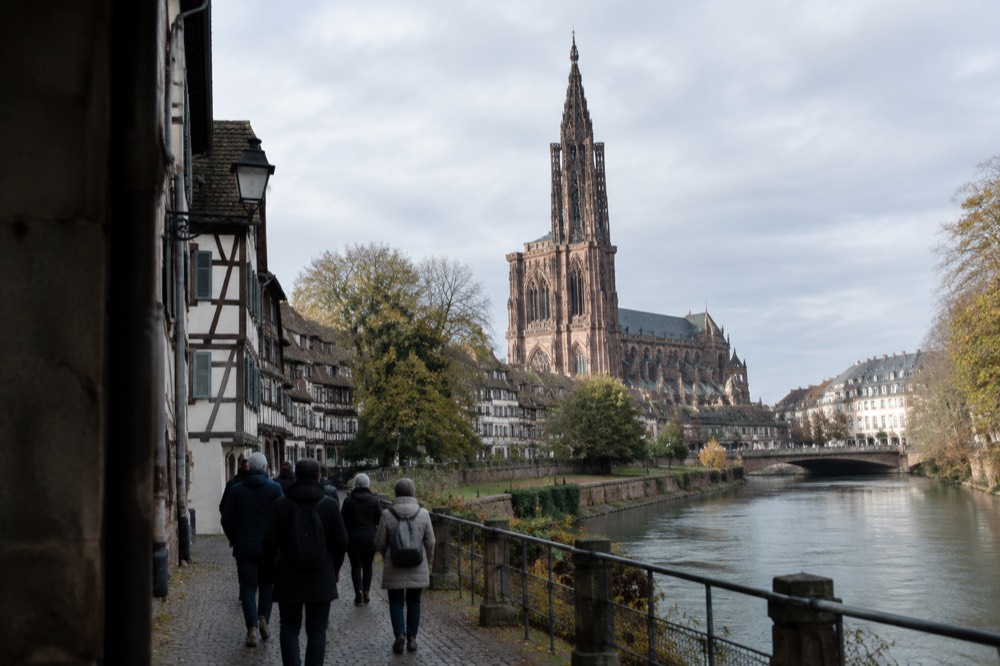
If you are weighing the park against the city's other big green spaces, or building a multi-day plan, these are the day tours and regional excursions that sit naturally beside a Parc de la Citadelle visit.
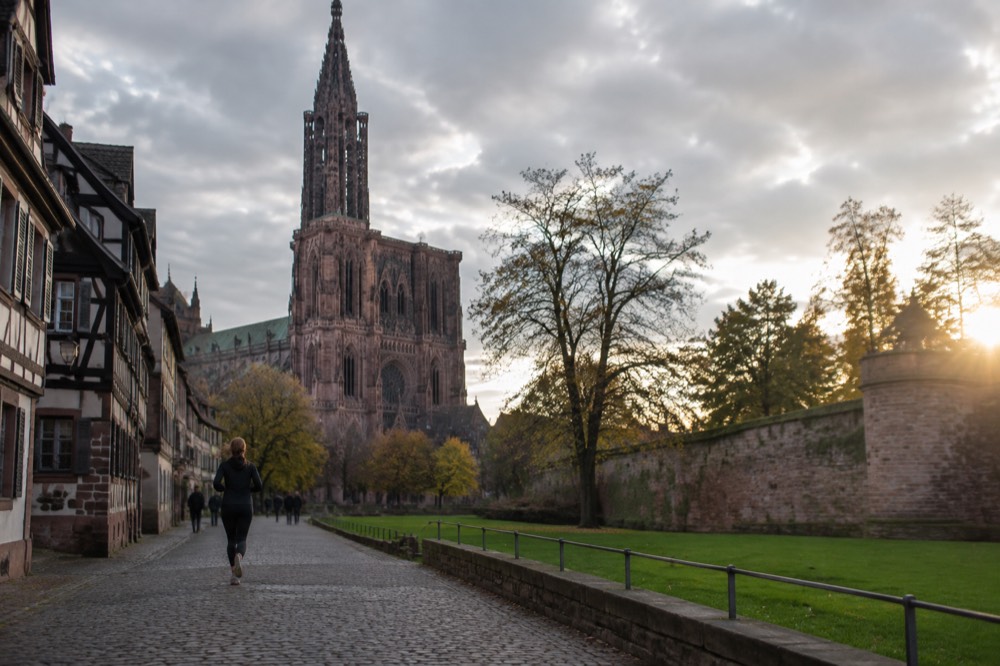
Common Questions About Parc De La Citadelle Strasbourg
Is Parc De La Citadelle In Strasbourg, France?
Yes. Parc de la Citadelle is in Strasbourg, the prefecture of the Bas-Rhin in Alsace, in the Grand Est region of north-eastern France, on the south-eastern edge of the city centre between the Krutenau neighbourhood and the university district. The city sits on the River Ill beside the Rhine, which forms the border with Germany, with Kehl on the far bank.
What Is There To See In Parc De La Citadelle?
The park holds the grassy remains of the old citadel, including rampart walks and surviving wall sections, wide lawns inside the fortress outline, tree-lined avenues along the old defensive plan, small animal enclosures with storks among the residents, and play areas for children. It is a landscape to walk rather than a ticketed attraction, and it fills a relaxed couple of hours at a family pace.
How Do I Get To Parc De La Citadelle By Public Transport?
CTS trams and buses serve the streets around the park on their way through the Krutenau and the hospital district. A single ticket costs 1.90 EUR through the Badgeo card, the CTS app or contactless payment, or 2.50 EUR bought on board the bus. A 24h Solo pass at 4.60 EUR or a 24h Trio at 10.20 EUR for two or three travellers suits a day that combines the park with other sights. Check the CTS network map for the stop nearest your starting point.
Is Parc De La Citadelle Good For Children?
Yes. The play areas and the animal enclosures sit together in one corner of the park, the inner lawns give children open space to run, and the whole site is flat and free of traffic, which suits prams and beginner cyclists. There is no schedule to keep, which makes it an easy afternoon between the city's ticketed sights.
When Should I Visit Parc De La Citadelle?
Late spring through early autumn is the comfortable window, with July averaging a 26.4 C daily maximum and September 21.6 C. Winter visits are perfectly workable, and in the Christmas season the park is a useful escape from the market crowds, but December averages a 5.9 C maximum and a 0.8 C minimum, so wrap up warm. Rain falls in every month, with 112.3 rain days of 1 mm or more across a typical year.
Can I Combine The Park With The Strasbourg Christmas Market?
Yes, and it works well. The market's 2026 dates are still being finalised on the city's Christmas site, so confirm them there, but the usual pattern is an opening in the last week of November running to 24 December. Last year's edition ran 26 November to 24 December 2025 and drew 3.05 million visitors. A calm green hour in the park between sessions of the market is one of the best ways to pace a December day in Strasbourg.
Parc de la Citadelle will never top a list of Strasbourg's landmarks, and that is precisely its value: a fortress turned inside out into lawns, a place where the city's students, families and runners get their fresh air within a short ride of the cathedral. Plan it as the flexible block in your day, reach it on a CTS day pass, and it will quietly become the part of the trip you remember most fondly.