Cdg To Strasbourg
There is no direct train from Charles de Gaulle to Strasbourg, so the journey runs through Paris and out to Gare de l'Est, where the high-speed service to Alsace departs. This guide sets out the route, the planning decisions, and what awaits at the other end.
Short answer
From Charles de Gaulle, take the airport rail link into Paris, cross the city to Gare de l'Est, and board the high-speed train to Strasbourg, which covers the Paris-Strasbourg leg in under two hours. Total door-to-door time depends on the connection in Paris, so book a TGV with margin and check times on SNCF Connect before travelling.
Strasbourg, the prefecture of the Bas-Rhin in Alsace, sits in the Grand Est region of north-eastern France, on the River Ill a short distance from the Rhine and the German border town of Kehl. Travellers landing at Paris Charles de Gaulle often underestimate the last stretch of the trip: the airport is on the far side of Paris from Alsace, and the fastest way across France to Strasbourg runs through the capital and out again from Gare de l'Est. This guide walks the whole route, from the terminal at Charles de Gaulle to the half-timbered lanes of the Grande Île, with the verified ticket prices, opening hours and seasonal facts that shape what you can do once you step off the train.
How Do You Get From Cdg To Strasbourg?
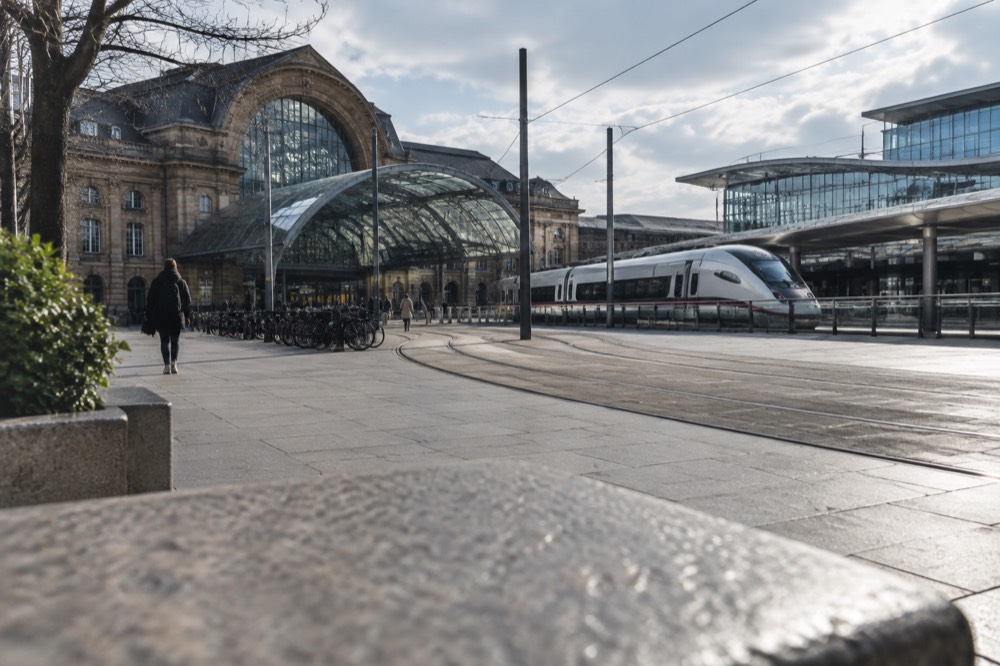
The route has three stages: an airport-to-Paris rail link, a transfer across the city to Gare de l'Est, and a high-speed train from Paris to Strasbourg that completes the final leg in under two hours. No train runs directly from Charles de Gaulle to Strasbourg, so every rail itinerary changes in Paris. The airport's own rail station connects the terminals to the city's network, and from there the aim is simple: reach Gare de l'Est, the station on the eastern side of Paris from which the high-speed services to Alsace depart. Booking the long leg in advance, and leaving a comfortable buffer for the cross-city transfer, is what separates a relaxed arrival from a sprint through the concourse.
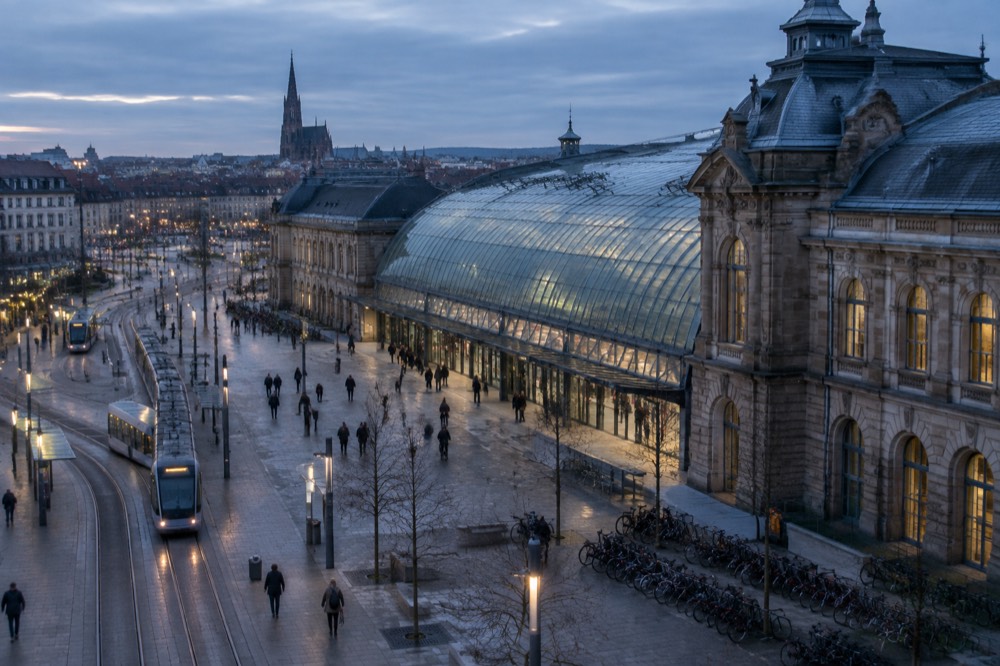
The high-speed leg deserves the planning attention, because it is the piece you book. The Paris-Strasbourg relationship is one of the classic high-speed runs in France, and the fastest services complete it in under two hours; SNCF Connect is the place to compare departure times, fare options and connection windows. Fares move with demand, so a ticket bought weeks ahead and a ticket bought at the counter on the day are different products at different prices.
What the transfer in Paris involves depends on which rail option you take from the airport and where it drops you. Allow real time for it. Crossing Paris with luggage between two mainline stations is a journey in itself, and a tight connection at Gare de l'Est is the single commonest way to miss a booked train. If the schedule looks thin, a later TGV with a wider buffer costs nothing extra in money and a great deal less in stress.
Rather skip the cross-Paris transfer with luggage? Book an airport transfer here.
| Stage | What It Involves | What To Check Before You Travel |
|---|---|---|
| Charles de Gaulle to central Paris | Airport rail link into the city network | Line status and terminal station on the airport's official access pages |
| Transfer to Gare de l'Est | Cross-city movement with luggage | Connection window against your booked departure |
| Paris to Strasbourg | High-speed service, under two hours on the fastest runs | Times and fares on SNCF Connect |
| Arrival at Strasbourg station | Station sits at the western edge of the centre | Tram and bus connections on the CTS network |
Is The Train From Paris To Strasbourg The Best Option?
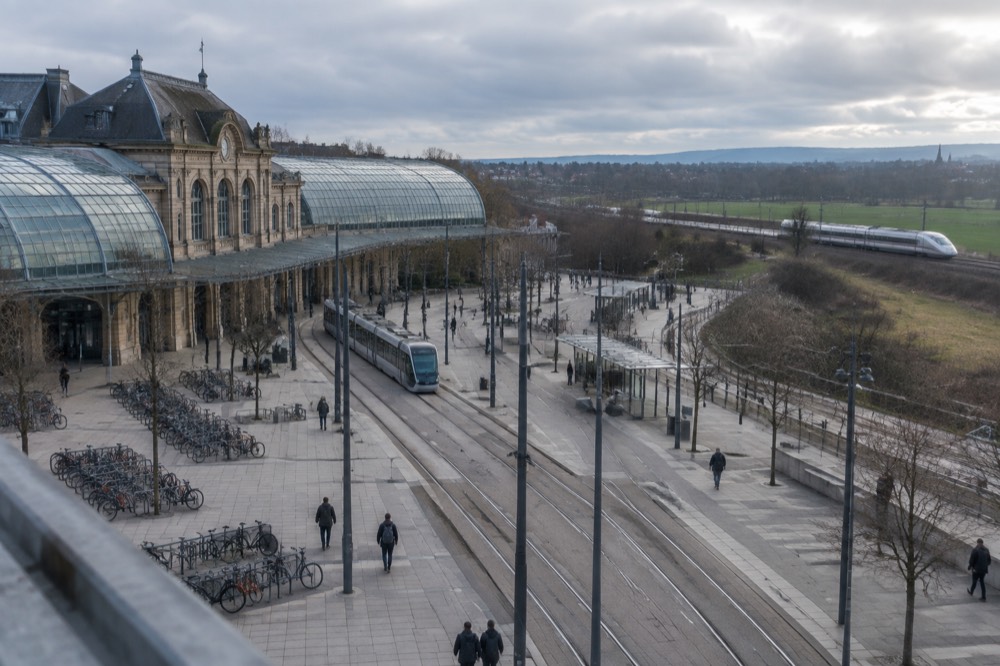
For nearly every traveller landing at Charles de Gaulle, yes: the train via Paris is the practical choice, because the high-speed leg is quick, the Strasbourg station sits within walking and tram reach of the historic centre, and the alternatives either add a flight change or hand you a long drive. Strasbourg does have its own airport, Entzheim, with its own rail shuttle, but there is no direct flight from Charles de Gaulle to Strasbourg and no journey time worth printing for driving, so the honest comparison is structural rather than numerical. The train wins on where it puts you: Gare Centrale in Strasbourg opens straight onto the tram network and the city centre.
The alternatives exist and are worth naming. A connecting flight from Charles de Gaulle to a nearer airport adds a security cycle and a second boarding to the day. Driving puts you on French and then Alsatian roads for hours, and parking in Strasbourg is its own subject, covered in the site's parking guide. The train is the option this site can describe with confidence end to end.
One structural point in the train's favour: Strasbourg's station district is not a peripheral interchange. The historic core, the Grande Île, begins a short walk from the platforms, and the tram lines that fan out from the station forecourt reach the European Quarter, Neustadt and the southern neighbourhoods without a transfer for many destinations. Arriving by rail means arriving inside the city you came to see.
For readers weighing the same question from a different starting point, the site's guide to getting from Paris to Strasbourg covers the capital-to-Alsace leg in more depth, and the where is Strasbourg page sets out the city's position on the Franco-German border for anyone mapping the wider region.
How Much Should You Budget For The Trip?
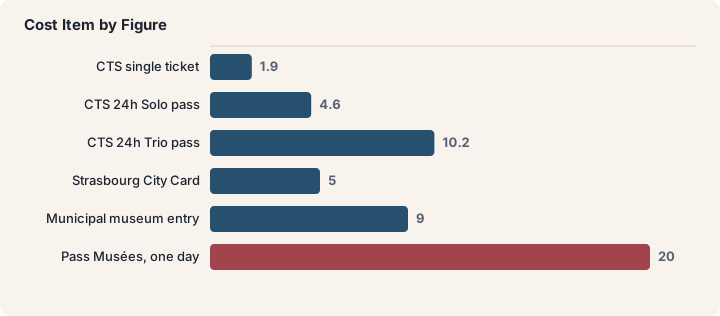
The only costs this page can state with figures are the ones inside Strasbourg itself: local transport runs from 1.90 EUR for a single ticket, museum entry is 9 EUR full price, and the cathedral platform is 10 EUR, while the two long-haul legs of the journey carry no fixed fare and must be priced live. The train fare from Paris depends on how early you book, the class and the demand on your travel date, so treat the city costs as plannable ones. That split is genuinely useful for budgeting, because the fixed, knowable costs are all on the Strasbourg side.
The Strasbourg City Card deserves a line in any budget conversation. It costs 5 EUR for an adult and 3.50 EUR for a child aged 3 to 17, runs for seven days, and works as a discount card rather than an all-inclusive pass: it knocks money off the municipal museums, the boat tours, the cathedral platform and the astronomical clock, among other things. For a short visit built around two or three paid sights, it can pay for itself; for a visit built around strolling the squares, it may not. The site's Strasbourg City Card guide works through the arithmetic.
| Cost Item | Figure | Notes |
|---|---|---|
| CTS single ticket | 1.90 EUR | Bought via the Badgéo card, the CTS app or contactless; 2.50 EUR on board the bus |
| CTS 24h Solo pass | 4.60 EUR | One person, 24 hours |
| CTS 24h Trio pass | 10.20 EUR | Two to three people travelling together |
| Strasbourg City Card | 5 EUR adult, 3.50 EUR child | Seven days, discounts only, not an all-inclusive pass |
| Municipal museum entry | 9 EUR full, 5 EUR reduced | Applies across the municipal museums |
| Pass Musées, one day | 20 EUR | Covers the municipal museums for a day |
What Should You Do First In Strasbourg?
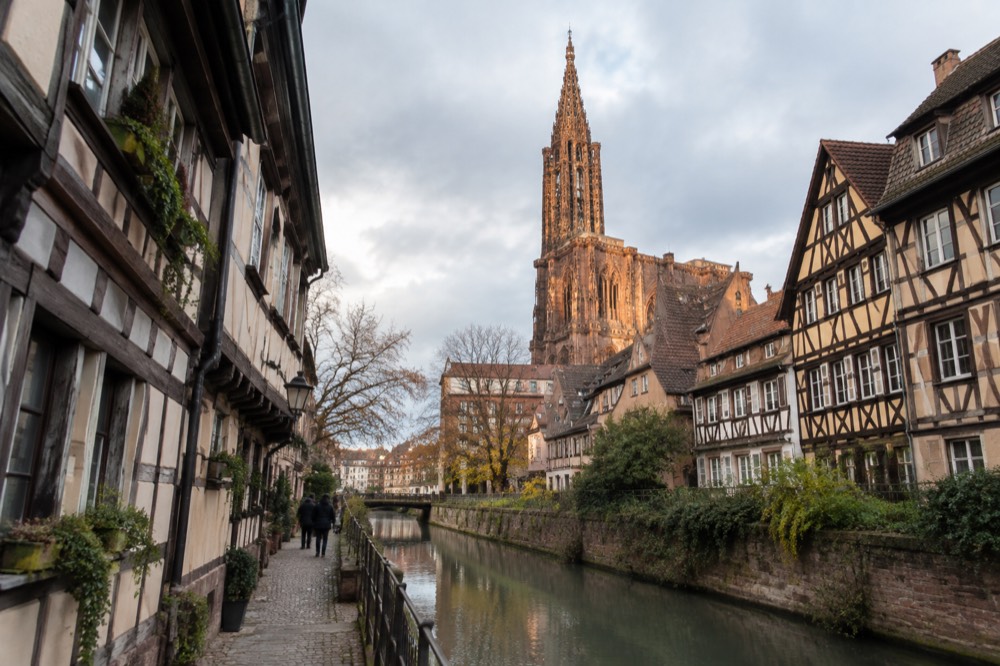
Walk. The Grande Île, the river-island core where the cathedral, Place Kléber and Petite France sit, is compact enough that a first afternoon on foot reaches the city's defining sights, and the free option is simply to wander the public squares and streets, which costs nothing. The cathedral's single spire is the natural first landmark: the nave is open Monday to Saturday from 08:30 to 11:15 and from 12:45 to 17:45, and on Sundays from 14:00 to 17:15, so a morning arrival from Paris lines up neatly with the visiting hours. From the Place du Château side you can add the astronomical clock, whose automaton show runs daily at 12:30 sharp.
A guided walk compresses the first hours. The European Quarter is the part of Strasbourg that first-time visitors from Paris routinely under-plan, and a guided walking tour of the European Quarter, led by a local guide, explains the European Parliament, the Council of Europe and the Court of Human Rights district in a way signage never manages. Check availability on the operator's live listing if the institutions are on your list; the tour pairs naturally with an afternoon in the Grande Île, since the quarter sits a short tram ride from the centre.
Food is the other natural first-evening move. Strasbourg's winstubs, the traditional Alsatian eating houses, serve tarte flambée, choucroute and baeckeoffe, and a guided culinary walk is one way to sample across several stops in a single evening rather than gambling on one dining room. A two-hour culinary tour with a local guide moves through the centre with tastings along the way, which suits a first night when you want both dinner and orientation. The site's food guides, from winstubs in Strasbourg onward, cover the à-la-carte alternative.
If the legs are tired after the journey, the Batorama boat tours run from the heart of the city and cover ground without walking: the long tour costs 16.20 EUR full fare and 8.90 EUR reduced, the short tour 12.50 EUR and 7.20 EUR, with the Red Tour lasting 1h10 and the Blue Tour 0h45, plus a Parliament-Cathedral return shuttle. It is a calm first-hour introduction to how the Ill frames the city.
Where Should You Stay After The Journey?
The practical answer splits by trip type: the Grande Île and Petite France put you inside the postcard and within walking distance of everything historic, while the station district wins on arrival convenience because the train from Paris deposits you there, and the Krutenau offers a quieter local base a short walk south. None of these choices requires a vehicle, which matters on a trip built around a rail arrival. The site's full where to stay in Strasbourg guide works through the neighbourhoods in detail, including the Christmas-season version for December travellers.
The trade-offs are worth spelling out. Staying near the station means the walk from your platform to your hotel is measured in minutes, and the tram interchange at the forecourt covers the whole city; the trade is a district with less of the old-town texture. Staying on the Grande Île reverses that: the half-timbered surroundings are the reason you came, and the trade is a longer drag of a suitcase over cobbles on arrival evening. The Krutenau, the student-and-foodie quarter south of the centre, splits the difference with a more local pace.
December changes the calculation, because the Christmas market pulls demand into the centre and prices follow. The site's guide to where to stay for the Strasbourg Christmas market covers that season specifically, and the main Strasbourg Christmas market page explains what the event involves.
How Many Days Do You Need In Strasbourg?
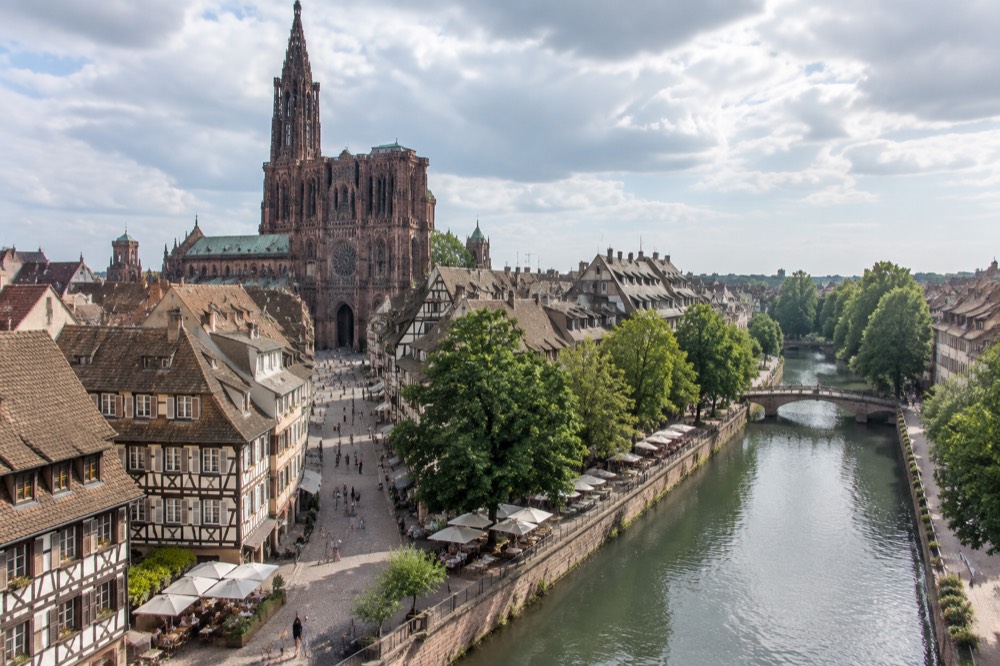
Two full days are enough to see Strasbourg's core: the cathedral and its platform, Petite France, the covered bridges, the Barrage Vauban terrace, the European Quarter, and a winstub evening, with a museum visit or a boat tour as a flexible third activity. If you want a slower pace, a day trip into the Alsace wine route, or time for more museums and markets, add a third day to the itinerary. A first day can carry the Grande Île on foot, and a second day can carry the European institutions, a museum morning and the riverside. Travellers who want the wine route, Colmar or the Black Forest as well should plan three days in the city or add a day-trip day, and the site's itinerary pages, from one day to three, set out hour-by-hour versions of the same territory.
The cathedral deserves the first morning, and not only for the nave. The platform, at 66 m, is the view over the red rooftops of the Grande Île and out toward the Black Forest horizon; it costs 10 EUR full fare and 6 EUR reduced, with children under 6 free, and from 1 April to 30 September it opens at 09:30 with the last ascent at 19:15, while from 1 October to 31 March it opens at 10:00 with the last ascent at 17:15. The astronomical clock show at 12:30 costs 4 EUR, with tickets sold on the day only, at the cathedral stalls between 10:00 and 11:00 or at the Saint-Michel entrance from 11:30, so the clock fixes the shape of a first day around itself.
Museums fill a rainy second morning. The municipal museums charge 9 EUR full and 5 EUR reduced, a one-day Pass Musées costs 20 EUR, and every municipal museum is free on the first Sunday of the month. One caveat that matters for planning: the Musée Alsacien is closed for works until 2028, so it cannot be part of any itinerary, and the site's Strasbourg museums guide lists what is open instead.
When Is The Best Time To Make The Trip?
Strasbourg's climate is semi-continental, with Meteo-France 1991-2020 normals showing mean daily maxima from 5.2 C in January to 26.4 C in July, so the answer depends on what you are travelling for: summer for the long light and the riverside, December for the Christmas market, and spring or autumn for thinner crowds and mild walking weather. Rain falls year-round, 635.7 mm across 112.3 days with 1 mm or more, so no season is a dry guarantee; the difference between months is temperature and daylight, not the presence of rain.
| Month | Mean Daily Maximum | Mean Daily Minimum | Rainfall |
|---|---|---|---|
| January | 5.2 C | -0.2 C | 35.4 mm |
| April | 17.0 C | 5.7 C | 41.8 mm |
| July | 26.4 C | 14.9 C | 71.9 mm |
| October | 15.8 C | 7.2 C | 59.5 mm |
| December | 5.9 C | 0.8 C | 45.2 mm |
The seasonal guides on this site go deeper: Strasbourg in summer, spring and autumn each cover their own events and openings, and the best time to visit Strasbourg page weighs the whole year. The Strasbourg weather page holds the full monthly normals table for anyone packing by numbers.
What About Arriving For The Christmas Market?
The next Christmas market dates are not yet published: the city's Christmas site states that the official dates and programme are still being finalised, so plan around the usual pattern, an opening in the last week of November running to 24 December, and confirm on the official site before booking anything. Last year's edition ran from 26 November to 24 December 2025 and drew 3.05 million visitors, which is the scale of the thing: December in Strasbourg is a full city, and the earlier the planning, the better the outcome. The high-speed leg from Paris carries December demand, so the fare and availability picture tightens as the market approaches.
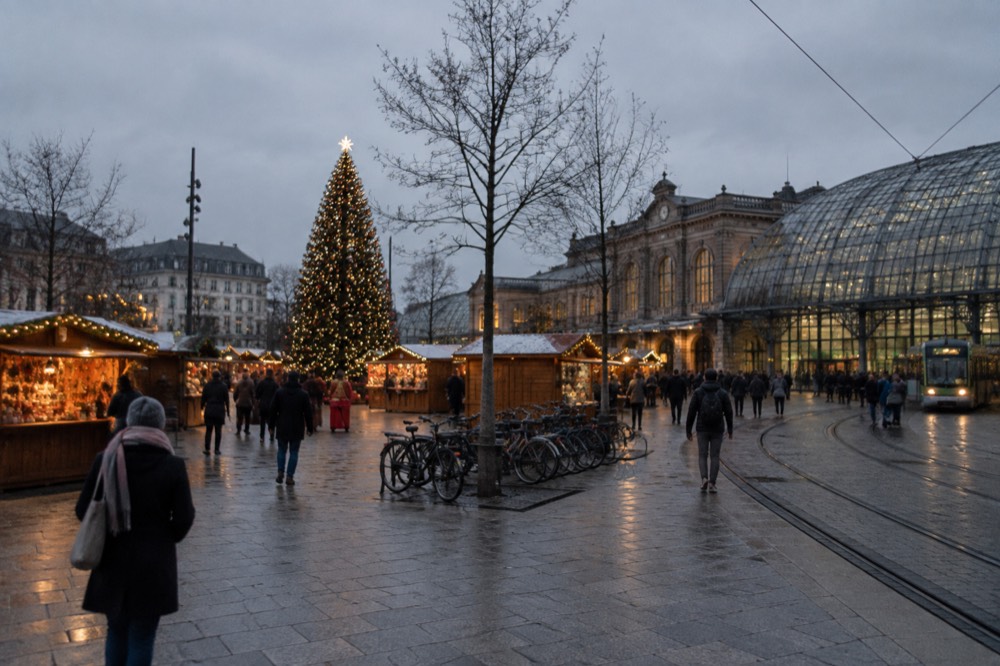
The market's shape is worth knowing before you arrive. Chalets spread across several squares in the historic centre rather than sitting in one place, with the cathedral and Place Kléber at the heart of it, and the chalets typically open from late morning into the evening. The 24 December close comes early in the evening, so a Christmas Eve arrival risks finding the stalls packing up. During the market the cathedral keeps continuous visiting hours on the Place du Château side from Monday to Saturday, 08:30 to 17:45, which is longer than its usual split day and useful for fitting the nave around market time.
Food is half the reason people come. The site's Strasbourg Christmas market food guide covers what to eat among the chalets, and the wider Christmas markets in Alsace and Colmar Christmas market pages cover the regional circuit for travellers turning the trip into a multi-market tour. Winter itself, beyond the market, has its own Strasbourg in winter guide.
How Do You Get Around The City Once You Arrive?
On foot and by tram: the historic centre is pedestrian-scaled, and the CTS tram and bus network covers everything beyond it, with a single ticket at 1.90 EUR bought through the Badgéo card, the CTS app or contactless payment, or 2.50 EUR if bought on board a bus. A 24-hour Solo pass costs 4.60 EUR and a 24-hour Trio pass for two to three people costs 10.20 EUR, so a day of hopping between the Grande Île, the European Quarter and Neustadt landmarks is cheaper on a pass than on singles the moment the third ride arrives.
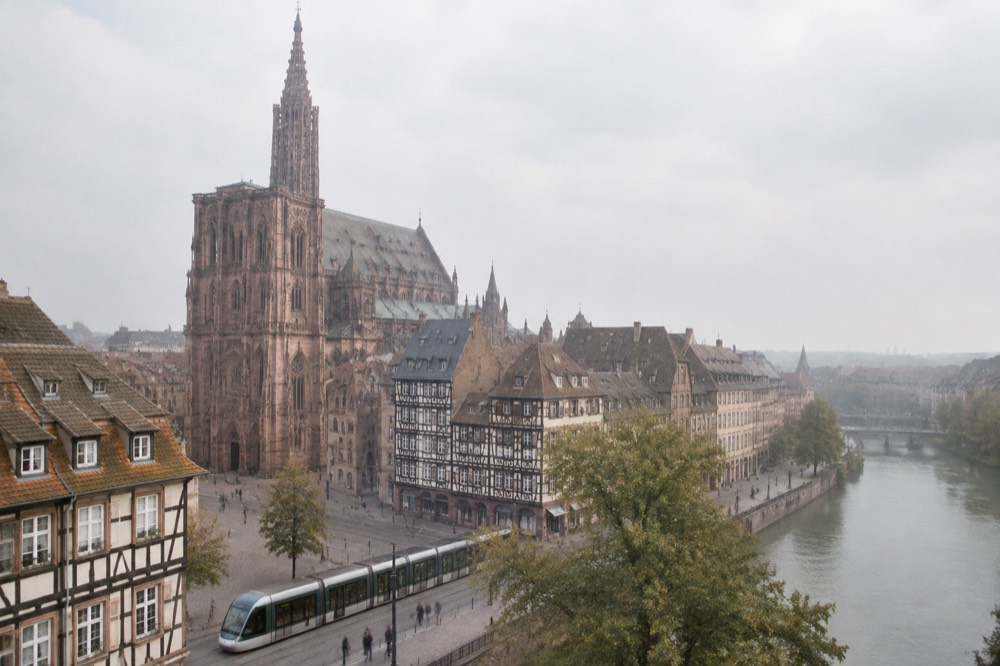
The station is the natural hub for an arriving traveller, because the tram interchange sits on its forecourt and the lines fan out across the city from there. The airport shuttle detail that sometimes confuses Paris arrivals concerns Strasbourg's own airport, Entzheim, which is a different place from Charles de Gaulle: a combined train-plus-city ticket covering the airport shuttle and a 24-hour city pass costs 4.60 EUR, and the shuttle itself runs up to five trains per hour, taking 8 minutes to reach Strasbourg station. That is the ticket to know about if your return journey leaves from Entzheim rather than back through Paris.
| CTS Ticket | Price | What It Covers |
|---|---|---|
| Single | 1.90 EUR | One journey, bought via Badgéo, the CTS app or contactless |
| Single on board a bus | 2.50 EUR | One journey, bought from the driver |
| 24h Solo | 4.60 EUR | One person, unlimited CTS travel for 24 hours |
| 24h Trio | 10.20 EUR | Two to three people travelling together |
| Airport combined ticket | 4.60 EUR | Entzheim airport shuttle plus a 24-hour city pass |
Which Tickets And Timesheets Are Worth Knowing Before You Land?
The three that shape a first day are the cathedral nave hours, the 12:30 astronomical clock show with its day-of-only ticket sales, and the platform's seasonal hours, because together they fix the rhythm of a morning in the Grande Île. The clock is the strictest of the three: tickets cost 4 EUR, with 3 EUR for groups of 12 or more and students up to 25, and 2 EUR for children aged 6 to 17, and they are sold only on the day, at the cathedral stalls from 10:00 to 11:00 or at the Saint-Michel entrance from 11:30. Miss the sales window and you miss the show.
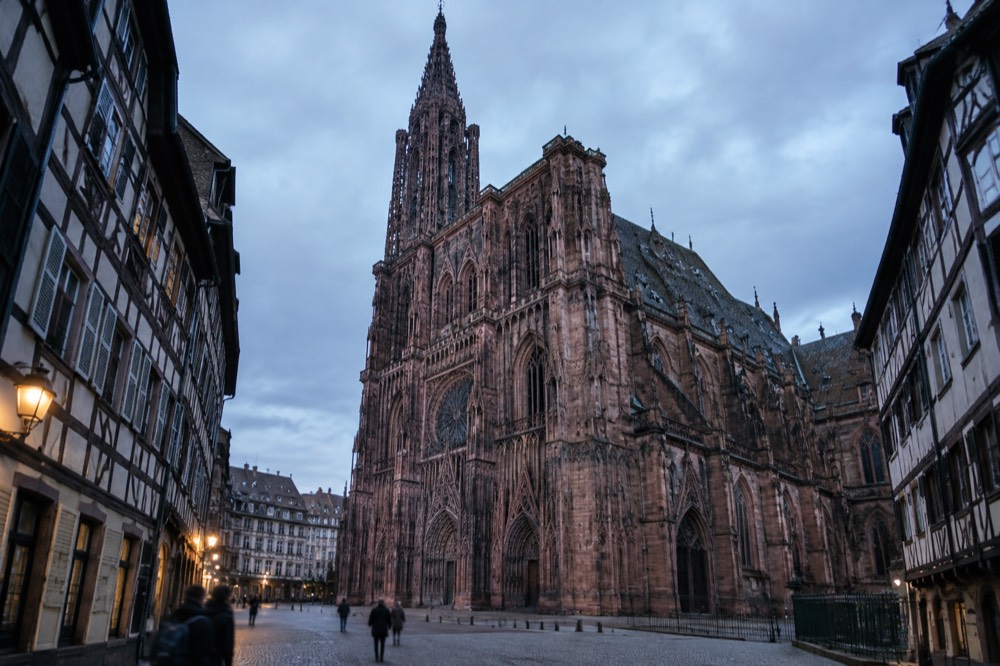
The platform has its own calendar. It closes on 1 January, 1 May and 25 December, and its hours shift with the seasons: from 1 April to 30 September it runs 09:30 to 13:00 and 13:30 to 20:00 with the last ascent at 19:15, and from 1 October to 31 March it runs 10:00 to 13:00 and 13:30 to 18:00 with the last ascent at 17:15. There are no luggage lockers at the cathedral, so the platform belongs at the start or end of a day, not the middle of a transit. A platform ticket also gives a reduced rate at the Musée de l'Œuvre Notre-Dame, which makes a combined morning of the view and the sculpture museum a natural pairing.
| Sight | Hours | Ticket |
|---|---|---|
| Cathedral nave, Mon-Sat | 08:30-11:15 and 12:45-17:45 | Entry to the nave is not priced on this page; check the cathedral's own site |
| Cathedral nave, Sun | 14:00-17:15 | Check the cathedral's own site |
| Platform, 1 Apr-30 Sep | 09:30-13:00 and 13:30-20:00, last ascent 19:15 | 10 EUR full, 6 EUR reduced, under 6 free |
| Platform, 1 Oct-31 Mar | 10:00-13:00 and 13:30-18:00, last ascent 17:15 | 10 EUR full, 6 EUR reduced |
| Astronomical clock show | Daily at 12:30 sharp | 4 EUR, day-of purchase only |
The museums keep a simpler sheet: 9 EUR full and 5 EUR reduced across the municipal museums, a one-day Pass Musées at 20 EUR, free entry for everyone on the first Sunday of every month, and the Musée Alsacien closed for works until 2028. The Barrage Vauban terrace, the panoramic deck over the river defences near the covered bridges, runs seasonal hours: 08:00 to 19:00 through September and October, 08:30 to 16:00 from November to February, and 08:00 to 19:00 in March and April. Its admission price is not stated on the official page, so check there rather than assuming.
Can You Turn The Trip Into An Alsace Break?
Yes, and the rail arrival makes it easy: the wine route villages, Colmar and the castle country all sit within day-trip range of Strasbourg, and a guided day tour from the city removes the need for a car entirely, which suits a trip that began at Charles de Gaulle without one. The medieval villages and wine-tasting day trip from Strasbourg is the classic version, a full-day circuit through the wine country with tastings built in. The site's Alsace wine route and Colmar guides cover the independent alternative for travellers who would rather ride regional trains than join a group.
The pairing logic is straightforward. Two days in Strasbourg plus one day in the wine villages is a complete long weekend off a single high-speed return booking from Paris, and the day tours depart from the city centre, so the station-side hotel that was convenient on arrival night is convenient for the day-trip morning too. Travellers with a fourth day can look at the Black Forest across the Rhine rather than how long the drive takes.
For anyone still deciding whether the whole journey is worth it, the site's is Strasbourg worth visiting page makes the case both ways, and the free things to do in Strasbourg page proves the city can be enjoyed on a small budget once the train fare is paid. Strasbourg's population of 293,771 in the commune makes it a compact city by big-city standards, and the Strasbourg Travel Guide homepage collects the full sight, food and seasonal coverage in one place.
Common Questions About Cdg To Strasbourg
Is there a direct train from Charles de Gaulle Airport to Strasbourg?
No. Every rail journey from Charles de Gaulle to Strasbourg changes in Paris, and the high-speed service to Alsace departs from Gare de l'Est. Plan the cross-city transfer with a comfortable buffer and check connection times on SNCF Connect before booking.
How long does the train from Paris to Strasbourg take?
The fastest high-speed services complete the Paris to Strasbourg leg in under two hours. The total journey from Charles de Gaulle is longer, because it includes the airport rail link into Paris and the transfer across the city to Gare de l'Est.
What is the cheapest way to get from Cdg to Strasbourg?
The train fare for the long legs is a live price that depends on how early you book and the demand on your date, so no fixed figure can be printed. The costs you can plan with certainty are inside Strasbourg: a single CTS ticket at 1.90 EUR, museum entry at 9 EUR and the cathedral platform at 10 EUR.
Where does the train arrive in Strasbourg?
At Gare Centrale, the main station, which sits at the western edge of the city centre with a tram interchange on its forecourt. The Grande Île, the historic core, begins a short walk away, and the tram lines reach the European Quarter, Neustadt and the southern neighbourhoods.
Is Strasbourg worth the trip from Paris?
For most travellers making the journey from Charles de Gaulle, the city justifies the transfer: a UNESCO-listed river core of half-timbered streets, a cathedral with a 66 m platform, the European institutions, and a food culture running from winstubs to the Christmas market. Two full days cover the essentials, and a third opens the wine route.
Can I visit the Strasbourg Christmas market on a trip from Paris?
Yes, and many people do it as an overnight or weekend trip. The 2026 market dates are not yet published; the usual pattern is an opening in the last week of November running to 24 December, and last year's edition ran 26 November to 24 December 2025. Confirm the dates on the city's Christmas site before booking.