Dancing Plague Of 1518
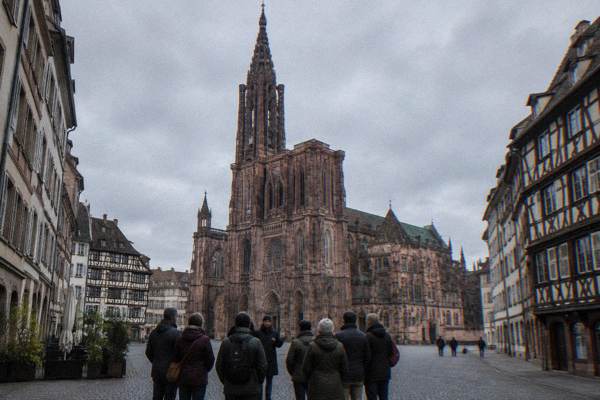
In 1518 the streets of Strasbourg, in Alsace, north-eastern France, were the stage for one of the strangest episodes in European chronicles: an outbreak of compulsive dancing that contemporaries could neither explain nor stop. This guide tells the story, separates what the sources say from what modern historians argue, and shows how to walk the surviving medieval city where it all happened.
Short answer
The dancing plague of 1518 was an outbreak of uncontrollable dancing recorded in Strasbourg, in Alsace, north-eastern France, in the year 1518. Chronicles describe people dancing in the streets for days, unable to stop, while the city authorities tried remedies that look bizarre today. Historians still debate the cause, and the medieval core where it happened is now a walkable World Heritage property.
In 1518, the streets of Strasbourg, the historic capital of Alsace in north-eastern France, became the setting for one of the oddest episodes in European chronicles: an outbreak of compulsive dancing that the people of the time could not explain and, by their own accounts, could not stop. Contemporary writings describe men and women dancing in the heat of the summer streets, apparently unable to leave off, while neighbours, relatives and city officials looked on in bewilderment. Later historians would call it the dancing plague, and it remains one of the most discussed mysteries of the early modern period. Five centuries later, the city where it happened is still there, its medieval core intact enough that you can walk the same tangle of lanes and squares on the Grande Île, and wonder what a summer in this city felt like when the dancing would not end.
What Was The Dancing Plague Of 1518?
The dancing plague of 1518 was an outbreak of compulsive, days-long dancing recorded in Strasbourg, in Alsace, north-eastern France, in the year 1518. Chronicles describe people dancing in the streets without pause, apparently against their will, until they collapsed from exhaustion. The city authorities of the day responded with remedies that read strangely now. Historians still argue over the cause, and the medieval quarter where it played out survives as a World Heritage property you can walk today.
The episode belongs to a small family of recorded "dancing manias" in late medieval and early modern Europe, and the Strasbourg outbreak of 1518 is the best known of them. The sources that describe it are chronicles and municipal records of the period, written by people who witnessed or reported on the events at first or second hand. They describe dancers who could not be talked out of the dance, families who tried to hold relatives still, and a city government that treated the phenomenon as a problem to be managed rather than a curiosity to be enjoyed.
What makes the story endure is the gap between how it reads and how it was experienced. To a modern visitor it sounds like a fable. To the people of a tightly governed imperial city on the Rhine plain, surrounded by harvest failures, epidemic disease and religious upheaval, it read as something happening in front of them, in their own streets, to their own neighbours. The chronicles are sober in tone, which is part of why historians have taken them seriously rather than dismissing the whole affair as legend.
The city itself is the best evidence that the setting was real. Strasbourg sits on the River Ill, a short distance from the Rhine, which forms the border with Germany; Kehl lies on the far bank. Its old core, the Grande Île, is an island of medieval lanes, half-timbered houses and stone squares, listed by UNESCO as part of the World Heritage property "Strasbourg, Grande-Île and Neustadt", with the Neustadt as the later extension. If you are unsure where exactly the city fits into the map of Europe, the guide to Strasbourg Travel Guide covers where exactly Strasbourg sits in full.
| Fact about the city today | Figure | What it means for a visitor |
|---|---|---|
| Population of the commune (INSEE 2023) | 293,771 | A compact city, walkable across its historic core |
| Cathedral tower platform height | 66 m | A climbable viewpoint over the old streets |
| Annual rainfall (1991-2020 normals) | 635.7 mm | Rain is part of the climate here, bring layers |
| Mean daily maximum in July | 26.4 C | Warm summers, the season the chronicles describe |
| Mean daily minimum in January | -0.2 C | Cold winters, frosts on the medieval lanes |
| World Heritage property | Strasbourg, Grande-Île and Neustadt | The medieval core is protected in its entirety |
Where In Strasbourg Did The Dancing Happen?
The chronicles place the dancing in the streets of Strasbourg's city core, the island now known as the Grande Île, rather than at any single named address. No plaque marks a precise spot, and historians are careful not to pin one down. What is certain is the setting: the same tightly packed lanes of half-timbered houses, guild halls and stone squares that a visitor walks today, around the cathedral and down toward the river.
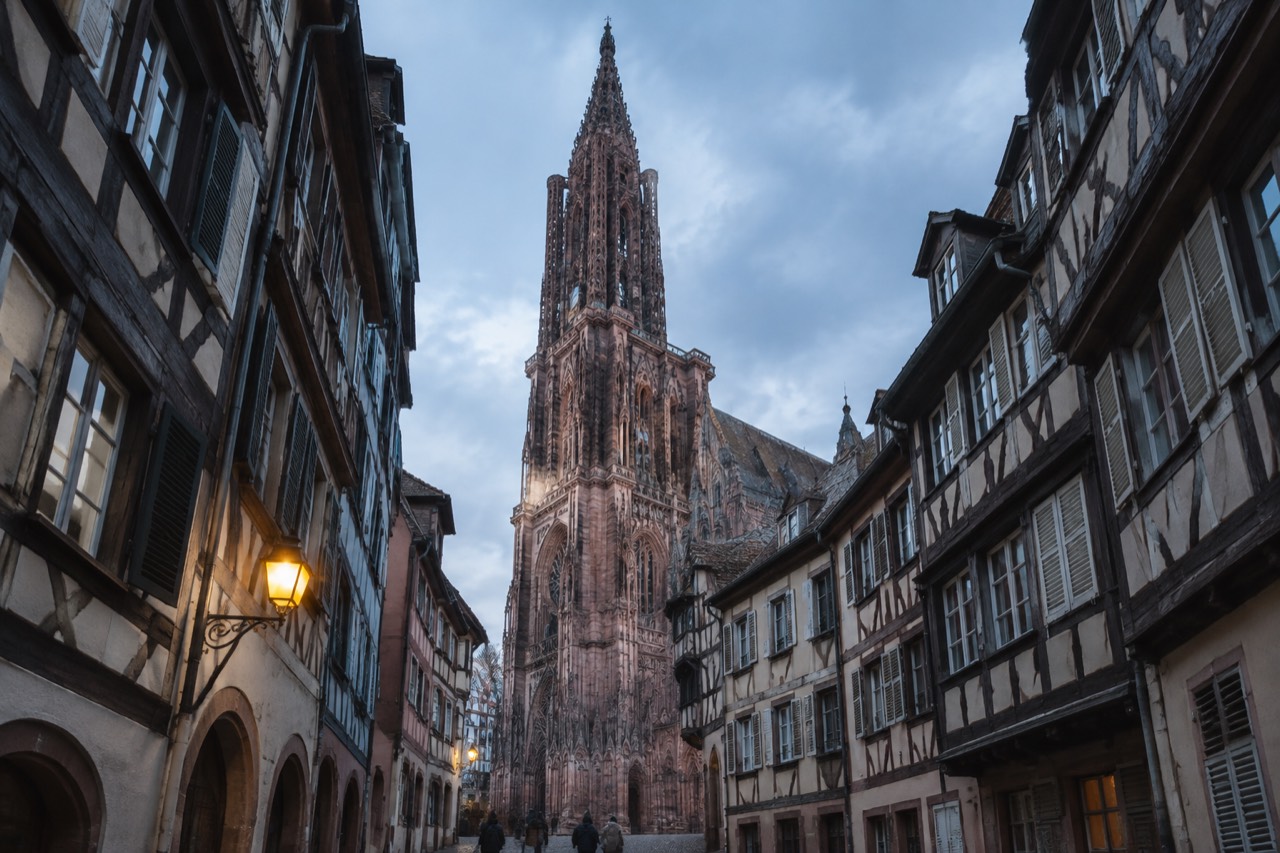
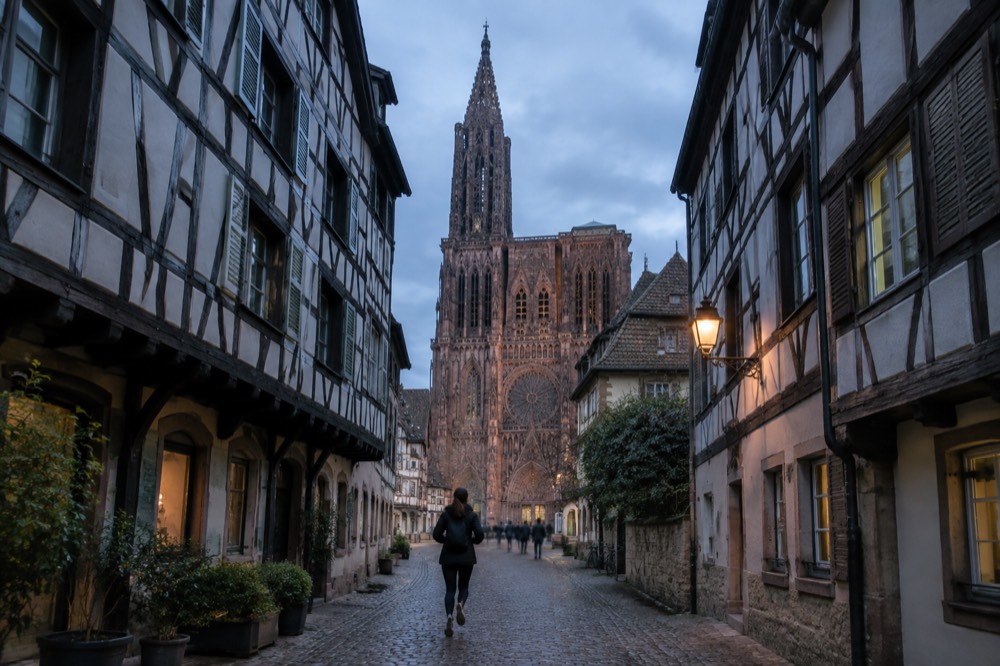
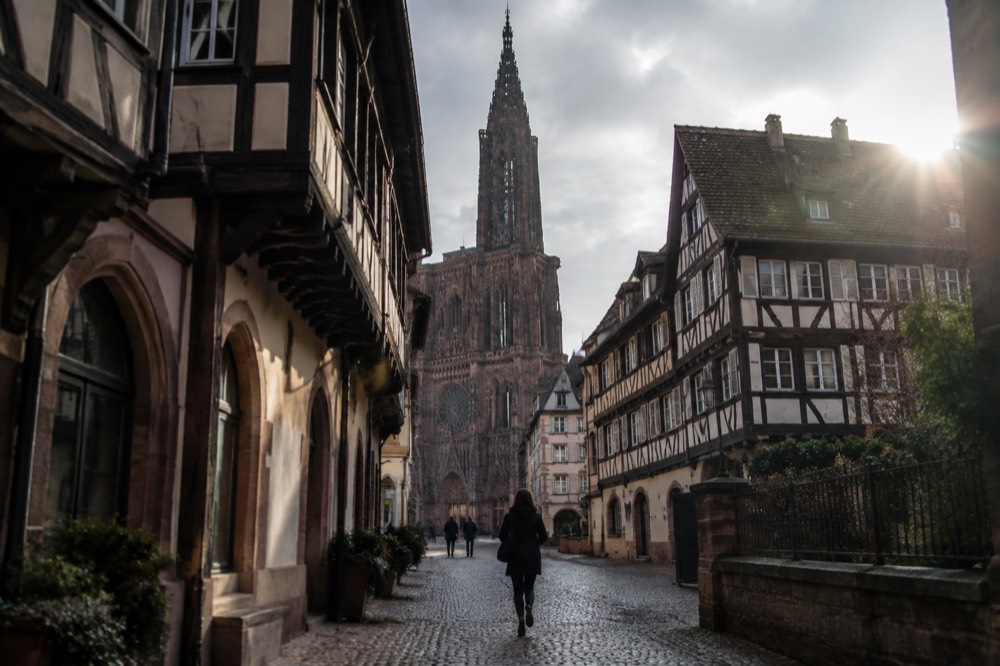
The Grande Île is one of the most complete medieval city cores in France. Its lanes are narrow, its houses are jettied timber frames stacked over the street, and its squares, Place Kléber, Place Gutenberg and the cathedral's Place du Château, open suddenly out of the tangle. Walking it, you understand something the chronicles convey indirectly: this was a crowded city, with little space in which a public spectacle could stay private. Whatever happened in 1518 happened in front of everyone.
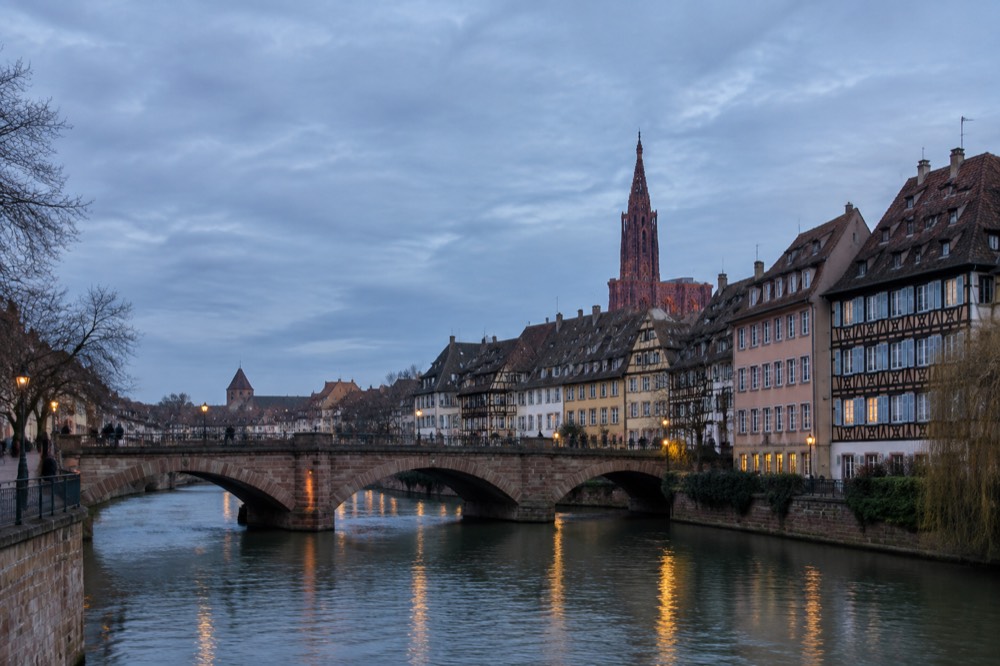
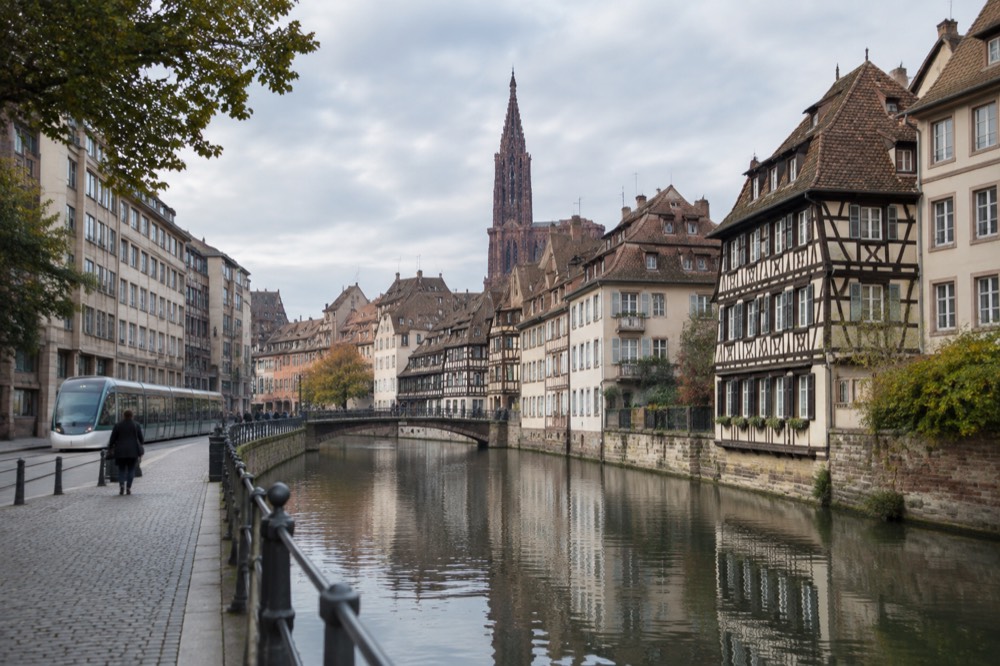
The cathedral dominates the island, a single spire above a pink sandstone west front, and it would have dominated it in 1518 too. The astronomical clock inside draws its own crowds today, with a full automaton show daily at 12:30; the cathedral's own hours page lists the nave opening times and the clock ticket terms, which are sold on the day only. Around the island, the Ill splits into channels, and the quarter of Petite France spreads along the water to the west, all timber frames and weavers' lanes. If you are weighing whether the city justifies the trip at all, the guide to whether Strasbourg deserves your time runs through the case.
Because the story lives in the streets rather than in a museum, a guided walk is the natural way to hear it told. A secrets-and-hidden-stories walk of the old centre is the tour this site pairs with the story, and you can Check availability on the operator's live listing. They know which lanes carry which stories.
If you would like the story told in the streets, book a free walking tour here.
How Did The City Authorities Respond To The Dancers?
The recorded response of the Strasbourg authorities reads like a catalogue of wrong turns: they tried to help the dancers keep dancing, hiring musicians and opening guild halls, on the theory that the dance had to be danced out. When that failed, they turned to processions, vows and shrines. Modern readers find the strategy astonishing, but it followed the medical and religious logic of its time, which treated the affliction as something to be completed rather than suppressed.
The first recorded interventions are the ones historians quote most often. Musicians were brought in, and dancing spaces were provided, because the prevailing theory held that the dancers would recover if the compulsion ran its course in controlled conditions. Guild halls and other covered spaces were opened for the purpose. Relatives were encouraged to let the dance finish rather than restrain the dancers by force, restraint being understood as dangerous in itself.
When the dancing continued, the tone of the response changed. The city turned to its religious machinery: processions were ordered, vows were taken, and dancers were taken, willingly or otherwise, to a shrine associated with healing and with dance, in the hills beyond the city. The logic was that if the affliction was spiritual, its cure would be too. Some dancers, the chronicles report, were treated with hostility once the city began to fear contagion, a shift that tells you how quickly sympathy turned to blame in a frightened population.
What stands out to a modern reader is that the authorities acted, decisively and at public expense, on a theory that was entirely wrong by our lights but coherent by theirs. That gap between their framework and ours is the real subject of the story, and it is the reason historians keep returning to 1518. It is also, honestly, excellent material for an evening walk: the same lanes that hosted the response now host the retelling, and the city after dark has its own atmosphere, covered in the guide to Strasbourg after dark.
What Explains The Dancing Plague Today?
No single explanation for the 1518 outbreak is accepted, but modern historians and physicians have narrowed the field to a few serious candidates: a mass psychogenic illness triggered by extreme stress, a hallucinogenic contamination of the grain supply, a religious trance phenomenon, or a chronicle tradition that amplified a smaller event. Each theory explains part of the record and struggles with another part, which is why the debate continues.
The stress theory is the one most historians now favour. The years around 1518 were cruel in this region: harvests had failed, grain prices had climbed, and disease moved through the towns of the Rhine plain. In that reading, the dancing was a mass psychogenic illness, a shared physical outbreak of unbearable communal anxiety, of a kind recorded in other stressed communities in other centuries. It explains why the dancers seemed unable to stop, and it explains why the outbreak eventually ended on its own.
The contaminated-grain theory argues that ergot, a fungus of rye that produces convulsions and hallucinations, drove the dancing. It has the advantage of a physical mechanism and the disadvantage that ergot poisoning does not, on the medical evidence, produce coordinated days-long dancing; it produces writhing and convulsion, which a chronicler might have described differently. The trance or devotional theory treats the dancing as an extreme form of religious practice that tipped into the involuntary. And a sceptical school argues that the chronicles, written and copied in a tradition of marvels, inflated a real but modest disturbance into a legend.
| Proposed explanation | What it suggests | Where it struggles |
|---|---|---|
| Mass psychogenic illness | Extreme communal stress surfaced as involuntary, contagious dancing | Hard to prove from five-century-old records |
| Ergot contamination of grain | A physical toxin produced the compulsion | Ergot symptoms do not match coordinated dancing |
| Religious trance or devotion | The dancing began as ritual and became involuntary | Blurs practice and affliction in the sources |
| Chronicle exaggeration | A smaller event grew in the retelling | Does not explain why multiple records agree |
What is striking is how little the debate needs the mystery to be solved. Whether the cause was stress, grain or fervour, the story documents a city under strain, and it documents how institutions behave when confronted with something they cannot classify. That is why the episode belongs to the history of Strasbourg rather than only to the history of medicine, and why the lanes where it happened reward a second, slower look.
What Did Strasbourg Look Like In 1518?
Strasbourg in 1518 was a free imperial city at the height of its medieval wealth, a walled island of timber-framed houses, guild halls and churches, dominated by its single-spired cathedral and threaded by the channels of the River Ill. It governed itself, minted its own coinage and printed its own books. The street plan of that city survives on the Grande Île today, which is why the story can still be walked rather than merely imagined.
The city the dancers knew was a commercial power on the Rhine plain, with the wealth to build in stone and the self-confidence to govern itself within the empire. Its streets were lined with the houses of guilds, and its squares hosted markets that still run in the same places; the city's market life is covered separately in the guide to Strasbourg's markets. The cathedral, with its single spire and its platform at 66 m, was already the landmark it is now.
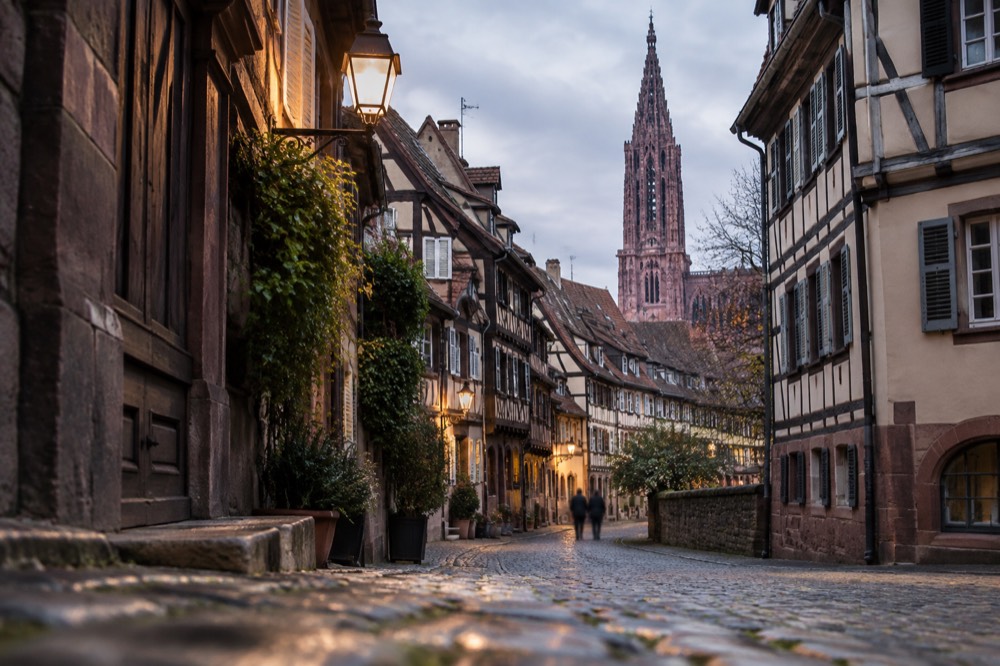
The timber-framed housing that fills the island was ordinary construction for its time, and its survival is what makes the modern walk so vivid. Half-timbering was the standard way to build in a city with a river trade in oak, and the frames were jettied over the street to gain floor space on expensive building plots. The houses lean over the lanes at angles that have settled over centuries, and the effect, for a visitor coming from the cathedral square into the tangle behind it, has not changed in kind since the dancers' day.
What has changed is everything around the island. The Neustadt, the imperial German quarter laid out to the north, joined the Grande Île inside the same World Heritage property as its later extension, and the modern institutions of Europe sit to the northeast of the old core. But on the island itself, the scale is still the scale of 1518: you walk it in minutes, you hear it in echoes, and the distance between the chronicles and the pavement is shorter than you expect.
How To Follow The Story On Foot Today
The practical way to follow the dancing plague story is a walking circuit of the Grande Île: start on the cathedral square, cut through the lane tangle toward Place Kléber, drop south to the river channels and Petite France, then return along the water past the Ponts Couverts and the Barrage Vauban terrace. The loop covers every kind of space the chronicles describe, takes an unhurried afternoon, and needs nothing but a pair of comfortable shoes.
Begin where the city's public life has always concentrated, the cathedral square. The west front is the single greatest piece of the city's medieval fabric, and the tower platform at 66 m gives you the whole island in one view, the best way to understand how small the stage of the story was. The platform ticket is 10 EUR full price, 6 EUR reduced, with children under 6 free, and the hours are seasonal, so check the cathedral's own access page before you climb. The astronomical clock show runs daily at 12:30, ticket 4 EUR, sold on the day only, and it is worth timing a visit around it.
From the square, walk the lanes north to Place Kléber, the city's largest open space and its traditional gathering point, then to Place Gutenberg, named for the printer whose trade transformed the city in the decades before 1518. These are the squares where a public phenomenon would have been most visible, and where the authorities would have had to act in front of the whole town. From there the lanes narrow again as you drop toward the water, and the character of the city changes with every block.
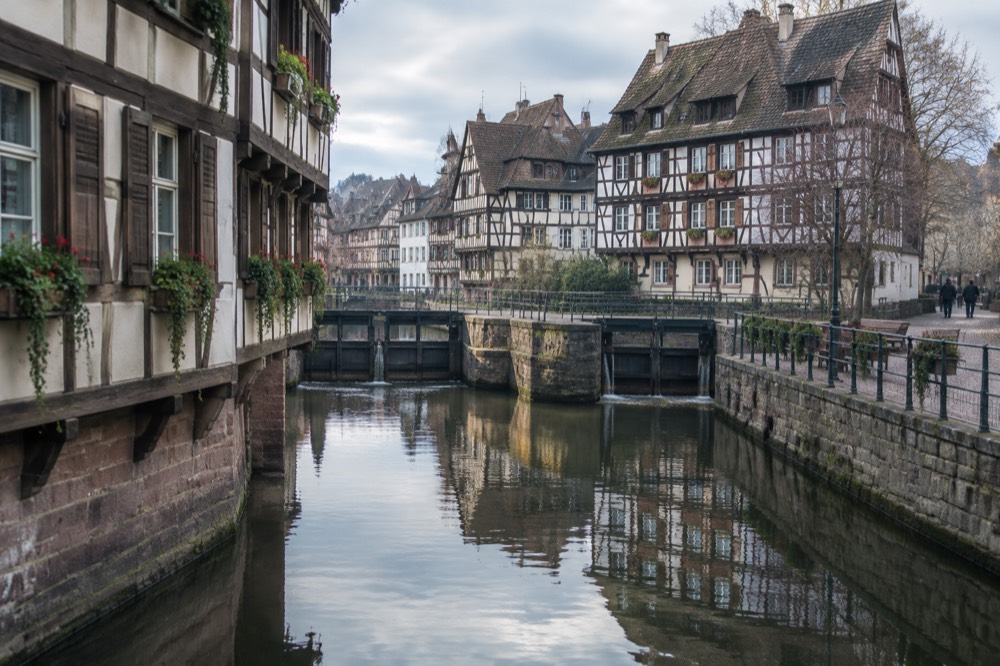
The southern leg of the circuit is the one visitors remember. The channels of the Ill divide around Petite France, a former tanners' and millers' quarter of timber frames over still water, and the Ponts Couverts and the Barrage Vauban terrace close the loop with the city's best rooftop panorama. The Barrage Vauban terrace keeps seasonal opening hours, so confirm them on the city's page for the site. None of this costs anything to see: the squares, bridges and riverbanks are public space, and the guide to free things to do in Strasbourg lists more of the same. For the stories behind the facades, the quieter corners are gathered in the guide to the city's hidden corners.
A guided version of this circuit is the secrets-and-hidden-stories walk, the tour this site features with the story. The guides work the dancing plague into the route alongside the plague pits, the fires and the other chapters the guidebooks skip, and the operator's live listing carries the current times and prices.
Which Day Trips Pair With A History Visit?
The best day trips from Strasbourg for a history-focused stay are the Black Forest across the Rhine in Germany, the wine villages of the Alsace route, and the museum city of Colmar to the south. Each pairs naturally with a morning spent on the dancing plague story, because each deepens the world the chronicles describe: the forest landscapes the shrine processions crossed, the wine country the city traded with, and the rival city that watched from down the road.
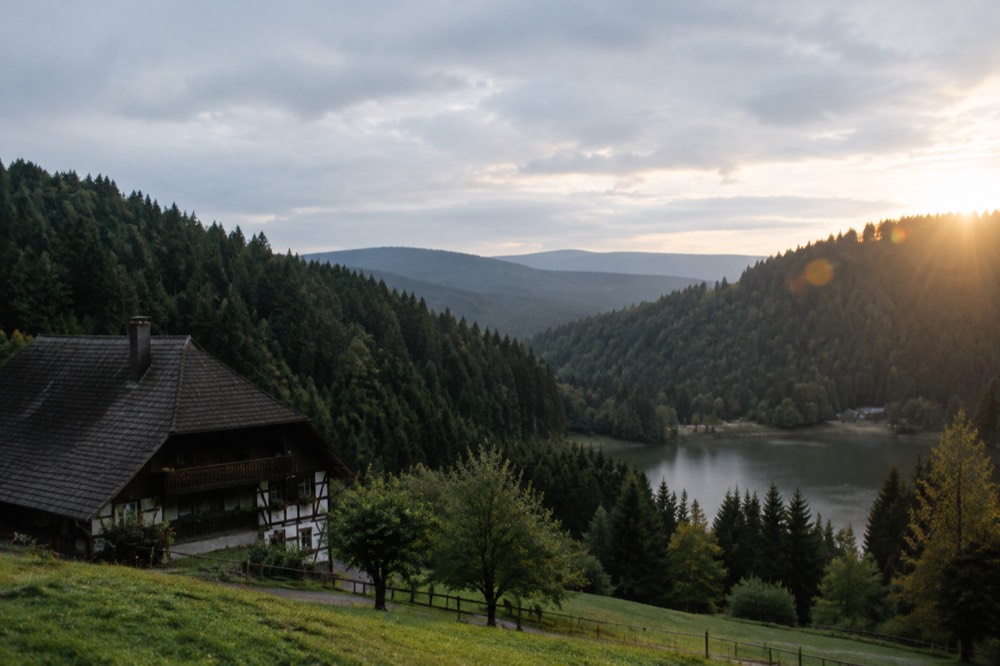
The Black Forest connection is the most direct. The shrine to which the Strasbourg dancers were taken in the chronicles lay in the hills. A guided excursion to Freiburg, Titisee and Triberg covers the German side of the border in one long day: a university town of medieval gates and streams, a lake ringed by forest, and the waterfall village at the heart of the cuckoo-clock trade. The tour this site pairs with the story runs there from Strasbourg, and the operator's live listing has the departure details.
The Alsace option keeps you on the French side. The wine route south of the city strings together fortified villages of half-timbered houses, and the vineyards begin at the city's own edge. Colmar, the largest town of the southern Alsace, is a canal-laced old core with its own museum weight, and it makes a calm counterpoint to a Strasbourg morning spent on the chronicles. There is no need to choose before you arrive; both work as spontaneous decisions from a Strasbourg base, and the comparison between the two cities is laid out in the guide to Strasbourg versus Colmar.
| Day trip | What it adds to the story | How it pairs with the city |
|---|---|---|
| Black Forest, Freiburg and Titisee | The landscape the shrine processions crossed | A guided day tour from Strasbourg, returning by evening |
| Alsace wine route villages | The trade and farmland behind the city's wealth | A half-day loop by car, coach or small-group tour |
| Colmar | A rival imperial city of the same world | An easy independent day out by regional transport |
Whichever you pick, book the guided versions early in a summer stay, because the warm months fill the small-group departures first. The Black Forest excursion in particular is the one this site recommends alongside the secrets walk, and the live listing shows what is running on your dates.
What Does A Visit To Strasbourg Cost?
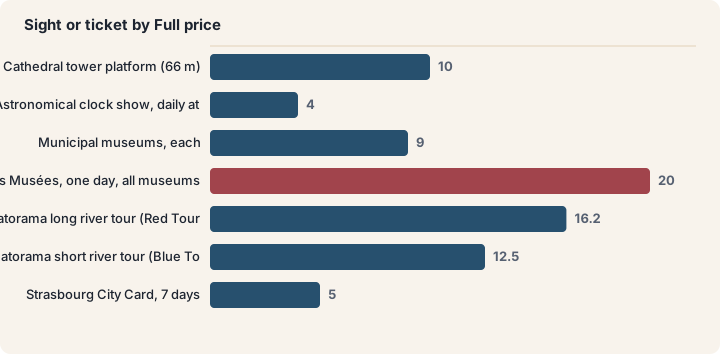
A day of sightseeing in Strasbourg costs surprisingly little: the medieval core is free to walk, the cathedral tower platform is 10 EUR full price, the astronomical clock show is 4 EUR, and municipal museums are 9 EUR full price, 5 EUR reduced, free on the first Sunday of each month. A 24-hour CTS transport pass is 4.60 EUR. The Strasbourg City Card, at 5 EUR for seven days, is a discount card rather than a pass.
The core experiences are either cheap or free. The lanes, squares, bridges and riverbanks of the Grande Île cost nothing, and the Batorama river boats, the long tour at 16.20 EUR full price and 8.90 EUR reduced, the short tour at 12.50 EUR and 7.20 EUR, give the island a water-level view for the price of a restaurant lunch. The municipal museums, the Beaux-Arts in the Palais Rohan, the Archaeological Museum, the MAMCS modern art collection and the Musée de l'Œuvre Notre-Dame among them, are each 9 EUR full price, with a one-day Pass Musées at 20 EUR covering them all. Note that the Musée Alsacien is closed for works until 2028 and should not be planned into a visit.
| Sight or ticket | Full price | Reduced price |
|---|---|---|
| Cathedral tower platform (66 m) | 10 EUR | 6 EUR (ages 6-18, students) |
| Astronomical clock show, daily at 12:30 | 4 EUR | 3 EUR (groups of 12+, students to 25), 2 EUR (ages 6-17) |
| Municipal museums, each | 9 EUR | 5 EUR |
| Pass Musées, one day, all museums | 20 EUR | - |
| Batorama long river tour (Red Tour, 1h10) | 16.20 EUR | 8.90 EUR |
| Batorama short river tour (Blue Tour, 0h45) | 12.50 EUR | 7.20 EUR |
| Strasbourg City Card, 7 days | 5 EUR | 3.50 EUR (ages 3-17) |
Getting around is equally manageable. The CTS network runs trams and buses across the city and to the airport shuttle stations, and the fares are simple.
| CTS ticket | Price | Notes |
|---|---|---|
| Single ticket | 1.90 EUR | Badgéo card, CTS app or contactless |
| Single ticket bought on board a bus | 2.50 EUR | Buy before boarding where you can |
| 24h Solo pass | 4.60 EUR | One traveller, unlimited rides |
| 24h Trio pass | 10.20 EUR | Two or three travellers together |
| Airport combined ticket | 4.60 EUR | Train from Entzheim, tram or bus, and a 24h city pass |
The City Card deserves a line of explanation because it is misunderstood. It is not an all-inclusive pass: it is a 5 EUR discount card, valid seven days, that takes money off the museums, the river boats, the cathedral platform and the clock. Whether it pays for itself depends on how much of that list you intend to do, and the full breakdown is in the guide to the Strasbourg City Card. Travellers watching the budget more broadly will find the rest of the arithmetic in the guide to visiting Strasbourg on a budget.
When Is The Best Time To Walk The Old Streets?
The best months to walk Strasbourg's medieval core for the dancing plague story are late spring and early autumn, when the 1991-2020 normals put mean daily maxima between 15.8 C and 21.6 C and rain days around eight to ten per month. July and August are the warmest at 26.4 C and 26.1 C, the season the chronicles describe, but also the busiest. December is cold, 5.9 C mean maximum, and it is the month the city transforms into its Christmas-market self.
The climate here is semi-continental, nothing like the Mediterranean pattern travellers sometimes expect of France: hot summers, cold winters, and rain distributed across the year, 635.7 mm annually with 112.3 rain days in the normals. What that means practically is that there is no month without a reason to visit and no month without a jacket. The month-by-month detail, including what the normals mean for packing, is in the guide to Strasbourg's weather, and the seasonal trade-offs are weighed in the guide to the best time to visit.
| Month | Mean daily maximum | Mean daily minimum | Rain | Rain days of 1 mm or more |
|---|---|---|---|---|
| January | 5.2 C | -0.2 C | 35.4 mm | 9.1 |
| April | 17.0 C | 5.7 C | 41.8 mm | 8.6 |
| July | 26.4 C | 14.9 C | 71.9 mm | 10.4 |
| October | 15.8 C | 7.2 C | 59.5 mm | 9.6 |
| December | 5.9 C | 0.8 C | 45.2 mm | 10.2 |
December deserves its own paragraph, because it is the month the city is at its most theatrical. The Christmas market, the institution the city calls its Capitale de Noël, fills the squares of the old core with chalets from late November to 24 December, and the 2025 edition drew 3.05 million visitors across its run from 26 November to 24 December. The 2026 dates are not yet published, so confirm them on the city's own Christmas site before you book anything. The market's food and layout are covered in the guides to the Strasbourg Christmas market and Christmas markets across Alsace, and the winter city beyond the market in the guide to Strasbourg in winter.
For the dancing plague story specifically, a quieter season has one real advantage: the lanes feel closest to their own scale when the crowds thin, and the stories land better told at an unhurried pace. A general guided walk of the historic centre, led by a local guide, is a good fit for that kind of visit, and the live listing shows the current departures.
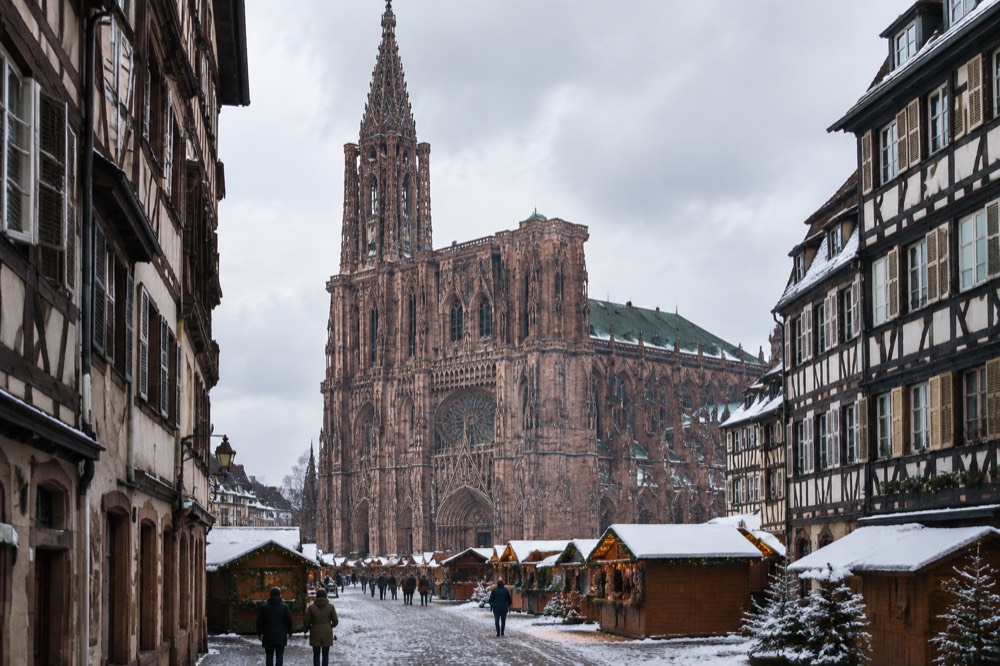
However you time it, the story of 1518 rewards the walk. Five centuries of rebuilding have spared the island that carried it, and the chronicles read differently once you have stood in the lanes they describe, on a warm afternoon, with the cathedral spire overhead and the river running quietly past the tanners' quarter. That is the whole argument for making the dancing plague part of a visit rather than a footnote to one: it turns a pretty old city into a document, and it gives every stone square you cross a reason to have been there.
Common Questions About The Dancing Plague Of 1518
What was the dancing plague of 1518?
It was an outbreak of compulsive dancing recorded in Strasbourg, in Alsace, north-eastern France, in 1518. Chronicles describe people dancing in the streets for days, unable to stop, while the city authorities tried remedies that ranged from hired musicians to religious processions. Historians still debate the cause.
Did the dancing plague really happen?
Multiple chronicles and municipal records from the period describe the outbreak, and historians treat the episode as real rather than legendary, though the details are debated. The sources are sober in tone and independent of each other, which is why the story has survived five centuries of scepticism.
Where in Strasbourg did the dancing take place?
The chronicles place it in the streets of the city core, the island now called the Grande Île, without naming a specific address. No plaque marks a spot. The same lanes, squares and riverbanks survive and can be walked in an afternoon.
What caused the dancing plague?
No single cause is accepted. The leading explanations are a mass psychogenic illness triggered by famine and stress, ergot contamination of the grain supply, an extreme form of religious trance, or exaggeration in the chronicle tradition. Each theory explains part of the record and struggles with another part.
Can you still see where it happened?
Yes, in the sense that the setting survives. The Grande Île is a World Heritage property of medieval lanes, half-timbered houses and stone squares around the cathedral, and a walking circuit of it covers every kind of space the chronicles describe. A guided secrets walk tells the story on the ground.
What is the best tour for Strasbourg's strange history?
A secrets-and-hidden-stories walking tour of the old centre is the natural choice, since the dancing plague is one of its regular stops. A general guided walk with a local guide covers the mainstream history, and a Black Forest day trip reaches the landscape the shrine processions crossed. Prices and times are on each operator's live listing.