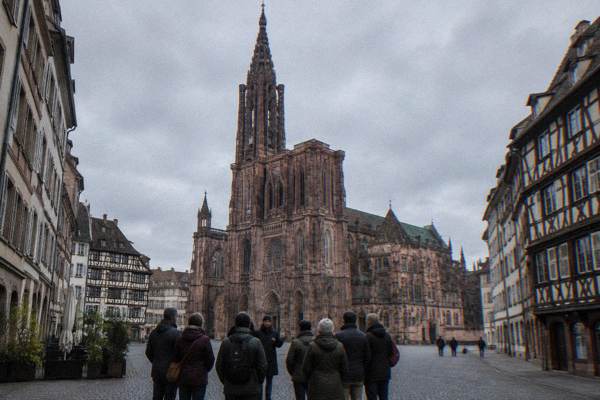
Strasbourg Wheelchair Accessible
Strasbourg, the prefecture of the Bas-Rhin in Alsace, north-eastern France, sits on the River Ill beside the German border, and its compact historic core makes it a realistic destination for wheelchair users and visitors with limited mobility.
Short answer
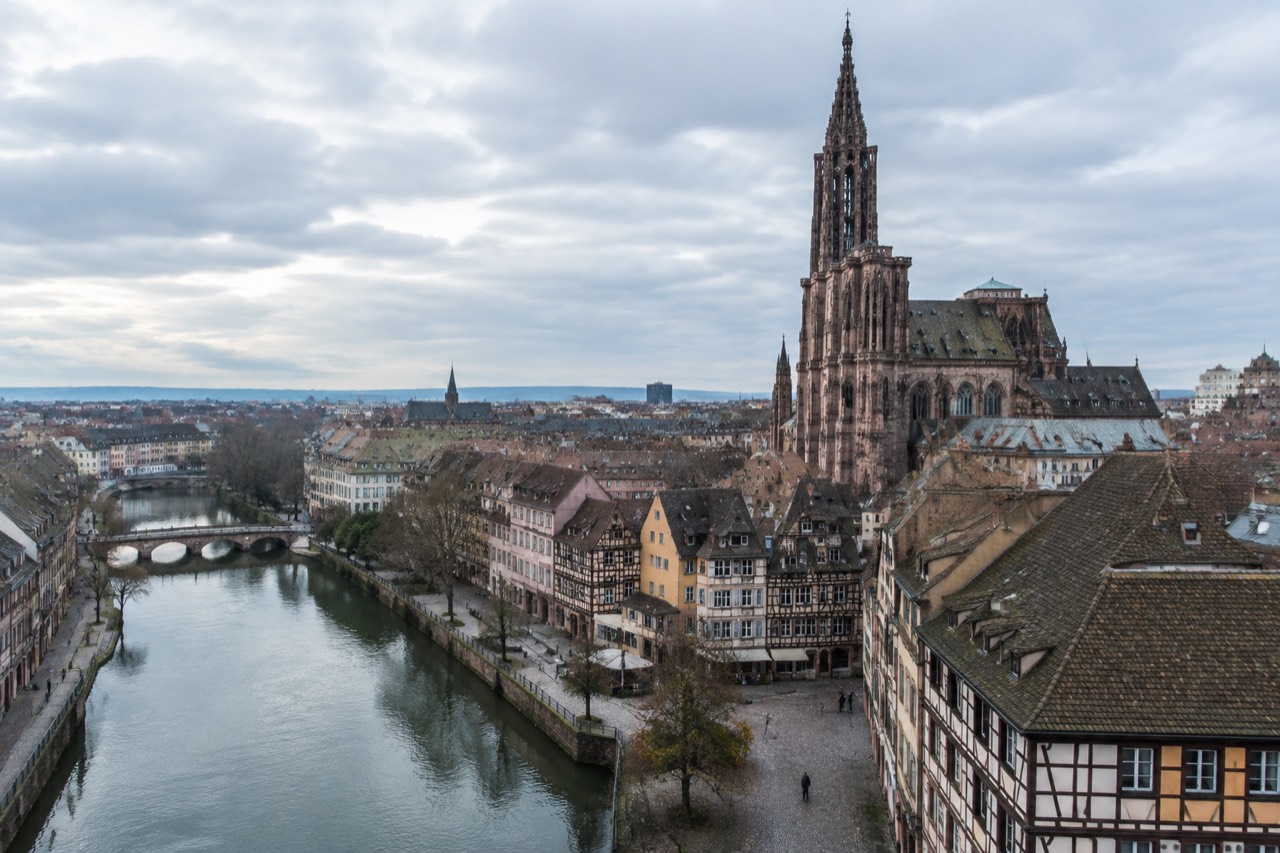
Strasbourg's Grande Île historic centre is compact and largely flat, with riverside quays and pedestrian squares. The cathedral platform costs 10 EUR full and 6 EUR reduced, municipal museums cost 9 EUR full and 5 EUR reduced, and a CTS 24-hour Solo transport pass costs 4.60 EUR. Confirm step-free details for each sight on its official page before travelling.
Strasbourg, the prefecture of the Bas-Rhin in Alsace, north-eastern France, lies on the River Ill just beside the Rhine and the German border, and it is one of the more manageable cities in France for visitors who use a wheelchair or travel with limited mobility. The historic core, the Grande Île, is small enough that its main squares, quays and half-timbered streets sit within a short rolling distance of one another, and the city's tram network reaches the station, the airport shuttle and the European Quarter. This guide sets out what the published figures say about tickets, hours and transport, what to check on official pages before travelling, and which guided formats suit visitors who prefer a set route over independent exploring. For background on the city's layout and appeal, the Strasbourg Travel Guide homepage covers the sights in full.
Is Strasbourg A Realistic City For Wheelchair Users?
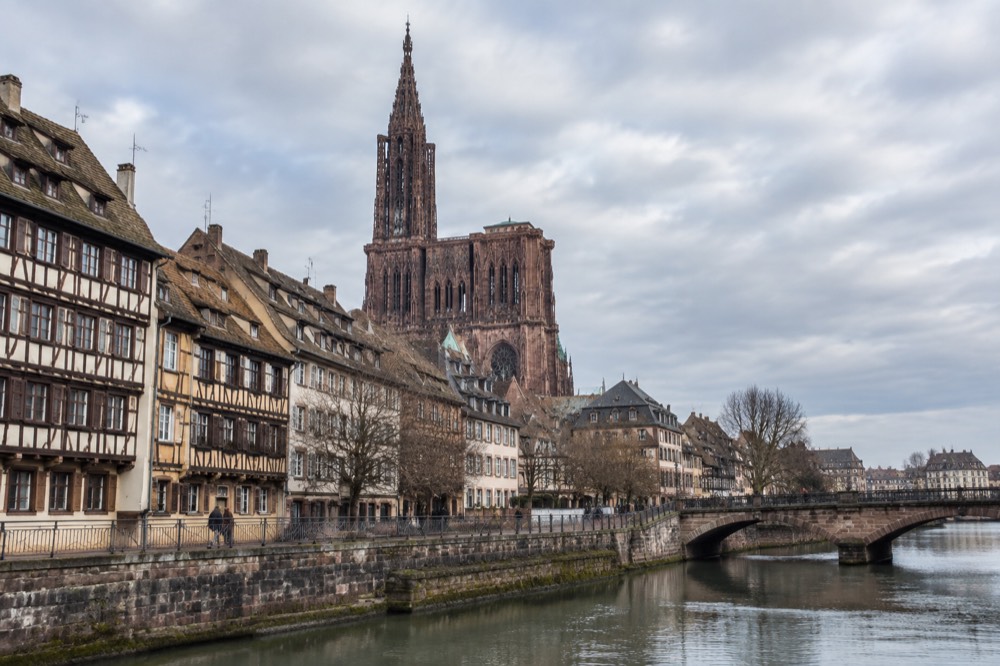
Yes, in outline: the Grande Île is compact, the riverside ground is largely flat, and the tram network connects the station, the airport shuttle and the European Quarter, so a visitor using a wheelchair can reach the main sights without a car. The caveats are cobbled lanes in the oldest streets, seasonal crowds in December, and the fact that step-free entry to individual buildings must be confirmed on each official page before travelling.
The honest starting point is scale. The commune counted 293,771 residents at the last INSEE figure, but the part a visitor comes to see, the Grande Île and its immediate surroundings, is walkable in the literal sense: the cathedral, Place Kléber, Place Gutenberg, Petite France and the Ponts Couverts all sit close together on ground that rises very little. Between the Ill and the canal channels the terrain stays level, which is the single biggest advantage the city offers a wheelchair user.
The difficulties are concentrated and predictable. The oldest lanes around the cathedral and in Petite France are cobbled or paved with stone setts, which slows a manual chair and rattles a powered one. December brings the Christmas market, whose chalets and crowds fill the main squares for roughly a month; last year's edition ran from 26 November to 24 December 2025 and drew 3.05 million visitors, and the next edition's dates are still being finalised on the city's Christmas site. Anyone planning a market visit with access needs should read the dedicated Christmas market planning guide and expect congestion at peak hours.
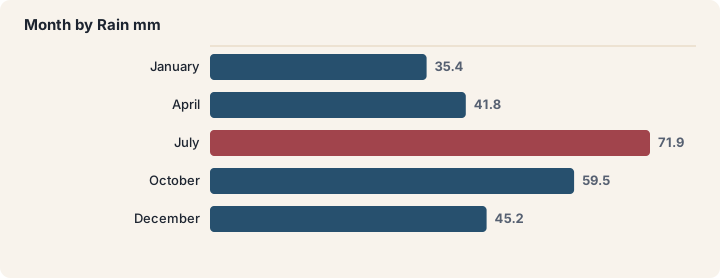
Rain matters more here than in southern France. The Meteo-France 1991-2020 normals for Strasbourg-Entzheim give 635.7 mm of rain a year spread over 112.3 days of 1 mm or more, with wet surfaces and fallen leaves making cobbles slicker from October onward. The Strasbourg weather guide breaks the months down. None of this makes the city inaccessible; it makes it a city worth planning around, with the best time to visit guide a good companion for choosing a quieter window.
Which Parts Of The City Centre Are Easiest To Get Around?
The flattest, most manageable ground is the riverside: the quays along the Ill, the Ponts Couverts and the viewing terrace at the Barrage Vauban, together with the open squares of Place Kléber and Place Gutenberg. The Grande Île's main pedestrian streets are level but cobbled in places, while Petite France is the most photogenic and the most uneven. The Neustadt's wider imperial boulevards are smoother under wheel.
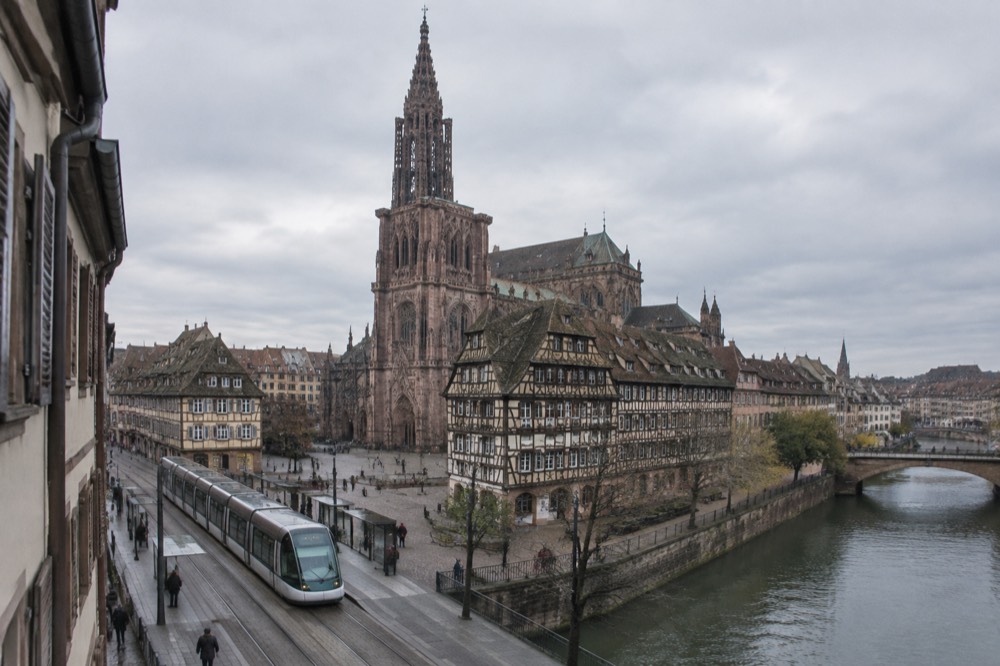
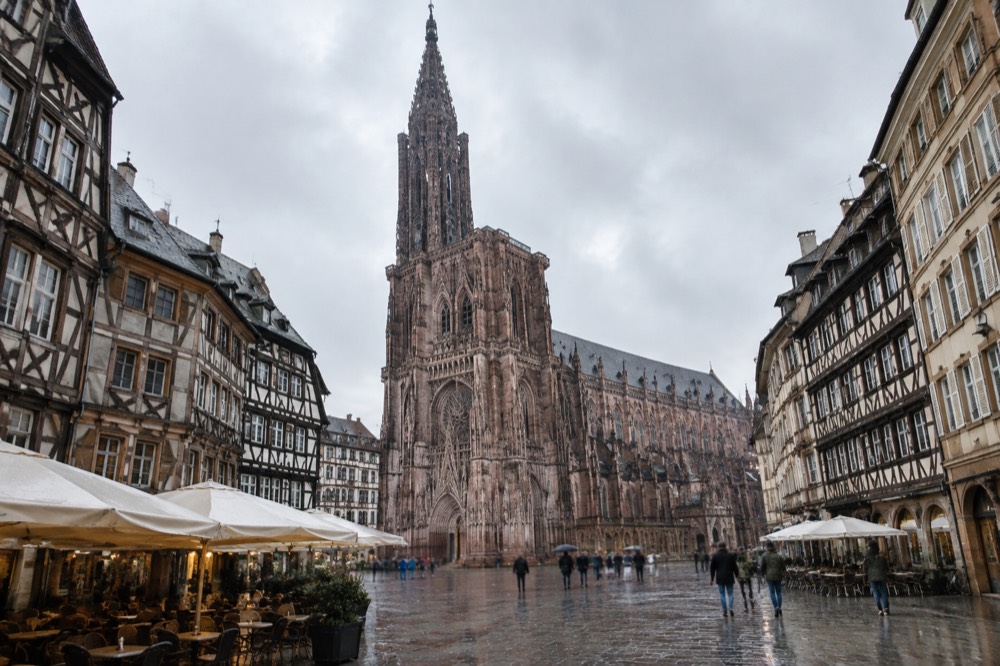
The Grande Île is the medieval island at the centre of everything, and its two big squares, Place Kléber and Place Gutenberg, are open, level and pedestrianised, with cafés and shops around their edges. From Place Kléber the main shopping streets run toward the cathedral on ground that stays flat, though the surfaces alternate between modern paving and older stone. The cathedral's own west front stands on the Place du Château, a broad, open square where a chair can manoeuvre comfortably even when foot traffic is heavy.
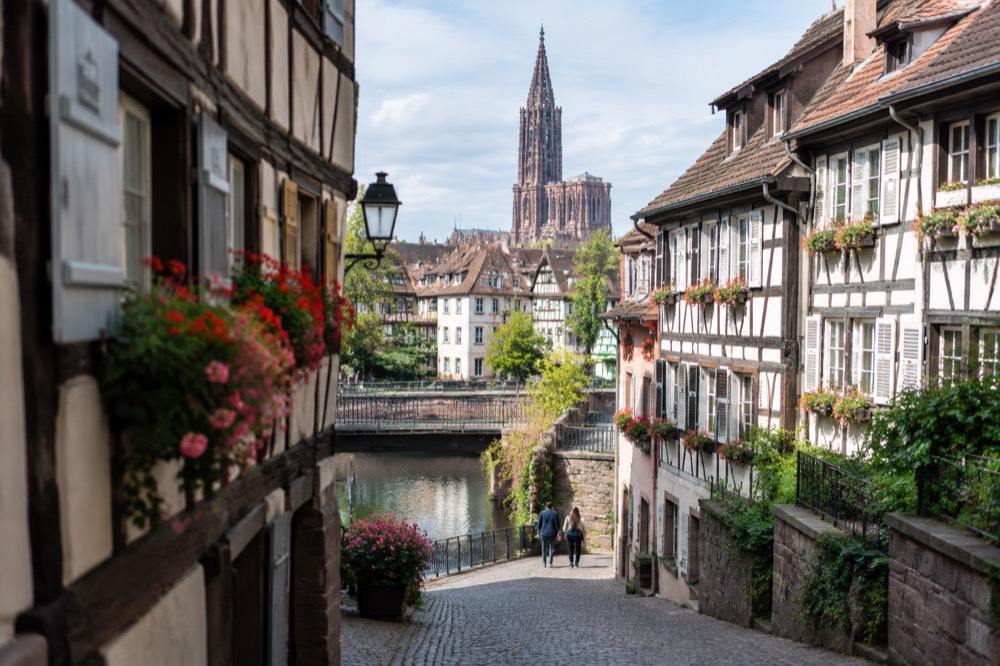
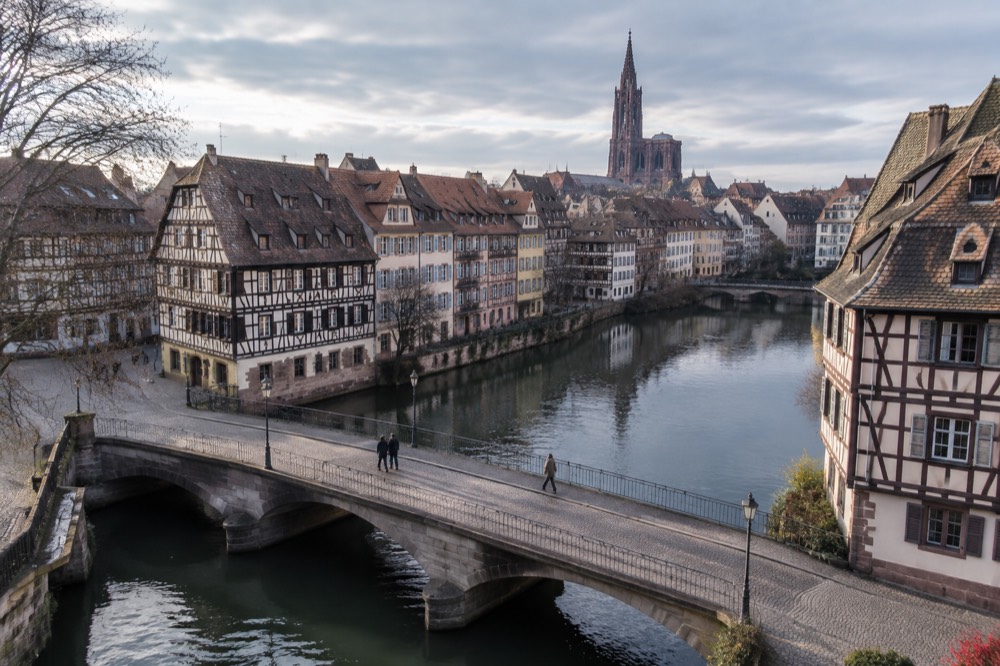
Petite France, the former tanners' and millers' quarter at the island's western tip, deserves its reputation and demands patience. The lanes here are narrow, the bridges are old, and the paving is the least forgiving in the city, but the payoff, half-timbered houses standing directly over the canal water, is reachable by sticking to the quays rather than the alleys. The Petite France area guide maps the quarter street by street. The Ponts Couverts and the Barrage Vauban terrace sit at the quarter's edge; the terrace has seasonal hours, 08:00-19:00 in September and October, 08:30-16:00 from November to February, and 08:00-19:00 in March and April, and the admission price is not published on the city page, so check it before setting out.
Across the Ill, the Neustadt, the German-era extension around the Place de la République, was laid out with wide boulevards and generous pavements, and it is generally the smoothest historic district under wheel. The European Quarter beyond it, home to the European Parliament, the Council of Europe and the European Court of Human Rights, is modern institutional building with contemporary public space around it. The European district overview covers what there is to see.
| Area | Ground and surface | What it offers | What to check first |
|---|---|---|---|
| Grande Île squares | Level, pedestrianised, mixed paving | Cathedral, Place Kléber, Place Gutenberg | Cobbled lanes between squares |
| Petite France | Narrow lanes, stone setts, canal bridges | Half-timbered houses, riverside views | Surface conditions and bridge access |
| Quays and Ponts Couverts | Flat riverside walkways | Open views along the Ill | Barrage Vauban terrace hours and price |
| Neustadt | Wide boulevards, smoother pavements | Place de la République, imperial architecture | Crossing widths at major junctions |
| European Quarter | Modern institutional public space | Parliament, Council of Europe, court buildings | Building security and entry procedures |
For a first visit, a guided route takes the guesswork out of surfaces and slopes, and the three formats below suit different energy levels and budgets, from a short city-centre circuit to a full small-group walk and a full-day excursion beyond the city.
How Accessible Are The Cathedral And The Main Museums?
The cathedral nave keeps published visiting hours, 08:30-11:15 and 12:45-17:45 Monday to Saturday and 14:00-17:15 on Sundays and feast days, while the tower platform at 66 m costs 10 EUR full or 6 EUR reduced and the astronomical clock show at 12:30 costs 4 EUR. Step-free entry to each building must be confirmed on the official pages, and the Musée Alsacien is closed for works until 2028.
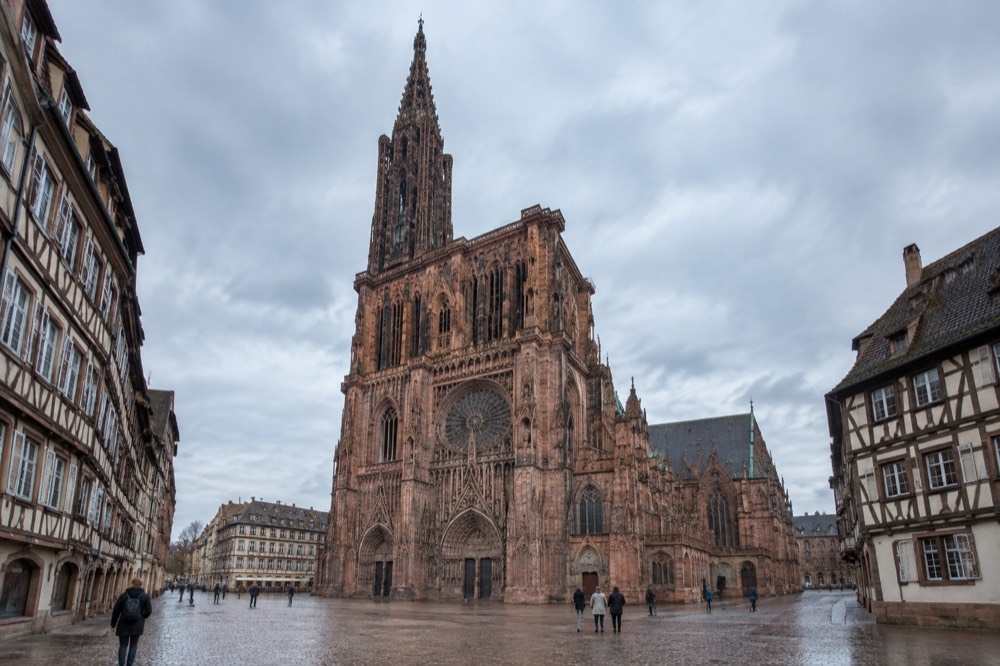
Strasbourg Cathedral dominates the city from its single spire, and the nave's hours are published in full on the cathedral's own access page, including a continuous opening on the Place du Château side during the Christmas market period. The tower platform, which sits at 66 m, runs on seasonal hours: 09:30-13:00 and 13:30-20:00 from 1 April to 30 September, with the last ascent at 19:15, and 10:00-13:00 and 13:30-18:00 from 1 October to 31 March, with the last ascent at 17:15. The platform is closed on 1 January, 1 May and 25 December. An ascent to a tower platform is a demanding proposition for anyone with mobility limits, so treat the platform as an optional extra rather than a fixture of the visit, and check the cathedral's access page for the current arrangements before buying.
The astronomical clock puts on its full automaton show daily at 12:30 sharp, except on Sundays and feast days with an 11:00 mass. Tickets cost 4 EUR for adults, with reductions to 3 EUR for groups of 12 or more and students to 25, and 2 EUR for children aged 6 to 17, and they are sold on the day only, at the cathedral stalls between 10:00 and 11:00 or at the Saint-Michel entrance from 11:30. There are no luggage lockers at the cathedral, which matters for anyone travelling with equipment or bags.
The municipal museums are the other main indoor draw, and their ticket structure is simple: 9 EUR full and 5 EUR reduced at each museum, a 1-day Pass Musées at 20 EUR, and free entry to every municipal museum on the first Sunday of the month. The Musée Alsacien is closed for works until 2028 and should not be planned into any itinerary. The Strasbourg City Card, at 5 EUR for adults and 3.50 EUR for children aged 3 to 17 and valid for 7 days, is a discount card rather than an all-inclusive pass, and it takes money off the museums, the boat tours, the cathedral platform, the clock and guided visits. The museums guide and the city pass guide compare the options in detail.
| Sight or ticket | Published price | Published hours or timing | Access note |
|---|---|---|---|
| Cathedral nave | Admission on the official page | Mon-Sat 08:30-11:15 and 12:45-17:45; Sun 14:00-17:15 | Confirm step-free entry on the cathedral page |
| Cathedral platform | 10 EUR full, 6 EUR reduced, under 6 free | Oct-Mar 10:00-13:00, 13:30-18:00 | Ascent to 66 m; check access arrangements |
| Astronomical clock show | 4 EUR adult, 2 EUR child 6-17 | Daily at 12:30 | Day-of tickets only, no reservations |
| Municipal museums | 9 EUR full, 5 EUR reduced | Free first Sunday of each month | Musée Alsacien closed until 2028 |
| Pass Musées 1 day | 20 EUR | Covers municipal museums | Check museum opening days |
| Strasbourg City Card | 5 EUR adult, 3.50 EUR child | Valid 7 days | Discount card, not all-inclusive |
A guided walk can carry a lot of this practical detail on the day, and a small-group format with a local guide keeps the pace adjustable. The operator's live listing states the meeting point and the route in full.
How Does Public Transport Work For Accessible Travel?
A CTS single ticket costs 1.90 EUR bought through the Badgéo card, the CTS app or contactless payment, or 2.50 EUR bought on board a bus, while a 24-hour Solo pass costs 4.60 EUR and a 24-hour Trio pass for two to three people costs 10.20 EUR. The airport shuttle train covers the run between Entzheim and the Gare Centrale in 8 minutes, and a combined ticket covering train, tram or bus and a 24-hour pass costs 4.60 EUR.
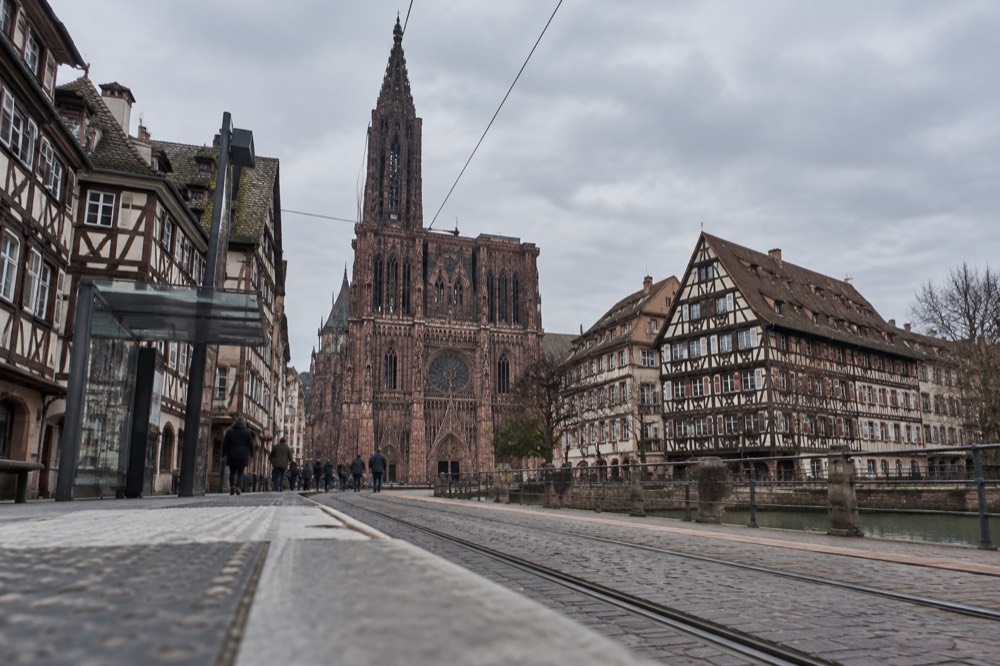
The CTS network of trams and buses is the backbone of car-free travel in Strasbourg, and its fares are published in full on the CTS fare pages. The single ticket at 1.90 EUR via the app, the Badgéo card or contactless, against 2.50 EUR on board a bus, rewards buying before boarding, and the 24-hour Solo pass at 4.60 EUR pays for itself after three journeys. For a pair or a small group, the 24-hour Trio at 10.20 EUR covers two to three people travelling together, which suits a visitor travelling with a companion or carer. Confirm the 72-hour pass price on the CTS site before assuming it fits a longer stay.
The airport link is unusually simple. Strasbourg Airport at Entzheim connects to the Gare Centrale by a shuttle train running up to five times an hour and taking 8 minutes, and the combined ticket at 4.60 EUR covers the train, a tram or bus connection and a 24-hour EMS pass. That single product is often the cleanest arrival solution for a wheelchair user flying in, because it removes the need to arrange a road transfer. Summer 2026 saw tram works on lines A to D and F near the Gare Centrale between June and August, and those works have ended, but the CTS site carries the current service notices, so check it for anything running during your dates.
For journeys beyond the city, the TGV link to Paris runs at high frequency, and journey times are best confirmed on SNCF Connect rather than taken from secondary pages. The getting around overview is not part of this page's link set, so rely on the CTS and SNCF pages for live operational detail, and treat any tram or bus accessibility specifics, such as boarding ramps and stop announcements, as things to confirm with CTS directly rather than details to assume.
| CTS ticket | Price | Where valid | Who it suits |
|---|---|---|---|
| Single | 1.90 EUR app, Badgéo or contactless | One journey on the network | One-off trips |
| Single bought on board | 2.50 EUR | One journey on a bus | Fallback only |
| 24-hour Solo | 4.60 EUR | Unlimited travel for one person | A day of sightseeing |
| 24-hour Trio | 10.20 EUR | Two to three people together | Visitor with a companion |
| Airport combined ticket | 4.60 EUR | Train, tram or bus and 24-hour EMS | Flying into Entzheim |
Which Guided Tours Suit Visitors With Limited Mobility?
Walking tours in Strasbourg run from a one-hour city-centre circuit to small-group walks of around two and a half hours, and the small-group format is the one to look at first, because a capped group size lets the guide hold a pace and route that suits the whole party. Tour prices, ratings and durations render from the listings themselves, so read the live listing for each product's exact figures and its stated accessibility provisions before booking.
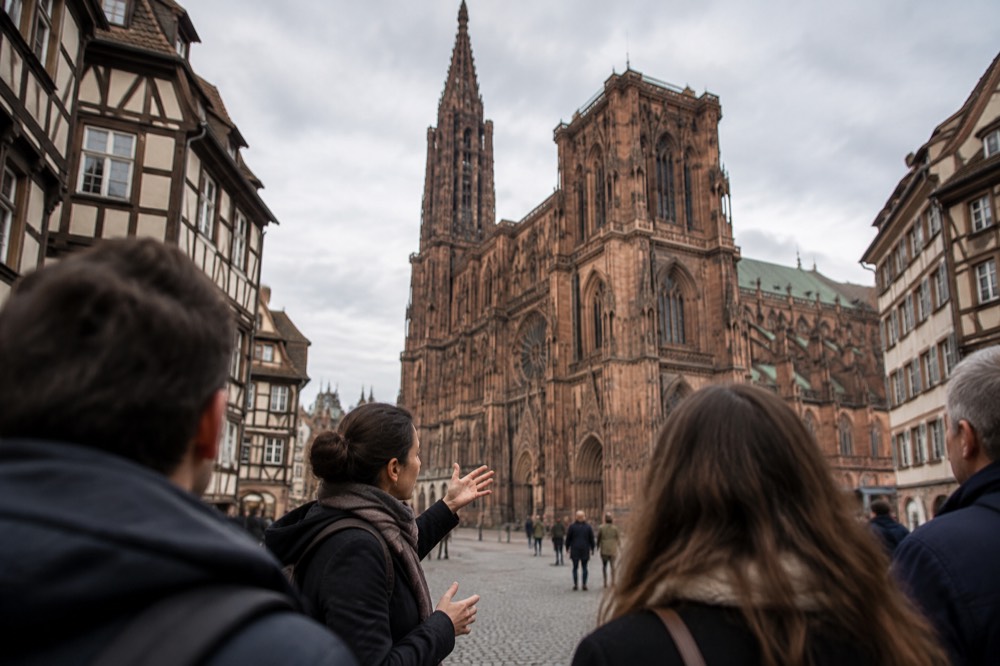
The featured small-group walk on this site, the Curiosities and History tour, is a strong candidate for a first day, because it covers the historic centre's highlights with a local guide and a group size that is capped rather than open-ended. Its live listing carries the meeting point, the route and the current price, and the operator's page states any mobility provisions it makes, so read both before committing. The tours overview is not in this page's link set, but the inline availability link below goes straight to the live listing.
For a shorter commitment, the one-hour city-centre walk concentrates on the core around the cathedral and the main squares, which is precisely the flattest ground in the city, and an hour is a sensible length for anyone building stamina or testing surfaces. The food walks are another option worth weighing: the gourmet tastings walk runs around three hours and stops at several addresses, which breaks the distance into short segments, and the traditional food walk runs longer still, so match the format to the day's energy rather than to the itinerary alone.
Beyond walking, the boat tours deserve attention. Batorama's official prices are published in full: the long tour costs 16.20 EUR full and 8.90 EUR reduced, the short tour 12.50 EUR full and 7.20 EUR reduced, and the durations are 1h10 for the Red Tour and 0h45 for the Blue Tour. A river circuit from a seated position is one of the least physically demanding ways to see Petite France and the covered bridges, and boarding arrangements are best confirmed with the operator before arrival. The boat tour guide compares the circuits in detail.
Segway and bike formats are less obviously suited to wheelchair users, though travellers with limited mobility who can stand may find a Segway tour less demanding than a long walk; the Euro Segway format is one of the most reviewed products on the roster. Treat any equipment-based tour as something to discuss with the operator first, since balance and boarding provisions are specific to each product.
Can You Take An Accessible Day Trip From Strasbourg?
Yes, with planning: the roster carries full-day excursions into the Alsace wine country and the Vosges foothills, including a seven-hour circuit taking in Colmar, Riquewihr and the Haut-Koenigsbourg castle, and a ten-and-a-half-hour medieval villages tour with wine tasting. Distances, drive times and castle access provisions are not published, so confirm the vehicle's step or lift access and each stop's terrain with the operator before booking.
The Alsace villages that draw day-trippers, Riquewihr, Eguisheim, Kaysersberg, are hillier and more cobbled than Strasbourg itself, and the Haut-Koenigsbourg castle sits on a rocky ridge reached by a winding approach. None of that rules them out, but it means the right questions before booking are about the vehicle and the stops: whether the coach or minibus has a step or lift, how long each stop lasts, and how far each village visit walks from the drop-off point. The operator's live listing states the itinerary, and a direct message answers what the listing does not.
The seven-hour Colmar, Riquewihr and castle tour is the most compact of the full-day options, and Colmar's old town, like Strasbourg's, is flat and canal-side, which makes it the gentlest stop on that circuit. The longer medieval villages tour adds wine tasting, which typically involves seated cellar visits, often the most accessible part of a wine village. For a half-day alternative, the half-day Alsace wine tour runs around four hours and stays closer to the city. The Alsace wine route guide and the Colmar guide sketch what each area offers.
A second option for travellers who would rather not commit to a full day is to use the regional train network for a self-directed trip, with the day trip from Paris guide and the Christmas markets in Alsace guide covering the seasonal alternatives. Train travel in the Grand Est region is best planned through SNCF Connect, and station accessibility provisions are published by SNCF rather than by this site, so check them for the specific stations on your route.
Where Should You Stay, And What Does The Weather Mean For Access?
Pick accommodation inside or on the edge of the Grande Île, where the ground is flattest and the tram stops are closest, and book after confirming step-free entry, lift access and bathroom layout directly with the property. The climate is semi-continental, with mean daily maxima from 5.2 C in January to 26.4 C in July and rain on 112.3 days a year, so surfaces are wet or leaf-strewn for a noticeable share of the year.
Location matters more than usual for an accessible stay, because a hotel two tram stops from the centre still means boarding, alighting and platform navigation for every outing, while a hotel on the island puts the cathedral, the squares and the riverside within a short roll. The where to stay guide maps the districts, and the seasonal Christmas market accommodation guide covers the December period, when demand and prices rise sharply. Book early for late November and December, and state access requirements in writing when reserving, since adapted rooms are limited in number in older buildings.
The semi-continental climate shapes the practical experience more than a first-time visitor expects. Winter means cold, with a mean January maximum of 5.2 C and a mean minimum of -0.2 C, and December averages 10.2 rain days of 1 mm or more, which is exactly the month the Christmas market fills the squares. Summer is warm rather than hot, with July means of 26.4 C maximum and 14.9 C minimum, and the wettest months by rainfall are May at 77.2 mm and July at 71.9 mm. The winter guide and summer guide take the seasons in turn, and the spring and autumn guides cover the shoulder seasons, which combine thinner crowds with milder surfaces.
| Month | Mean maximum C | Mean minimum C | Rain mm | Rain days of 1 mm or more |
|---|---|---|---|---|
| January | 5.2 | -0.2 | 35.4 | 9.1 |
| April | 17.0 | 5.7 | 41.8 | 8.6 |
| July | 26.4 | 14.9 | 71.9 | 10.4 |
| October | 15.8 | 7.2 | 59.5 | 9.6 |
| December | 5.9 | 0.8 | 45.2 | 10.2 |
The figures come from the Meteo-France 1991-2020 normals for Strasbourg-Entzheim, and they argue for packing wet-weather gear for the chair or scooter, since rain on cobbles is the combination that slows an independent visit down most.
What Should An Accessible Trip Checklist Include?
Confirm step-free entry and adapted facilities with every building and hotel before travelling, buy CTS tickets through the app or contactless rather than on board, book the cathedral clock show on the day at the stated stalls, and read each tour's live listing for its accessibility provisions. Aim for the shoulder seasons, keep the first day short, and carry the CTS fare and museum figures on this page as your planning baseline.
A workable order of operations looks like this. First, fix the dates against the seasonal picture and the event calendar, using the events and festivals guide to avoid an unintentional collision with a major festival week. Second, book the hotel with written confirmation of step-free entry, lift access and an adapted bathroom, and prefer the island or its immediate edge. Third, plan the sightseeing around the published figures: the cathedral nave hours, the platform's seasonal hours and closure dates, the clock show at 12:30 with day-of tickets, the museum prices and the free first Sunday, and the Batorama tour prices and durations.
Fourth, handle transport before arrival: install the CTS app or set up contactless payment, note the 1.90 EUR single against the 2.50 EUR on-board price, and consider the 4.60 EUR airport combined ticket if flying into Entzheim. Fifth, choose one guided format for the first full day, a small-group walk or a short city-centre circuit, and read the live listing for its stated provisions before booking. Sixth, if a day trip is on the plan, ask the operator directly about vehicle access and stop terrain. The free things to do guide and the budget guide help with the low-cost end, and the hidden gems guide suggests quieter corners away from the main squares.
| Planning step | What to confirm | Where to confirm it |
|---|---|---|
| Hotel | Step-free entry, lift, adapted bathroom | Directly with the property, in writing |
| Cathedral | Nave hours, platform hours, clock show rules | The cathedral's own access page |
| Museums | Opening days, first-Sunday free entry, closures | The municipal museums' tariff page |
| Transport | Fares, pass options, airport combined ticket | The CTS fare pages |
| Tours | Meeting point, pace, mobility provisions | Each operator's live listing |
| Day trips | Vehicle access, stop terrain, timings | The operator, before booking |
Strasbourg rewards this kind of preparation more than it punishes improvisation, but the two are not in opposition: a day of confirmed bookings can still leave afternoons free for rolling along the Ill, sitting in Place Kléber, and discovering that the flattest, easiest ground in the city is also the prettiest. For travellers weighing the city against other destinations, the is Strasbourg worth visiting guide sets out the case in full, and the where is Strasbourg page covers the geography and border context.
Whichever format fits, the short city-centre circuit below is the gentlest way to test the ground on a first morning, covering the flattest part of the city with a local guide and an easy exit point if the day needs to end early.
Common Questions About Accessible Travel In Strasbourg
Is Strasbourg Cathedral wheelchair accessible?
The nave keeps published visiting hours, 08:30-11:15 and 12:45-17:45 Monday to Saturday and 14:00-17:15 on Sundays and feast days, but step-free entry arrangements are stated on the cathedral's own access page rather than in general guides, so confirm them there before visiting. The tower platform at 66 m, priced at 10 EUR full and 6 EUR reduced, is an ascent and should be treated as optional for anyone with mobility limits.
Are Strasbourg trams and buses accessible for wheelchair users?
CTS fares are published in full, from a 1.90 EUR single via the app, Badgéo card or contactless to a 4.60 EUR 24-hour Solo pass, and the airport shuttle train covers the 8-minute run from Entzheim to the Gare Centrale. Boarding provisions such as ramps, level access and stop announcements are detailed by CTS on its own pages, so check the specific lines on your route before travelling.
Which Strasbourg museums are best for visitors with limited mobility?
The municipal museums charge 9 EUR full and 5 EUR reduced, with a 20 EUR 1-day pass and free entry on the first Sunday of every month. The Musée Alsacien is closed for works until 2028 and should be left off any itinerary. Step-free arrangements vary by building, and the museums' own pages carry the current details for each site.
Can you visit the Strasbourg Christmas market in a wheelchair?
Yes, with planning. The market fills the city's open squares, which are level and pedestrianised, but chalets and crowds compress the space for roughly a month. Last year's edition ran from 26 November to 24 December 2025 and drew 3.05 million visitors; the 2026 dates are still being finalised, so confirm them on the city's Christmas site and plan visits outside peak evening hours.
Are there accessible guided tours in Strasbourg?
The roster includes small-group walks of around two and a half hours, a one-hour city-centre circuit, and seated river tours with Batorama, whose long circuit costs 16.20 EUR full and 8.90 EUR reduced and runs 1h10. Each product's live listing states its route and any mobility provisions, and the operator can answer specific access questions before booking.
Strasbourg's accessibility story is fundamentally a compact-city story: flat riverside ground, a pedestrianised core, a tram network with published fares, and indoor sights whose hours and prices are all printed on official pages. Plan around the cobbles and the December crowds, confirm the building-by-building details in advance, and the city opens up on its own terms.