Zurich To Strasbourg
The run from Zurich to Strasbourg, in north-eastern France, is an overland journey through Basel, and the city at the end of it, a UNESCO-listed river capital on the German border, repays every hour of the trip.
Short answer
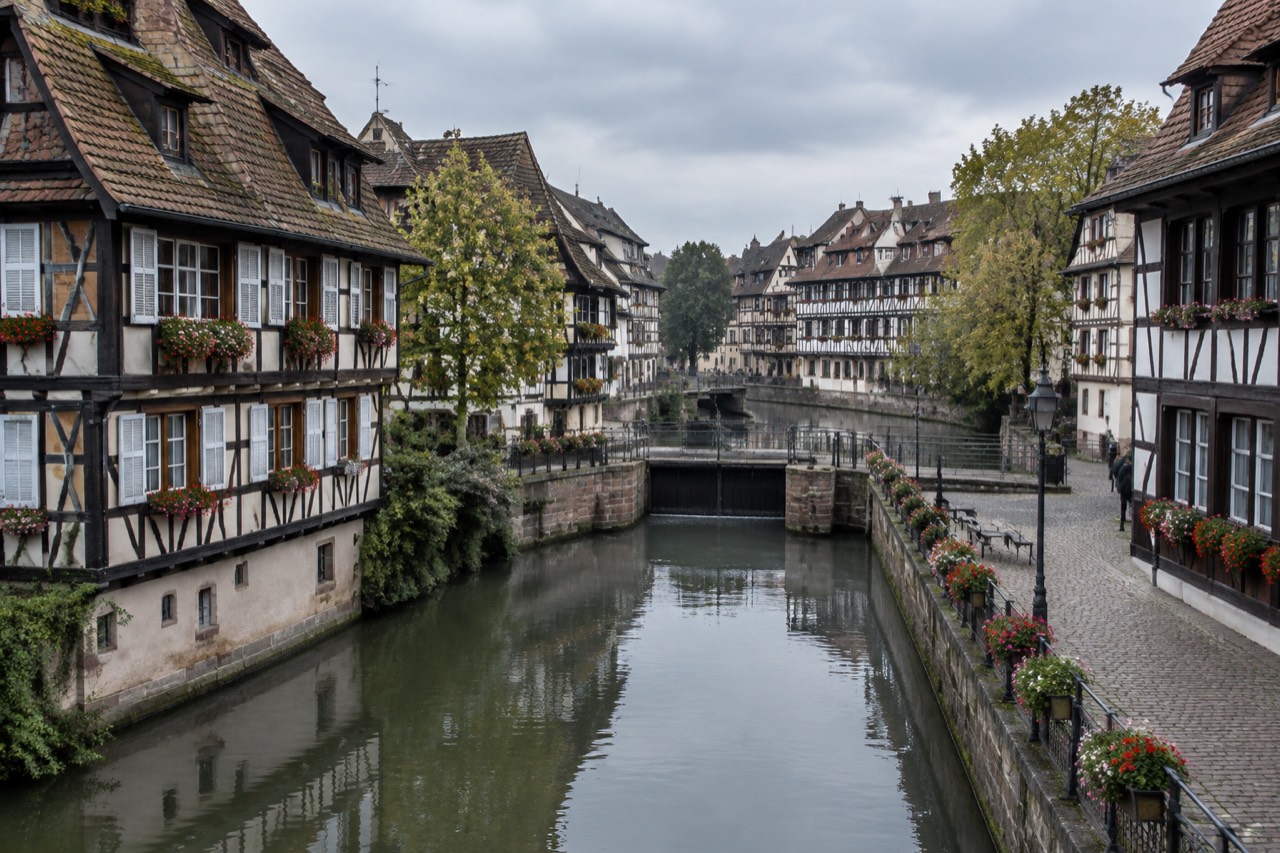
Strasbourg sits in Alsace, in north-eastern France, beside the German border, and there is no useful direct flight from Zurich, so the standard route runs overland via Basel, by train or by car. Once there, a single CTS ticket costs 1.90 EUR, the cathedral platform is 10 EUR, and two days cover the Grande Île comfortably.
The journey from Zurich to Strasbourg, the prefecture of the Bas-Rhin in Alsace, north-eastern France, is one of the quieter pleasures of European travel: you leave a Swiss lakeside city and arrive, a few hours later, in a French one whose half-timbered centre rises from an island in the River Ill, a short walk from the German border town of Kehl. There is no direct flight worth taking, because the airports are close enough that the ground connection beats the whole airport experience, so the trip runs by rail or road through Basel, where Switzerland, France and Germany meet. This guide lays out the route options, the tickets worth sorting before arrival, the weather to expect, and a realistic shape for two days in the city, with the Alsatian wine country folded in as a day trip.
How Do You Travel From Zurich To Strasbourg, France?
There is no useful direct flight between Zurich and Strasbourg, in north-eastern France, so the journey runs overland: rail via Basel is the standard route, and a car crosses the same ground on the motorway network. Timetables and fares change with the season, so check the operators' own journey planners before committing to a date or a connection.
The rail route is the one seasoned travellers take. You board in Zurich, change at Basel, and continue into France on the Alsace line towards Strasbourg. Basel's station is a genuine three-country hub, with French and German destinations signposted from the same concourse, and the change there is a matter of walking between platforms rather than crossing a city. Book through the operators' own sites, and compare a through ticket against two separate legs, because pricing on cross-border rail in this corridor is not always intuitive. If your dates fall in the Christmas market season, book early: the late-November-to-24-December period fills Strasbourg's hotels faster than any other stretch of the year, and rail seats follow the same curve.
Driving is the flexible alternative. The route crosses into France near Basel or, if you prefer a German stretch, runs up the far bank of the Rhine; both motorway corridors are well built and plainly signed. Two things matter more than the driving itself. First, check the vignette rules for Swiss motorways and the toll situation on the French autoroutes before you set off, because the two systems charge in different ways. Second, think hard about whether you want a car in Strasbourg at all: the city centre is compact, tram-served, and awkward for parking, and a car earns its keep only if the Alsace wine route or the Black Forest is part of the plan. The parking and car hire picture in Strasbourg is covered in its own guide.
| Option | What it involves | Who it suits | What to check |
|---|---|---|---|
| Rail via Basel | Zurich to Basel, then a French regional or long-distance service into Strasbourg | Travellers without luggage-heavy plans who want to read or work | Operator journey planners, Basel connection time |
| Car via Basel | Motorway crossing into France near Basel, then the Alsace corridor | Visitors extending into the wine route or Black Forest | Swiss vignette, French autoroute tolls, city parking |
| Car via the German bank | Crossing into Germany and running north along the Rhine | Drivers who want a German stop on the way | Border crossing times, fuel prices on each side |
| Flying via a hub | Connecting through Paris or another large airport | Almost nobody, given the short ground distance | Total door-to-door time before you believe a fare |
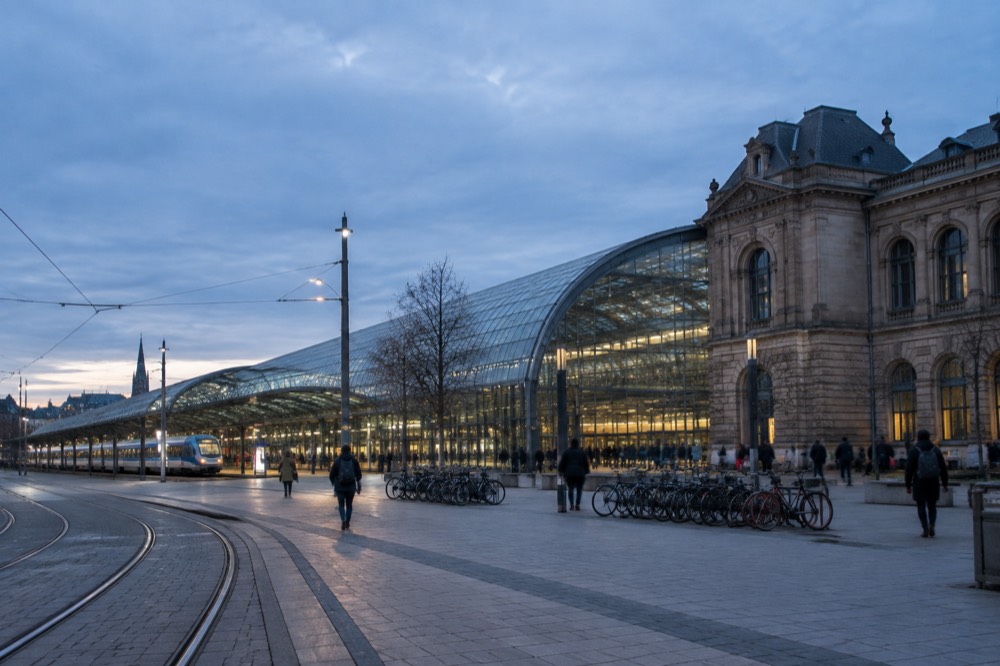
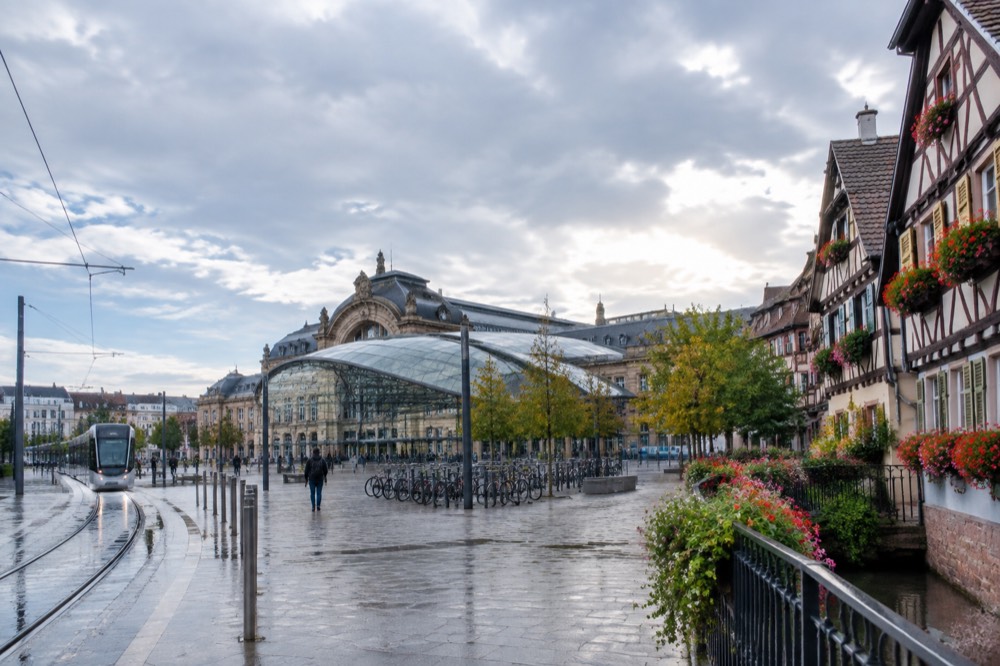
One planning note that surprises Swiss visitors: Strasbourg's station sits at the western edge of the city centre, and the tram network meets it directly, so a rail arrival puts you within minutes of the Grande Île without a taxi. The train station district guide explains the layout, the tram connections and where to eat within walking distance of the platforms.
Is Strasbourg Worth The Journey From Zurich?
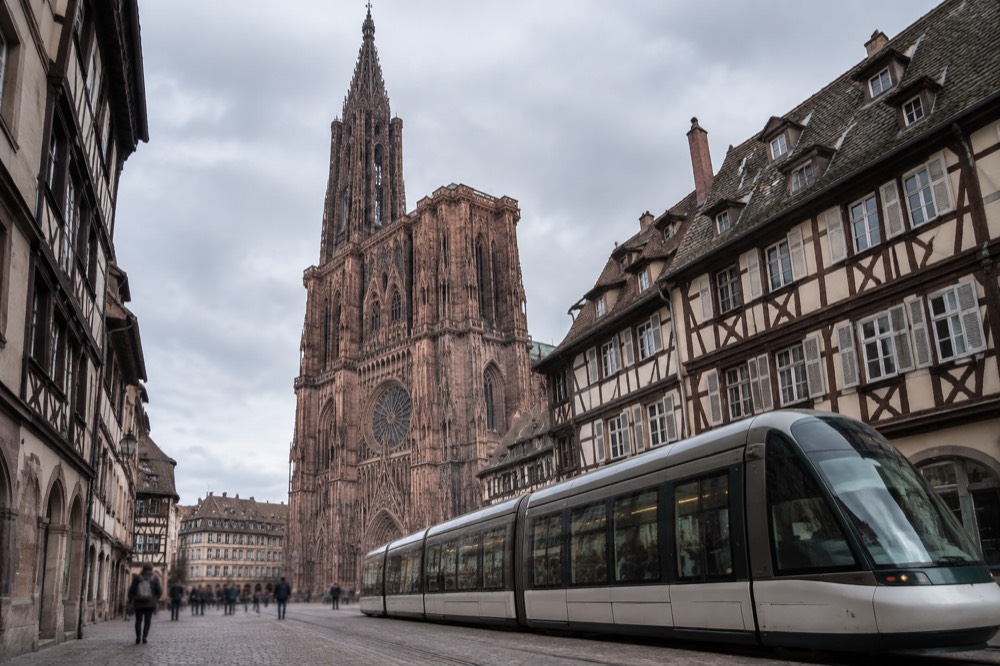
Yes, and for reasons that survive the hype: the Grande Île and the later Neustadt extension form a UNESCO World Heritage property, the cathedral's single spire and its 66 m platform give the city a silhouette unlike anywhere in Switzerland, and the cost of living once you arrive sits well below Zurich's. Two full days are enough for the core, with a third for the wine country.
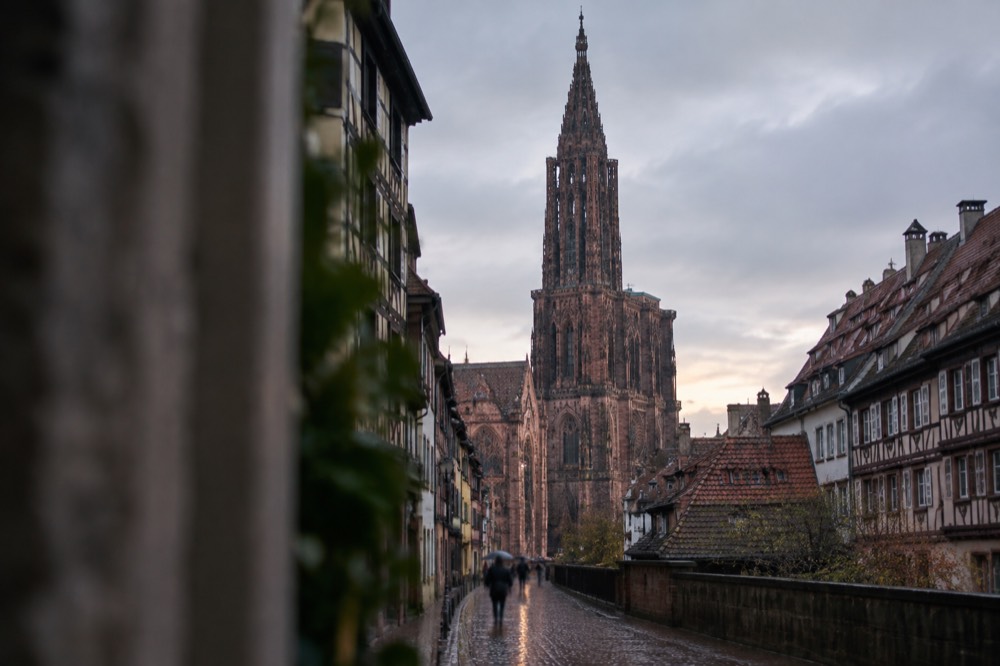
Strasbourg rewards the journey because it is genuinely different from both of its neighbours rather than a blend of them. The city is French, in the Bas-Rhin department of the Grand Est region, yet its half-timbered architecture, its wine culture and its winstub dining rooms belong to a Rhineland tradition that Zurich simply does not have. The cathedral alone justifies the trip: one openwork spire, a platform you can climb for 10 EUR, and an astronomical clock whose automaton show runs daily at 12:30 for a 4 EUR ticket bought on the day only. The deeper answer to the value question, including what the city offers beyond the postcard streets, is in the is Strasbourg worth visiting guide.
Money matters here more than scenery does. Zurich is one of Europe's most expensive cities; Strasbourg is not. The municipal museums are free on the first Sunday of every month, which is a detail worth building an itinerary around if your dates allow. Budget travellers will find a fuller breakdown in Strasbourg on a budget, and the free-first-Sunday rule applies to the Musée des Beaux-Arts, the MAMCS and the other city museums alike, with one exception: the Musée Alsacien is closed for works until 2028 and should not be on any current plan.
For visitors timing the trip around December, the calculus sharpens. Strasbourg's Christmas market normally opens in the last week of November and runs to 24 December; last year's edition ran 26 November to 24 December 2025 and drew 3.05 million visitors, which tells you what the squares feel like in the evenings. The city posts each edition's dates on its Christmas site, so confirm them there before booking rail seats or a room. The Strasbourg Christmas market guide carries the full planning detail, and the where to stay for the Christmas market guide handles the December accommodation question.
If the Christmas season pulls you across, pairing the trip with a guided experience is the efficient way to see the city when the squares are crowded. Three options stand out for a first visit:
Each of those three solves a different problem: a full-day escape into the Alsatian countryside, a half-day taste of the wine route, and a walking introduction to the historic streets. All three can be held with free cancellation on the operator's live listing, which matters when December weather in the Rhine valley is still deciding what it wants to do.
Which Alsace Day Trips Work From A Strasbourg Base?
The wine route is the classic day trip, and it is best done either by guided minibus or by careful planning around sparse rural transport: the villages are small, the distances between them short by car, and the trains infrequent beyond the main line. A guided full-day highlights tour of the Alsace reaches the signature villages in one loop, while a half-day wine tour suits a shorter stay.
The Alsatian wine country begins a short drive south of the city, and its villages, places like Riquewihr, Eguisheim, Kaysersberg and Ribeauvillé, are the image of Alsace that draws visitors from Zurich in the first place. Each has its own character and its own guide on this site: Riquewihr, Eguisheim, Kaysersberg and Ribeauvillé are all covered in depth. The honest planning advice is that public transport to the smaller villages is thin, so a traveller without a car chooses between a guided tour and a slower, train-and-bicycle approach built on the main line towns such as Obernai, which has its own guide.
The full-day option that pairs best with a Zurich arrival is the full-day highlights of the Alsace tour, which loops the wine route's signature stops with a guide who handles the driving. It is the tour this site features for this route, because a Zurich traveller typically arrives without a car and with a fixed number of days, and the tour converts one of those days into the countryside experience that would otherwise need a hire car and a sober driver. Check availability on the operator's live listing, where the current price, rating and departure details are shown.
For a shorter taste, the half-day wine tour covers the essentials of Alsatian wine in an afternoon, which suits a two-night stay where one full day belongs to the city itself. The paragraph above it explains the trade-off: fewer villages, but an afternoon back in Strasbourg for the cathedral platform and the evening winstubs.
Beyond the wine route, the options widen. The Black Forest sits just across the river, Baden-Baden and Freiburg make comfortable German stops, and Haut-Koenigsbourg castle crowns a ridge above the plain; each has a dedicated day-trip guide on this site. The pairing table below matches the destination to the kind of traveller it serves.
| Day trip | What it is for | How it pairs with a tour | What to check |
|---|---|---|---|
| Alsace wine route villages | Half-timbered streets, tasting rooms, photo stops | Full-day highlights tour or half-day wine tour | Weather, tasting room opening days |
| Colmar | A larger Alsatian town with its own canal quarter | Stops on several guided loops, or reachable by direct regional train | Timetable frequency outside peak hours |
| Haut-Koenigsbourg | A restored castle with a wide view over the plain | Included on some castle-and-villages tours | Seasonal opening hours on the castle page |
| Black Forest (Germany) | Forest scenery, waterfalls, cuckoo-clock towns | Guided day trips run from Strasbourg | Border crossing is open, but check tour pickup points |
| Basel (Switzerland) | A stop on your own route, not a day trip from Strasbourg | None needed; it is your transit hub | Basel is not in the euro, so carry Swiss francs |
A note on that last row, because it catches people out: Switzerland uses the Swiss franc, and the euro is not a working currency there. Basel makes a natural lunch stop on the Zurich to Strasbourg run, but plan to pay by card or in francs, and do not assume the euro notes in your pocket will be accepted.
Which Tickets Should You Sort Out Before You Arrive?
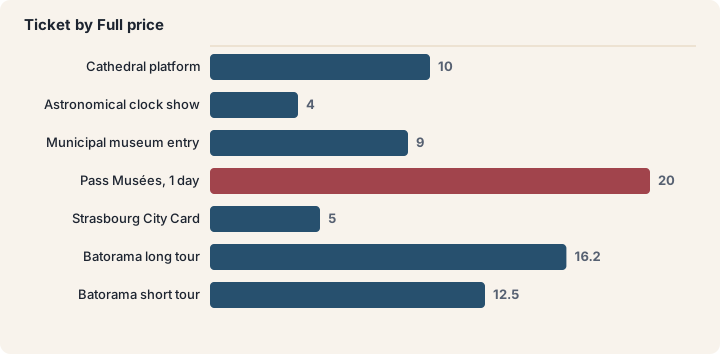
Sort three things in advance: your rail seats, your accommodation, and any guided day trip, because all three tighten in the Christmas period. Everything else, the cathedral platform at 10 EUR, the astronomical clock at 4 EUR, the museums at 9 EUR, can be bought on the day, and the municipal museums are free on the first Sunday of every month.
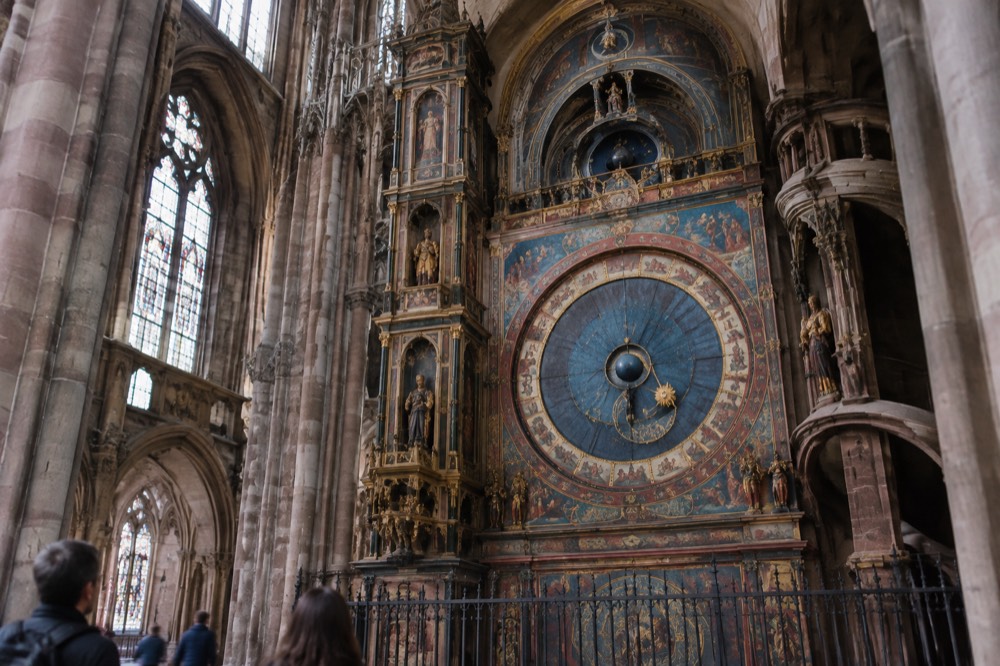
The cathedral tickets are the easiest money you will spend in Strasbourg, and they need no advance planning. The nave is open to visitors Monday to Saturday from 08:30 to 11:15 and from 12:45 to 17:45, and on Sundays from 14:00 to 17:15. The platform, at 66 m, runs on seasonal hours: from 1 April to 30 September it opens 09:30 to 13:00 and 13:30 to 20:00 with the last ascent at 19:15, and from 1 October to 31 March it opens 10:00 to 13:00 and 13:30 to 18:00 with the last ascent at 17:15. The platform ticket is 10 EUR full price, 6 EUR reduced, free for children under 6, and it carries a reduced rate at the Musée de l'Œuvre Notre-Dame next door. The astronomical clock show is at 12:30 sharp; tickets are 4 EUR, sold on the day only, at the cathedral stalls between 10:00 and 11:00 or at the Saint-Michel entrance from 11:30.
The museum picture is simple and cheap. Every municipal museum charges 9 EUR full price and 5 EUR reduced, the one-day Pass Musées is 20 EUR, and all of them are free on the first Sunday of the month, with the single caveat that the Musée Alsacien is closed until 2028. The Strasbourg City Card is a 5 EUR discount card, 3.50 EUR for children aged 3 to 17, valid for seven days, that knocks money off the museums, the Batorama boats, the cathedral platform and the clock; it is not an all-inclusive pass, and whether it pays for itself depends on how much of that list you will actually use. The city pass guide runs the arithmetic, and the museums guide ranks the collections.
| Ticket | Full price | Reduced | Notes |
|---|---|---|---|
| Cathedral platform | 10 EUR | 6 EUR | Children under 6 free; platform at 66 m |
| Astronomical clock show | 4 EUR | 3 EUR groups and students to 25, 2 EUR children 6-17 | Day-of purchase only, 12:30 show |
| Municipal museum entry | 9 EUR | 5 EUR | Free on the first Sunday of every month |
| Pass Musées, 1 day | 20 EUR | - | Covers the municipal museums for one day |
| Strasbourg City Card | 5 EUR | 3.50 EUR child (3-17) | 7-day discount card, not all-inclusive |
| Batorama long tour | 16.20 EUR | 8.90 EUR | Red Tour, 1h10 |
| Batorama short tour | 12.50 EUR | 7.20 EUR | Blue Tour, 0h45 |
The Batorama river tours deserve their own word, because they are the one sight ticket that sells out in high season. The long tour runs 1h10 and the short tour 0h45, both gliding up the Ill past the Ponts Couverts and the European institutions; buy ahead in December and in summer. For the guided experiences, free cancellation on the operator's live listing means an early booking costs you nothing if plans shift, which is exactly the flexibility a rail traveller from Zurich wants.
How Do You Get Around Strasbourg Without A Car?
You do not need a car in Strasbourg at all: the CTS tram and bus network covers the centre, the station and the European quarter, and a single ticket bought in the app or by contactless payment costs 1.90 EUR, or 2.50 EUR if bought on board a bus. A 24-hour Solo pass is 4.60 EUR, and the 24-hour Trio, for two or three people, is 10.20 EUR.
The tram is the city's spine, and it is one of the reasons the car-free plan works so well. Lines thread from the station past the Grande Île to the European institutions and out to the newer districts, and the historic centre itself is small enough that once you are inside it, you walk. Buy tickets before boarding on trams: the 1.90 EUR single applies to the Badgéo card, the CTS app and contactless payment, while the on-board bus purchase costs 2.50 EUR. Validate every ticket, because inspectors do check, and an unvalidated ticket is treated as no ticket. The wider set of guides lives on Strasbourg Travel Guide.
If you are flying out of the region instead of taking the train back, note that Strasbourg's airport connects to the city by a rail shuttle, up to five trains an hour, eight minutes to the station, and the combined airport ticket that bundles the shuttle with a day of city transport is 4.60 EUR. Zurich travellers arriving by rail will not need it on the way in, but it matters if the return journey is planned by air. The getting around guide has the full network detail, and the airport to city centre guide covers the shuttle.
| CTS ticket | Price | Where it is valid |
|---|---|---|
| Single | 1.90 EUR | Badgéo card, CTS app, contactless; whole CTS network |
| Single bought on board | 2.50 EUR | Buses only, from the driver |
| 24h Solo | 4.60 EUR | One person, 24 hours, whole network |
| 24h Trio | 10.20 EUR | Two or three people travelling together |
| Airport combined ticket | 4.60 EUR | Airport rail shuttle plus 24H EMS city transport |
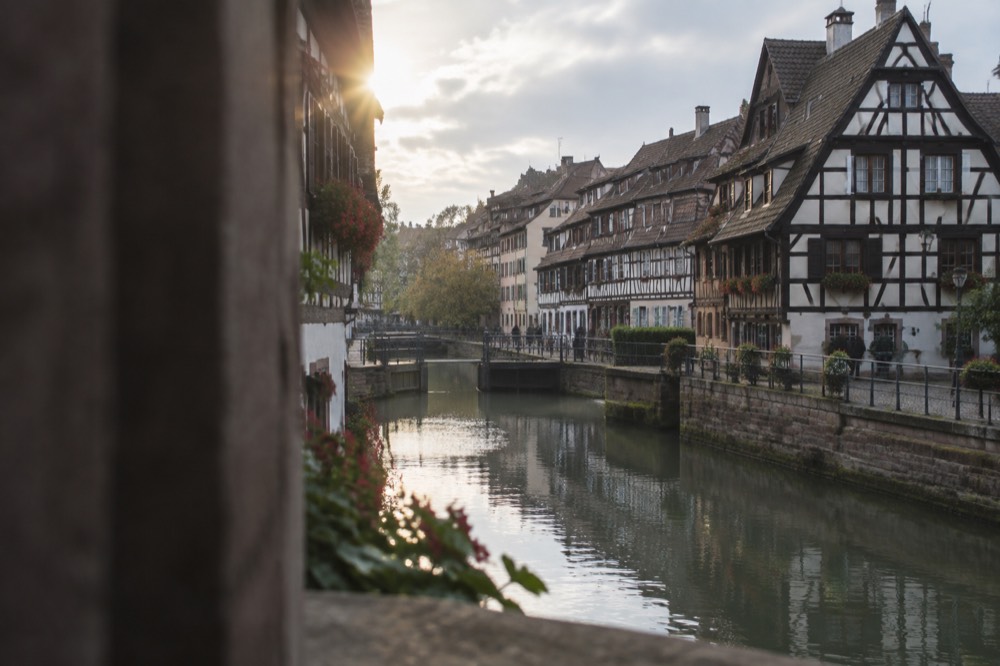
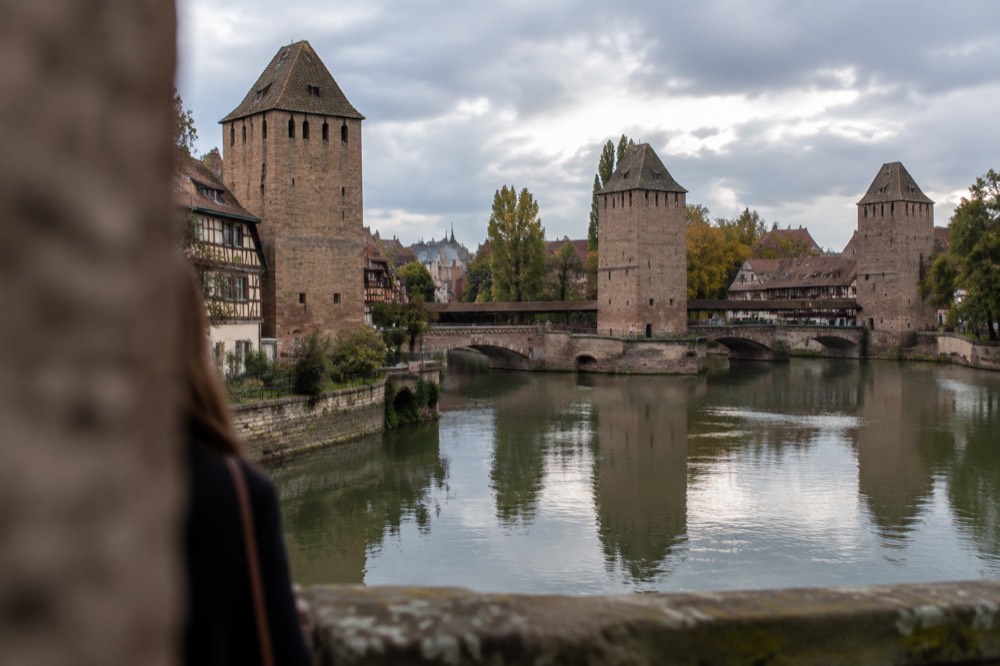
Beyond the trams, the centre invites walking, and the city has made a point of keeping it that way. The Grande Île is a compact island of lanes and squares, and the riverside path from Petite France to the Barrage Vauban terrace is a short, flat stroll. The Barrage Vauban terrace keeps seasonal hours, 08:00 to 19:00 in the September-October stretch and 08:30 to 16:00 through the November-February winter, with the admission situation to be checked on the official page; the view from the top, over the Ponts Couverts and the cathedral spire, is the classic postcard of the city.
What Does The Weather Mean For Your Planning?
Strasbourg's climate is semi-continental, colder in winter and warmer in summer than Zurich's, with a mean maximum of 5.2 C in January and 26.4 C in July, and 635.7 mm of rain spread over 112.3 rain days a year. Plan for rain in any month, and plan for real cold from December to February.
The Meteo-France 1991-2020 normals for Strasbourg-Entzheim give the honest picture. Winter is genuinely cold: January's mean minimum sits below freezing at -0.2 C, and December's mean maximum is 5.9 C, which is exactly the weather that makes the Christmas market's mulled wine a practical garment rather than a souvenir. Summer, by contrast, is warm and occasionally close, with July means of 26.4 C by day and 14.9 C at night. Rain is spread evenly rather than concentrated in one wet season: every month carries between 8.0 and 10.8 days with a millimetre or more, so a packed rain layer earns its place in the bag in June just as it does in November.
| Month | Mean maximum C | Mean minimum C | Rain mm | Days with 1 mm or more |
|---|---|---|---|---|
| January | 5.2 | -0.2 | 35.4 | 9.1 |
| April | 17.0 | 5.7 | 41.8 | 8.6 |
| July | 26.4 | 14.9 | 71.9 | 10.4 |
| October | 15.8 | 7.2 | 59.5 | 9.6 |
| December | 5.9 | 0.8 | 45.2 | 10.2 |
| Whole year | 16.0 | 6.9 | 635.7 | 112.3 |
For the route itself, the weather matters mostly in winter. Snow is not the norm on the Rhine plain, but freezing rain and frost are, and the Basel-Strasbourg rail corridor can slow in hard weather; check the operators' disruption pages on the morning of travel between December and February. The month-by-month detail, including which months pair best with which activities, is in the best time to visit Strasbourg guide and the Strasbourg weather guide, and the seasonal guides, spring, summer, autumn and winter, break the year down further.
How Should You Shape Two Days In The City?
Give day one to the Grande Île: the cathedral and its platform in the morning, the 12:30 clock show, then Petite France and the riverside in the afternoon. Give day two to either the European quarter and the Neustadt, or a guided day trip into the wine country, and leave the evenings for the winstubs, because Strasbourg's dining rooms are half the reason to come.
The first morning belongs to the cathedral, and the timing is not arbitrary. The nave opens 08:30 to 11:15 and then closes for the midday mass window, reopening at 12:45; the clock show is at 12:30 sharp with day-of tickets; and the platform queue is shortest before the tour groups arrive from late morning. Doing the platform first, the nave second and the clock third threads the morning cleanly. From the cathedral, the walk to Petite France takes in the Maison Kammerzell and the lanes of the Grande Île, and the riverside around the Ponts Couverts makes an easy afternoon loop, with the Barrage Vauban terrace as the high point of the walk.
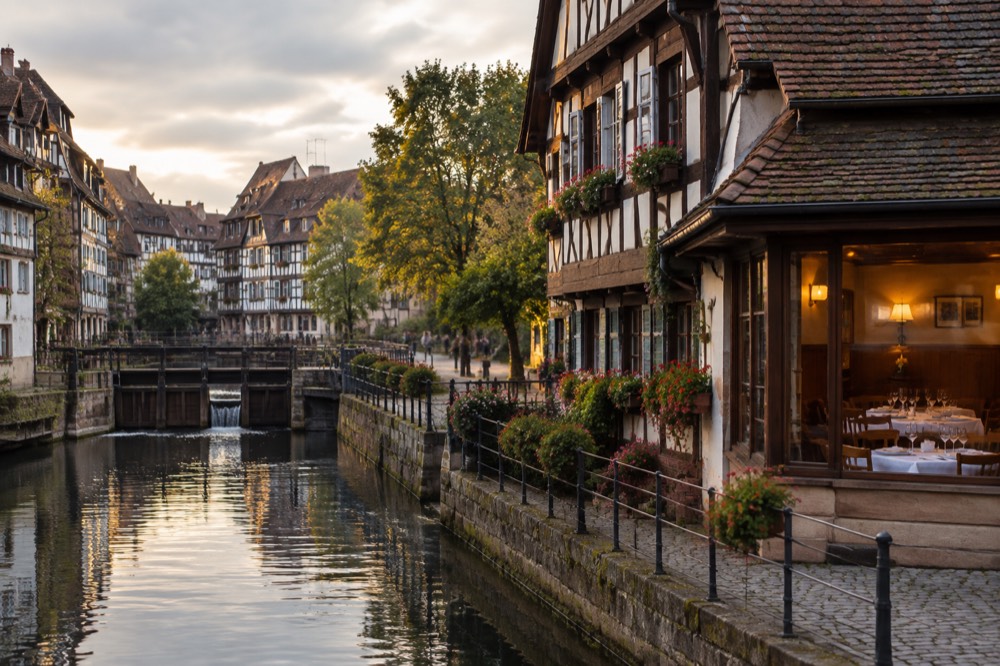
A guided walk is the efficient way to absorb that first day when the streets are busy, and the historic-centre walk that ends in Petite France is the one this site recommends for a Zurich arrival, because it compresses the island's story into a single led loop and leaves the afternoon free. The full-day and two-day itineraries on this site, one day in Strasbourg and two days in Strasbourg, carry the hour-by-hour versions.
Want a guided introduction to the island on day one? Book a small-group walking tour here.
Day two splits by interest. The European quarter, home to the European Parliament, the Council of Europe and the European Court of Human Rights, gives the city its second identity, and the Parlamentarium visitor centre is worth the airport-style security check if institutions interest you; its hours outside plenary weeks are Monday to Friday 09:00 to 18:00 and Saturday 09:30 to 12:00 and 13:00 to 18:00, with different hours in plenary weeks, so check the official page. Alternatively, day two goes to the Alsace, using the guided options above, or to the museums, using the 9 EUR ticket and the free-first-Sunday rule. Families have a dedicated Strasbourg with kids guide, and the hidden gems guide covers the corners the first visit misses.
| Time block | Where | Why it works in that slot |
|---|---|---|
| Morning, day one | Cathedral platform, then the nave | Shortest queue before late morning; nave closes 11:15 to 12:45 |
| 12:30, day one | Astronomical clock show | Fixed daily show; buy the 4 EUR ticket on the day |
| Afternoon, day one | Petite France, Ponts Couverts, Barrage Vauban terrace | Flat riverside walking; terrace light is best mid-afternoon |
| Evening, day one | A winstub in the Grande Île | Dining rooms fill early in the market season |
| Day two, option A | European quarter and the Neustadt | Tram-served, quieter, architectural contrast |
| Day two, option B | Guided Alsace day trip | No car needed; countryside loop with a guide |
Where Should You Eat On A First Visit?
Eat in a winstub, the Alsatian dining room, and order the region's own dishes: tarte flambée, choucroute and baeckeoffe, with a kougelhopf if there is room. A guided food walk with tastings is the fastest way to learn the cuisine, and it doubles as an orientation of the streets that hold the good rooms.
Alsatian food is the part of the trip Zurich cannot replicate. The winstub, wood-panelled and wine-focused, serves the region's pork-and-cabbage canon alongside its own wines, and Riesling is the local answer to the question of what to drink with choucroute. The dish guides on this site cover the ground in depth: tarte flambée, choucroute, baeckeoffe and kougelhopf, plus the winstubs guide and the best restaurants guide for where to find them. The Strasbourg food guide ties the whole cuisine together.
A tasting walk turns the same material into an evening. The traditional food walk with tastings runs about three and a half hours and moves between stops that each carry one part of the Alsatian table, which suits a first visit better than a single long dinner: you learn the streets and the cuisine in the same stretch of time, and a guide who knows the rooms will steer you past the tourist squares.
For December travellers, the market itself is a food event, with the chalets of the old town selling the warm, simple things that fit cold evenings. The pattern to remember is that the market runs to 24 December and closes early that evening; the food side of it, and what is actually worth eating among the stalls, is covered in the Christmas market food guide.
Whether the trip ends up being two days or five, the shape holds: arrive by rail through Basel, walk the island, climb the platform, eat in a winstub, and give at least one day to the wine country. Zurich gives you the lakes and the mountains; Strasbourg, two borders away in north-eastern France, gives you something the Swiss itinerary has no equivalent of, and the journey itself is short enough that a long weekend does it justice.
Common Questions About Travelling From Zurich To Strasbourg
Is there a direct train from Zurich to Strasbourg?
No direct service links the two cities, so the standard rail route changes at Basel, where French-bound services leave from the same station. Check the operators' own journey planners for current timetables and fares, and compare a through ticket against separate legs for each border crossing.
Can you fly from Zurich to Strasbourg?
There is no useful direct flight, because the cities are close enough that the ground connection, rail via Basel, beats the airport experience door to door. Flying means connecting through a hub such as Paris, which rarely saves time on this corridor.
Do you need a car in Strasbourg?
No. The tram and bus network covers the centre, the station and the European quarter, a single ticket is 1.90 EUR and a 24-hour Solo pass is 4.60 EUR, and the historic centre itself is walked rather than driven. A car only earns its keep if the wine route or the Black Forest is central to the plan.
Is Basel a good stop on the way?
Yes, Basel is the natural interchange for this route and a comfortable place to break the journey. One caution: Switzerland is not in the euro, so carry Swiss francs or pay by card there, and do not assume euro notes will be accepted.
How many days do you need in Strasbourg?
Two days cover the Grande Île, the cathedral platform, Petite France and a museum or two, with evenings in the winstubs. A third day is worth adding for the Alsace wine country, either on a guided day trip or by regional train to a main-line town such as Obernai.
When does the Strasbourg Christmas market run?
The market normally opens in the last week of November and runs to 24 December, closing early on the final evening. Last year's edition ran 26 November to 24 December 2025; the 2026 dates were not yet published, so confirm them on the city's own Christmas site before booking.