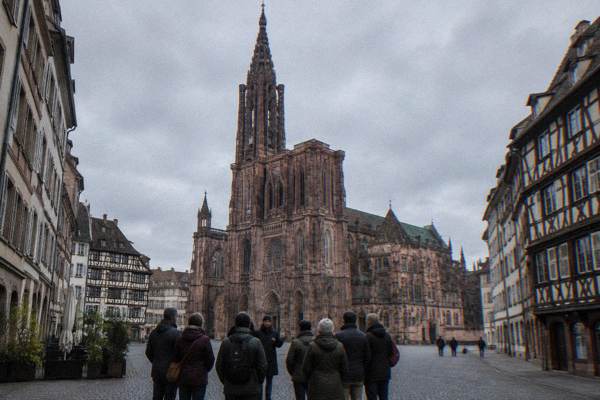
Strasbourg History
Strasbourg, in Alsace, north-eastern France, is a frontier city whose whole past is visible on foot: a medieval island core, a German-built imperial quarter and the institutions of modern Europe, all within a short walk of one another.
Short answer
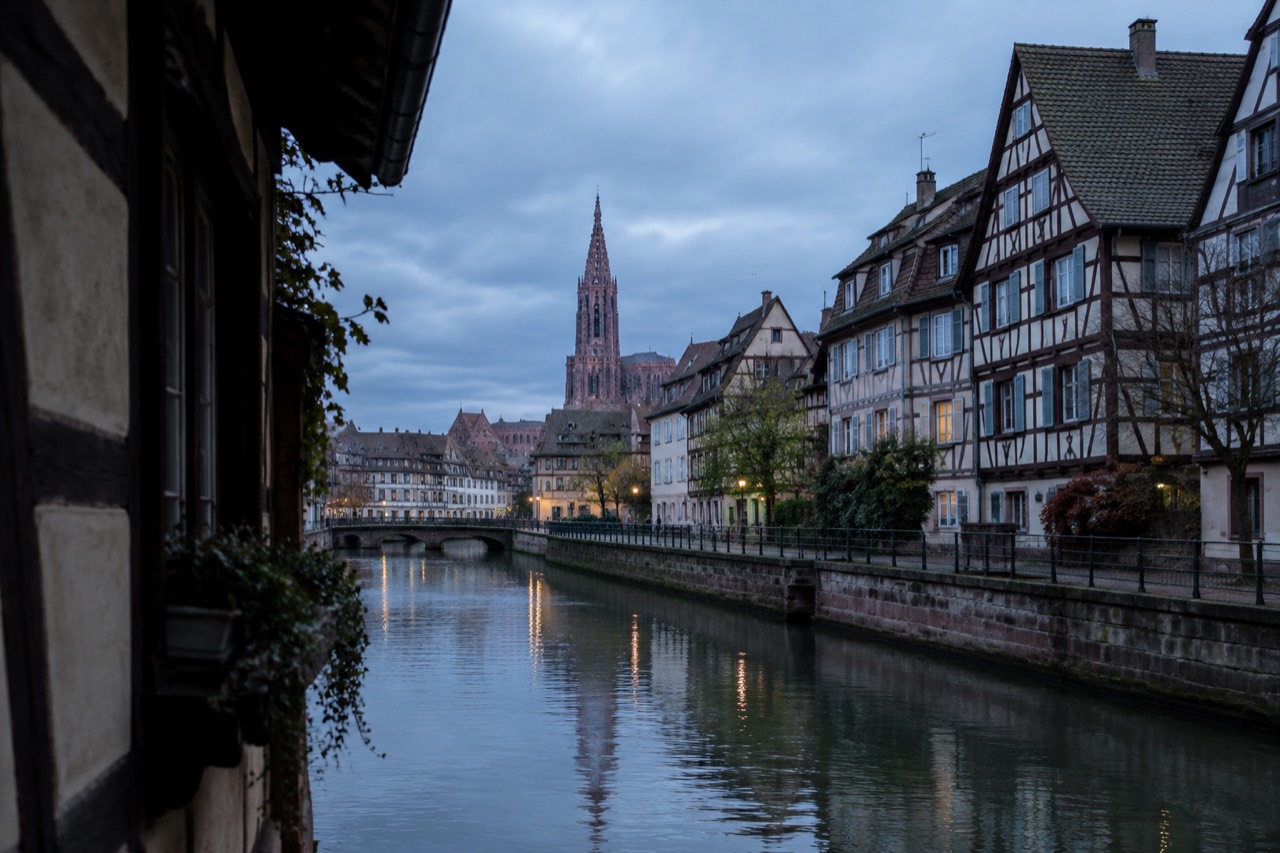
Strasbourg is the prefecture of the Bas-Rhin, in Alsace within the Grand Est region of France, on the Ill beside the Rhine border with Germany. Its past runs from the medieval Grande Île, listed by UNESCO with the Neustadt, to its role hosting the European Parliament. The cathedral platform at 66 m costs 10 EUR; municipal museums cost 9 EUR and are free on first Sundays.
Strasbourg, the prefecture of the Bas-Rhin department in Alsace, within the Grand Est region of France, sits on the River Ill a short distance west of the Rhine, the waterway that forms the border with Germany; the German town of Kehl lies on the far bank. INSEE counted 293,771 residents in the commune in 2023. What makes the city unusual is how legible its past remains: a medieval island core, a quarter of grand boulevards laid out in its German years, and a modern district of European institutions all stand within walking distance of one another, and each layer records a different political chapter. This guide reads those layers in order, with the opening hours, ticket prices and attendance figures that let a visitor check them on the ground rather than take them on trust.
What Makes Strasbourg's History Different From Other French Cities?
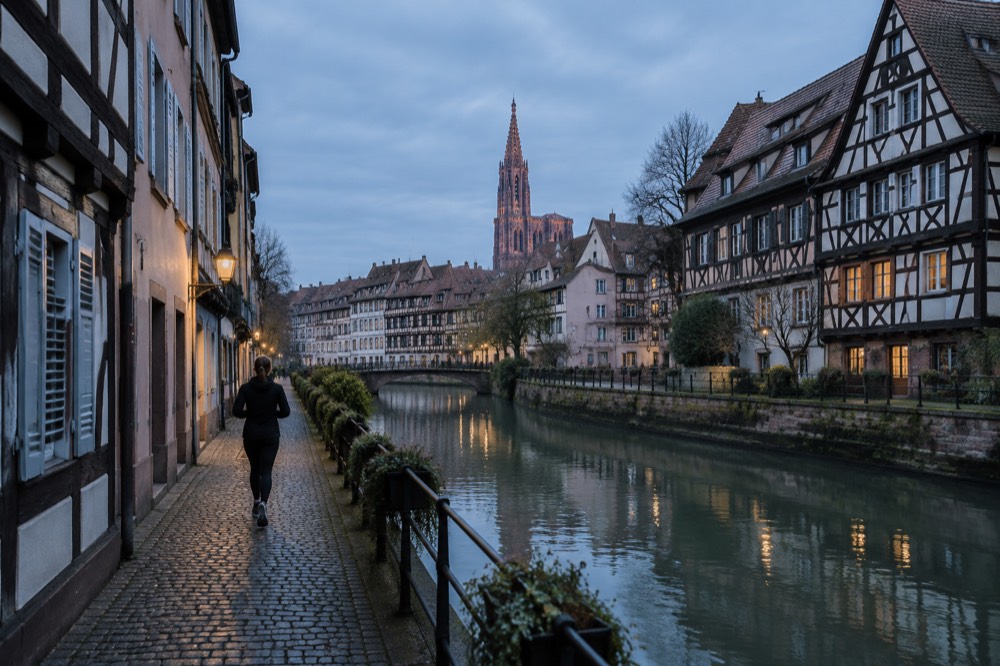
Strasbourg is a frontier city, and that is the key to its past. It stands on the Ill beside the Rhine, the river that marks the border with Germany, and it has belonged to both countries at different periods, so its oldest quarters carry a Germanic architectural character while its government is French. UNESCO captures the blend in a single World Heritage property.
The Ill is the quiet river that does the work. It divides into several channels around the old town, creating the island on which the medieval city grew, and those channels are the reason the historic core has the shape it does: bridges at every turn, water at the foot of half-timbered houses, and defensive works built directly in the river. The Rhine, by contrast, is the big neighbour. It forms the international boundary, and Kehl faces Strasbourg from the German bank, close enough that the two towns function as a single cross-border region. For the geography in detail, see where Strasbourg sits on the map.
The climate shaped the city as much as the politics. Strasbourg lies far from both the Atlantic and the Mediterranean, and Meteo-France's 1991-2020 normals for Strasbourg-Entzheim describe a semi-continental regime: a mean daily maximum of 5.2 C in January against 26.4 C in July, with 635.7 mm of rain spread over 112.3 rain days in an average year. Hot summers, cold winters and steady rainfall produced a city of covered markets, indoor winstubs and a Christmas season that fills the darkest month with light. The seasonal trade-offs for a visit are laid out in planning around the seasons.
The result is a city that does not fit the standard French mould, which is exactly why travellers debate whether Strasbourg is worth the trip. Alsatian culture keeps its own proper names, its own dishes and its own dialect history, and the built environment records every shift of rule without a single plaque needing to say so.
How The Grande Île Became A UNESCO World Heritage Site
The Grande Île is the island at the centre of Strasbourg, a district of half-timbered houses, cobbled squares and the cathedral that forms the city's medieval core. UNESCO inscribed the island in 1988 and extended the listing to the Neustadt in 2017, giving the property its present name, Strasbourg, Grande-Île and Neustadt, reference 495.
Walk the island and the medieval plan still holds. The cathedral stands at the heart of it, with the half-timbered Maison Kammerzell beside it on the square; the lanes drop away toward the water in every direction, and the two great open spaces, Place Kléber and Place Gutenberg, break the tight streets with room to breathe. Place Kléber is the city's principal gathering point, the square where Strasbourg meets in numbers, and Place Gutenberg holds the quieter western end of the old core. Nothing here needs a ticket: strolling the public squares and streets costs nothing, and the streets themselves are the monument.
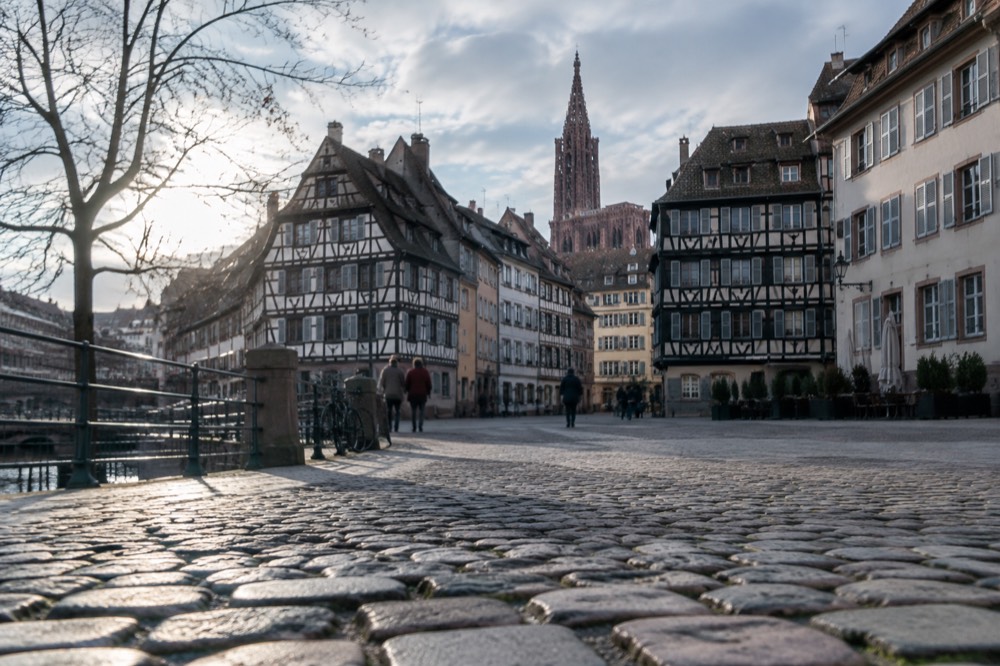
The UNESCO listing is what protects that continuity. Because the island is inscribed as World Heritage, its street plan, facades and rooflines are guarded against the rebuilds that erased comparable districts elsewhere, and the extension to the Neustadt in 2017 widened the protected area to cover the German-built quarter as well. The property is one of the few on the list that spans two national architectural traditions inside a single city, and the inscription years are widely recorded as 1988 for the island and 2017 for the extension.
A guided introduction is the practical way to absorb it. A small-group welcome walking tour of the historic centre sets the old streets in context, from the cathedral square to the river channels, and it pairs well with a later solo wander; the tour can be booked through the operator's live listing. Check availability
Want a guided introduction to the old streets? Book a free walking tour here.
| Part of the property | Character | Listing status |
|---|---|---|
| Grande Île | Medieval island core: cathedral, half-timbered quarters, squares, river channels | Inscribed 1988 |
| Neustadt | Imperial-era quarter of boulevards and monumental public buildings | Added by extension in 2017 |
| Whole property | "Strasbourg, Grande-Île and Neustadt" | UNESCO reference 495 |
For visitors, the practical effect is simple: the old core rewards slow walking, and the crowds thin out within two streets of the cathedral. That balance of fame and quiet corners is picked up in the city's hidden gems, which lists the places the standard route misses.
Why The Neustadt Records The German Chapter Of The Story
The Neustadt is the wide-avenue quarter laid out during Strasbourg's decades as a German city, and its architecture deliberately contrasts with the medieval island: monumental public buildings, formal parks and grand facades on a scale the old core never attempted. UNESCO brought it inside the same World Heritage property in 2017, so one listing now records both chapters of the city's past.
Cross the Ill to the north and east of the island and the city changes register. The lanes give way to broad, straight avenues; the half-timber gives way to stone and stucco; and the squares open into ceremonial spaces built for an imperial administration rather than a merchant town. The grandest of them is Place de la République, framed by institutional buildings and formal planting, and it reads as a deliberate statement: a new city alongside the old one, on the same river, under a different flag. No date on the ground is needed to feel the shift; the street width does it.
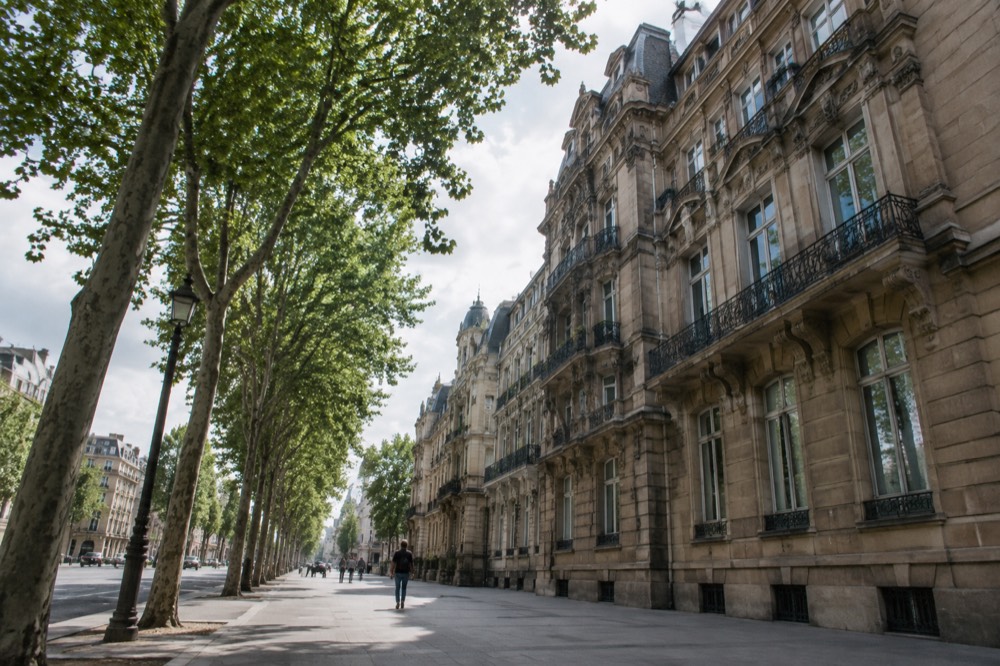
The two quarters now belong to the same protected property, which is the point of the 2017 extension. A visitor can walk from a medieval lane to an imperial boulevard and cross the entire political distance in between, and the UNESCO listing treats that crossing as the heritage value itself. It is a rare arrangement: a World Heritage boundary drawn to hold a city's successive identities together rather than to isolate its oldest fragment.
The German chapter does not stop at the Rhine. Kehl sits directly opposite on the German bank, and the wider German landscape, from the Black Forest to the spa town of Baden-Baden, is close enough that organised day trips run there from Strasbourg, a pairing covered later in this guide. For now the Neustadt is the on-city evidence: the built proof that this French prefecture has a German architectural twin inside it.
What Role Did The River Play In Strasbourg's Past?
The Ill made Strasbourg. It splits into channels around the Grande Île, and the city's old defences still stand in the water: the Ponts Couverts, the covered bridges, and the Barrage Vauban, whose panoramic terrace looks across the whole island. Batorama runs river cruises past them today, with the long tour at 16.20 EUR full fare and the short tour at 12.50 EUR.
Defence came first. The Ponts Couverts still span the channels at the river's edge, four towers and their bridgework standing directly beside the Barrage Vauban, the massive fortified weir built to control the water and to watch the approaches. The Barrage Vauban's rooftop terrace is one of the great viewing points in the city, a panorama over the entire island core, and it keeps seasonal opening hours, published by the city and listed below. The terrace's admission terms are on the city's own page for the site.
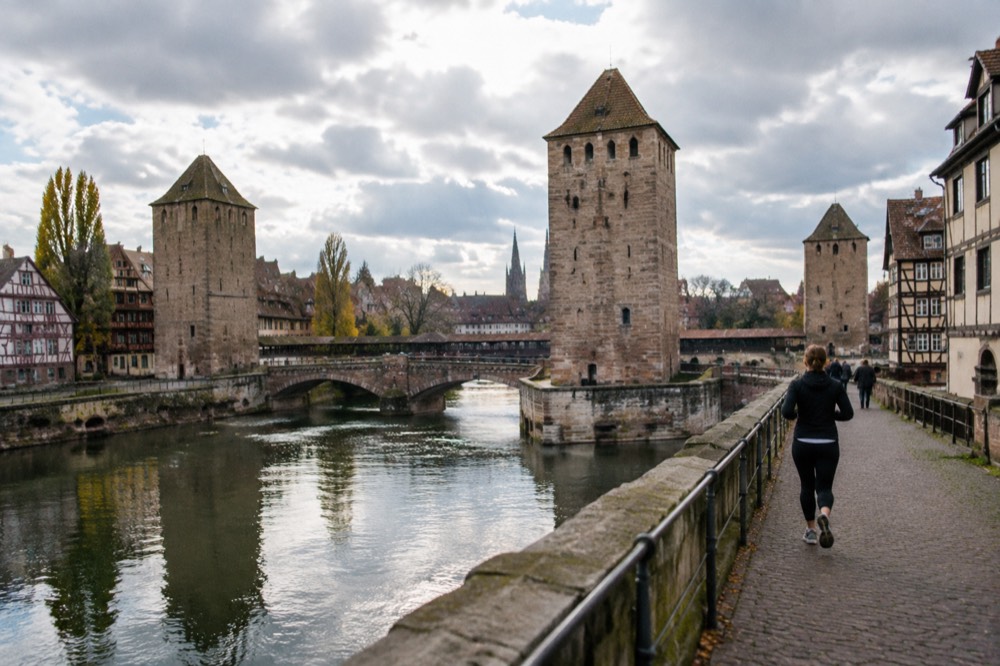
Then came the trade and the crafts. Petite France, at the island's watery edge, is a working river quarter of half-timbered houses standing directly over the channels, the district where the Ill's divided waters did the city's daily work. Today it is the postcard district, but the water still runs under the buildings, and the bridges between the islets still force the visitor to cross and recross the river the way the medieval city did.
The river view is now a product in itself. Batorama, the city's established cruise operator, runs two principal circuits: the long Red Tour, an hour through the full channel network, and the shorter Blue Tour. A practical first day pairs a guided walk of the old core with one cruise, since the walks explain the streets and the water explains the plan.
| Batorama tour | Duration | Full fare | Reduced fare |
|---|---|---|---|
| Long tour, Red Tour circuit | 1h10 | 16.20 EUR | 8.90 EUR |
| Short tour, Blue Tour circuit | 0h45 | 12.50 EUR | 7.20 EUR |
The Barrage Vauban terrace keeps the following seasonal hours, and the city's page for the site should be checked for the months in between and for any closure days.
| Season | Terrace opening hours |
|---|---|
| 1 September to 31 October | 08:00-19:00 |
| November to February | 08:30-16:00 |
| March to April | 08:00-19:00 |
How To Walk Through Medieval Strasbourg Today
The old core is compact enough to cross on foot in a morning, and its heritage is packed into a few streets: the lanes around the cathedral, the squares at Place Kléber and Place Gutenberg, and the museums of the Palais Rohan. A full municipal museum ticket costs 9 EUR, reduced 5 EUR, and every municipal museum is free on the first Sunday of the month.
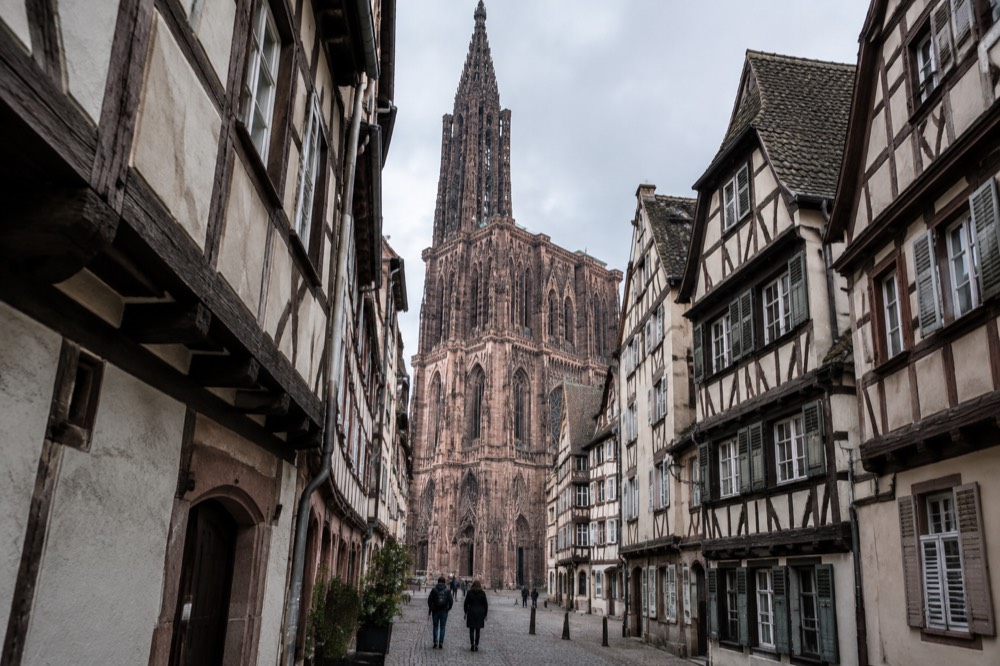
A workable walking route runs from the cathedral square down through the lanes to the water, loops Petite France at the island's edge, and returns past Place Kléber. The distance is short; the detours are the point. Every lane off the route holds something, from the Maison Kammerzell's carved facade to the river stairs where the channels narrow, and the whole loop can be walked slowly in a morning with long stops. Everything else covered here is indexed on Strasbourg Travel Guide.
The museums carry the story indoors. The Palais Rohan, beside the cathedral, holds the Musée des Beaux-Arts and its companion collections, and the Musée de l'Œuvre Notre-Dame, facing the cathedral, holds the cathedral's own artistic heritage; a platform ticket gives a reduced rate there. The modern collection sits at MAMCS. One absence matters: the Musée Alsacien, the folk-life museum, is closed for works until 2028 and should not be routed into any visit. The full picture, including the free-first-Sunday rule, is in the city's museums in depth, and the discount options are compared in the Strasbourg City Card explained.
| Museum ticket | Price | Notes |
|---|---|---|
| Full fare, any municipal museum | 9 EUR | Beaux-Arts, Archaeological, MAMCS, Decorative Arts, Historical, Œuvre Notre-Dame |
| Reduced fare | 5 EUR | Standard reductions apply |
| Pass Musées, 1 day | 20 EUR | All municipal museums in a single day |
| First Sunday of the month | Free | Every municipal museum |
| Musée Alsacien | Closed | Closed for works until 2028 |
| Strasbourg City Card | 5 EUR adult, 3.50 EUR child | 7-day discount card, not an all-inclusive pass |
Guided walks add the layers the streets cannot. A small-group hidden-stories walk of the historic centre covers the episodes the plaques leave out, the sort of detail that turns a pretty lane into a document, and it suits a second day once the geography is already under foot. Free options exist too, and the pay-what-you-want model is covered in free things to do in Strasbourg.
Why The Cathedral Is The Historical Centrepiece Of The City
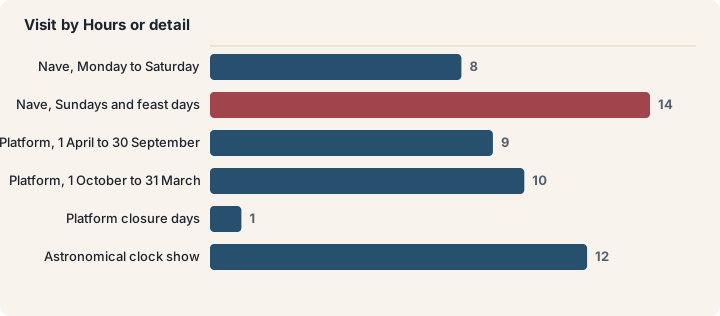
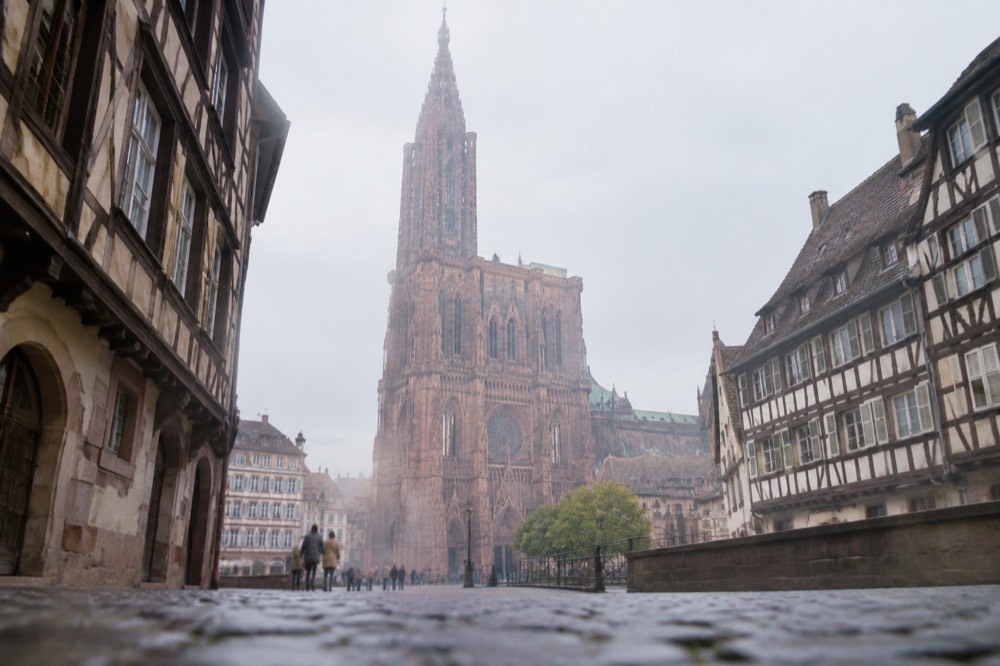
Strasbourg Cathedral dominates the city's history and its skyline: a single spire rather than two towers, with a viewing platform at 66 m reached by a paid ticket, 10 EUR full fare and 6 EUR reduced, free under 6. The astronomical clock performs at 12:30 daily; a seat costs 4 EUR, sold on the day only.
The building is the fixed point around which everything else in the old city was arranged. Its single spire, visible across the island's rooftops from every quarter, gave the medieval city its orientation, and it still does: the cathedral square is where the lanes converge, and the Maison Kammerzell, the Œuvre Notre-Dame museum and the Palais Rohan all stand within a minute of its walls. The Gothic front fills one entire side of the square, and the platform at 66 m looks out over the roofs of the Île and the channels of the Ill beyond them.
The clock is the cathedral's second performance. The astronomical clock's automaton show runs at 12:30 sharp each day, and tickets, at 4 EUR with reductions for groups and children, are sold on the day only, at the cathedral stalls between 10:00 and 11:00 or at the Saint-Michel entrance from 11:30. There are no reservations, so the practical move is to buy early, visit the platform or the nave, and come down for the show.
The visitor figures below are the ones to plan around, and the cathedral's own hours page is the place to confirm them before a visit.
| Visit | Hours or detail | Ticket |
|---|---|---|
| Nave, Monday to Saturday | 08:30-11:15 and 12:45-17:45 | Admission terms on the cathedral's page |
| Nave, Sundays and feast days | 14:00-17:15 | Admission terms on the cathedral's page |
| Platform, 1 April to 30 September | 09:30-13:00 and 13:30-20:00, last ascent 19:15 | 10 EUR full, 6 EUR reduced |
| Platform, 1 October to 31 March | 10:00-13:00 and 13:30-18:00, last ascent 17:15 | 10 EUR full, 6 EUR reduced |
| Platform closure days | 1 January, 1 May, 25 December | Closed |
| Astronomical clock show | 12:30 daily | 4 EUR, day-of purchase only |
A guided cathedral tour adds what the stones cannot say for themselves, and the short format suits a morning that continues into the lanes afterwards.
How Strasbourg Became A Capital Of Europe
Strasbourg's newest historical layer is political: the city hosts the European Parliament, the Council of Europe and the European Court of Human Rights in its European Quarter. The public face of it is the Parlamentarium visitor centre, open Monday to Friday 09:00-18:00 and Saturday 09:30-12:00 and 13:00-18:00 outside plenary weeks, after an airport-style security check.
The European chapter grew directly out of the city's earlier one. A frontier city that had changed hands between France and Germany became the natural place for the two countries to build shared institutions, and over the decades that followed the war, the European Parliament, the Council of Europe and the European Court of Human Rights all took their seats here, in a quarter of modern buildings across the Ill from the old core. The symbolism needs no explaining: the institutions of a reconciled Europe placed in a city that had been the prize of an earlier rivalry.
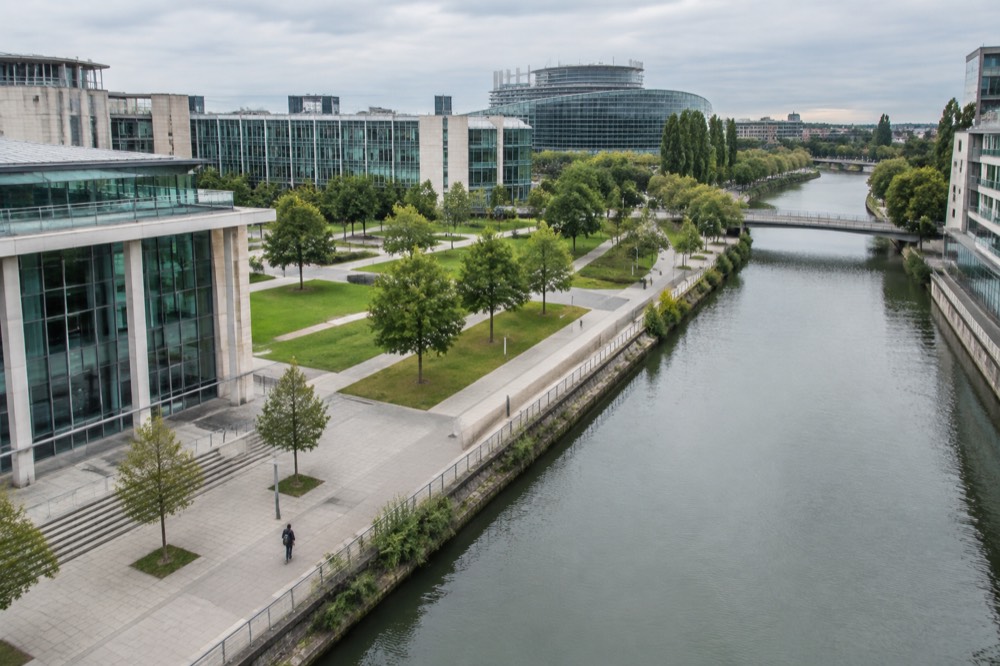
The Parlamentarium is the visitor's way in. Its hours outside plenary weeks are Monday to Friday 09:00-18:00 and Saturday 09:30-12:00 and 13:00-18:00, with last entry at 17:00; during plenary weeks the schedule changes, and the European Parliament's visitor page carries the current version. Entry is subject to an airport-style security check, so the practical advice is to arrive without large bags and to allow time for the screening rather than to budget a bare half hour.
The quarter itself rewards the walk. The institutional architecture, set in open ground with the Parc de l'Orangerie nearby, is a deliberate contrast with the dense medieval island, and the walk from the cathedral to the European buildings crosses the whole span of the city's history in under an hour: medieval stone, imperial boulevards, then glass and steel. It is the clearest single walk in Strasbourg for understanding what the city has been and what it now is.
How The City Remembers Its Hardest History
Strasbourg's hardest history is remembered at a distance rather than displayed in the centre: the Natzweiler-Struthof site in the Vosges mountains, a former camp now a memorial, is visited on half-day guided tours from the city. The European Quarter, covered above, is the other half of that memory, built as the institutional answer to what the memorial records.
The memorial site sits high in the Vosges, the mountain range that rises south-west of Strasbourg, and it is the only place in the region where the history of the camps can be stood in front of rather than read about. A half-day guided tour from Strasbourg handles the transport and the context, which matters here more than anywhere else on the itinerary: the site deserves more than a drive-by, and the guides who run the trip are the difference between seeing the place and beginning to understand it. The tour's own listing carries the current departure details.
Back in the city, the memory is quieter but present. The European institutions are the visible answer, and the walk between the memorial and the Parliament, taken over two days rather than one, is the most coherent historical itinerary Strasbourg offers: what those years broke, and what was deliberately built in response. Visitors who want the fuller picture of the city's own wartime experience will find the old town's survival itself part of the story, though the details belong to the city's museums and archives rather than to street plaques.
What The Christmas Market Says About Strasbourg's Past
Strasbourg styles itself the Capital of Christmas, and the market is the city's history performed annually: the 2025 edition ran from 26 November to 24 December 2025 and drew 3.05 million visitors, after 3.4 million in 2024. The 2026 dates are not yet published; the pattern is a late-November opening and a 24 December close, confirmed each year on the city's Christmas site.
The market is the one Strasbourg tradition that fills the entire historic stage at once. Chalets spread across several squares in the old core, typically open from late morning into the evening, and the city's own bilan for the 2025 edition counted 3.05 million visitors, a figure the press release compares with 3.4 million the year before. For a city of 293,771 residents, that is the calendar's defining event, and it turns the medieval streets back into what they were built to be: crowded, commercial and lit after dark.
The cathedral adapts with the season. During the Christmas market the cathedral stays open continuously Monday to Saturday on the Place du Château side, from 08:30 to 17:45, which removes the midday closure that applies the rest of the year and lets market visitors drift in and out between the chalets. The market's food traditions, the winstub dishes and the baked and spiced specialities, are a living record of Alsatian domestic culture, and they are catalogued in the Christmas market food guide.
Planning around the market is its own discipline. The full practical treatment, including where to sleep and how the squares connect, is in the complete Christmas market guide, the seasonal logistics are in Strasbourg in winter, the evening atmosphere is covered in Strasbourg at night, and the rest of the year's calendar is in Strasbourg's events and festivals.
| Christmas market fact | Figure | Source |
|---|---|---|
| 2025 edition dates | 26 November to 24 December 2025 | City press release |
| 2025 attendance | 3.05 million visitors | City press release |
| 2024 attendance | 3.4 million visitors | City press release |
| 2026 dates | Not yet published | The city's Christmas site |
| Usual pattern | Opens in the last week of November, closes on 24 December | The city's Christmas site |
Read together, the layers make a coherent whole: an island that grew rich on its rivers, a quarter that records its German years, a cathedral that anchored every era, and a set of European institutions that turned a contested frontier into a shared capital. Strasbourg's history is not behind glass; it is the street plan, and it is open all day.
Common Questions About Strasbourg History
Is Strasbourg French Or German?
Strasbourg is a French city: the prefecture of the Bas-Rhin, in Alsace within the Grand Est region of north-eastern France. Its culture and architecture carry a strong German inheritance because the city belonged to German states at different periods, and the Rhine, with Kehl on the German bank, forms the border just beyond the city.
What Is The Oldest Part Of Strasbourg?
The Grande Île, the island core where the Ill's channels divide, is the medieval heart of the city and the original core of the UNESCO listing. Its half-timbered lanes, the cathedral and the squares at Place Kléber and Place Gutenberg make up the oldest streets a visitor walks today.
Can You Climb Strasbourg Cathedral?
Yes. The platform at 66 m is reached by a paid ticket at 10 EUR full fare, 6 EUR reduced, free for children under 6. Hours run 09:30-13:00 and 13:30-20:00 from April to September and 10:00-13:00 and 13:30-18:00 from October to March, with closures on 1 January, 1 May and 25 December.
Is The Musée Alsacien Open?
No. The Musée Alsacien is closed for works until 2028 and should not be included in any itinerary. The other municipal museums are open, at 9 EUR full fare and 5 EUR reduced, with a 1-day Pass Musées at 20 EUR and free entry to every municipal museum on the first Sunday of the month.
When Are The Strasbourg Christmas Market Dates Published?
The 2026 dates are not yet published; the city's Christmas site states that the dates and programme are still being finalised. The 2025 edition ran from 26 November to 24 December 2025, and the usual pattern is an opening in the last week of November and a close on 24 December, so confirm the current edition on the city's own Christmas pages before booking travel.