Strasbourg To Munich
Strasbourg, the Alsatian capital on the French side of the Rhine, and Munich, the Bavarian capital beyond the Black Forest, sit close enough for one comfortable trip. This guide sets out how to travel between them, where to stop, what a day in each city costs, and how to time the whole thing.
Short answer
Strasbourg and Munich are linked by rail and road across the Rhine plain. A sensible plan is two or three days in Strasbourg, a stop in the Black Forest or Baden-Baden, then two days in Munich. Both cities use the euro and sit inside Schengen.
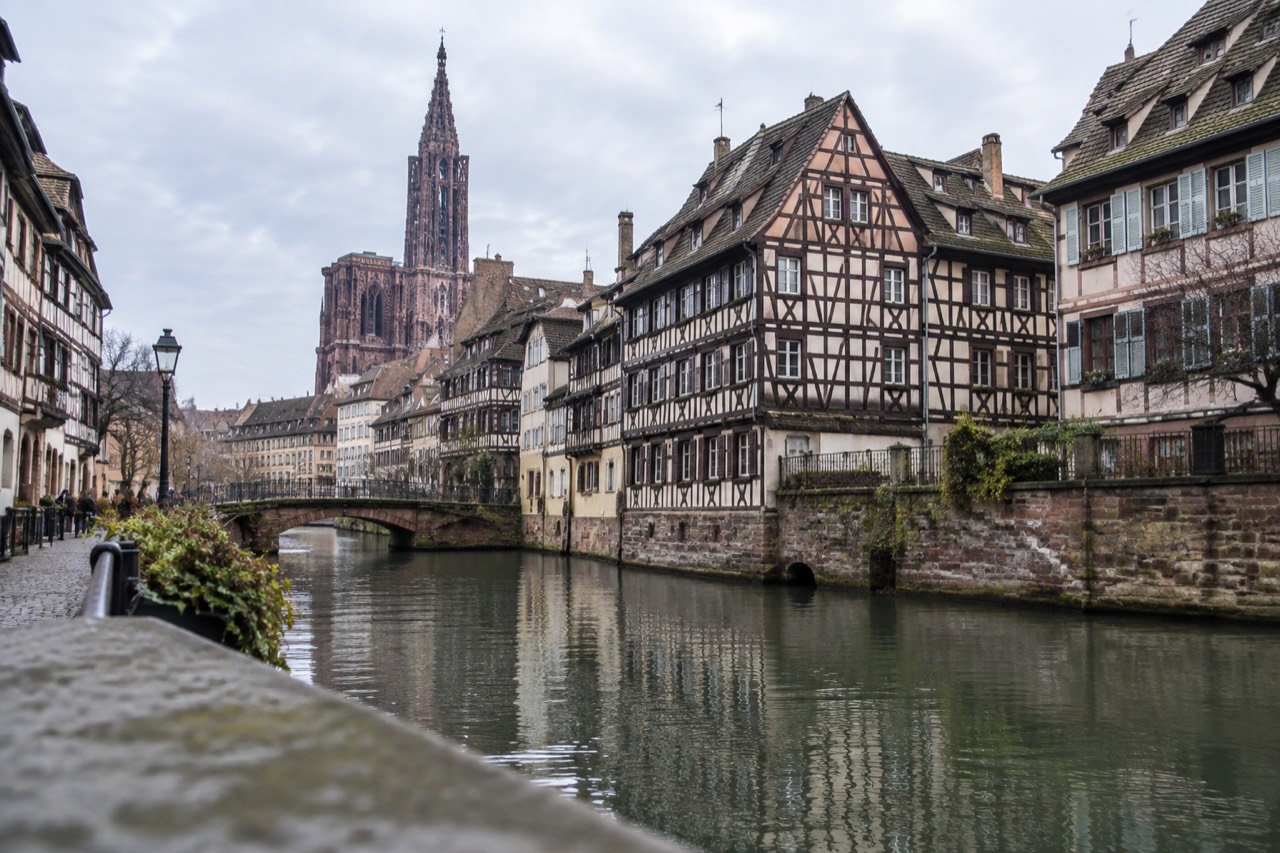
Strasbourg, in Alsace in north-eastern France, is a border city: the River Ill runs through it, the Rhine marks the German frontier a short distance east, and Kehl sits on the far bank. Munich lies deeper into Germany, beyond the Black Forest and the Swabian and Bavarian uplands, close enough that travellers regularly pair the two cities in a single trip. The route between them crosses some of the most rewarding territory in western Europe, from Alsatian wine villages to forested hills and spa towns. This guide covers how to make the journey, where to break it, what each end costs, and how to time the whole thing, with the verified Strasbourg figures from our facts file and honest pointers on what to check live for the German leg.
How Do You Get From Strasbourg To Munich?
There are four realistic ways to cover the Strasbourg to Munich leg: mainline rail with a change in Germany, a long-distance coach, a self-drive across the Rhine and through the Black Forest, or a flight with a connection. Rail is the option travellers pick for comfort, the coach for price, the car for the stops in between, and the plane rarely, because the surface journey is straightforward and both cities sit on the same land corridor. Confirm any journey time on the operator's own timetable. SNCF Connect and the Deutsche Bahn journey planner are the two pages to check for rail, and each sells tickets for the whole route.
The rail logic is simple. Strasbourg station is a major TGV and regional hub for the Grand Est, and the German network begins across the river at Kehl, from where regional trains run into the German system. Itineraries generally head north along the Rhine plain towards Karlsruhe or cut east of the Rhine through Stuttgart and Ulm towards Bavaria. Both patterns are bookable in one transaction on either national site. Summer 2026 saw tram works near Strasbourg's Gare Centrale on lines A to F, which ended by autumn, but engineering works on the rail line itself should always be checked before travel day rather than assumed.
Driving gives you the stops. The car route crosses the Rhine at Kehl and threads either through the northern Black Forest or via Baden-Baden and the motorway corridor towards Stuttgart and Munich. Fuel, motorway vignette rules and parking differ between France and Germany, and Germany's motorways are famously toll-free for cars while France's are not, which is one reason the drive can cost less than people expect once you are across the border. If you would rather not drive at all, the coach operators run the corridor daily, and their fares are set by demand, so check the operator's site rather than any published average.
| Mode | What It Involves | Who It Suits | What To Check Live |
|---|---|---|---|
| Train | Rail via the Rhine plain, typically with a change in Germany | Travellers who want city-centre to city-centre ease | SNCF Connect and the Deutsche Bahn planner for times and fares |
| Coach | Long-distance bus, usually with a comfort stop | Budget travellers and students | The operator's own site for the day's fare |
| Car | Cross the Rhine at Kehl, then Black Forest or motorway routes | Anyone who wants to stop in the villages and forest towns | Parking in both old towns, which is restricted |
| Plane | Connecting service, with a change at a hub | Almost nobody on this corridor | Whether a connection saves any real time |
Is There A Direct Train From Strasbourg To Munich?
The usual pattern on this corridor is a one-change itinerary, most often via Karlsruhe, Stuttgart, or Offenburg, depending on the schedule you pick. The practical answer is to book the whole journey in a single transaction and let the planner choose the connection, which keeps the transfer protected and the trip simple. The change, when there is one, typically falls at Karlsruhe, Stuttgart or Offenburg depending on the departure, and the German regional and intercity trains carry you onward from there. For schedules and journey times, open SNCF Connect or the Deutsche Bahn site, put in your date, and read the day's own numbers rather than trusting a figure copied from an older page. That is also where you will see whether any given departure happens to run without a change, and how much protection a through-ticket gives you if a delay strikes.
Booking early matters on this corridor for a different reason than price alone. The French and German systems release their cheapest fare buckets on their own schedules, and a through-ticket bought in one transaction protects you if a delayed first leg makes the connection tight. If you buy two separate tickets and the first train is late, the second operator owes you nothing. The safest structure for a Strasbourg to Munich day of travel is a single booking, a connection of comfortable length, and no plans that evening in Munich.
One Strasbourg detail is worth knowing before you ride. The station district, the gare area around the station, has its own character and a cluster of hotels, and it sits one tram stop or a short walk from the city centre, so a morning departure does not require an early taxi. The CTS tram and bus network serves the station directly, and a single ticket bought in the app or by contactless costs 1.90 EUR, or 2.50 EUR if you buy it on board the bus. For a fuller grounding in the city before you leave, the guides on where Strasbourg sits in France and Europe and on the best time to visit Strasbourg cover the geography and the seasons in detail.
How Many Days Should The Whole Trip Take?
Plan on five to seven days for the full Strasbourg to Munich journey. Give Strasbourg itself two or three days to cover its old town, canals, and nearby wine villages. Reserve one day for the corridor between the two cities, with a stop in the Black Forest or Baden-Baden along the way. Finish with two days in Munich, enough for the old town, its famous beer halls, and a day trip or museum visit. Compress it to four and you will see both old towns but nothing between them; stretch it to eight or nine and you can add an Alsatian wine village, a castle in the Vosges foothills, or a second German stop along the way. The single biggest planning decision is whether the middle day is a travel day or a sightseeing day, and the answer is almost always the latter, because the corridor between the two cities holds the part of the trip people remember longest and the part that a rushed timetable skips entirely.
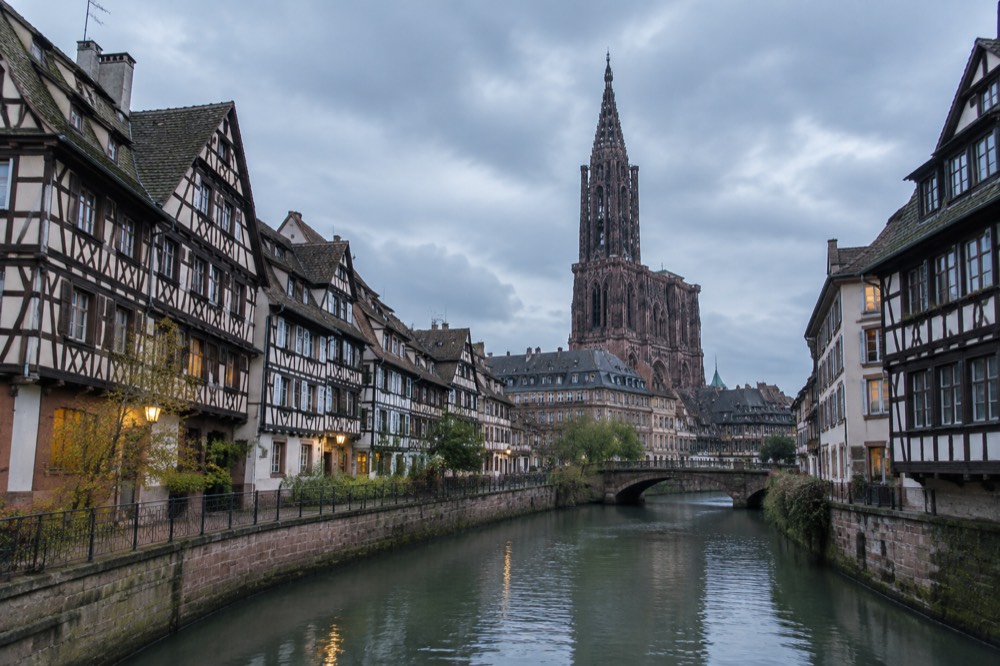
Strasbourg earns its two days honestly. The Grande Île, the river-island old centre, holds the cathedral with its single spire, the Petite France quarter of former tanneries and mills, the Ponts Couverts and the Barrage Vauban terrace above them, and a density of half-timbered streets that takes a full day just to walk. A second day can go to the Neustadt, the later German-built district, and the European Quarter institutions, or to a boat circuit on the Ill, which is the perspective the streets cannot give you. The Batorama river tours run a long circuit of 1h10 and a short circuit of 0h45, with the long tour at 16.20 EUR full fare and 8.90 EUR reduced, and the short tour at 12.50 EUR and 7.20 EUR, all verified on the operator's own page.
Munich, at the other end, works on the same scale. The old core around Marienplatz, the Frauenkirche's domed towers, the beer gardens and the art galleries fill two days without strain, and a third opens up day trips into the Bavarian lakes and Alps to the south. Neither city rewards a rushed half-day. If your total budget of time is under five days, cut a Munich day rather than the corridor stop, because Munich is easy to return to and the Black Forest leg is not.
If you want the water-level view of Strasbourg with a skipper to yourself rather than a shared commentary boat, a private cruise on the Ill is the premium version of the experience, and the live listing carries the current group rate for up to four people. Check availability once your dates are fixed, because private boats book ahead in the Christmas and summer peaks.
What Should You See In Strasbourg Before You Leave?
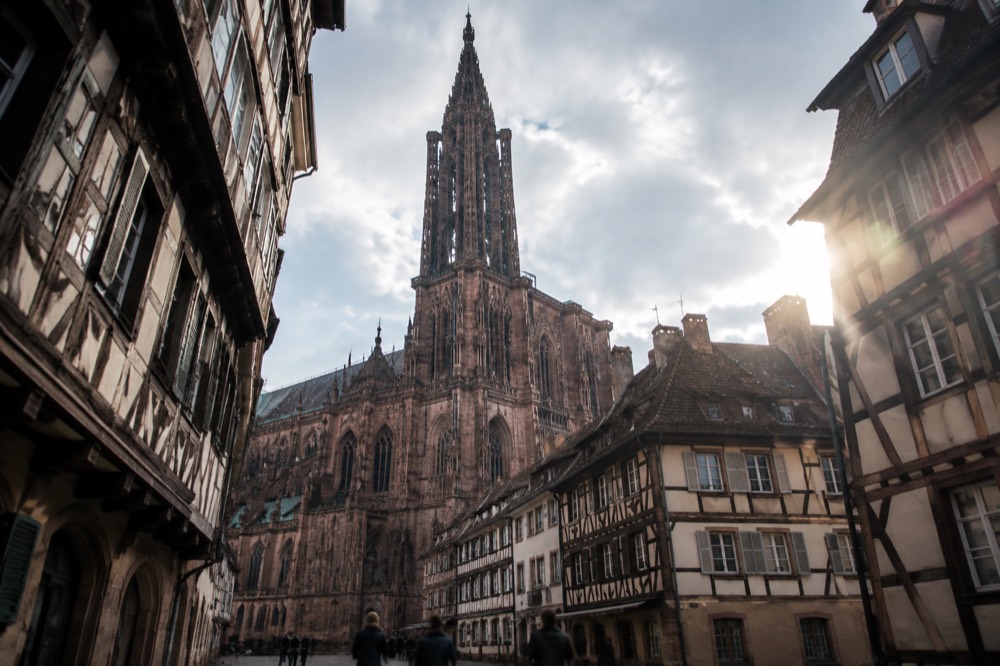
Before leaving Strasbourg, see the Grande Île first: its UNESCO-listed streets, the soaring cathedral, and the canalside lanes of Petite France. Give these your first half-day, then split the second half between a river trip and the Neustadt, whose imperial architecture gives the city its second, often-missed face. For the cathedral tower and the astronomical clock, buy tickets on the day rather than in advance, which keeps your schedule flexible and saves you from over-planning a visit that rewards wandering. The cathedral nave is open Monday to Saturday from 08:30 to 11:15 and 12:45 to 17:45, and on Sunday afternoons from 14:00 to 17:15, with continuous opening on the Place du Château side during the Christmas market. The platform at 66 m, reached by stairs and lift stages, costs 10 EUR full fare and 6 EUR reduced, with children under 6 free, and runs on seasonal hours: 09:30 to 13:00 and 13:30 to 20:00 in the April to September season, 10:00 to 13:00 and 13:30 to 18:00 from October to March, with the last ascent earlier than the closing time.
The astronomical clock is the one timed event in the city. The full automaton show runs daily at 12:30 sharp, and the ticket is 4 EUR, 3 EUR for groups and students up to 25, and 2 EUR for children aged 6 to 17. Tickets are sold on the day only, at the cathedral stalls between 10:00 and 11:00 or at the Saint-Michel entrance from 11:30, and no reservations are taken, so the practical move is to arrive early, buy the ticket, and have lunch in the Place du Château beforehand. The clock show is short and the platform climb is the longer reward, so plan them as one cathedral block rather than two separate errands.
The museums cluster usefully. Municipal museums, including the Musée de l'Œuvre Notre-Dame beside the cathedral, the Beaux-Arts in the Palais Rohan, and the modern art museum MAMCS, charge 9 EUR full and 5 EUR reduced, with a 1-day Pass Musées at 20 EUR covering them all. Every municipal museum is free on the first Sunday of the month, which is worth structuring a whole trip around if your dates allow. One closure to plan around: the Musée Alsacien, the folk-life museum, is closed for works until 2028 and should not appear in any itinerary.
| Sight | Full Fare | Reduced | Note |
|---|---|---|---|
| Cathedral platform, 66 m | 10 EUR | 6 EUR | Under 6 free; seasonal hours |
| Astronomical clock show, 12:30 | 4 EUR | 2 EUR children 6-17, 3 EUR students | Day-of tickets only, no reservations |
| Municipal museums | 9 EUR | 5 EUR | Free the first Sunday of every month |
| Pass Musées, 1 day | 20 EUR | Covers the municipal museums | |
| Batorama long river tour, 1h10 | 16.20 EUR | 8.90 EUR | Short tour 12.50 EUR / 7.20 EUR |
A guided walk compresses the old centre for a first evening, and a small-group curiosities walk reaches the stories the plaques leave out. The welcome-level option below is the gentlest introduction, and it pairs well with a morning boat circuit on the following day.
Curious what a local could reveal on your first evening? Book a small-group walking tour here.
Where Should You Stop Between Strasbourg And Munich?
The two classic corridor stops are the Black Forest, reached within the first hours of driving, and Baden-Baden, the spa town just inside Germany, and a one-night stop in either turns the transfer into the best day of the trip. Baden-Baden pairs a historic bathhouse culture with a compact old town and gallery, and the Black Forest beyond it offers the deep-wood towns, the lakes and the clock-making villages that give the region its name. Freiburg, the university city at the forest's southern edge, is the natural overnight base if you want a city with a cathedral and a market square rather than a small town, and it sits conveniently on the rail corridor towards Munich.
For travellers who prefer a guided structure on this leg, a day trip from Strasbourg into the Black Forest covers the Freiburg, Titisee and Triberg pattern in a single outing, and it removes the car entirely. The guide below runs that corridor, and the live listing carries the current price and dates. The trade-off is honest: a guided day trip shows you the highlights and returns you to Strasbourg for the night, while a self-drive or rail stop lets you sleep inside the forest and reach Munich the following afternoon.
| Stop | What It Is | Why Break Here | What To Check Live |
|---|---|---|---|
| Baden-Baden | Historic spa town just inside Germany | Baths, galleries, a walkable old centre | Bathhouse opening hours and admission |
| Freiburg | University city at the Black Forest's edge | Cathedral square, streams, a real urban rhythm | Hotel prices, which swing with term time |
| Titisee and Triberg | Forest lake and waterfall town | The scenery the region is named for | Seasonal boat and trail openings |
| Stuttgart | State capital on the rail corridor | Museums and a strong food scene, if you want a city stop | Whether your rail connection already lands here |
Two planning notes. First, the Alsatian side of the border deserves its own day if you have it: the wine route villages such as Riquewihr, Eguisheim and Kaysersberg sit south of Strasbourg, and they are covered in our guide to the Alsace wine route, which pairs well with a first or final evening in the city. Second, if the whole trip is built around December, read the corridor stops against our guide to Christmas markets across Alsace, because the German forest towns run their own markets and the pairing is a natural one.
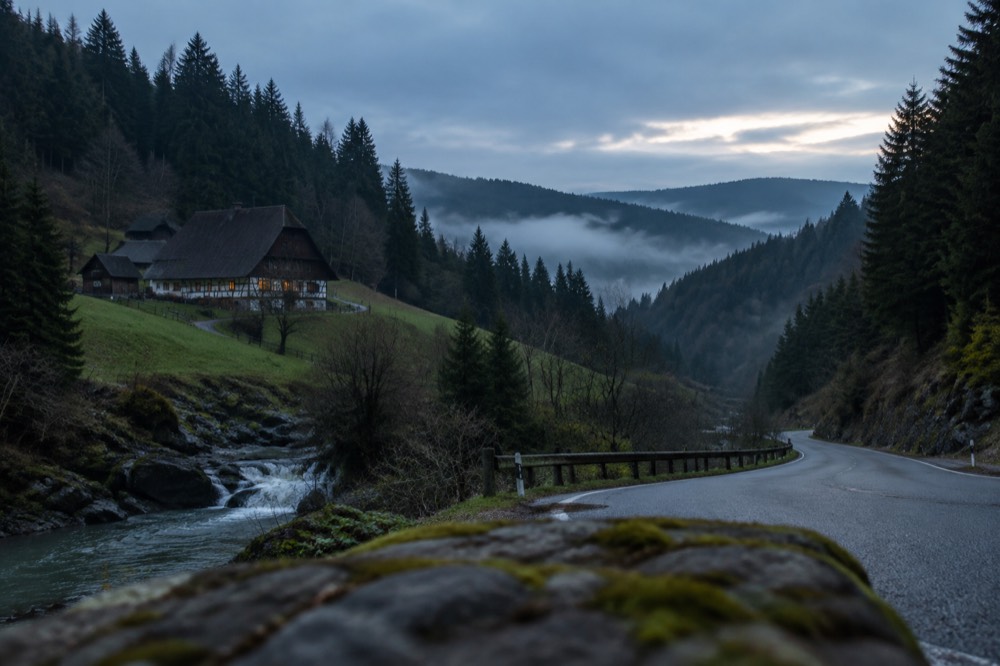
What Is The Weather Like On The Strasbourg To Munich Route?
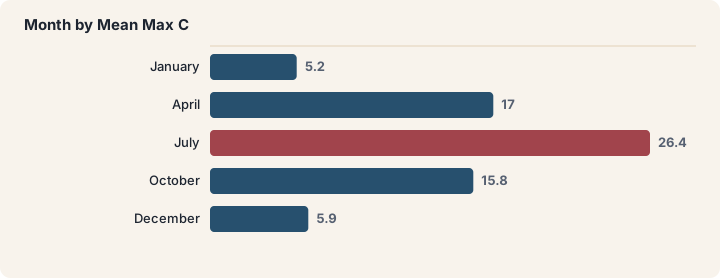
The Strasbourg to Munich route sits in a semi-continental climate zone, meaning cold winters and warm summers at the Strasbourg end. As you travel toward Bavaria, expect winter temperatures to run a touch colder, since the Munich end sits at higher elevation and farther from the moderating influence of the Rhine plain. The Meteo-France 1991-2020 normals for Strasbourg-Entzheim give a mean daily maximum of 5.2 C in January against 26.4 C in July, a mean annual maximum of 16.0 C, and 635.7 mm of rain spread over 112.3 rain days a year. That is a genuinely four-season pattern: snow is possible in the Black Forest and Bavaria from November, and summer days on the Rhine plain can be properly hot, so the packing list for this trip changes more between seasons than it does between the two cities.
What this means for packing is layered clothing in every season except high summer, and real waterproofs from May onwards. May is the wettest month in the Strasbourg record at 77.2 mm, with 10.8 rain days of a millimetre or more, and June and July follow close behind. Winter travellers should treat the forest stretch as the cold anchor of the trip: December in Strasbourg averages a maximum of 5.9 C and a minimum of 0.8 C, and the German uplands will not be warmer.
| Month | Mean Max C | Mean Min C | Rain Days 1mm Or More |
|---|---|---|---|
| January | 5.2 | -0.2 | 9.1 |
| April | 17.0 | 5.7 | 8.6 |
| July | 26.4 | 14.9 | 10.4 |
| October | 15.8 | 7.2 | 9.6 |
| December | 5.9 | 0.8 | 10.2 |
The seasonal angle is worth a decision early. Spring and autumn give you the route at its quietest and the forests at their best colour, summer gives you long evenings and the full boat season, and winter gives you the Christmas markets on both sides of the border at the cost of short days and cold nights. Our Strasbourg weather guide unpacks the month-by-month normals in full, and the winter in Strasbourg guide covers what the cold season actually feels like on the ground.
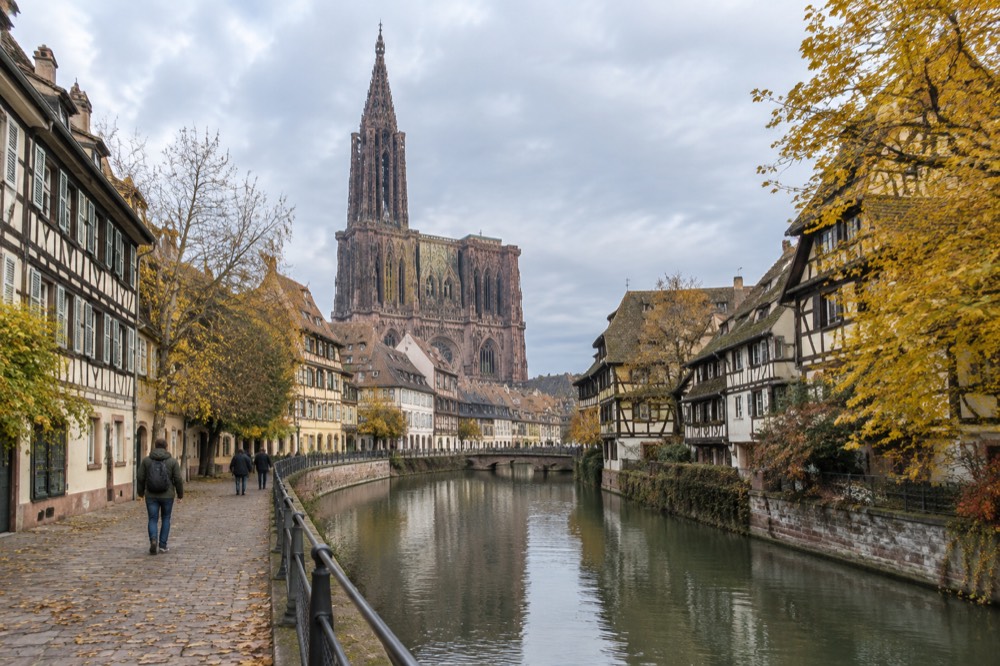
Is Strasbourg Or Munich Better For A Christmas Trip?
Both cities are serious Christmas destinations, and the honest answer is that Strasbourg markets itself as the Capital of Christmas while Munich gives you a Bavarian version with a stronger beer-hall culture around it, so the pairing rather than the choice is the point. Strasbourg's market is the reason many people travel in December at all: last year's edition ran from 26 November to 24 December 2025 and drew 3.05 million visitors, a figure the city published in its own review of the edition. The 2026 dates are not yet published, so confirm them on the city's Christmas site before booking anything: the usual pattern opens in the last week of November and runs to 24 December, with chalets open from late morning into the evening and an early close on the 24th.
The practical December structure for a two-city trip is Strasbourg first, corridor second, Munich last. Strasbourg in the market weeks is dense, atmospheric and best done on foot with a warm layer, and the cathedral is open continuously on the Place du Château side during the market, which changes the visiting rhythm. Munich's markets then give you the second half of the trip, with the Bavarian version of the same tradition and the advantage that the city's indoor culture, the beer halls and the galleries, is strong enough to absorb a cold afternoon.
Costs run higher in December than in any other month in both cities, and hotel prices in Strasbourg during the market weeks reflect demand that the 3.05 million visitor figure makes easy to understand. Book Strasbourg accommodation early, and read our guide on where to stay for the Strasbourg Christmas market before you commit to a neighbourhood. If you are weighing the two cities against each other rather than pairing them, the comparison in our guide on Strasbourg versus Colmar covers the Alsatian side of that family of questions.
| City | Christmas Market Pattern | Verified Figure | What To Check Live |
|---|---|---|---|
| Strasbourg | Late November to 24 December, chalets late morning to evening | 2025 edition ran 26 Nov to 24 Dec; 3.05 million visitors | The city's Christmas site for the 2026 dates |
| Munich | Advent markets around the old town squares | None in our facts file | The Munich city pages for dates and locations |
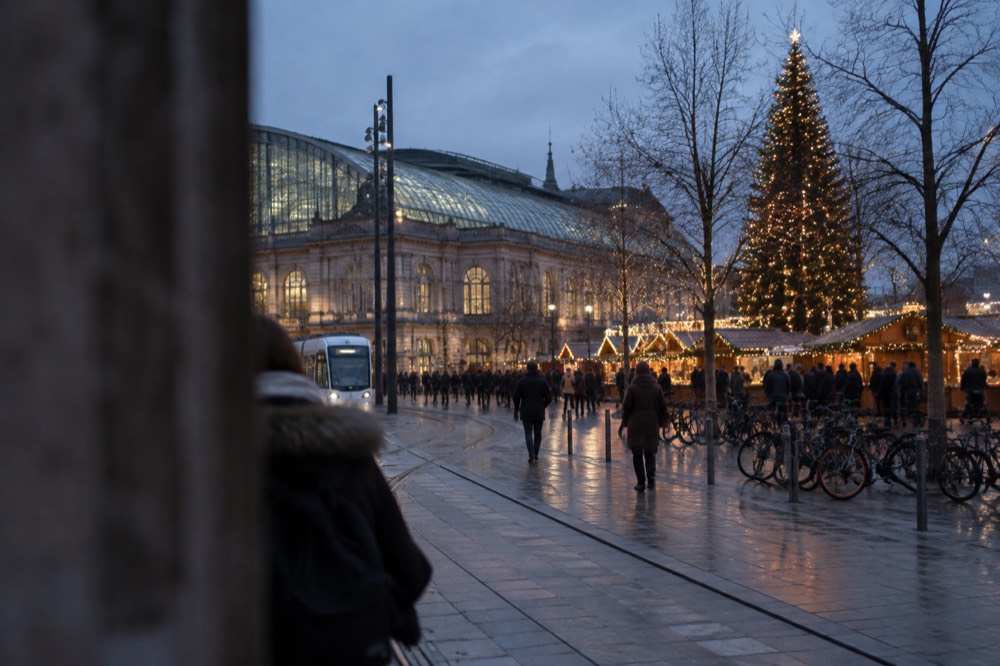
What Does A Day In Strasbourg Cost?
A day in Strasbourg can run from a cheap museum-and-walking plan to a much bigger bill once you add the tower, the clock, a river cruise and a winstub lunch, because the headline sights are individually cheap but they add up quickly. Transport is the smallest line: a CTS single is 1.90 EUR bought in the app, by Badgéo or contactless, or 2.50 EUR on board the bus, a 24-hour Solo pass is 4.60 EUR, and the 24-hour Trio for two or three people is 10.20 EUR. The airport shuttle deserves its own note: the combined train-plus-network ticket from Entzheim is 4.60 EUR and covers the tram and bus network for the day, which makes the arrival leg of a Strasbourg trip almost free once you have paid it.
The sight lines are listed in the table above, so take this as the daily arithmetic. A cathedral-only day, nave plus platform plus clock, costs full fare at the door. A museum day at two municipal museums costs nothing at all on the first Sunday of the month. A full day with the Batorama long tour added adds the boat fare on top, before food. Food is where budgets drift: a winstub lunch with tarte flambée is cheaper than a dinner with Alsatian wine, and our guides on Strasbourg food and on eating on a budget in Strasbourg price the practical options honestly.
One discount instrument is worth knowing and easy to misunderstand. The Strasbourg City Card is a 5 EUR discount card, 3.50 EUR for children aged 3 to 17, valid for 7 days, and it takes fixed amounts off museums, the boat tours, the cathedral platform, the clock and other sights. It is not an all-inclusive pass: you still buy each ticket, at the reduced rate. Whether it pays for itself depends on how many of the listed sights you visit, and the full discount list is on the tourist office's shop page. Our Strasbourg City Card guide works through the arithmetic sight by sight.
| CTS Ticket | Price | Covers |
|---|---|---|
| Single, app / Badgéo / contactless | 1.90 EUR | One journey with changes |
| Single, bought on board the bus | 2.50 EUR | One journey with changes |
| 24-hour Solo | 4.60 EUR | All CTS trams and buses for a day |
| 24-hour Trio | 10.20 EUR | A day for two or three people |
| Airport combined ticket | 4.60 EUR | Train from Entzheim plus a day of CTS |
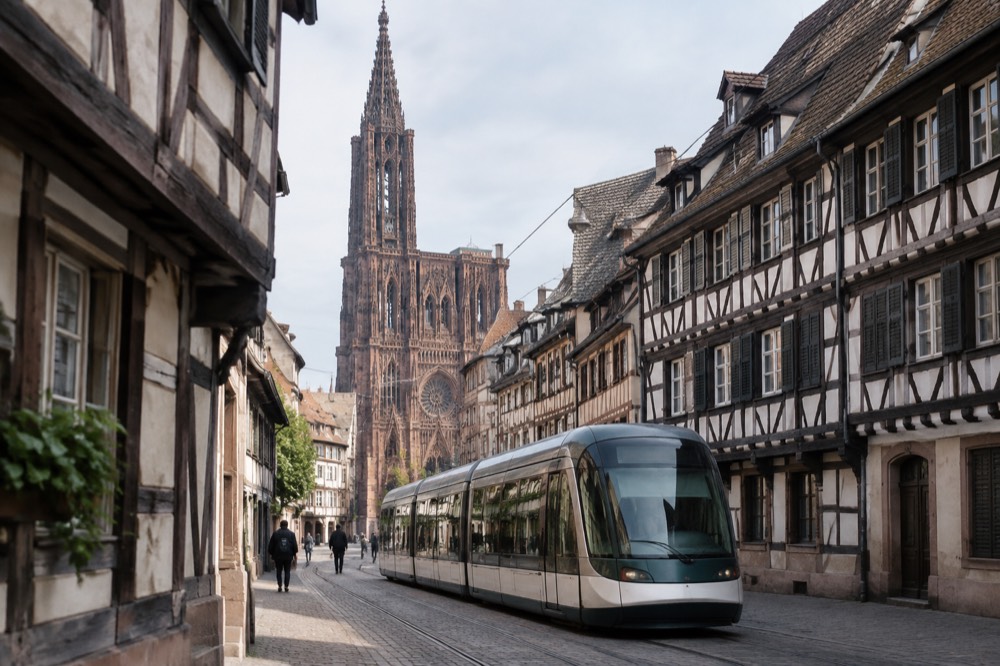
How Do You Handle Money, Phones And Documents On The Route?
France and Germany share the euro and the Schengen area, so the Strasbourg to Munich crossing involves no border formalities, no currency exchange and no phone roaming change, and the only document question is whether your nationality needs a Schengen visa at all. Both ends of the trip price everything in euros, cards are accepted almost everywhere in both cities, and contactless payment works on the Strasbourg CTS network as a ticketing method in its own right. The one trap in the wider region is Switzerland: Basel is a tempting day trip from Strasbourg, and Switzerland is in Schengen but not in the euro, so never assume euros will be accepted there.
The phone question is mostly a data question. A European plan roams in Germany at domestic rates under the EU rules, and visitors from outside Europe will want either a local SIM or an eSIM data plan that covers France and Germany in one bundle. The practical Strasbourg detail is that the CTS app doubles as a ticket wallet, so a working data connection at the moment of boarding saves the on-board surcharge on the bus. At the German end, the regional transport associations each have their own apps, and the DB app sells the rail tickets for the Munich leg.
Documents are simpler than they look. For most European residents, a national identity card or passport is the whole requirement. For visitors from further afield, the Schengen rules mean one visa covers both cities, because the internal border between France and Germany has no checkpoint on this route. Travel insurance that covers rail delay is a small, sensible add-on for a two-country itinerary with a connection in the middle, and it costs less than a rebooked ticket if a first leg runs late.
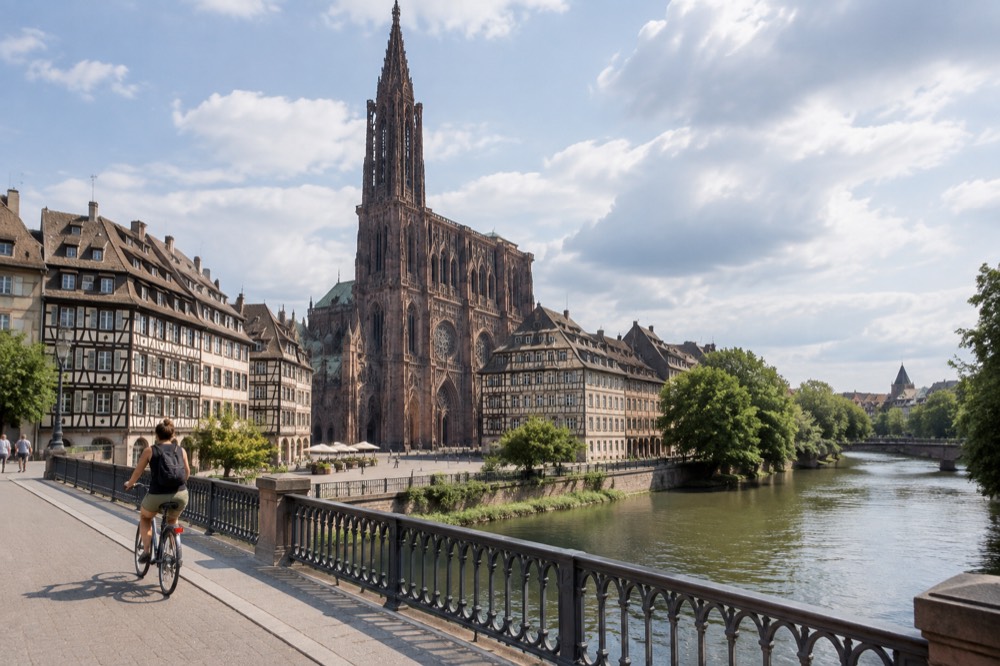
Should You See Strasbourg By Bike Before You Go?
Yes, if your visit lands in the warmer half of the year, a bike is one of the best ways to see Strasbourg. The city is almost entirely flat, the cycle network is extensive and easy to follow, and a guided ride reaches the European Quarter and the riverbanks that walking itineraries tend to skip. In colder or rainier months, you may prefer to explore on foot instead. Strasbourg's own identity as a cycling city is real: the Ill's banks, the two-rivers park and the bridges make a loop that a guided tour stitches together in a single outing, and the Neustadt's wide boulevards are a pleasure at bike pace that they are not on foot. In winter the same rides run cold, and the indoor options, the museums and the winstubs, are the better call for a short visit.
The guided bike option below is the standard format: a local guide, bikes included, and a route that covers the old centre and the districts beyond it. It suits travellers who have already walked the Grande Île and want the second-day perspective. For the evening, the food and wine walks in our Strasbourg food tour guide are the natural pairing, and for the water angle the boat options are covered in our Strasbourg boat tour guide.
What Should You Check Before You Travel?
Confirm four things in the week before departure: the rail times and fares on the operator's own planner, the 2026 Christmas dates on the city's site if you are travelling in the market season, the opening hours of any museum you care about, and your Munich accommodation. Everything else on this route is forgiving. The corridor has daily trains and coaches, both cities absorb late arrivals without drama, and the sights that need timed tickets, the cathedral clock above all, are bought on the day, so a small amount of checking a week out covers the whole plan.
The checklist below is the short version. The one item people forget is the first Sunday of the month rule at the municipal museums: if your Strasbourg day falls on one, the museums are free and the day's budget shifts to food and the river.
| Item | Where To Confirm | Why It Matters |
|---|---|---|
| Rail times and fares | SNCF Connect and the Deutsche Bahn planner | No verified journey time for this route is published here |
| Christmas market dates | The city's Christmas site | The 2026 dates are still being finalised |
| Museum hours | The municipal museums' own pages | Hours shift with seasons and holidays |
| Cathedral platform and clock | The cathedral's own hours page | Seasonal hours and day-of ticket sales |
| Munich accommodation | Your booking confirmation | December demand in both cities is heavy |
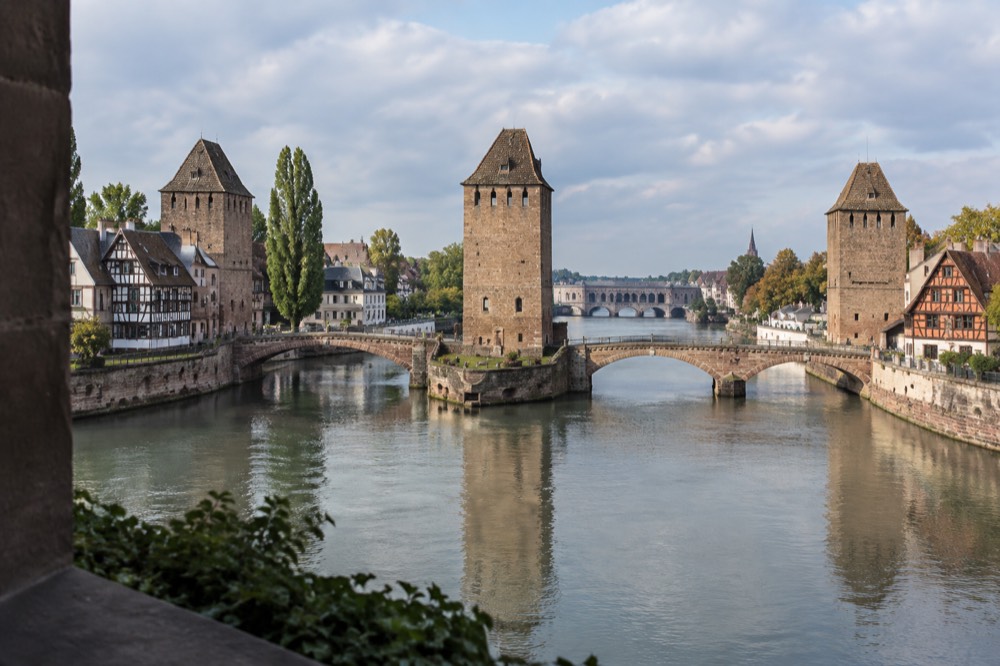
Strasbourg rewards the slow end of this trip and Munich rewards the hungry end, and the corridor between them is the part you will talk about longest. Plan the transfer as a day rather than a dash, book the rail leg as one transaction, and leave an evening free in each city for the thing you did not plan: a winstub in the Krutenau, a beer garden off the Marienplatz, or an hour on a riverbank watching the water carry the light. The Strasbourg Travel Guide homepage holds the full set of city pages if you want to build the itinerary out further.
Common Questions About Strasbourg To Munich
Is There A Direct Train From Strasbourg To Munich?
Itineraries on this corridor typically involve a change in Germany. Book the whole trip in one transaction on SNCF Connect or the Deutsche Bahn planner, which will show the day's own connections and whether any departure runs without a change.
How Many Days Do You Need For Strasbourg And Munich Together?
Five to seven days is comfortable: two or three in Strasbourg, one for the corridor with a stop in the Black Forest or Baden-Baden, and two in Munich. Four days is the workable minimum, and anything shorter means choosing between the two old towns and the countryside between them.
Do You Need Different Currency Or Documents For Germany?
No. France and Germany both use the euro and both are in the Schengen area, so there is no border checkpoint, no currency exchange and no change to your phone plan's EU roaming. One Schengen visa, where a visa is needed at all, covers both cities.
When Do The Strasbourg Christmas Markets Run?
The 2026 dates are not yet published. The usual pattern opens in the last week of November and runs to 24 December, and last year's edition ran from 26 November to 24 December 2025, drawing 3.05 million visitors. Confirm the current dates on the city's Christmas site before booking.
What Is The Cheapest Way To Do The Strasbourg Sights?
Time your visit to the first Sunday of the month, when every municipal museum is free, and walk the public squares and riverside, which costs nothing. The paid highlights are cheap individually: the cathedral platform is 10 EUR, the clock show 4 EUR, and the long Batorama river tour 16.20 EUR at full fare.
Where Should You Stop Between The Two Cities?
Baden-Baden for the spa culture and galleries, Freiburg for a proper city stop at the Black Forest's edge, and the Titisee and Triberg area for the forest scenery itself. A guided day trip from Strasbourg covers the Freiburg, Titisee and Triberg pattern without a car if you would rather not drive.