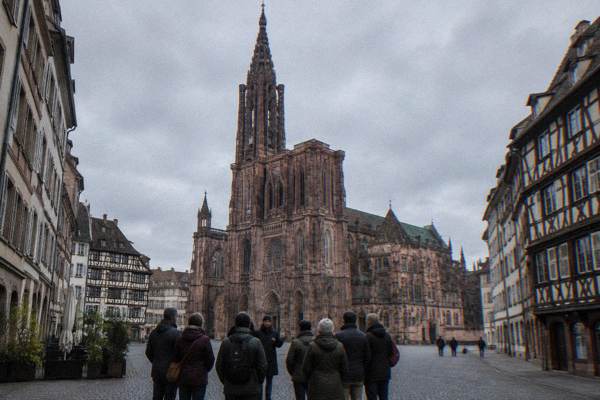
Shopping In Strasbourg
Strasbourg, in Alsace, north-eastern France, keeps its shopping inside a compact medieval core: designer windows and French chains on the streets around Place Kléber, wine and food gifts in the winstubs, and a Christmas market that draws millions.
Short answer
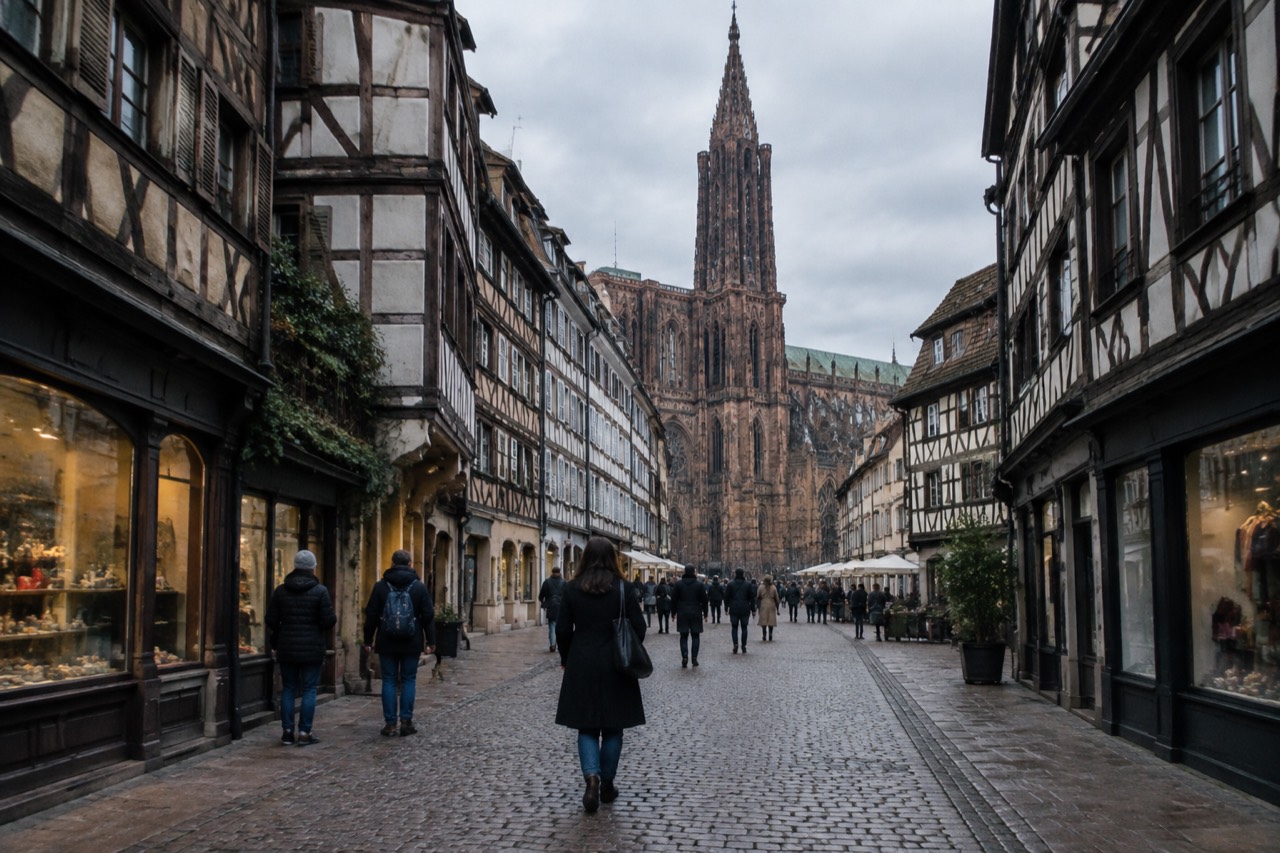
Shopping in Strasbourg centres on the Grande Île: the streets around Place Kléber and the rue des Grandes Arcades carry the main fashion and department-store retail, Petite France holds the gift and craft shops, and the Christmas market, open from late November to 24 December, adds hundreds of stalls. A 24-hour CTS transport ticket costs 4.60 EUR, and the Strasbourg City Card costs 5 EUR for seven days of discounts.
Strasbourg, the prefecture of Bas-Rhin in Alsace, part of the Grand Est region of north-eastern France, is a small city with an outsized shopping reputation, and the reason is geography. The retail core sits almost entirely on the Grande Île, the river-island historic centre recognised by UNESCO as part of the property "Strasbourg, Grande-Île and Neustadt", so a visitor can walk from the cathedral to the designer windows near Place Kléber in a matter of minutes. Add the Christmas market, which ran from 26 November to 24 December in its 2025 edition and drew 3.05 million visitors, and the city becomes one of the more distinctive shopping destinations in France. This guide, from the editors at Strasbourg Travel Guide, walks through the quarters, the streets, the souvenirs and the seasonal calendar.
Where Are The Main Shopping Areas In Strasbourg?
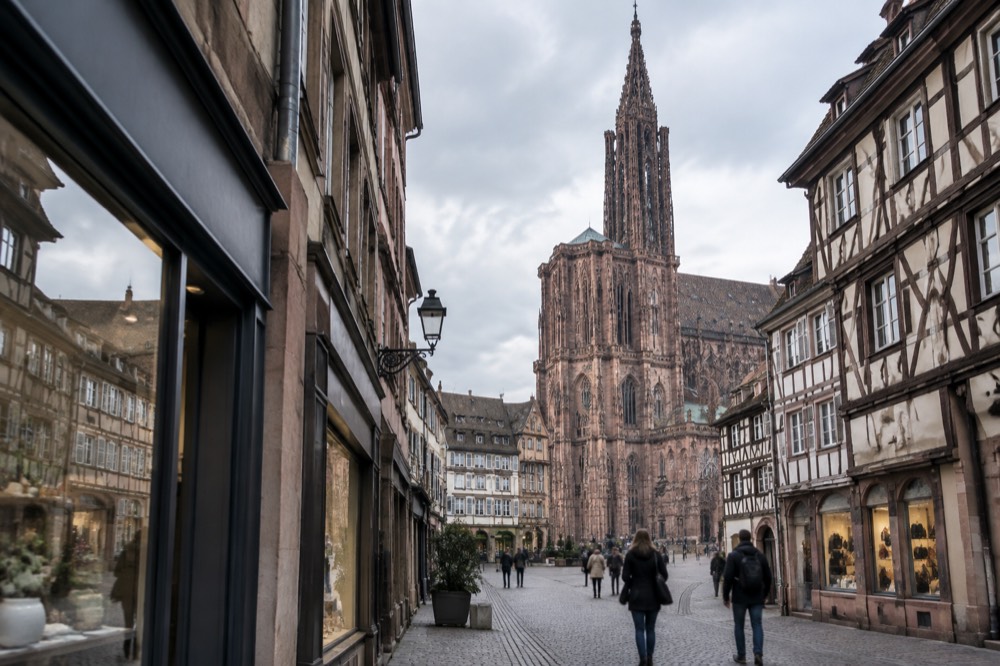
The main shopping areas of Strasbourg sit on and around the Grande Île: the rue des Grandes Arcades and the streets running off Place Kléber hold the fashion, footwear and department-store retail, Petite France and the riverside lanes hold the gift, craft and food shops, and the Christmas market spreads chalets across several central squares from late November to 24 December. Everything is walkable, and nothing worth buying sits more than a short stroll from the cathedral.
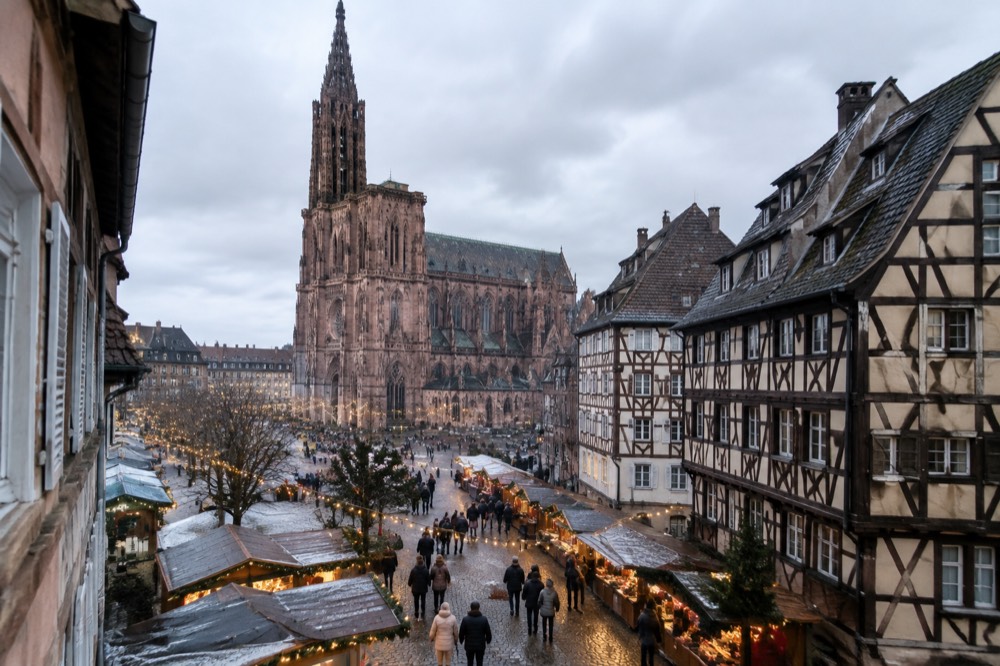
The useful mental map is a triangle. One corner is Place Kléber, the city's central square and the anchor of the mainstream retail streets. A second is the cathedral and its surrounding lanes on the Place du Château side, where the shopping turns to books, prints, ornaments and small specialist shops. The third is Petite France, the former tanners' and millers' quarter at the western tip of the island, where the half-timbered streets carry gift shops, food shops and the kind of Alsatian craft retail that visitors come looking for.
Beyond the island, the Neustadt, the imperial-era extension east of the centre, adds quieter residential shopping, and the gare district around the station holds practical retail aimed at travellers and commuters. For a visitor with a day or two, though, the Grande Île is where the shopping happens. The quarters each have a different character, and the differences matter if you arrive with a list.
| Area | What you find there | Who it suits | Best paired with |
|---|---|---|---|
| Streets around Place Kléber | Fashion, footwear, French and international chains, department stores | Anyone shopping for clothes or brands | A break on the square itself |
| Rue des Grandes Arcades | The city's principal pedestrian shopping street, continuous retail frontage | Shoppers who want density and easy walking | The cathedral, a few minutes north |
| Petite France | Gift shops, Alsatian crafts, food shops, riverside half-timbered lanes | Souvenir hunters and photographers | The covered bridges and the Barrage Vauban terrace |
| Lanes around the cathedral | Books, prints, ornaments, small specialist shops | Visitors after keepsakes rather than fashion | The astronomical clock show at 12:30 |
| Neustadt | Quieter residential retail, fewer tourists | Travellers staying several days | Place de la République |
| Christmas market chalets | Seasonal crafts, ornaments, food and drink, from late November | Everyone, in season | The whole city centre, since the chalets sit among the shops |
The Neustadt deserves a word because it is the part of the shopping map first-time visitors skip. It is a genuinely grand quarter, and its shops serve the people who live in it, which means the browsing is calmer and the prices are closer to local ones. The hidden corners of Strasbourg beyond the centre are covered in a separate guide for travellers who want that side of the city.
What Are The Best Shopping Streets In Strasbourg?
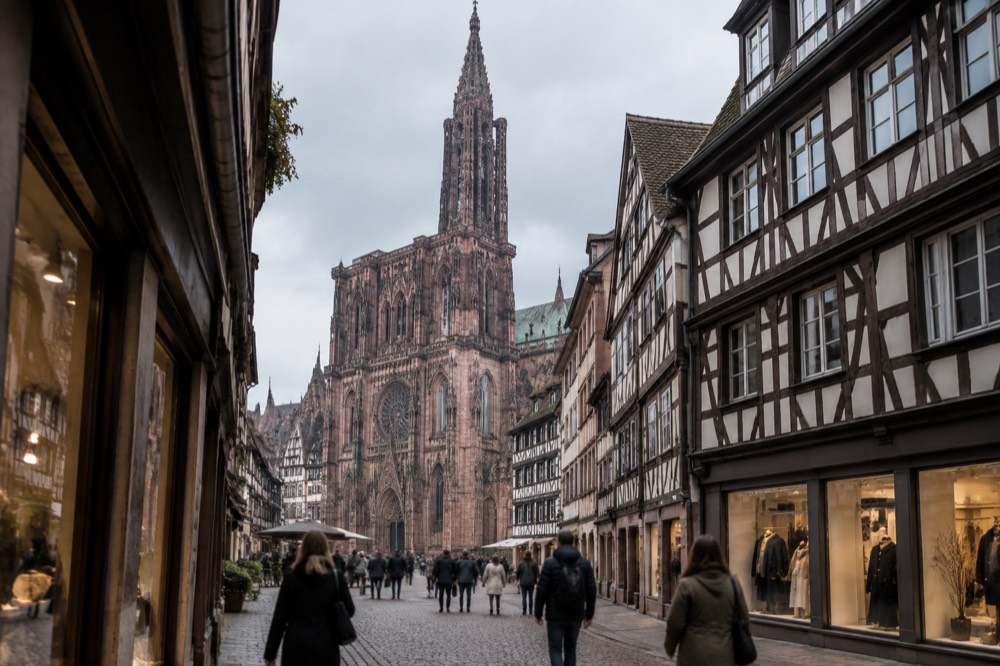
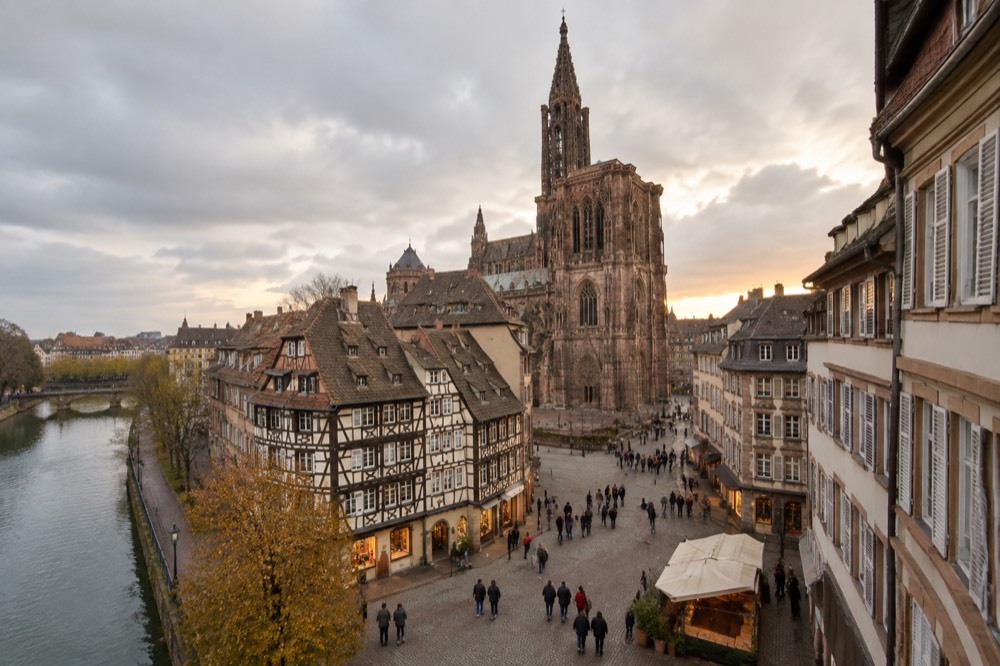
The rue des Grandes Arcades is Strasbourg's principal shopping street, a pedestrianised stretch running from near Place Kléber toward the Place des Halles side of the centre, and it carries the densest continuous retail in the city. Around it sit the rue des Francs-Bourgeois and the streets off Place Kléber, which hold the fashion and department-store offer, while the rue des Orfèvres and the lanes near the cathedral hold the smaller, more distinctly Alsatian shops.
If you only have one shopping street in you, make it the Grandes Arcades. Its retail runs from French chain fashion to optics, books and quick food. The street sits inside the old city, so the walk itself is part of the point: the shopfronts sit in buildings that have been rebuilt and re-fronted across centuries, and nothing about the street feels like an out-of-town mall.
The second tier of streets is where the character lives. The rue des Orfèvres, the goldsmiths' street by name, still leans toward jewellery and small specialist retail. The lanes immediately south and east of the cathedral hold print sellers, bookshops and ornament shops aimed squarely at visitors, and the quality varies, so it pays to compare before buying. In Petite France, the shopping is food-forward: foie gras and terrine producers, biscuit makers, and wine shops selling the Alsatian whites the region is known for.
A practical note on timing: French city-centre retail traditionally closes one day a week, and in Strasbourg that day is commonly Sunday for the conventional shops, with the food shops, winstubs and market stalls running their own schedules. The only hours worth trusting are the ones posted on the door or on the shop's own page, so plan the fashion streets for Monday through Saturday and leave Sundays for the Christmas market in season, for strolling, and for the squares and streets themselves, which cost nothing, as the free things to do in Strasbourg guide sets out.
For travellers who want the shopping packaged with the seeing, a guided walk strings the retail streets together with the stories behind them, and the Alsatian market towns make an even bigger day of it:
Want the retail streets and their stories packaged together? Book a free walking tour here.
What Souvenirs Should You Buy In Strasbourg?
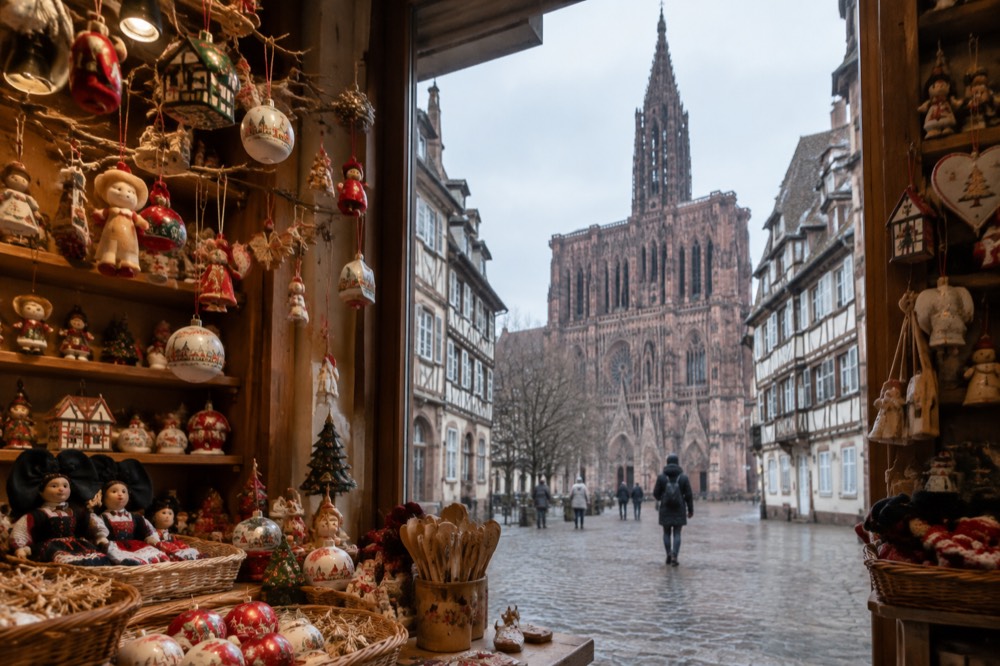
The souvenirs worth buying in Strasbourg are the ones the region actually produces: Alsatian wine, kougelhopf moulds and the cake itself, foie gras and terrines, Alsace-themed Christmas ornaments, and stoneware and textiles in the Alsatian folk tradition. The ornament shops and food shops around the cathedral and in Petite France carry all of these, and the Christmas market, from late November to 24 December, adds seasonal crafts to the same streets.
The kougelhopf is the emblem. It is the brioche-like Alsatian cake baked in a fluted ring mould, and the moulds themselves, in glazed earthenware, are sold across the city as a two-in-one souvenir: a usable kitchen object and a very Alsatian object. The cake travels less well than the mould, so the standard advice is to eat the cake in a winstub and carry the mould home.
Christmas ornaments are the second emblem, and Strasbourg's claim on Christmas is not marketing. The city styles itself as the Capital of Christmas, and the ornament sellers around the cathedral and on the market squares sell hand-finished glass and wood pieces alongside the mass-produced versions. The difference is visible and tactile, so pick pieces up and check for the finish and the weight before paying.
| Souvenir | What it is | Where to look | What to check before buying |
|---|---|---|---|
| Kougelhopf mould | Fluted earthenware ring mould for the Alsatian cake | Gift shops around the cathedral and in Petite France | Glazing, weight, whether it is oven-safe |
| Alsatian wine | Riesling and the other regional whites, plus crémant | Wine shops on the Grande Île | What travels well and what should be drunk young |
| Foie gras and terrines | The region's classic preserved meats and pâtés | Food shops and winstub counters | Sealed packaging for travel, keep chilled |
| Christmas ornaments | Glass and wood decorations, Alsatian folk motifs | Ornament shops near the cathedral; market chalets in season | Hand-finished versus mass-produced, packaging for the flight |
| Stoneware and textiles | Alsatian folk pottery, printed linens | Craft shops in Petite France | Origin marking, whether the piece is decorative or usable |
| Alsatian biscuits and sweets | Regional pastry specialities in gift tins | Food shops across the centre | Sell-by dates if the trip home is long |
One honest caution: the souvenir shops nearest the cathedral frontage carry the widest range and some of the highest prices in the city. Walk two streets in any direction and the same categories appear at gentler prices. The pattern holds in every tourist city, and Strasbourg is no exception.
The Christmas market is where the souvenir question gets a seasonal answer, and a guided day into the Alsatian market towns turns it into a full outing:
Where To Buy Alsatian Wine And Food Gifts?
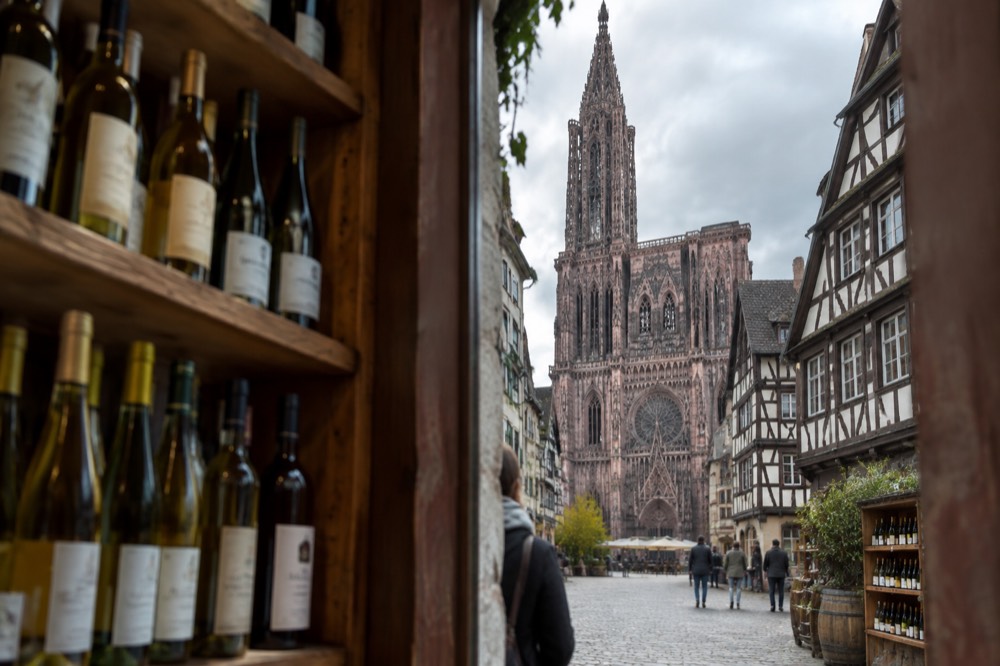
Alsatian wine and food gifts are sold across the Grande Île: the wine shops of the centre and Petite France stock the region's riesling, gewurztraminer, pinot gris and crémant, the food shops carry foie gras, terrines, biscuits and honey, and the winstubs sell bottles to drink on the spot or take away. For an education before you buy, a short guided tasting in the city centre covers the grape varieties in an hour.
Alsace is one of France's defining white-wine regions, and the grape names on the labels, riesling above all, are the region's signature. A wine shop in Strasbourg is therefore not a generic bottle shop: the staff sell one region's output and can usually talk through it, and the useful questions to ask are which bottles are built to age, which should be drunk within the year, and what survives a long journey home. The answers change what you should carry.
Crémant, the region's traditional-method sparkling wine, is the gift that travels best of all, and it is the answer to the champagne-priced question: a bottle of Alsatian fizz at a fraction of the name-brand price. The Alsace wine guide on this site covers the varieties and the vocabulary in depth for travellers who want to shop the labels with confidence.
The food gifts follow the wine. Foie gras and terrines are the classics, sold sealed for travel, and the biscuit tins and honey jars make lighter souvenirs that survive a suitcase. The winstubs, the Alsatian tavern-restaurants dotted across the centre, are part of the shopping route too: they are the place to taste what you are about to buy, and several sell their house bottles to take away.
For travellers who want the tasting before the buying, a guided tasting of Alsatian wines in the city centre does exactly that:
Beer belongs in the same conversation, because Alsace is one of France's serious brewing regions and Strasbourg's craft beer has its own scene. The beer guide for Strasbourg covers it, and a guided tasting held before the taps open to the public gives the morning a structure:
Is Shopping Expensive In Strasbourg?
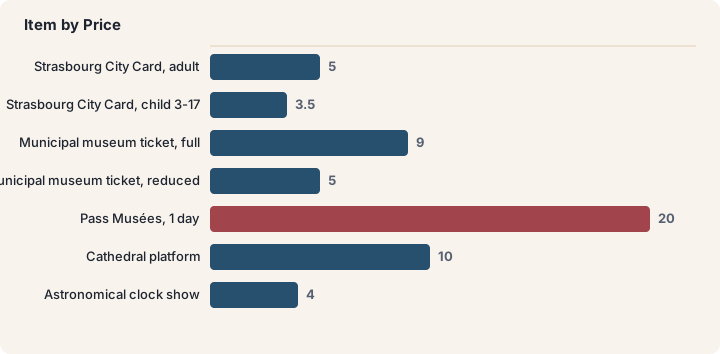
Shopping in Strasbourg is not uniformly expensive: the fashion streets carry standard French city-centre prices, the food and wine gifts span a wide band depending on shop and producer, and the city offers real discounts through the Strasbourg City Card, which costs 5 EUR for adults and 3.50 EUR for children aged 3 to 17 and runs for seven days. The municipal museums cost 9 EUR full price, 5 EUR reduced, and are free on the first Sunday of every month.
The honest answer splits by category. Clothes, footwear and cosmetics sell at the same prices you would meet in any French city of this size, and the department-store end of the offer is national pricing rather than tourist pricing. The souvenir end is where the spread opens: a mass-produced ornament and a hand-finished one can sit in the same window at very different figures, and the wine shops range from everyday bottles to producer rarities.
The discounts that exist are real and specific. The Strasbourg City Card is a discount card, not an all-inclusive pass: for 5 EUR it buys seven days of reductions across the municipal museums, the cathedral platform, the astronomical clock, the river boats and guided visits, so a traveller combining shopping with sightseeing recovers the cost quickly. The details are laid out in the Strasbourg City Card guide.
| Item | Price | Notes |
|---|---|---|
| Strasbourg City Card, adult | 5 EUR | Discount card, valid 7 days |
| Strasbourg City Card, child 3-17 | 3.50 EUR | Same 7-day validity |
| Municipal museum ticket, full | 9 EUR | Applies across the municipal museums |
| Municipal museum ticket, reduced | 5 EUR | Standard reductions |
| Pass Musées, 1 day | 20 EUR | Covers the municipal museums for one day |
| Municipal museums, first Sunday of the month | Free entry | Every municipal museum, every month |
| Cathedral platform | 10 EUR full, 6 EUR reduced | Platform at 66 m, under 6 free |
| Astronomical clock show | 4 EUR | 12:30 daily, tickets on the day only |
Note that the Musée Alsacien, the folk museum that once explained half the objects sold in the gift shops, is closed for works until 2028, so do not plan a visit around it. The other municipal museums are open, and the first-Sunday rule makes a cheap morning of them. For a fuller picture of where the money goes on a Strasbourg trip, the budget guide to Strasbourg breaks down the everyday costs.
When Is The Best Time Of Year To Shop In Strasbourg?
The best time to shop in Strasbourg depends on what you are buying: late November to 24 December brings the Christmas market and the ornament chalets to the same streets as the permanent shops, December draws the crowds that come with 3.05 million visitors to the 2025 edition, and the quieter months from spring to autumn give the fashion streets and winstubs room to breathe. There is no bad month for the shops themselves.
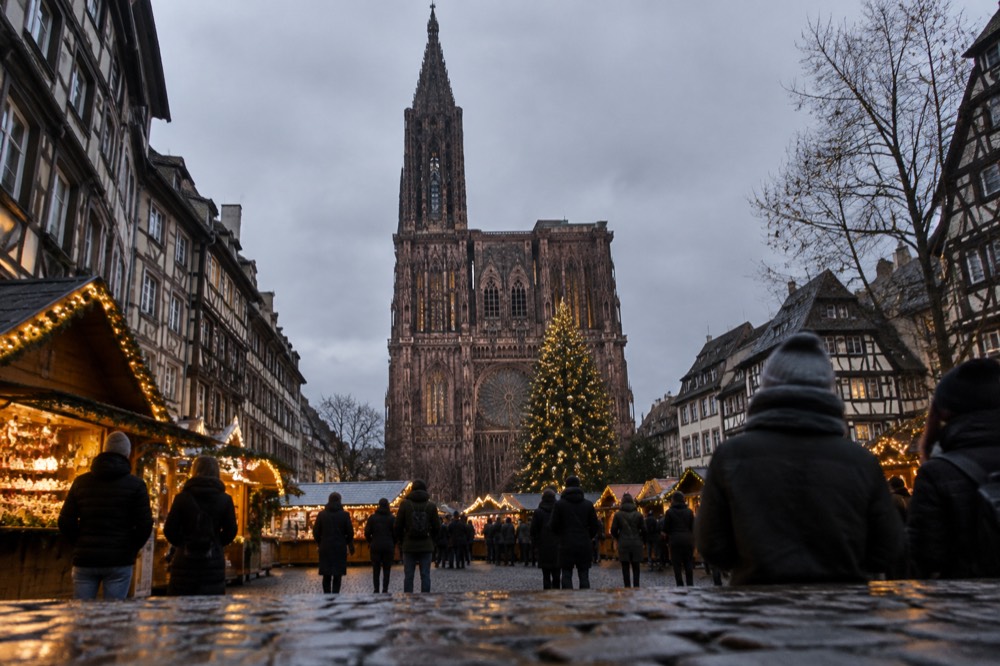
The Christmas season is the shopping season, and it is not subtle. The 2025 edition of the market ran from 26 November to 24 December and drew 3.05 million visitors, against 3.4 million in 2024, and those numbers are the city's own. The city's Christmas site states that the dates and programme are still being finalised, so confirm them there before booking anything around them. The pattern, in plain words: the market opens in the last week of November and runs to 24 December, with the final day closing early in the evening.
Weather shapes the season more than visitors expect. Strasbourg's climate is semi-continental, and the Meteo-France 1991-2020 normals for Strasbourg-Entzheim give a mean December maximum of 5.9 C and a mean minimum of 0.8 C, with 45.2 mm of rain and 10.2 rain days of 1 mm or more across the month. November is milder, at 9.4 C and 3.3 C, but wetter, at 47.6 mm. In short: the Christmas market is a cold-weather market, and the shopping is better with gloves.
| Month | Mean maximum C | Mean minimum C | Rain mm | Rain days of 1 mm or more |
|---|---|---|---|---|
| September | 21.6 | 10.7 | 54.6 | 8.0 |
| October | 15.8 | 7.2 | 59.5 | 9.6 |
| November | 9.4 | 3.3 | 47.6 | 9.2 |
| December | 5.9 | 0.8 | 45.2 | 10.2 |
Outside the season, the shoulder months are the comfortable ones. May has a mean maximum of 20.9 C, June 24.4 C, September 21.6 C, and the streets carry visitors without the December density. The best time to visit Strasbourg and Strasbourg in winter guides cover the trade-offs month by month, and the weather in Strasbourg page holds the full normals table.
How Does Christmas Shopping Work In Strasbourg?
Christmas shopping in Strasbourg means the market chalets and the permanent shops running side by side: the chalets typically open late morning and run into the evening, the 2025 edition closed on 24 December early in the evening, and the ornament, craft and food stalls sit on the same squares as the cathedral and the Grandes Arcades. The 2026 dates are not yet published, so confirm them on the city's Christmas site before you plan.
The mechanics are simple. The chalets cluster across several squares in the historic centre, and the cathedral sits in the middle of it all, open continuously on the Place du Château side Monday to Saturday during the market, 08:30 to 17:45, with the astronomical clock show at 12:30 sharp and tickets at 4 EUR sold on the day only. A shopping day in season therefore mixes retail with a clock show and, for anyone who wants the view, the platform at 66 m for 10 EUR full price.
| Christmas market fact | Figure | Source of the pattern |
|---|---|---|
| 2025 edition dates | 26 November to 24 December 2025 | City's own edition |
| 2025 attendance | 3.05 million visitors | City's press release |
| 2024 attendance | 3.4 million visitors | City's press release |
| 2026 dates | Not yet published | City's Christmas site |
| Usual pattern | Opens in the last week of November, runs to 24 December | Described in words, confirmed each year |
| Final day | Closes early in the evening on 24 December | Described in words |
The food side of the market is a shopping category of its own, and the Christmas market food in Strasbourg guide covers the sausages, the bredele biscuits and the hot drinks in detail. The full market, square by square, is in the Strasbourg Christmas market guide, and travellers basing themselves in the city for it should read where to stay for the Strasbourg Christmas market early, because December fills the centre.
For visitors who want the market without self-driving, a guided day tour into the Alsatian market towns pairs the city's chalets with the smaller towns' own, and Check availability on the operator's live listing alongside the day trips from Strasbourg planning page.
How Do You Get Around Strasbourg While Shopping?
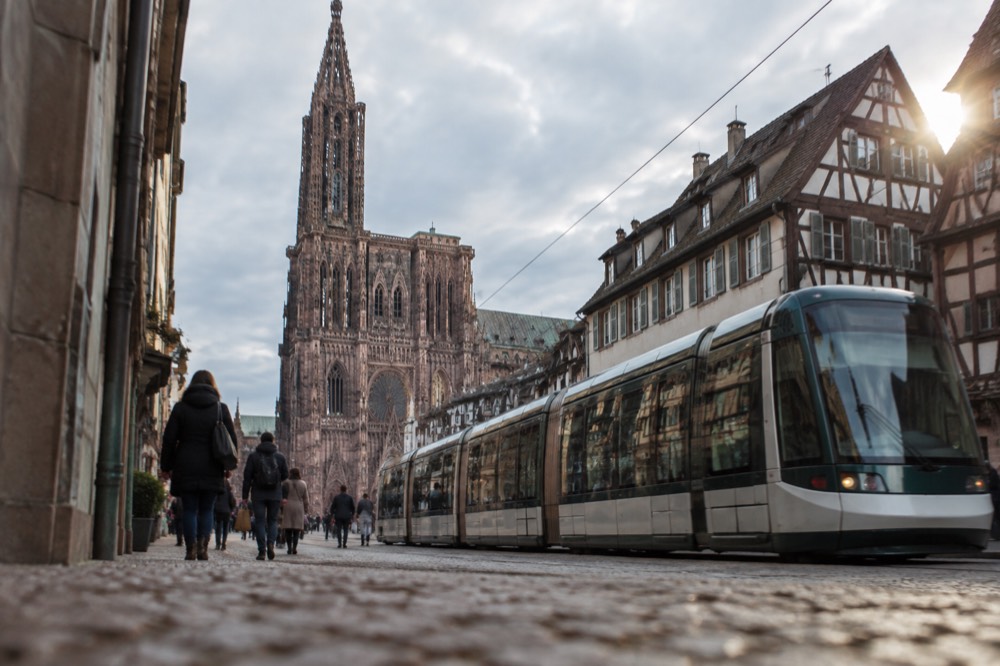
You get around Strasbourg's shopping core on foot, because the Grande Île is compact and pedestrian-heavy, and the CTS tram and bus network covers everything beyond it: a single ticket costs 1.90 EUR bought through the app, a Badgéo card or contactless, or 2.50 EUR on board a bus, a 24-hour Solo pass costs 4.60 EUR, and a 24-hour Trio pass for two to three people costs 10.20 EUR.
The trams are the useful part for shoppers, because they cross the island and link the station, the Neustadt and the outlying retail without a search for parking, and parking in the centre is its own project, covered in the site's parking guide. The fare structure rewards a little planning: buying on the bus is the expensive way, at 2.50 EUR against 1.90 EUR, and a day pass pays for itself after the third or fourth ride.
| CTS ticket | Price | What it covers |
|---|---|---|
| Single, app / Badgéo / contactless | 1.90 EUR | One journey on the network |
| Single, bought on board a bus | 2.50 EUR | Same journey, higher price |
| 24h Solo | 4.60 EUR | One person, 24 hours |
| 24h Trio | 10.20 EUR | Two to three people, 24 hours |
| Airport combined ticket | 4.60 EUR | Train, tram or bus and the 24H airport ticket |
The airport link is worth knowing even for a shopping trip, because the shuttle train runs to the station in 8 minutes, with up to five trains an hour, and the combined ticket at 4.60 EUR covers the train plus the city network for the day. Arriving shoppers can therefore be on the Grandes Arcades within half an hour of landing. The getting around Strasbourg guide holds the full network detail, and the where to stay in Strasbourg guide covers which quarters put you closest to the shops on foot.
For travellers who want the shopping and the sightseeing bundled, these are the tours that fit a retail-heavy visit best:
Common Questions About Shopping In Strasbourg
What Souvenirs Should You Buy In Strasbourg?
Kougelhopf moulds in glazed earthenware, Alsatian wine and crémant, foie gras and terrines, hand-finished Christmas ornaments, and Alsatian stoneware and textiles are the region's signature purchases. The gift shops around the cathedral and in Petite France carry all of them, and the Christmas market adds seasonal crafts from late November to 24 December.
What Are The Best Shopping Streets In Strasbourg?
The rue des Grandes Arcades is the principal pedestrian shopping street, running from near Place Kléber through the centre, and the streets off Place Kléber carry the fashion and department-store retail. The rue des Orfèvres and the lanes around the cathedral hold the smaller specialist and souvenir shops, and Petite France holds the gift and food shops.
When Is The Best Time To Shop In Strasbourg?
For the Christmas market, late November to 24 December: the 2025 edition ran 26 November to 24 December and drew 3.05 million visitors. For quieter browsing of the permanent shops, the spring to autumn months give the streets room, with mean maximums of 20.9 C in May and 21.6 C in September. The city posts each edition's dates on its Christmas site, so confirm them there.
Is Shopping In Strasbourg Expensive?
The fashion streets carry standard French city-centre prices. Souvenirs and wine span a wide band depending on producer and finish. The Strasbourg City Card, at 5 EUR for adults and 3.50 EUR for children for seven days, buys discounts at the museums, the cathedral platform, the astronomical clock and the river boats, and the municipal museums are free on the first Sunday of every month.
Are Shops In Strasbourg Open On Sunday?
The conventional city-centre shops close on Sunday, and the schedule to trust is the one posted on each shop's door or own page. In season, from late November to 24 December, the Christmas market chalets carry the weekend and typically open late morning into the evening, and the food shops and winstubs run their own schedules.
How Do You Get Around Strasbourg While Shopping?
On foot within the Grande Île, which is compact and largely pedestrianised, and by CTS tram or bus beyond it. A single ticket costs 1.90 EUR via the app, a Badgéo card or contactless, or 2.50 EUR on board a bus, a 24-hour Solo pass costs 4.60 EUR, and a 24-hour Trio pass for two to three people costs 10.20 EUR.
Shopping in Strasbourg is a walking activity before it is a spending one: the quarters sit minutes apart, the souvenirs are the region's own products rather than imports, and the calendar decides the mood, from calm autumn streets to a December market that fills the same squares with millions of visitors. Pick the month to match what you came to buy, confirm the Christmas dates on the city's own site, and the rest of the trip plans itself around a compact, walkable island.